

Sales Time Management Is a Math Problem, Not a Motivation Problem
It's 10:30 AM on a Tuesday. You've been "working" for two and a half hours - answered Slack messages, updated three opportunity stages in Salesforce, sat through a pipeline standup that ran 20 minutes long, and researched a prospect's org chart. You haven't made a single outbound call.
This isn't a discipline failure. It's a systems failure. Reps spend roughly 70% of their time on non-selling tasks, and that number hasn't meaningfully budged in years. The fix isn't a motivational poster or a new morning routine - it's treating your calendar like a budget and your data like infrastructure.
Three Things That Actually Move the Needle
If you take nothing else from this piece:
- Adopt the "bookends" weekly structure. Monday and Friday handle admin, pipeline hygiene, and prep. Tuesday through Thursday are sacred selling time.
- Run a 10-minute daily Eisenhower review of your pipeline. Separate urgent from important. Stop letting Q3 tasks eat your Q2 blocks.
- Audit your prospect data. Bad contact info is the silent time killer nobody talks about. Every bounced email and disconnected number burns minutes from your protected prospecting blocks.
The Productivity Crisis by the Numbers
Forrester's sales productivity benchmark puts it at roughly 14 of 51 working hours per week lost to admin tasks. That's nearly two full workdays, every single week, spent on things that don't generate revenue. CRM entry, chasing internal approvals, hunting for the right deck, formatting reports nobody reads.
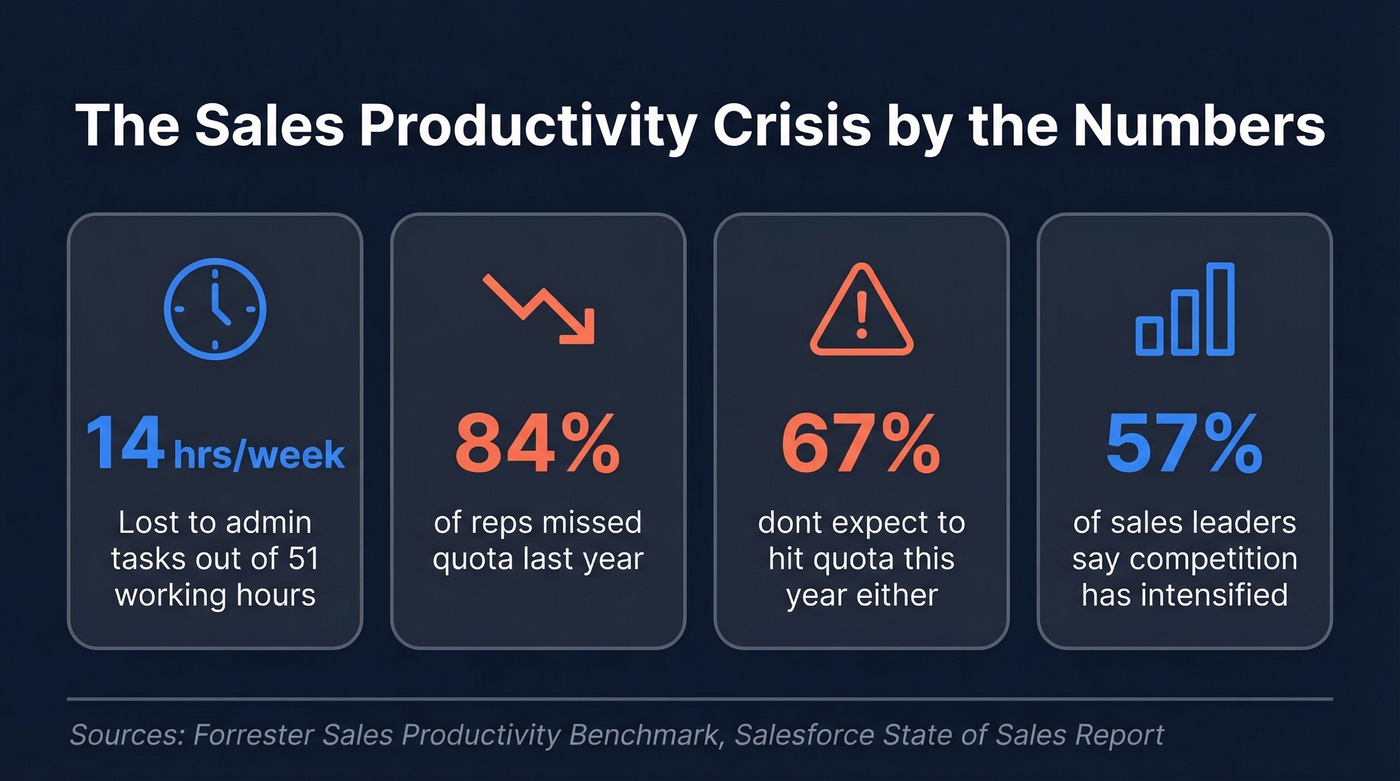
The downstream impact is brutal. In the most recent Salesforce State of Sales report, 84% of reps missed quota, and 67% don't expect to hit it this year either. Meanwhile, 57% of sales leaders say competition has intensified. You're fighting harder for deals with less time to actually sell.
And the selling time you do get? It's harder to use well. Buying committees keep expanding, which means more research, more outreach threads, and more follow-up just to move one deal forward.
Here's the thing most people get wrong about burnout: it isn't caused by working too many hours. It's caused by working too many hours on the wrong things. The reps who flame out fastest aren't the ones making 80 dials a day. They're the ones who never get to make 80 dials because the day disappears into busywork before lunch.
Five Mistakes Killing Your Quota
1. Treating every opportunity as equal. You've got 40 open opportunities. Twelve will close. The other 28 consume the same prep time, the same follow-up cadence, the same mental energy. Ruthless qualification isn't cold - it's math. Score every deal by ICP fit, stage velocity, and champion strength, then cut the bottom 20% loose every Friday.
2. Confusing activity with productivity. A full calendar feels productive. Sixty emails sent feels productive. Neither tells you whether deals moved forward. Track pipeline movement instead of activity volume. Did a deal advance a stage? Did a new thread open with an economic buyer? That's productivity.
3. Living in the inbox. Email is someone else's to-do list for you. Every time you check it, you're letting other people set your priorities. Batch email into two or three windows per day and protect everything in between.
4. Failing to plan the week. Day-to-day planning doesn't work in sales because sales is inherently unpredictable - a prospect calls back, a deal accelerates, a fire breaks out. If you're planning day by day, you're always reactive. Plan the week on Sunday night or Monday morning. The week is the right unit for sales: long enough to absorb surprises, short enough to stay accountable.
5. Overfilling the calendar. No buffer time means no capacity for the urgent deal that needs a proposal by 3 PM. Leave 20% of your calendar unscheduled. It's not wasted time. It's surge capacity.

Bad contact data is the silent time killer in your prospecting blocks. Every bounced email and disconnected number eats minutes from the selling hours you fought to protect. Prospeo's 98% email accuracy and 125M+ verified mobiles mean your Tuesday-Thursday power hours actually connect you with buyers - not dead ends.
Stop bleeding protected selling time to bad data.
The Eisenhower Matrix for Sales
The Eisenhower Matrix isn't new, but most sales teams apply it wrong. They treat it as a personal productivity exercise instead of a pipeline operating system. Here's how it actually maps to sales work:
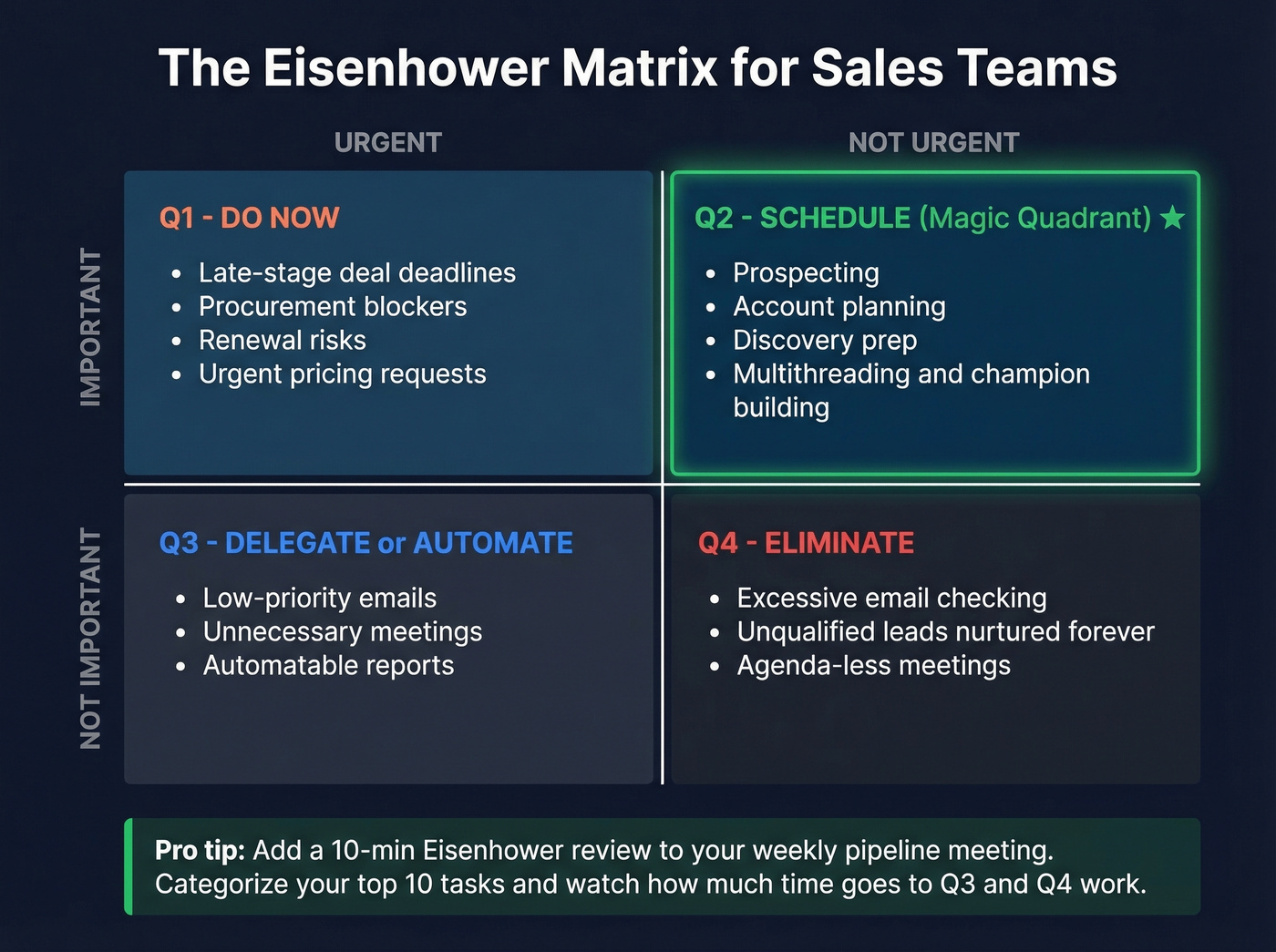
| Urgent | Not Urgent | |
|---|---|---|
| Important | Late-stage deadlines, procurement blockers, renewal risks, urgent pricing | Prospecting, account planning, discovery prep, multithreading, champion building |
| Not Important | Low-priority emails, unnecessary meetings, automatable reports | Excessive email checking, unqualified leads nurtured indefinitely, agenda-less meetings |
The magic quadrant for quota attainment is Q2 - important but not urgent. Prospecting, account planning, discovery prep. These activities build pipeline three months from now. They're also the first things that get sacrificed when Q1 and Q3 tasks crowd in.
We've watched reps transform their output just by adding a 10-minute Eisenhower review to their weekly pipeline meeting. Force every rep to categorize their top 10 tasks. You'll be shocked how much time goes to Q3 and Q4 work that feels busy but moves nothing forward.
How to Structure Your Sales Week
Stop optimizing your day. Optimize your week.
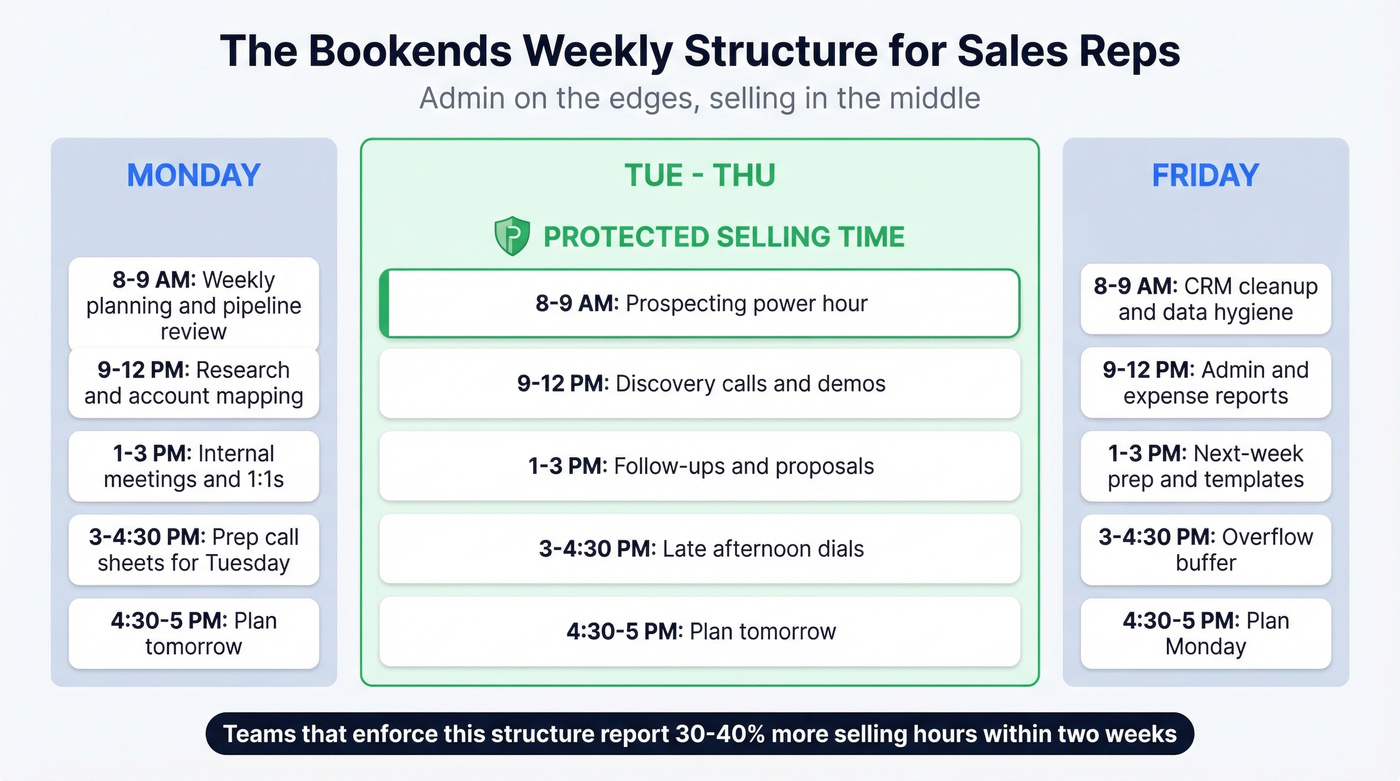
Sales is too unpredictable at the daily level. A prospect calls back, a deal needs an emergency proposal, your manager schedules a last-minute coaching session. The bookends approach solves this: use Monday and Friday for admin, research, and prep, then protect Tuesday through Thursday as core selling time.
Here's a sample weekly structure for an AE:
| Time Block | Monday | Tue-Thu | Friday |
|---|---|---|---|
| 8:00-9:00 | Weekly planning, pipeline review | Prospecting power hour | CRM cleanup, data hygiene |
| 9:00-12:00 | Research, account mapping | Discovery calls, demos | Admin, expense reports |
| 12:00-1:00 | Lunch | Lunch | Lunch |
| 1:00-3:00 | Internal meetings, 1:1s | Follow-ups, proposals | Next-week prep, templates |
| 3:00-4:30 | Prep call sheets for Tue | Late-afternoon dials | Overflow buffer |
| 4:30-5:00 | Plan tomorrow | Plan tomorrow | Plan Monday |
The key principle is timeboxing - assigning fixed calendar blocks to high-value activities so reactive work can't crowd them out. If it's not on the calendar, it doesn't exist. In our experience, teams that enforce this consistently report 30-40% more selling hours within two weeks. That's the difference between reps who hit quota and reps who wonder where the week went.
SDRs should flip the emphasis: heavier prospecting blocks Tuesday through Thursday morning, with afternoon slots for follow-up sequences and research. The structure adapts, but the bookends stay constant.
Let's be honest: if your average deal size is under $10k, how you manage your selling hours matters more than raw talent. A mediocre rep with a protected calendar and clean data will outsell a gifted rep drowning in admin every single quarter.
Staying Organized With the Right Tech Stack
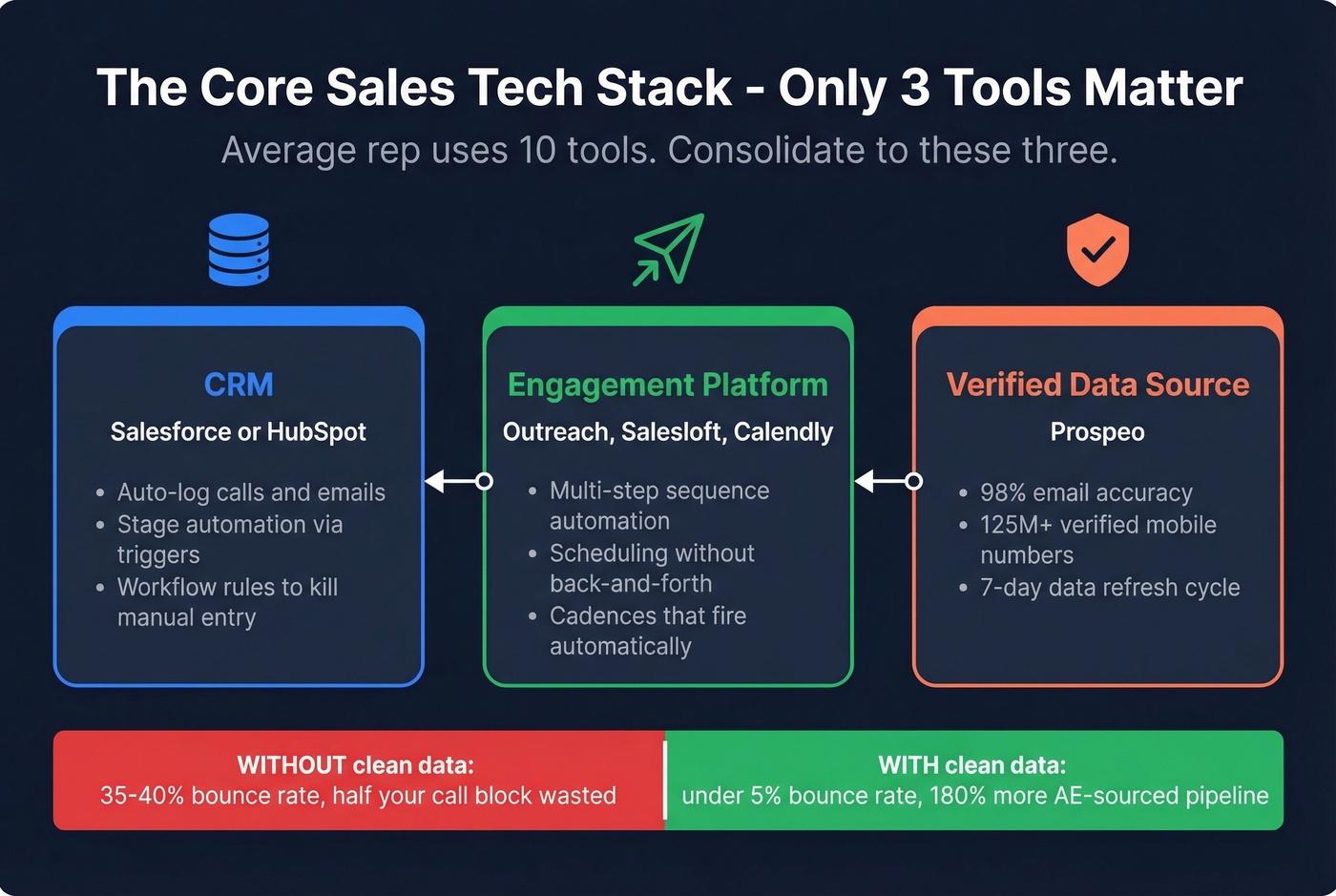
The average rep juggles around 10 tools to close a deal. That's too many. Consolidate to a core stack of three: CRM, engagement platform, and verified data source.
CRM Automation
If CRM admin is eating a meaningful chunk of your day, your tech stack is broken. Salesforce and HubSpot both support auto-logging for calls and emails, stage automation based on activity triggers, and workflow rules that eliminate manual data entry. Turn them on. Every minute spent manually logging a call is a minute stolen from the next conversation.
Engagement Platforms
Outreach and Salesloft handle sequence automation - multi-step cadences that fire without you touching each email individually. Calendly or Chili Piper eliminate the scheduling back-and-forth that slows down booking meetings. These aren't nice-to-haves anymore. They're table stakes for any team doing outbound at scale.
Data Quality - The Hidden Time Killer
You blocked 90 minutes for cold calling. First three numbers are disconnected. Two emails bounce. By the time you've found working contact info for your fifth prospect, half your block is gone.
This is the sales time management problem nobody writes about.
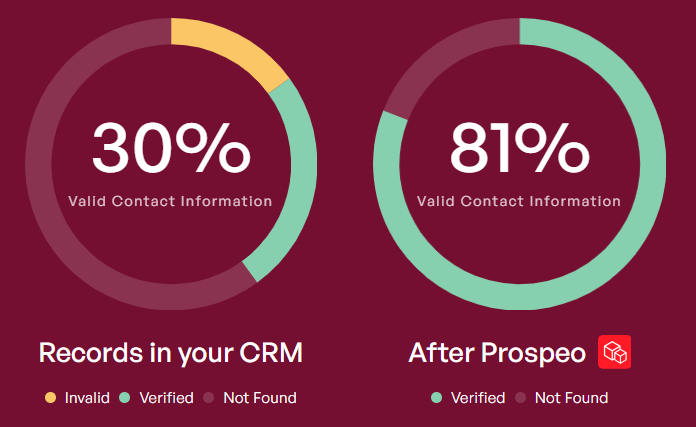
Bad data doesn't just hurt deliverability - it destroys the time-blocking system you spent all weekend building. Prospeo addresses this at the source with 98% email accuracy, 125M+ verified mobile numbers, and a 7-day data refresh cycle while the industry average sits at six weeks. One example: Snyk's 50-person AE team was running a 35-40% bounce rate before switching. After moving to Prospeo, bounces dropped under 5%, and AE-sourced pipeline jumped 180%.
AI Agents
The AI angle on time management is real, not hype. In Salesforce's 2026 State of Sales data, 88% of reps with AI agents say the tech increases their odds of hitting targets, and high performers are 1.7x more likely than underperformers to use prospecting agents. One team deployed an SDR agent to work low-score leads and created 3,200 opportunities in four months - leads that human reps didn't have time to touch.
Real talk: AI agents won't replace prospecting judgment. But they're excellent at Q3 tasks from your Eisenhower Matrix - qualifying inbound leads, drafting initial outreach, summarizing call notes. Every Q3 task you hand to an agent is time returned to Q2 work. The consensus on r/sales is similar: automate the grunt work, keep humans on discovery and negotiation.
The ROI of Reclaimed Selling Time
Here's the math. Say you reclaim five extra selling hours per week through better sales time management, cleaner data, and automation. Over a year, that's 250+ additional selling hours per rep - the equivalent of more than six extra 40-hour workweeks spent on pipeline creation, discovery, and deal progression. That investment in systems pays compounding dividends quarter after quarter.
If you want to go deeper on what to automate (and what to keep human), map your week to concrete sales activities and standardize the repeatable parts with sales follow-up templates.
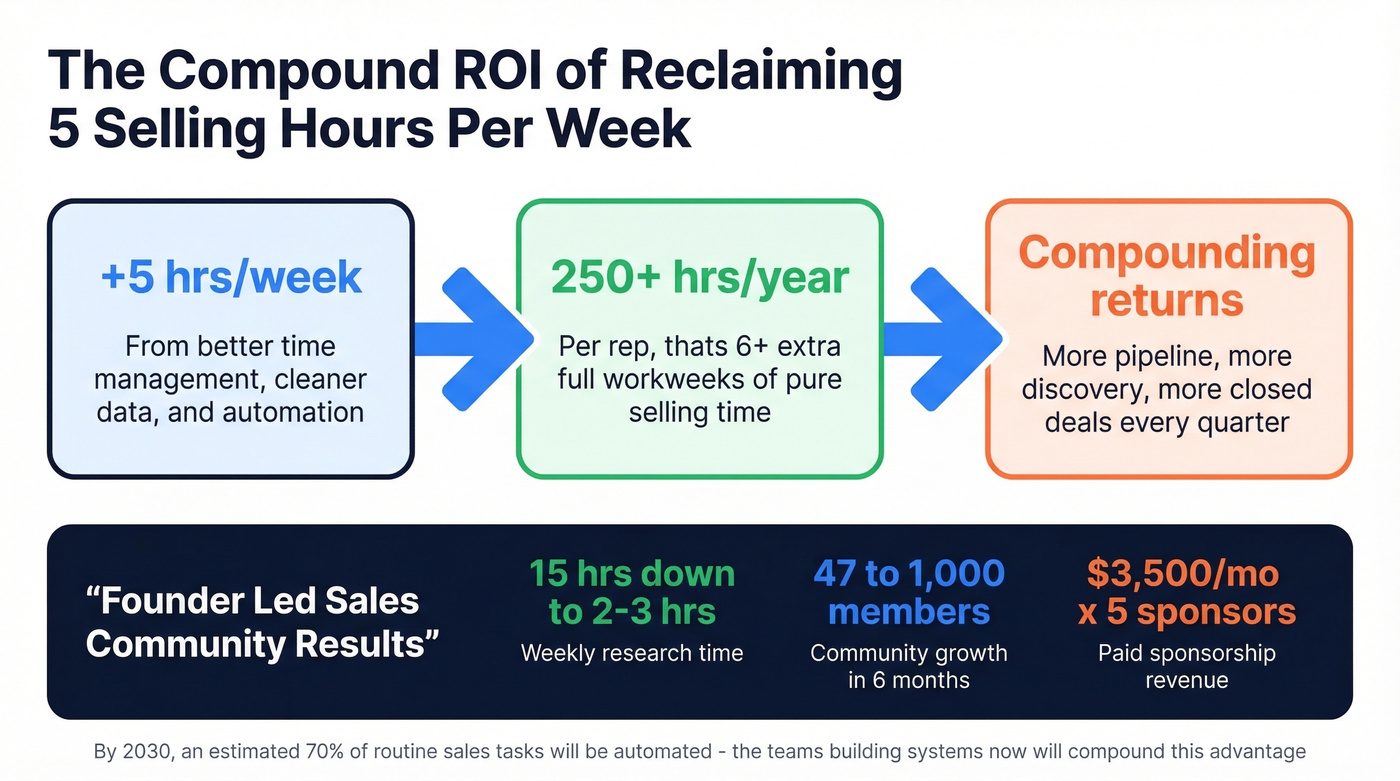
By 2030, an estimated 70% of routine sales tasks will be automated. The teams building these systems now won't just hit quota. They'll compound the advantage every quarter while competitors are still manually logging calls.
Skip all of this if your team already spends 50%+ of their week in live selling conversations. You're in the top decile and your systems are working. For everyone else, the Founder Led Sales community offers a useful case study: after implementing verified data for prospect list building, their weekly research time dropped from 15 hours to 2-3 hours, the community grew from 47 to 1,000 members in six months, and they landed five paid sponsors at $3,500/month each.
If you're rebuilding your outbound engine, start with modern sales prospecting techniques and a clean source of B2B company data so your reps aren't wasting blocks on dead ends.
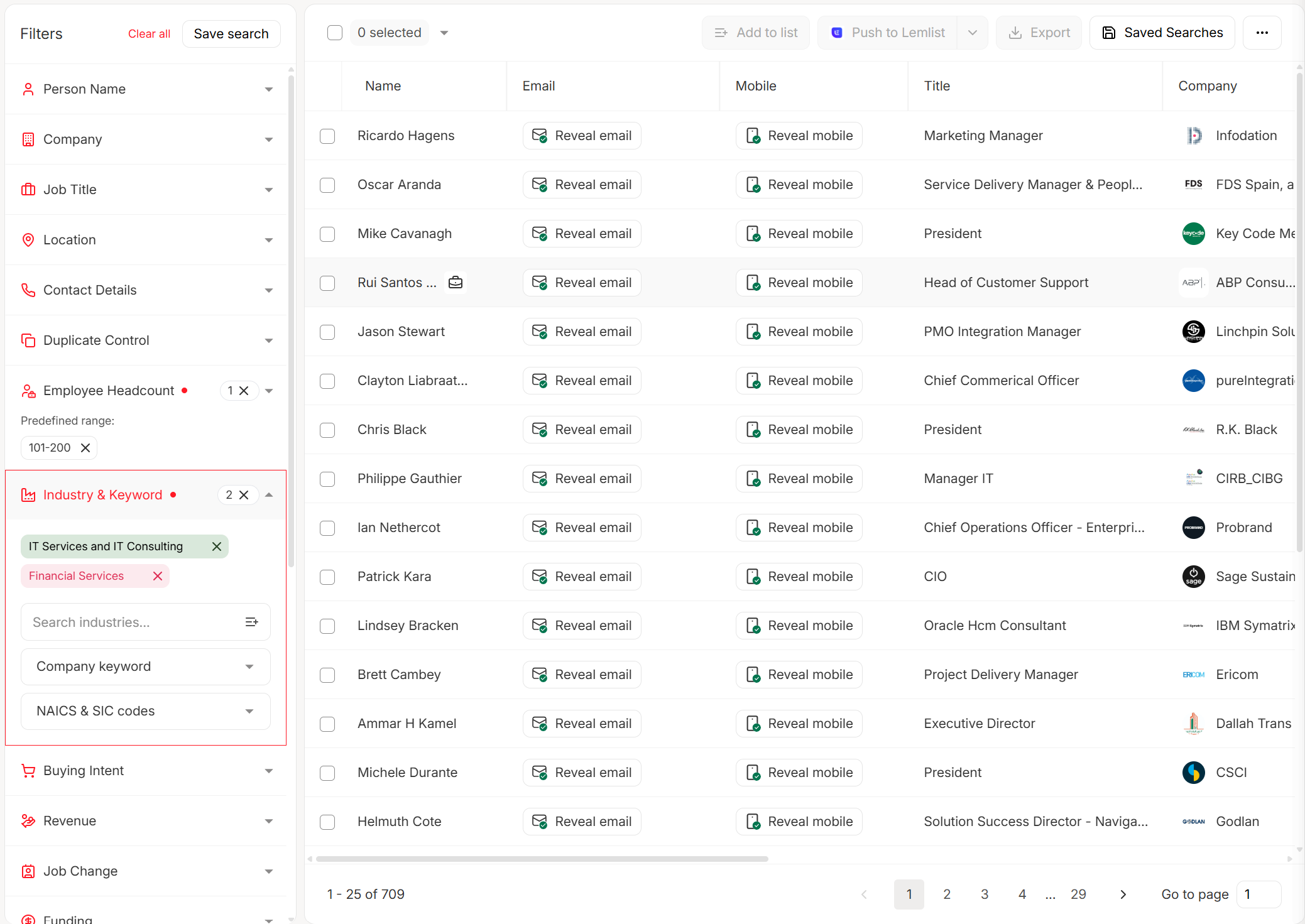
You just carved out a perfect bookends week. Now imagine burning your Tuesday prospecting block researching org charts and hunting for emails. Prospeo's 30+ search filters, intent data across 15,000 topics, and Chrome extension cut list-building from 15 hours to under 3 - so your core selling days stay sacred.
Give your reps back two full selling days every week.
FAQ
How much time do sales reps actually spend selling?
Most benchmarks land between 30-40% of the work week - roughly 15-20 hours out of 50. The gap is fixable through systems-level changes: better CRM automation, cleaner contact data, and protected calendar blocks. Individual willpower alone won't move the needle when the infrastructure is broken.
What's the best way to manage time as a salesperson?
Start with the bookends weekly structure: dedicate Monday and Friday to admin and prep, then protect Tuesday through Thursday as core selling time with timeboxed blocks. Layer in CRM automation and verified prospect data so your protected blocks aren't wasted on bounced emails and disconnected numbers.
How does bad contact data waste selling time?
Every bounced email and disconnected number burns 3-5 minutes of a prospecting block - finding a replacement contact, re-researching, re-queuing. Across a 90-minute calling session, bad data can eat 30+ minutes. When your data is verified and refreshed weekly, your time blocks actually deliver the output they're designed for.
How should I manage a large pipeline without losing hours?
Use the Eisenhower Matrix to score every open deal by urgency and importance, then cut the bottom 20% of unqualified opportunities each Friday. This prevents low-probability deals from consuming the same prep and follow-up time as your best opportunities, freeing hours for accounts most likely to close.