

Virtual Sales Assistant: The 2026 Buyer's Guide
A virtual sales assistant might be the highest-ROI hire you make this year. Sales reps spend 60% of their time on non-selling tasks, and 57% say the sales cycle is getting longer. That's not a productivity problem - it's a structural one.
What You Need (Quick Version)
- Start with 10-15 hours per week, not full-time. Most sales teams need focused admin coverage, not 40 hours of VA support.
- Budget $500-$1,500/mo for a capable remote sales assistant - the sweet spot between "too cheap to be useful" and "might as well hire in-house."
- The biggest ROI lever is data quality, not hourly rate. A VA spending four hours building a list that bounces 35% is burning money. Verified contact data turns that same task into 30 minutes with an under-5% bounce rate.
- Go managed agency if you value your time. Go Upwork if you're bootstrapped and can handle vetting yourself.
What Does a Virtual Sales Assistant Do?
A virtual sales assistant is a remote professional focused on lead generation, CRM management, cold outreach, and follow-ups - the operational backbone of a sales function. Not a general-purpose VA who happens to do some sales tasks on the side.
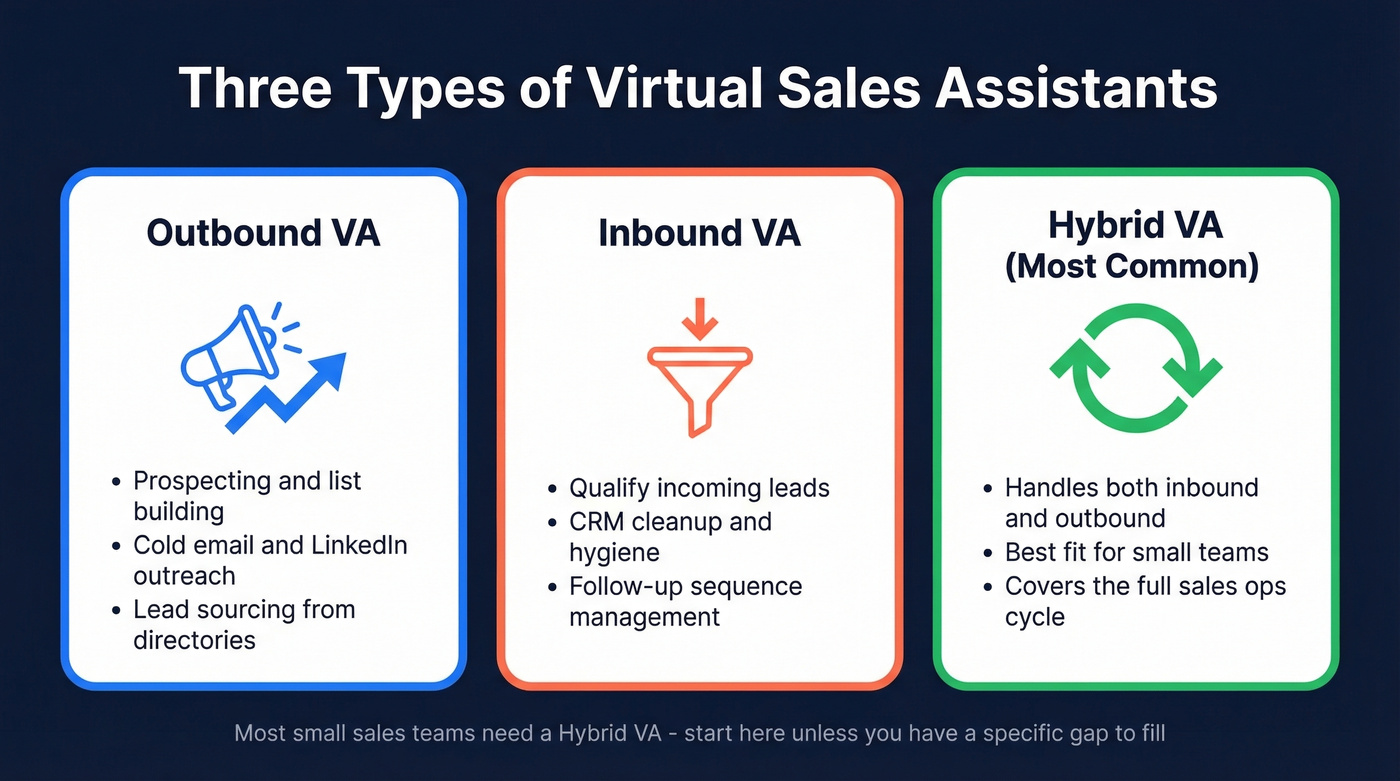
The role breaks into three types. Outbound VAs handle prospecting, list building, and cold outreach. Inbound VAs qualify incoming leads, clean up your CRM, and manage follow-up sequences. Hybrid VAs do both, and they're what most small teams actually need.
The market is growing fast. The virtual assistant industry was valued at $4.97B in 2023 and is projected to hit $15.88B by 2028 - a 25.7% CAGR, according to The Business Research Company. Sales-specific VAs are a big part of that growth, driven by teams that can't justify a ~$76K/year in-house SDR but still need outbound capacity.
Tasks You Can Delegate
Not every task is day-one material. Here's how to tier your delegation:
Tier 1 - Delegate Immediately
Any competent VA can handle these from week one:
- CRM updates and data entry
- Meeting scheduling and calendar management
- Contact list cleanup and deduplication
- Basic research: company info, org charts, technographics
Tier 2 - After Onboarding (Weeks 2-4)
Once your VA understands your ICP and messaging:
- Prospect research with qualification criteria
- Cold email outreach using your templates
- Follow-up sequences and nurture touches
- Trade show and directory lead sourcing
Tier 3 - Experienced VAs Only
These require product knowledge and judgment. Don't rush them:
- Developing and iterating call scripts
- Preparing sales presentations and one-pagers
- Managing inbound lead qualification
Here's the thing: the mistake most teams make is starting at Tier 3. Your VA doesn't know your product yet. Let them earn their way up the complexity ladder while delivering immediate value on admin tasks. We've watched teams hand a brand-new VA a lead qualification rubric on day one, then wonder why half the "qualified" leads turn out to be terrible fits.
How Much Does It Cost?
Every other page on this topic is a VA company's sales pitch with no real numbers. Let's fix that.
Hourly Rates by Region
| Region | General Admin | Specialized Sales |
|---|---|---|
| Philippines | $3-$7/hr | $15-$20/hr |
| Latin America | $15-$25/hr | $25-$35/hr |
| US-based | $19-$30/hr | $30-$75+/hr |
Source: VettedVAs 2026 cost guide. Philippines-based VAs offer the widest cost advantage, but LatAm VAs bring timezone overlap with US teams - worth the premium if your reps need real-time collaboration.
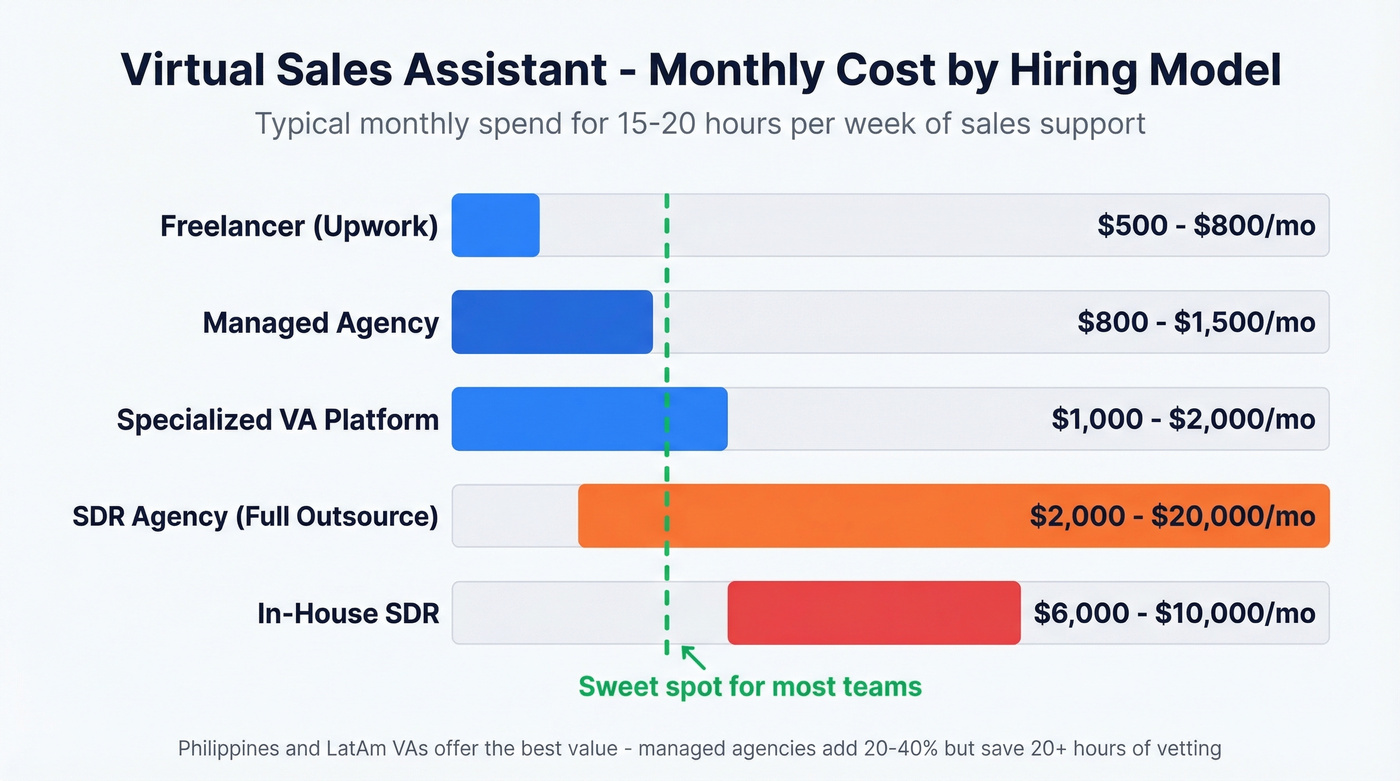
Cost by Hiring Model
| Model | Typical Cost | Best For |
|---|---|---|
| Freelancer (Upwork) | $15-$25/hr | Bootstrapped teams |
| Managed agency | 20-40% premium | Time-strapped founders |
| SDR agency | $2K-$20K/mo | Full outbound outsource |
| In-house SDR | $6K-$10K/mo | Mature sales orgs |
| Per-appointment | $50-$400/booking | Pay-for-performance |
Managed services are worth the premium for most teams. You're paying for vetting, backup coverage if your VA gets sick, and quality control you'd otherwise do yourself. We've seen founders burn 20+ hours vetting freelancers on Upwork only to hire someone who ghosts after two weeks. That "savings" evaporates fast.
Monthly Retainer Ranges
For quick budgeting: 20 hours/month runs $80-$1,200 depending on region and specialization. Most sales teams land in the $800-$1,500/month range for a Philippines or LatAm-based VA doing 15-20 hours per week.

You just read that a VA spending four hours on a list that bounces 35% is burning money. Prospeo's 300M+ verified contacts with 98% email accuracy turn that same task into 30 minutes - with under 5% bounce rates. At $0.01 per email, your VA's list-building costs less than their hourly rate.
Give your virtual sales assistant data that actually converts.
Human VA vs AI Sales Assistant
Every vendor is pitching an "AI SDR" that'll replace your human outbound team. Here's what actually works - and what doesn't.
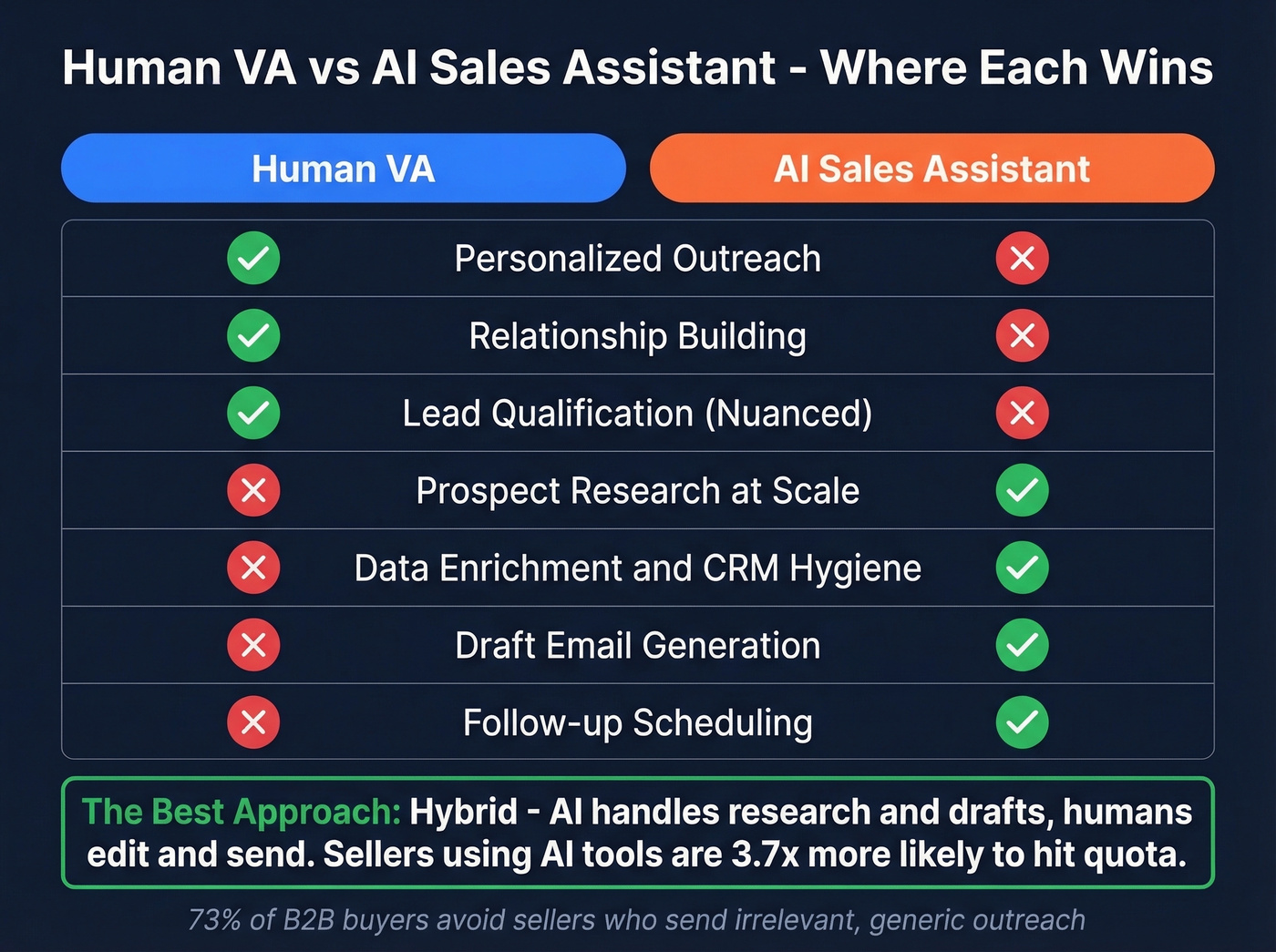
Where AI wins: Prospect research, data enrichment, draft messaging, CRM hygiene, and follow-up scheduling. These are pattern-matching tasks where AI is genuinely faster and cheaper than a human. Most AI SDR platforms charge $500-$2,000/month per seat.
Where AI falls apart: Actual outreach. The consensus on r/SaaS is blunt - prospects detect AI-written content and detest it. One practitioner put it plainly: lead sourcing and research can be automated, but outreach has to be done by a human. Another founder reported cold email was dead for their use case entirely, with LinkedIn outreach outperforming it because prospects could verify credibility via profile.
73% of B2B buyers actively avoid sellers who send irrelevant outreach. AI-generated emails that feel generic aren't just ineffective - they're actively damaging your brand.
The right answer is hybrid. Use AI tools for research, personalization data, and draft generation. Use your human VA to edit, personalize, and send. Sellers who partner with AI tools are 3.7x more likely to meet quota - but that's AI augmenting humans, not replacing them. Skip the "fully autonomous AI SDR" pitch until the technology stops producing emails that read like a robot wrote them, because right now, it does.
Where to Find One
| Hiring Channel | Examples | Budget | You Manage? |
|---|---|---|---|
| Freelance marketplace | Upwork, Fiverr | Low | Yes |
| Managed agency | Belay, 20four7VA | Medium | No |
| Job boards | FlexJobs, Indeed | Low-Medium | Yes |
| Specialized VA platform | Time Etc, Prialto | Medium | Partially |
For bootstrapped teams comfortable managing someone directly, Upwork gives you the most control at the lowest cost. If you'd rather not spend 10 hours interviewing candidates, a managed agency like Belay or Prialto handles recruiting, onboarding support, and replacement coverage if things don't work out.
Don't hire a remote sales assistant until you've sold your product yourself for at least six months. I can't stress this enough. You need to understand your sales process before you can delegate it. A VA can't build a playbook that doesn't exist yet.
Before you grant access, set up role-based CRM permissions, require an NDA, and use a password manager with shared vaults instead of sending credentials over email or Slack. AI-generated portfolios make vetting harder than ever - always run a paid trial task before committing to a contract.
Tools Your VA Needs
A virtual sales assistant is only as productive as the tools you give them. Here's the minimum stack:
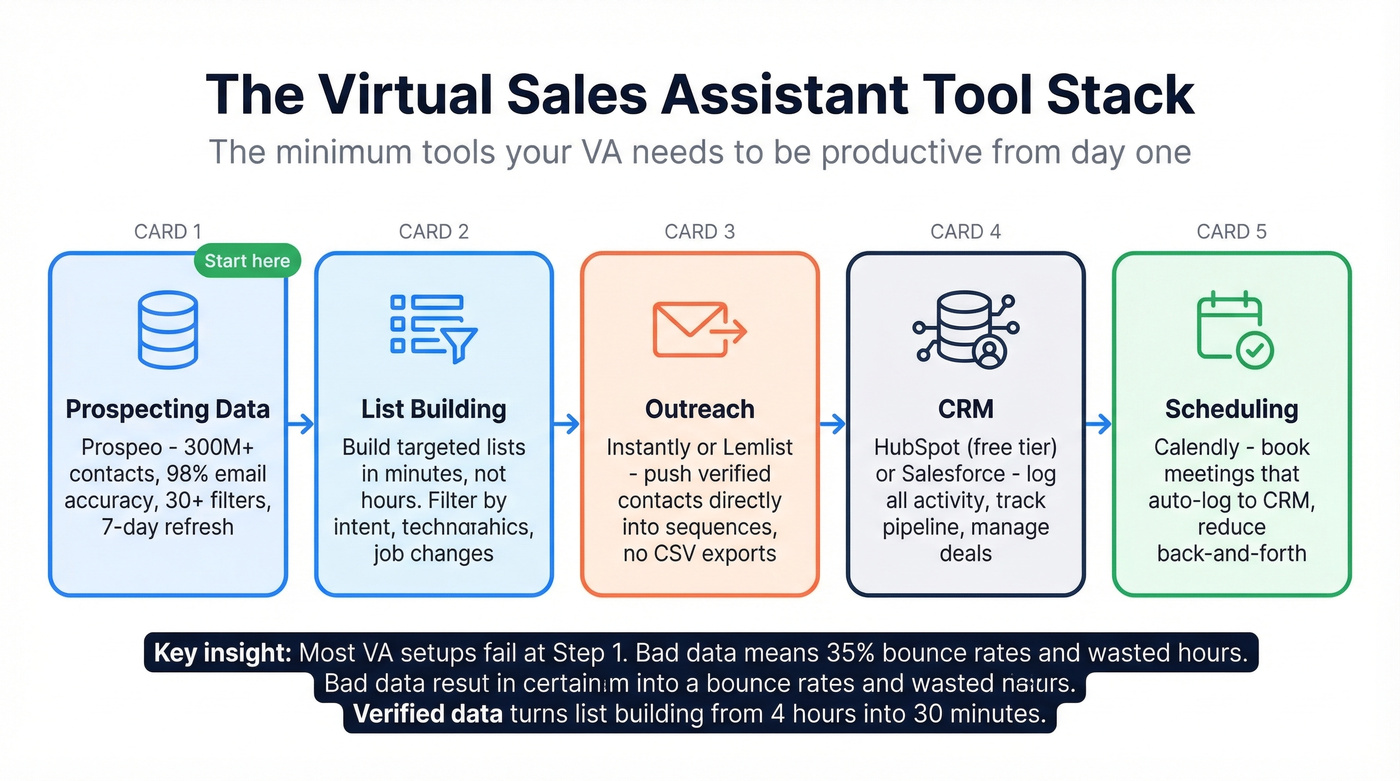
CRM: Salesforce or HubSpot. Non-negotiable. HubSpot's free tier works well for small teams.
Communication: Slack for async, Zoom for syncs. Daily standups in Slack keep your VA aligned without eating into selling time.
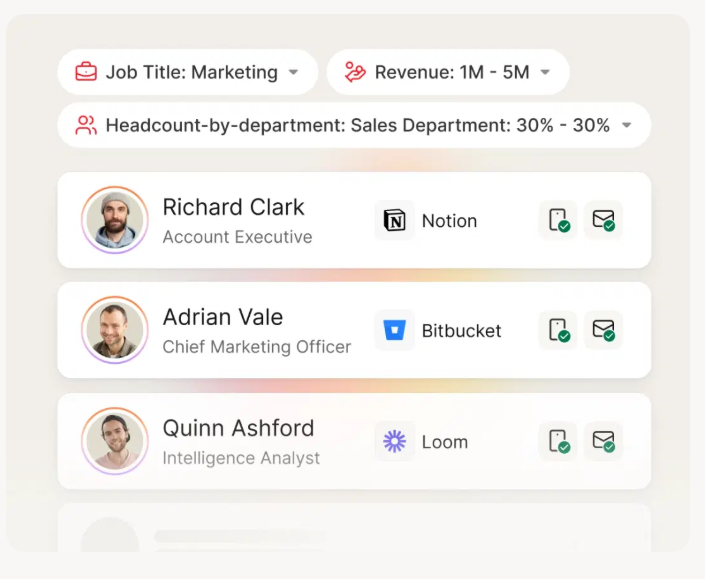
Prospecting data: This is where most VA setups fail. Your VA spends four hours manually building a prospect list from web searches and company directories, loads it into your sequencer, and it bounces 35%. That's not a VA problem - it's a data problem.
Prospeo fixes that bottleneck. With 300M+ professional profiles at 98% email accuracy and 125M+ verified mobile numbers, all refreshed every seven days, a targeted list takes minutes instead of hours. The 30+ search filters cover buyer intent, technographics, job changes, headcount growth, and more - so your VA builds lists that actually match your ICP instead of guessing. There's a free tier to start.
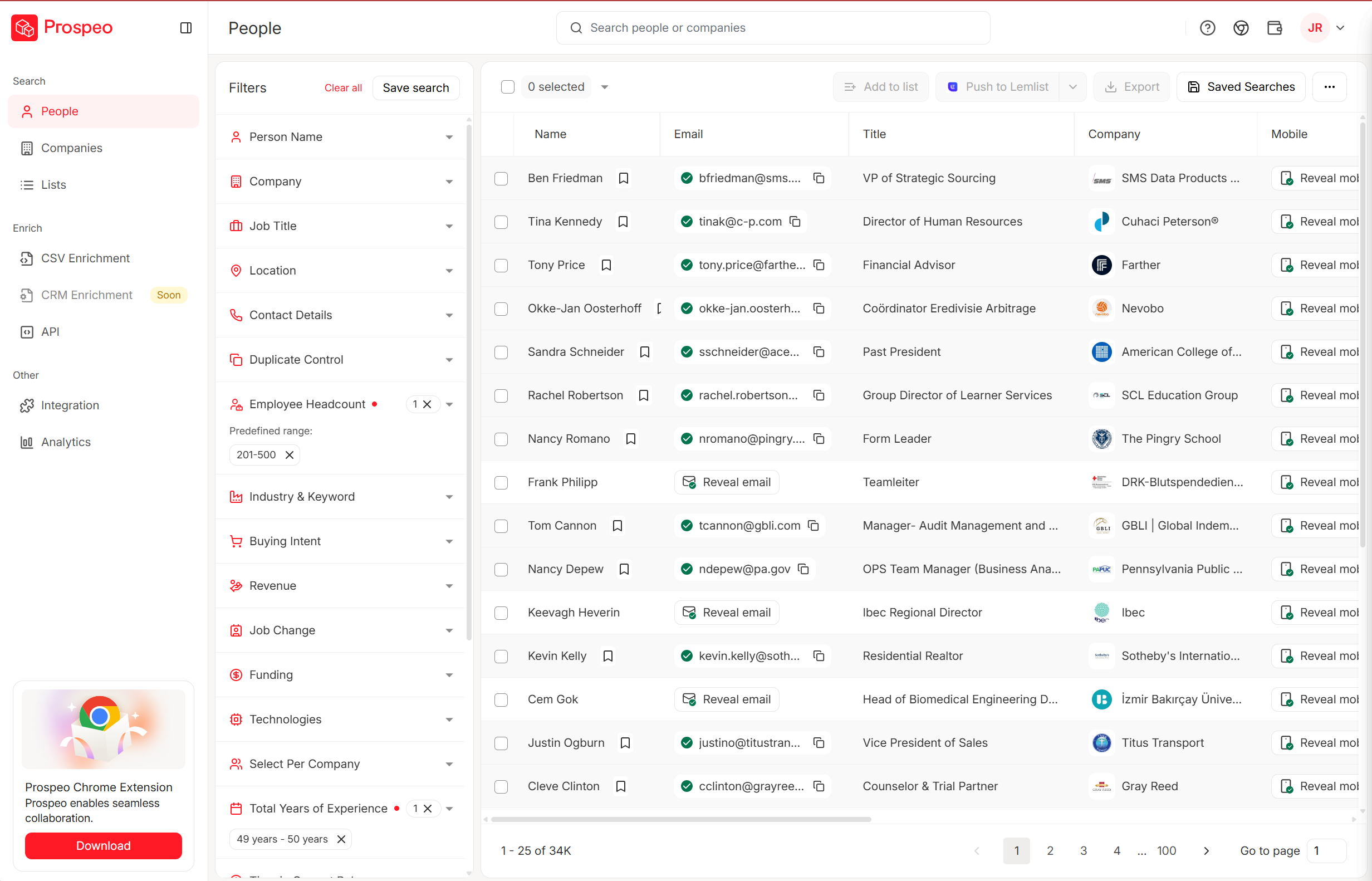
Outreach: Instantly or Lemlist for cold email sequences. Both integrate natively with Prospeo, so your VA can push verified contacts straight into campaigns without manual CSV exports.
Scheduling: Calendly for booking meetings, connected to your CRM so booked meetings auto-log.
Benefits of Hiring a Sales VA
Reclaim selling time. Your closers stop doing data entry and start having conversations and closing deals. That 60% of non-selling time shrinks dramatically when someone else owns the admin work.
Scale without overhead. No office space, no benefits package, no payroll taxes. You get outbound capacity at a fraction of the cost of a full-time in-house hire, and you can scale hours up or down as pipeline demands shift. A team we work with went from 10 hours/week to 30 during their Q4 push, then back down in January - try doing that with a W-2 employee.
Faster speed to lead. A dedicated VA monitoring inbound forms and enriching leads means prospects get a response in minutes, not hours. Research shows that responding within five minutes makes you 21x more likely to qualify a lead.
Cleaner data, better decisions. Consistent CRM hygiene means your pipeline reports actually reflect reality, so forecasting improves and reps stop working dead leads.
Five Mistakes That Kill ROI
Prioritizing cost over quality. A $5/hr VA with garbage data is more expensive than a $20/hr VA with verified emails. The cheap VA sends 500 emails that bounce 35% and get your domain flagged. The experienced VA sends 500 that land in inboxes and book meetings. Do the math.
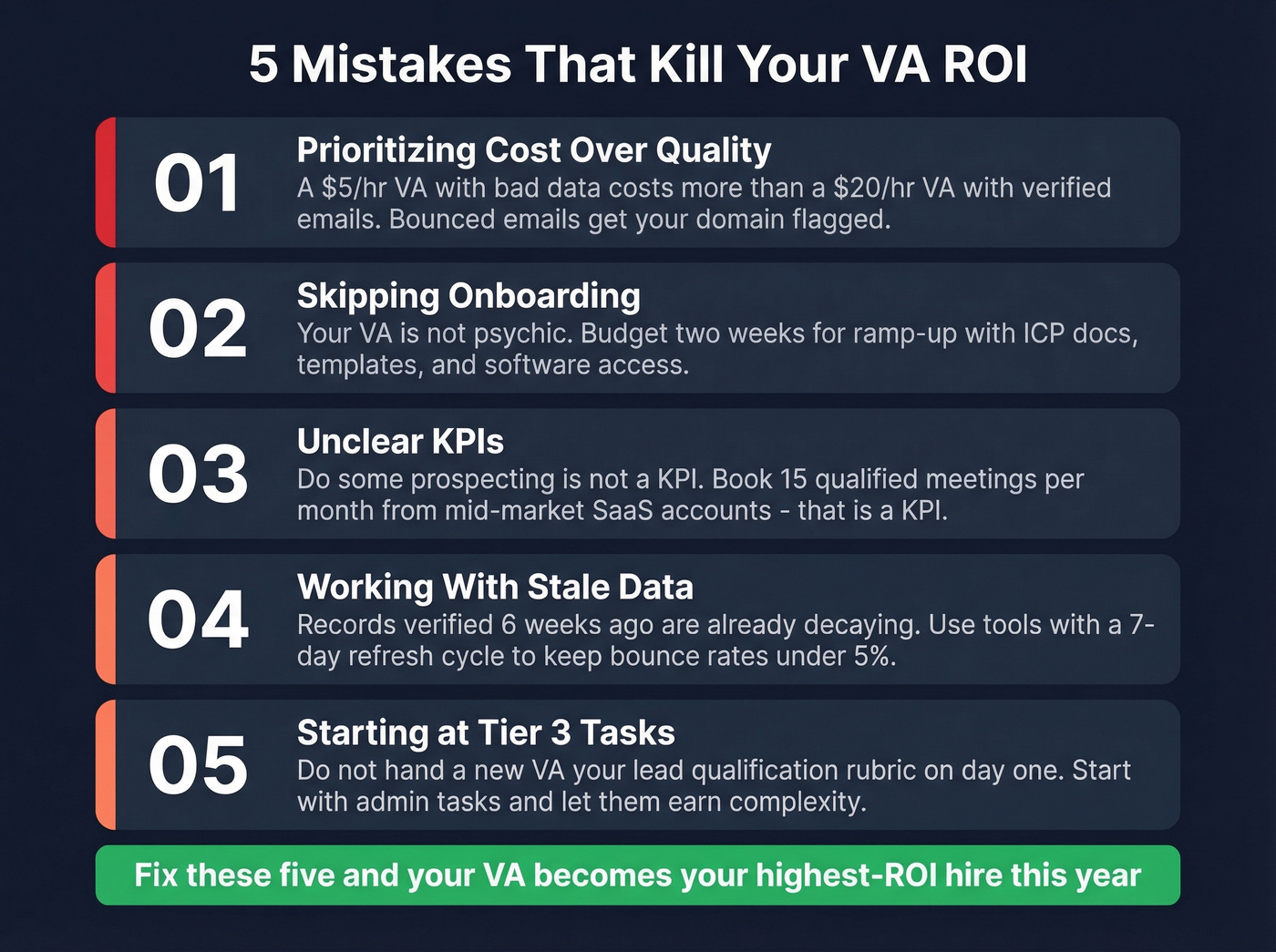
Skipping onboarding. Your VA isn't psychic. Build a structured plan: software access, daily agenda, ICP documentation, messaging templates, and escalation protocols. Budget two weeks for ramp-up.
Unclear KPIs. "Do some prospecting" isn't a KPI. "Book 15 qualified meetings per month from mid-market SaaS accounts" is. Set weekly check-ins and track leading indicators like emails sent, reply rates, and meetings booked.
Working with stale data. Even a great VA can't outperform records that were last verified six weeks ago. The difference between a 7-day data refresh cycle and the industry-standard 6-week cycle is the difference between emails that land and emails that bounce.
Giving up after one bad hire. The first VA might not work out. That's normal. We've talked to founders who abandoned the model entirely after one failed engagement, which is like firing your whole sales team because one rep didn't hit quota. Refine your hiring criteria, improve your onboarding docs, and try again.
The hybrid model works - AI for research, humans for outreach. Prospeo combines both: 30+ search filters, intent data across 15,000 topics, and 125M+ verified mobile numbers so your VA spends time selling, not searching. Data refreshes every 7 days, not 6 weeks.
Stop paying your VA to fight bad data. Start paying them to close deals.
FAQ
Is a virtual sales assistant worth it?
Yes - a 20-hour/week VA at $15/hr costs $1,200/mo and frees a rep who costs $6K+/mo to focus on closing. Even one extra deal per month pays for the VA several times over. The key is pairing them with verified data so their outreach actually lands.
How many hours per week do I need?
Start with 10-15 hours. That covers CRM hygiene, prospect research, and follow-up management for most early-stage teams. Scale up once processes are documented, typically around the 60-day mark.
Can a VA do cold calling?
Yes, but start them on research and email outreach first. Cold calling requires product knowledge and objection-handling skills that take 30-60 days to build. Give them a script and recorded call examples before they dial.
What's the difference between a VA and an SDR?
An SDR owns the full prospecting-to-meeting pipeline and carries a quota. A VA handles the admin and research that supports it - the 60% of non-selling work so the SDR can focus on conversations and closing.
What tools should I give my sales VA?
A CRM (HubSpot or Salesforce), Slack, a verified contact data platform like Prospeo, and an outreach tool like Instantly or Lemlist. That four-tool stack covers 90% of what a sales VA needs from day one.