

Warm Outreach: The Practitioner's Playbook for 2026
Your SDR team sent 5,000 emails last month and got 47 replies. Your boss wants to know why. The answer isn't better subject lines or a new sequencing tool - it's that you're reaching out to people who have zero reason to care. Stop optimizing your cold emails. Start warming your list instead.
What Is Warm Outreach?
Most articles define it as "reaching out to people you have a relationship with." That's incomplete, and it limits how you think about the tactic.
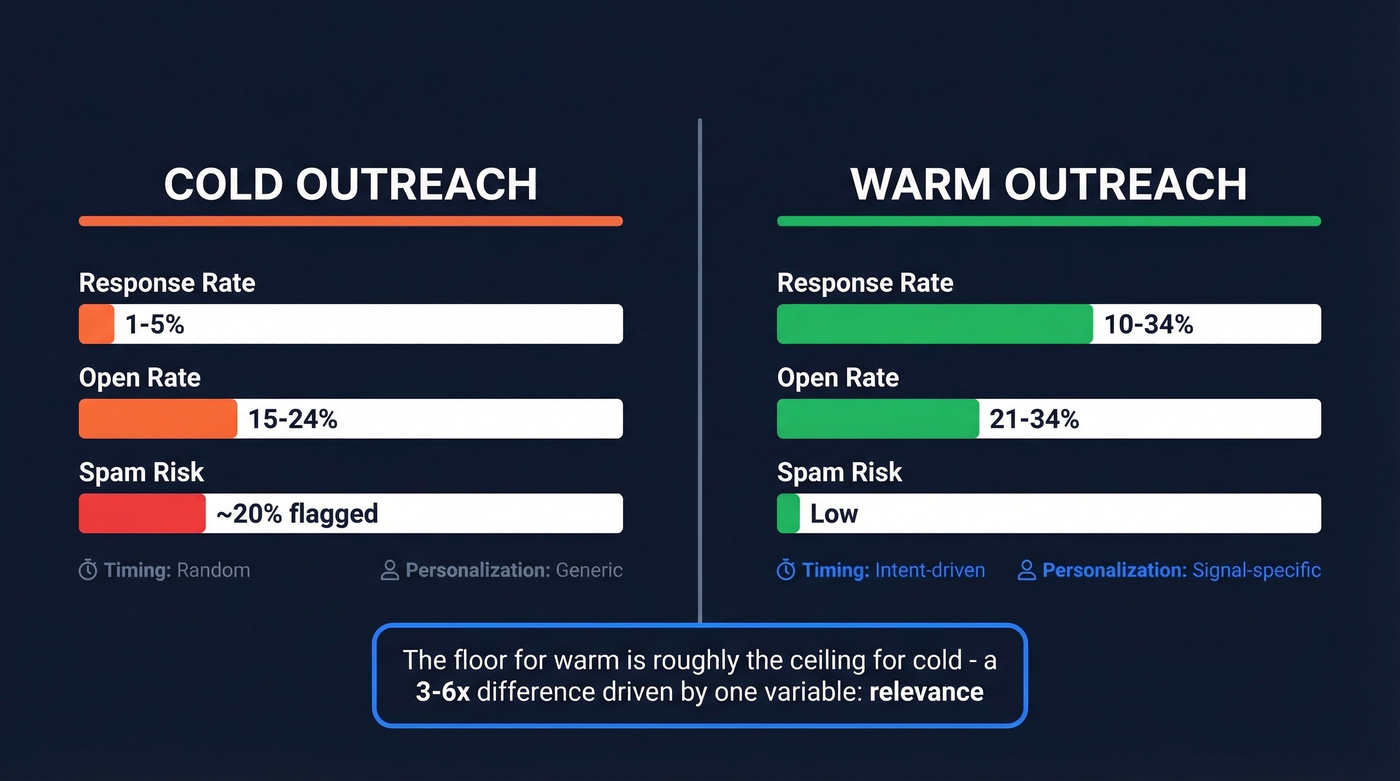
Warm outreach is contacting anyone who's shown intent, whether or not you've ever spoken. A stranger who visited your pricing page three times this week is warmer than a college friend who hasn't thought about your product category in years. That distinction is what unlocks scale - you're not limited to your personal network, you're limited by your ability to detect and act on buying signals.
| Cold Outreach | Warm Outreach | Winner | |
|---|---|---|---|
| Response rate | 1-5% typical | 10-34% | Warm |
| Open rate | 15-24% | 21-34% | Warm |
| Spam risk | ~20% flagged as spam | Lower | Warm |
| Personalization | Generic or light | Signal-specific | Warm |
| Timing | Random | Intent-driven | Warm |
Even where the open-rate ranges overlap at the margins, the gap in response rates tells the real story: a 3-6x difference driven by one variable - relevance.
Why Warm Outbound Wins by the Numbers
Instantly analyzed billions of cold email interactions and found an average reply rate of 3.43%. The top 10% of senders hit 10.7%, and that's the ceiling for cold. Sopro's analysis of 151 million outreach points puts the average cold response rate at 5.1%. GrowLeads' analysis of over 1,000 startup founders showed warm outreach pulling 10-34% response rates. The floor for warm is roughly the ceiling for cold.

ReactIn's data across 5,000+ campaigns paints a similar picture: intent-based outreach averaged a 27% reply rate and converted at 10-25%, compared to 1-3% for spray-and-pray cold. And here's the stat that should change how you think about timing: 6sense's Buyer Experience Report found that 94% of buying groups have already ranked their preferred vendors before they ever talk to sales, after consuming an average of 13 content pieces. If you're reaching out cold, you're showing up after the decision is half-made. Signal-driven outreach means you're part of the conversation while it's still happening.
Intent Signals That Make Outreach "Warm"
Not all signals are created equal. A pricing page visit is worth more than a blog read. A champion changing jobs is worth more than a funding announcement.
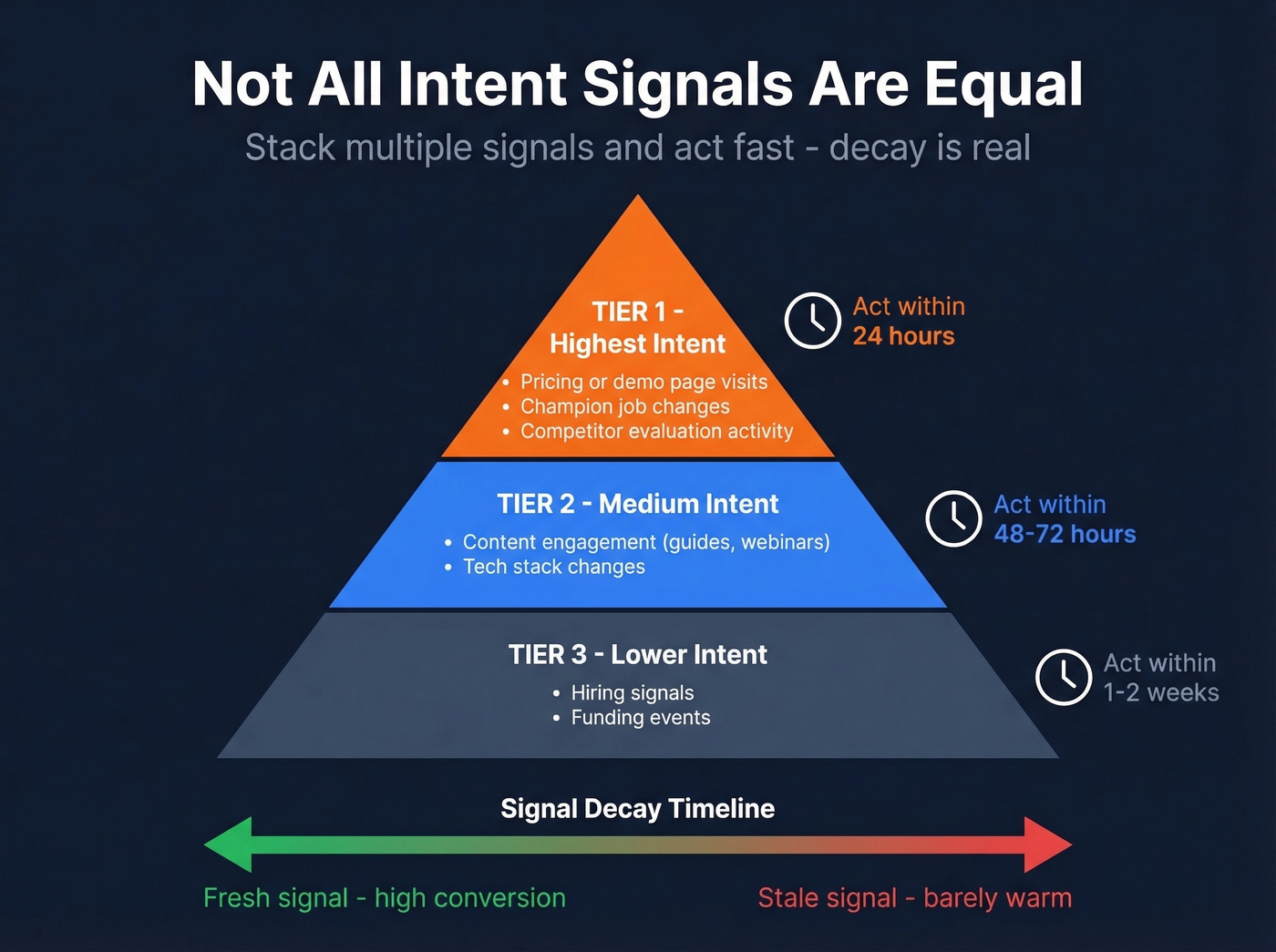
| Tier | Signal | Action Window |
|---|---|---|
| Tier 1 (highest) | Pricing/demo page visits, champion job changes, competitor eval | Within 24 hours |
| Tier 2 | Content engagement, tech stack changes | 48-72 hours |
| Tier 3 | Hiring signals, funding events | 1-2 weeks |
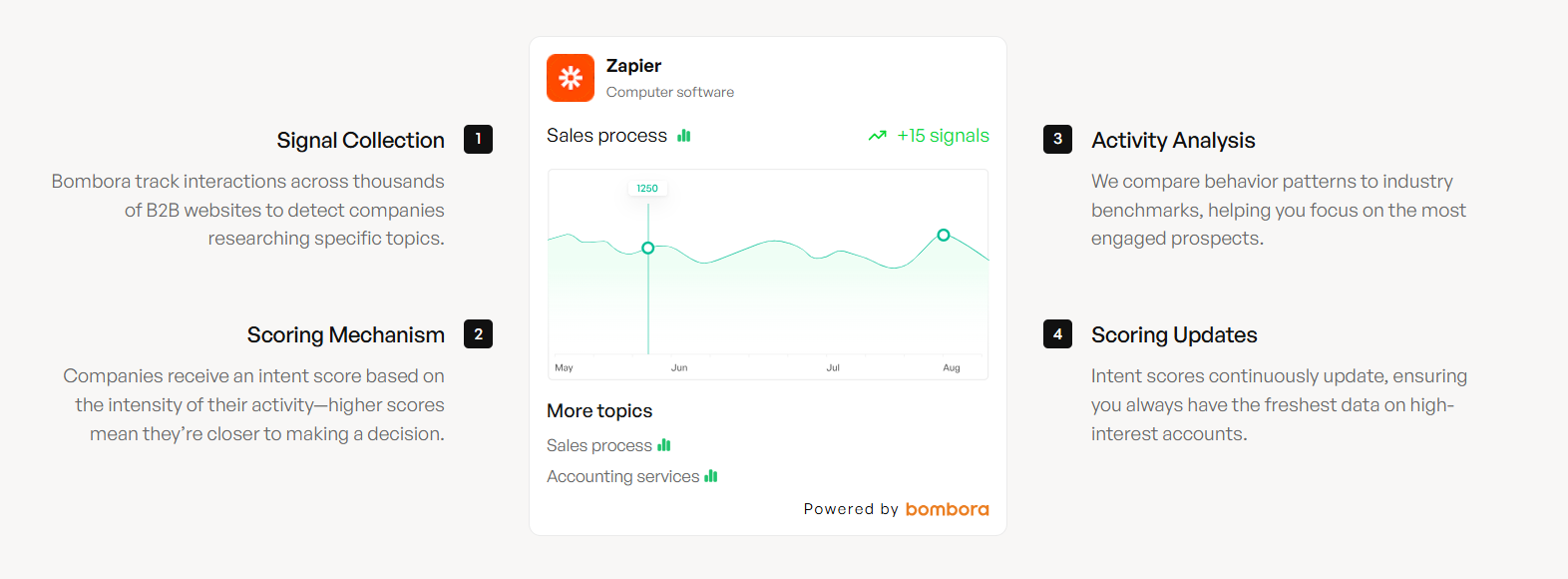
The decay is real. A pricing page visit that's a week old is barely warm anymore. In our experience, the scoring model doesn't need to be complex: assign 50 points for 3+ pricing page visits with a 7-day decay, 30 points for content engagement with a 14-day decay, and so on. When a prospect crosses your threshold, they enter the sequence.
Some practitioners use a WARM checklist: Well-defined TAM, Authority confirmed, Relevance established, Make it personal. Layer as many signals as you can - website visits, profile views, event attendance, post engagement, job changes, buyer interest in the last 30 days. The more signals you stack, the warmer the message feels.
The Hormozi Method: Rule of 100
Alex Hormozi's framework from 100M Leads is the simplest warm outreach system that actually works. The core rule: reach out to 100 people daily, in the first four hours of your day, plus follow-ups.
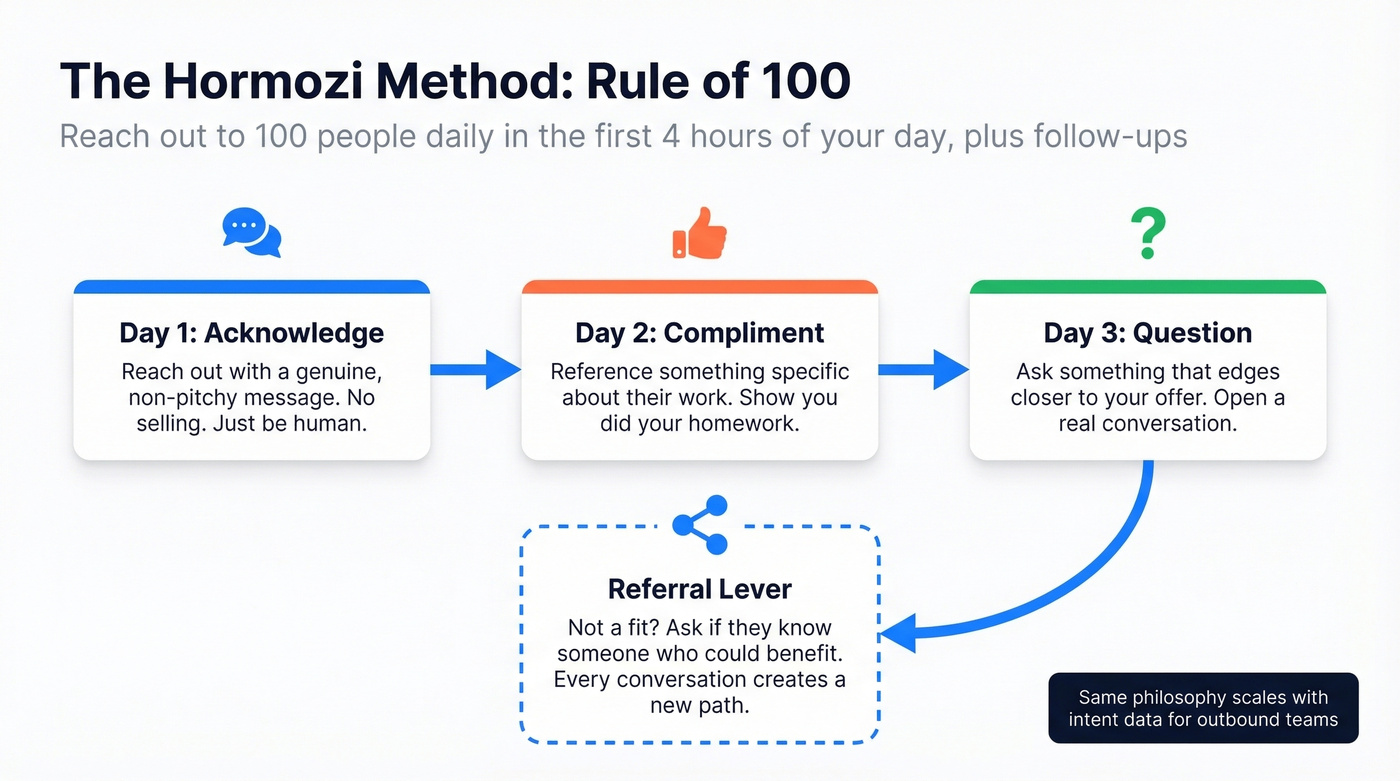
His warm-up cadence runs three days:
- Day 1: Acknowledge - reach out with a genuine, non-pitchy message
- Day 2: Compliment - reference something specific about their work
- Day 3: Question - ask something that edges closer to your offer
Then the referral lever: even if they're not a fit, ask if they know someone who could benefit. This works beautifully for founders with personal networks and social followings. For teams running outbound at scale, you'll want to graduate to a signal-based warm outbound strategy - same philosophy, but powered by intent data instead of personal connections.

You just read that 94% of buyers rank vendors before talking to sales. Prospeo tracks intent signals across 15,000 Bombora topics - so you reach prospects while they're actively researching, not after they've decided. Layer buyer intent with job changes, technographics, and 30+ filters to build lists that are warm before you hit send.
Stop sending cold emails to warm buyers. Find them first.
How to Warm Up Cold Contacts
You don't need to know someone to make outreach feel warm. A Reddit practitioner on r/sales laid out a five-step process that we've seen work repeatedly:
- Target your ICP precisely - build a list matching your ideal customer profile using filters like role, company size, tech stack, and growth signals
- Find a personalized entry point - reference their role, a recent milestone, or a challenge specific to their industry
- Lead with value, not a pitch - send a checklist, a short video, or a relevant tip with zero ask attached
- Run a light nurturing sequence - 3-4 touches that mirror the same helpful tone
- End with a clear next step - book a call or download a deeper resource
Over 40% of prospects decide to open based on the first sentence, so front-load your signal reference. Messages under 300 characters get 19% more responses than longer ones. Personalized connection requests increase acceptance by up to 58%, and trigger-event outreach boosts replies by 32%. The common thread? Every touch references something specific. Generic "I'd love to connect" messages are dead.
Templates You Can Steal Today
Each template below is under 80 words - Instantly's benchmark data shows best-performing campaigns use sub-80-word emails. The average prospect needs 5 touches to engage, and executives often require around 9.
Template 1: Engagement Trigger
Subject: Saw you were interested - quick question
Hi [First Name], I noticed you [downloaded our guide on X / visited our pricing page / engaged with our post on Y]. Curious - is [specific problem] something your team is actively working on? I put together a short breakdown of how [similar company] solved it. Happy to share if useful. - [Your name]
Template 2: Job Change Trigger
Subject: Congrats on the new role
Hi [First Name], saw you just joined [Company] as [Title] - congrats. At [Previous Company], your team was using [tool/approach]. Curious if you're evaluating the same stack at [Company] or starting fresh. Either way, happy to share what we're seeing work for [role type] teams right now. - [Your name]
Template 3: Event/Content Follow-Up
Subject: Enjoyed your take on [topic]
Hi [First Name], caught your [talk at X / comment on Y / post about Z]. Your point about [specific insight] resonated - we're seeing the same pattern with our customers. I wrote a quick take on [related angle]. Thought you'd find it interesting: [link]. - [Your name]
Template 4: Mutual Connection
Subject: [Mutual contact] suggested I reach out
Hi [First Name], [Mutual contact] mentioned you're leading [initiative] at [Company]. We helped [similar company] [specific result] - thought it might be relevant to what you're building. Worth a 15-minute call this week? - [Your name]
Your Day-by-Day Sequence
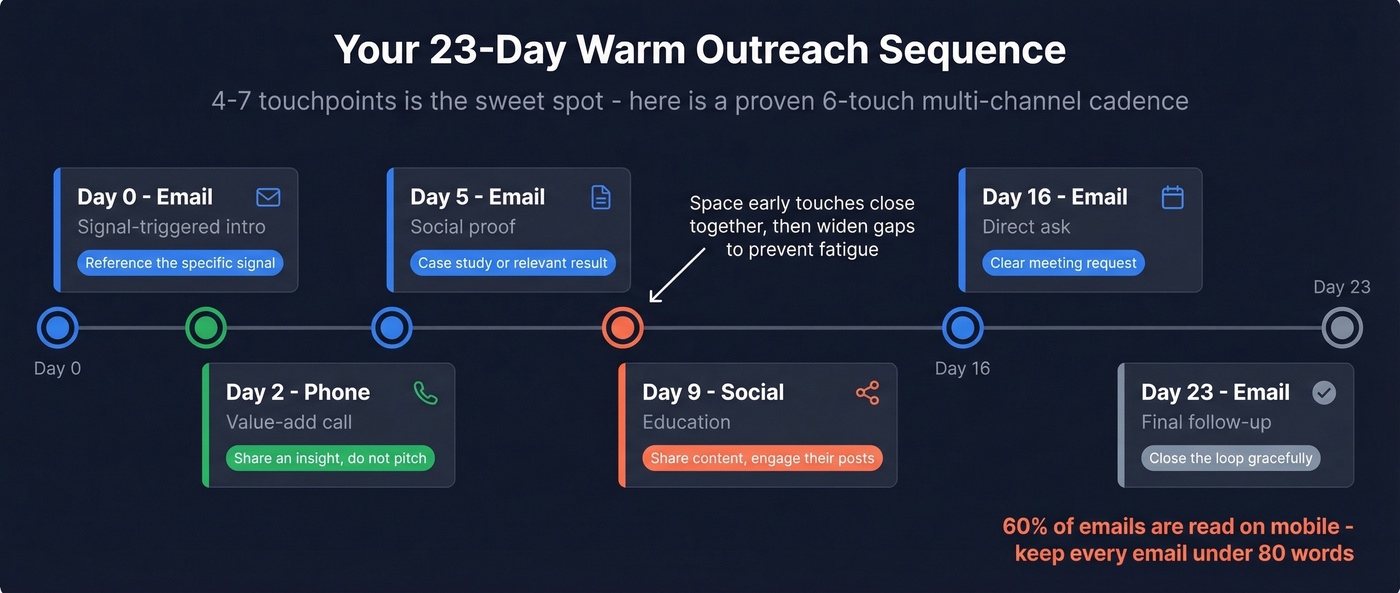
Templates are only half the equation. The sweet spot is 4-7 touchpoints for most warm outbound sequences. Here's a 6-touch sequence over 23 days:
| Day | Channel | Purpose |
|---|---|---|
| 0 | Signal-triggered intro (reference the specific signal) | |
| 2 | Phone | Value-add call (share an insight, don't pitch) |
| 5 | Social proof (case study or relevant result) | |
| 9 | Social | Education (share content, engage with their posts) |
| 16 | Direct ask (clear meeting request) | |
| 23 | Final follow-up (close the loop gracefully) |
Space early touches 2-4 days apart, then widen the gaps. This prevents fatigue while keeping you top of mind. And keep every email short - 60% of emails are read on mobile, so anything over 80 words gets skimmed or skipped.
Mistakes That Kill Reply Rates
Here's the thing: most warm outreach fails not because the signal was wrong, but because the execution was sloppy. We've audited dozens of sequences and the same five mistakes show up constantly.
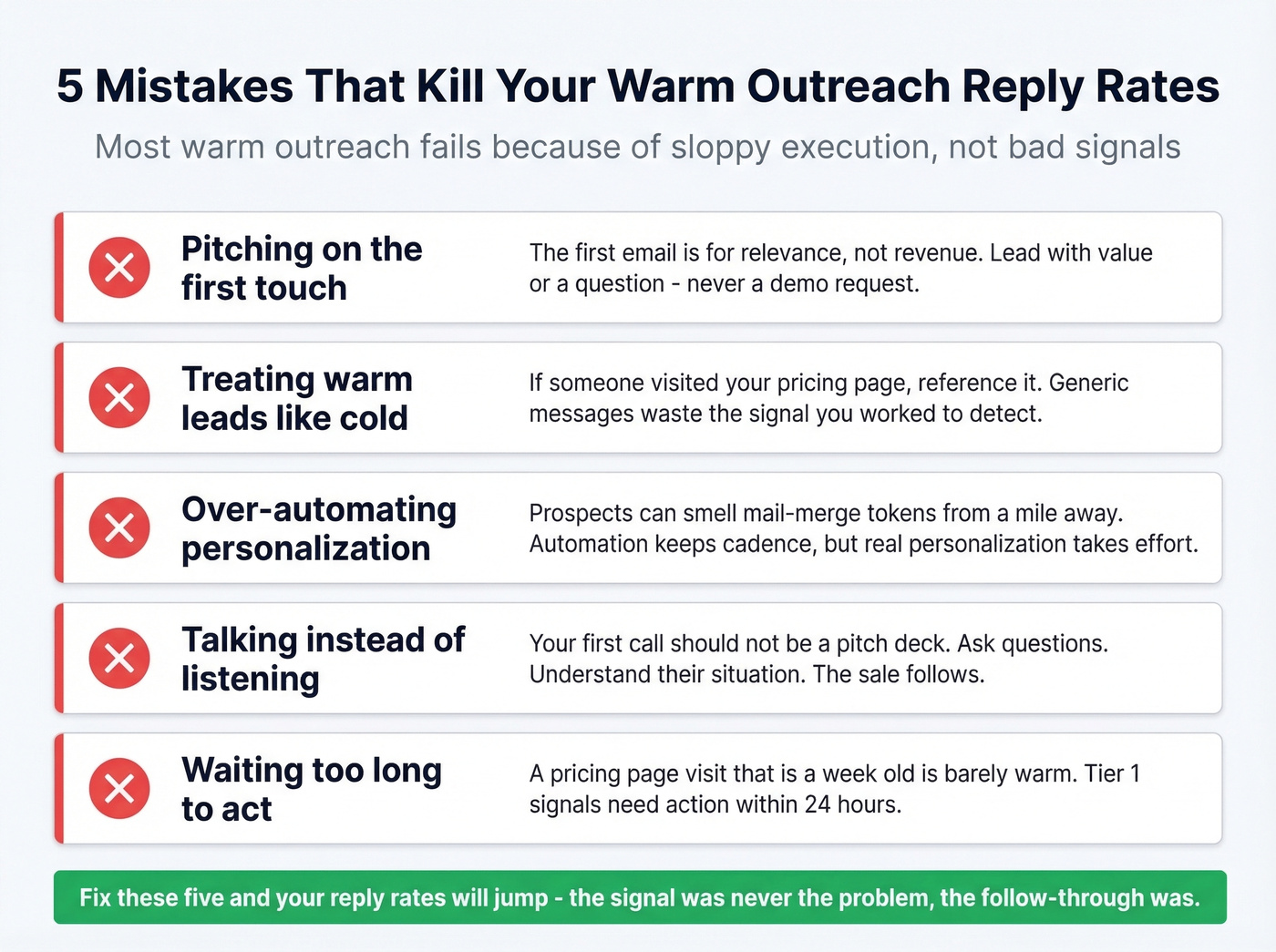
Pitching on the first touch. The first email is for relevance, not revenue. Lead with value or a question - never a demo request.
Treating warm leads like cold. If someone visited your pricing page, don't send them a generic "who handles X at your company?" message. Reference the signal. That's the whole point.
Over-automating. Automation keeps cadences consistent, but templated personalization isn't fooling anyone. Prospects can smell mail-merge tokens from a mile away.
Talking instead of listening. Your first call shouldn't be a pitch deck. Ask questions. Understand their situation. The sale follows.
The Tool Stack for Warm Outreach
The intent data market hit $4.49B in 2026, and 91% of B2B marketers now use intent data - but only 24% report exceptional ROI. The gap isn't access; it's execution.
Let's be honest: if your average deal size is under $15K, you don't need a six-figure intent data platform. A verified contact database with built-in intent signals and a solid sequencing tool will outperform an enterprise stack you only use at 20% capacity. Skip the enterprise platforms unless your ACV justifies them.
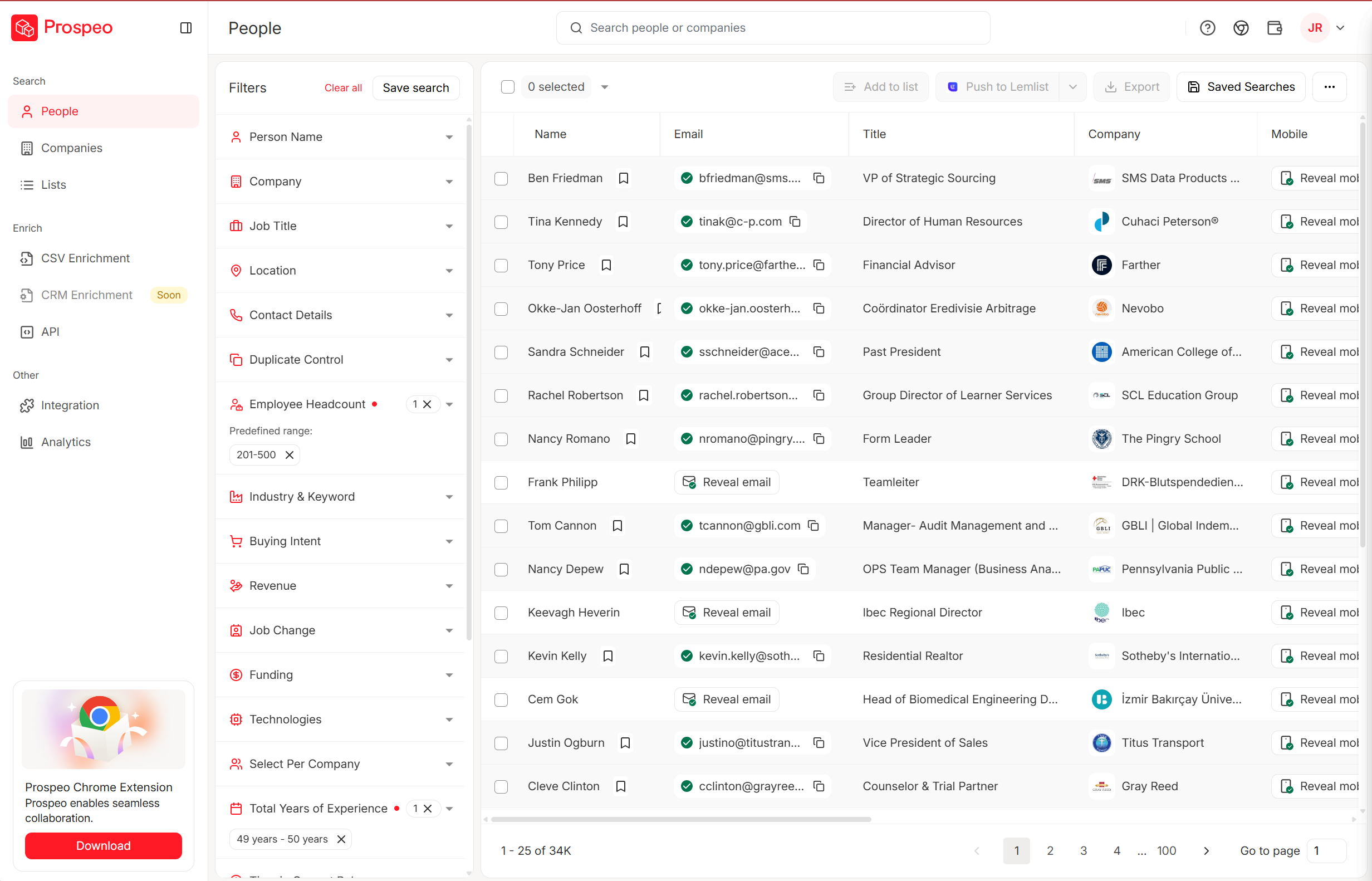
For the data layer, we use Prospeo - 300M+ professional profiles with 143M+ verified emails at 98% accuracy, 125M+ verified mobile numbers, and a 7-day data refresh cycle versus the 6-week industry average. It tracks 15,000 Bombora topics via Bombora, so you can build signal-rich lists and verify contacts in one workflow at roughly $0.01 per email. Meritt tripled their pipeline from $100K to $300K per week after switching, and bounce rates dropped from 35% to under 4%.
If you're still piecing together your stack, start with a shortlist of SDR tools and a dedicated data enrichment workflow.
| Tool | Approx. Pricing | Best For |
|---|---|---|
| Prospeo | Free tier (75 emails/mo), ~$0.01/email | Verified contacts + intent signals in one platform |
| Apollo | Free tier, from ~$49/user/mo | Free-tier starting point for small teams |
| Bombora | $12K-$40K/year | Standalone intent data for mid-market+ |
| 6sense | $30K-$300K+/year | Enterprise ABM with deep analytics |
| Instantly | From ~$30-100/month | High-volume email sequencing |
| Lemlist | From ~$39-160/month | Multichannel sequences with personalization |
| Clay | From ~$149-800/month | Enrichment workflows and data orchestration |
Every template above depends on one thing: accurate contact data. A perfectly timed, signal-rich email that bounces is worse than a cold one that lands. Prospeo delivers 98% email accuracy with a 7-day refresh cycle, so your warm outreach actually reaches the inbox. At $0.01 per email, bad data is no longer an excuse for low reply rates.
Warm signals deserve verified emails. Get both for a penny each.
FAQ
What's the difference between warm and cold outreach?
Cold outreach contacts strangers with no prior signal. Warm outreach targets prospects who've shown intent - a website visit, content download, job change, or social engagement. Warm typically gets 10-34% response rates versus 1-5% for cold, because the message arrives when the prospect is already thinking about the problem.
How many touchpoints does warm outreach need?
The sweet spot is 5-7 touchpoints over 2-4 weeks. Executives often require around 9 touches before engaging. Space early emails 2-4 days apart, then widen the gaps to avoid fatigue.
Can I do warm outreach without a personal network?
Absolutely - it requires knowing something about a prospect, not knowing them personally. Intent signals, content engagement, job changes, and competitor evaluations all create warmth at scale. The consensus on r/sales is that signal-based outreach outperforms personal-network outreach once you're past 50 prospects a day.
What tools do I need for warm outreach?
You need three layers: a signal source for intent data, verified contact data with high accuracy and fresh records, and a sequencing tool like Instantly or Lemlist. Some platforms combine the first two, which simplifies the stack and cuts costs.
How do I keep warm outreach from feeling automated?
Keep messages under 80 words, reference a specific signal ("I noticed you visited our pricing page"), and never pitch on the first touch. Specificity and genuine curiosity are what separate warm outreach from spam.