

What Is Team Selling - and When Does It Actually Work?
You lost a $200K deal last quarter. Not because the product was wrong - because nobody covered the CFO. Your AE owned the technical champion, the SE nailed the proof of concept, and the CFO's concerns about implementation risk went unaddressed for six weeks. By the time someone reached out, the CFO had already greenlit a competitor.
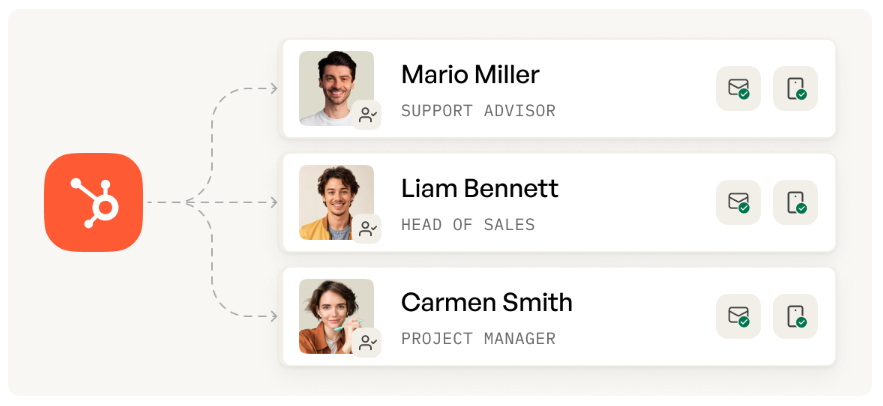
So what is team selling? It's the practice of assigning multiple people from your organization to a single deal, each mapped to specific stakeholders in the buying committee. Not "helping out on a call." A structured motion where roles, responsibilities, and stakeholder coverage are defined before the first meeting. More formally: it's a coordinated go-to-market approach where each seller owns a distinct relationship within the buying group, with shared accountability for the outcome.
Here's the short version. Team selling lifts win rates meaningfully - but only on deals above roughly $50K. Compensation is the number one reason these initiatives die internally. And none of it works if your contact data for the buying committee is garbage.
Why Team Selling Matters in 2026
Average B2B win rates sit around 20-21%. Buying committees are a big reason. HBR pegged the average B2B purchase at 6.8 decision-makers back in 2017. Gartner's more recent data pushed that to 8-13 stakeholders depending on deal complexity.
One rep can't meaningfully engage 10+ stakeholders. They can't build trust with the CFO, answer the security team's questionnaire, run a technical deep-dive with engineering, and align the executive sponsor - all while managing pipeline. A collaborative selling approach isn't a nice-to-have anymore. It's structural.
The Real Data Behind Team Selling
You've probably seen the "258% more likely to close" stat floating around sales Twitter. Let's trace it. That number comes from Amit Bendov, Gong's CEO, presenting at the AA-ISP Digital Sales World Conference. Gong analyzed over 1 million recorded sales calls and found that having at least one additional person from your company on a call made closing 258% more likely. Interestingly, who joined mattered less than simply adding a knowledgeable person.
Here's the thing: Gong's site doesn't publish the original methodology or segmentation behind that number. It's a conference stat, not a peer-reviewed study. Useful, but directional - not gospel.
The Outreach Insights Group provides more granular benchmarks:
| Engagement Level | Win Rate Lift |
|---|---|
| Multiple sellers assigned (no coordination) | +2 pp |
| Coordinated engagement (calls/emails/meetings) | +6.2 pp |
| Deals >$50K with collaboration | +9 pp |
| Director+ involvement | +29 pp |
| Over-collaboration on small deals | -7.9 pp |
Outreach also found that when multiple sellers are formally assigned to an opportunity, deal cycles shorten by 51 days versus single-owner deals. Coordinated engagement shaves off an additional 16 days.
The jump from +2 to +6.2 percentage points tells the whole story: assigning people doesn't move the needle. Coordinated engagement does. And over-collaboration on smaller deals actively destroyed value - which brings us to the part most guides skip.
When Does Team Selling Backfire?
Over-collaboration on smaller, transactional deals hurts win rates by 7.9 percentage points. More people doesn't mean more wins. It means more confusion, more scheduling overhead, and a buyer who can't figure out who to call.
If the deal is under $50K, think twice before adding headcount.
We've seen teams blow up deals by emailing the same stakeholder three different messages in a week. The common failure modes: no role clarity (two people both think they own the relationship), single-thread dependency (the AE still only talks to one champion), and fragmented buyer engagement. A collaborative deal motion without structure is just a crowd.
Let's be honest - most companies don't have a team selling problem. They have a coordination problem. The instinct to throw more people at a deal is easy. Building the infrastructure so those people actually help is hard. If you can't answer "who owns which stakeholder?" in five seconds, you're not running a coordinated motion. You're team flailing.

Team selling only works when every seller can actually reach their assigned stakeholder. Prospeo gives you 98% accurate emails and 125M+ verified mobile numbers so your pod, assembly line, or flex team can multi-thread into the entire buying committee - not just the one champion your AE already knows.
Stop assigning stakeholders your team can't even contact.
How to Structure the Process
Three models work depending on your segment:
Pods (mid-market): AE + SDR + SE as a permanent unit with shared pipeline ownership. Tight communication, strong chemistry, but less flexible when deal types vary.
Assembly line (high-volume SMB): Handoffs between specialized roles. Fast, but coordination gaps are the risk. Works best when your CRM hygiene is airtight and handoff criteria are documented.
Flexible collaboration (enterprise): AE pulls in specialists per deal stage. This is the most scalable approach, but it needs clear rules or it collapses into ad-hoc chaos where nobody knows their lane.
Regardless of model, a RACI framework eliminates the "who's doing what" problem:
| Deal Stage | AE | SDR | SE |
|---|---|---|---|
| Stakeholder mapping | A | R | C |
| Discovery calls | A | R | C |
| Technical demo | C | I | A/R |
| Proposal & pricing | A/R | I | C |
| Mutual action plan | A | R | C |
CSM and Exec Sponsor roles are typically Informed or Consulted throughout, with the Exec Sponsor stepping to Accountable for executive alignment meetings.
One Accountable per stage. No exceptions. The moment two people think they're the A, you've got a deal that stalls.
How to Handle Compensation
Compensation is the number one reason team selling initiatives die. Reps won't collaborate if they think someone else is eating their commission.
Forrester's framework draws a clean line: use splits when individual contributions are identifiable, team quotas when they're genuinely indistinguishable. In practice, most teams land on one of three models:
- Proportional: 60/20/20 based on manager-assessed contribution
- Fixed percentage: AE 70% / SDR 30% - predictable, simple
- Over-crediting: each rep gets 75% credit (total exceeds 100%) to incentivize collaboration
In our experience, the split conversation needs to happen before the first team deal closes - not after, when resentment has already set in. Default ratios should be documented. And watch for gaming. Reps asking to be added to deals late just to get over quota is the most common abuse pattern we've heard about on r/sales, and it poisons trust fast.
The Data Quality Foundation
You've mapped sellers to stakeholders. Your RACI is clean. Comp splits are agreed. Then the SDR team spends two weeks multi-threading into the account - and half the emails bounce.
This is the part that kills team selling quietly. Assigning team members to cover specific stakeholders only works if you can actually reach those stakeholders. That means verified emails and working phone numbers for every person in the buying committee, not just the champion your AE already knows. Prospeo's 98% email accuracy and 7-day data refresh cycle mean your SDR team isn't wasting cycles on bounced emails. Search by company, filter by department and seniority across 30+ filters, and export verified contacts for the entire buying committee in minutes.
If you're seeing bounces, start with your email bounce rate and fix the upstream list quality.
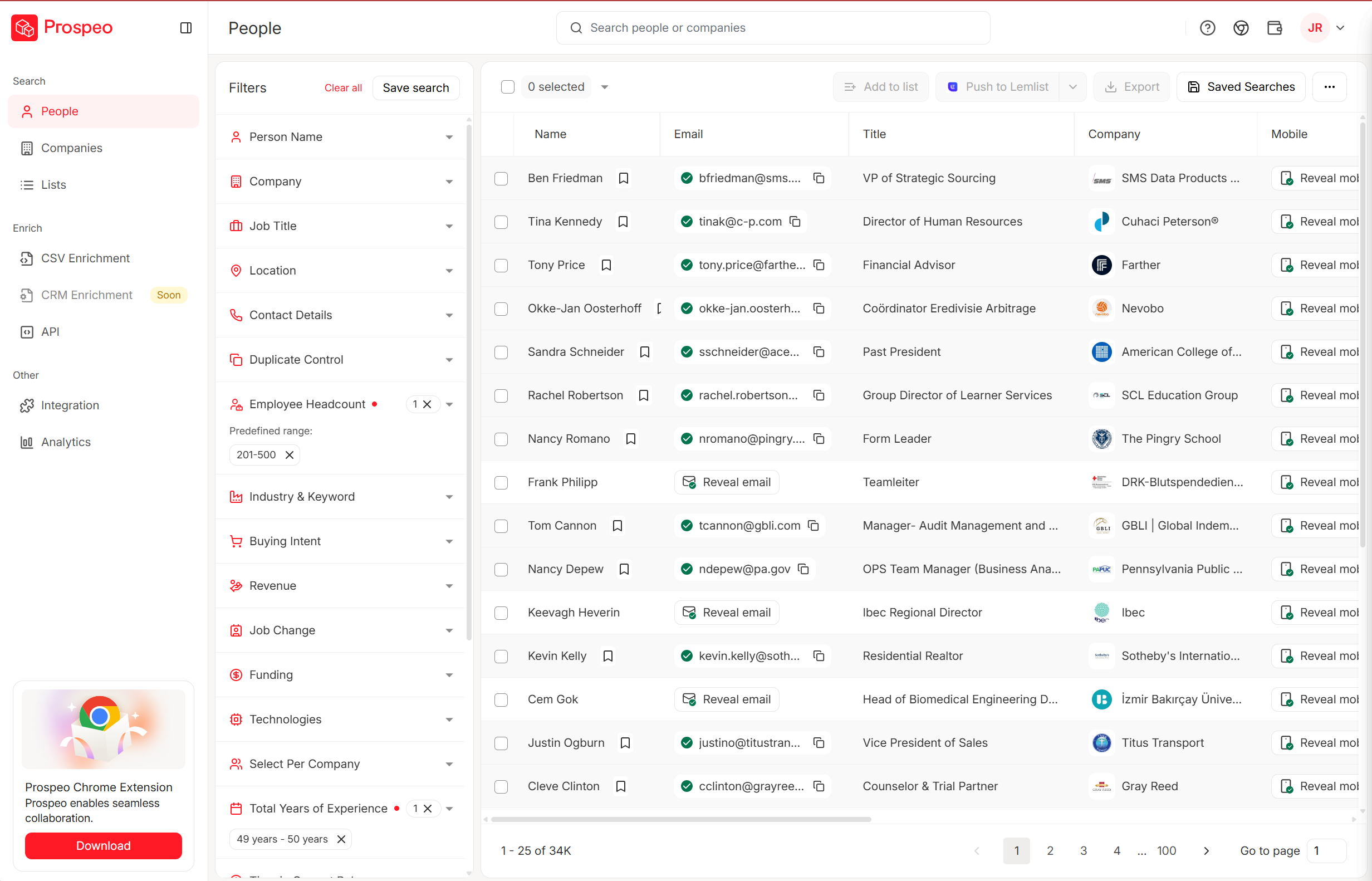
You've built the RACI, agreed on comp splits, and assigned sellers to stakeholders. Now your SDR needs the CFO's direct line and your SE needs the security lead's verified email. Prospeo covers the buying committee with 300M+ profiles, 30+ filters, and data refreshed every 7 days - at $0.01 per email.
Cover every stakeholder in the deal for a penny each.
FAQ
What's the difference between team selling and account-based selling?
Team selling is a deal-level tactic - multiple reps coordinating on one opportunity. Account-based selling is an account-level strategy aligning marketing and sales across a target account over months. They're complementary but operate at different scopes. You can run team selling within an ABS motion, but you don't need ABS to do team selling.
How many people should be on a collaborative deal?
Two to four sellers mapped to specific buyer stakeholders. Coordination matters more than headcount - adding bodies without clear roles hurts win rates on deals under $50K by nearly 8 percentage points.
What types of deals benefit most?
Complex, high-value opportunities - typically $50K+ - where multiple stakeholders hold decision-making power. Enterprise software, professional services, and infrastructure deals are natural fits because the buying committee spans departments and seniority levels that a single rep can't credibly cover alone. Skip team selling for transactional, single-buyer deals. It'll slow you down.
What tools support a team selling motion?
You need three layers: a CRM with shared deal visibility (Salesforce, HubSpot), an internal coordination channel (Slack deal rooms work well), and a data platform to find verified contact info for every stakeholder. You can't cover the CFO without a working email, and you can't call the VP of Engineering without a direct dial that actually rings.