

Winmo vs Apollo.io: They Don't Actually Compete
Comparing Winmo and Apollo.io is like comparing a Bloomberg Terminal to Mailchimp. They share a "Sales Intelligence" label on review sites, but they solve completely different problems. Let's save you the demo calls.
Why This Comparison Doesn't Work
Check G2's alternatives page for Winmo. Users compare it to ZoomInfo Sales, MediaRadar, and D&B Hoovers - not Apollo. Winmo lives in ad-sales intelligence. Apollo lives in general B2B outbound.
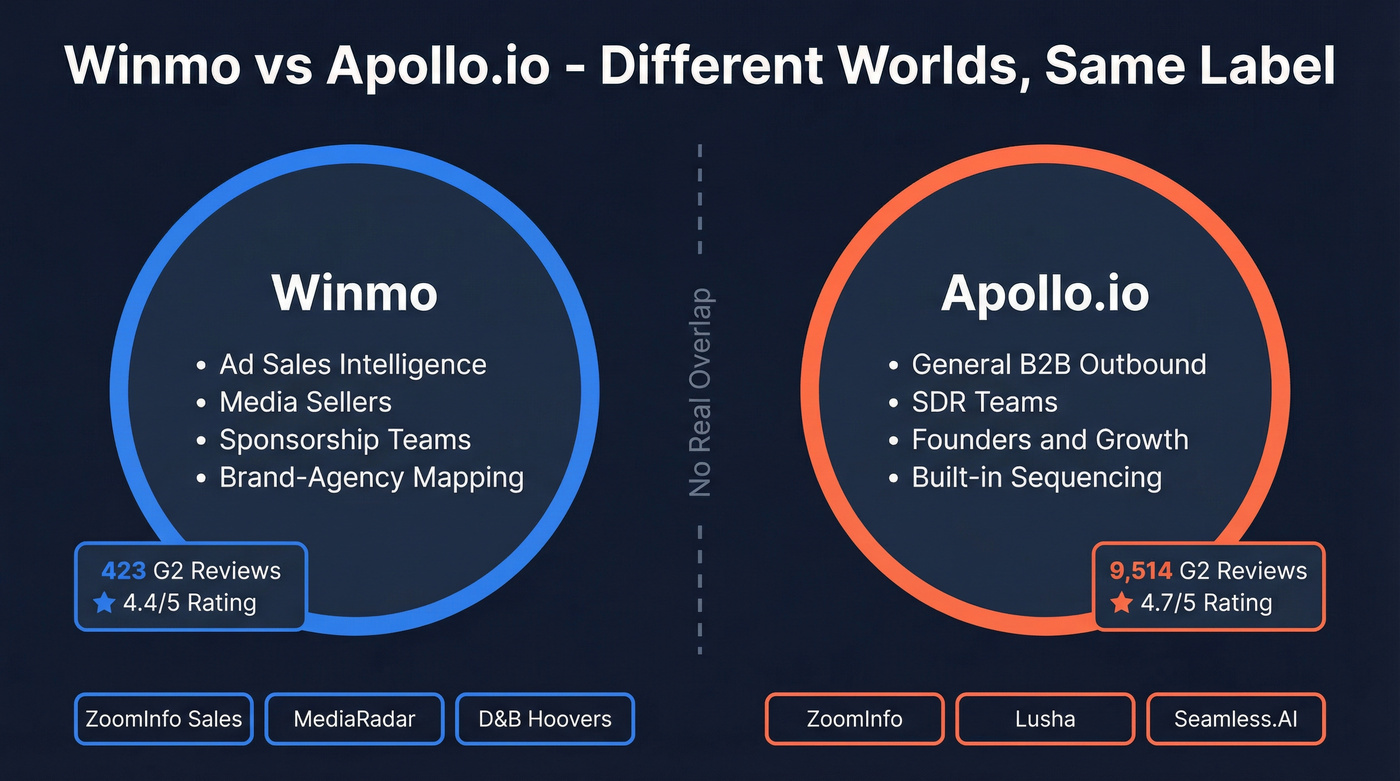
The review gap tells the story: Apollo has 9,514 G2 reviews across every vertical, while Winmo has 423, almost entirely from advertising and media companies. These tools aren't rivals. They're neighbors in different zip codes.
30-Second Verdict
- Selling ad space or sponsorships to brands/agencies? Winmo. Nothing else maps brand-agency relationships and ad spend this way.
- Running general B2B outbound at scale? Apollo. Strong filters, built-in sequencing, massive database.
What Winmo Actually Does
Winmo is sales intelligence for one specific motion: selling media, advertising, and sponsorships to brands and their agencies.

Use this if you're a media seller or sponsorship team that needs to know which brands are shifting ad budgets and who the decision-makers are at their agencies. WinmoEdge predictive alerts flag opportunities 3-18 months ahead - the kind of signal that lets you call before the RFP drops. G2 reviewers consistently praise the research team's responsiveness, though some note that information can be buried across multiple screens.
Skip this if you're running standard B2B outbound to SaaS buyers or anyone outside the advertising ecosystem. Winmo's database focuses on larger, well-known brands. Smaller or independent companies often aren't covered. G2 rates it 4.4/5 across 423 reviews.

Winmo nails brand-agency mapping. Apollo nails sequencing. Neither nails email accuracy - users report 30%+ bounce rates on Apollo alone. Prospeo's 5-step verification and 7-day data refresh deliver 98% email accuracy on 300M+ profiles, so your domain stays clean no matter where your contacts originate.
Verify every contact at $0.01/email before it touches your sequences.
What Apollo.io Actually Does
Apollo is the Swiss Army knife of B2B outbound - roughly 265M contacts with built-in sequencing, deal management, and enrichment in one platform.
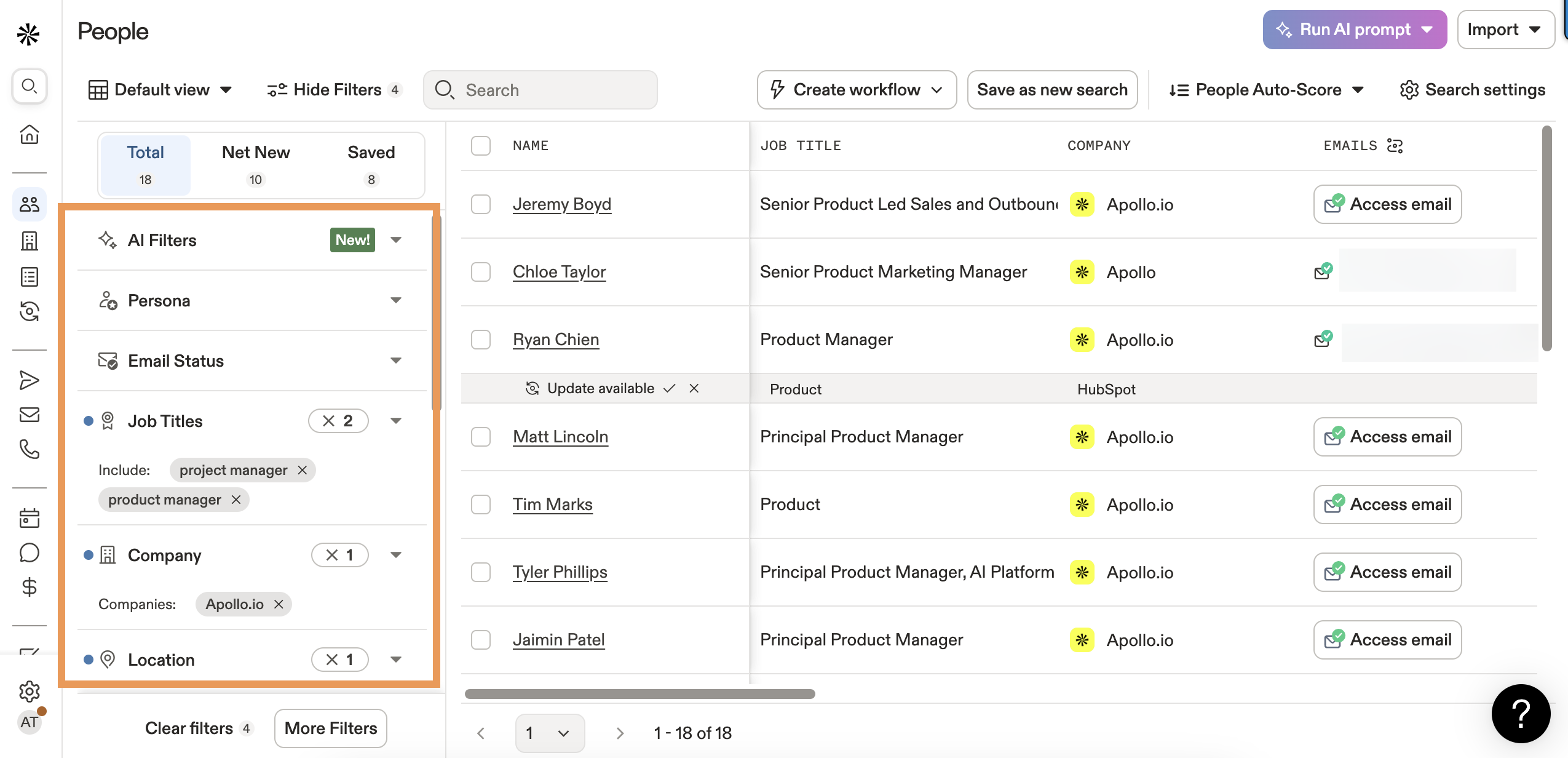
Here's our honest take after testing it across multiple campaigns: Apollo is the best starting point for most B2B teams that don't have a specific vertical need. Its 4.7/5 G2 rating with 9,514 reviews reflects genuine breadth. SDR teams, founders, growth teams - it works across the board.
The weak spot? Local SMB prospecting. Reddit threads in r/coldemail consistently flag that Apollo returns generic info@ addresses and front-desk numbers for contractors, trades, and small shops. And there's no brand-agency mapping or media spend tracking. That's Winmo's world entirely.
Pricing Side-by-Side
| Dimension | Winmo | Apollo |
|---|---|---|
| Starting price | ~$9,995/yr (public anchor); Core plans from $13,995/yr | Free tier; paid from $59/user/mo |
| Typical annual | $12,000-$31,814 (Vendr benchmark range) | ~$708-$1,188/user/yr |
| Contract | Annual commitment only | Monthly available |
| Credit model | $150-$300 per extra research request | Credits don't roll over |
| Best for budget | No | Apollo |
| Pricing transparency | Demo required | Apollo (public pricing) |
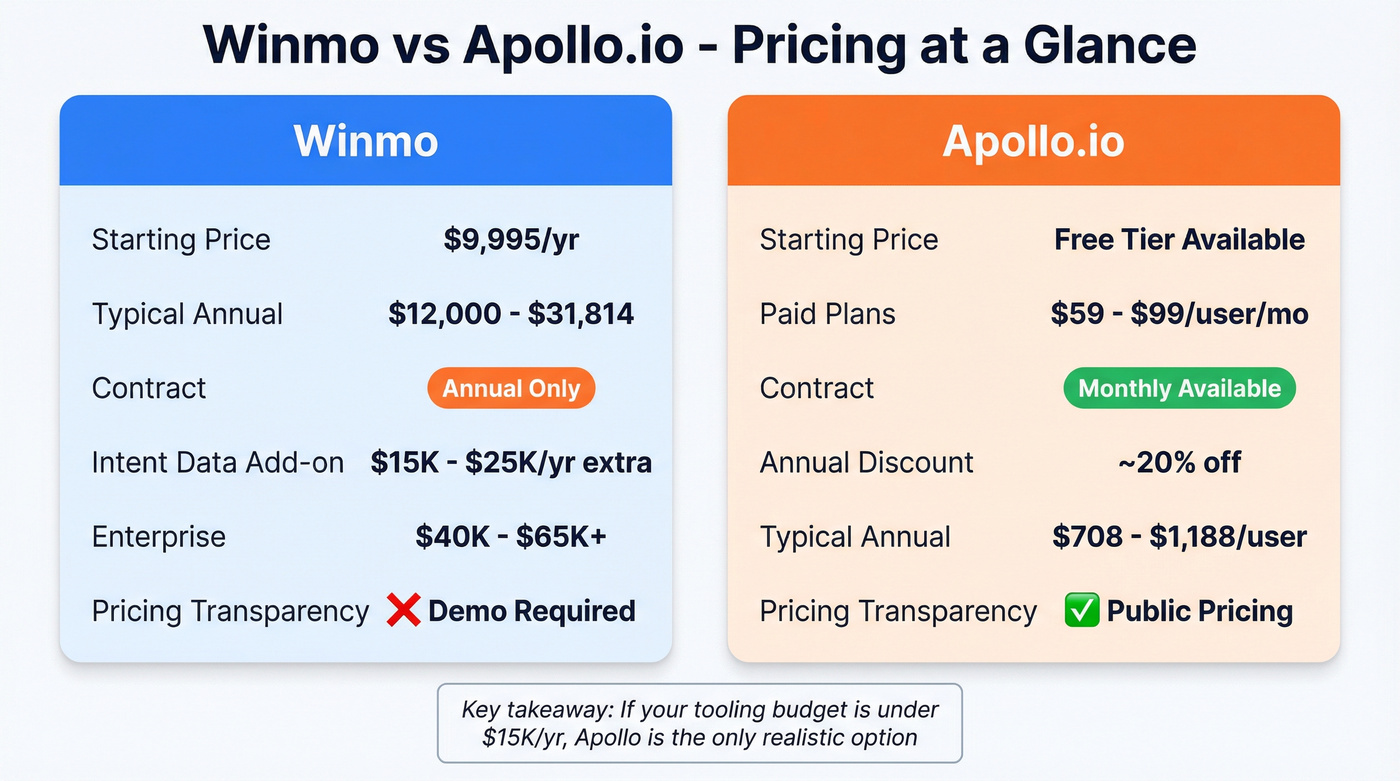
Winmo has four commonly quoted tiers - Core, Standard, Explorer, and Enterprise - and the base can balloon fast. Intent data add-ons run $15K-$25K/yr, and Enterprise packages hit $40K-$65K+. If your average deal size on ad sales is under $50K, Winmo's price tag probably doesn't pencil out.
Apollo lists $59/user/mo (Basic) and $99/user/mo (Professional), with roughly 20% off on annual billing. The catch: unused credits expire each cycle, which punishes inconsistent usage.
Data Quality - The Real Differentiator
Here's the thing: neither tool is great on raw email accuracy, and that's the dimension most outbound teams actually care about.
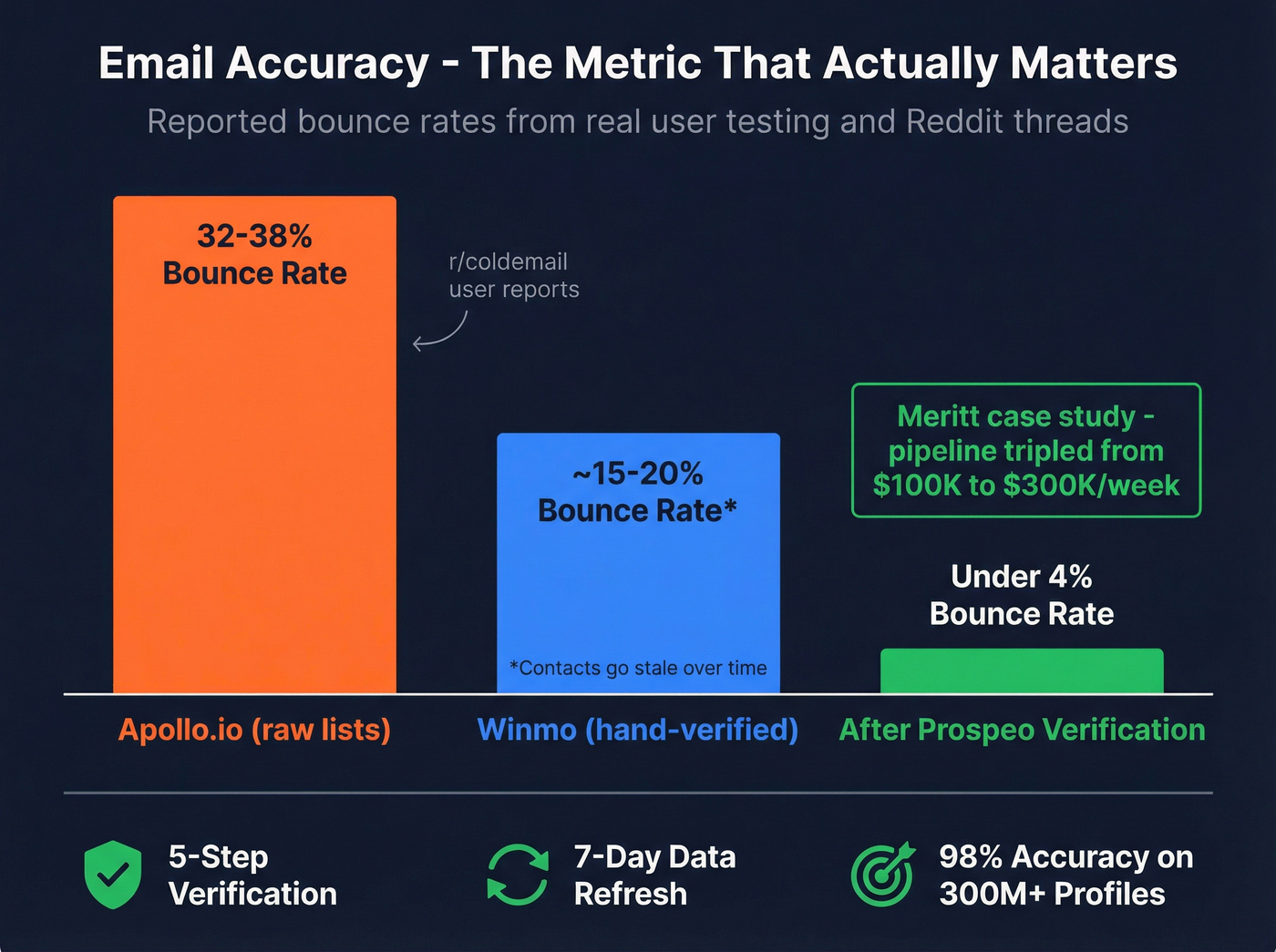
Reddit users in r/coldemail report bounce rates of 32-38% on Apollo cold lists, even with the built-in "Global Bounce Check." We've seen similar numbers in our own testing - workable, but risky when your sender reputation is on the line.
Winmo's database is built around hand-verified decision-makers, which helps for the specific brand/agency contacts they cover. But contacts still go stale, and the database skews toward larger brands.
Let's be honest about what we've learned running outbound at scale: if you're weighing Winmo vs Apollo.io, you're probably asking the wrong question. The real question is which data source fits your market, and then how you verify that data before it touches your sequences. One customer, Meritt, went from a 35% bounce rate to under 4% after adding Prospeo's email finder as a verification layer - regardless of where the original contacts came from. Their pipeline tripled from $100K to $300K/week, and connect rates jumped to 20-25%.

Prospeo's 5-step verification process - catch-all handling, spam-trap removal, honeypot filtering - runs on proprietary infrastructure rather than third-party email providers. With a 7-day data refresh cycle vs. the 4-6 week industry average, stale contacts get caught before they damage your sender reputation.
Meritt ran the same play: pulled contacts from their source, then verified through Prospeo. Bounce rate dropped from 35% to under 4%, and pipeline tripled to $300K/week. Proprietary infrastructure, catch-all handling, spam-trap removal - no third-party email providers in the chain.
Stop choosing between tools. Layer Prospeo on top of whichever you pick.
Which Tool Should You Pick?
Ad-sales and sponsorship teams: Winmo. The brand-agency relationship mapping and predictive spend alerts don't exist anywhere else.
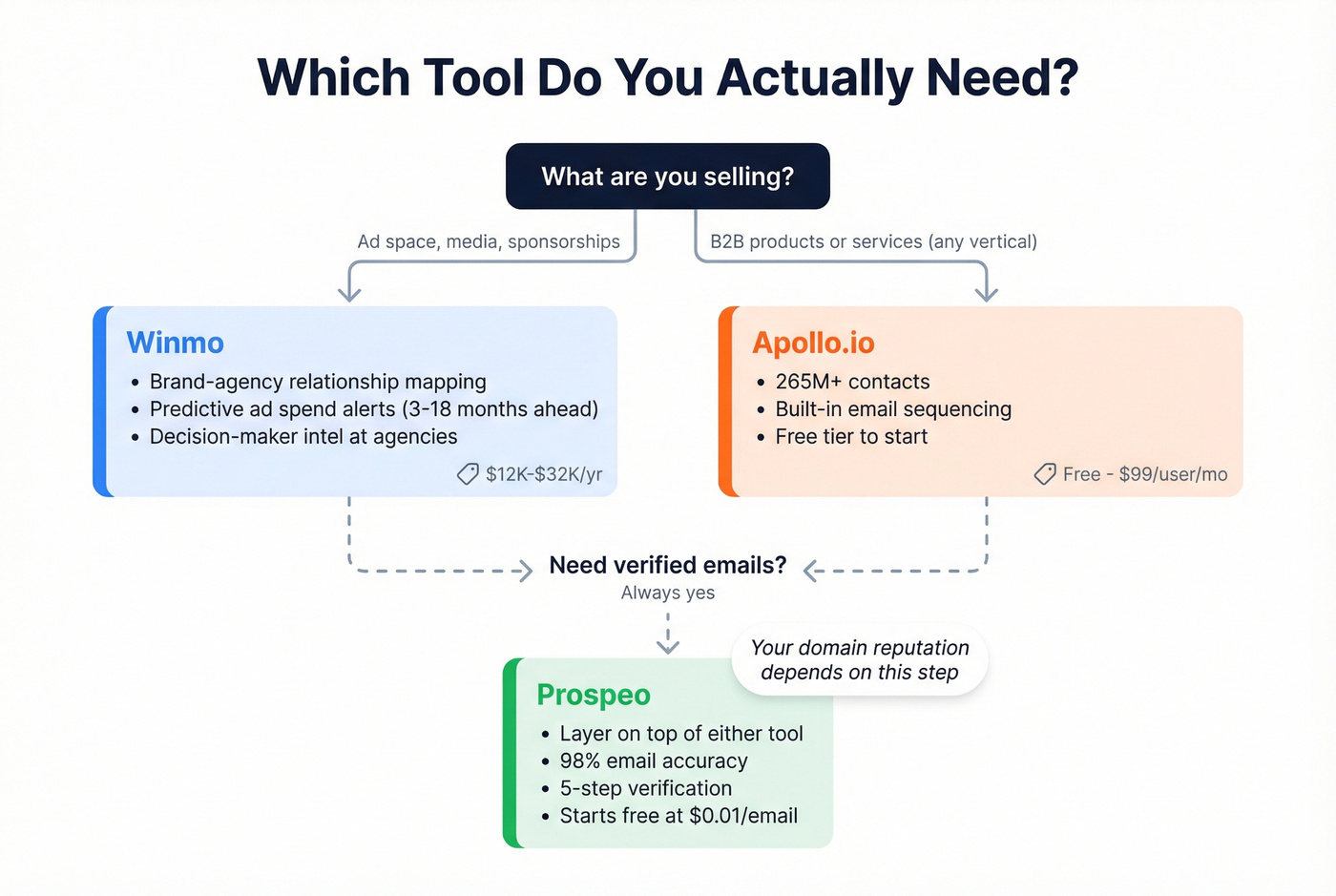
General B2B outbound: Apollo. The database breadth, sequencing, and free tier make it the obvious starting point. But verify your lists - 30%+ bounce rates will wreck your domain.
Verified contact data without the overhead: Prospeo. 300M+ profiles, 98% accuracy, 7-day refresh, starts free.
Some teams genuinely need both Winmo and Apollo. Just don't skip verification regardless of which database you pull from.
FAQ
Do Winmo and Apollo.io serve the same market?
No. Winmo is ad-sales intelligence for media sellers targeting brand and agency decision-makers. Apollo is a general B2B outbound platform. G2's alternative lists for the two tools don't even overlap - Winmo competes with MediaRadar, Apollo with ZoomInfo.
How much does Winmo cost compared to Apollo?
Winmo starts at ~$9,995/year publicly, with Core plans at $13,995/year on an annual commitment. Apollo starts free, with paid plans from $59/user/month (roughly 20% off annually). For teams spending under $15K/year on tooling, Apollo is the only realistic option.
Which tool has better email accuracy?
Neither excels here. Apollo users report 30%+ bounce rates on cold lists; Winmo's hand-verified contacts are strong but go stale. For highest deliverability, add a dedicated verification layer before any outbound sequence - regardless of your source database.
Can I use both Winmo and Apollo together?
Yes, and some media-sales teams do exactly this. Use Winmo for brand-agency intelligence and ad-spend signals, then use Apollo or a verification tool to find and confirm contact data for the decision-makers Winmo identifies. The tools complement rather than replace each other.