

1x1 Pixel Tracking: What Still Works in 2026
A 1x1 pixel tracking request fires when an email client loads images or when someone hits your landing page. It's been a backbone of digital measurement for over two decades. The problem: nearly half of your email open data is now artificial, and regulators have finally caught up.
Quick Summary
- Tracking pixels still fire, but the data they return is increasingly unreliable - Apple MPP inflates email opens by 15-20 points, and ad blockers strip roughly 32% of web pixels before they load.
- The EDPB and UK ICO now explicitly classify pixels under consent rules, not just cookies.
- Server-side tracking is the practical fix for web and ads. Verified contact data is the fix for email.
What Is a Tracking Pixel?
A tracking pixel is a transparent image - one pixel by one pixel - embedded in a webpage or email. When the page loads or the email client renders images, the browser requests that image from a remote server. The image itself is irrelevant. What matters is the URL query string and the cookies sent along with the HTTP request.
Here's Meta's noscript fallback in practice:
<noscript>
  <img height="1" width="1" style="display:none"
       src="https://www.facebook.com/tr?id={pixel-id}&ev=PageView&noscript=1"/>
</noscript>
That src URL is doing all the work. The server logs the request, reads the parameters, matches any cookies to a user profile, and records the event.
How the Image Request Works
When your browser requests that tiny image, it sends a full HTTP request packed with data. Julia Evans broke this down at the developer-tools level. A typical Meta Pixel request includes the pixel's id, ev=PageView to log the event type, dl= for the exact page URL, rl= for the referrer, plus screen dimensions, a timestamp, and browser metadata.
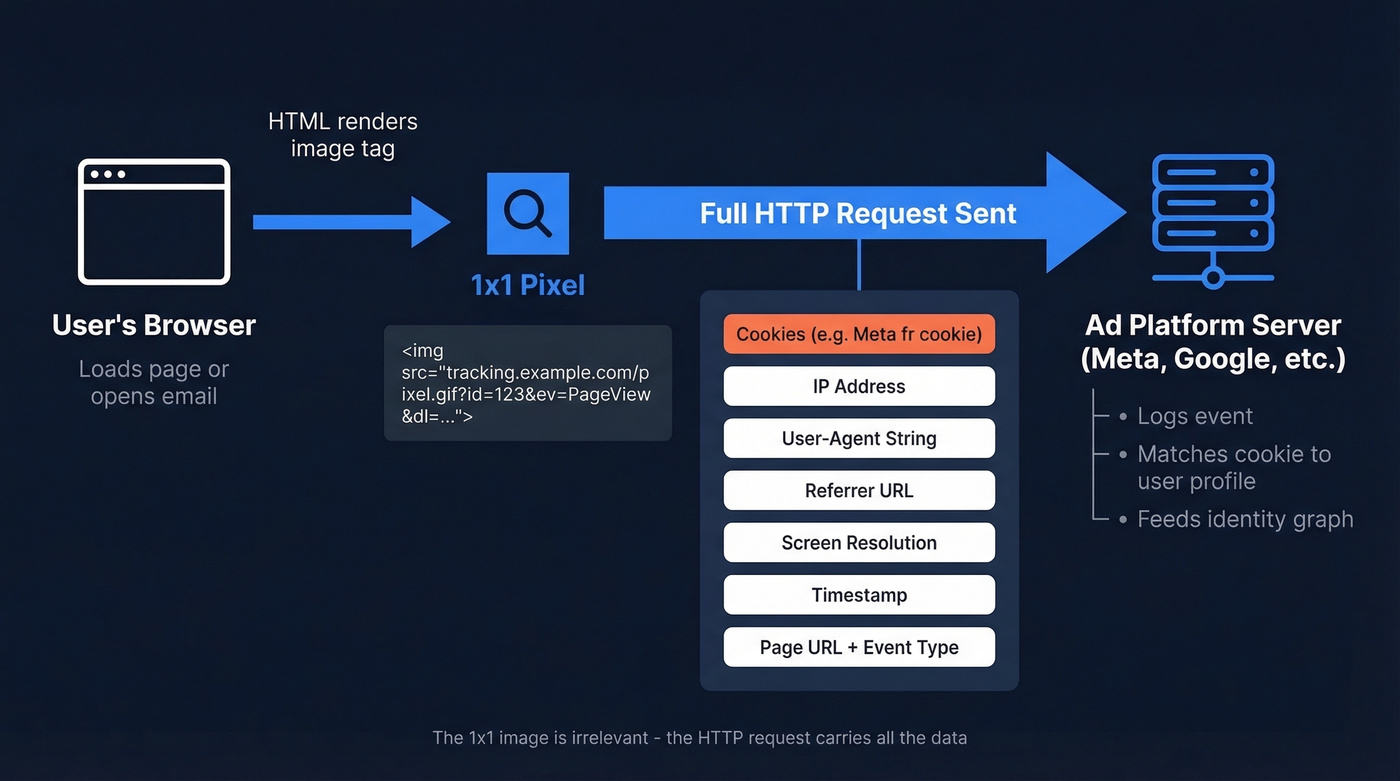
The real power comes from cookies. When a third-party cookie like Meta's fr cookie rides along with the request, it links your browsing on an ecommerce site to your logged-in identity on the ad platform. That's how retargeting works - and why cookie restrictions matter so much. Evans found that Wrangler.com loaded 19 different tracking pixels from separate domains on a single page load. Every one fires its own HTTP request and feeds its own identity graph.
What Pixels Collect (and Can't)
What a pixel captures: IP address, user-agent string with browser and OS details, timestamp, referrer URL, screen resolution, page URL, and event type.
What a pixel can't do: read your inbox, capture screenshots, follow you across the web on its own without cookies or identity graphs, or access your browsing history.
The real privacy concern isn't any single pixel. It's aggregation. When pixel data from dozens of sites gets combined with identity graphs, the composite profile becomes detailed. But the pixel itself just logs one image load.

When MPP inflates opens by 15-20 points and ad blockers strip 32% of pixels, your engagement data is fiction. The fix isn't better tracking - it's better input data. Prospeo delivers 98% verified emails with a 7-day refresh cycle, so you reach real people instead of optimizing against noise.
Stop measuring ghosts. Start reaching verified buyers.
The 2026 Reality: What's Broken
Let's be honest about the numbers. Apple Mail Privacy Protection is now active on 49.29% of all email opens. MPP pre-fetches tracking pixels regardless of whether the recipient actually opens the email, inflating open rates by 15-20 percentage points. Campaigns that genuinely ran at ~28% opens pre-MPP now show ~52% with zero change in clicks or conversions.
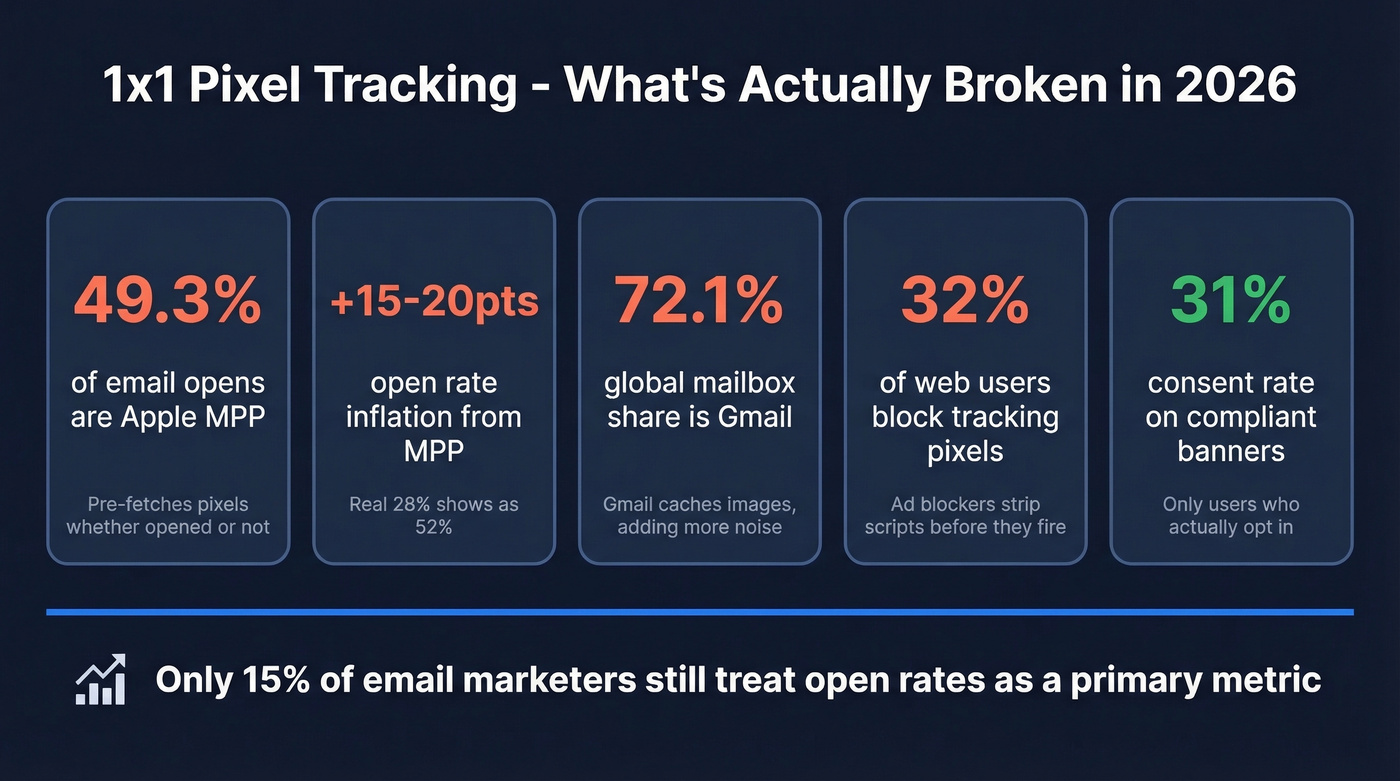
Gmail caches images too, adding another layer of measurement noise at massive scale given Gmail's 72.1% global mailbox usage. AI bot clicks peaked at 3+ million per day in early 2025, further polluting engagement data. The gap between reported opens and actual engagement has only widened since then.
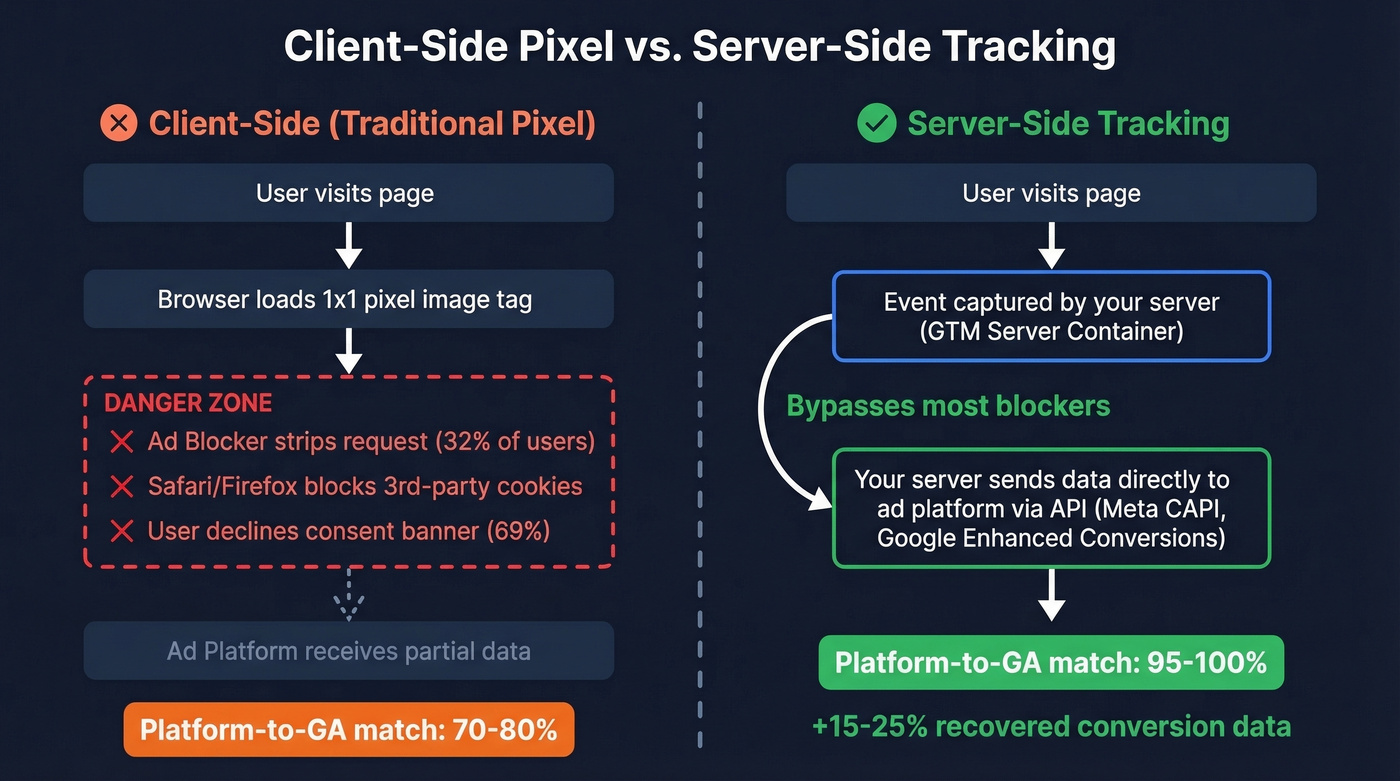
On the web side, roughly 32% of internet users run ad blockers that strip tracking scripts before they fire. Safari and Firefox block third-party cookies by default, covering 30-35% of global browser traffic. When users do see a compliant consent banner, only about 31% accept tracking.
Here's the thing: Google didn't kill third-party cookies in Chrome. They abandoned the deprecation plan in July 2024 and retired many Privacy Sandbox technologies in late 2025 (CHIPS survived). But the ecosystem degraded anyway. Between Apple's Link Tracking Protection stripping tracking parameters - including UTMs - in iOS 18, browser-level blocking, and low consent rates, your pixel data is a partial picture at best. Planning around it like it's ground truth is a mistake.
Only 15% of email marketers still treat open rates as a primary success metric. The rest have moved on.
Our take: If your outbound strategy still depends on open-rate signals to determine interest, you're optimizing against noise. The teams getting results in 2026 have shifted to reply rates, click-through, and verified-delivery metrics instead.
Legal Requirements in 2026
Regulators have moved from vague guidance to explicit rules on pixel-style tracking in key markets.
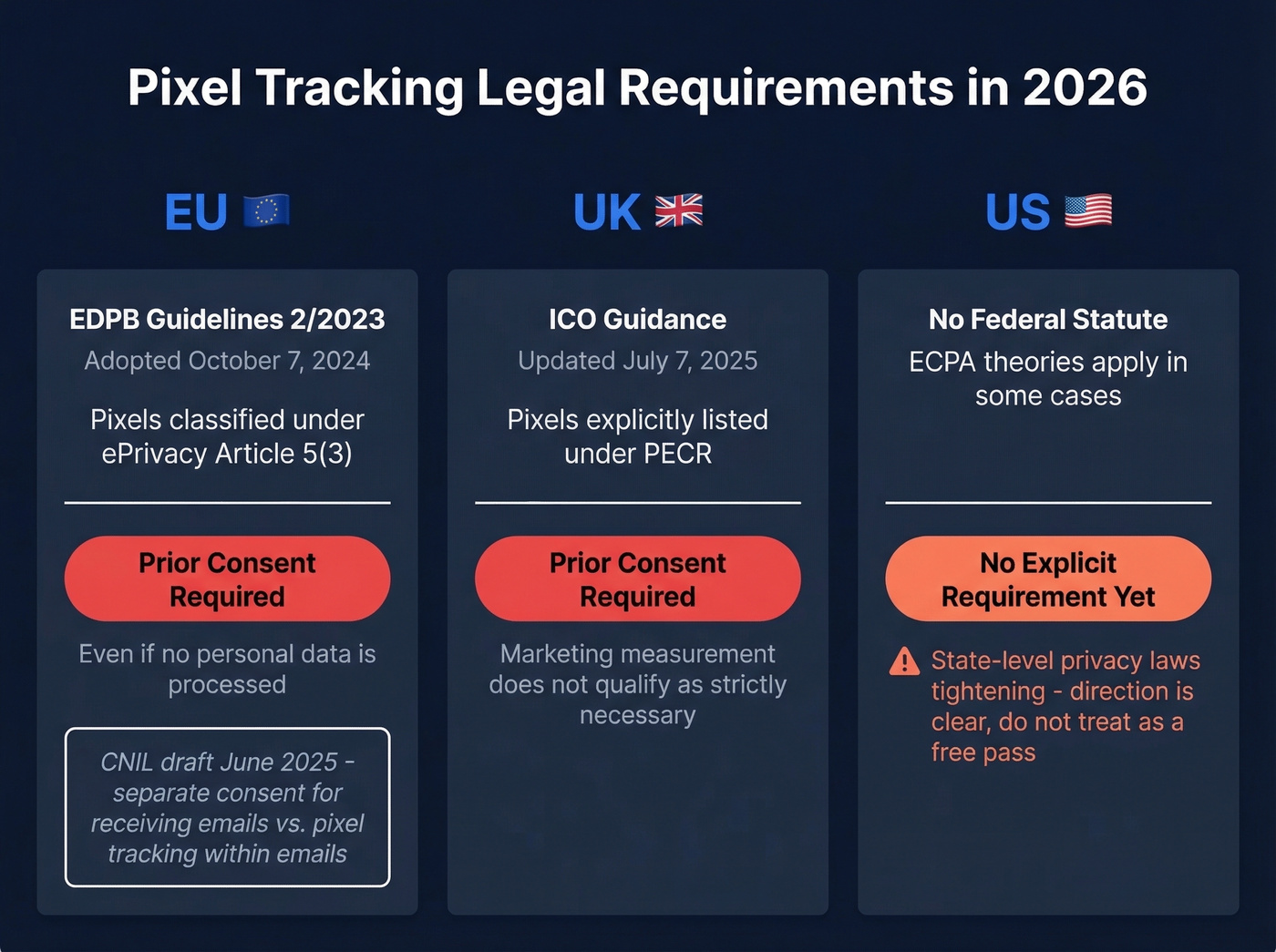
In the EU, the EDPB's Guidelines 2/2023 - adopted 7 October 2024 - classify URL and pixel-based tracking under ePrivacy Directive Article 5(3) on a technology-neutral basis. Prior consent is required even if no personal data is ultimately processed. That means any email tracking beacon embedded in a marketing message requires opt-in before it can fire, a significant shift from the implied-consent assumptions many senders operated under for years. France's CNIL went further in June 2025, drafting recommendations that would separate consent for receiving marketing emails from consent for pixel tracking within those emails.
In the UK, the ICO's guidance updated July 7, 2025 explicitly lists tracking pixels as a technology covered by PECR. Prior consent is required unless the pixel is "strictly necessary" - marketing measurement doesn't qualify.
The US remains the outlier. No federal statute specifically covers email tracking pixels, though ECPA theories apply in some cases. Don't treat that as a free pass. State-level privacy laws are tightening, and the direction is clear.
Server-Side Tracking: The Fix
Use this if you're running paid acquisition on Meta, Google, or TikTok and your reported conversions don't match your backend data. D2C operators report recovering 15-25% of lost conversion data after switching to server-side. GTM server-side containers, Meta's Conversions API, and Google's Enhanced Conversions send event data from your server directly to the ad platform, bypassing most ad blockers. Platform-to-GA alignment improves from 70-80% to 95-100% in well-implemented setups.
If you're building a measurement stack end-to-end, it helps to map this to your broader funnel metrics so you don't "fix" tracking but still optimize the wrong stage.
Skip this if you're a small team without dev resources. Server-side tracking requires a container host, configuration expertise, and ongoing maintenance.
For email specifically, server-side tracking doesn't solve the open-rate problem - MPP corrupts that signal regardless of where the pixel fires. When measurement is this unreliable, the one variable you fully control is input data quality. We've seen this play out with our own outbound: teams like Snyk cut bounce rates from 35-40% to under 5% after switching to Prospeo's 5-step email verification, and that's the kind of deliverability improvement that actually moves pipeline when open tracking is lying to you. If you're diagnosing deliverability, start with email bounce rate and work backward to list quality.
Common Pixel Mistakes
Before you blame the ecosystem, check your implementation. These are the errors we see most often in audits:
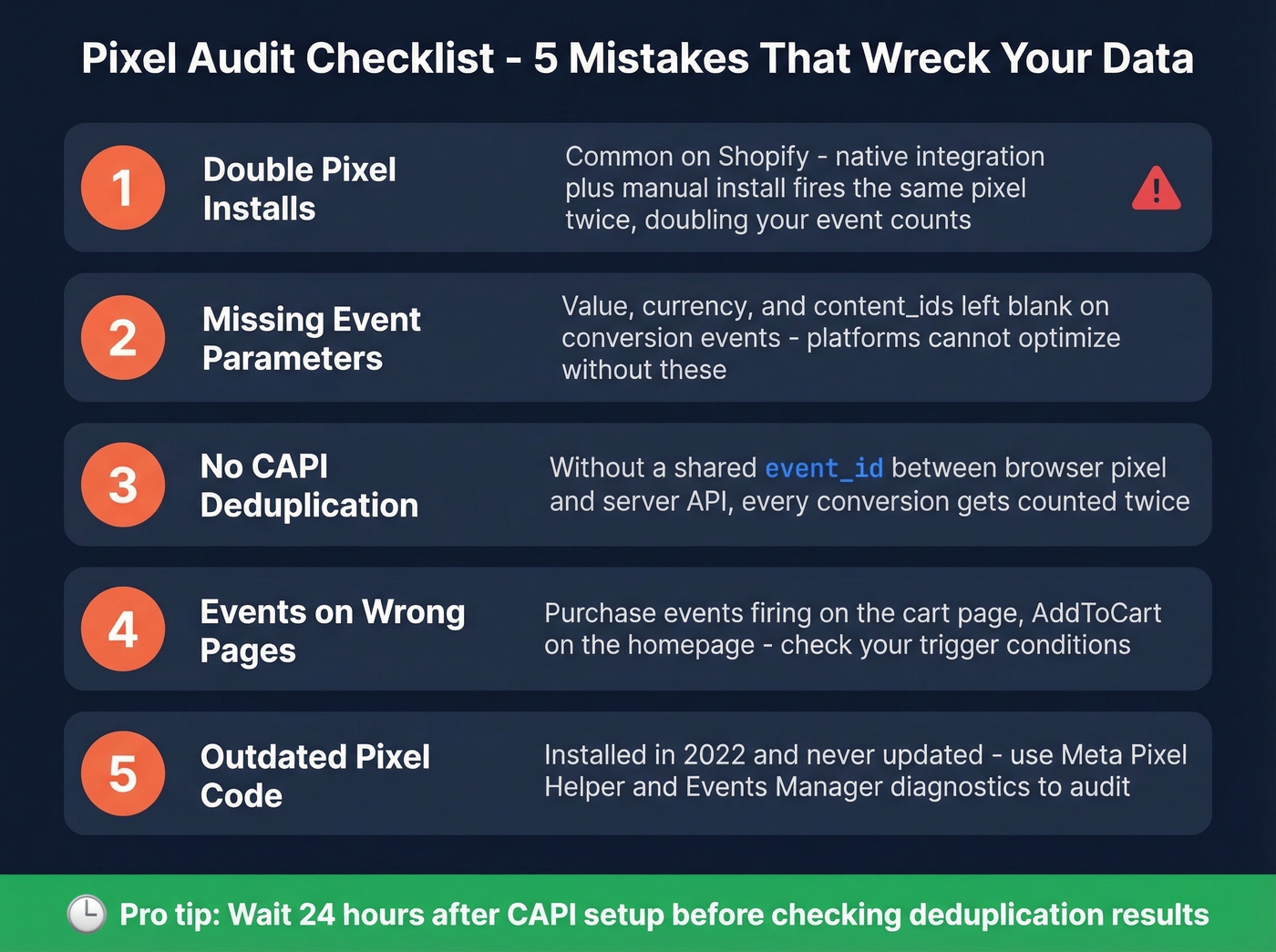
- Double pixel installs - especially on Shopify, where native plus manual installs fire the same pixel twice
- Missing event parameters -
value,currency, andcontent_idsblank on conversion events - No deduplication between browser pixel and CAPI - without a shared
event_id, you're double-counting every conversion - Events firing on wrong pages - Purchase events on the cart page, AddToCart on the homepage
- Outdated pixel code - installed in 2022 and never updated
Use Meta's Pixel Helper and Events Manager diagnostics to audit. Wait roughly 24 hours after CAPI setup before checking deduplication results. If you're running outbound alongside paid, align your tracking QA with your sales prospecting techniques so you don't misread intent signals.
Reply rates and verified delivery beat open rates in 2026. But those metrics only work when your contact data is real. Prospeo's 5-step verification and proprietary email infrastructure keep bounce rates under 4% - ask Snyk, whose 50 AEs dropped from 35-40% to under 5%.
Replace unreliable pixel signals with contacts that actually connect.
FAQ
Do tracking pixels hurt email deliverability?
Pixels are a minor factor compared to SPF/DKIM/DMARC, sender reputation, and link domains. The bigger risk is measurement distortion - inflated opens make you think campaigns work when they don't. Controlling data quality on the input side, through verification that catches spam traps and honeypots, fixes the variable you can actually influence.
Can a tracking pixel see my browsing history?
No. A pixel logs one image load - IP address, user-agent, referrer, and timestamp. It can't access browsing history, read inbox contents, or capture screenshots. The privacy concern is aggregation across sites via identity graphs, not the pixel itself.
How does an email beacon differ from a web pixel?
An email tracking beacon works on the same principle - a tiny image request that logs when a message is opened - but email clients don't support JavaScript, so the beacon relies entirely on the image load. That makes it far more vulnerable to pre-fetching by Apple MPP and image caching by Gmail, which is why email open data is much less reliable than web pixel data in 2026.
Are tracking pixels legal in 2026?
In the EU, the EDPB classifies pixel tracking under ePrivacy Article 5(3) - prior consent required. The UK ICO says the same under PECR. In the US, no federal statute specifically covers email tracking pixels yet. Treat pixels as requiring consent in any market with active privacy regulation.