

AI SDRs: What Works, What Fails, and What to Buy in 2026
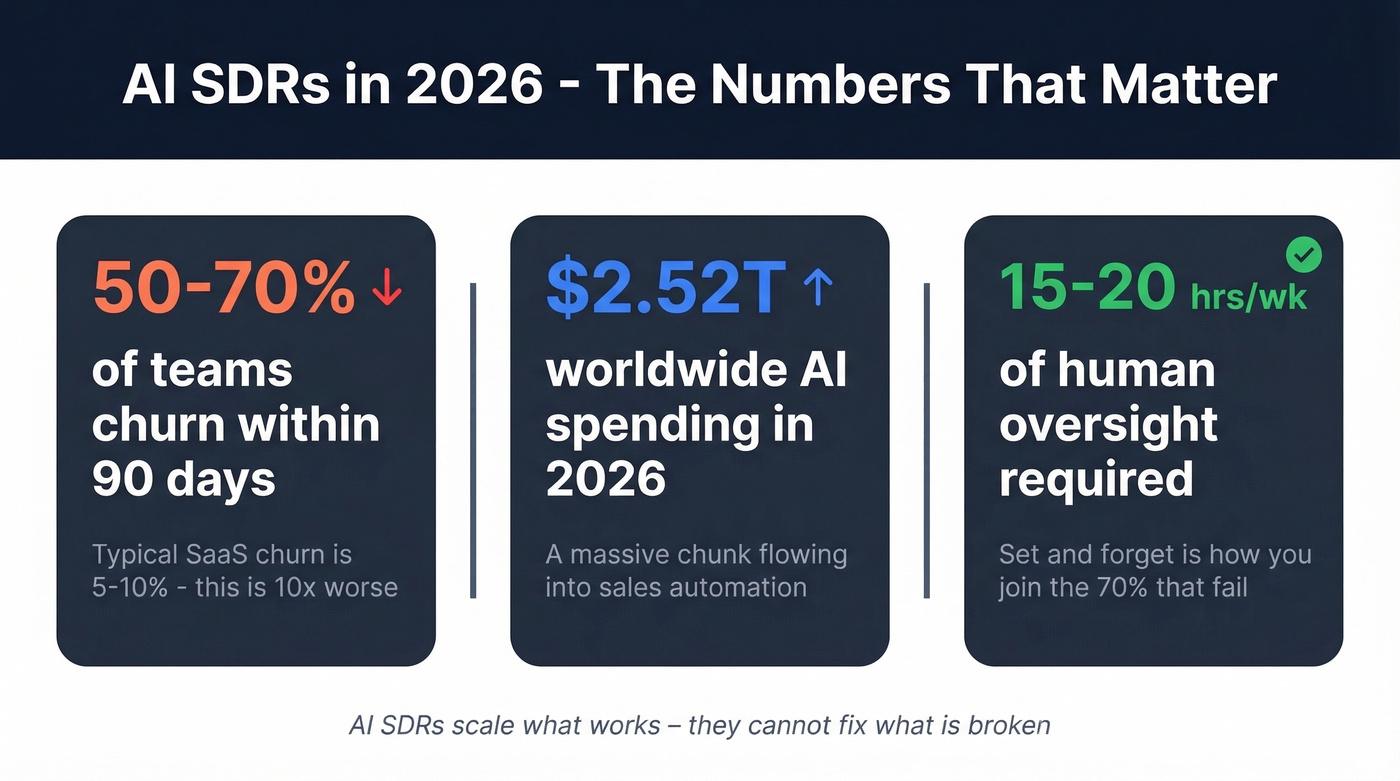
Your VP of Sales just forwarded you an 11x demo invite with the note "thoughts?" The pitch sounds incredible - an AI agent that books meetings while your reps sleep, at a fraction of the cost. Worldwide AI spending hit $2.52 trillion, and a massive chunk is flowing into sales automation. But 50-70% of teams buying AI SDRs churn within three months.
Here's how to be in the group that doesn't.
The Short Version
- They work - but only if your ICP, playbook, and contact data are already proven. They scale what works. They can't fix what's broken.
- Budget 15-20 hours/week of human oversight. "Set and forget" is how you join the majority that churn out within three months.
- Start with verified data, a proven outbound playbook, and a pilot of 100-200 accounts before committing $30K+/year to an enterprise platform.
What Is an AI SDR Platform?
An AI SDR is software that automates the core sales development loop: identify prospects, research them, personalize outreach, send messages, handle replies, qualify interest, and book meetings. The best ones handle up to 80% of routine SDR tasks - the repetitive email-send-follow-up-log cycle that burns out human reps.
Clean contact data goes in, the AI researches each prospect (company news, tech stack, job changes), generates personalized messaging, sends across email and sometimes other channels, monitors replies, and routes qualified responses to a human closer. It'll send 3,000 emails without blinking - and also without noticing that prospect #847 is your CEO's college roommate.
Most outbound platforms focus on email and other text-based channels, though some include phone and voice. The category also includes inbound tools - agents that engage website visitors via chat, recover missed conversations, and qualify leads in real time. If your site gets meaningful traffic, the inbound side is worth evaluating alongside outbound.
The market splits into two camps: tools that aim to replace human SDRs entirely (11x, Artisan) and tools that make existing SDRs faster (outbound platforms like Apollo, Reply.io, Instantly). 45% of sales teams already run a hybrid model, blending AI volume with human nuance. That hybrid approach is where we've seen the real results.
AI SDRs vs Human SDRs
The debate isn't "replace or don't replace." It's about understanding where each excels.
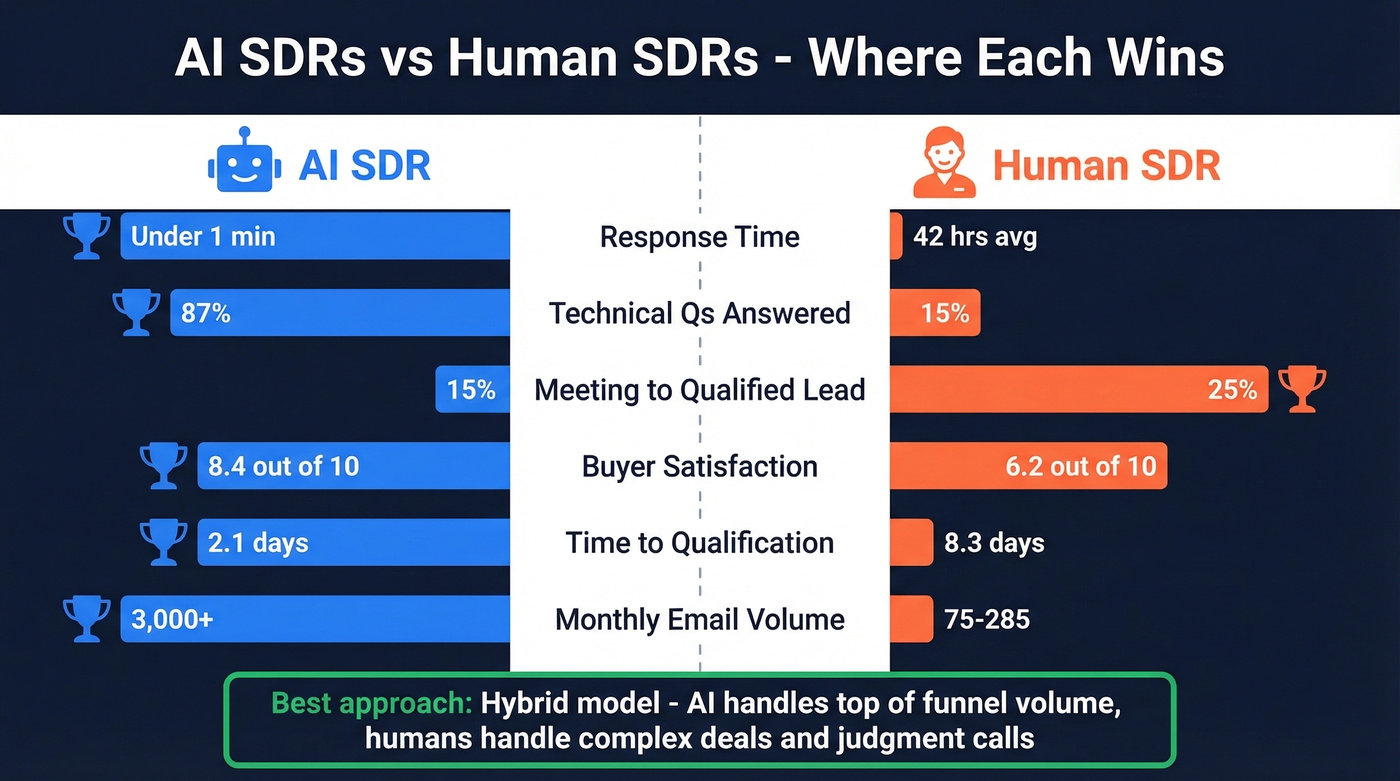
| Metric | AI SDR | Human SDR | Winner |
|---|---|---|---|
| Response time | <1 min | 42 hrs avg | AI SDR |
| Technical Qs answered | 87% | 15% | AI SDR |
| Meeting to qualified lead | 15% | 25% | Human SDR |
| Technical buyer satisfaction | 8.4/10 | 6.2/10 | AI SDR |
| Time to technical qualification | 2.1 days | 8.3 days | AI SDR |
| Monthly outbound volume | 3,000+ emails | 75-285 emails | AI SDR |
AI wins on speed and volume. Humans win on judgment and complex deal navigation. The best teams use both - AI handles the top-of-funnel grind while humans focus on conversations that actually require a brain.
Here's the thing: if your deals are transactional and under $10K ACV, you probably don't need a human SDR team at all. An automated agent with tight targeting and clean data will outperform a junior rep on those deals every time. But the moment deal complexity rises - multi-stakeholder buying committees, custom implementations, six-figure contracts - human judgment becomes irreplaceable. That 25% vs 15% meeting-to-qualified-lead gap matters enormously at enterprise price points.
One data point from SaaStr worth flagging: 95% of human SDRs don't fully understand what they're selling. AI agents actually outperform on technical questions because they can be loaded with complete product knowledge. The 87% vs 15% gap isn't a fluke.
Why 70% of Deployments Fail
The 50-70% churn rate within three months isn't a bug in the technology. Typical SaaS churn runs 5-10%. These tools churn at 10x that rate.
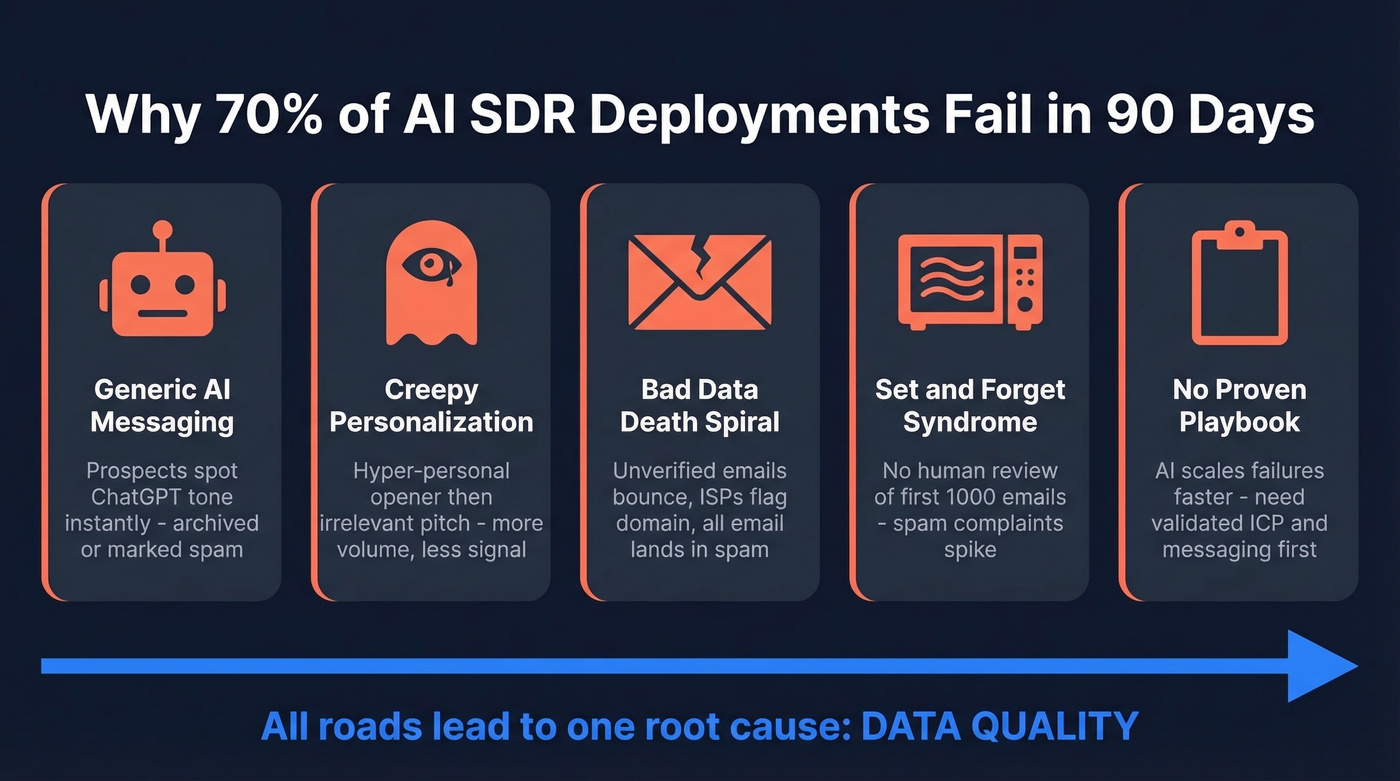
Generic "obviously AI" messaging. The r/sales consensus is brutal: prospects spot AI-written emails instantly. Formulaic openers, generic value props, and that unmistakable ChatGPT cadence get you archived or marked as spam. Some practitioners now add intentional typos to subject lines to bypass AI-detection filters - that's how bad the problem has gotten.
The creepy intro problem. The AI scrapes a prospect's recent activity, drops a hyper-personalized opening line - "Loved your take on Q3 pipeline metrics, Sarah!" - then pivots to a completely irrelevant pitch. As one Reddit thread put it, it's "more volume, less signal" - still spam, just with creepier intros.
Bad data triggers a domain death spiral. This failure mode causes the most lasting damage. Unverified emails bounce, ISPs flag your domain, deliverability craters, and suddenly even your human reps' emails land in spam. One 11x user on Reddit described Alice adding irrelevant companies to their CRM, reaching out to existing customers, creating hundreds of duplicates, and producing nonsensical messaging. They called it a "literal disaster."
Set-and-forget syndrome. One well-documented team failed for their first 30 days - generic messaging, poor response rates, spam complaints. They manually reviewed the first 1,000 emails before things started working. Teams that treat these tools like a microwave ("press start and walk away") are the ones that churn.
No proven playbook to scale. AI scales what's already working. If your outbound motion hasn't been validated by humans first - clear ICP, tested messaging, proven channels - the AI will just scale your failures faster and more expensively.

70% of AI SDR deployments fail because of bad data - bounced emails, flagged domains, and spam folders. Prospeo's 5-step verification delivers 98% email accuracy with a 7-day refresh cycle, so your AI agent sends to real inboxes, not dead ends.
Feed your AI SDR data that actually converts.
Data Quality: The Make-or-Break Factor
Every failure mode above traces back to one root cause: data quality. Your automated outreach is only as good as the contacts it sends to.
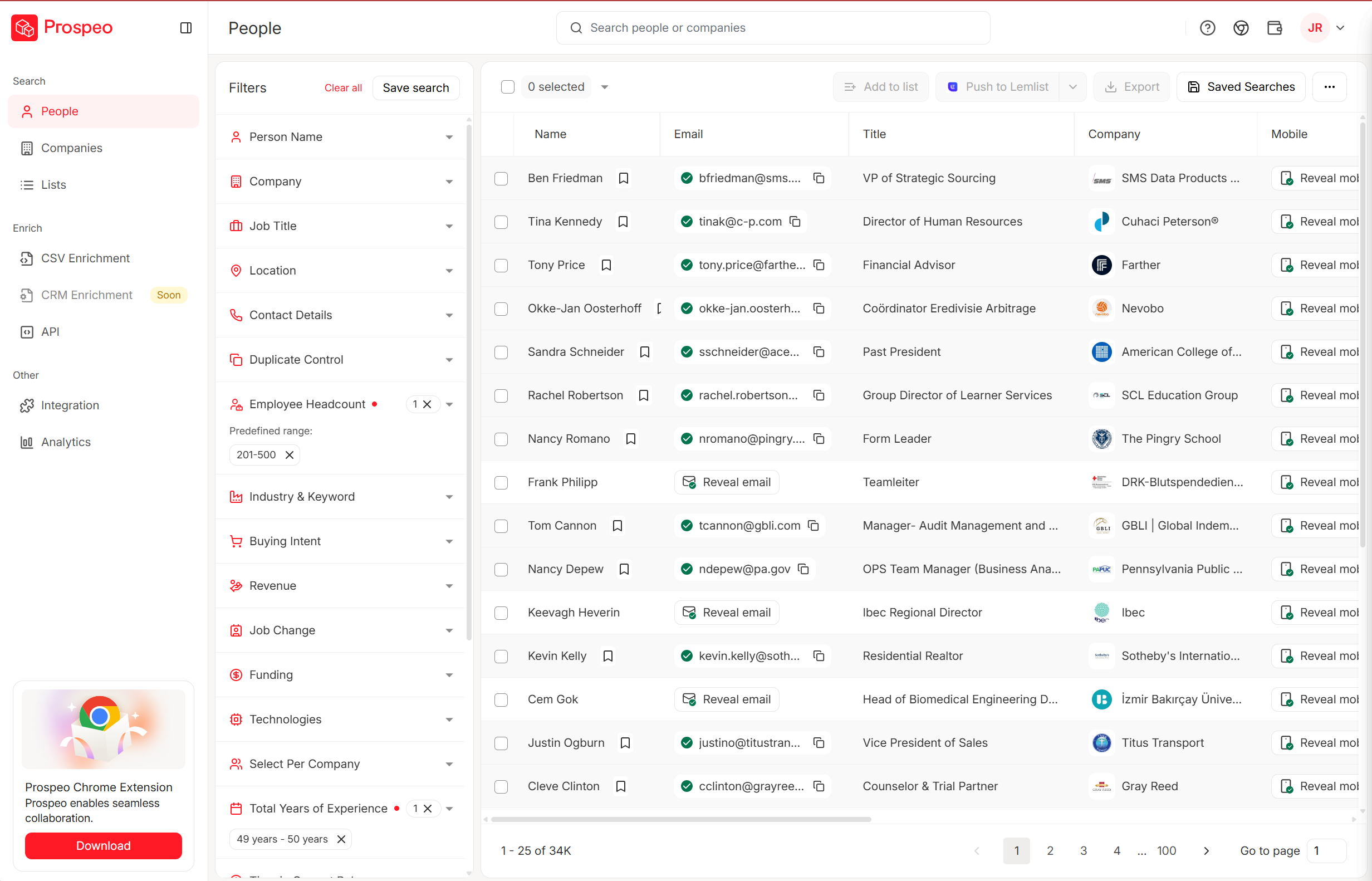
At 10-15% bounces, ISPs scrutinize your domain and deliverability can crater. Many platforms don't verify every email in real time before sending - they trust whatever's in their database or your CRM. Artisan's G2 reviews flag data inaccuracy as a recurring con. 11x's CRM contamination stories speak for themselves.
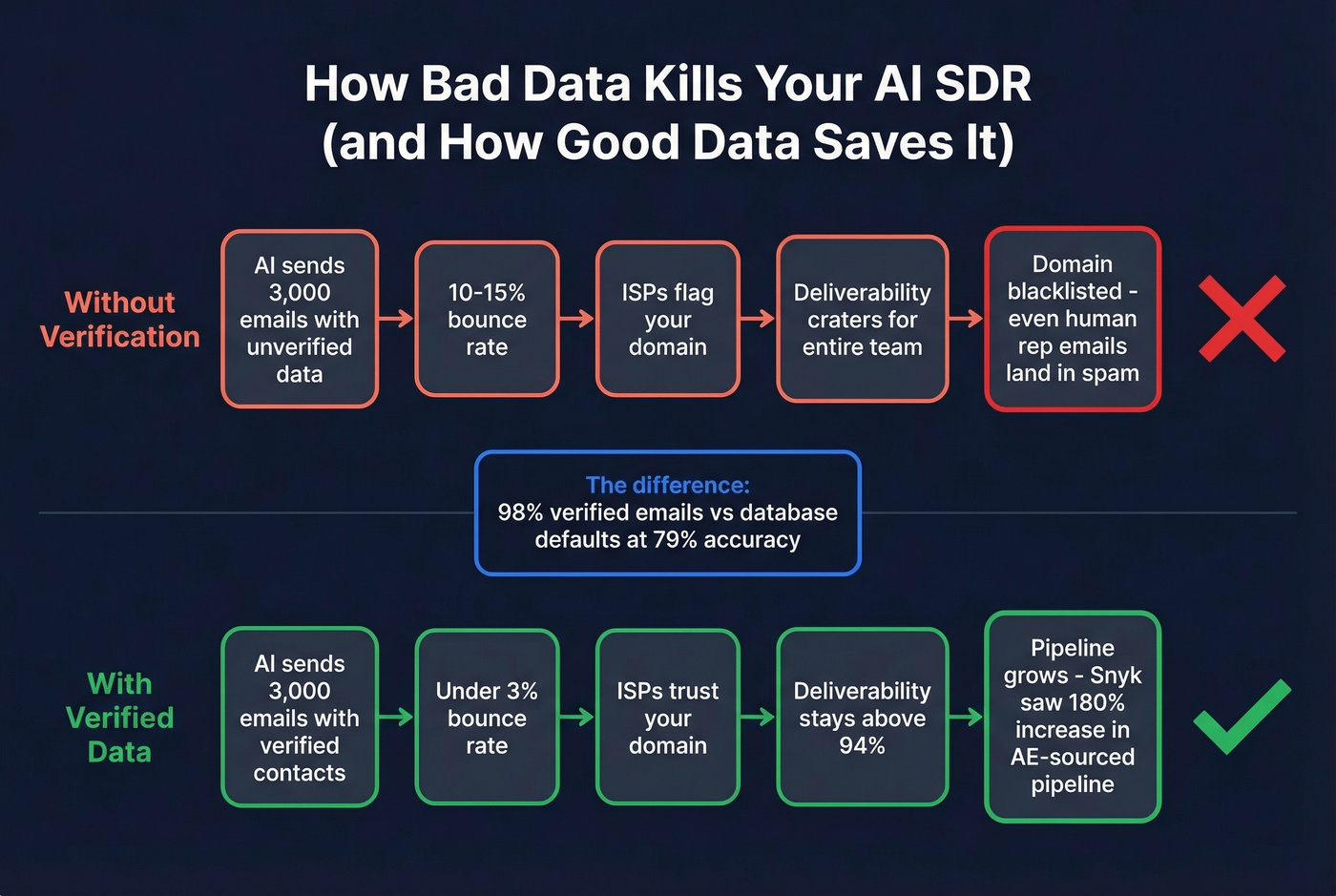
The proof is in real deployments. When Snyk's 50 AEs switched to Prospeo's verified data, bounce rates dropped from 35-40% to under 5%, and AE-sourced pipeline grew 180%. Stack Optimize built from $0 to $1M ARR with client deliverability above 94%, bounce rates under 3%, and zero domain flags. That's the difference between data that works and data that burns your infrastructure.
Best AI SDR Tools in 2026
The category is crowded. Here's what's actually worth evaluating.
Reply.io (Jason AI)
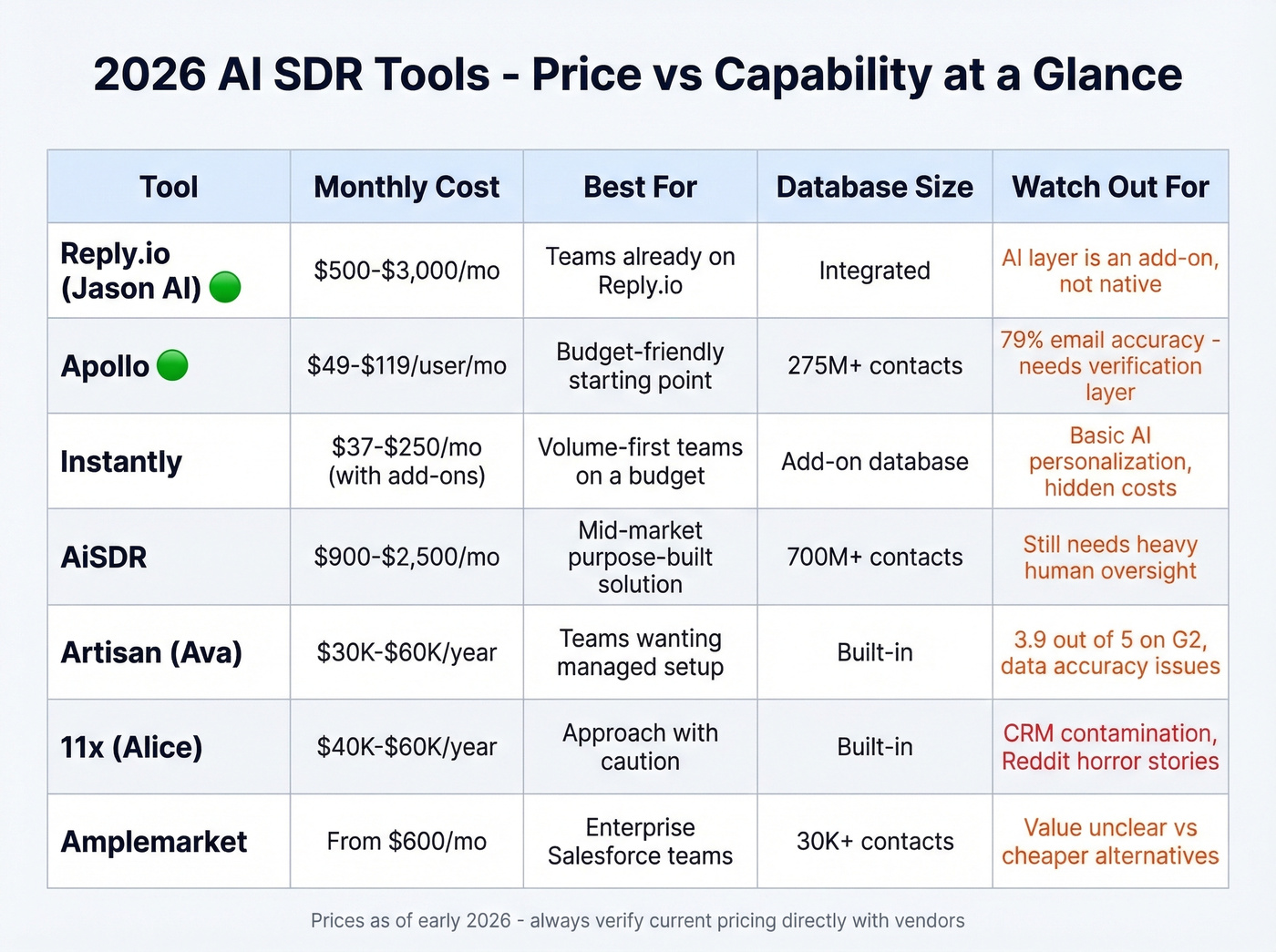
Reply.io has been in the sequencing game for years, and Jason AI is their autonomous layer. Email plans run $59-$99/user/month; the AI SDR add-on bumps you to $500-$3,000/month. Jason AI handles autonomous meeting booking, objection handling, and multi-step follow-ups - going beyond basic sequencing into actual conversation management.
The tradeoff: Jason AI is an add-on to a sequencing platform, not a purpose-built autonomous agent. You get solid infrastructure but the AI layer isn't as deeply integrated as tools built AI-first. For mid-market teams already running Reply.io sequences, it's the lowest-friction path to AI-assisted outbound.
Apollo
Apollo is the obvious starting point for teams testing automated outbound on a budget. Free tier available, paid plans from $49-$119/user/month, and a database covering 275M+ contacts. Built-in sequencing means you don't need a separate tool to start sending.
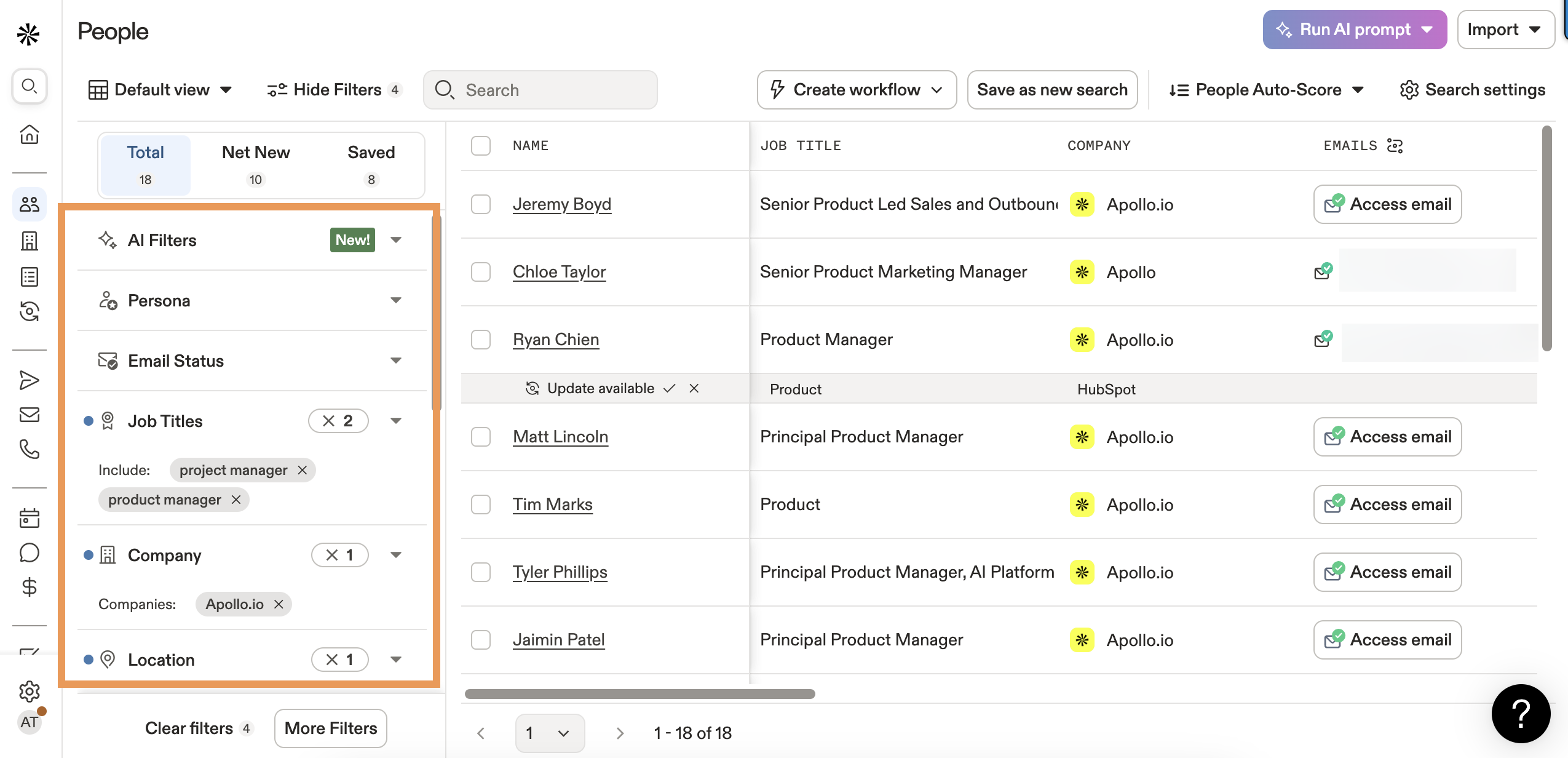
We've seen teams get productive on Apollo in days, not weeks. But the data accuracy gap is real - at roughly 79% email accuracy, one in five emails can bounce. For a human SDR sending 200 emails a month, that's manageable. For an AI agent blasting 3,000+, it's a deliverability risk. Pair Apollo's prospecting with a verification layer and you get the best of both worlds: Apollo's reach with 98%+ accuracy on every send.
Instantly
Use it if your primary metric is volume and your budget is tight. Plans start at $37/month with deliverability features like warmup and inbox rotation.
Skip it if you need sophisticated AI personalization. The AI writing layer is basic compared to purpose-built platforms. The real cost after add-ons - lead database, verification, CRM sync - typically lands at $150-$250/month. Still cheap, but not the $37 the landing page suggests.
AiSDR
A dedicated platform typically priced around $900-$2,500/month, positioned with unlimited seats and leads depending on the plan. The 700M+ database is impressive on paper, and the pricing sits in a sweet spot between budget tools and enterprise platforms. Good for mid-market teams wanting a purpose-built solution without paying 11x prices. Still requires significant setup and human oversight - don't let "unlimited" fool you into thinking it's hands-off.
Artisan (Ava)
Artisan's AI BDR "Ava" is typically sold on annual contracts in the $30,000-$60,000/year range. Setup and customer support are common pros on G2. The problem: a 3.9/5 rating with data inaccuracy flagged repeatedly. At that price point, data quality issues are hard to forgive. We'd want to see that accuracy improve before recommending it for high-volume outbound.
11x (Alice)
Let's be honest: 11x is one of the most expensive options at ~$40,000-$60,000/year with some of the most alarming user complaints. CRM contamination, targeting failures, outreach to existing customers, nonsensical messaging. They don't publish pricing, and the Reddit horror stories make the opacity worse. Approach with extreme caution, and demand a proof-of-concept before signing anything.
Amplemarket
Strong for enterprise teams already on Salesforce - bi-directional sync, full activity logging, and native workflow triggers set it apart from tools that just push data one way. Startup plan runs ~$600/month on annual billing with 2 users and 30K contacts. Growth and Elite plans are custom-quoted. Solid platform, but the value proposition gets fuzzy against cheaper alternatives unless you need that deep CRM integration.
Smartlead
Around $39-$174/month. Email-focused with strong deliverability infrastructure, but not a true autonomous agent - more of a sending platform. Pair with a separate data source and an AI writing layer for a modular stack that gives you more control than an all-in-one.
Clay
Free tier; paid plans up to $720/month on annual billing. Workflow automation for building enriched prospect lists, not an outreach tool itself. Best for RevOps teams building custom stacks that feed into sequencers. If you want full control over your data pipeline and don't mind the setup, Clay is unmatched. For teams that want something working out of the box, look elsewhere.
Agent Frank (Salesforge)
$499/month billed quarterly, 1,000 active contacts. Newer entrant with mailboxes at $2.50-$4 each. We haven't tested this one enough to recommend it confidently, but the pricing is competitive for a dedicated AI agent.
Pricing at a Glance
| Tool | Starting Price | Best For | Contract? |
|---|---|---|---|
| Instantly | $37/mo | Volume outbound | No |
| Apollo | Free; $49/mo+ | Teams starting out | No |
| Smartlead | ~$39/mo | Email deliverability | No |
| Agent Frank | $499/mo | Mid-price AI agent | Quarterly |
| Reply.io | $59/mo; AI $500/mo+ | Multichannel | No |
| Amplemarket | ~$600/mo | Salesforce teams | Annual |
| AiSDR | $900-$2,500/mo | Mid-market AI SDR | Varies |
| Artisan | ~$30-60K/yr | Easy-setup AI BDR | Annual |
| Clay | Free; up to $720/mo | RevOps workflows | No |
| 11x | ~$40-60K/yr | Enterprise (caution) | Annual |
| Human SDR | $75-100K/yr loaded | Judgment + complex deals | N/A |
The Real Cost of AI Sales Development
The platform subscription is the tip of the iceberg.
Budget 40-60 hours of data preparation before you launch anything - ICP definition, list building, data cleaning, CRM deduplication, and domain/mailbox setup. Then 10-15 hours/week of ongoing management: reviewing AI-generated emails, adjusting targeting, monitoring deliverability, and handling escalated replies. Skip the "it pays for itself in month one" math. Realistic ROI timeline: 3-6 months with clean data and a proven playbook, 6-9 months if you're building from scratch.
One team brought in $1M+ closed within 90 days - but only after failing for the first 30 days and investing significant operator time in manual review.
Here's a stat that should sharpen your urgency: opportunities closed within 50 days have a 47% win rate vs 20% after that threshold. AI SDR platforms compress time-to-qualification from 8.3 days to 2.1 days. That speed advantage compounds into real revenue - but only if the data going in doesn't sabotage the outreach going out.
Infrastructure costs add up too. Dedicated sending domains run about $13/year each - often bought in packs like 5 for ~$65/year, and you'll want 3-5. Warmed mailboxes cost $2-5/month each, and you'll want 5-15. Add a verification tool to keep bounce rates under control. For enterprise platforms, expect $50K-$100K+ annually all-in.
30-Day Launch Plan
Think of this as a crawl-walk-run framework. Most teams try to sprint on day one and face-plant.
Week 1 - Crawl: Audit and prepare. Define your ICP with surgical precision. Build or clean your prospect lists using verified data - filter by buyer intent, technographics, job changes, and headcount growth. Set up 3-5 sending domains and begin warmup. No emails go out this week.
Week 2 - Walk: Configure and constrain. Set up your platform with tight guardrails. Exclusion lists for existing customers, partners, and competitors. Messaging templates based on sequences that have already worked with human reps. Domain-level sending limits. CRM integration with duplicate detection.
Week 3 - Walk faster: Pilot with manual review. Launch against 100-200 accounts. Manually review every single email before it sends. Yes, every one. This is where the worst messaging failures get caught - hallucinations, irrelevant personalization, off-brand language. Adjust daily.
Week 4 - Run: Analyze and cautiously scale. Review response rates (target 5-12% after tuning vs the 2-4% industry average). Identify which ICPs and messages are working. Begin expanding volume, but keep the manual review cadence for at least another 2-3 weeks. Aim for 3,000+ emails/month once messaging is dialed.
Compliance Risks You Can't Ignore
AI SDRs send at scale. Scale multiplies compliance exposure.
TCPA: $500-$1,500 per violation. Send 1,000 messages without proper consent and you're looking at $500K-$1.5M in exposure. Automated agents that auto-dial or text without opt-in are especially dangerous.
CAN-SPAM: Up to $53,088 per email. Every email needs a physical address and a working unsubscribe link. Opt-outs must be processed within 10 business days.
GDPR: 4% of global revenue or EUR 20M, whichever is higher. If you're targeting EU prospects, your outreach platform needs legitimate interest documentation and a clear data processing basis.
The fix isn't complicated: use GDPR-compliant data sources, maintain suppression lists, honor opt-outs immediately, and audit your targeting rules weekly. But "not complicated" doesn't mean "optional."
Snyk cut bounce rates from 35% to under 5% and grew AE-sourced pipeline 180% - all by switching to Prospeo's verified contacts. Before you spend $30K+ on an AI SDR platform, make sure the data layer won't sabotage it.
Fix the data before you automate the outreach.
FAQ
Can AI SDRs fully replace human reps?
Not yet. AI SDRs handle volume, speed, and initial qualification, but humans still win on judgment and complex deal navigation - 45% of teams already run a hybrid model. For contracts above $25K with multi-stakeholder committees, plan for augmentation, not replacement.
How much do AI SDR platforms cost?
From $37/month (Instantly) to $60,000/year (11x). The mid-market sweet spot is $500-$2,500/month for a dedicated platform. Budget an additional 15-20 hours/week of human oversight plus $100-$300/month in infrastructure costs for domains, mailboxes, and verification.
What's the biggest reason deployments fail?
Bad contact data. Unverified emails bounce, ISPs flag your domain, and deliverability craters - even your human reps' emails start landing in spam. A 98% accuracy rate with weekly refreshes prevents this; tools sitting closer to 79% accuracy are risky at 3,000+ sends per month.
How long before an AI SDR generates ROI?
Three to six months with clean data and a proven playbook. Six to nine months if you're building from scratch. One team failed for their first 30 days before hitting $1M+ closed within 90 days - patience and daily oversight aren't optional.
Are AI SDRs worth it for small teams?
For teams with fewer than five reps and deal sizes under $15K, automated outbound can be a game-changer - if you already have a validated playbook. Start with Apollo or Instantly, pair with a verification tool like Prospeo for clean data, and run a 100-account pilot before scaling spend.