AI Is Reshaping the B2B Buyer Journey - Here's What to Do About It
A prospect told your AE they'd narrowed to three vendors before the first call. You weren't one of them. That scenario is playing out across B2B sales right now, and it's only accelerating. The buyer journey AI is transforming looks nothing like it did two years ago: the average buying cycle compressed from 11.3 months to 10.1 months in a single year, and artificial intelligence is accelerating how fast buyers research, compare, and form a shortlist before they ever pick up the phone.
The funnel isn't dying. It's being front-loaded. Buyers still move through awareness, consideration, and decision - but AI compresses the first two into one research session. By the time they talk to your rep, the deal is already half-decided.
The Short Version
- The Day One shortlist is everything. 95% of winning vendors are already on the buyer's initial list. If you're not visible in AI-generated answers, you're not on it.
- GEO is the new SEO. Companies already allocate 12% of digital budgets to Generative Engine Optimization. Start with schema, original data, and earned media.
- Your outbound data has to match the speed. A compressed journey means stale contacts equal missed windows. If your data is six weeks old, you're reaching out after the decision.
How AI Compressed the Buying Cycle
The 6sense 2025 Buyer Experience Report surveyed over 4,000 B2B buyers and found something that should alarm every GTM leader. The buying cycle didn't just get shorter - the entire decision architecture shifted forward, with journey compression driven by artificial intelligence becoming the defining trend in enterprise sales.
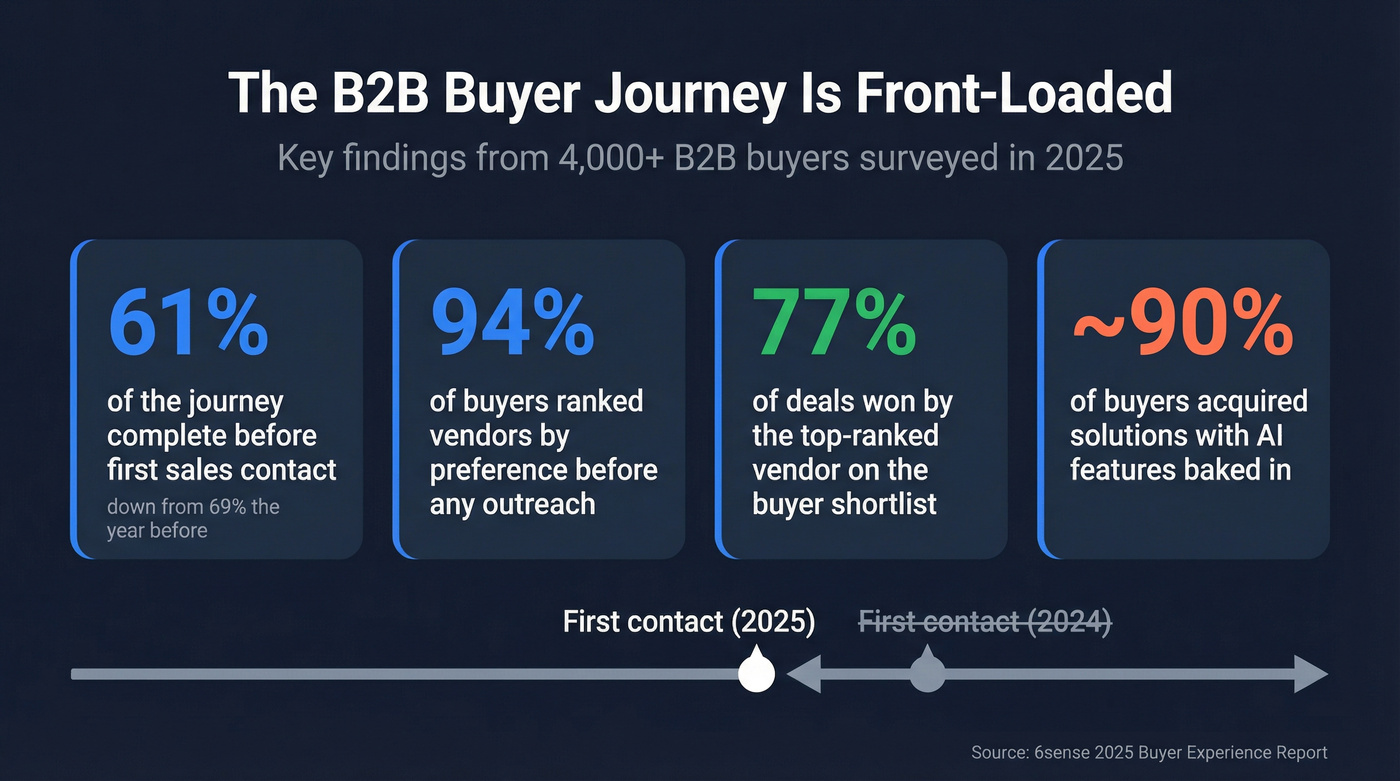
Buyers now make first contact at 61% of the journey, down from 69% the year before. That's roughly six to seven weeks earlier. 58% cite the need to evaluate vendors' AI capabilities, and 62% point to economic uncertainty pushing them to move faster.
Buyers evaluated roughly five vendors on average, but 94% ranked those vendors by preference before contacting a single one. The top-ranked vendor got the first call about 80% of the time and won the deal 77% of the time. Nearly 90% of buyers acquired solutions with AI features baked in - AI isn't a nice-to-have, it's table stakes.
Let's be honest about what this means for sales teams: if you're optimizing only for the late stage - demos, proposals, pricing negotiations - you're fighting after preferences are already formed. Most of the competitive battle now happens before a buyer ever talks to sales.
How Buyers Use ChatGPT for Research
When a VP of Operations asks an AI assistant "what are the best contract management platforms for mid-market companies," the model synthesizes an answer from the information it has access to. Muck Rack's analysis of over 1,000,000 LLM citations shows what kinds of sources tend to show up.
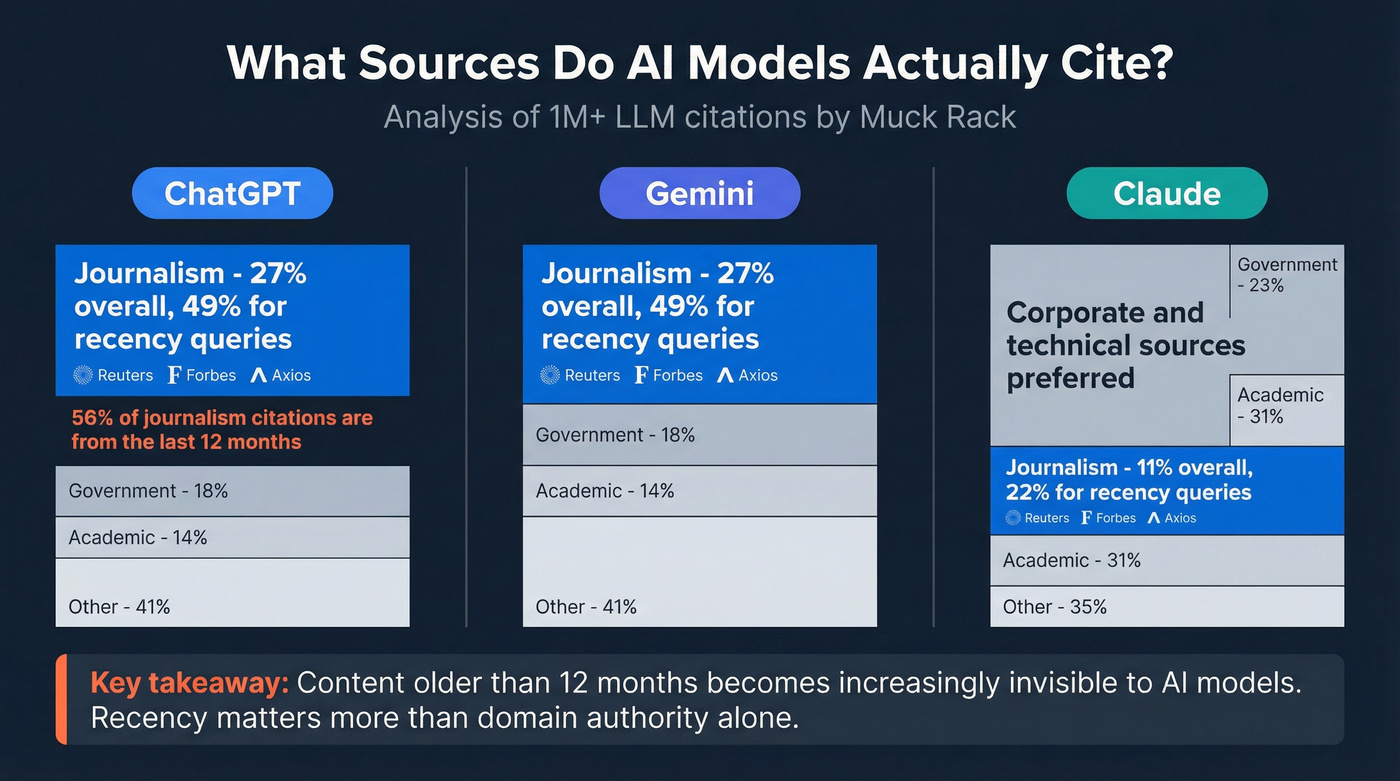
Journalistic content gets cited 27% of the time across all query types. For prompts that imply recency - "best tools in 2026," "latest trends in X" - that number jumps to 49%. ChatGPT and Gemini heavily favor outlets like Reuters, Forbes, Financial Times, and Axios. Claude cites journalism the least, pulling more from corporate and technical sources.
The recency bias is clear. For ChatGPT, 56% of journalism citations come from the last 12 months. Content you published eighteen months ago becomes increasingly invisible to these models. If you want to be discoverable in AI-mediated research, you need content that stays current and content that earns citations from sources these models actually surface.
What AI Agents Prioritize
IDC's framework for AI-mediated buying journeys boils down to three words: proof over promises. Agentic AI systems don't evaluate vendors the way humans do. They surface solutions based on relevance, applicability, and trustworthiness - and they determine trustworthiness by checking whether your claims are machine-readable, verifiable, and referenced by credible third parties.
Your product pages need structured data and schema markup, not just marketing copy. Your claims need to be echoed by independent sources: analyst reports, press coverage, customer case studies hosted on third-party sites.
Consistency across channels matters more than most teams realize. If your pricing page says one thing, your G2 profile says another, and your partner listing contradicts both, AI agents treat that inconsistency as a negative trust signal. Audit every public-facing data point quarterly, and treat your G2, Capterra, and directory listings with the same rigor as your homepage.
There's also a values dimension emerging. 81% of buyers and 88% of C-level executives now prioritize ethical AI use when selecting technology partners. AI agents don't morally evaluate vendors, but they do prioritize well-structured, frequently referenced content from authoritative sources. If your AI ethics page is a vague paragraph buried in your footer, it's not doing the work. Publish a dedicated page with specific commitments, link it from your main navigation, and reference it in press releases and analyst briefings.

A compressed buyer journey means your outreach window just shrank by weeks. If your contact data is on a 6-week refresh cycle, you're reaching decision-makers after they've already ranked their vendors. Prospeo refreshes every 7 days with 98% email accuracy - so you land in inboxes while buyers are still forming their shortlist.
Stop reaching out after the decision is already made.
The GEO Playbook
Every article tells you to "optimize for AI search." Fine. How? With what budget? Measured by what KPI?
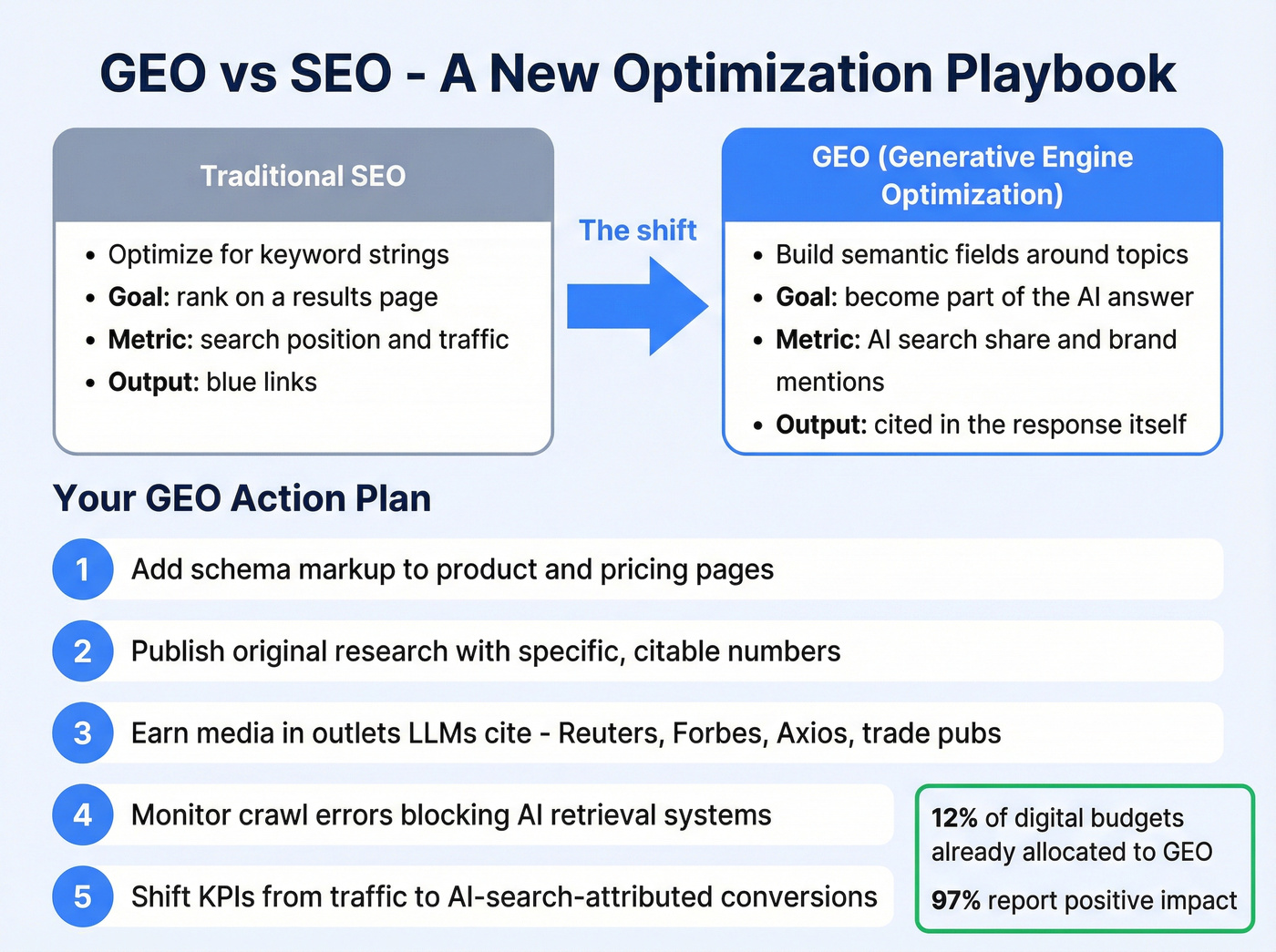
GEO - Generative Engine Optimization - is the practice of structuring content so AI models retrieve, cite, and surface it. It's not a rebrand of SEO. Instead of ranking on a results page, you're trying to become part of the answer itself.
The context-first publishing framework offers one of the clearest tactical models we've seen. Instead of optimizing for keyword strings, you build a semantic field around your topic using axis terms, structural context, problem context, retrieval units, and entity associations. LLM systems retrieve chunks - segments of content transformed into vector representations - and chunks with higher contextual similarity and semantic density get selected more often.
12% of digital budgets already go to GEO, and 32% of digital leaders call it their top priority for 2026. 97% report positive impact from their efforts. The organizational shift is real: 93% of leaders are building GEO capabilities in-house rather than outsourcing. And here's the gap nobody talks about - high-maturity organizations spend nearly twice as much on GEO as lower-maturity peers. The teams already winning are doubling down while everyone else is still running pilots.
Start with these moves:
- Implement schema markup across product and pricing pages
- Publish original research with specific, citable numbers (not "we surveyed some customers")
- Earn media mentions in outlets LLMs actually cite - Reuters, Forbes, Axios, industry-specific trade publications
- Monitor crawl errors that could make content invisible to AI retrieval systems
- Shift KPIs from traffic to AI-search-attributed conversions, AI search market share, and brand sentiment in AI responses
Buyers Still Want Humans
Here's my hot take: the companies pouring everything into AI automation are about to get blindsided. Gartner predicts that by 2030, 75% of B2B buyers will prefer sales experiences that prioritize human interaction over AI. That's not a contradiction with everything above - it's a division of labor.
AI handles discovery. Humans close deals.
The buyer uses AI tools to build a shortlist, reads three comparison articles, watches a demo video, and then wants to talk to a person who understands their specific situation. Understanding how buyers run comparison prompts, ask for pricing breakdowns, and request vendor pros and cons helps your reps anticipate what the buyer already knows before the first call. Buyers are showing up to calls with preferences already formed, and the reps who treat those calls as discovery sessions instead of confirmation conversations lose the deal.
You need to be visible in AI and ready with a human when the buyer reaches out. Teams that over-automate the sales conversation while under-investing in AI visibility have it exactly backwards.
Your Data Has to Keep Up
If the buying cycle is 10 months and the vendor is effectively chosen by month six, stale data means you're reaching out after the decision is made. We've seen this pattern repeatedly - teams running outbound with contact data that's four to six weeks old, targeting prospects who already signed with a competitor.
Intent signals are the early-warning system. They detect in-market buyers before those buyers self-identify by filling out a form or requesting a demo. But intent data is only useful if the contact data attached to it is fresh and accurate.
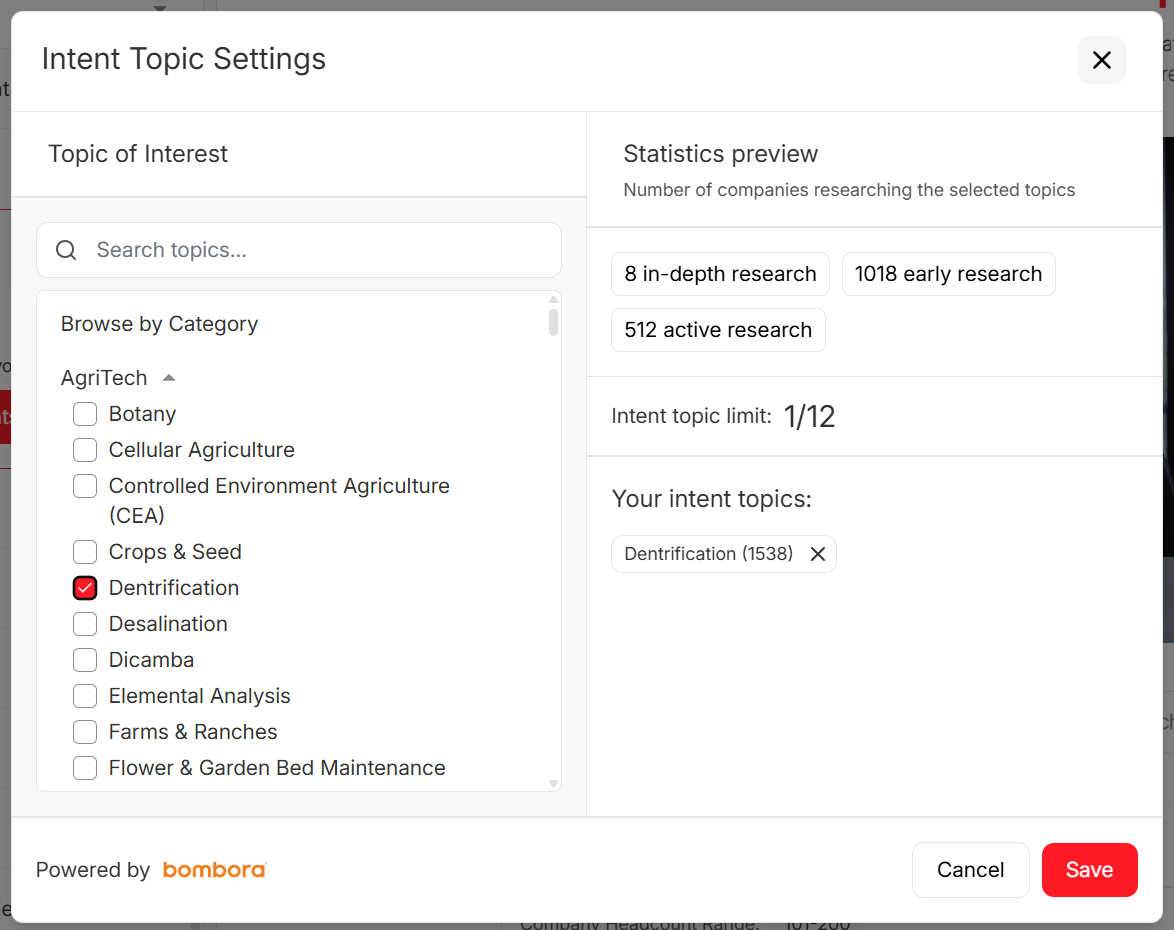
Prospeo tracks intent across 15,000 topics (powered by Bombora) and refreshes its entire database every seven days - compared to the six-week industry average. That difference matters when the buying window is compressing. The platform covers 300M+ professional profiles with prospect data accuracy and 125M+ verified mobile numbers, so when intent signals fire, you're reaching the right person with a working email and a direct dial. Snyk saw this firsthand: bounce rates dropped from 35-40% to under 5%, and AE-sourced pipeline jumped 180%.
Real talk: if your outbound sequences are bouncing at 15-20%, the compressed buyer journey is the least of your problems. You're burning domain reputation and missing the window simultaneously.
Four AI Mistakes Killing Pipeline
A Forrester analysis highlighted four genAI mistakes B2B marketing teams keep making - and the adoption gap makes them worse. Only 20% of B2B marketing teams use genAI daily, while 90% of buyers use it at every stage of the buying process. Your buyers are more AI-fluent than your team. When AI-mediated queries return results that don't mention your brand, that fluency gap costs you pipeline.
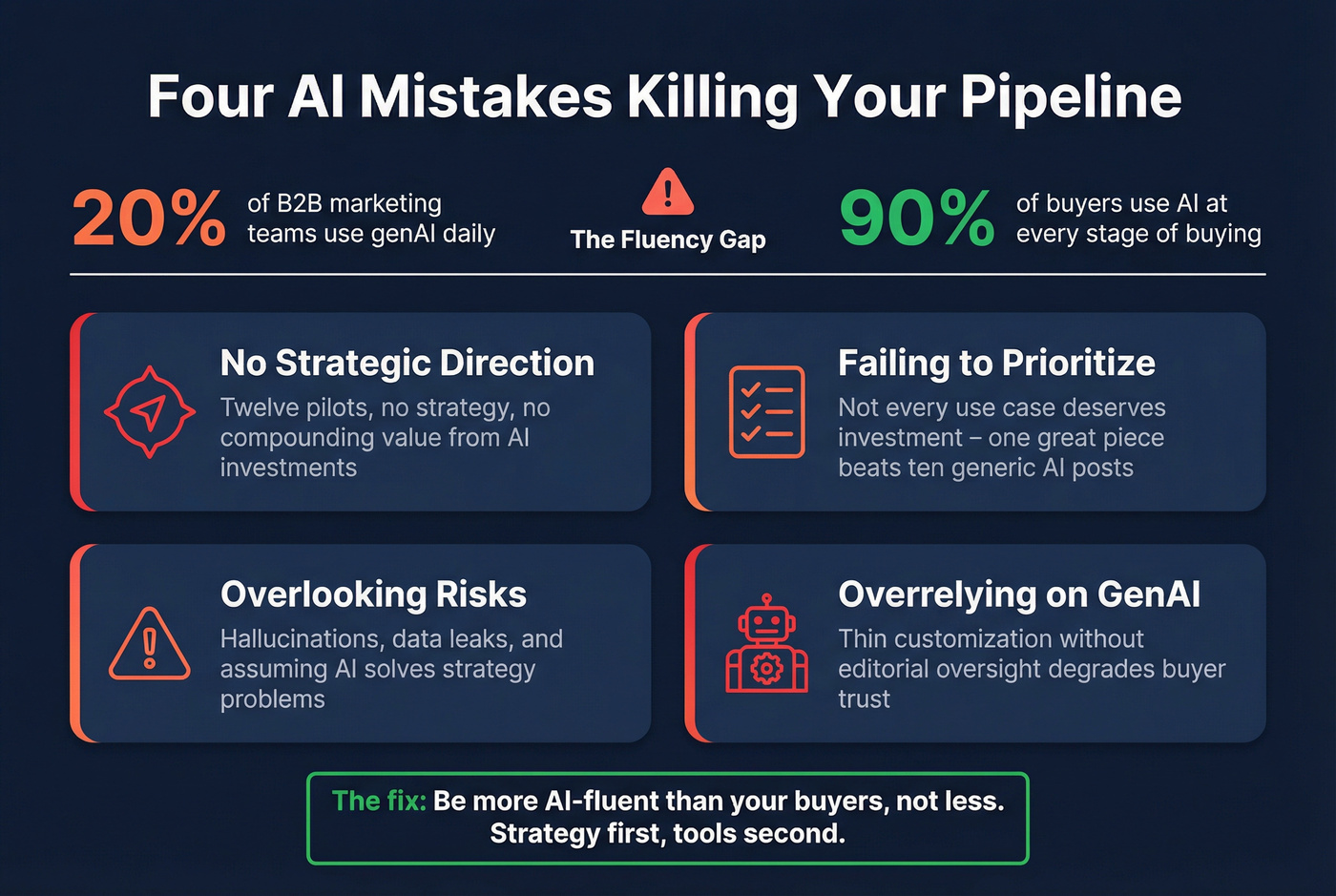
Lacking strategic direction. Teams test AI tools without a long-term vision. Twelve pilots, no strategy, no compounding value.
Failing to prioritize. Not every use case deserves investment. In our experience, the fastest way to lose credibility with both humans and AI retrieval systems is publishing "AI slop" - thin, obviously generated content that degrades trust. One well-researched piece with original data outperforms ten generic AI-written posts every time.
Overlooking risks. Hallucinations are real. Leaking proprietary data into free-tier AI tools is real. Assuming AI solves strategy problems is a fantasy.
Overrelying on genAI. Thin customization degrades the buyer experience. Skip this approach if you don't have editorial oversight in place - it's what separates useful content from noise, and without it you'll do more damage than good.
94% of buyers rank vendors before first contact. That means your outbound needs to hit the right person, at the right company, at the exact moment they're researching. Prospeo's intent data tracks 15,000 topics so you can spot in-market buyers and reach them with verified contacts - not stale records from last quarter.
Catch buyers while they're still building their shortlist.
FAQ
How is AI changing the B2B buyer journey?
AI tools compress the research phase so buyers form shortlists and rank vendors before ever contacting sales. 95% of winning vendors are on the buyer's Day One list, and the top-ranked vendor wins 77% of the time. Your priority is showing up in AI-generated answers during the discovery phase, not just performing well in demos.
What is GEO and why does it matter?
Generative Engine Optimization structures content so AI models cite and surface it in responses. 12% of digital budgets already go to GEO, 97% of leaders report positive results, and 32% call it their top priority for 2026. It's the new SEO for AI-mediated discovery.
How do you reach buyers in a compressed buying cycle?
Intent data detects in-market buyers before they self-identify. Prospeo tracks 15,000 intent topics and refreshes contact data every seven days, so outbound hits the right person with a verified email while they're still evaluating - not after they've signed with a competitor.
How are buyers using ChatGPT during purchasing?
B2B buyers use ChatGPT to compare vendors, summarize feature sets, estimate ROI, and draft internal business cases. Your content needs to be structured so AI models can parse and cite it accurately - vague marketing language gets filtered out in favor of specific, data-backed claims.