

The Best Email Verification Tools in 2026 - What the Accuracy Claims Won't Tell You
Email gets 26.6% of the average marketing budget and 64.6% of businesses say deliverability issues have directly hit revenue. You've probably lived this: you cleaned a 50,000-email list before a campaign, paid for verification, felt good about it - then the bounce report came back at 6%. Sender reputation tanked, replies dried up, and you spent two weeks warming a backup domain.
The problem isn't that email verifiers don't work. It's that most teams don't understand what these tools actually measure, what they miss, and which ones are worth paying for. We compared the best email verification tools to find out.
Our Picks (TL;DR)
| Category | Tool | Why |
|---|---|---|
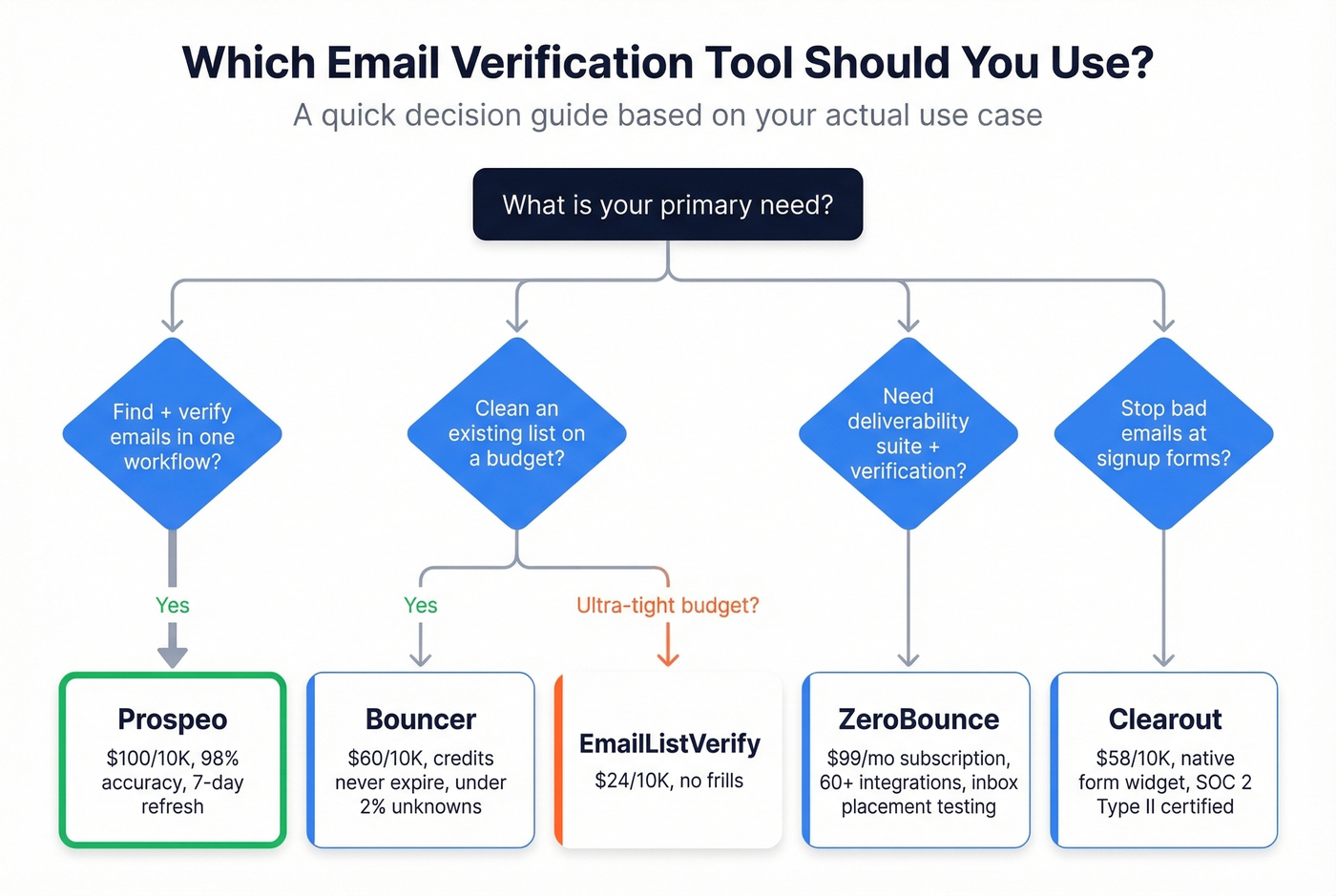
| Best overall accuracy | Prospeo | 98% accuracy, 7-day refresh, find + verify in one step |
| Best bulk verifier | Bouncer | $60/10K, credits never expire, <2% unknowns |
| Best for marketing | ZeroBounce | Deliverability suite, inbox placement testing, 60+ integrations |
| Best budget option | EmailListVerify | ~$24/10K, no frills |
| Best for forms | Clearout | Native form widget, ISO & SOC 2 Type II certified |
Prospeo goes beyond standalone verification - it finds and verifies emails in one workflow, which eliminates the "verify stale data" problem entirely. If you already have lists and just need to clean them, Bouncer is the move. Marketing teams running inbox placement tests alongside verification should look at ZeroBounce. And if budget is the only thing that matters, EmailListVerify gets the job done at a fraction of the cost.
Hot take: Most teams don't need a better verifier. They need fresher source data. If your emails are more than 30 days old, even the best email verification tool is just putting a stamp of approval on decay.
The Accuracy Myth
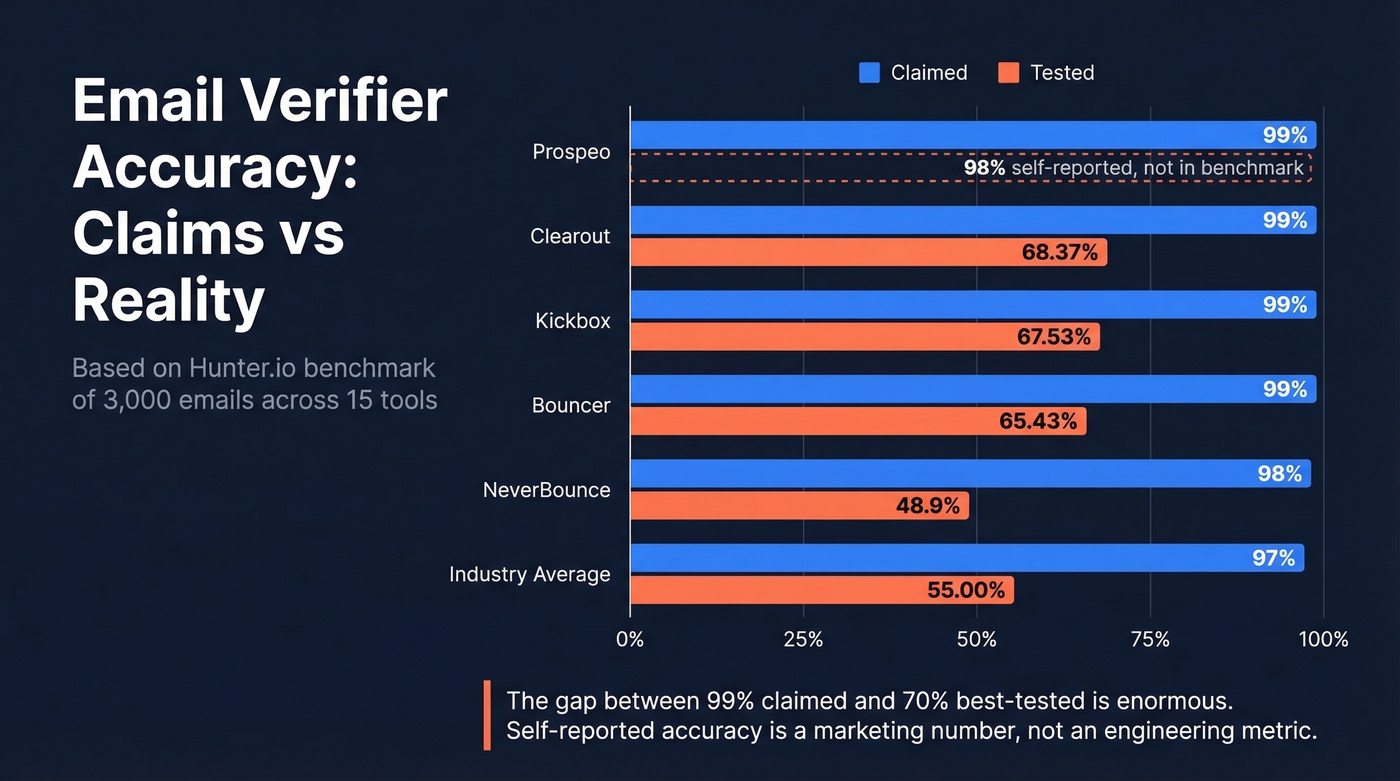
Every email verifier claims 97-99% accuracy. Every single one. The only multi-tool benchmark that actually tested this - Hunter's 3,000-email test across 15 verifiers - found the top scorer hit 70%. The worst managed 31%.
Let that sink in.

Hunter acknowledges bias in their benchmark since the dataset came from Hunter activity, which could give their own tool an edge. But even adjusting for that, the gap between "99% claimed" and "70% measured" is enormous. Self-reported accuracy is a marketing number, not an engineering metric.
What drives that gap: catch-all domains. Enterprise companies running Microsoft 365 or Google Workspace with catch-all enabled accept every email sent to their domain, whether the mailbox exists or not. A verifier pings the server, gets an "accepted" response, and marks it valid. Then you send, and it bounces. Only 23.6% of teams verify before every campaign, and even fewer understand that their "verified" list still contains landmines. Meanwhile, 60.3% cite spam filtering as the top barrier to inbox placement - a problem that bad verification makes worse.
The operational threshold that matters: keep total bounces under 2%, hard bounces under 1%. Anything above that and ESPs start throttling you.
What Verification Costs at Scale
Pricing varies wildly, and the sticker price per email isn't the whole story. Credit expiry, unknown-result charges, and minimum purchases all change the math.
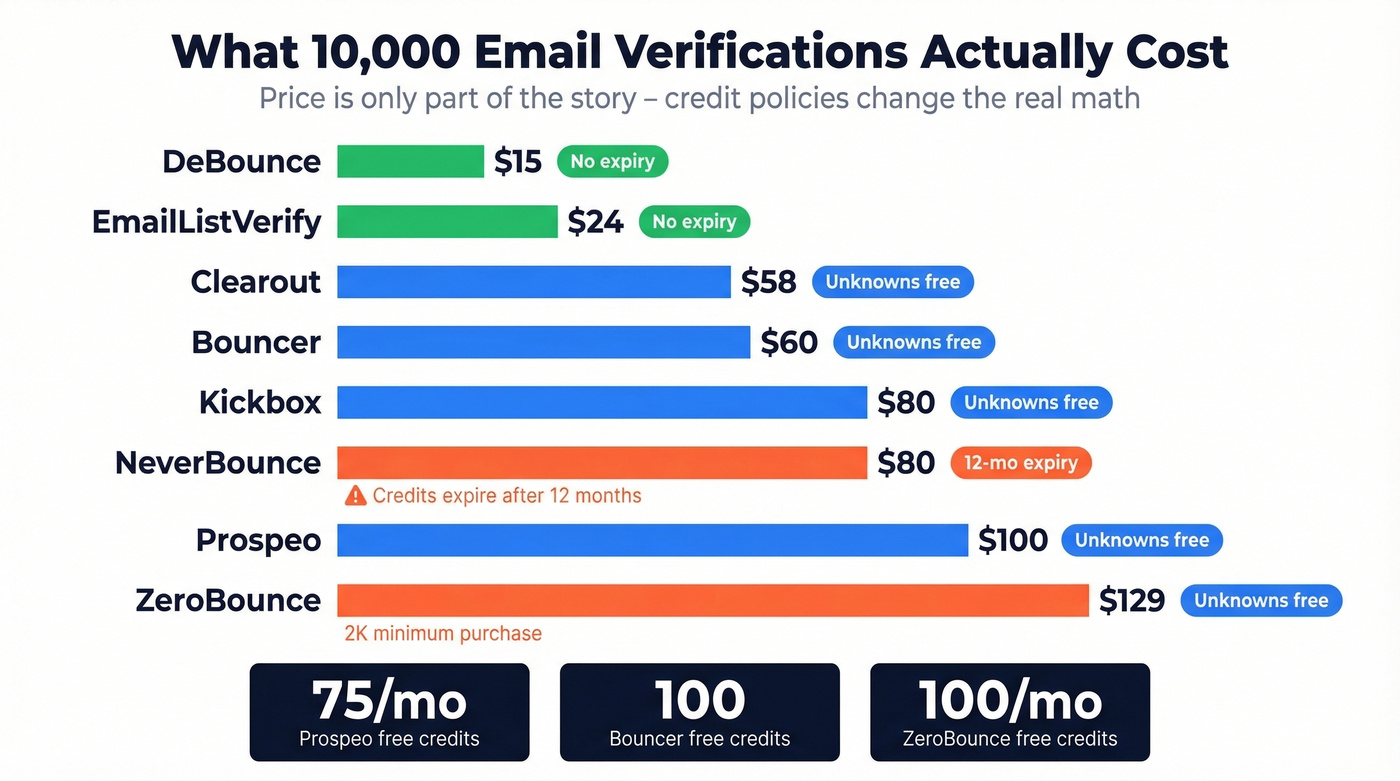
Here's what 10,000 verifications actually cost:
| Tool | ~Price/10K | Credit Policies | Free Credits | Catch-All Handling |
|---|---|---|---|---|
| Prospeo | ~$100 | No expiry, unknowns free | 75/mo | Advanced (5-step) |
| Bouncer | $60 | No expiry, unknowns free | 100 | Basic |
| ZeroBounce | $129 PAYG / $99/mo sub | No expiry, unknowns free (min 2K purchase) | 100/mo | Basic |
| Clearout | ~$58 | No expiry, unknowns free | 100 | Granular verdicts |
| Kickbox | ~$80 | No expiry | 100 | Basic |
| NeverBounce | $80 | 12-mo expiry | Free first list | Basic |
| Hunter | ~$149 | Bundled in plan | 50/mo | Basic |
| Emailable | ~$50 | - | 250 | Basic |
| EmailListVerify | ~$24 | - | - | Basic |
| Verifalia | ~$60 (est.) | - | Free online | Basic |
| DeBounce | ~$15 (est.) | - | 100 | Limited |
Two things jump out. NeverBounce's 12-month credit expiry is hostile to any team that doesn't verify monthly - buy credits in January, forget to use them by December, and they're gone. That's one of the most common friction points we see in verification pricing, right alongside catch-all frustration. At the budget end, EmailListVerify at ~$24/10K is genuinely hard to beat if accuracy tradeoffs don't scare you.

You just read that the best-tested verifier scored 70% on real data - and catch-all domains are the reason. Prospeo's 5-step verification handles catch-alls, spam traps, and honeypots before you ever hit send. Snyk dropped bounce rates from 35-40% to under 5% across 50 AEs.
Get 98% email accuracy at $0.01 per lead - test it free.
Top Email Verifiers Compared
Prospeo - Best for Accuracy + Data Freshness
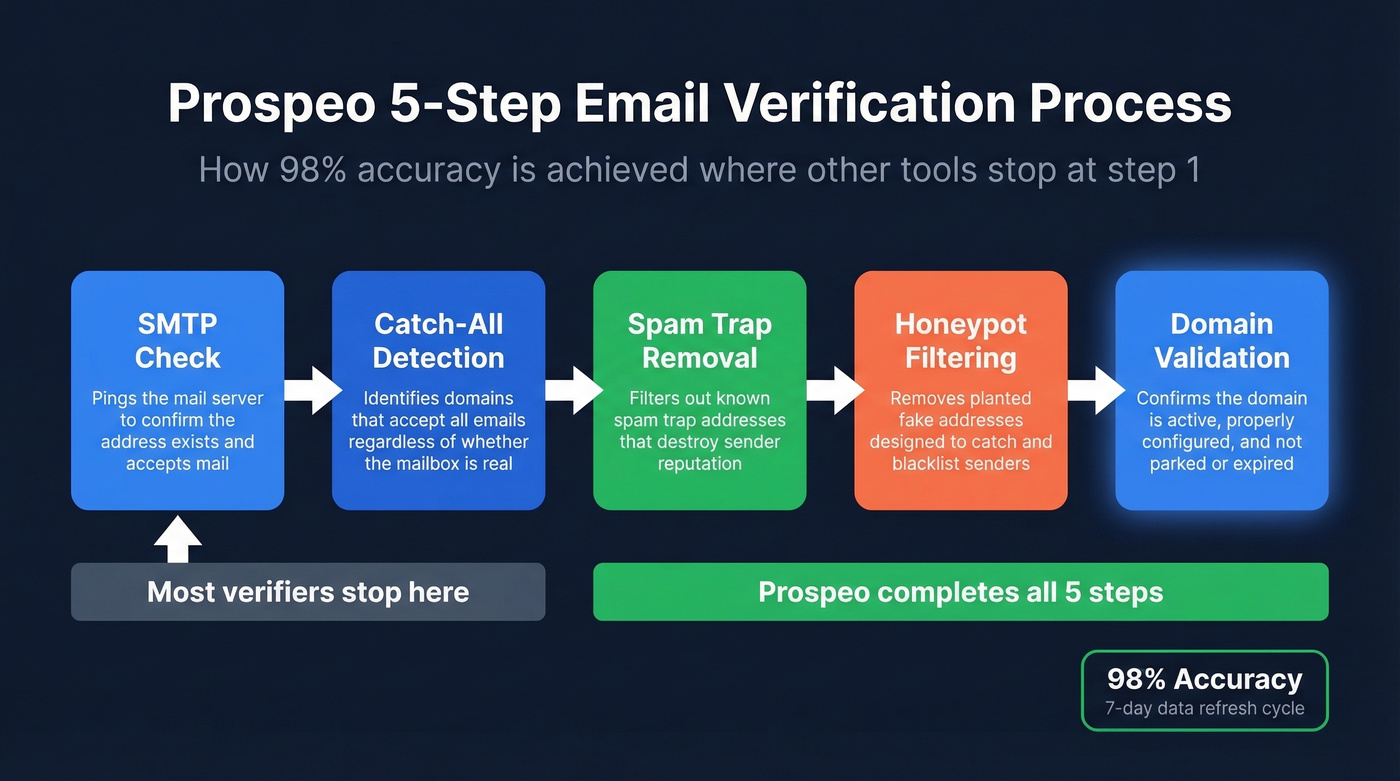
Most verification tools solve one problem: is this email valid right now? Prospeo solves a different one: give me a verified email that's actually current. Its 5-step verification process - SMTP check, catch-all handling, spam-trap removal, honeypot filtering, and domain validation - is built into a platform with 143M+ verified emails refreshed on a 7-day cycle. The industry average refresh is 6 weeks. That gap matters more than any accuracy percentage.
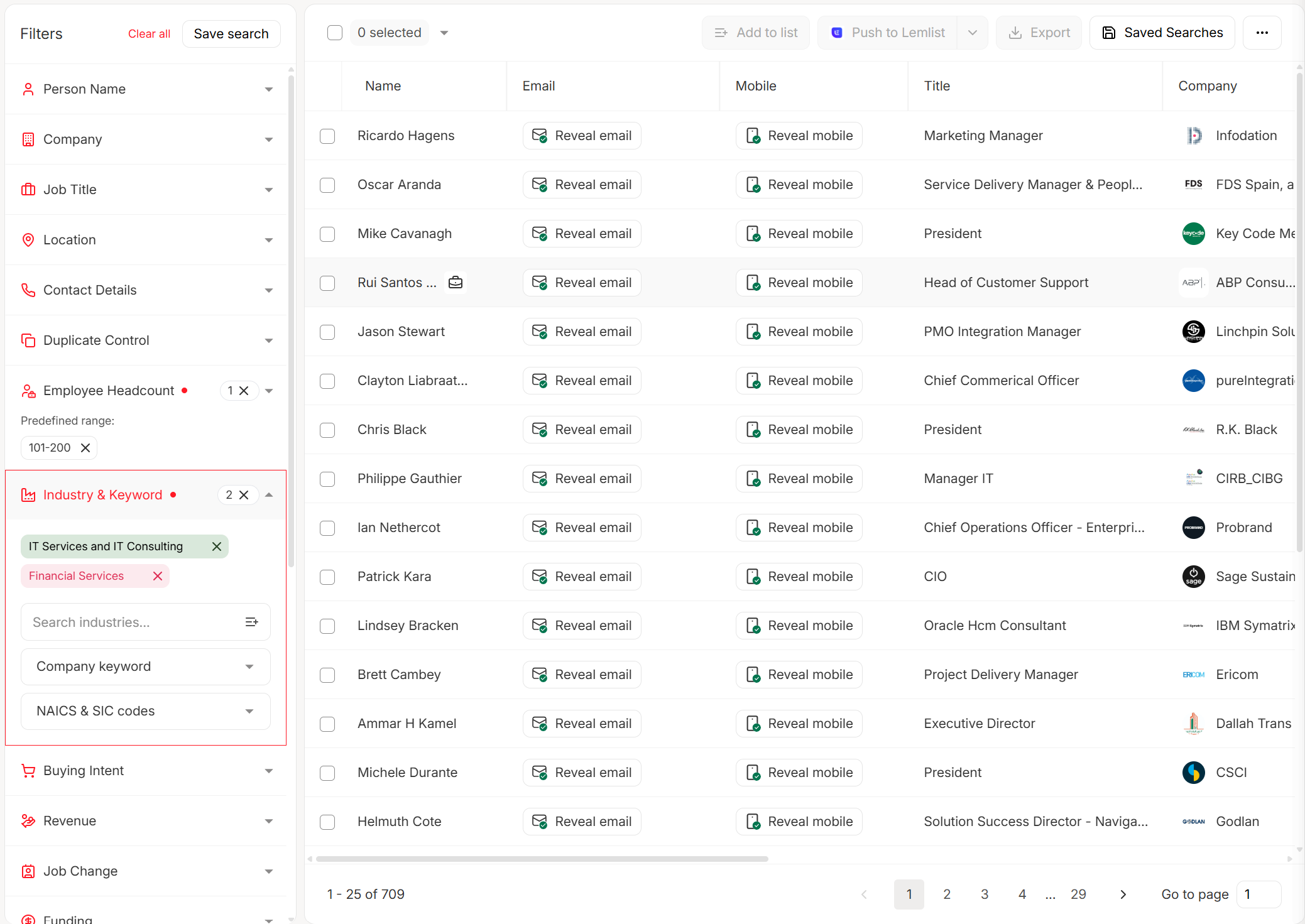
The results speak for themselves. Snyk's team of 50 AEs dropped bounce rates from 35-40% to under 5% after switching. Meritt tripled their pipeline from $100K to $300K per week. The Chrome extension with 40,000+ users lets you find and verify contacts from company websites, web sources, and CRMs, and native integrations push verified data straight into Salesforce, HubSpot, Smartlead, Instantly, Lemlist, Clay, Zapier, and Make.
The verdict: If you want to skip the "find emails in one tool, verify in another" dance, this is the answer. One workflow, 98% accuracy, ~$0.01/email. Free tier gives you 75 emails/month to test plus 100 Chrome extension credits/month. If you already have clean lists and just need a bulk verifier, Bouncer is cheaper for pure verification.
Bouncer - Best Standalone Bulk Verifier
Bouncer is the tool we'd recommend to anyone who says "I just need to clean a list." No ecosystem play, no upsell to a deliverability suite - just reliable, transparent bulk verification hosted in the EU.
The economics are clean: $60 for 10,000 verifications, scaling down to $2/1,000 at the million-credit tier. Credits never expire. Duplicates aren't charged. Unknowns aren't charged. Their "<2% unknown results" stat backs up the reliability claim, and in the Hunter benchmark Bouncer scored 65.43% - not the highest, but solid for a tool that doesn't control the source dataset.
Use this if: You need a no-nonsense bulk verifier with transparent pricing and EU hosting. The Deliverability Kit add-on at $25-250/mo is worth exploring if you also want inbox placement monitoring.
Skip this if: You need email finding bundled with verification. Bouncer only verifies.
ZeroBounce - Best for Marketing Teams
ZeroBounce packs more features into its platform than any other verifier on this list. Beyond basic verification, you get inbox placement testing, email scoring, data enrichment, blacklist monitoring, and DMARC tools - all bundled into ZeroBounce ONE at $99/mo (or $79/month billed annually) for 10,000 credits. Volume discounts drop the per-email cost to about $0.0032 at the million-email tier. The 60+ integrations make it easy to wire into marketing stacks.
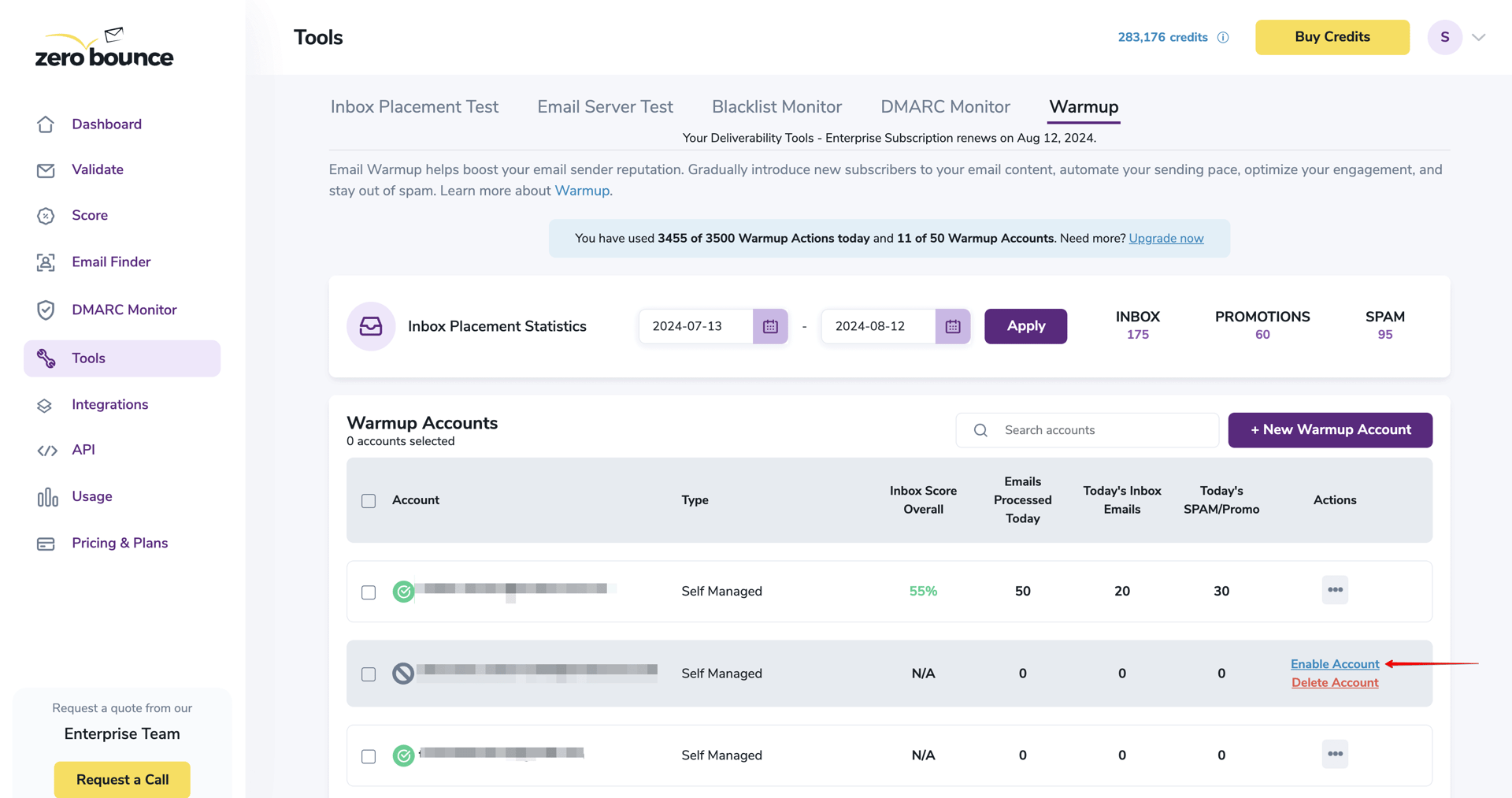
If you only need verification, ZeroBounce is roughly 2x Bouncer's price. The PAYG rate hits $129 for 10,000 emails, and there's a 2,000-credit minimum purchase. You're paying for the platform, not just the verification. For marketing teams running large campaigns who need deliverability analytics alongside email list hygiene, that premium makes sense. For an SDR team cleaning a prospecting list, it doesn't.
Best for: Marketing ops teams managing large subscriber lists who need verification + deliverability monitoring + enrichment in one platform.
Clearout - Best for Form Validation
If your biggest leak is bad emails entering through signup forms, Clearout is built for you. Its native form validation widget catches invalid emails before they hit your database - a fundamentally different use case than bulk list cleaning. ISO and SOC 2 Type II certification adds compliance credibility for enterprise buyers.
At ~$58 for 10,000 verifications, pricing sits mid-range. Unknowns aren't charged, credits never expire, and there's a refund policy framework tied to bounce-rate outcomes with specific requirements like sending "Safe-to-Send" addresses within 24 hours. In the Hunter benchmark, Clearout scored 68.37% - second overall. The 38 integrations cover most marketing and sales stacks.
Kickbox - Strong on Deliverability Insights
Kickbox scored 67.53% in the Hunter benchmark - third overall - and pairs verification with deliverability reporting that's genuinely useful. They publish the industry deliverability stats that half the articles in this space cite, which tells you they understand the problem deeply.
At ~$80 for 10,000 verifications with 100 free credits, pricing is middle-of-the-pack. The API-first design makes Kickbox a strong fit for engineering teams building verification into product workflows rather than running one-off list cleans.
NeverBounce
NeverBounce is a solid verifier with 80+ integrations and a $49/mo subscription for 10,000 monthly verifications. PAYG runs $8/1,000. Where it loses points: credits expire after 12 months. For high-volume teams burning through credits monthly, that's a non-issue. For everyone else, it's a dealbreaker when Bouncer and Clearout offer credits that never expire.
Hunter
Hunter is best known as an email finder, not a verifier - and they published the only real multi-tool benchmark in the space. Their own tool scored 70%, which is convenient given they built the test dataset. The bias disclosure is appreciated, but take the ranking with a grain of salt. At ~$149 for 10,000 verifications bundled into their Growth plan, Hunter is expensive for verification alone. Best for teams already using Hunter for email finding who want a verifier in the same workflow.
Emailable
Mid-range pricing at ~$50/10K, the most generous free tier at 250 credits, and processing speed of 2M emails/hour - fastest in class. Twenty-two integrations cover the basics. A solid pick for teams that need fast bulk processing without paying ZeroBounce prices.
EmailListVerify
The budget king. ~$24 for 10,000 verifications, scaling to roughly $0.0004/email at high volume. No deliverability suite, no enrichment, no frills. If your only requirement is "clean this list as cheaply as possible" and you accept that accuracy trails premium tools, EmailListVerify gets the job done. Catch-all handling is minimal.
Verifalia
Free online validator for one-off checks - paste an email, get a result. Paid plans run ~$50-80/10K. API available. Best for developers who need a quick integration or anyone verifying a handful of addresses manually.
DeBounce
~$15 for 10,000 verifications with 100 free credits. Budget pricing, but catch-all handling is limited. Fine for low-stakes list cleaning; risky for anything mission-critical.
Notable Mentions
MillionVerifier and Snov.io both come up frequently on r/sales and r/emailmarketing. MillionVerifier competes at the budget end with pricing around $29/10K and a focus on simplicity. Snov.io bundles verification into a broader outbound platform similar to Hunter. Neither made our top picks, but both are worth a look if the tools above don't fit your stack.
How Tools Handle Catch-All Domains
Catch-all domains accept every email sent to them - valid mailbox or not. When a verifier pings a catch-all server, it gets an "accepted" response regardless, which means the tool can't tell you whether john@company.com actually exists. This is why a big chunk of B2B lists come back as "unknown" or "accept-all."
The difference between tools comes down to what they do with that uncertainty. Most verifiers slap an "accept-all" label on the result and leave you to decide. Better tools try to give you an actionable signal rather than a shrug - Clearout provides more granular verdicts, for example, and some platforms layer additional data signals on top of the SMTP response.
Here's the thing: no tool can guarantee accuracy on catch-all domains. The best approach is to send to catch-all results in small batches, monitor bounces carefully, and recheck every 60-90 days. Domains change their catch-all configuration, employees leave, and what was valid last quarter bounces today.
When a Standalone Verifier Isn't Enough
Here's a pattern we see constantly: a team buys a prospecting database, exports 10,000 contacts, runs them through a standalone verifier, gets a "clean" list, and still bounces 4-5%.
The verifier did its job. The problem is the source data was already stale.
Most B2B databases refresh contacts every 4-6 weeks. People change jobs, companies rebrand domains, mailboxes get deactivated. By the time you export and verify, the data is already decaying. A standalone verifier can only tell you "this email responds to an SMTP ping right now" - it can't fix the fact that the email belonged to someone who left the company three weeks ago. For cold email deliverability, this distinction is everything.
This is where a platform that finds and verifies in one step with a weekly refresh cycle eliminates the standalone verifier entirely. The email you get was verified within the last week, not the last month. For outbound teams, that difference shows up directly in bounce rates and sender reputation.
If you're stitching together scraping + verification, it's worth reading up on email list scrubbing and how to clean your email list without wrecking deliverability.
Most verification tools check emails that are already decaying. Prospeo refreshes 143M+ verified emails every 7 days - 6x faster than the industry average. Find, verify, and push contacts to your CRM in one workflow instead of stitching together separate tools.
Skip the find-then-verify dance. One platform, one step, zero bounces.
Re-Verification Schedule
Email lists decay faster than most teams realize. About 9% of webform emails are invalid at the point of entry. For purchased or scraped lists, decay accelerates after 30 days. Proper email list hygiene means treating re-verification as a recurring line item, not a one-time expense.
Every 60 days: Re-verify any list you're actively sending to. Job changes, domain expirations, and mailbox deactivations accumulate fast.
Every 90 days: Re-verify dormant lists before reactivating them. A list that was clean in January will have noticeably higher bounces by April.
Before every major campaign: If the list hasn't been verified in the last 30 days, run it again. The cost of re-verification is trivial compared to the cost of a damaged sender reputation.
Outside of verification, make sure your domain auth is correct too (SPF/DKIM/DMARC). A lot of teams miss this and blame the verifier - our SPF DKIM DMARC setup guide walks through the full checklist.
FAQ
What's the difference between email verification and email validation?
Functionally, they're the same thing. "Verification" refers to the SMTP check - does this mailbox exist and accept mail? "Validation" often includes syntax checks, MX record lookups, and domain verification on top of that. Every modern email checker does both, so don't get hung up on the terminology. Focus on whether the tool handles catch-all domains and spam-trap detection.
How accurate are email verifiers really?
The only independent multi-tool benchmark - Hunter's test of 3,000 real business emails across 15 verifiers - found the top scorer hit 70% and the worst managed 31%. Self-reported claims of 97-99% don't hold up under controlled testing. Accuracy drops hardest on catch-all and enterprise domains, which is where most B2B emails live.
Do I need a separate verifier if my prospecting tool already verifies?
Not always. Platforms that verify emails at the point of discovery with a weekly data refresh often eliminate the need for a standalone verifier. If your source data is fresh and pre-verified, a second pass adds cost without meaningful accuracy improvement. If your prospecting tool refreshes data monthly or less, a standalone verifier is still worth the insurance.
How often should I re-verify my email list?
Every 60-90 days for active lists, and before any major campaign if the list hasn't been checked in 30+ days. Email addresses decay as people change jobs, companies rebrand, and mailboxes get deactivated. Budget roughly $2.40-$10 per 1,000 contacts per re-verification cycle depending on your tool.
What should I do with catch-all or accept-all results?
Never send to them in bulk. Catch-all domains accept all mail - including to nonexistent addresses - so a "valid" result means nothing. Send in small batches of 50-100, monitor bounces closely, and recheck every 60-90 days. Clearout provides more granular verdicts on catch-all domains than the generic "accept-all" label most verifiers return.