

Business Mailing Lists: Best Providers, Real Pricing, and What Works in 2026
Your marketing manager just asked you to "buy a business mailing list." Simple enough - until you realize that phrase means completely different things depending on whether you're sending postcards or cold emails. One path leads to per-record postal data brokers charging $0.03-$0.30 per name. The other leads to B2B data platforms with verified emails, direct dials, and intent signals. Pick the wrong category and you'll waste weeks and thousands of dollars.
We've spent months comparing both sides of this market. Here's what actually holds up.
Our Picks (TL;DR)
For B2B email and phone data: Prospeo - 98% email accuracy, ~$0.01/lead, free tier with 75 verified emails/month.
For direct mail (mid-market): Melissa - $0.05/record, CASS/NCOA processing available, 93-97% deliverability guarantee.
For direct mail (small business): DirectMail.com - $0.075/record, $125 minimum, list builder included.
What Is a Business Mailing List?
Traditionally, a "business mailing list" meant a database of company names, postal addresses, and maybe phone numbers - built for direct mail campaigns. You'd buy a list from a broker, print your mailers, and send them through USPS. That model still exists and works for certain industries.
Let's be honest, though: most people using this term in 2026 actually need verified B2B email addresses and phone numbers for digital outreach. The phrase is a holdover from the direct mail era. What you probably want is a B2B data platform that gives you filtered, verified contact data you can push into your CRM or sequencer.
Buy or Build Your List?
| Buying a List | Building Your Own | |
|---|---|---|
| Speed | Hours to days | Weeks to months |
| Cost upfront | $125-$5,000+ | Staff time + tools |
| Data quality | 60-98% depending on provider | You control it |
| Compliance risk | Higher | Lower |
| Long-term ROI | Diminishing | Compounding |
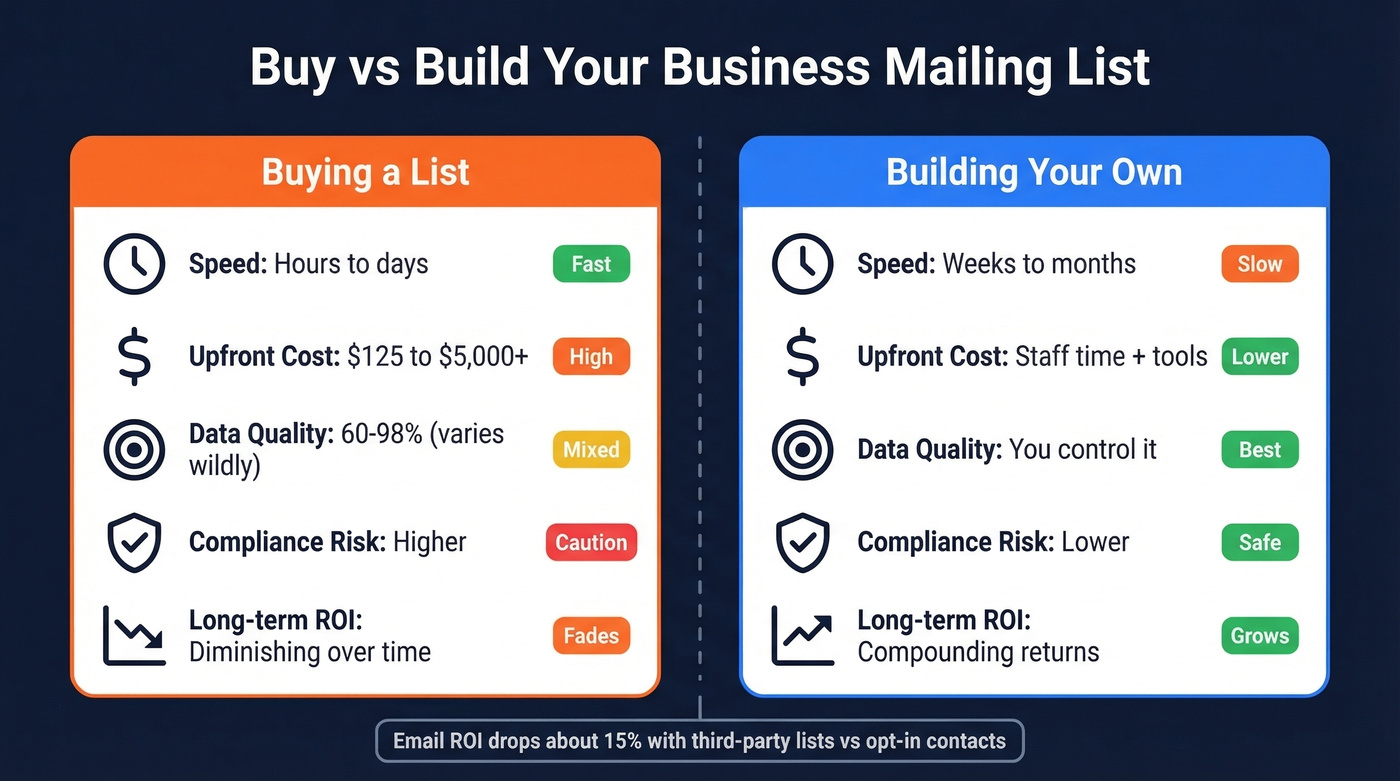
Email ROI drops ~15% when using third-party lists versus opt-in contacts. That's a real penalty. But it doesn't mean buying is always wrong.
Buying makes sense when you're entering a new market with zero contacts, supplementing organic lead gen during a pipeline crunch, or pairing purchased data with intent signals to filter for in-market buyers. Treat purchased lists as a starting point, not a strategy.
Here's the thing most buyers miss: many direct marketing lists are licensed for one-time use. Send a second mailing without paying again and you're violating the agreement. Some brokers seed their lists with tracking addresses specifically to catch you. B2B data platforms work differently - you export contacts and own the data.
How Much Do They Cost?
Pricing in this space is deliberately opaque. Try finding what Experian or Data Axle actually charges. You'll hit a "request a quote" form every time. Here's what we found after digging through public pricing pages, sales conversations, and community threads.
Direct Mail List Pricing
| Provider | Per Record | Min. Order | Includes Email? | Deliverability |
|---|---|---|---|---|
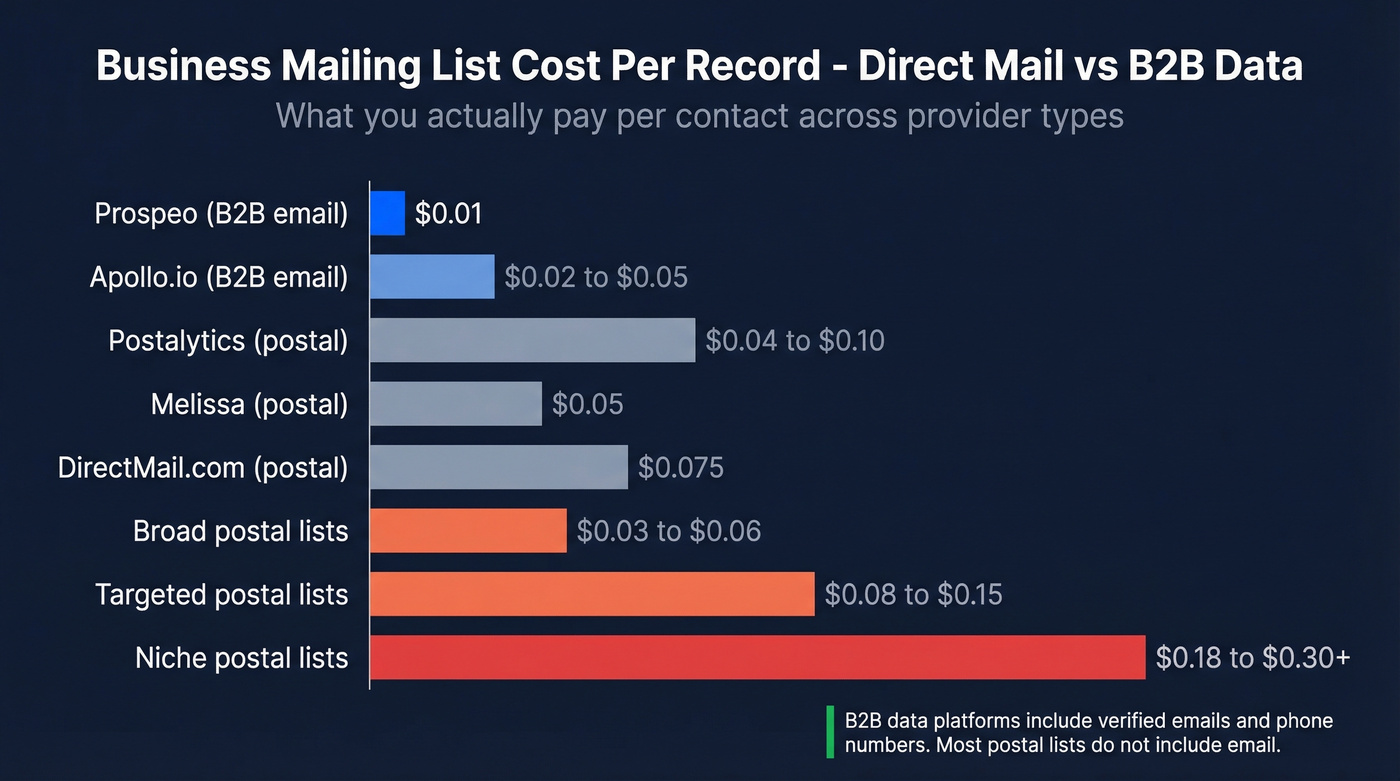
| Broad lists | $0.03-$0.06 | $100-$500 | No | ~0.2-0.4% response |
| Targeted lists | $0.08-$0.15 | $100-$500 | Sometimes | ~0.6-0.9% response |
| Niche lists | $0.18-$0.30+ | $200-$1,000 | Often | ~1.0-1.5% response |
| DirectMail.com | $0.075 | $125 | Where available | Not stated |
| Melissa | $0.05 | $50 | $0.185/record with emails | 93-97% guarantee |
| Postalytics | $0.04-$0.10 | ~$100 | No | CASS/NCOA certified |
B2B Data Platform Pricing
| Provider | Pricing | Database Size | Accuracy | Free Tier? |
|---|---|---|---|---|
| Prospeo | From $39/mo (~$0.01/lead) | 300M+ contacts | 98% email | Yes (75/mo) |
| Apollo.io | From $49/mo | 210M+ contacts | 80-90% | Yes |
| Lusha | From $29/mo | 280M+ contacts | ~92% | Yes |
| Hunter.io | From $34/mo | 117M+ contacts | 90%+ | Yes |
| ZoomInfo | $14,995/yr+ | 400M-500M+ contacts | 85-90% | No |
The gap between these two categories is massive. A 5,000-record postal list might cost $375-$1,500. A year on a self-serve B2B platform could cost less while giving you search access to hundreds of millions of verified contacts.
Best Providers for B2B Data
Prospeo
Prospeo's database covers 300M+ professional profiles, 143M+ verified emails, and 125M+ verified mobile numbers. The 98% email accuracy rate comes from a proprietary 5-step verification process with catch-all handling, spam-trap removal, and honeypot filtering. Meritt saw bounce rates drop from 35% to under 4% after switching, tripling their pipeline from $100K to $300K per week.

The 7-day data refresh cycle is the real differentiator here. Most providers refresh around every 6 weeks, which means you're emailing people who changed jobs a month ago. Prospeo also packs 30+ search filters including buyer intent data tracking 15,000 topics via Bombora, technographics, and headcount growth signals. Native integrations cover Salesforce, HubSpot, Smartlead, Instantly, Lemlist, Clay, Zapier, and Make.
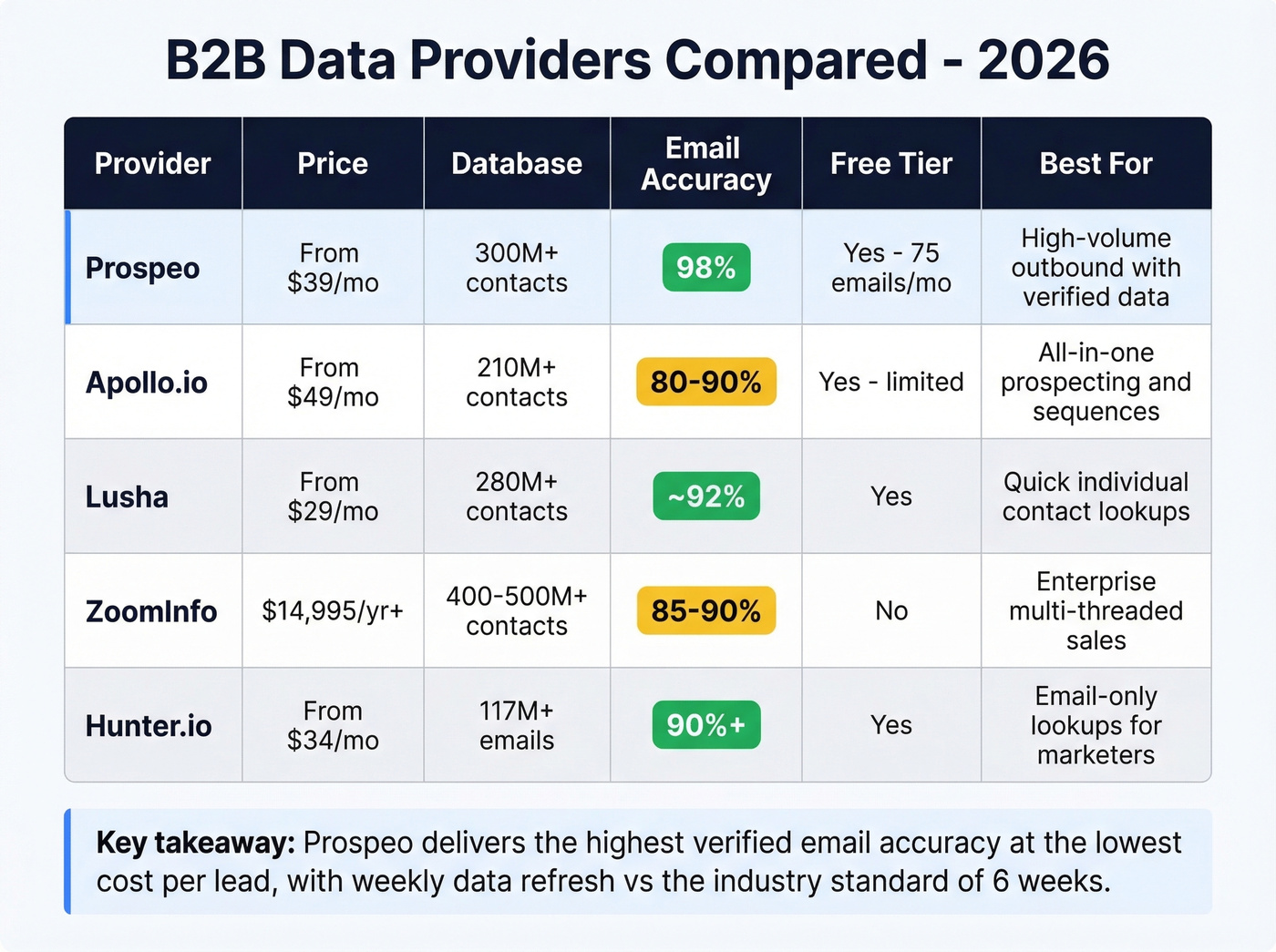
Pricing starts free - 75 emails/month plus 100 Chrome extension credits/month - and paid plans run roughly $0.01 per lead. No contracts, no sales calls required.

You just saw the pricing gap: postal lists cost $0.03-$0.30 per record with no email included. Prospeo gives you 300M+ verified contacts - emails, direct dials, intent signals - for ~$0.01 each. 98% email accuracy, 7-day refresh, 30+ filters. No contracts, no sales calls.
Build a better business mailing list in minutes, not weeks.
Apollo.io
Apollo's 210M+ contact database is genuinely impressive for a platform that offers a free tier. Paid plans start at $49/month, with Professional at $99/user/month. The platform bundles prospecting, email sequences, and a basic CRM - attractive for teams that want everything in one place.
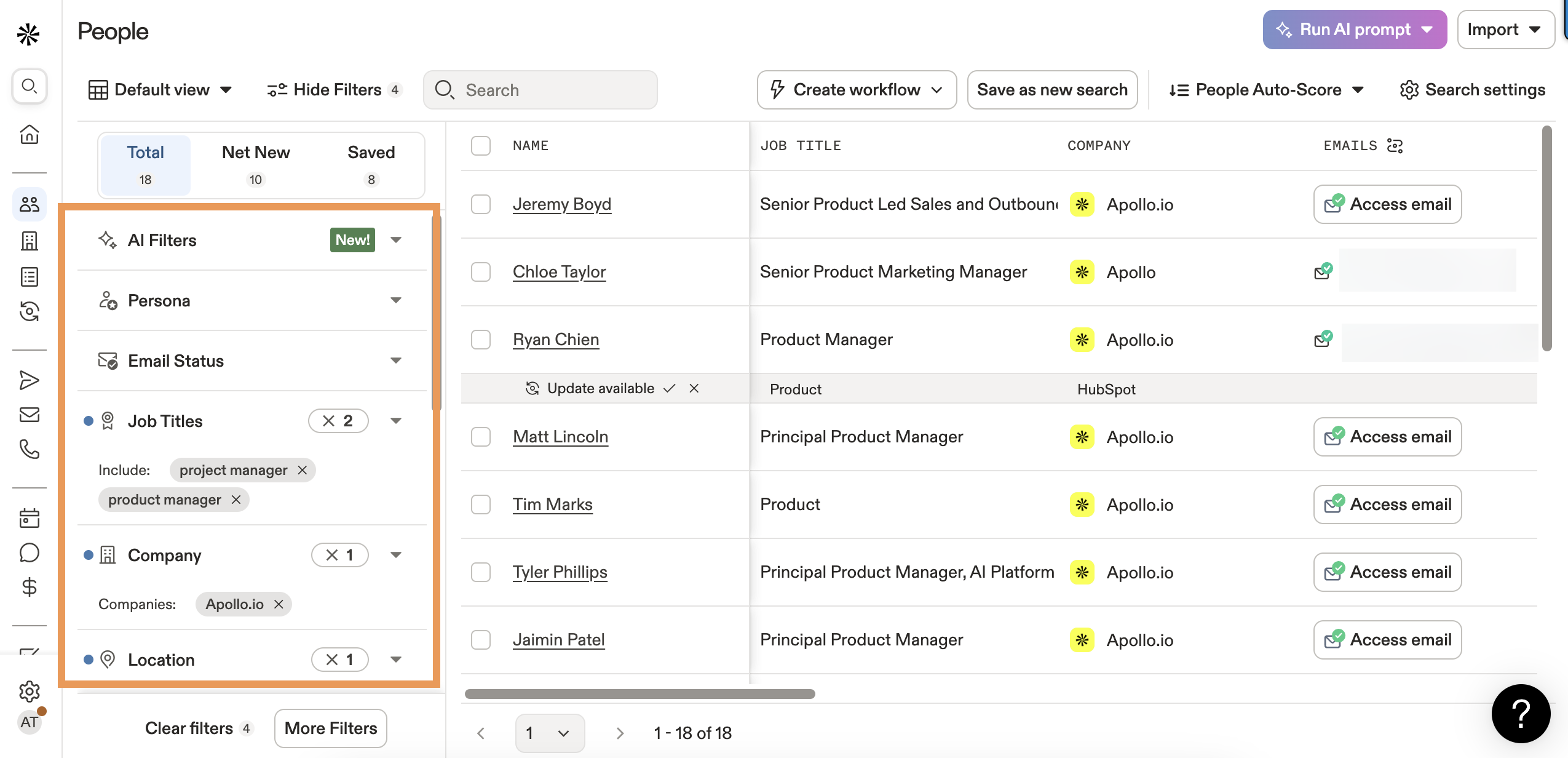
The tradeoff is accuracy. The most consistent buyer objection we see with Apollo is bounce rates, and credit consumption gets confusing fast, especially on the free plan where limits are tight. Apollo wins on price and accessibility versus ZoomInfo but leaves a meaningful accuracy gap for high-volume outbound.
Lusha
Lusha is the tool for reps who want quick contact lookups without learning a complex platform. The 280M+ database and clean UI mean you can go from "I need this VP's email" to "sent" in under a minute. Starts at $29/month.
The limitation is scope. Lusha is a lookup tool, not a prospecting platform. No bulk exports at lower tiers, no intent data, no advanced filtering. If your workflow is "find 10-20 contacts a day and reach out manually," Lusha fits. For teams building lists of 500+, skip this one.
ZoomInfo
ZoomInfo is still the most comprehensive GTM platform on the market. But most teams don't need comprehensive - they need accurate. At $14,995/year minimum (and often $30-100K+/year depending on seats and modules), you're paying for capabilities you'll likely never activate.
The 400M-500M+ contacts, intent data, technographics, and org charts are genuinely best-in-class for enterprise sales teams running complex, multi-threaded deals. But the #1 complaint across r/sales and similar communities is price - specifically, paying for features that sit unused. If your average deal size is under $25K, you almost certainly don't need ZoomInfo-level infrastructure.
Hunter.io
Hunter covers 117M+ professional email addresses and starts at $34/month. It's email-only - no phone numbers, no intent data. Best for marketers who need email addresses and nothing else. Think of it as a scalpel where the platforms above are Swiss Army knives.
If you're comparing tools in this category, see our breakdown of email list providers and Hunter alternatives.
Buying a one-time-use mailing list with 60% accuracy is a losing bet. Prospeo's 5-step verification and weekly data refresh mean you're reaching real people at current companies - not bouncing off stale records. Meritt cut bounce rates from 35% to under 4% and tripled pipeline.
Stop licensing stale lists. Own verified B2B data you can actually use.
Best Providers for Direct Mail
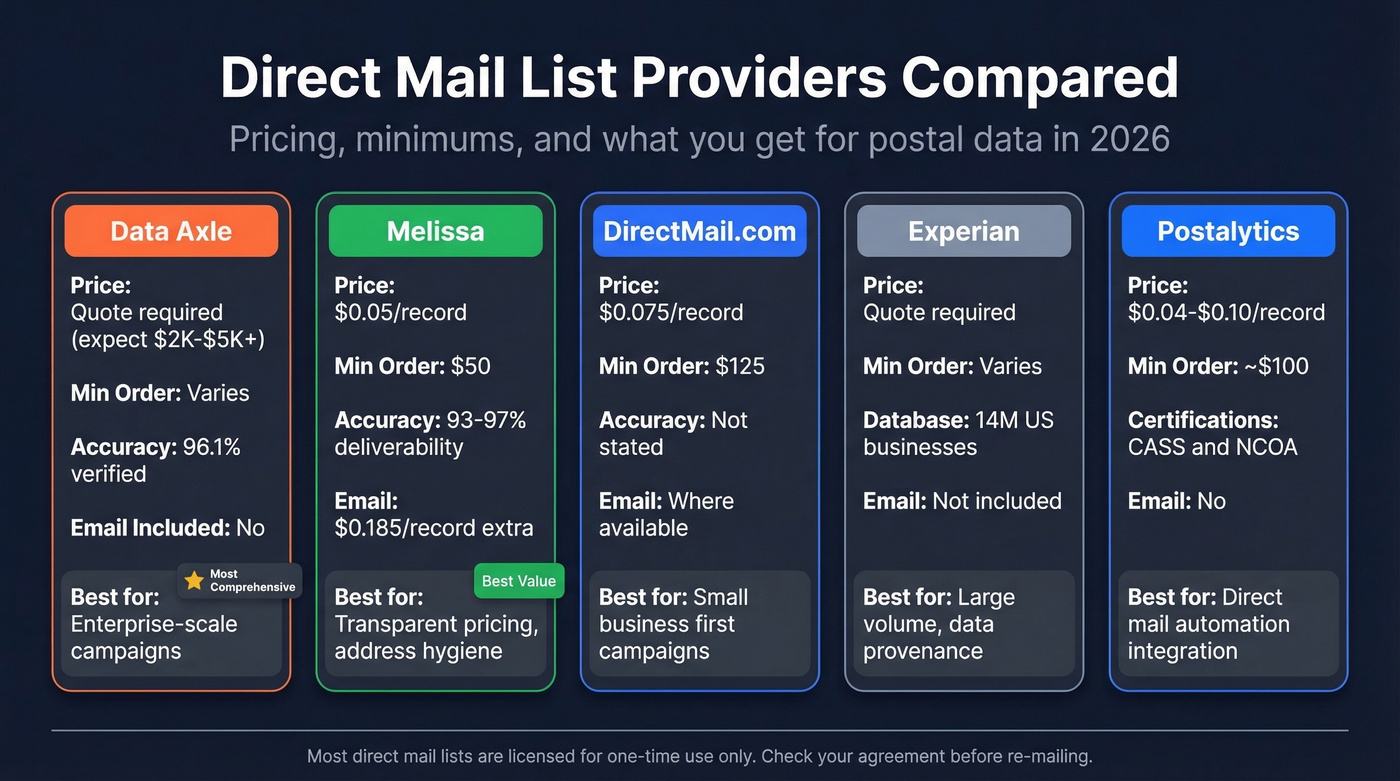
Data Axle / Salesgenie
Data Axle is the 800-pound gorilla of postal data. They employ over 300 full-time researchers and invest millions annually in data quality, pulling from new business filings, daily utility connections, press releases, annual reports, corporate websites, public directories, and user-generated feedback. A competitive audit by the University of Nebraska-Omaha found 96.1% accuracy for company name, address, and phone number.

You get 40+ data points for filtering - industry, revenue, employee count, geography, and more. The downside is the same as every enterprise data provider: no published pricing and a mandatory sales conversation. Expect $2,000-$5,000+ depending on volume and targeting.
Melissa
Melissa is the transparent-pricing antidote to the "request a quote" runaround. Records run $0.05 each ($50 per 1,000) with a $50 minimum order. With emails appended and scrubbed, pricing jumps to $185 per 1,000. Melissa guarantees 93-97% deliverability, and CASS processing and NCOA Link tools are available for address hygiene.
If you need B2B email data for cold outreach, Melissa isn't the right fit. Their strength is postal data quality and address verification, not digital prospecting.
DirectMail.com
For small businesses running a first direct mail campaign, DirectMail.com's experience is hard to beat. Business lists run $0.075/record with a $125 minimum, and that pricing includes telephone numbers. The database also includes email addresses and phone numbers where available, updated monthly. The platform focuses on 9 industries and supports 30+ search selections plus geographic targeting.
The ceiling is low - this isn't built for scale beyond SMB volumes. But for a local business sending 2,000 postcards to nearby companies, it's the fastest path from "I need a list" to "mailers are printing."
Experian
Experian business database contains 14 million U.S. businesses, with 200,000 new businesses added monthly. Their lists include firmographic data like SIC/NAICS codes, revenue ranges, and employee counts. Pricing isn't published - expect to negotiate. Experian's prospect lists for direct mail and telemarketing don't include email addresses. Worth considering for large-volume campaigns where data provenance matters, but Melissa offers better pricing transparency for most use cases.
Postalytics
Postalytics covers 18M U.S. businesses at $0.04-$0.10/record with a list builder that connects directly to their direct mail automation platform. Lists are refreshed monthly and include CASS & NCOA certifications. A solid option if you want list building and mail fulfillment in one tool.
LeadsPlease
LeadsPlease is upfront about both accuracy and pricing - lists typically run $0.05-$0.12/record depending on targeting depth. They also offer print-and-mail services, making them a good fit for small-volume, one-off direct mail campaigns where you don't want to manage multiple vendors.
One more option worth knowing: USPS Every Door Direct Mail (EDDM) lets you send to every address in a carrier route without buying a list at all. If you're a local business targeting a geographic area rather than a specific audience, EDDM can be cheaper than any list provider.
What to Look for in a Provider
Verification methodology. Ask how they verify data. A 5-step verification process with catch-all handling is fundamentally different from a single-pass email check. The difference shows up in your bounce rate - and in whether your domain gets flagged.
Data refresh frequency. The average professional changes roles every 3-4 years, and in tech and sales the churn is faster. A provider refreshing every 6 weeks means you're working with contacts who may have already moved on. Look for weekly or bi-weekly refresh cycles.

Compliance. CAN-SPAM, CCPA, and GDPR aren't optional. If a provider can't clearly explain their compliance framework, walk away. (If you want the legal deep dive, see Is It Illegal to Buy Email Lists?.)
Pricing transparency. If they hide pricing behind a "request a demo" form, they plan to overcharge you. The best providers publish rates or give clear ranges.
Integrations. Your data needs to flow into your CRM and sales engagement tools without manual CSV gymnastics. Native integrations with Salesforce, HubSpot, and sequencing tools are table stakes for most teams.
Intent data and technographics. Knowing which companies are actively researching your category - and what tech stack they run - turns a cold list into a warm one. This is what separates modern database marketing lists from the static spreadsheets of a decade ago.
Why Data Quality Beats List Size
A vendor bragging about "500M+ contacts" means nothing if 20% of those emails bounce. The global inbox placement average sits around 84% - meaning roughly one in six emails never reaches the inbox even under ideal conditions. For high-volume senders pushing 1M+ emails, inbox placement drops to roughly 27%.
The numbers get worse when you factor in list hygiene. Only 23.6% of B2B marketers verify email lists before launching campaigns. And only 7.6% of domains enforce DMARC. That's staggering.
Look at the response rate data for direct mail and the pattern holds across channels: broad lists pull 0.2-0.4% response rates, while highly targeted lists hit 1.0-1.5%+. A 5,000-record verified list will outperform a 50,000-record unverified list every time. We've seen this play out repeatedly - teams that obsess over list size instead of list quality end up with trashed sender reputations and nothing to show for it.
If you're sending email at scale, it also helps to monitor bounce rate and follow a real email deliverability guide instead of guessing.
Five Mistakes That Waste Your Budget
Not defining your target audience before buying. "All businesses in Texas" isn't a target audience. Narrow by industry, company size, job title, and revenue before you spend a dollar.
Treating one mailing as the whole strategy. A single mailing isn't marketing - it's a test. Budget for a sequence of 3-5 touches, not a one-shot blast.
Skipping list verification before sending. Unverified data means wasted spend and damaged reputation. For email, one bad campaign can tank your domain reputation for months.
Ignoring one-time-use licensing terms. Many direct marketing lists are licensed for a single mailing. Reuse without paying again and you're violating the agreement - and some brokers seed lists with tracking addresses to catch you.
Not tracking results. Use unique promo codes, dedicated landing pages, UTM parameters, or QR codes. If you can't measure which list segment drove results, you can't optimize the next round.
Business Mailing Lists FAQ
Is it legal to buy a mailing list?
Yes, in most jurisdictions for both postal mail and B2B email outreach, provided you comply with CAN-SPAM (U.S.), CCPA (California), and GDPR (EU). GDPR requires legitimate interest or consent for email - postal mail has fewer restrictions. Check local regulations if you're targeting outside the U.S.
What's the difference between a mailing list and an email list?
A traditional mailing list contains postal addresses for direct mail campaigns. A B2B email list contains verified email addresses and often phone numbers for digital outreach. Many modern providers offer both, but pricing models and data quality standards differ significantly between the two.
Can I reuse a purchased list?
Usually not. Most list brokers license data for a single use - one mailing. Reuse requires a separate license or a higher upfront fee. B2B data platforms work differently: you export contacts and own the data, so there's no per-use restriction on outreach.
How many records do I need for direct mail?
Start with 1,000-5,000 highly targeted records rather than 50,000 broad ones. A targeted list at $0.15/record with a 1.2% response rate will outperform a broad list at $0.04/record with a 0.3% response rate - and cost less overall.
What's the cheapest way to get verified B2B emails?
Self-serve platforms with per-lead pricing beat annual contracts for most teams. Prospeo's free tier gives you 75 verified emails/month, and paid plans run ~$0.01 per lead - a fraction of enterprise platforms that start at $14,995/year.
The bottom line: "business mailing lists" is one term covering two very different buying decisions. If you're sending physical mail, Melissa and DirectMail.com give you transparent pricing and certified postal data. If you're running outbound email and phone campaigns, the B2B data platforms above will get you further, faster, and cheaper. Either way, spend your budget on verified, targeted data - not the biggest list you can find.