

Buyer Readiness Signals: How to Detect, Score, and Act on Real Purchase Intent
Marketing hit their MQL target last quarter - 200 leads, right on plan. Sales converted three. The pipeline review was awkward, the finger-pointing predictable, and nobody could explain why 197 "qualified" leads went nowhere.
One B2B marketer on r/sales summed it up well: "Traditional metrics like MQL volume, CTR, and downloads look fine on dashboards - but they don't always translate into pipeline." That gap between lead activity and actual purchase readiness is where most B2B revenue dies quietly.
Buyer readiness signals are the behaviors, statements, and data patterns that indicate a prospect is actively evaluating vendors and approaching a purchase decision - not just browsing. 94% of B2B buying groups have already ranked their preferred vendors before ever talking to sales. If you're waiting for a demo request to spot readiness, you're already late.
Here's the uncomfortable math. Most of your addressable market isn't actively shopping. The 95/5 rule, popularized by the Ehrenberg-Bass Institute, suggests only about 5% of potential buyers are in-market right now. The other 95% are passive buyers who may need your solution eventually but aren't evaluating vendors today. Distinguishing the 5% from the 95% is the entire point of a readiness signals framework.
The Quick Version
Every team that reliably detects purchase readiness runs three layers:
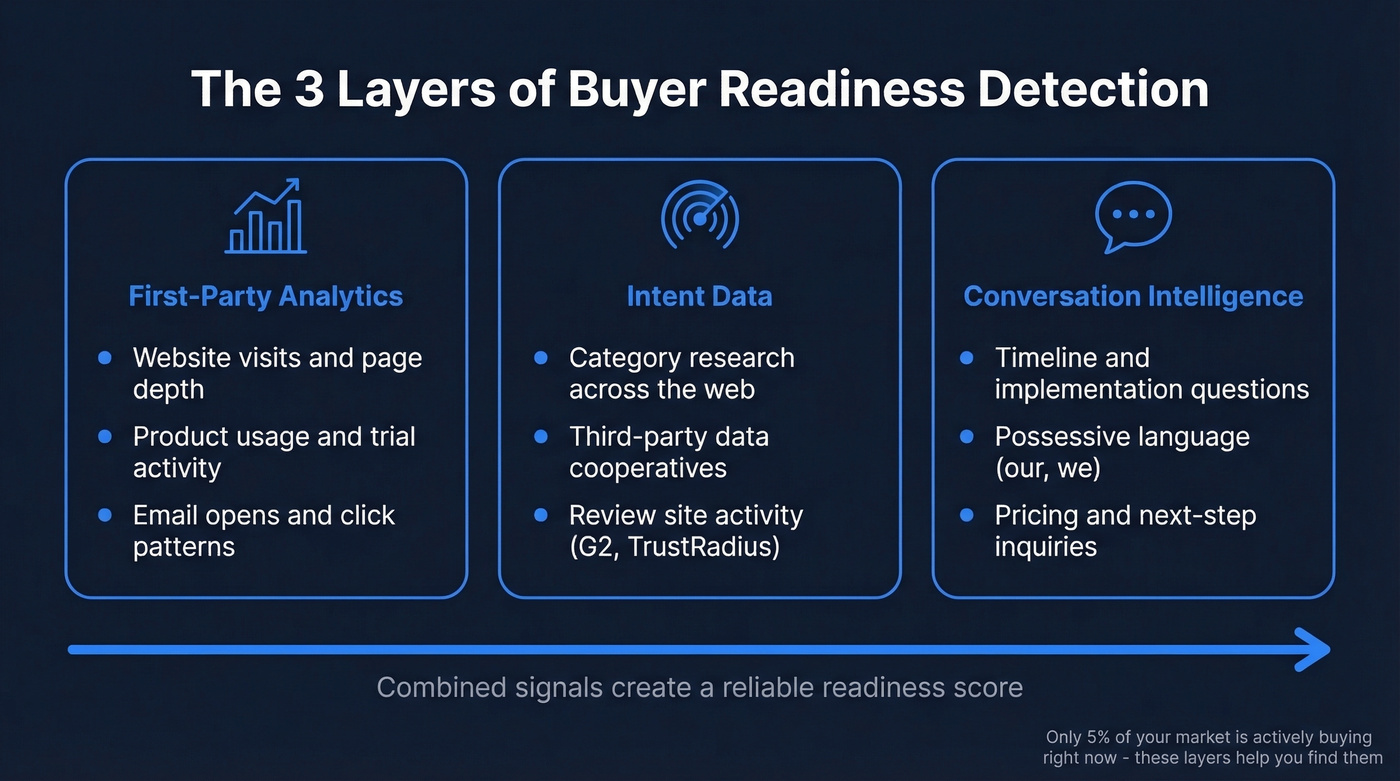
- First-party analytics - your website, product, and email engagement data. The foundation.
- Intent data - third-party signals showing which accounts are researching your category across the web.
- Conversation intelligence - verbal cues from calls and emails that reveal decision-stage language.
The five signals that actually predict purchases: pricing page revisits, multi-stakeholder engagement from one account, demo or trial requests, multi-source intent surges in the same week, and verbal buying language on calls like timeline questions and possessive statements.
The prerequisite most teams skip? Verified contact data. Detecting that an account is in-market means nothing if you can't reach the right person.
The 4 Types of Readiness Signals
Not all signals are created equal. Lumping them together is how teams end up chasing noise.
| Signal Type | What It Captures | Source | Resolution Level |
|---|---|---|---|
| Behavioral | Digital actions on your properties | First-party | Contact-level |
| Verbal | Language on calls/emails | Conversation intel | Contact-level |
| Intent | Research across the web | Third-party / second-party | Account or contact |
| Opportunity | Firmographic triggers | News, job postings, funding | Account-level |
Behavioral signals come from your own analytics - pricing page visits, repeat sessions, content depth. These are among the most reliable because they're first-party and high-context.
Verbal signals surface during sales conversations. A prospect asking "How long would implementation take after we sign?" is telling you something a pageview never will. High-fidelity, low-volume.
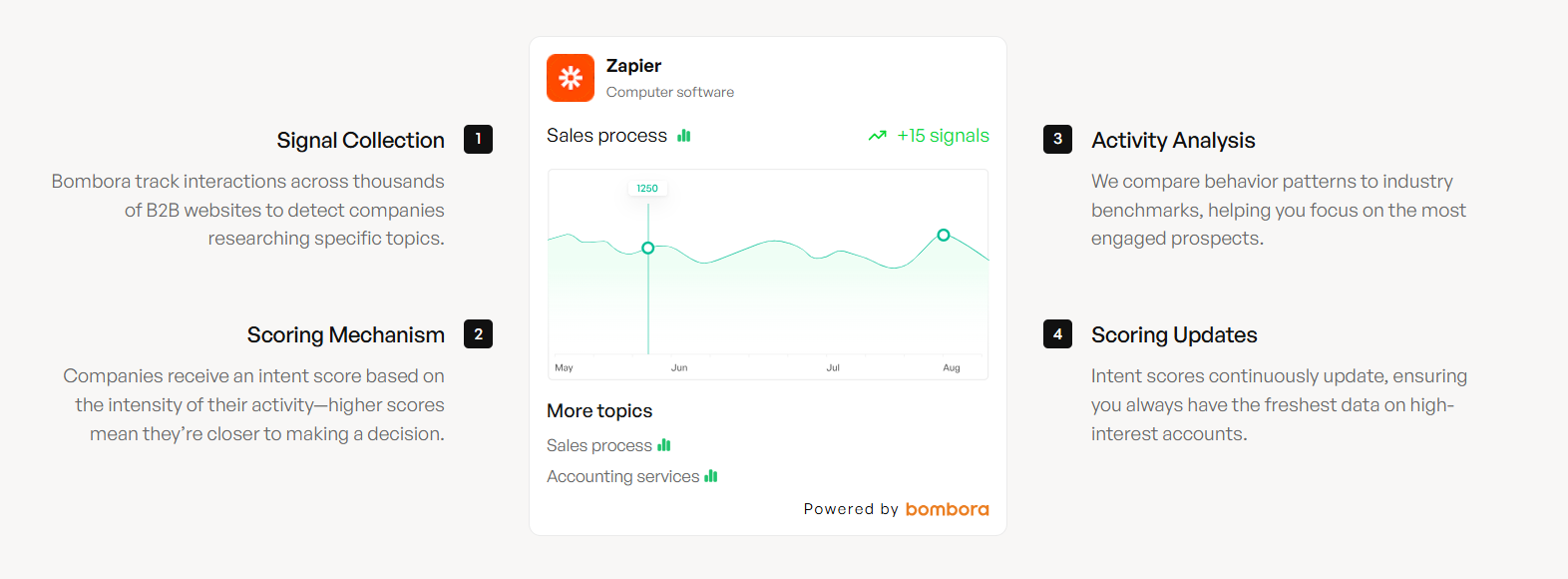
Intent signals come from third-party data cooperatives tracking billions of interactions monthly across 5,000+ sites, or second-party sources like G2 and TrustRadius. The limitation: most intent data resolves to the account level, not the individual. You know a company is researching. You don't always know who.
This is compounded by the "dark funnel" reality - buyers increasingly research quietly, avoiding forms and gated content early in their process, leaving almost no visible trail. By the time they surface, they've already formed opinions.
Opportunity signals are firmographic triggers - a new funding round, a CTO hire, a technology change. These don't indicate intent directly, but they create the conditions where buying becomes likely.
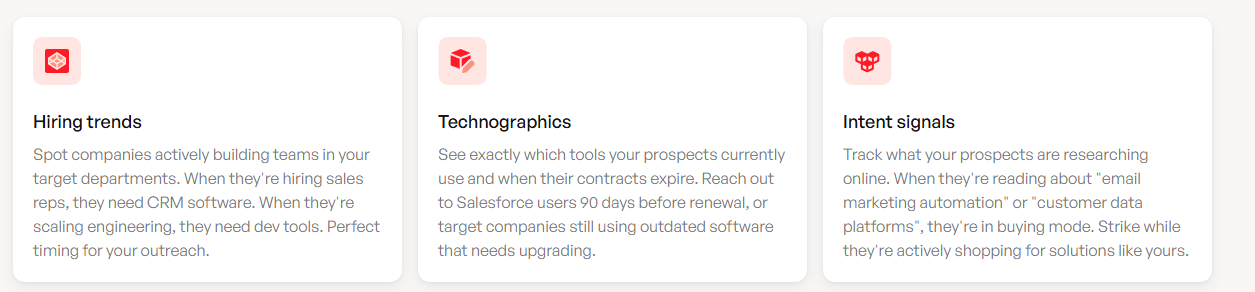
The real power comes from combining types. A single pricing page visit is weak. A pricing page visit + a third-party intent surge + a new VP of Sales hire at the account? That's a signal stack worth acting on.
Signals by Funnel Stage
Different signals matter at different stages.
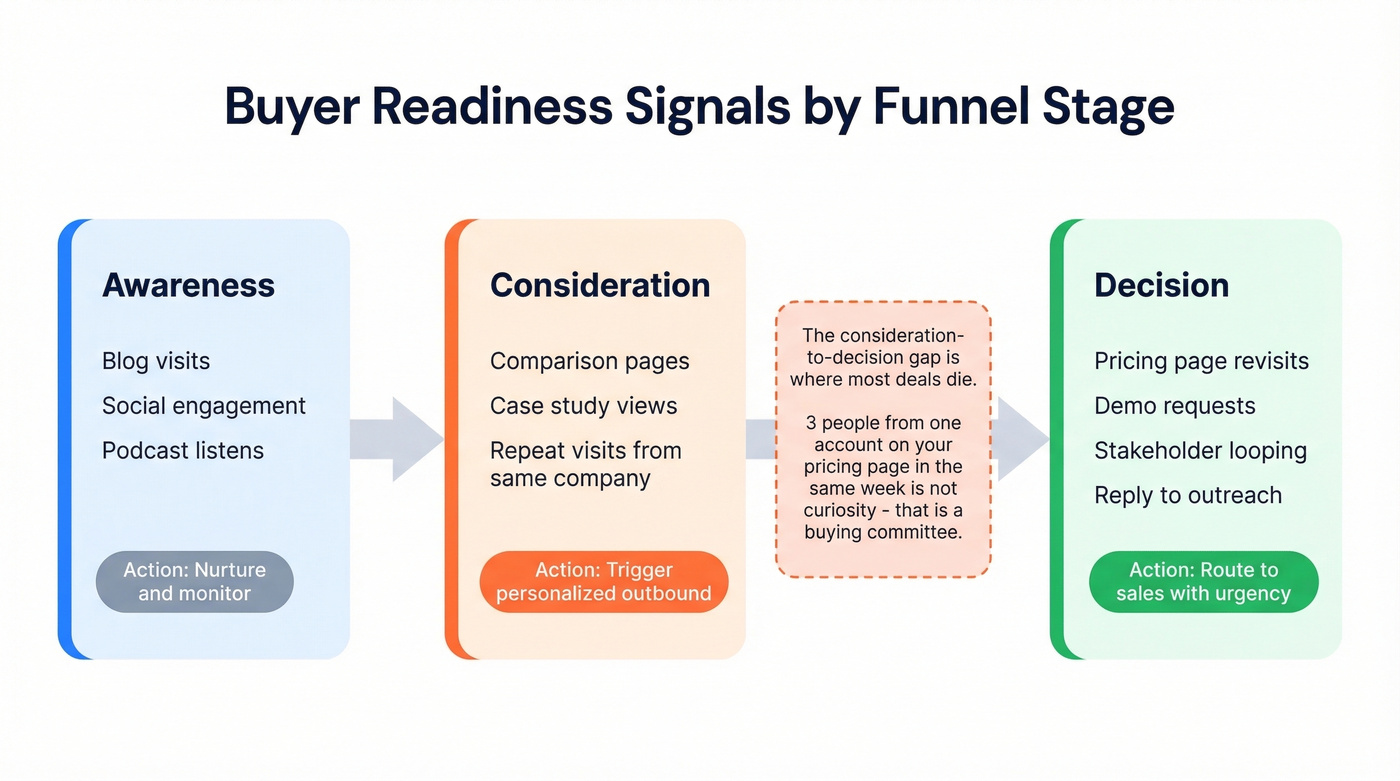
| Stage | Signals | Action |
|---|---|---|
| Awareness | TOFU blog visits, social engagement, podcast listens | Nurture; monitor for repeat engagement |
| Consideration | Comparison pages, case studies, repeat visits from same company | Trigger personalized outbound |
| Decision | Pricing page revisits, demo requests, stakeholder looping, reply to outreach | Route to sales with urgency |
The consideration-to-decision transition is where most teams lose deals. Multiple visits from the same company - especially across comparison and case study pages - is one of the strongest outreach triggers available. Three people from one account hitting your pricing page in the same week isn't curiosity. That's a buying committee doing homework.
Don't treat awareness-stage signals with the same urgency as decision-stage ones. A blog download isn't a buying signal. It's a content signal. The distinction matters enormously for how you allocate sales time.
Building a Scoring Model
Let's be honest: most scoring models fail because they're too complex. We've seen teams build 100-point models with 50 variables, then wonder why reps ignore the scores entirely. You need five to seven signals, properly weighted - not a spreadsheet that requires a data science degree to maintain.
Here's a concrete model on a 0-100 scale:
| Signal | Points | Rationale |
|---|---|---|
| Demo/trial request | 30 | Highest-intent action |
| Pricing page visit | 15 | Decision-stage behavior |
| Repeat visit from decision-maker | 20 | Contact-level + recency |
| Multi-source intent surge | 20 | Cross-validated signal |
| Case study / comparison page | 10 | Consideration-stage depth |
| Webinar attendance (engaged) | 5 | Moderate interest |
| ICP fit multiplier | 1.5x | Amplifies all signals |
Tier thresholds - Cold (0-25), Warm (26-50), Hot (51-75), Ready (76-100).
The ideal customer profile fit multiplier is critical. A VP of Engineering at a Series B SaaS company visiting your pricing page twice is fundamentally different from a marketing intern downloading an eBook. Apply the multiplier before routing.
Picture a VP at a target account who shows zero intent data but matches your ICP perfectly. Score: maybe 30 (warm). Meanwhile, a mid-level manager at a non-ICP company visits your pricing page daily. Without the ICP filter, that manager scores higher - and wastes your rep's afternoon. Companies that update their scoring quarterly improve conversion rates. The model isn't set-and-forget.
For teams selling to both enterprise and SMB, build separate scoring models. A VP at a 5,000-person company and a founder at a 20-person startup don't exhibit the same readiness patterns.
Sales reps are 7x more likely to have meaningful conversations when they reach out within an hour of detecting a buying signal. That's why your scoring model needs to trigger outreach to the right person, not just flag the right account.
Signals That Aren't
79% of leads never convert to sales. A big reason: teams mistake activity for readiness. Here are six false positives that consistently fool scoring models.
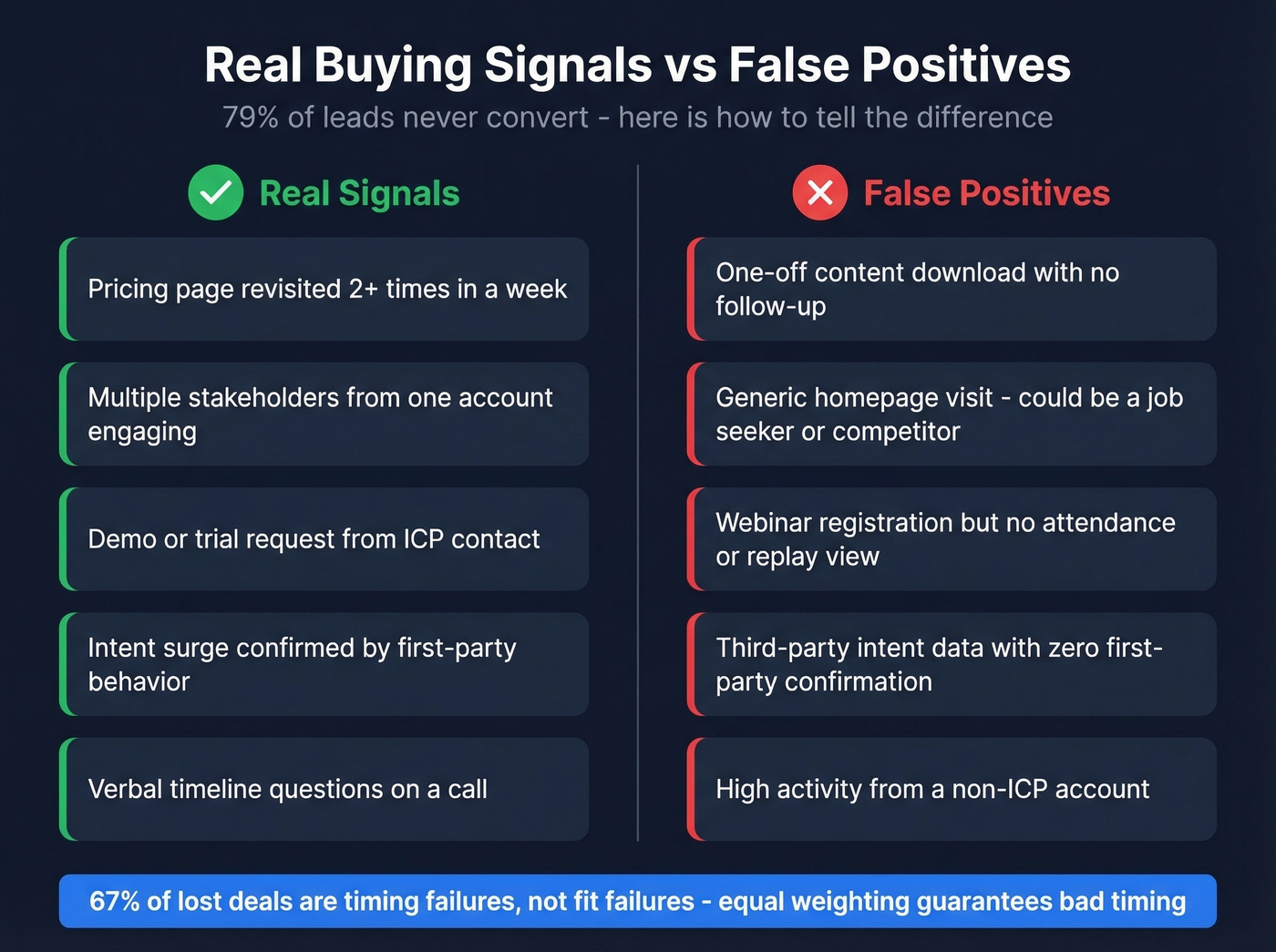
One-off content download. A student downloading your eBook on "sales automation trends" isn't a buyer. Watch for follow-up engagement before scoring.
Generic homepage visit. Could be a job seeker, an investor, a competitor, or someone who mistyped a URL. Homepage visits without deeper navigation are noise.
Webinar registration without engagement. Registration is a low-friction action. If they didn't attend, didn't watch the recording, and didn't engage afterward, it's not a signal.
Third-party intent data in isolation. Intent data tells you a company is researching a category. It doesn't tell you they're evaluating you, or that the timing is right. Always cross-reference with first-party behavior.
Signal noise from non-ICP accounts. A 5-person agency showing high intent for your enterprise platform isn't a deal. Filter by fit before scoring behavior.
Treating all signals equally. A pricing page visit and a blog view aren't the same thing. 67% of lost deals are timing failures, not fit failures - and equal weighting guarantees bad timing.
Skip enterprise-grade intent data entirely if your average deal size is under $10K. A well-instrumented website, a sharp SDR team, and a simple scoring model will outperform a $50K intent platform that nobody actually acts on. The bottleneck is almost never data - it's the speed and quality of your response.

Scoring accounts as 'ready' means nothing if you can't reach the decision-maker. Prospeo tracks 15,000 intent topics via Bombora and pairs them with 143M+ verified emails and 125M+ mobile numbers - so when your scoring model says 'act now,' you actually can.
Turn buyer readiness signals into booked meetings, not dead-end account alerts.
Readiness Signals on Calls
Digital signals get all the attention, but verbal buying language on calls is some of the highest-fidelity data you'll ever collect. Train your reps on these categories:
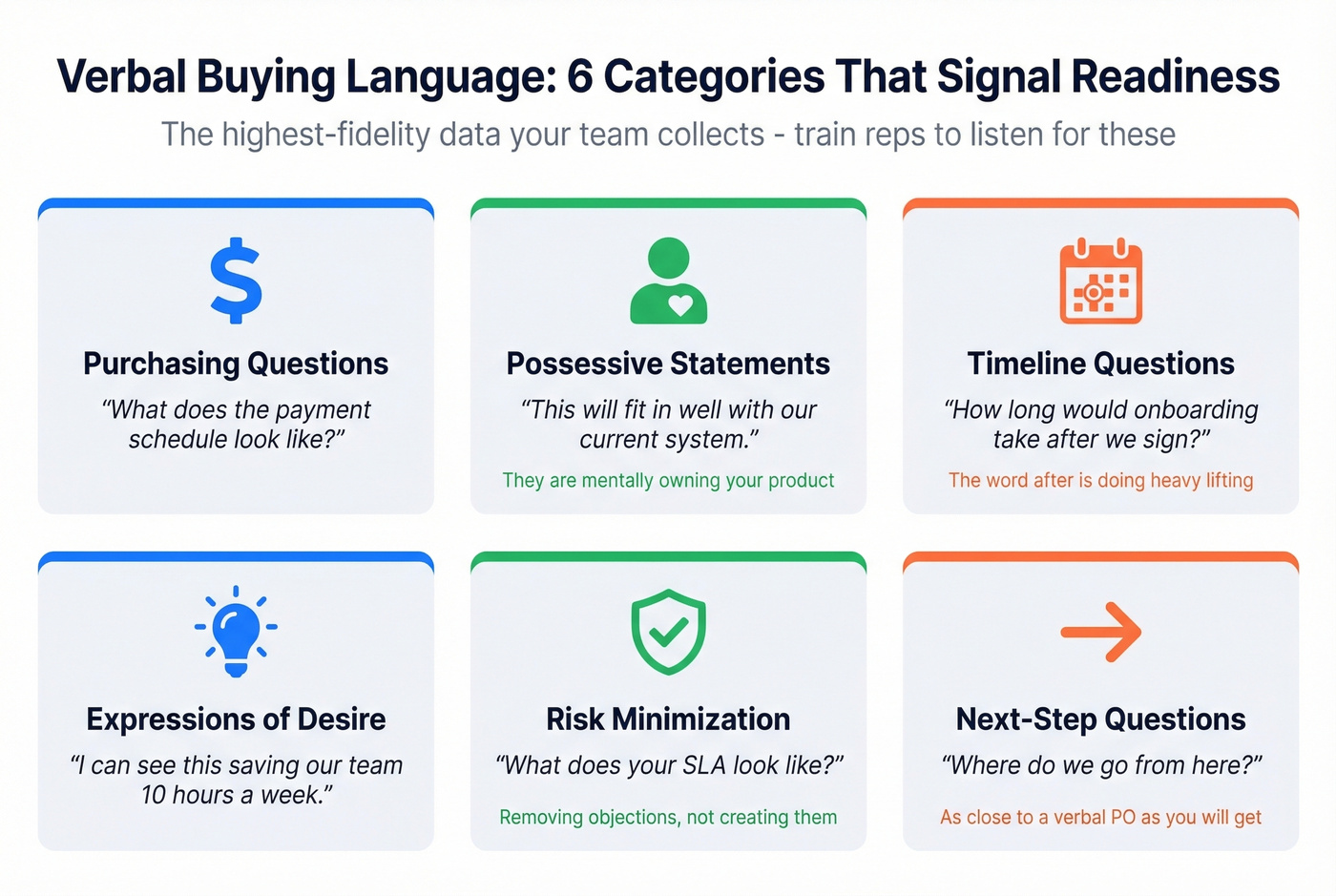
Purchasing and financing questions sound like "What does the payment schedule look like?" or "Can we start with a quarterly contract?" Early price focus can sometimes signal curiosity rather than commitment, so context matters - but when paired with other readiness indicators, these questions are gold.
Possessive statements are the subtle ones. "This will fit in well with our current system." When a prospect starts saying "our" and "we" about your product, they're mentally owning it.
Implementation timeline questions reveal the most. "How long would onboarding take after we sign?" The word "after" is doing heavy lifting in that sentence.
Expressions of desire: "I can see this saving our team 10 hours a week." They're imagining the future state. Risk-minimization questions: "What does your SLA look like?" They're removing objections, not creating them. Next-step questions: "Where do we go from here?" That's as close to a verbal purchase order as you'll get without a signature.
Reaching Passive Buyers Before They Enter the Market
So what is a passive buyer, and why should you care? A passive buyer fits your ICP and will likely need your solution but hasn't started evaluating vendors yet. They're not clicking comparison pages or requesting demos. They're going about their day, unaware or unconcerned about the problem you solve.
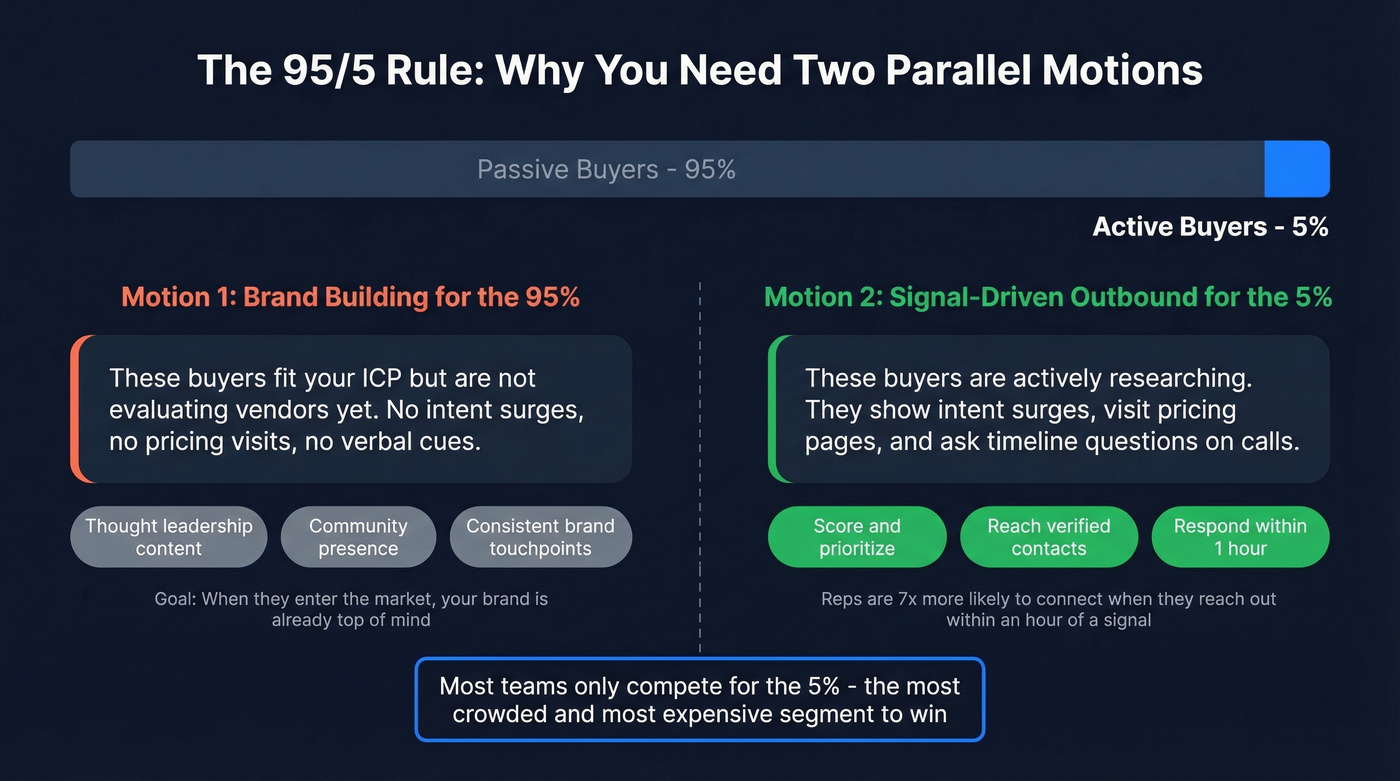
Passive buyers don't generate buying signals by definition. No intent surges, no pricing page visits, no verbal cues on calls. But ignoring them entirely means you're only competing for the 5% who are already in-market - the most crowded, most expensive segment to win.
Smart teams run two parallel motions: a signal-driven outbound engine for the 5% showing active readiness, and a brand-building nurture program for the 95% who aren't there yet. When those passive buyers eventually enter the market, your brand is already on their shortlist. The goal isn't to force a sale - it's to ensure that when their purchase intent finally fires, you're the first vendor they think of.
Tools for Detection
Here's a scenario we've watched play out dozens of times. An SDR gets an intent alert: a target account is surging on "sales engagement platform." She pulls up the contact in her CRM. The VP of Sales left six months ago - the record is stale. By the time she finds the new contact through manual research, the buying window has closed.
The intent data market hit $4.49B in 2026, projected to reach $20.89B by 2035. Yet only 24% of teams report exceptional ROI from their intent investment. The gap isn't the data - it's the detection-to-action lag.
What actually works, by category:
First-party analytics. Google Analytics is the baseline (free; GA360 typically runs $50K+/year for enterprise). Track pricing page visits, session depth, and return frequency. Skip this and you're flying blind.
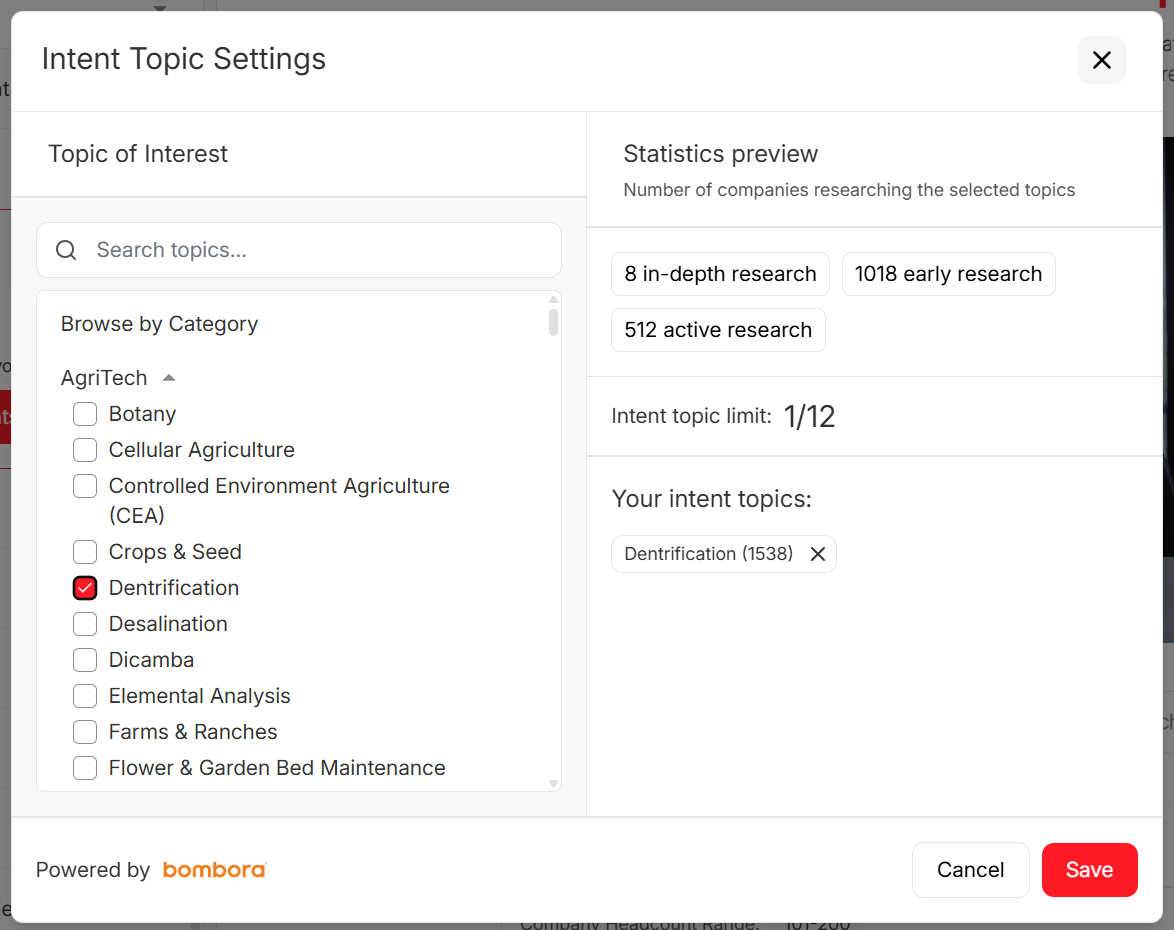
Intent + contact data. This is where most teams either overspend or underinvest. Prospeo closes the detection-to-action gap by pairing intent data across 15,000 topics with 143M+ verified emails and 125M+ verified mobile numbers on a 7-day refresh cycle. When a target account surges, you're reaching the right person with a verified email or direct dial - not a six-month-old record. Enterprise intent platforms typically cost $12K-$100K+/year, with platforms like 6sense reaching $300K+/year. Prospeo covers intent data, verified contacts, and enrichment starting free, with paid plans at roughly $0.01 per email.
Your scoring model flags a multi-stakeholder surge at a target account. Now what? Prospeo resolves account-level intent to contact-level data - 98% accurate emails, 30% mobile pickup rate - so reps reach the right person within that critical first hour.
Stop flagging accounts. Start reaching the humans behind the signals.
Bombora ($12K-$40K/yr) is the dominant third-party intent cooperative, tracking 17B interactions monthly. Strong data, but account-level only - you still need contact resolution.
6sense offers a free tier for basic account identification; enterprise packages run $30K-$300K+/yr. Powerful for large orgs with the resources to implement it fully. Demandbase sits in a similar range ($30K-$100K/yr) with strong ABM orchestration.
Conversation intelligence. Gong typically costs around $100+/user/month and captures verbal signals from sales calls. If your team runs 20+ calls a week, the pattern recognition alone justifies the cost.
If you're evaluating platforms, start with contact-level intent data so you can route signals to the right stakeholder.
B2B vs B2C: Different Playbooks
A pricing page visit means very different things depending on your business model.
| Dimension | B2B | B2C |
|---|---|---|
| Cycle length | Weeks to months | Minutes to days |
| Decision-makers | Committee (3-10 people) | Individual |
| Primary driver | Logic, ROI, risk reduction | Emotion, impulse, price |
| Qualification method | Lead scoring + nurture | Fast conversion triggers |
| Key readiness signal | Multi-stakeholder engagement | Cart behavior, urgency cues |
In B2B, a single person visiting your pricing page is interesting. Three people from the same account visiting it is a signal. In B2C, one person adding to cart and abandoning is the signal - and the response window is hours, not days.
Privacy and Compliance
This isn't optional. GDPR and CCPA require explicit consent before tracking users with cookies, pixels, or scripts. Google Consent Mode v2 has been required for EU operations since March 2024. No non-essential trackers before consent. Period.
The cookieless alternatives are maturing. Server-side processing, anonymized IPs, and temporary hashed identifiers with 24-hour windows let you capture behavioral signals without violating consent requirements. If you're still running full tracking stacks without a consent management platform, you're accumulating legal risk alongside your intent data.
For a deeper checklist, align your tracking with B2B compliance requirements and your data sourcing with a GDPR Compliant Database.
FAQ
What's the difference between buyer intent and buyer readiness?
Buyer intent means a prospect is researching a category - they're aware of a problem and exploring solutions. Buyer readiness means they're actively evaluating specific vendors and approaching a purchase decision. Intent feeds into readiness; readiness is where sales engagement converts.
How many signals should a scoring model include?
Five to seven high-signal behaviors, properly weighted, outperform complex 50-variable models. Focus on pricing page visits, demo requests, repeat visits from decision-makers, multi-source intent surges, and verbal buying language. Complexity kills adoption.
How do I avoid false positives in scoring?
Filter signals by ICP fit before scoring behavior. A blog download from a student and a pricing page visit from a VP at a target account aren't the same signal. Cross-reference first-party behavior, third-party intent, and firmographic fit before routing to sales.
What is a passive buyer?
A passive buyer fits your ideal customer profile but isn't currently evaluating solutions or showing active purchase intent. They represent roughly 95% of your total addressable market at any given time. Build brand awareness with these accounts so that when they enter the market, you're already a known option.