

Best Clay Alternatives for 2026: 13 Tools Tested & Compared
Clay's workflow builder is genuinely impressive - but if your core problem is getting accurate contact data into your sequences, you can end up overpaying for infrastructure you don't need.
If you're evaluating Clay alternatives that prioritize data accuracy over workflow complexity, here are 13 options organized by what you actually need, with real pricing and accuracy data so you can make a decision this week.
Why Teams Are Switching From Clay in 2026
Clay is still the best workflow builder in the GTM space. Nobody disputes that. The problem is that most teams don't need a workflow builder - they need verified emails and phone numbers at a predictable cost.
Three things are pushing teams to look elsewhere:
- Pricing pressure at scale. Credit burn gets expensive fast once you're running enrichment plus AI steps at volume.
- Credit model complexity. When you're chaining lots of steps - enrichment, HTTP calls, scraping, AI - it's easy to lose track of what each row really costs.
- Build vs. buy is getting real. More teams are deciding to either buy a dedicated data tool for accuracy, or rebuild workflows in n8n for cost control.
One r/coldemail user detailed a $4,200/year Clay subscription plus ~$350/month in credit overages, totaling roughly $700/month. They rebuilt their workflows in n8n for about ~$380/month total including server and API costs - but it took ~80 hours to learn and build.
The Reddit consensus on Clay is split down the middle. People call it "legitimately incredible" and "magical" for AI research, then immediately complain about the pricing model. A separate thread asked bluntly whether Clay "just priced out half its user base." The comments were overwhelmingly sympathetic.
Here's the thing: if your average deal size sits below $10k, you probably don't need Clay-level orchestration. You need accurate data and a good sequencer. That's it.
Our Picks (TL;DR)
We evaluated these tools across data accuracy, pricing transparency, workflow capability, and team fit. No hedging here - the table maps each use case to the strongest option.
| Use Case | Tool | Why | Starting Price |
|---|---|---|---|
| Email/phone accuracy | Prospeo | 98% email accuracy, $0.01/lead | Free tier |
| All-in-one platform | Apollo | Database + sequences + CRM | Free / $49/user/mo |
| Waterfall enrichment | FullEnrich | 15+ providers, pay on success | $29/mo |
| Clay-like UI | Freckle | Workflow builder, no credit anxiety | Free (500 credits) |
| Enterprise data + intent | ZoomInfo | Deepest US database | ~$15k/yr |
| GDPR/European coverage | Cognism | Strong EMEA mobile data | ~$1,000-$3,000/mo |
| Cold email + leads | Instantly | Sending + database bundle | $47/mo per product |
| DIY cheapest at scale | n8n | Full control, no credit limits | Free (self-hosted) |
The Best Clay Alternatives
Prospeo
Prospeo is the best pick when your priority is verified contact data - not building elaborate workflows.
The platform covers 300M+ professional profiles with 143M+ verified emails and 125M+ verified mobile numbers, all refreshed on a 7-day cycle. That refresh cadence matters more than most people realize. Most providers update every six weeks, which means you're working with stale data for over a month. We've seen teams blame their sequences when the real problem was month-old contact records.

Prospeo delivers 98% email accuracy through a proprietary 5-step verification process that includes catch-all handling, spam-trap removal, and honeypot filtering. Mobile numbers hit a 30% pickup rate across all regions. The platform also tracks 15,000 intent topics via Bombora, giving you in-market buyer signals that typically require a ZoomInfo-tier subscription.
Snyk's 50-person AE team switched and cut bounce rates from 35-40% to under 5%, with AE-sourced pipeline up 180%.
Pricing: ~$0.01 per email. 10 credits per mobile number. Free tier includes 75 emails and 100 Chrome extension credits per month. No contracts, no sales calls. Self-serve from minute one.
vs. Clay: Clay is a workflow builder that happens to include enrichment. Prospeo is built for accuracy. If your bottleneck is bad data, not missing workflows, Prospeo costs a fraction of Clay and delivers better contact data.
Use it if you need verified emails and direct dials at scale without workflow complexity.
Skip it if you specifically need Clay's AI research agents and multi-step automation logic.

Most teams switching from Clay don't need a workflow builder - they need verified contact data that won't torch their domain. Prospeo delivers 98% email accuracy and 125M+ verified mobiles on a 7-day refresh cycle, at ~$0.01 per email. No credit chains, no overages.
Stop paying for orchestration when your real problem is bad data.
Apollo
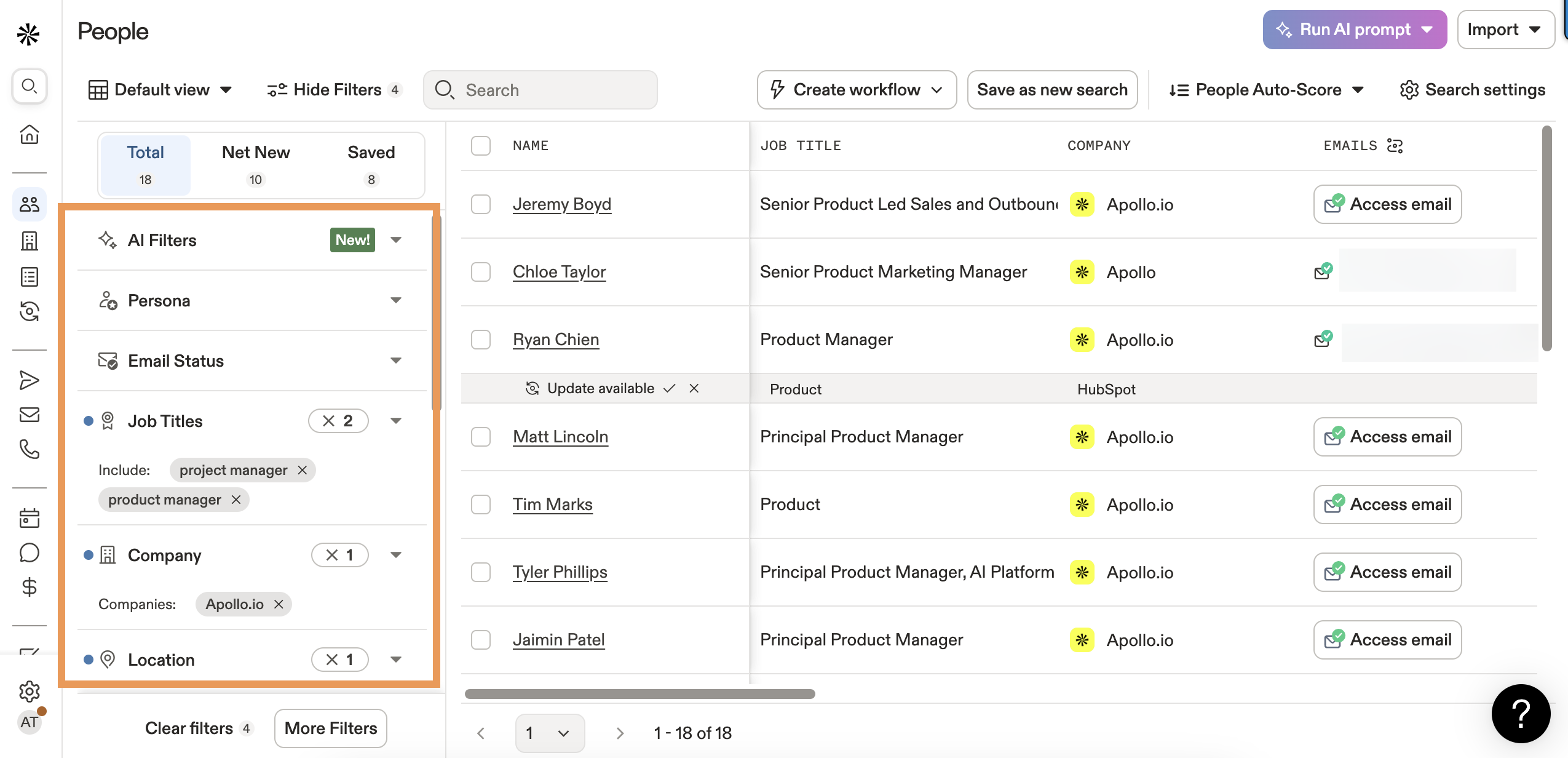
Apollo is the obvious starting point for teams that want database, sequences, and a lightweight CRM in one platform. The free tier is genuinely useful for solo founders, and the paid plans scale reasonably.
But here's where it gets complicated. The "unlimited emails" on paid plans comes with fair usage limits, and mobile data plus exports consume credits. In practice, Apollo's email accuracy runs 60-70% valid based on practitioner reports - fine for high-volume outbound where you expect some waste, but it'll hurt your domain reputation if you're running tight sequences.
Apollo does a lot of things adequately. It doesn't do any one thing as well as a specialist.
Pricing: Free tier available. Basic starts at $49/user/month billed annually, $59 monthly. Professional runs $79/$99. Organization is $119/$149 with a minimum of three users. You can't reduce seats mid-term - a detail that bites teams who hire optimistically.
Use it if you want one platform for prospecting, sequencing, and basic CRM without stitching tools together.
Skip it if data accuracy is your primary concern. 60-70% valid emails means 30-40% waste.
FullEnrich
Let's start with the comparison that matters: Clay offers waterfall enrichment too, but at scale you can end up paying for a lot of steps. FullEnrich only charges on successful finds. That single difference makes cost-per-usable-contact far easier to control.
FullEnrich cascades across 15+ data providers - you bring the contacts, they find the data. No database to browse. Work emails cost 1 credit, personal emails cost 3, mobile numbers cost 10, and reverse lookups cost 1. The average find rate runs about 80%, and practitioners report ~90% valid emails versus 60-70% from single-provider tools like Apollo or Lusha. Credits roll over for three months on monthly plans.
Pricing: Starter at $29/month for 500 credits. Unlimited users with shared credits across the workspace. GDPR and CCPA compliant - they deliberately don't maintain a contact database.
Use it if you already have prospect lists and need the highest possible enrichment rate without maintaining a database subscription.
Skip it if you need to discover prospects from scratch. FullEnrich enriches, it doesn't prospect.
Freckle
Freckle is what Clay would look like if it were designed for teams without a dedicated RevOps person. The UI is familiar - table-based, with agent columns and waterfall enrichment - but without the credit anxiety.
The free plan is surprisingly generous: 500 credits, unlimited users, CRM integrations, waterfall enrichment, web scraping, and both email and phone enrichment at 5 credits per phone. Pro plans start at $99/month for 2,500 credits and scale up to $6,250/month for 250,000 credits. One credit equals one output - simple enough that you don't need a spreadsheet to predict your monthly bill.
Freckle sits on top of your CRM and auto-enriches records, which is a workflow most Clay users are building manually.
vs. Clay: Similar UI, dramatically simpler pricing. You lose Clay's AI research agents, deep workflow logic, and the breadth of Clay's 150+ provider ecosystem, but you gain predictability.
Use it if you want Clay's interface without the learning curve or credit surprises.
Skip it if you need Claygent-level AI research or Clay's massive provider ecosystem.
ZoomInfo
Let's start with the price tag, because it changes the conversation. Professional runs $15k-$18k/year for 1-3 seats. Advanced is $22k-$28k. Elite hits $35k-$45k+. Annual contracts only. Discounts of 30-65% off list price are common with negotiation, but expect 10-20% renewal increases. A 10-seat contract with intent data can run $40-60k/year.
If that number didn't make you flinch, ZoomInfo is the enterprise default for good reason: deepest US database, intent signals, org charts, and a workflow engine that integrates with everything. We've seen teams buy ZoomInfo for the database and then realize they're paying for intent, chat, and workflow features they never activate.
vs. Clay: ZoomInfo is a data platform; Clay is a workflow builder. They're complementary more than competitive. But if you're choosing one, ZoomInfo gives you deeper data and intent signals while Clay gives you more flexible automation.
Use it if you're an enterprise team that needs US-focused data depth, intent signals, and can negotiate aggressively on pricing.
Skip it if your team is under 50 reps. The minimum spend doesn't justify itself.
Cognism
Cognism is the pick for teams selling into Europe. Their EMEA mobile data and GDPR-first compliance posture make them the default for UK and EU-focused outbound. Two packages - Grow and Elevate - with custom pricing that typically lands between $1,000 and $3,000/month for small teams. You'll need a demo to get a quote.
Where Cognism wins over ZoomInfo: European coverage and mobile verification. Where ZoomInfo still wins: US database depth and workflow breadth.
vs. Clay: Cognism gives you compliant European data out of the box. Clay can access similar data through integrations, but you're paying for the workflow layer on top.
Instantly
Instantly bundles cold email sending with a lead database, but the pricing is three separate products - and that's where confusion starts. Outreach is $47/month, Leads is $47/month, CRM is $47/month. The full stack runs $141/month minimum.
The Leads product has 450M+ B2B leads, but treat the database as a prospecting layer, not a verified data source. Run contacts through a verification tool before sending.
If you're building a broader outbound stack, start with these SDR tools to see what pairs well.
Lusha
Lusha is a straightforward Chrome extension for quick contact lookups. Free plan gives you 70 credits/month - emails cost 1 credit, phone numbers cost 10. Paid plans run ~$20-$60/user/month depending on tier. It's fast and simple, but practitioners report email accuracy in the 60-70% range, similar to Apollo. Good for ad-hoc lookups, not for building large verified lists.
If deliverability is a priority, pair any finder with a dedicated email verification layer.
Seamless.AI
Seamless.AI has a large database but still won't publish pricing in 2026, which is genuinely frustrating. User-reported quotes put Pro at ~$79/user/month with 1,000 credits, and Enterprise at ~$149/user/month with a five-user minimum ($745/month floor). Extra credits run $49 per 500. Users report ~85% email accuracy and ~60% phone accuracy. The database is solid; the buying experience is not.
If you're comparing accuracy and cost, this Seamless.AI comparison breaks down the tradeoffs.
n8n (DIY)
The cheapest option at scale - if you have ~80 hours to build it. Free when self-hosted, $20/month on cloud.
One Reddit user rebuilt their entire Clay workflow in n8n for ~$380/month total including server and API costs, saving $3,480/year versus Clay. Users also mention Latenode as a middle ground between Clay's polish and n8n's flexibility.
Rule of thumb from practitioners: stick with Clay under $10k/month revenue, switch to n8n once you're past $50k/month where the ROI on building your own stack flips. The tradeoff is real - Clay gets you operational in hours, n8n takes weeks.
If you're automating list building, these sales prospecting techniques help you avoid garbage-in/garbage-out.
HubSpot Breeze Intelligence
For teams that already live in HubSpot, Breeze Intelligence (formerly Clearbit) is the path of least resistance. It enriches CRM records natively - no CSV exports, no third-party connectors.
Pricing for credit packs is around $30/month for 100 credits, scaling to $150/month for 1,000 credits on higher tiers. Enterprise plans with higher volumes run $700+/month. The data quality is decent for firmographic enrichment but weaker on direct dials compared to dedicated contact data tools.
If you're evaluating vendors, this overview of data enrichment services is a useful baseline.
Hunter
Email finder with a strong domain search feature. Starter is $49/month, Growth is $149/month. Best for finding emails by company domain rather than individual prospecting.
If Hunter is on your shortlist, compare it against other Hunter alternatives before committing.
Kaspr
European-focused Chrome extension. Free tier available, Starter at EUR65/user/month, Business at EUR99/user/month. Good complement to Cognism for EMEA teams on a tighter budget.
LeadIQ
Prospecting tool with CRM integration. Free plan includes 50 credits. Pro is $15/month with 2,400 yearly credits - one of the cheapest entry points for basic contact capture.
If you're trying to keep spend low, these free lead generation tools can fill gaps in your stack.
Snyk's 50 AEs cut bounce rates from 35-40% to under 5% and grew AE-sourced pipeline 180% after switching. Prospeo's 5-step verification, catch-all handling, and 7-day data refresh mean you're never prospecting with stale records - at a fraction of Clay's cost.
75 free emails, no contract, no sales call - start in 30 seconds.
Data Accuracy Comparison
Accuracy is the single most important metric for any data tool, and it's the one vendors are least honest about. Bad emails don't just waste sequences - they tank your domain reputation, hurt deliverability across your entire sending infrastructure, and create a compounding problem that takes weeks to fix.
We've tested these numbers across thousands of contacts. The gap between 98% and 60% accuracy isn't marginal. It's the difference between a campaign that works and one that burns your domain.
| Tool | Email Accuracy | Phone Accuracy | Method |
|---|---|---|---|
| FullEnrich | ~90% | Varies by provider | Waterfall across 15+ providers |
| Seamless.AI | ~85% | ~60% | Single-provider database |
| Apollo | 60-70% | ~50% connect rate | Single-provider database |
| Lusha | 60-70% | ~50% connect rate | Single-provider database |

The phone numbers story is similar. A 30% mobile pickup rate versus what users describe as "50/50 at best" from Apollo and Lusha - when you're paying reps to make calls, that's the difference between a productive afternoon and a wasted one.
If you're seeing issues, start with these bounce rate benchmarks and fixes before scaling volume.
Pricing Comparison
All tools side by side, with Clay's Starter ($134/month billed yearly) and Pro ($720/month billed yearly) as the baseline.
| Tool | Starting Price | Credit Model | Contract | Free Tier |
|---|---|---|---|---|
| Clay | $134/mo (Pro: $720) | Credits | Billed yearly | 100 credits/mo |
| Prospeo | ~$0.01/email | Per-credit, valid only | None | 75 emails/mo |
| Apollo | $49/user/mo | Credits for mobile/export | Annual or monthly | Yes |
| FullEnrich | $29/mo | Success-only | Monthly | No |
| Freckle | $99/mo (Pro) | 1 credit = 1 output | Monthly | 500 credits |
| ZoomInfo | ~$15k/yr | Bundled by tier | Annual only | No |
| Cognism | ~$1k-$3k/mo | Custom | Annual typical | No |
| Instantly | $47/mo per product | Credits (Leads) | Monthly | Limited |
| Lusha | ~$20-$60/user/mo | 1 email / 10 phone | Monthly or annual | 70 credits/mo |
| Seamless.AI | ~$79/user/mo | 1 credit/contact | Annual typical | 50 credits |
| n8n | Free / $20/mo | No credits (API costs) | None | Yes (self-hosted) |
| HubSpot Breeze | ~$30/mo (100 credits) | Per-credit enrichment | Monthly or annual | No |
| Hunter | $49/mo (Starter) | Per search/verification | Monthly | Yes |
| Kaspr | EUR65/user/mo | Per credit | Monthly | Yes |
| LeadIQ | $15/mo (Pro) | 2,400 yearly credits | Monthly | 50 credits |
The spread between LeadIQ at $15/month and ZoomInfo at $15k/year is staggering - and the data quality gap isn't remotely proportional. The biggest value inflection point sits in the $29-$99/month range, where tools like FullEnrich, and Apollo deliver 80-98% of what enterprise platforms offer at 2-5% of the cost. In our experience, teams that switch from Clay to a dedicated data tool cut their cost-per-verified-contact by 60-80%.
Should You Stay on Clay?
Look, Clay is still the best workflow builder in the GTM space. If you're running complex multi-step enrichment with Claygent research, conditional logic, and automated CRM syncing - and you have RevOps capacity to maintain it - Clay earns its price.
But you can dramatically reduce what you're paying. The biggest lever is BYO API keys. One power user running 2M emails/month through Clay reported that using their own OpenAI key instead of Clay's built-in models made AI steps ~30-35x cheaper. They ran 50k-row tables for $10-15 instead of $1,500+ in Clay credits.
Connect external enrichment providers via API keys too. Verified emails at $0.01/lead through an external provider instead of burning a pile of Clay credits per lookup. Use formulas over AI where possible. These tactics can cut your Clay bill by 80-90%.
If you're doing this, it helps to understand lead enrichment mechanics so you can price each step correctly.
Stay on Clay if: You run complex multi-step workflows, need AI research agents, and have RevOps capacity to optimize credit usage.
Leave Clay if: Your core need is verified contact data at a predictable cost. You're paying for a workflow builder when all you need is a data platform.
How to Choose the Right Tool
Three questions will get you to the right Clay replacement.
What's your primary need?
- Accurate contact data: Prospeo - 98% email accuracy, self-serve, no contract
- All-in-one prospecting + sequences: Apollo, free tier to start
- Workflow automation: Freckle for a Clay-like UI, or n8n for full DIY
- Enterprise data + intent: ZoomInfo, if budget allows
What's your monthly budget?
For teams under $100/month, FullEnrich Starter at $29, Apollo free, or LeadIQ at $15 all work. Between $100 and $500/month, Apollo Basic/Pro, Freckle Pro, or the Instantly stack give you room to grow. Above $500/month, you're in ZoomInfo, Cognism, or Clay-with-BYO-API-optimization territory.
How big is your team?
Solo or 2-3 people should keep it simple with Apollo or FullEnrich. Teams of 4-10 reps benefit from Freckle's shared workflows or Apollo's team features. Once you're past 10 reps, ZoomInfo or Cognism start making sense for enterprise features and admin controls.
FAQ
Is Clay worth it in 2026?
Yes, if you need complex workflow automation and have RevOps capacity to optimize credit usage. No, if your primary need is verified contact data - dedicated enrichment tools deliver better accuracy at a fraction of the cost. Clay's strength is orchestration, not data quality.
What's the cheapest alternative to Clay?
n8n is cheapest at ~$380/month total stack cost including server and APIs, but requires ~80 hours to build. For plug-and-play options, FullEnrich starts at $29/month and LeadIQ at $15/month - both with zero setup time.
Which Clay competitor has the best data accuracy?
Prospeo delivers 98% email accuracy with proprietary 5-step verification and a 30% mobile pickup rate. FullEnrich reports ~90% via waterfall enrichment across 15+ providers. Apollo and Lusha typically land at 60-70% valid emails based on practitioner reports.
Can I use Clay with external data providers to save money?
Yes - connect your preferred enrichment provider via BYO API keys. Users report cutting Clay costs by up to 90% using external enrichment at $0.01/lead instead of burning Clay credits per lookup. Pair this with your own OpenAI key for AI steps to maximize savings.
What happened to Clay's Explorer plan?
Clay's Explorer tier includes HTTP API integrations and webhooks, sitting between Starter and Pro in their pricing. Teams that rely heavily on API/webhooks often end up on higher tiers as usage grows - which is why pricing pressure becomes a common reason people evaluate alternatives.