

Cold Email Case Studies: Lessons from 16.5M+ Emails
A SaaS founder sent 464,000 cold emails over four months and landed 50 paying customers - zero ad spend. Another practitioner blasted 147,000 emails and walked away with just 40 calls. Same channel, wildly different outcomes. The difference wasn't copy or subject lines. It was targeting, list quality, and knowing when to stop sending.
Reply rates dropped 15% year-over-year to 5.8% in 2024. Yet 61% of decision-makers still prefer cold email over LinkedIn or phone. The channel isn't dying - lazy execution is. Every winning cold email case study here shares three traits: tight ICP definition before writing a word of copy, verified email lists with bounce rates under 2%, and short plain-text emails under 70 words with one soft CTA.
Fix your targeting and clean your list before touching copy. That's the single highest-leverage move we've seen across every dataset.
Campaign Performance Benchmarks
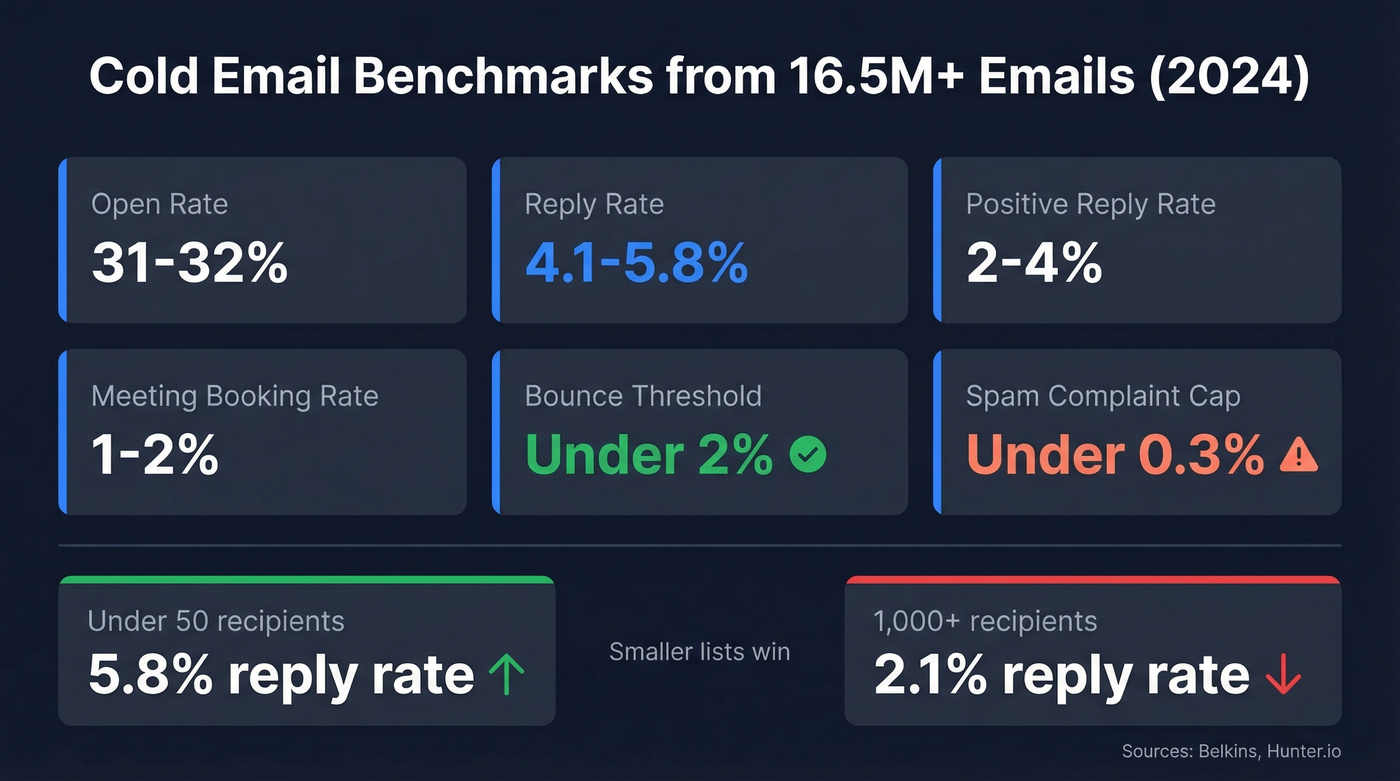
These numbers come from Belkins' analysis of 16.5M emails across 93 business domains (Jan-Dec 2024) and Hunter's analysis of 11M emails with 217 decision-maker surveys.
| Metric | Benchmark |
|---|---|
| Open rate | 31-32% |
| Reply rate | 4.1-5.8% |
| Positive reply rate | ~2-4% |
| Meeting booking rate | 1-2% |
| Bounce threshold | <2% |
| Spam complaint cap | <0.3% |
Campaigns targeting fewer than 50 recipients hit 5.8% reply rates. Scale to 1,000+ and replies drop to 2.1%. Reaching 1-2 contacts per company yields a 7.8% reply rate, while blanketing 10+ contacts at the same company drops you to 3.8%. Smaller and tighter wins.
Here's the thing: 73% of decision-makers value personalized emails, while generic blasts pull just 2.8% reply rates. And 71% of recipients ignore emails that aren't relevant to them. Relevance isn't a nice-to-have. It's the entire game.

Real Cold Email Case Studies
The Volume Play - 147K Emails, 40 Calls
Pure volume in action: 147,000 cold emails, 1.2% positive reply rate, 1,764 conversations, 40 calls booked. When this practitioner shifted to "joining warm conversations" - reaching prospects already discussing the problem - reply rates jumped to 34%.
That's not a typo. From 1.2% to 34% by changing who they emailed, not what they wrote.
The SaaS Engine - 464K Emails, 50 Customers
This is the most detailed practitioner-level breakdown we've found. A SaaS founder sent 464,000 emails between October 2024 and February 2025, generating 616 positive replies and converting 50 into paying customers - an 8% positive-reply-to-customer conversion rate.
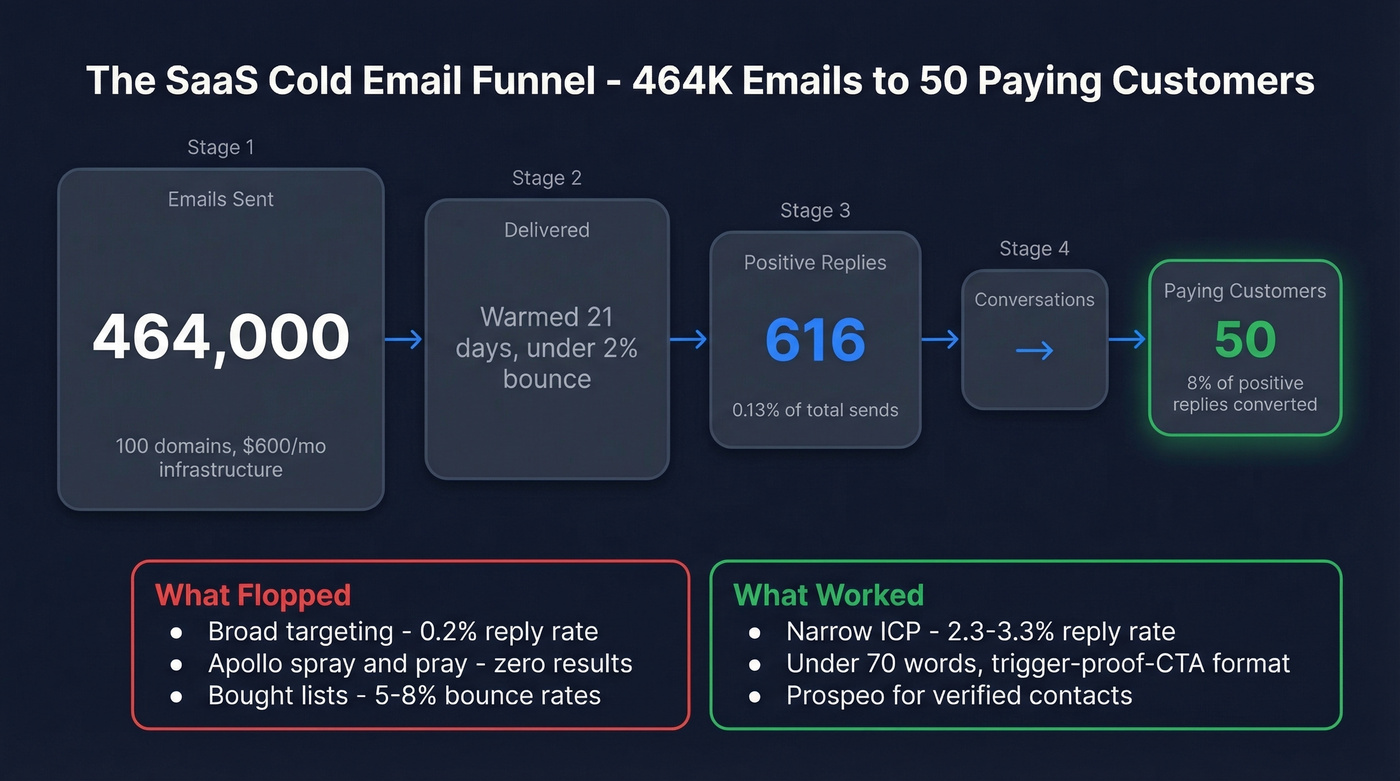
The infrastructure ran about $600/month: 100 domains warmed over 21 days, capped at 5,000 emails per day. The stack included Clay for enrichment, Prospeo for sourcing verified contacts, Leadmagic for validation, and PlusVibe for sending.
Broad targeting - "B2B SaaS companies" - produced a 0.2% reply rate and zero meetings. Narrowing the ICP to sales-assisted companies with $500K-$3M ARR already using cold email pushed replies to 2.3-3.3%. Same copy, same infrastructure, completely different results.
What flopped: spray-and-pray via Apollo (40,000 emails, zero results), bought lead lists (5-8% bounce rates, instant spam folder), and emails over 100 words. The winning format - call it the trigger-proof-CTA framework - ran under 70 words: a trigger line explaining how you found them, one sentence of proof, and a soft CTA. Belkins' data confirms the sweet spot at 6-8 sentences, pulling 6.9% reply rates.
The List Hygiene Lesson - Half the List Dead
A marketing team started with 4,917 email addresses. After deduplication and verification, the list dropped to 2,160 deliverable addresses - they lost over half before sending a single email. The winning sequence was a simple 3-email series asking for 15 minutes, producing 45 replies (~2.8%) that converted to phone calls.
Sending to an unverified list doesn't just waste budget. It damages your domain reputation in ways that take months to repair.

That SaaS founder's winning stack included Prospeo for a reason. Verified emails at 98% accuracy mean bounce rates stay under 2% - the exact threshold every case study here treats as non-negotiable. At $0.01 per email with data refreshed every 7 days, you're not paying to blast dead inboxes.
Stop losing half your list before you send a single email.
Results by Industry
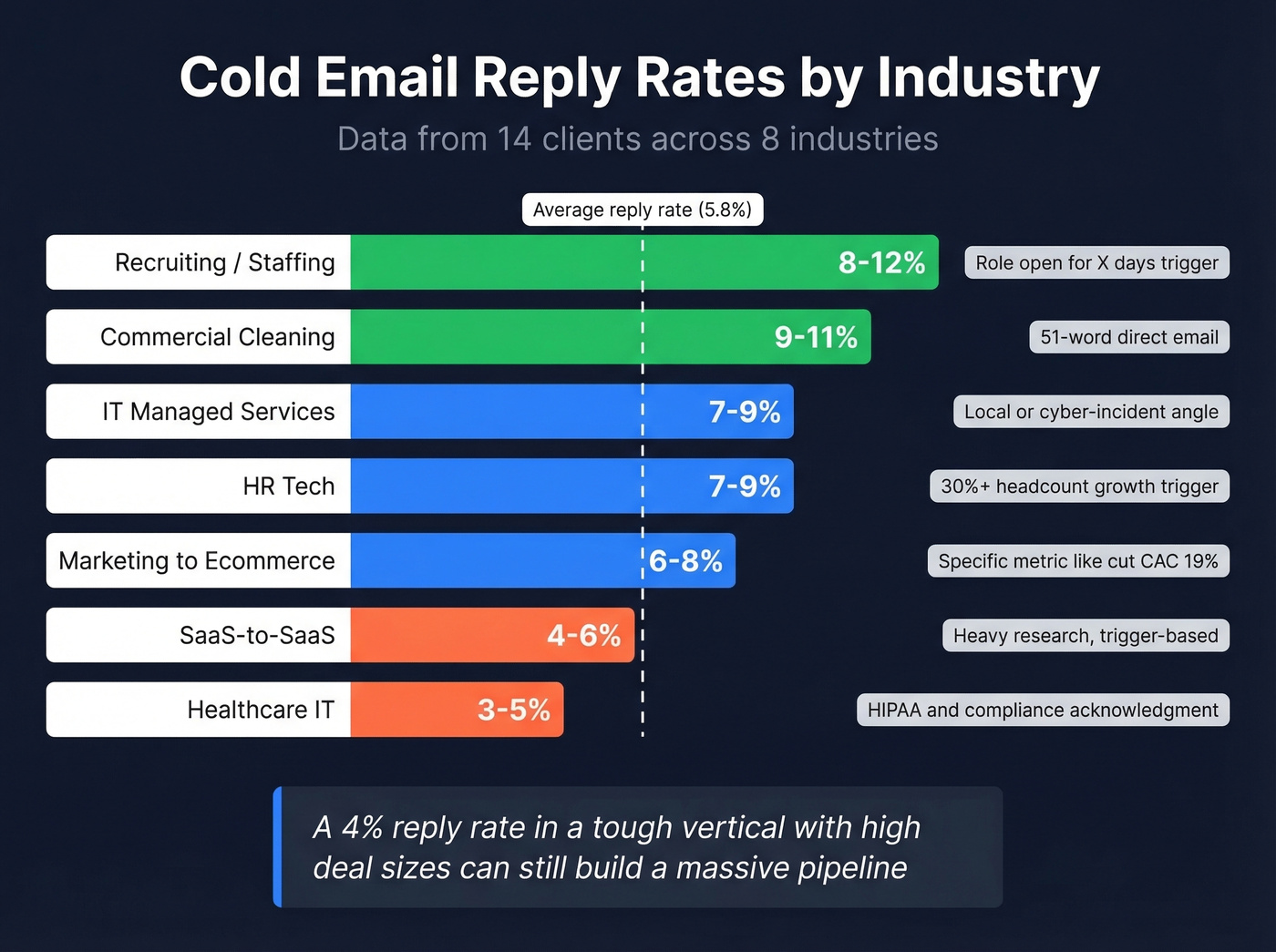
Not every vertical responds the same way. An outbound agency running campaigns across 14 clients and 8 industries shared these ranges:
| Industry | Reply Rate | Winning Angle |
|---|---|---|
| Commercial cleaning | 9-11% | 51-word email, direct |
| Recruiting/staffing | 8-12% | "Role open for X days" trigger |
| IT managed services | 7-9% | Local/cyber-incident angle |
| HR tech | 7-9% | 30%+ headcount growth trigger |
| Marketing to ecommerce | 6-8% | Specific metric ("cut CAC 19%") |
| SaaS-to-SaaS | 4-6% | Heavy research, trigger-based |
| Healthcare IT | 3-5% | HIPAA/compliance acknowledgment |
The consensus on r/b2bmarketing is that SaaS-to-SaaS is the hardest vertical because "everyone has seen every tactic." No universal template exists. The winning angle varied completely by industry, which is why ICP research matters more than copywriting tricks.
If you're selling into healthcare IT and expecting recruiting-level reply rates, recalibrate. A 4% reply rate in a tough vertical with high deal sizes can still build a massive pipeline.
What Doesn't Work
Every campaign we analyzed confirmed the same anti-patterns:
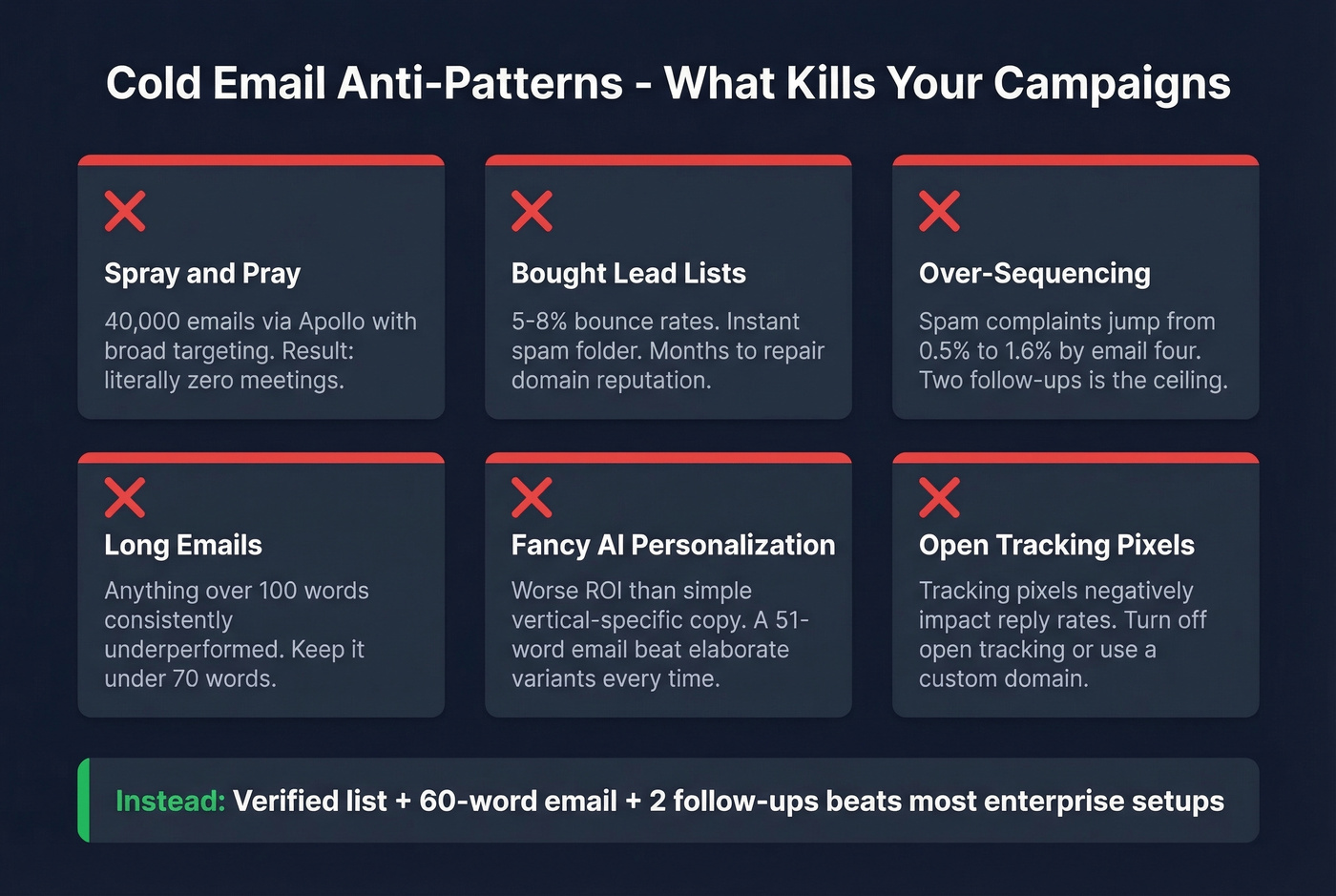
- Spray-and-pray - 40,000 emails through Apollo with broad targeting produced zero results. Not low results. Zero.
- Bought lead lists - 5-8% bounce rates and instant spam folder placement. (If you're tempted, read Is It Illegal to Buy Email Lists?.)
- Over-sequencing - Spam complaints jump from 0.5% to 1.6% by the fourth email. Unsubscribes hit 2% by round four. Two follow-ups is the ceiling.
- Long emails - Anything over 100 words consistently underperformed.
- Fancy personalization - Elaborate AI-driven personalization had worse ROI than simple vertical-specific copy. The 51-word commercial cleaning email beat heavily personalized variants every time.
- Open tracking pixels - Hunter's research found tracking pixels negatively impact reply rates. Turn off open tracking entirely, or use a custom tracking domain at minimum.
Let's be honest about something: if your average deal size sits below $10K, you probably don't need a $2,000/month outbound stack. A verified list, a 60-word email, and two follow-ups will outperform most enterprise setups running bloated sequences with AI personalization. Track reply rates and meetings booked. Ignore vanity open-rate metrics.
The Playbook
Every winning campaign followed the same sequence, and the order matters as much as the individual steps.
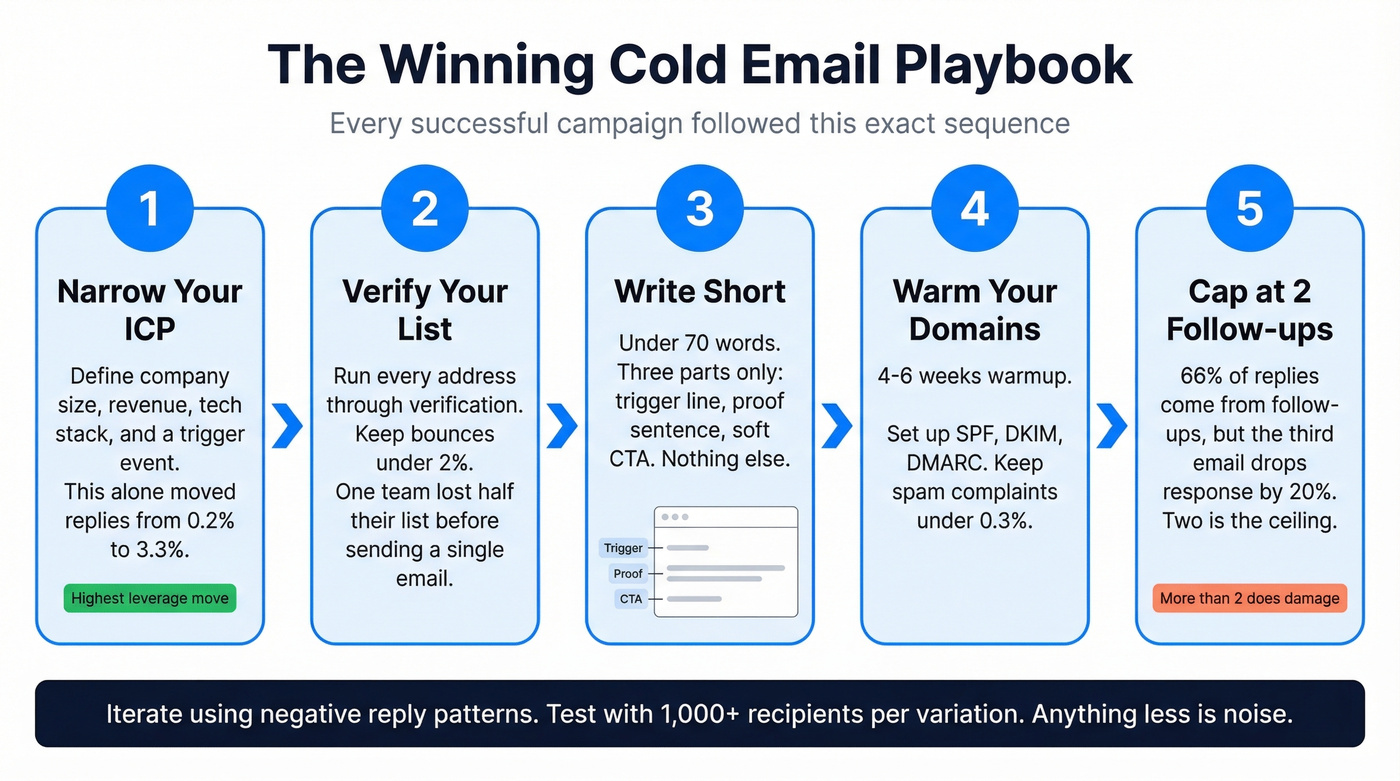
First, narrow your ICP before writing copy. This alone moved reply rates from 0.2% to 3.3% in the SaaS case study above. Define company size, revenue range, tech stack, and a trigger event that makes your outreach timely.
Third, write short. Under 70 words. Trigger line, proof sentence, soft CTA. That's it. (If you want examples, start with these cold email follow-up templates.)
Fourth, warm your domains 4-6 weeks with SPF/DKIM/DMARC authentication and keep spam complaints under 0.3%. If you're troubleshooting deliverability, use an email deliverability guide and check your DMARC alignment.
Fifth, cap your sequence at two follow-ups. 66% of replies come from follow-ups, but only the first one moves the needle meaningfully - the third email drops response rates by 20%.
When you iterate on copy, use negative reply patterns to write your next variant. If prospects keep saying "we already have a solution," your next test should lead with a switching trigger, not a feature list. Test with ~1,000 recipients per variation - anything less is noise.
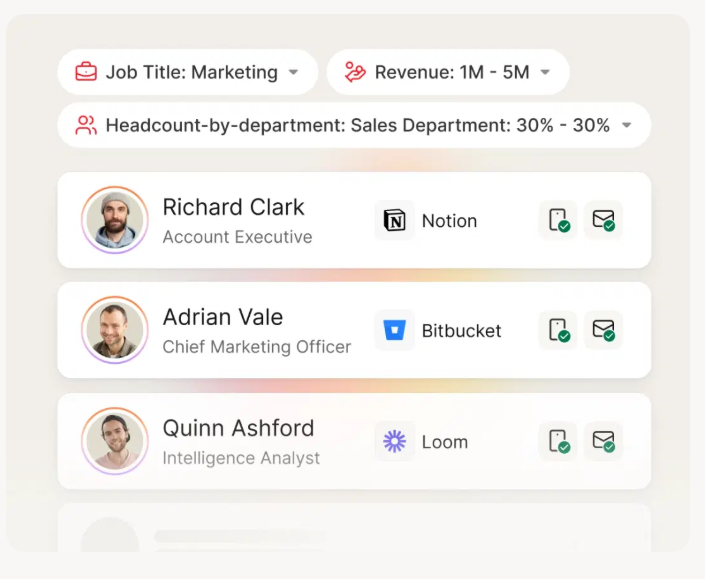
Every winning campaign in this breakdown started the same way: tight ICP targeting before writing a word of copy. Prospeo's 30+ filters - buyer intent, headcount growth, technographics, funding - let you find the exact prospects already in-market. That's how you go from 1.2% to 34% reply rates.
Target the warm conversations. Prospeo finds them for you.
FAQ
What's a good cold email reply rate in 2026?
Large-dataset benchmarks show a 5.8% average reply rate for tightly targeted campaigns under 50 recipients. Campaigns over 1,000 recipients drop to 2.1%. Industry ranges span 3-5% for healthcare IT up to 8-12% for recruiting and staffing. Anything above 5% with focused targeting is strong.
How many follow-ups should I send?
Two. The first follow-up lifts replies by up to 49%. The third email drops response rates by 20% and pushes spam complaints from 0.5% to 1.6%. After two follow-ups, you're doing more damage than good.
How do I keep cold emails out of spam?
Authenticate your domain with SPF, DKIM, and DMARC. Verify your list to keep bounces under 2%. Use a custom tracking domain or disable open tracking entirely. Keep spam complaints below 0.3%. Warm new domains 4-6 weeks before scaling sends.
Skip this if your list isn't verified
Seriously. If you haven't run your email list through a verification tool, none of the tactics above will matter. Bad data poisons everything downstream - deliverability, reply rates, domain reputation. Verify first, strategize second.