

CRM Adoption Best Practices: Stop Training Harder, Start Engineering Less Friction
Your VP pulls up a pipeline report on Monday morning. Half the records haven't been touched in three weeks. The other half are missing close dates, next steps, or both. Nobody trusts the forecast, so the real pipeline review happens in a spreadsheet someone emailed at 11 PM.
Sound familiar? That gap between "we have a CRM" and "we actually use the CRM" is where forecasts go to die. 70% of CRM projects fail to meet expectations, and Gartner found only 24% of organizations consider their implementations successful. Yet when CRM works, the ROI is massive - Nucleus Research pegs it at $8.71 returned for every $1 spent. The distance between those numbers isn't a training problem. It's a friction problem, and that's exactly what these CRM adoption best practices are built to fix.
The Short Version
If you fix only three things - simplify your data model so reps touch fewer fields, auto-enrich records so nobody types what a tool can populate, and make leaders pull CRM reports in every pipeline review - you'll move faster than most rollouts ever do. One manufacturing company went from under 40% active usage to 85%+ in a single quarter after adding real change management and a champion motion. The rest of this article explains how.
Why Sales Reps Avoid the CRM
The consensus on r/CRM is blunt: 90% of CRMs aren't configured correctly. Teams buy the platform, copy the defaults, and hope it works despite every business operating differently. That's failure mode #1 - misconfiguration.
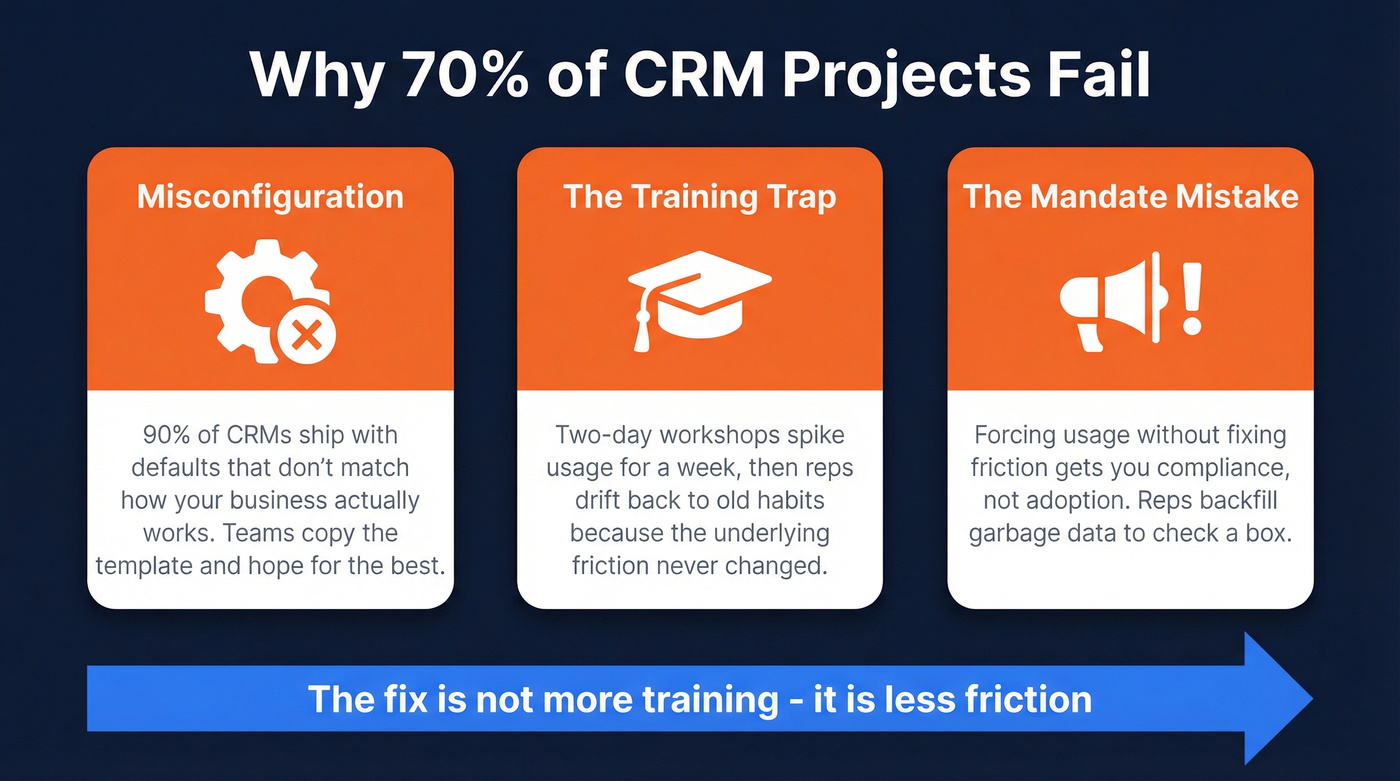
Failure mode #2 is the training trap. You run a two-day workshop, usage spikes for a week, then reps drift back to old habits because entering data slows them down more than it helps them sell. In professional services, CRM competes directly with billable hours - making zero-touch data capture even more critical.
Failure mode #3 is the mandate mistake. Forcing usage without fixing the underlying friction gets you compliance, not adoption. Reps backfill garbage data to check a box, and now your CRM is full of records nobody trusts.
Another Reddit thread from heavy-industry sales put it well: reps who spend their days putting out fires on job sites aren't going to sit down and lovingly update opportunity stages. The system has to meet them where they are. Here's what reps actually say when you ask them directly:
"Using the system takes too much time."
"I've been successful without a CRM - why should I change?"
"I don't need 'Big Brother' checking up on my activities."
"It's too cumbersome."
TiER1 Performance end-user interviews
These aren't excuses. They're symptoms of a system that creates more work than it eliminates.

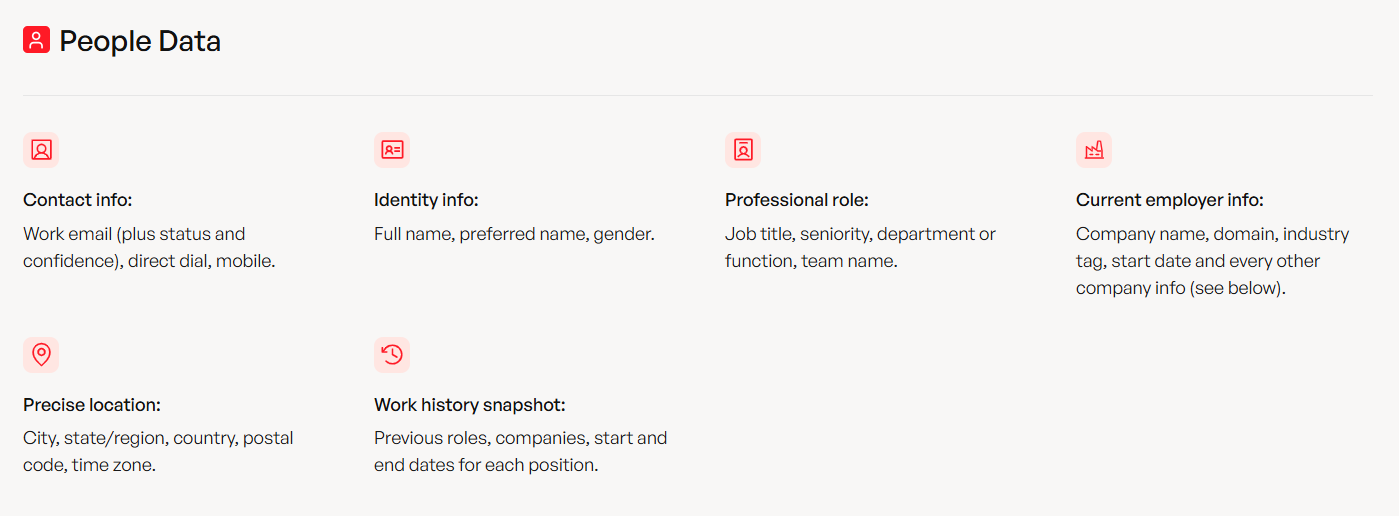
Manual data entry is the #1 reason reps abandon your CRM. Prospeo's native Salesforce and HubSpot integrations auto-populate 50+ data points per contact - verified emails at 98% accuracy, direct dials, firmographics - with an 83% match rate. Data refreshes every 7 days, so records never decay. At $0.01/email with no contracts, it costs less than the productivity you're losing to empty fields.
Kill manual entry and watch your CRM adoption numbers climb.
Five Practices That Drive Real Adoption
Before implementing these, identify your stakeholders - the VP who owns the forecast, the ops lead who builds reports, and the reps who live in the system daily. Each one has different friction points, and each needs a different reason to care.
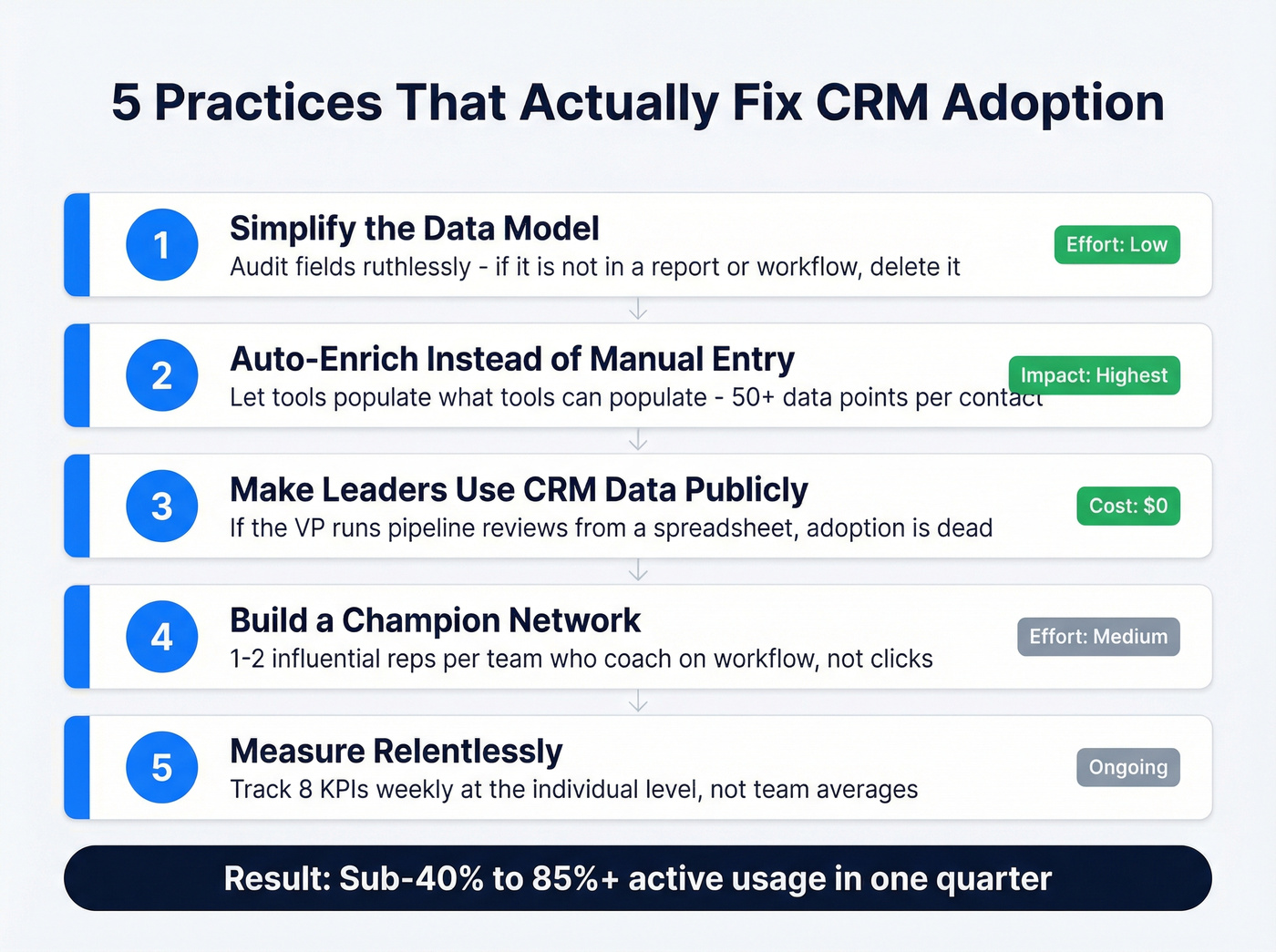
1. Simplify the Data Model
Most CRMs ship with 50+ default fields. Your team usually needs far fewer.
Audit ruthlessly: if a field isn't used in a report, a workflow, or a trigger, delete it or at least remove it from required views. Fewer fields means less friction means more compliance. Make the right behavior the easy behavior. We've seen this single step do more to boost engagement than any training session, because it removes the thing reps hate most - pointless busywork that doesn't help them close deals.
2. Auto-Enrich Instead of Manual Entry
Manual data entry is the #1 adoption killer. Every minute a rep spends typing a phone number, company size, or industry code is a minute they're not selling - and they know it. The fix is enrichment: let a tool populate what a tool can populate.
Prospeo's native Salesforce and HubSpot integrations handle this well, returning 50+ data points per contact - verified emails at 98% accuracy, direct dials, firmographics - at an 83% enrichment match rate. Its 7-day refresh cycle keeps records current instead of decaying, which matters because CRM data deteriorates by roughly 25% annually without active maintenance. If you're comparing vendors, start with a shortlist of data enrichment options. For context, ZoomInfo typically runs $15-40K/year for similar enrichment, while Prospeo starts free and scales at roughly $0.01/email with no contracts.
3. Make Leaders Use CRM Data Publicly
Here's the thing: if your VP still runs pipeline reviews from a spreadsheet, your adoption initiative is dead on arrival. Full stop. Reps take behavioral cues from leadership. When managers pull reports directly from the CRM in every meeting - forecast reviews, deal inspections, coaching sessions - it sends an unmistakable signal that the data matters.
This is the single strongest adoption lever we've encountered. It costs nothing. It requires zero technology. It just requires leaders to actually use the tool they're asking everyone else to use.
4. Build a Champion Network
Identify one or two influential reps per team as CRM champions. Not IT support - peers who coach on workflow, not clicks. The Alexander Group and TiER1 Performance both emphasize this: adoption spreads through social proof, not top-down mandates.
Celebrate early wins publicly. When the rep who keeps the cleanest pipeline gets called out in the all-hands, everyone notices. Tie recognition and performance reviews to data quality - not just quota attainment - and watch behavior shift. This kind of peer-driven momentum is what turns a rollout into a lasting habit.
5. Measure Relentlessly
You can't improve what you don't track. And vague goals like "increase adoption" don't cut it.
Your Adoption Scorecard
Track these eight KPIs weekly. If you're below the benchmarks, the problem is almost always in one of the five practices above.
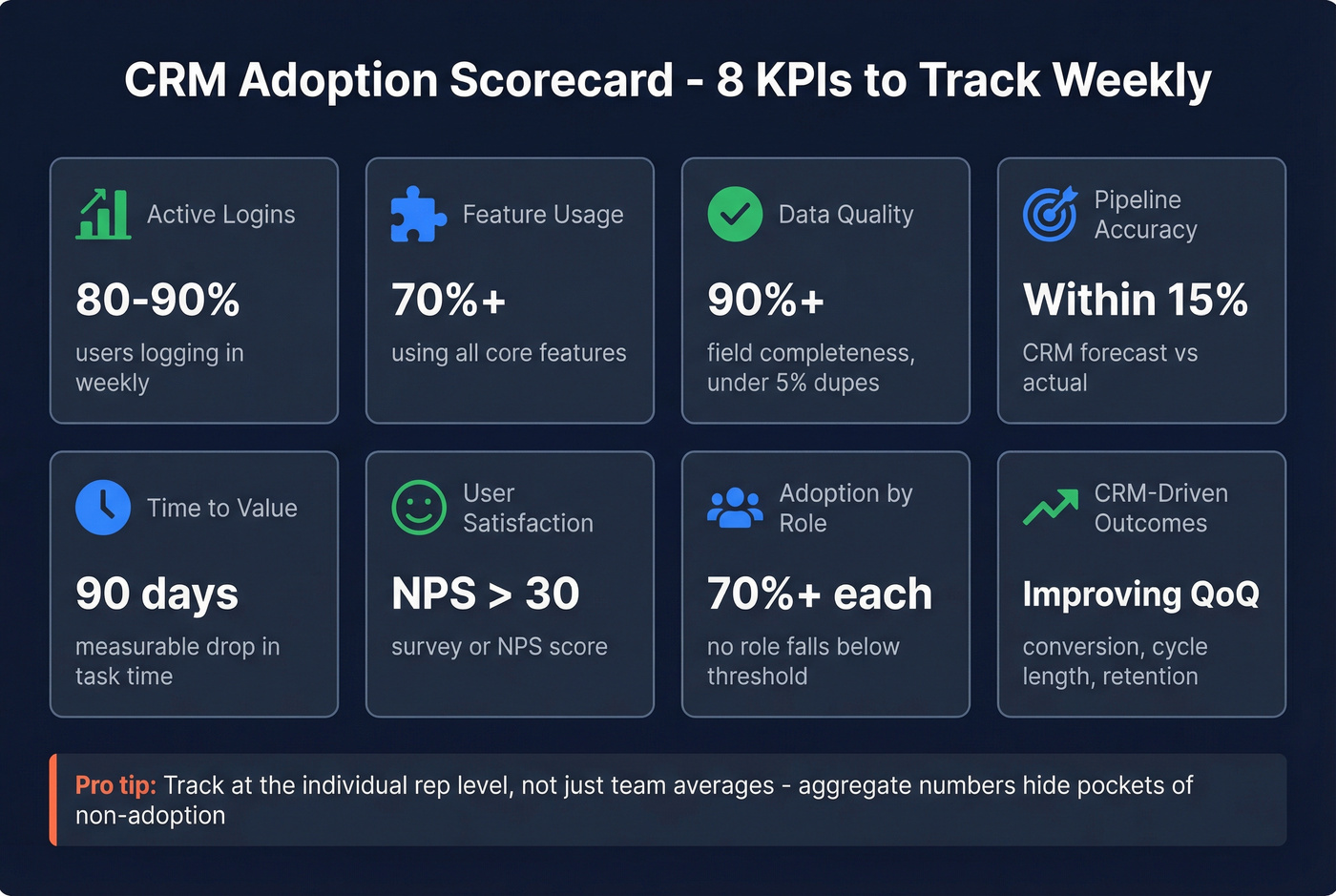
| Metric | What to Track | Good Benchmark |
|---|---|---|
| Active logins | % of users logging in weekly | 80-90% |
| Feature usage | Contacts, opps, tasks, dashboards | 70%+ using all core features |
| Data quality | Field completeness, dupes, stale records | 90%+ complete, <5% dupes |
| Pipeline accuracy | CRM forecast vs. actual | Within 15% variance |
| Time to value | Task time pre vs. post CRM | Measurable drop in 90 days |
| User satisfaction | NPS or survey | NPS > 30 |
| Adoption by role | Usage across sales/mktg/support | No role below 70% |
| CRM-driven outcomes | Conversion, cycle length, retention | Improving QoQ |
Now set role-specific expectations so "use the CRM" isn't abstract:
| Role | Daily Entries (Target) |
|---|---|
| Sales rep | 15-20 (leads, calls, meetings) |
| Account manager | 10-15 (updates, interactions) |
| Sales manager | 5-10 (pipeline, forecasts) |
These are calibrated benchmarks from Teamgate that give each role a concrete, achievable target. Tracking adoption at the individual level - not just team averages - reveals who needs support and where the process is actually breaking down. If you want to connect activity targets to outcomes, map them to sales activities and your sales operations metrics.
Fix the System, Not the People
Let's be honest about what that manufacturing company did to jump from sub-40% to 85%+ usage in one quarter. They didn't retrain. They restructured - simplified fields, reduced manual entry, installed champions, and made leadership accountable for using CRM data in every decision.
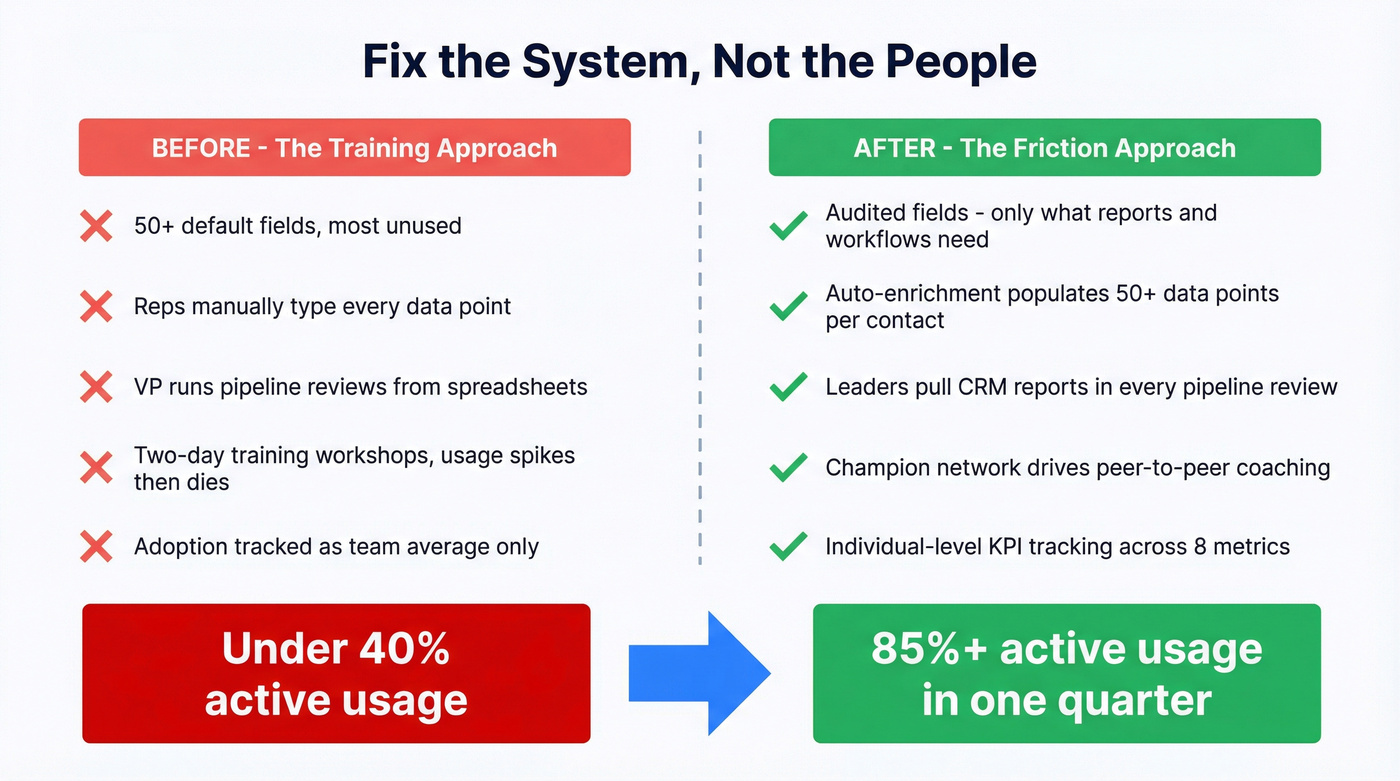
That's the pattern. 70% of CRM projects fail because they treat adoption as a discipline issue when it's a design issue. Apply these CRM adoption best practices - fix the system - and you get what CRM was supposed to deliver all along: accurate forecasting, shorter sales cycles, and pipeline visibility you can actually trust. If forecasting is the pain point you're trying to fix, align your CRM rollup with sales forecasting and the most common sales pipeline challenges. Skip the three-day training bootcamp. Spend that time removing the fields nobody uses and automating the data entry nobody wants to do. The adoption will follow.
Dirty CRM data doesn't just tank adoption - it destroys forecast accuracy and pipeline trust. Prospeo returns 50+ verified data points per contact at a 92% API match rate, refreshed weekly instead of the 6-week industry average. That's how teams like Snyk got 50 AEs actively prospecting with bounce rates under 5% and 200+ new opportunities per month.
Stop backfilling garbage data. Start with records reps actually trust.
FAQ
Which practices have the biggest impact?
Simplifying your data model, auto-enriching records, and making leadership pull CRM reports in every pipeline review. The leadership lever is free and has the highest ROI - teams that mandate CRM-only pipeline reviews see adoption climb 20-40 percentage points within one quarter.
How long does it take to improve adoption?
Most teams see measurable improvement within one quarter when they address root causes - configuration bloat, manual entry burden, and leadership behavior. Adding more training without fixing these structural issues just creates another temporary spike followed by the same relapse.
Can enrichment tools help with adoption?
Yes - manual data entry is the #1 adoption blocker. When enrichment tools auto-populate records with verified contact data, the friction that drives reps away disappears. In our experience, teams that automate even basic firmographic and contact enrichment see data completeness jump above 90% within weeks, not months.
What KPIs should we track for CRM adoption?
Focus on weekly active logins (target 80-90%), field completeness (90%+), duplicate rate (under 5%), and forecast accuracy (within 15% of actual). Track these at the individual rep level, not just team averages - aggregate numbers hide the pockets of non-adoption that drag down data quality for everyone.