

7 Data Enrichment Examples With Before & After Records
Your CRM has 50,000 contacts. By year's end, roughly 11,000 of them will be wrong - stale titles, dead emails, disconnected phones. B2B data decays at 22.5% annually, and the global enrichment market hit $2.37 billion for a simple reason: revenue teams pay a real penalty for stale data.
What follows are seven data enrichment examples, each with field-level before/after records so you can see exactly what changes. Enriched leads convert 20-30% better. These examples show why.
Why Enrichment Matters
79% of B2B leads never convert to sales. Gartner pegs the average annual cost of poor data quality at $12.9M per organization. The decay curve is steep: contacts aged under 3 months see a 25% email open rate and 3% reply rate, but by 24 months those numbers crater to 8% opens and 0.5% replies - a 6x decline in replies that makes outbound feel broken when the real problem is just stale data.
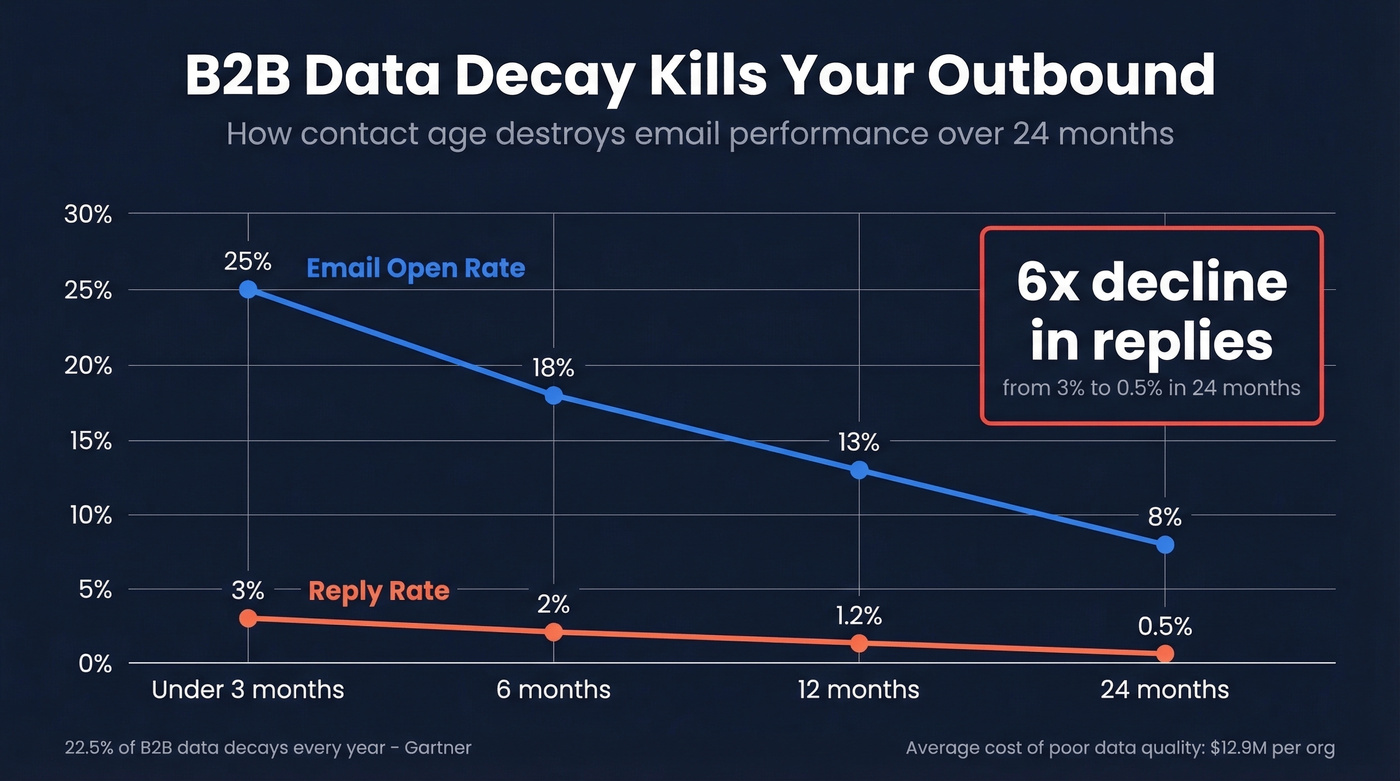
We've seen this pattern across dozens of customer accounts. Teams blame their messaging, their sequences, their SDRs. Then they re-enrich their database and reply rates jump overnight. The data was the bottleneck the whole time.
7 Practical Data Enrichment Examples
1. Contact & Email Enrichment
The most common starting point - and in our experience, where most teams get the highest ROI. An SDR has a name and an email. Nothing else.
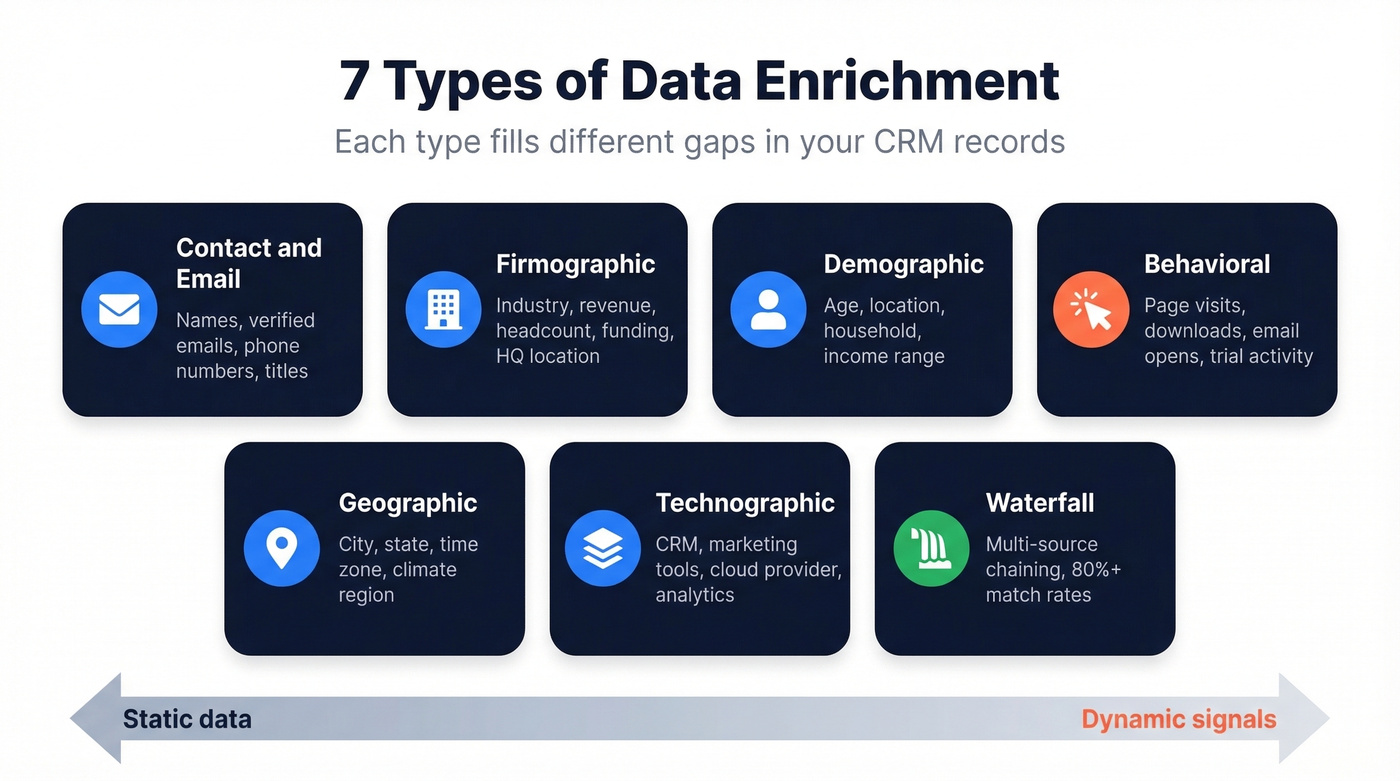
| Field | Before | After |
|---|---|---|
| Name | Jane Smith | Jane Smith |
| jane@acme.com | jane@acme.com (verified) | |
| Phone | - | +1 (415) 555-0192 |
| Title | - | VP of Marketing |
| Revenue | - | $12M-$25M |
| Tech stack | - | HubSpot, Snowflake |
Prospeo returns 50+ verified data points per contact - job title, company revenue and headcount, technographics, and intent data across 15,000 topics - with 98% email accuracy and a 7-day refresh cycle. One customer, Meritt, saw bounce rates drop from 35% to under 4% while pipeline tripled from $100K to $300K per week.
That's not a marginal improvement. That's a different business.
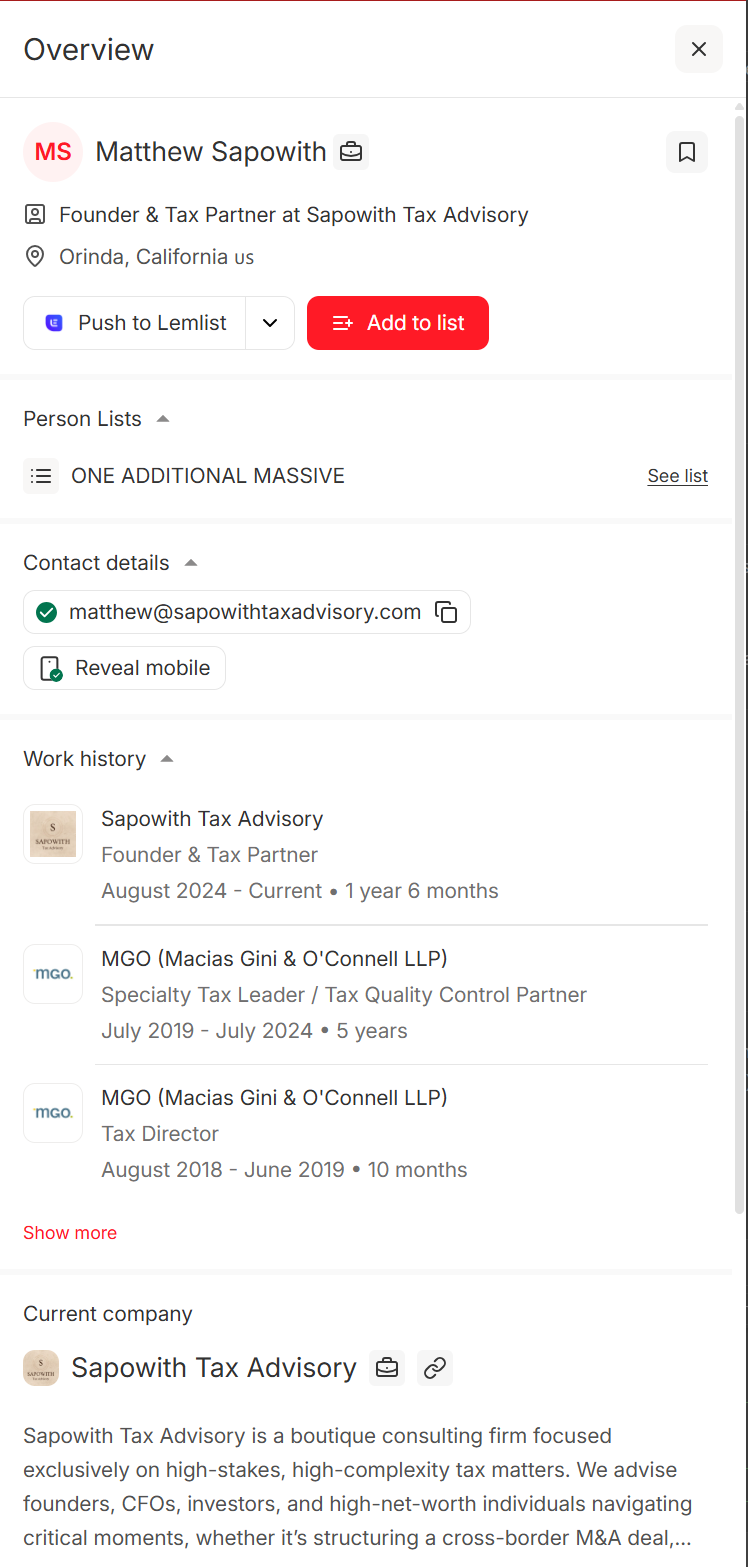
2. Firmographic Enrichment
Marketing needs to know which accounts fit the ICP before spending ad dollars. Without firmographic data, ABM is just guessing with a bigger budget.
| Field | Before | After |
|---|---|---|
| Company | Bolt Logistics | Bolt Logistics |
| Industry | - | Supply chain / 3PL |
| Revenue | - | $50M-$100M |
| Employees | - | 320 |
| Funding | - | Series C, $45M |
| HQ | - | Austin, TX |
A recruitment firm using firmographic enrichment targets only companies with recent headcount growth instead of blasting every company in a ZIP code. The average B2B form converts at roughly 2% - firmographic enrichment helps you make sure that 2% is the right 2%.
3. Demographic Enrichment
Think B2C or high-touch B2B where personal context matters. Here's what a travel agency's customer record looks like before and after:
| Field | Before | After |
|---|---|---|
| Name | Carlos Rivera | Carlos Rivera |
| Age range | - | 35-44 |
| Location | - | Denver, CO |
| Household | - | Married, 2 children |
| Income | - | $120K-$150K |
Now the agency pitches family ski packages to Carlos instead of generic beach deals. Personalized emails see 29% higher open rates and 41% higher click-through rates - demographic enrichment is what makes that personalization possible.
4. Behavioral Enrichment
This is where enrichment gets dynamic. You're appending what someone does, not just who they are.
Sarah Kim visited your pricing page three times this week. She downloaded the ROI calculator and the buyer's guide. She's opened six of your last eight emails and been active in the free trial for 14 days. Without behavioral enrichment, she's just another row in the CRM. With it, she's the first call of the day - and sales knows exactly which features to lead with because they can see what she's already explored.
Let's be honest: most CRMs are graveyards of static records. Behavioral enrichment is what turns them into something sales actually wants to open in the morning.
5. Geographic Enrichment
Simple but powerful for retail, field sales, and regional marketing. Take a ZIP code - 55401 - and enrich it into Minneapolis, Minnesota, Central time zone, cold/continental climate. A retail chain uses this to run winter clothing ads only in cold climates and swimwear campaigns in the South. Field sales teams use time zone enrichment to stop calling West Coast prospects at 6 AM their time.
If your average deal size is under five figures and you're not doing geographic enrichment, you're probably wasting ad spend on regions that'll never convert. It's one of the cheapest enrichment types with the most immediate payoff for localized businesses.
6. Technographic Enrichment
If you sell software, knowing what your prospect already uses is the single most valuable enrichment type. Full stop.
| Field | Before | After |
|---|---|---|
| Company | NovaTech | NovaTech |
| CRM | - | Salesforce |
| Marketing automation | - | Marketo |
| Cloud provider | - | AWS |
| Analytics | - | Mixpanel |
A SaaS company selling a Salesforce integration now leads with "we plug directly into your existing Salesforce instance" instead of a generic pitch. Technographic signals from sources like Wappalyzer and live job postings add another layer of targeting precision that firmographics alone can't touch.
7. Waterfall Enrichment
Here's the thing: no single data provider covers everyone. Single-source enrichment hits 40-50% contact discovery, which is exactly why waterfall enrichment exists. It chains multiple providers in sequence and pushes match rates to 80%+.
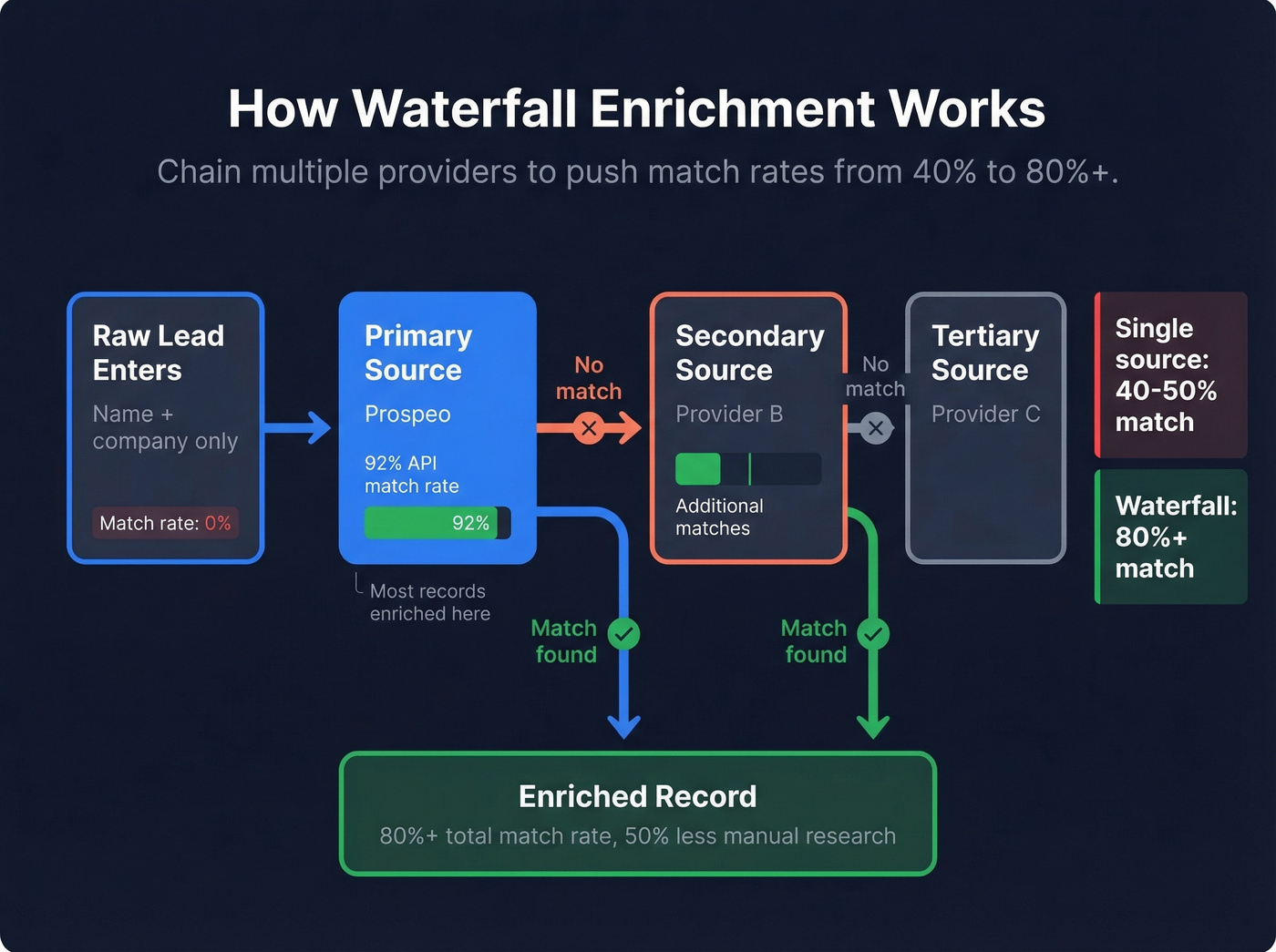
| Metric | Single Source | Waterfall |
|---|---|---|
| Match rate | 40-50% | 80%+ |
| Contactable prospects | Baseline | +40-60% |
| Manual research time | High | Cut by ~50% |
Tools like Clay, Databar, and BetterContact orchestrate this - querying a primary provider first, then falling back to secondary and tertiary sources until verified data is found. Prospeo integrates natively with Clay and other orchestration platforms, so it fits into waterfall workflows as either a primary or secondary source.
The tradeoff is complexity and compliance. Not all providers in a waterfall are GDPR/CCPA compliant, and one source can overwrite a verified phone number with an unverified one. Vet your data provenance carefully.

Every before/after example above starts the same way: sparse records that can't drive revenue. Prospeo's enrichment returns 50+ verified data points per contact - job title, revenue, technographics, intent signals - with a 92% match rate and 98% email accuracy. Meritt tripled their pipeline from $100K to $300K/week after switching.
Stop decorating dead records. Enrich with data that actually connects.
Enrichment Mistakes That Waste Budget
Enriching without a defined ICP. If you don't know who you're targeting, you're paying to decorate records you'll never use. We've watched teams burn through thousands of credits enriching contacts that no rep would ever call.
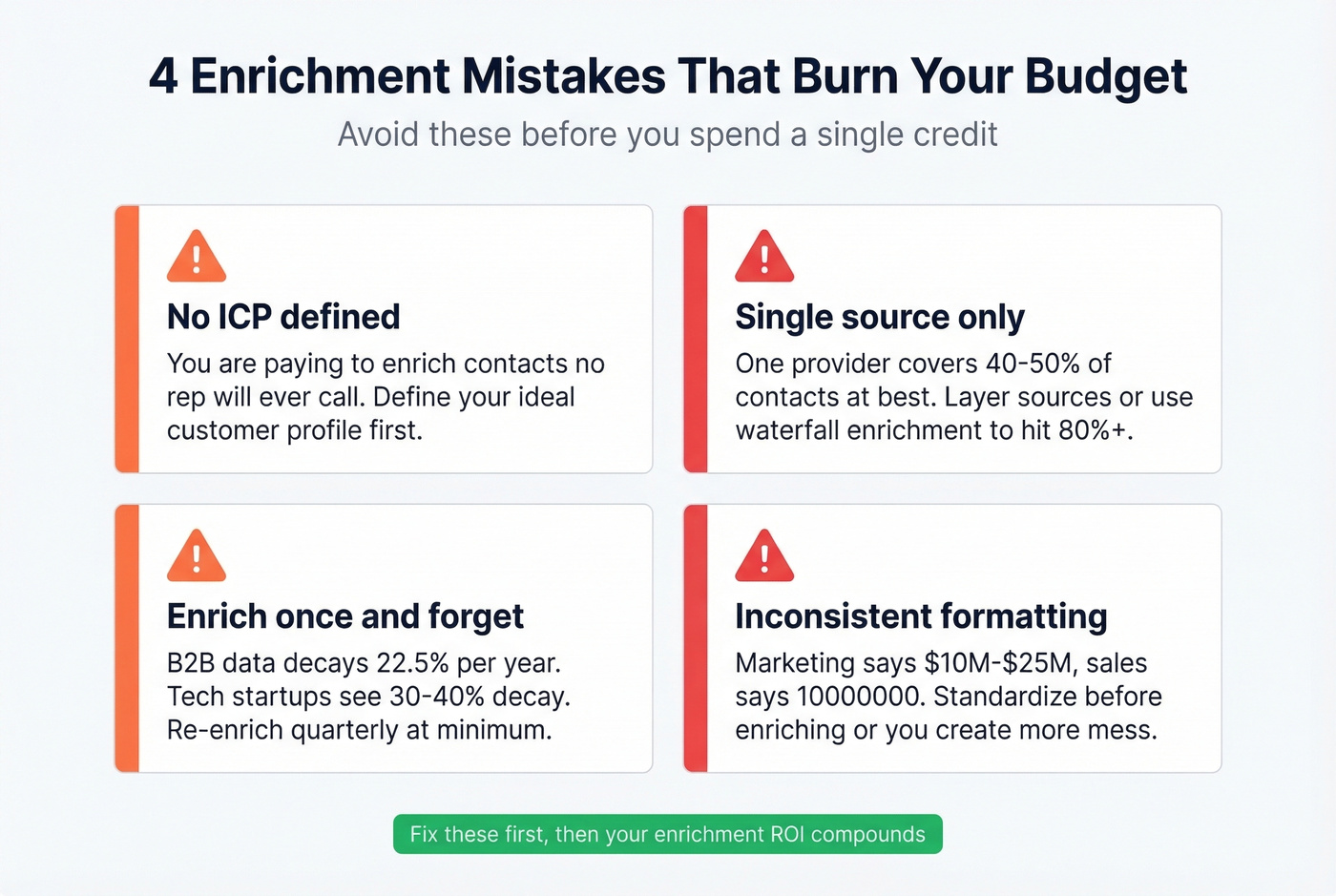
Relying on a single source. One provider gives you 40-50% coverage at best. Layer sources or use waterfall enrichment.
Enriching once and assuming you're done. B2B data decays at 22.5% per year - and it's worse in fast-moving sectors. Tech startups see 30-40% annual decay, while manufacturing hovers around 10-15%. Quarterly re-enrichment is the minimum. Monthly for high-value accounts.
Inconsistent formatting across teams. Marketing stores revenue as "$10M-$25M" while sales uses "10000000." Standardize before you enrich, or you'll create more mess than you clean up.
Best Tools for Data Enrichment in 2026
| Tool | Best for | Match/Accuracy | Pricing |
|---|---|---|---|
| Prospeo | Accuracy + freshness | 83% enrichment match, 92% API match, 98% email | ~$0.01/email, free tier |
| Apollo | All-in-one prospecting | 275M+ contacts | Free tier, ~$49/mo+ |
| Clay | Waterfall orchestration | Strong multi-source coverage | ~$149/mo+ |
| ZoomInfo | Enterprise standard | Strong US data | ~$15K-$40K/yr |
| Cognism | European data | Phone-verified mobiles | ~$1K-$3K/mo |
| Clearbit (Breeze Intelligence) | HubSpot enrichment | 100+ attributes | $30-$700/mo credits |
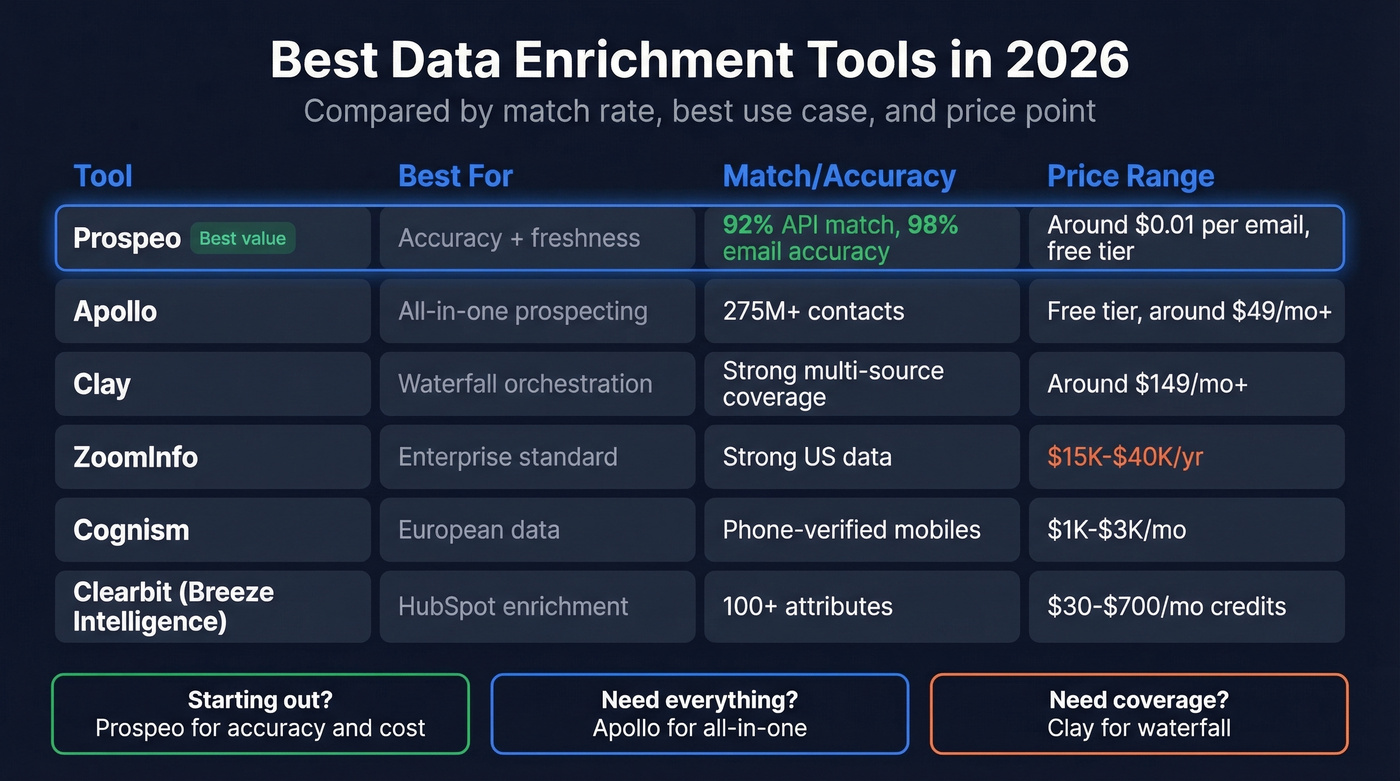
For teams just getting started: Prospeo for accuracy and cost, Apollo for all-in-one prospecting, Clay for waterfall coverage across multiple sources. Skip ZoomInfo unless you're enterprise-scale with budget to match - the consensus on r/sales is that you're paying mostly for the brand at that point.
If you want a deeper breakdown, see our full guide to the best data enrichment tools and the best B2B databases.
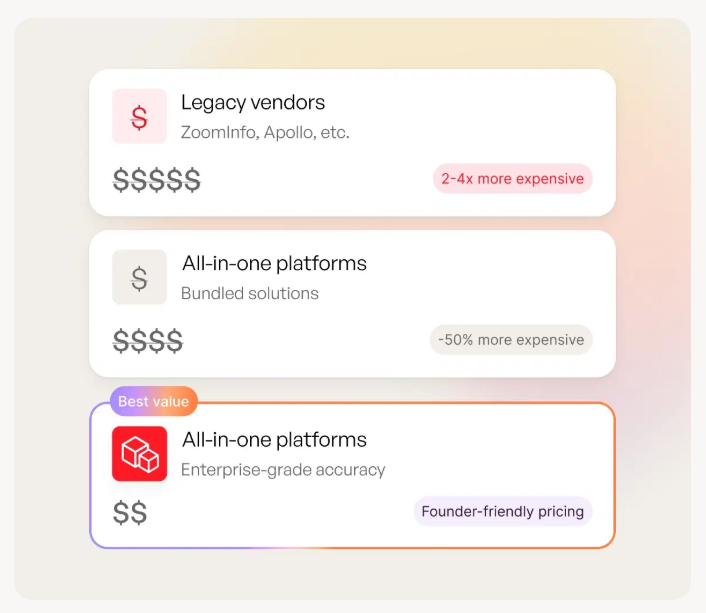
Waterfall enrichment works - but only if your primary source pulls its weight. Prospeo covers 300M+ profiles with a 92% API match rate and 7-day refresh cycle, so fewer records ever need a fallback. Native Clay integration means you can plug Prospeo into any waterfall workflow in minutes.
Start your waterfall with the source that fills 92% of records on the first pass.
FAQ
What's the difference between enrichment and cleansing?
Cleansing fixes existing data - deduplication, formatting, removing invalid records. Enrichment adds new data points you didn't have before. Always cleanse first, then enrich. Enriching dirty data just gives you more detailed dirty data.
How often should you re-enrich your CRM?
At minimum quarterly. B2B work emails decay at 20-30% annually - they're the fastest-decaying field in your CRM. High-value accounts deserve monthly refreshes.
What are the highest-ROI enrichment types?
For outbound-heavy teams, contact and technographic enrichment drive the biggest lift - expect 20-30% higher conversion rates on enriched leads. Product-led teams benefit most from behavioral enrichment tied to trial activity and feature usage signals.
How much does enrichment cost per record?
Anywhere from $0.01 to $0.50 depending on provider and data depth. Self-serve tools start at roughly $0.01 per email. Enterprise platforms like ZoomInfo run $15K-$40K per year with credit-based access on top. Choose based on volume and accuracy needs, not brand name.