

DeBounce vs Apollo.io: Do You Need Both, or Neither?
You exported 1,000 "Verified" leads from Apollo, loaded them into your sequencer, and 600 came back as catch-all or risky. Sound familiar? If you're weighing DeBounce vs Apollo.io for email verification, you've probably hit this exact wall. We've seen this pattern across dozens of outbound teams - the built-in verifier just isn't enough.
30-Second Verdict
DeBounce is a dedicated email verifier. Apollo.io is a prospecting platform with built-in verification. They're complements, not competitors.
Use DeBounce on top of Apollo if you need a $4.50-per-10K safety net. Skip both if you want pre-verified emails from the start - Prospeo delivers 98% email accuracy with a 5-step verification process built into the data layer, so there's no second tool and no suppression lists to manage.
What Each Tool Does
Apollo.io
Apollo is a full prospecting and engagement platform with 275M+ contacts, built-in sequences, and a credit-based model starting at $49/user/month on the Basic plan billed annually. It uses a 7-step email verification system that includes SMTP checks, signals from its contributor network, and bounce-rate monitoring. Apollo claims a 91% accuracy rate.
In Apollo's Email Status documentation, Verified emails are "fully confirmed," cost 1 credit, and if a verified email bounces within 30 days, Apollo automatically refunds the credit. That refund policy is nice, but it doesn't fix the damage a bounced email does to your sender reputation. Apollo's strength is prospecting scale, not verification depth.
DeBounce
DeBounce is a pure-play email verifier - no prospecting, no sequences, just list cleaning. It runs SMTP validation, syntax and MX checks, disposable email detection, and spam-trap/honeypot filtering at $0.00045 per verification, which works out to $4.50 per 10K emails.
On G2, it holds a 4.5/5 rating across 172 reviews, with users praising affordability and ease of use. One reviewer reported bounces dropping from 21% to around 1%. Credits never expire. DeBounce also markets 97.5% deliverability.
G2 reviewers do flag occasional issues with spam and temporary email detection, but for the price, it's hard to complain.
Verification Head-to-Head
| Factor | Apollo.io | DeBounce |
|---|---|---|
| Primary function | Prospecting + sequences | Verification only |
| Verification method | 7-step system (SMTP + network + delivery signals) | SMTP + syntax + MX + traps |
| Claimed accuracy | 91% | 97.5% deliverability |
| Real-world accuracy | ~85-90% per user estimates | Bounces: 21% to 1% per G2 reviews |
| Catch-all handling | Labels, filterable | Flags, limited resolution |
| Cost per check | 1 credit per verified email | ~$0.00045 |
| Bounce credit refund | Yes, within 30 days | N/A |
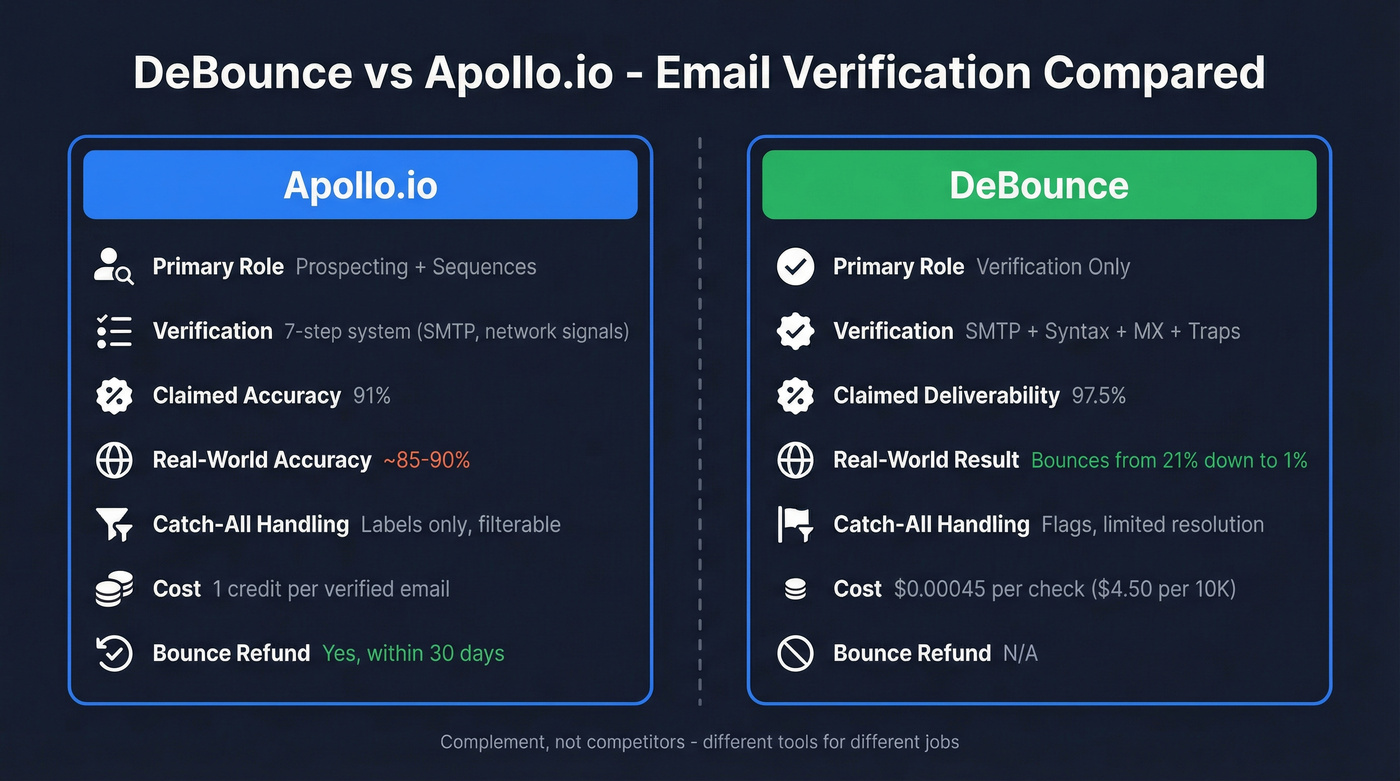
Here's where it gets interesting. The gap between Apollo's 91% claim and real-world results is significant. Practitioners on r/coldemail estimate Apollo's accuracy closer to 85-90%.
One user exported ~900 Apollo "Verified" leads, re-checked them with MillionVerifier, and found only ~19% came back as truly valid - with ~60% flagged as risky or catch-all. Another reported a 7.4% failure rate with Apollo "Verified" emails alone, dropping to ~4.1% after adding ZeroBounce as a waterfall validator. "Inaccurate Data" is a recurring con theme in Apollo's G2 reviews, and Apollo's own deliverability guidance defaults to a 50 emails/day sending limit.

Apollo users report 60% of "Verified" emails flagged as risky after a second check. Prospeo's 5-step verification - with catch-all handling, spam-trap removal, and honeypot filtering - hits 98% accuracy before you ever export. No DeBounce pass. No suppression list uploads.
One tool, one cost, zero duct-tape workflows.
The Catch-All Problem
Before blaming either tool, let's talk about the structural issue nobody can fully solve.
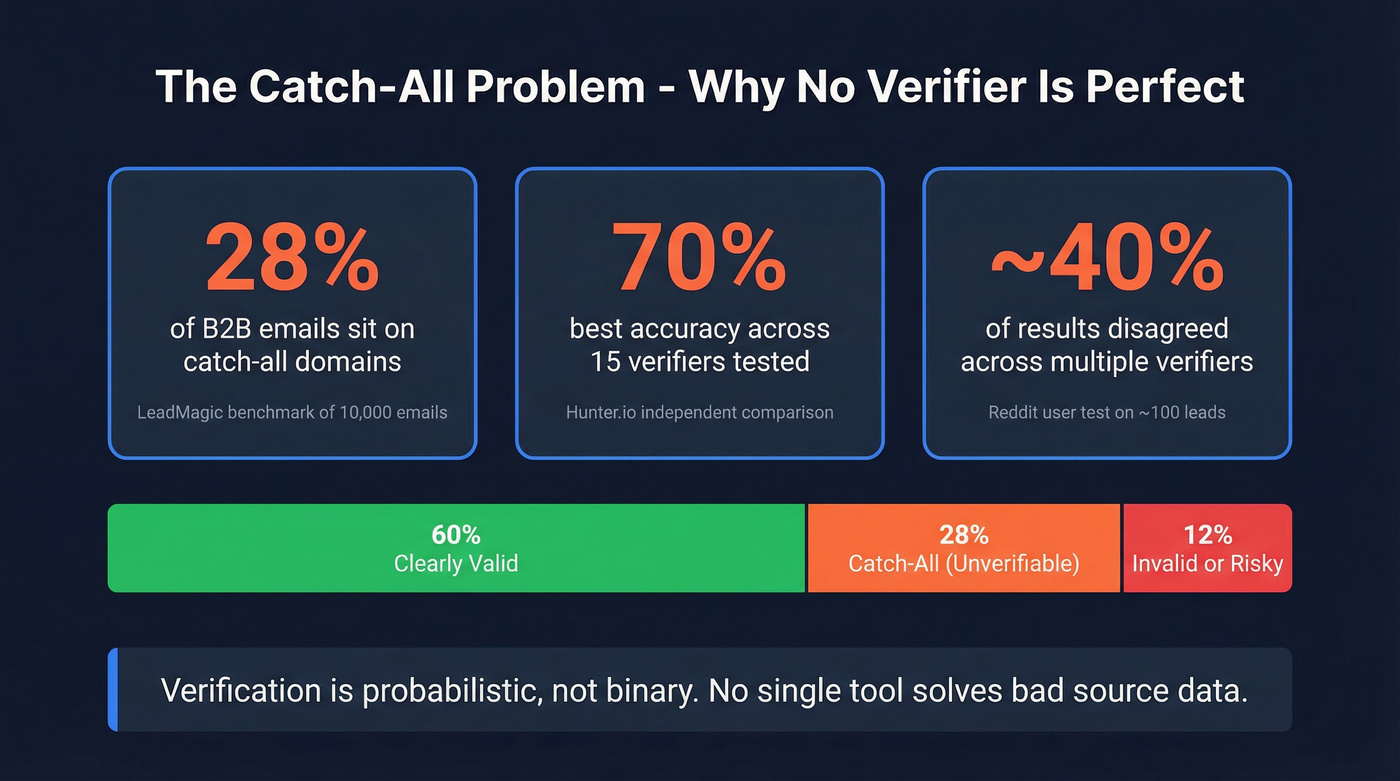
A LeadMagic benchmark of 10,000 B2B emails found 28% sit on catch-all domains - servers that accept everything, making it impossible to confirm whether a specific mailbox exists. A Hunter test across 15 verifiers found the top tool only hit 70% overall accuracy. That's the best in class, and it's still a coin flip on nearly a third of your list.

In our experience, catch-all domains are the single biggest source of verification disagreement. One Reddit user tested multiple verifiers on ~100 leads and results disagreed on roughly 40% of them. Verification is probabilistic, not binary - and no single verifier solves bad source data.
Here's the thing: if your deal sizes are under five figures and you're sending fewer than 200 emails a day, the double-verification tax probably isn't worth it. Fix the source data instead - starting with better email list hygiene.
Using DeBounce With Apollo
If you're sticking with Apollo and want DeBounce as a safety net, the workflow looks like this:
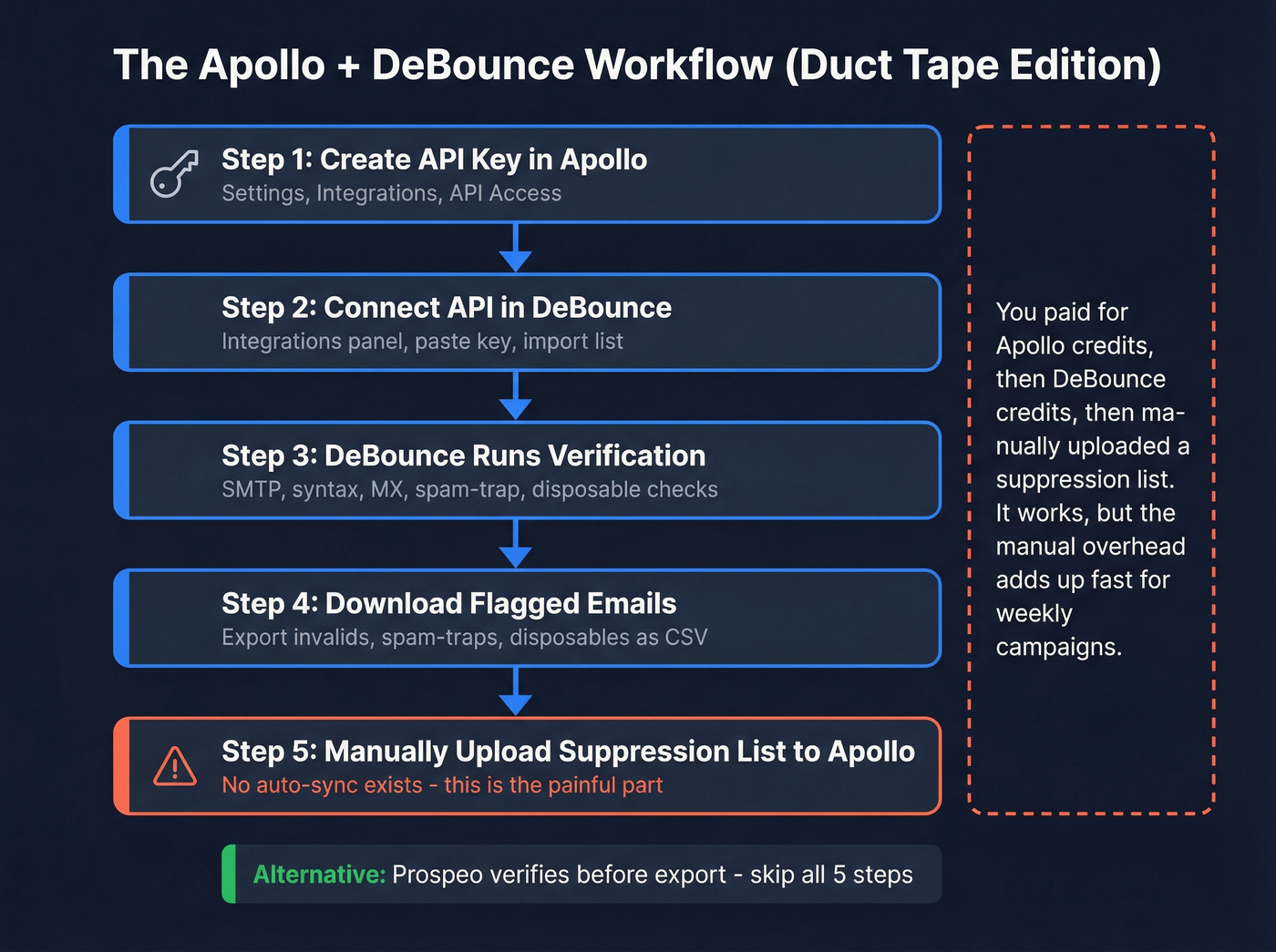
- Create an API key in Apollo
- Connect it in DeBounce's Integrations panel and import your list
- Download flagged categories like invalid, spam-trap, and disposable addresses
- Manually upload those to Apollo's suppression list
That last step is the frustrating part. DeBounce has no auto-suppression back to Apollo right now. You paid for Apollo credits, then DeBounce credits, then manually uploaded a suppression list. It works, but it's duct tape - and for teams running weekly campaigns, the manual overhead adds up fast.
Skip the Band-Aid
If the double-verification workflow feels like overkill, it's because it is.
Prospeo runs a 5-step verification process - including catch-all handling, spam-trap removal, and honeypot filtering - before you ever see an email. Its proprietary email-finding infrastructure doesn't rely on third-party providers, which is why the data is cleaner at the source. The result: 98% accuracy from 143M+ verified emails, refreshed on a 7-day cycle while the industry average sits at 6 weeks. One source, one cost, verified from the start.
Teams using Prospeo report bounce rates under 4%. Snyk cut theirs from 35-40% to under 5% and added 200+ new opportunities per month after switching.
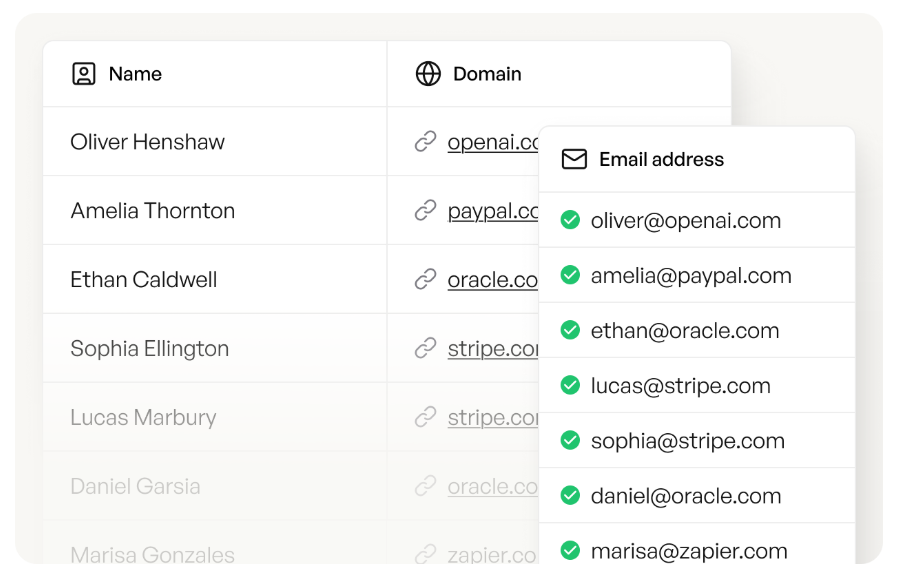
Snyk's 50 AEs cut bounce rates from 35-40% to under 5% and added 200+ opportunities per month - without a single third-party verifier in the stack. Prospeo's proprietary email infrastructure refreshes every 7 days, not 6 weeks.
Replace your verification stack with data that's clean at the source.
When to Use Each
Apollo alone - Small campaigns, tight budget, and you can tolerate some bounces. Filter to "Verified" only and cap sends at 50/day. Skip this if your sender reputation is already fragile (and learn how to calculate email bounce rate before you scale).
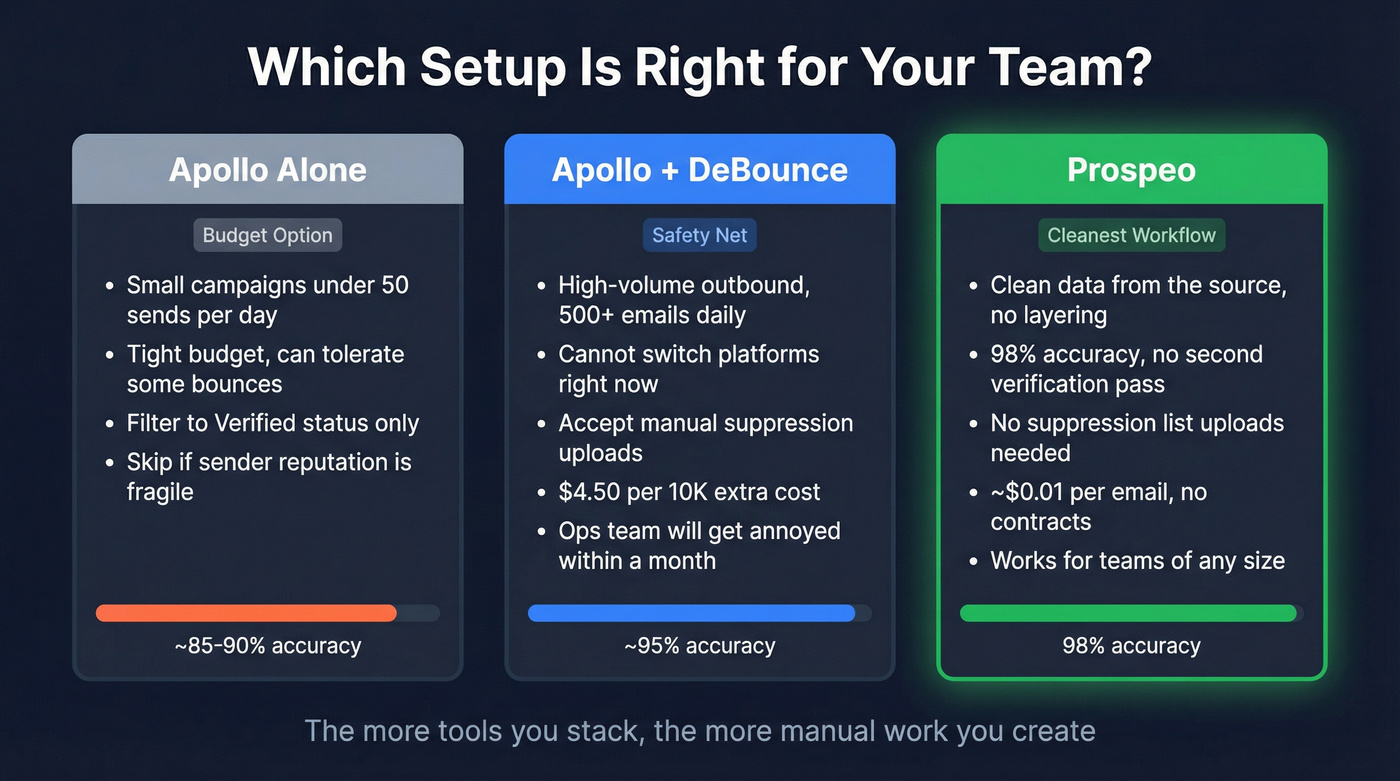
Apollo + DeBounce - High-volume outbound where you can't switch platforms and need a cheap safety net. Accept the manual suppression workflow as the cost of staying on Apollo. For teams sending 500+ emails daily, the $4.50-per-10K spend pays for itself in avoided bounces, but the manual upload step will annoy your ops team within a month.
Prospeo - You want clean data from the source without layering tools. 98% accuracy, no second verification pass, no suppression list uploads. The cleanest workflow of the three, and at ~$0.01 per email with no contracts, the math works for teams of any size - especially if you’re comparing email list cleaners or evaluating best B2B databases.
FAQ
Is Apollo's built-in verification enough?
For small, low-stakes campaigns under 50 sends/day, it's workable. For high-volume outbound, practitioners report needing a second pass - Apollo "Verified" emails have tested as low as 19% truly valid in independent spot checks on r/coldemail.
How much does DeBounce cost on top of Apollo?
About $4.50 per 10,000 emails, with credits that never expire. The catch: there's no auto-suppression integration, so you'll manually upload invalids back to Apollo after every batch. DeBounce's pricing page has the full breakdown.