

Decision Making in Sales: Why Buyers Freeze and How to Unfreeze Them
Decision making in sales isn't about your choices. It's about your buyer's. Your pipeline looks full - thirty "opportunities" sitting in your CRM. But twelve are actually being evaluated. The rest? Prospects who said "interesting, let me loop in my team" three months ago and haven't responded since. A common phrase on r/sales is "decision-making hell" - deals stuck in limbo where nobody says no, but nobody says yes either. Your biggest competitor isn't another vendor. It's indecision, and it kills 40-60% of deals.
The Short Version
Three levers move stalled deals:
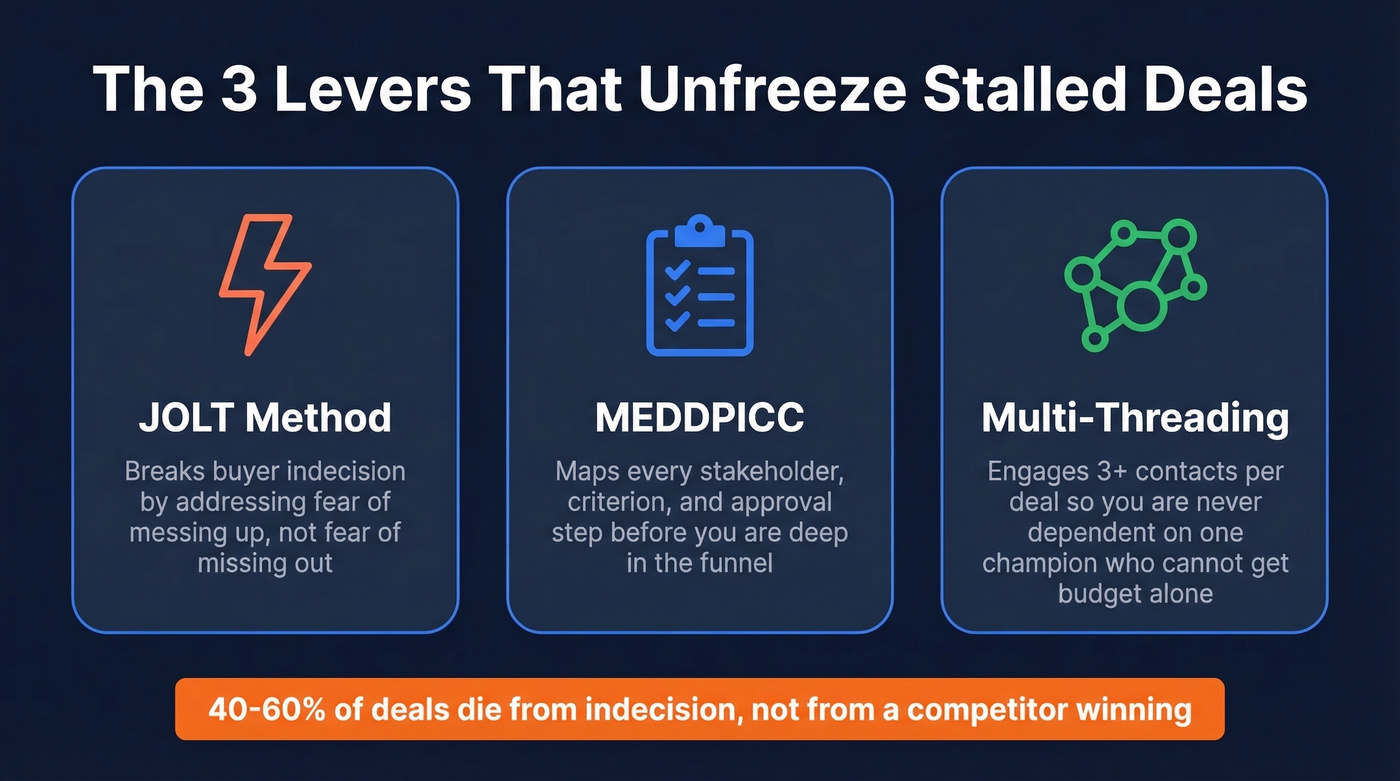
- The JOLT method breaks buyer indecision by addressing fear of messing up - not fear of missing out.
- MEDDPICC qualifies complex deals by mapping every stakeholder, criterion, and approval step before you're deep in the funnel.
- Multi-threading with verified contact data ensures you're never single-threaded into one champion who can't get budget approved alone.
Master all three, and you stop losing to "no decision."
How B2B Buying Works in 2026
Buyers do more homework before they ever talk to you. Average sales cycle length dropped from 11.3 months to 10.1 months between 2024 and 2025. Shorter cycles don't mean simpler ones, though.
A typical B2B buying group includes 6-10 decision-makers. In enterprise deals, 30% of committees have 10+ stakeholders. The point of first contact has shifted from 69% to 61% of the buyer's journey - prospects engage sellers earlier, but 83% still mostly define their requirements before that first conversation. And 94% of buyers now use LLMs during buying research. You've got committees that arrive pre-informed, pre-opinionated, and harder to influence once you finally get the meeting.
Why "No Decision" Kills More Deals Than Competitors
Here's the thing: most sales training focuses on beating the other vendor. But you're far more likely to lose to inertia.
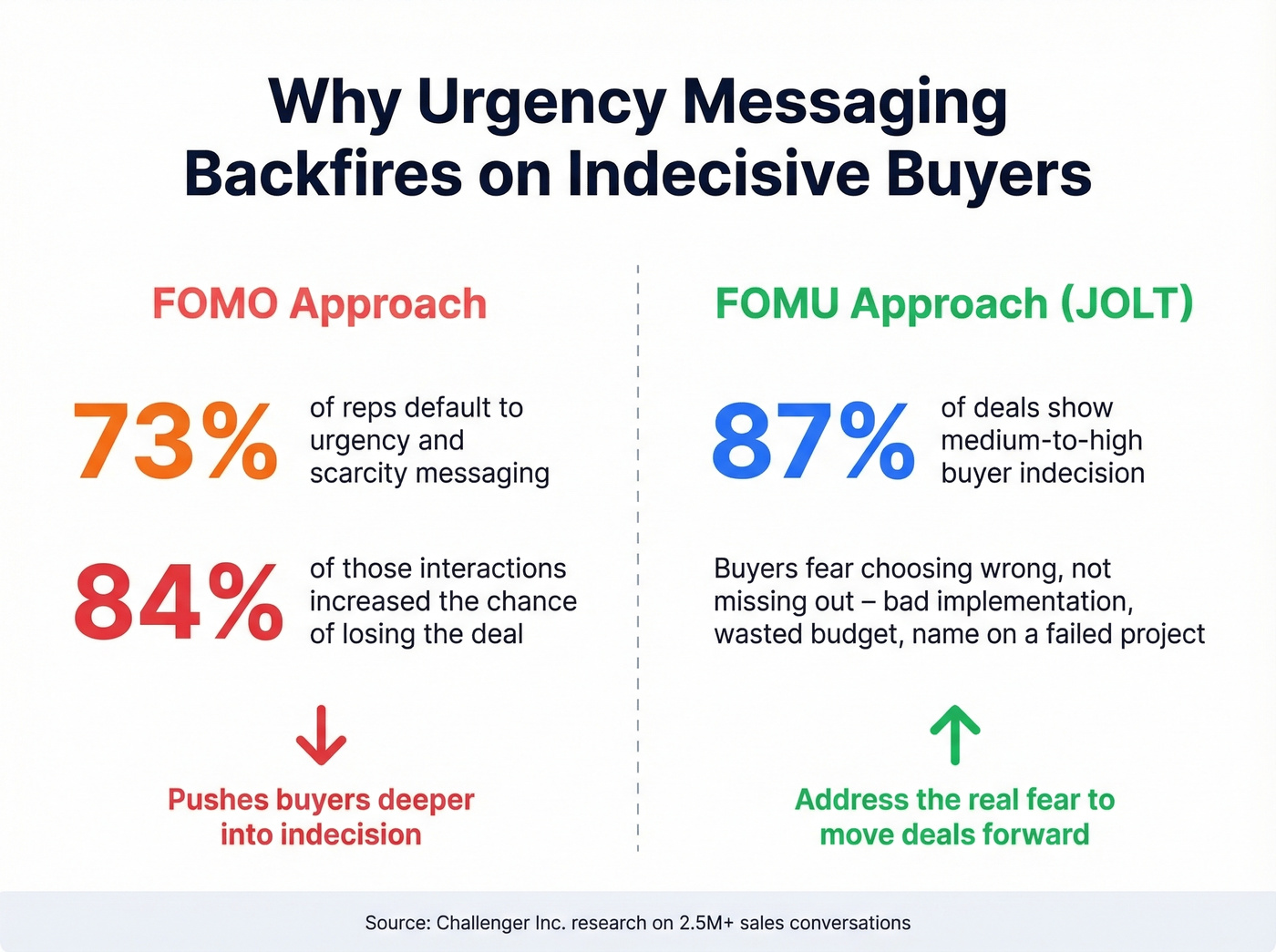
Challenger's research found that 87% of all deals show medium-to-high levels of buyer indecision. And 63% of B2B leads take at least three months to decide, with 20% waiting over a year. The instinct when a buyer hesitates is to lean harder on urgency. "This pricing expires Friday." Classic FOMO. And 73% of reps default to exactly that messaging. The problem? In 84% of those interactions, FOMO messaging actually increased the likelihood of losing the deal.
The real driver is FOMU: fear of messing up. Buyers aren't worried about what they'll miss by waiting. They're worried about what happens if they choose wrong - a bad implementation, a wasted budget cycle, their name attached to a failed initiative. That's a fundamentally different emotion, and it requires a fundamentally different response.
If 41% of buyers already have a preferred vendor before formal evaluation begins, your job isn't to "win the bake-off." It's to be the preferred vendor before the bake-off starts. Everything else is playing catch-up.

41% of buyers pick a preferred vendor before formal evaluation. To be that vendor, you need to reach the full buying committee early - not just one champion. Prospeo gives you 300M+ profiles with 30+ filters to map every stakeholder, from economic buyer to technical evaluator, with 98% verified emails and 125M+ direct dials.
Reach every decision-maker before your competitor reaches one.
Frameworks That Actually Work
The JOLT Method for Indecision
JOLT targets buyer indecision with four steps. Judge the level of indecision - is this a mild hesitation or full-blown paralysis? Offer a clear recommendation instead of more options. Limit exploration by narrowing scope. Take risk off the table with guarantees, pilots, or phased rollouts. The framework came from analyzing 2.5 million recorded sales conversations, and it works because it addresses FOMU head-on rather than piling on pressure.
MEDDPICC vs. BANT
BANT was popularized at IBM in the 1950s. It's still fine for transactional, shorter-cycle deals where one person holds the checkbook.
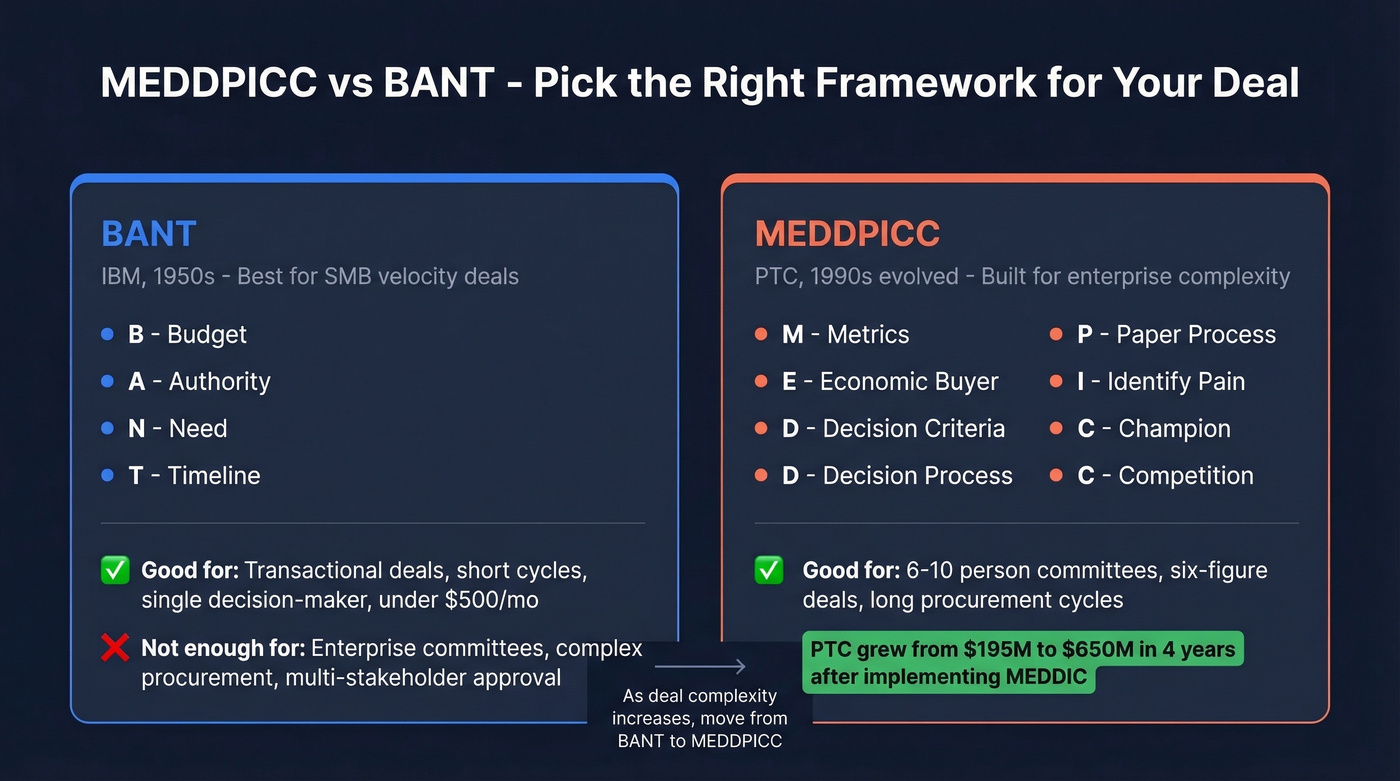
For enterprise, it's inadequate. MEDDIC was developed at PTC in the 1990s, and MEDDPICC evolved from it by adding Paper Process and Competition for modern enterprise complexity. After implementing MEDDIC, PTC's revenue grew from roughly $195M to $650M in four years. The decision criteria at this level - technical fit, ROI timeline, integration complexity, security compliance - are too layered for a four-question framework to capture. Use BANT for SMB velocity deals. Use MEDDPICC for anything with a buying committee.
Validation, Then Approval
Force Management breaks the decision process into two phases. First, validation: does this solution meet our requirements? Then approval: who signs, in what order, and what's the procurement timeline?
Conflating the two is how deals die. Nail validation before you ever ask about signatures. We've watched reps jump straight to "who signs the contract?" before the technical team has even agreed the product works. Understanding this split is what separates reps who manage the process from reps who just react to it.
Five Biases Shaping Every Deal
Loss aversion. Losses feel roughly twice as painful as equivalent gains feel good. Frame your pitch around what the buyer loses by doing nothing - not what they gain by switching.
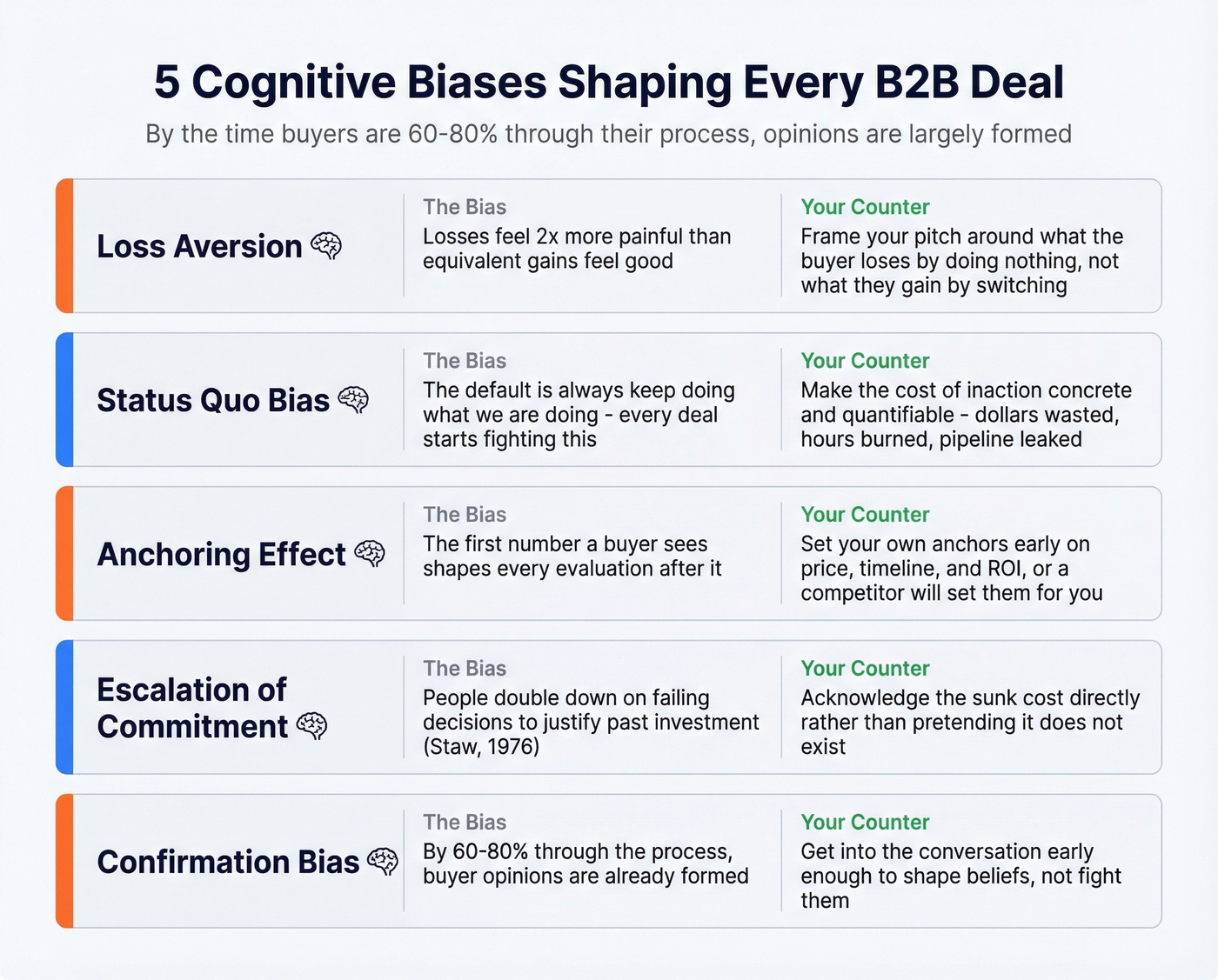
Status quo bias. The default is always "keep doing what we're doing." Every deal starts fighting this. Make the cost of inaction concrete and quantifiable: dollars wasted, hours burned, pipeline leaked.
Anchoring effect. The first number a buyer sees shapes every subsequent evaluation. Set your own anchors early - on price, timeline, and expected ROI - or a competitor will set them for you. (If you want to go deeper, see anchors in negotiation.)
Escalation of commitment. Barry Staw's 1976 research showed people double down on failing decisions to justify past investment. If your prospect has spent six months evaluating an incumbent, acknowledge the sunk cost directly rather than pretending it doesn't exist.
Confirmation bias. By the time buyers are 60-80% through their decision process, their opinions are largely formed. Get into the conversation early enough to shape beliefs, not fight them.
Tactical Playbook: Moving Stalled Deals
Stop adding options and start removing them. A common fix in decision-fatigue discussions on r/sales is limiting choices to two or three packages. More options means more paralysis.
Multi-Thread Across the Committee
Map stakeholders early: economic buyer, champion, blocker, technical evaluator, end user. Ask your champion "who else needs to be involved?" and don't accept "just me" in enterprise deals. Getting multiple contacts engaged simultaneously is what separates forecasted deals from fantasies.
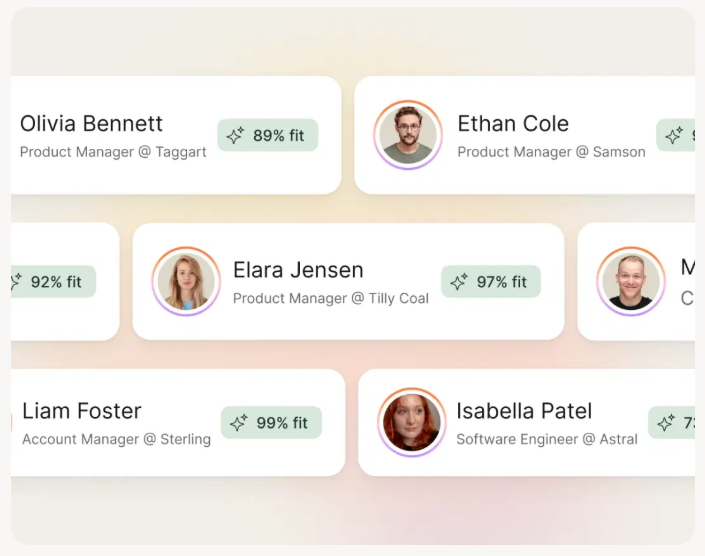
In our experience, the deals that close fastest are the ones where you've got three or more contacts engaged before the proposal goes out. We've seen too many reps single-thread into a champion who loves the product but can't get procurement to move. You can't influence a decision-maker you can't reach, and reps already spend 72% of their time on non-selling activities - research, admin, follow-ups. Bad data makes that worse. Tools like Prospeo let you search by role, seniority, and department across 300M+ professional profiles, then push verified contacts straight to your CRM or outreach tools so you're multi-threaded from day one.
De-Risk the Decision
Offer trials, phased rollouts, or money-back guarantees. The enemy is FOMU. Every risk you remove makes it easier for your champion to sell internally. Let's be honest - nobody got fired for choosing the vendor that offered a pilot program.
Align on Decision Criteria Early
This means you and the buyer agree on what "success" looks like before the evaluation begins. Document the criteria - budget thresholds, must-have integrations, deployment timeline - and reference them in every follow-up. When a deal stalls, it's often because the committee never agreed on what they were evaluating in the first place. Skip this step if you want to spend three months chasing a deal that was never real.
Mistakes That Kill Deals
Mixing up decision-makers. Pitching the evaluator like they're the economic buyer, or ignoring procurement entirely. These are different people with different concerns. (Related: technical buyer vs economic buyer.)
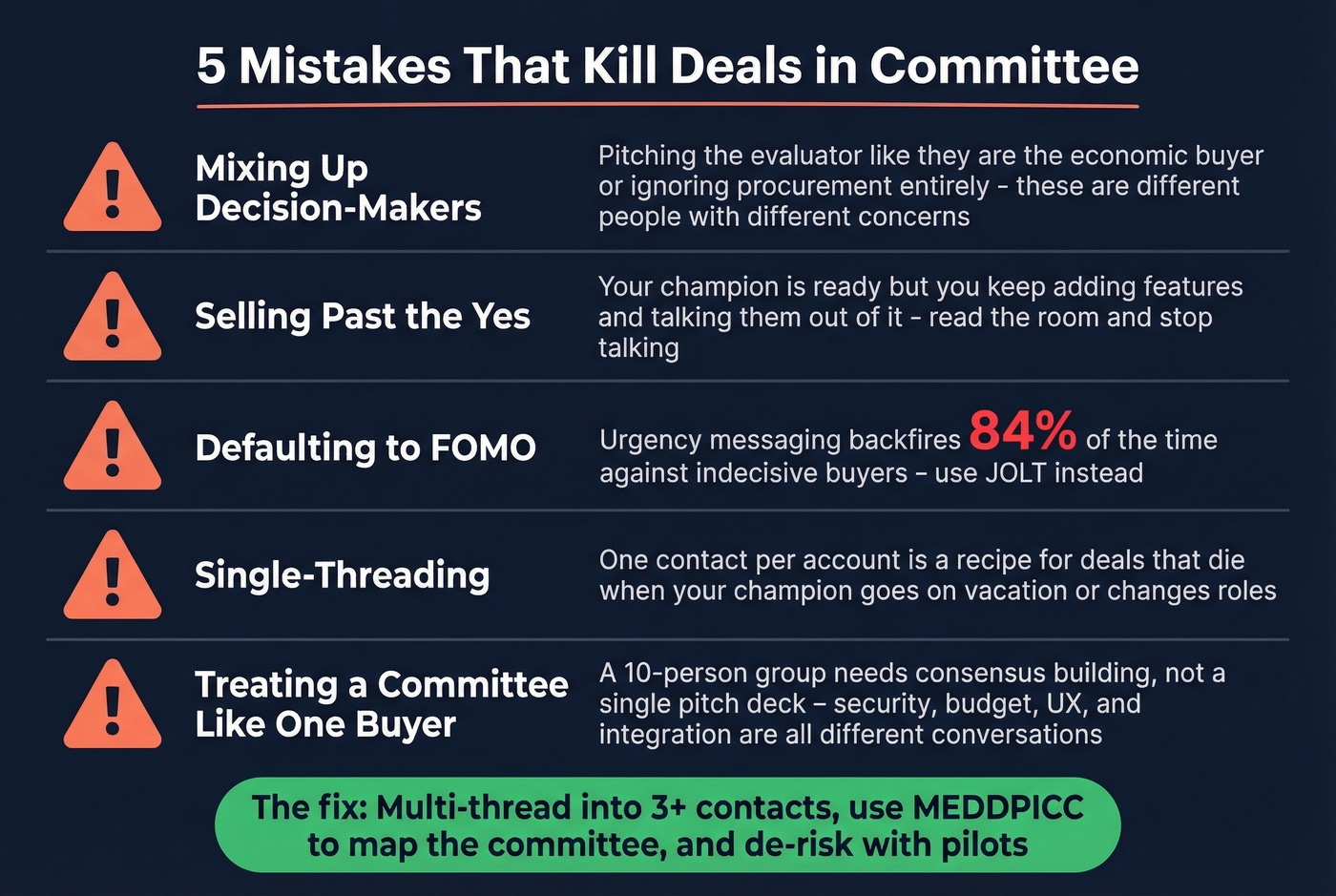
Selling past the yes. Your champion is ready, but you keep adding features and talking them out of it. Read the room.
Defaulting to FOMO when buyers hesitate. Urgency messaging backfires 84% of the time against indecisive buyers. Stop it.
Single-threading. One contact per account is a recipe for deals that die when your champion goes on vacation, changes roles, or just gets busy with something else.
Treating a committee like one buyer. A ten-person group needs consensus-building, not a single pitch deck. Each stakeholder cares about something different - security, budget, UX, integration. Address them individually.
Single-threaded deals die in committee. Multi-threading requires verified contact data for 6-10 stakeholders per deal - and reps already waste 72% of their time on non-selling activities. Prospeo's Chrome extension lets you pull verified emails and direct dials for entire buying groups in clicks, not hours. At $0.01 per email, data quality stops being a budget conversation.
Stop losing to 'no decision' because you only had one contact.
FAQ
What percentage of B2B deals are lost to indecision?
Between 40-60%, per Challenger's research. Buyer indecision - not a competing vendor - is the most common reason qualified deals never close. Reps who use the JOLT method to address fear of messing up recover more of these stalled opportunities than those who default to urgency tactics.
How many stakeholders are in a typical B2B buying group?
Gartner puts it at 6-10 decision-makers, with 30% of enterprise committees exceeding 10. Multi-threading into at least three contacts before sending a proposal significantly improves close rates.
What frameworks help with decision making in sales?
MEDDPICC for enterprise qualification, JOLT for breaking indecision, and BANT for transactional SMB deals. The right framework depends on deal complexity - don't force an enterprise methodology onto a $500/month sale, and don't try to qualify a six-figure deal with four questions.
How do you define decision criteria in a B2B sales process?
Ask each stakeholder what a successful outcome looks like for their department, then consolidate answers into a shared scorecard covering technical requirements, budget constraints, and timeline expectations. Documenting criteria early prevents scope creep and gives your champion a ready-made business case to circulate internally.