

Best Email Warming Services in 2026 (Tested & Ranked)
You spent two weeks warming up a fresh domain, loaded 5,000 contacts into your sequence, and watched your bounce rate hit 12% on day one. The warmup didn't fail - your list did. That's the paradox nobody talks about: teams invest in email warming services to build sender reputation, then torch it by sending to unverified addresses. One in six emails never reaches the inbox globally, the average cold email bounce rate sits around 7.5%, and most of that damage is preventable.
Here are the warmup tools worth your money in 2026, ranked by real deliverability benchmarks - plus the step most guides skip entirely.
Our Picks (TL;DR)
Best for scaling 5+ inboxes: Instantly. Unlimited warmup on every plan, starting at $37/mo. Connect as many inboxes as you want without per-seat math.
Best for protecting your warmup investment: Prospeo. 98% email accuracy with a 7-day data refresh cycle. If your list is clean, your warmup actually sticks. Free tier available, paid plans from ~$39/mo.
Best standalone warmup tool: Lemwarm. Free with any Lemlist subscription; $29/mo per inbox otherwise. Strong deliverability network across 20k+ healthy domains.
Hot take: Per-inbox warmup pricing is a tax on scale. If you're running 10+ inboxes, most standalone tools cost more than your entire outreach platform. And if your average deal size is under $10k, you probably don't need the premium deliverability suites - Instantly's bundled warmup plus clean data will outperform a $100/mo standalone tool paired with a stale list every single time.
What Changed in 2026
Deliverability rules shifted hard. Gmail began outright rejecting non-compliant emails at the SMTP level - not just routing them to spam, but bouncing them entirely. Outlook followed with full Basic Auth retirement. In 2023, nearly half of all emails worldwide were flagged as spam. The pressure on inbox placement has only intensified since.
Here's what matters now:
- Gmail engagement signals got smarter. Time-to-read, reply depth, and conversation length all factor into inbox placement. Shallow warmup interactions don't carry the weight they used to.
- Google cracked down on API-based warmup providers. Tools that relied on the Gmail API risked losing access. Many now use IMAP/SMTP connections instead.
- Apollo killed warmup in 2024, replacing it with "Inbox Ramp Up" - volume pacing with no engagement loops and no reputation building. If you're on Apollo, you need a separate warmup service.
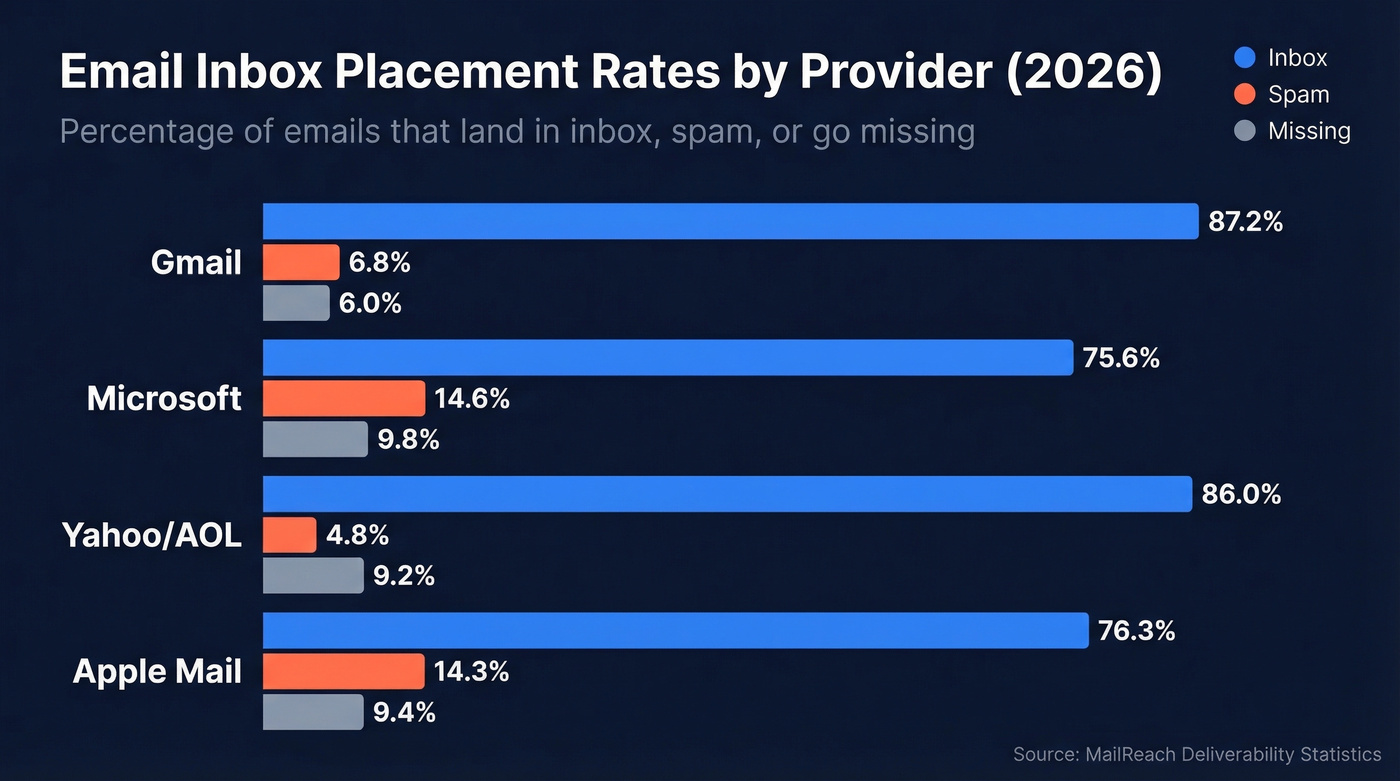
- Microsoft delivers just 75.6% to inbox versus Gmail's 87.2%. If your prospects are on Outlook, warmup matters even more.
| Provider | Inbox Rate | Spam Rate | Missing |
|---|---|---|---|
| Gmail | 87.2% | 6.8% | 6.0% |
| Microsoft | 75.6% | 14.6% | 9.8% |
| Yahoo/AOL | 86.0% | 4.8% | 9.2% |
| Apple Mail | 76.3% | 14.3% | 9.4% |
The consensus across cold-email communities is clear: warmup isn't a setup step anymore. It's ongoing infrastructure.
How Email Warmup Works
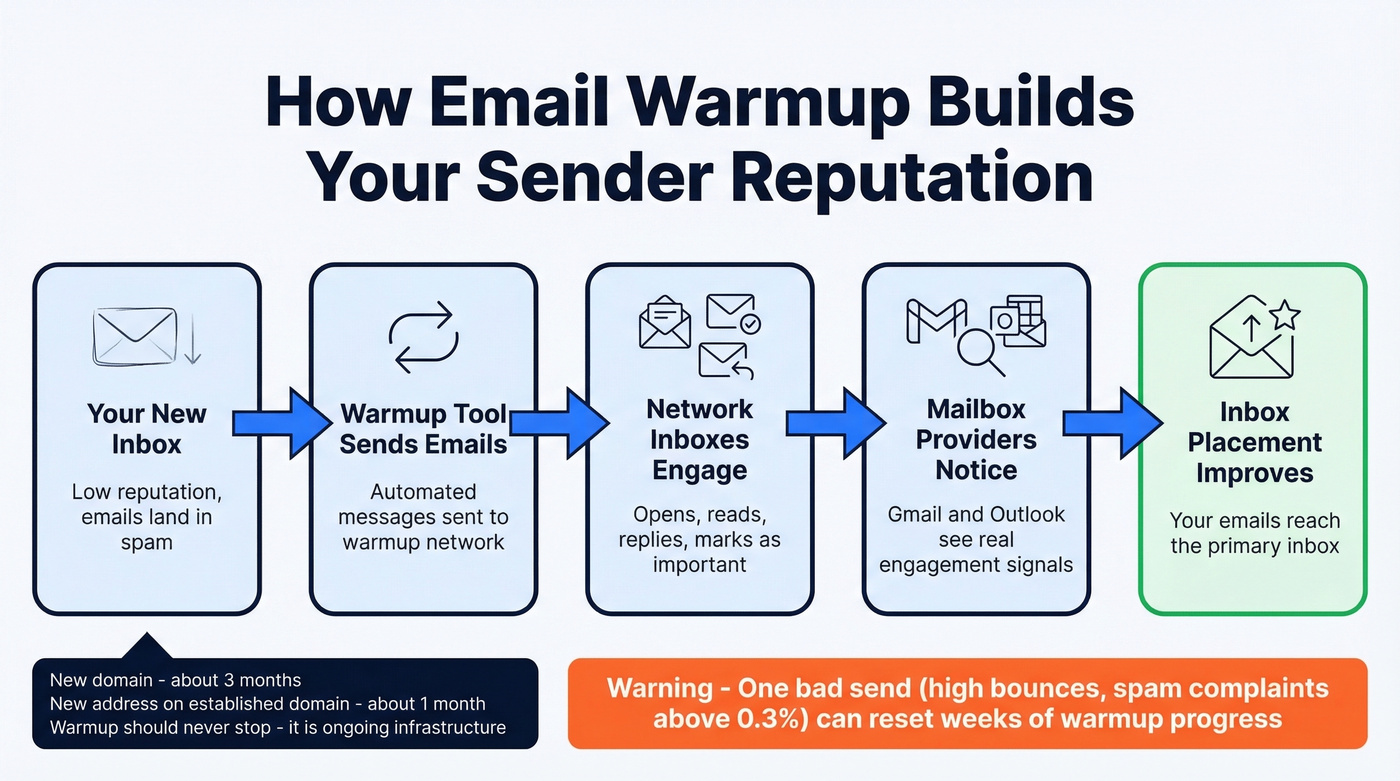
Email warmup tools create artificial engagement loops that mimic real human behavior. They send messages from your inbox to a network of other inboxes, which then open, read, reply to, and sometimes mark those messages as important. Over time, mailbox providers see your address as legitimate and route your emails to the primary inbox instead of spam.
The timeline isn't optional:
- New domain: roughly 3 months before you can send at volume safely
- New address on an established domain: about 1 month of warmup
- Gmail free accounts: capped at 100 emails/day via SMTP, 500 via browser
- Google Workspace: up to 2,000 emails/day
- Warmup must be continuous - stopping after your initial ramp is like canceling your gym membership after one month and expecting to stay fit
One practical tip that most guides miss: don't run warmup and live campaigns simultaneously from the same inbox. Keep them in separate phases so your engagement signals stay clean.
Gmail's spam complaint threshold is 0.3%. Cross that line and your inbox placement drops fast. Warmup builds your sender reputation, but a single bad send can undo weeks of progress. That's why list quality and warmup aren't separate conversations - they're the same conversation.

Warmup tools build your sender reputation. Bad data burns it overnight. Prospeo's 98% email accuracy and 7-day data refresh cycle mean your list stays clean - so every week of warmup actually compounds instead of resetting after one bad send.
Stop warming up inboxes just to torch them with stale data.
Top Email Warming Services in 2026
| Tool | Deliverability | Starts From |
|---|---|---|
| Instantly | 95% | $37/mo |
| Smartlead | 97% | $39/mo |
| Lemwarm | 96% | $29/mo/inbox |
| MailReach | 93% | $19.50/mo/inbox |
| Warmbox | 90% | $19/mo |
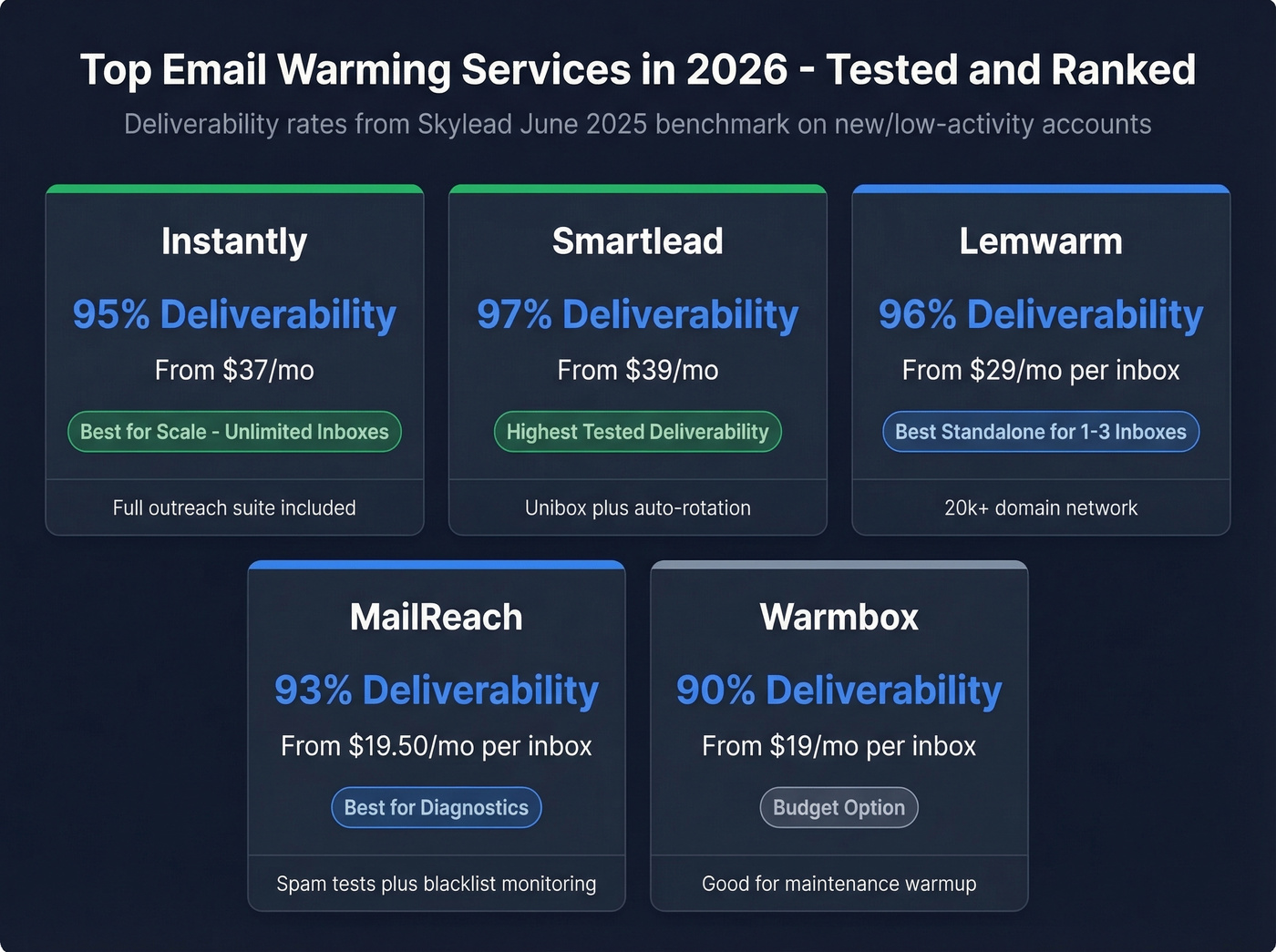
Deliverability rates from Skylead's June 2025 benchmark on new/low-activity accounts.
Instantly
Instantly is the obvious pick for anyone running more than a handful of inboxes. Unlimited email accounts and unlimited warmup come standard on every plan - including the $37/mo Growth tier. That pricing model alone makes it the default for agencies and teams scaling outbound across multiple domains.
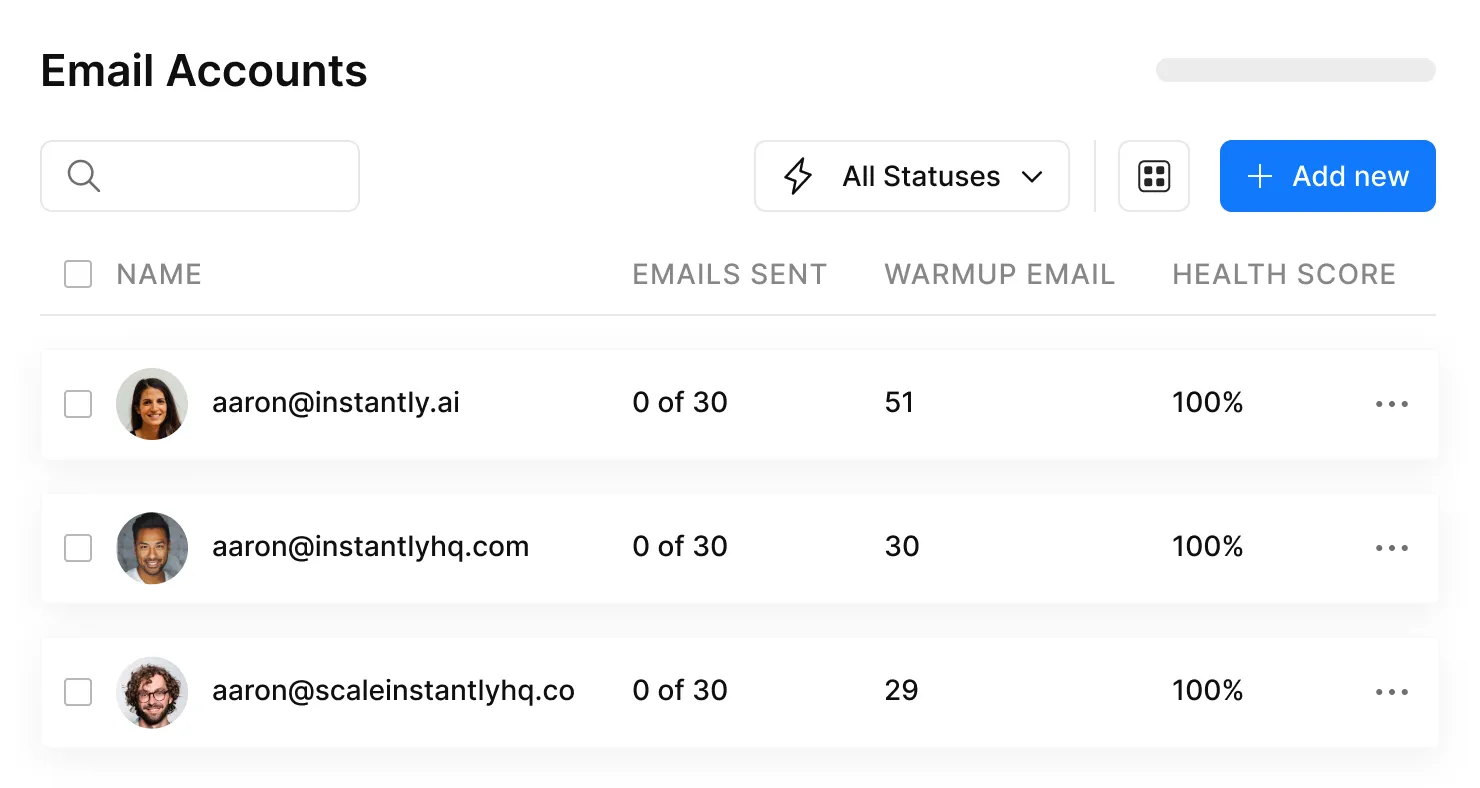
You also get strong warmup controls: ramp schedules, open/reply-rate settings, spam-protection options, and a deliverability dashboard that shows inbox vs. spam placement. We've heard it called one of the cleanest interfaces for managing warmup across dozens of accounts, and after testing it ourselves, we'd agree.
Best for: Teams running 5+ inboxes who want warmup bundled with their outreach platform. Agencies managing client domains at scale.
Skip if: You only need warmup for a single inbox and don't want a full outreach suite. You'd be paying for features you won't use.
Pricing: $37/mo Growth (1,000 contacts, 5,000 emails/mo), $97/mo Hypergrowth (25,000 contacts, 100,000 emails/mo). Annual plans drop to $30/mo and $77.60/mo respectively.
Smartlead
Smartlead hit 97% deliverability in benchmark testing - the highest rate in the Skylead dataset. That number alone earns it a spot near the top, but the operational tooling around warmup is what actually sets it apart.
The Unibox consolidates replies across all your inboxes into a single stream. When you're managing 20+ inboxes, that's not a nice-to-have - it's the difference between catching replies and losing deals. Auto-rotation swaps out flagged accounts before they tank your campaign. We've seen teams pick Smartlead over Instantly specifically for these features.

The tradeoff? Smartlead's feature density means a steeper learning curve than Instantly. If you want the simplest possible setup, look elsewhere. If you want a top-tier tested deliverability rate plus serious reply management, this is it.
Pricing: Starts at $39/mo. Unlimited warmup included on paid plans.
Lemwarm
At $29/mo per inbox, Lemwarm makes zero sense at scale. Ten inboxes costs $290/mo - nearly 8x what Instantly charges for unlimited accounts. So why is it on this list?
Because for 1-3 inboxes, it's the strongest standalone warmup tool available. The network spans 20k+ healthy domains, and the Smart plan at $49/mo per inbox lets you warm up using your actual email templates. That means the engagement patterns Gmail sees during warmup match what it'll see during real campaigns. That consistency genuinely improves inbox placement.
If you're already on Lemlist, Lemwarm comes free with your subscription. That's the real play: the Lemlist ecosystem bundles warmup, sequences, and deliverability monitoring into one stack.
Pricing: Essential $29/mo per inbox, Smart $49/mo per inbox. Annual plans drop to $24/mo and $40/mo respectively.
MailReach
MailReach is less of a warmup tool and more of a deliverability diagnostics platform that happens to include warmup. Every plan bundles at least 20 spam test credits, plus blacklist monitoring, SPF/DKIM/DMARC checks, and a reputation tracking dashboard. At $19.50/mo per mailbox, it's priced for teams that want monitoring depth over raw scale.
Best for: Teams diagnosing deliverability problems, not just preventing them. Great as a secondary tool alongside a primary outreach platform.
Skip if: You're optimizing for cost at scale. Per-mailbox pricing adds up fast.
Warmbox
Budget standalone warmup. Starts at $19/mo per inbox. Deliverability benchmarked at 90% - lower than the top tier, but adequate for established domains that just need maintenance warmup. Nothing flashy, nothing broken.
Snov.io
Snov.io runs a full outreach suite with email finder, verification, sequences, and warmup baked in. Their controlled test showed baseline deliverability jumping from 74% to 95% after one week of warmup on fresh Gmail accounts. When they intentionally sent a "spoiled" email mid-test, deliverability dropped to 72% - then recovered to 95% by the end of the warmup cycle. That recovery resilience matters if you're worried about occasional bad sends.
Pricing: Warmup included on paid plans starting at ~$39/mo.
Warmup Inbox
Simple per-inbox warmup with a free trial. Pricing is $19/mo per inbox, or $15/mo billed annually. No outreach features, no diagnostics - just warmup. Works fine for teams with 1-3 inboxes who want a dedicated warmup service without platform lock-in.
Warmy.io
Premium deliverability suite with AI-driven warmup scheduling and detailed analytics. Offers a 7-day free trial with no credit card. Pricing runs from $41 to $358 per mailbox per month billed annually. The Tier 1 options above deliver more proven results at lower price points, but Warmy is worth evaluating if deliverability analytics are your top priority.
Folderly
Enterprise warmup and deliverability platform starting at $96/mailbox/month billed annually. Overkill for most outbound teams, but relevant for large orgs with complex email infrastructure and compliance requirements.
Warmbots (Growbots)
Free tier for budget-conscious teams - the first 3 inboxes cost nothing. Additional inboxes run $5/mo each. Genuinely useful for solo founders warming up a single inbox without spending anything. Don't expect the deliverability rates of Instantly or Smartlead.
Cost at Scale
This is where per-inbox pricing falls apart. Let's look at what 25 inboxes actually costs:
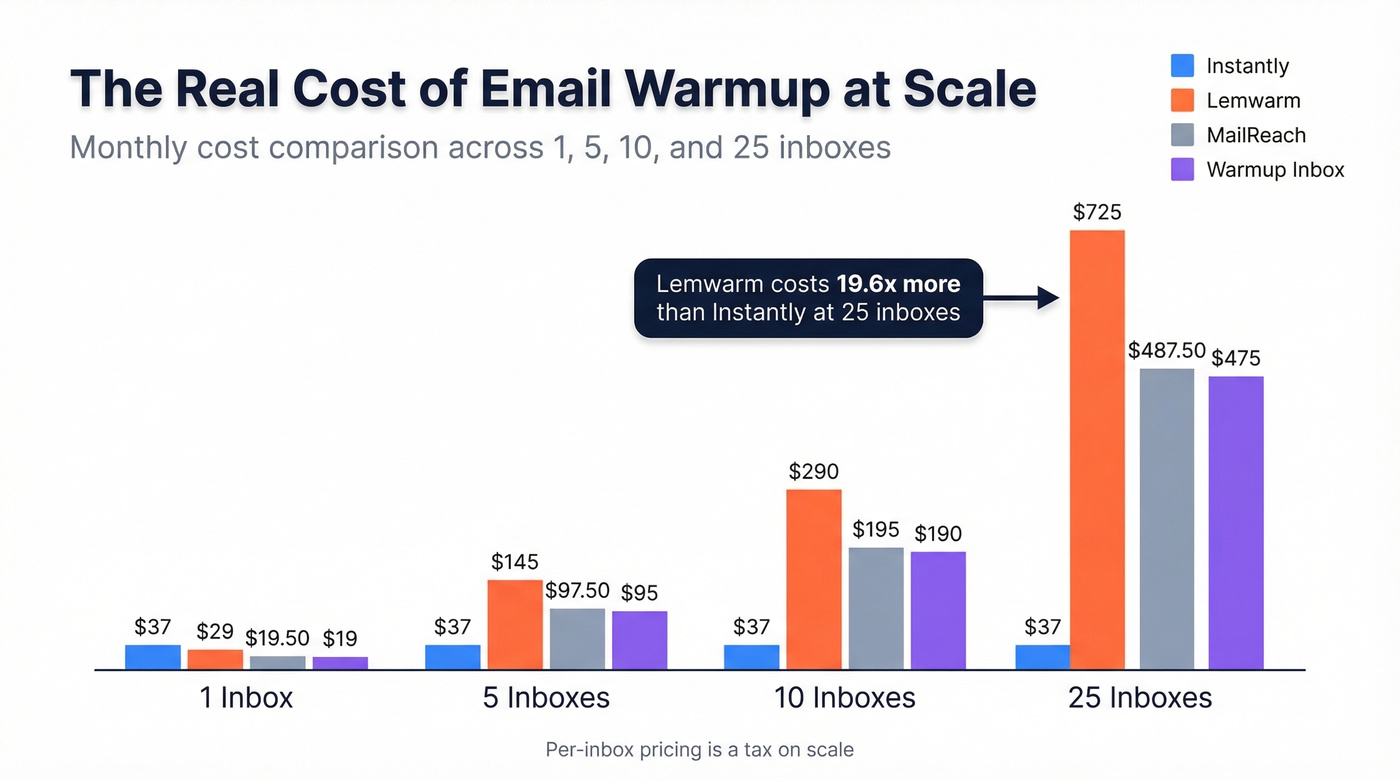
| Tool | 1 inbox | 5 inboxes | 10 inboxes | 25 inboxes |
|---|---|---|---|---|
| Instantly | $37/mo | $37/mo | $37/mo | $37/mo |
| Lemwarm | $29/mo | $145/mo | $290/mo | $725/mo |
| MailReach | $19.50/mo | $97.50/mo | $195/mo | $487.50/mo |
| Warmup Inbox | $19/mo | $95/mo | $190/mo | $475/mo |
| Warmbox | $19/mo | $95/mo | $190/mo | $475/mo |
| Warmbots | Free | $10/mo | $35/mo | $110/mo |
Look: 25 inboxes at $29/inbox is $725/mo just for warmup. That's nearly $9,000/year before you send a single outbound email. Instantly's flat-rate model makes per-inbox pricing look absurd at scale.
You might've seen TrulyInbox positioning itself as another unlimited-mailbox budget option. It offers competitive pricing, but it lacks the deliverability benchmarks and network depth of Instantly or Smartlead. Unlimited mailboxes mean nothing if your inbox placement rate is mediocre.
For teams running fewer than 3 inboxes, standalone tools are fine. Beyond that, the economics tilt hard toward bundled platforms.
Warmup Alone Won't Save You
Here's the pattern we see over and over: a team invests in warmup, gets their inbox placement to 95%+, launches a campaign to 5,000 contacts, and watches their sender reputation crater within 48 hours. The warmup worked. The list didn't.

It's like mopping the floor while the faucet's running. The average cold email bounce rate is 7.5%. Anything above 3% starts eroding the sender reputation your warmup tool spent weeks building. Most teams blow past that threshold because they're pulling contacts from databases that refresh every 6 weeks - or never.
Warmup tools build your sender reputation. Verification protects it. They're two halves of the same system.
Gmail's spam complaint threshold is 0.3%. One campaign to unverified addresses can undo months of warmup. Prospeo's 5-step verification with catch-all handling and spam-trap removal keeps your bounce rate under 4% - at roughly $0.01 per email.
Protect your warmup investment with data that actually delivers.
How to Test Your Deliverability
Don't guess whether your warmup is working. Measure it.
GlockApps is the standard deliverability testing tool - it's what Snov.io used in their controlled benchmark, and it's what most serious outbound teams rely on. Run 2 free deliverability tests to see inbox placement across major ISPs. Check your spam score against SpamAssassin, Barracuda, and Google's filters. Monitor 50+ industry blocklists for your sending domains, and set up DMARC monitoring with their 10,000 free messages/month to catch authentication issues early.
If your deliverability drops after a bad send, track how quickly your warmup tool restores placement. Snov.io's test showed recovery from 72% back to 95% within a week - that's the benchmark to beat. A 10-minute GlockApps check can save you from burning a domain.
FAQ
How long does email warmup take?
New domains need roughly 3 months of warmup before sending at volume. A new address on an established domain takes about 1 month. Warmup should continue indefinitely - stopping lets your sender reputation decay within days.
Is email warmup safe for Gmail?
Google cracked down on API-based warmup providers, revoking access for tools that violated their terms. Reputable services now use IMAP/SMTP connections instead. Stick with Instantly, Lemwarm, or Smartlead and you're fine.
Can I warm up multiple inboxes at once?
Yes. Instantly includes unlimited inbox warmup on all plans at $37/mo flat. Per-inbox tools get expensive fast - 10 inboxes at $29/each on Lemwarm runs $290/mo. Beyond 3-5 inboxes, bundled platforms save serious money.
Why am I still landing in spam after warmup?
Usually it's a data quality problem, not a warmup problem. Bounce rates above 3% destroy the sender reputation warmup built. Verify your list before sending - Prospeo's 5-step verification process keeps bounces under that threshold.
Do I need a standalone warmup service or is built-in enough?
Built-in warmup from Instantly or Smartlead is sufficient for most teams. Standalone tools like Lemwarm or MailReach add value if you need advanced diagnostics or template-based warming. For the majority of outbound teams, bundled warmup plus verified contact data is the winning combination.