

Best Enrow Alternatives for 2026 (7 Picks Compared)
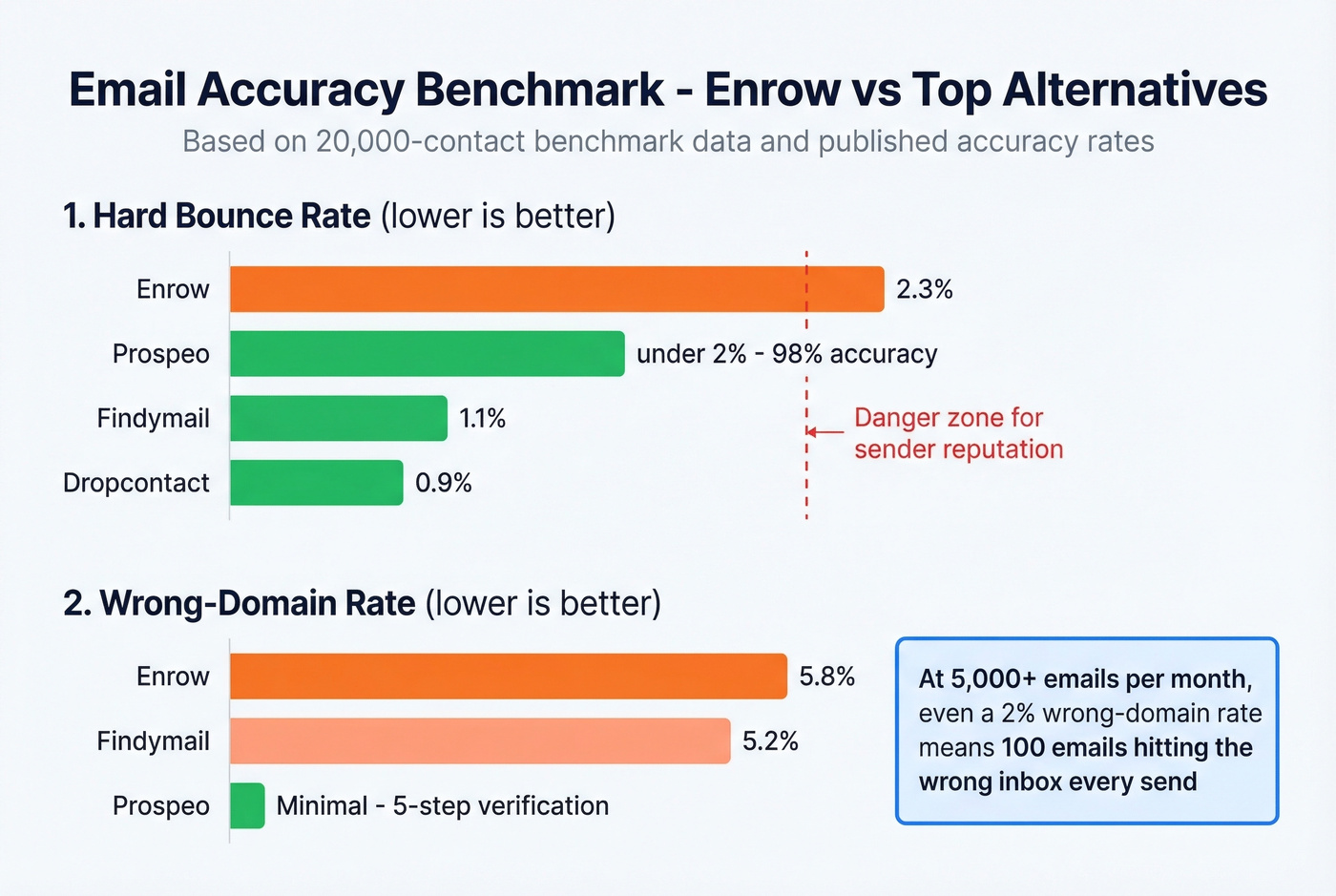
Enrow works fine until you're enriching 10,000+ contacts a month and the invoice starts looking like a SaaS subscription you never agreed to. A common thread on r/coldemail sums it up: "At scale, the costs really add up." Pair rising costs with a 5.8% wrong-domain rate in a 20,000-contact benchmark and a 2.3% hard bounce rate, and the case for switching writes itself.
You're not alone in looking. We tested and compared 7 tools with published pricing and either benchmark data or clear, testable product policies - no vaporware, no "contact us" black boxes.
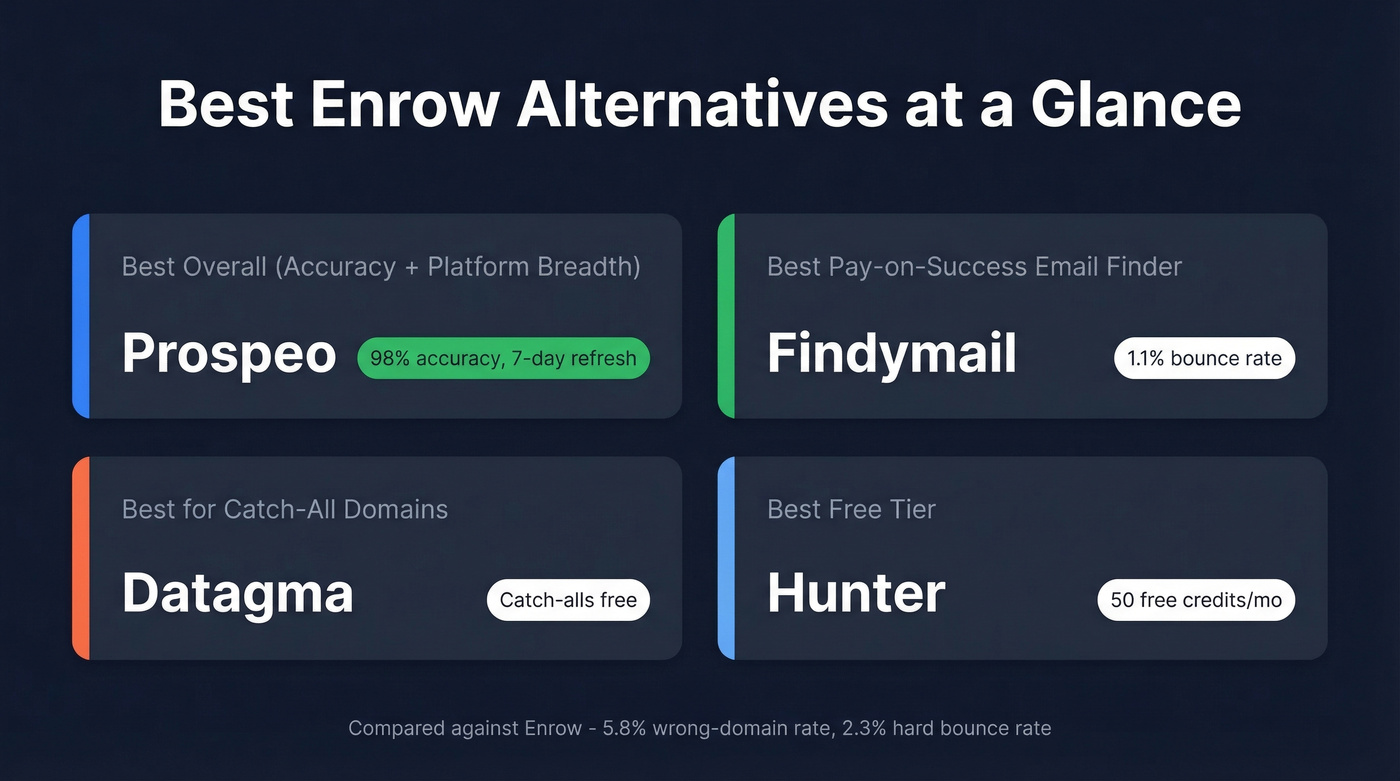
Our Picks (TL;DR)
| Use Case | Pick |
|---|---|
| Best overall (accuracy + platform breadth) | Prospeo |
| Best pay-on-success email finder | Findymail |
| Best for catch-all domains | Datagma |
| Best free tier | Hunter |
What to Look for When Switching from Enrow
Bounce rate under 2%. Top performers keep hard bounces below 1%. Anything above 2% puts your sending domain at risk. (If you want the deeper mechanics, see our Email Bounce Rate guide.)
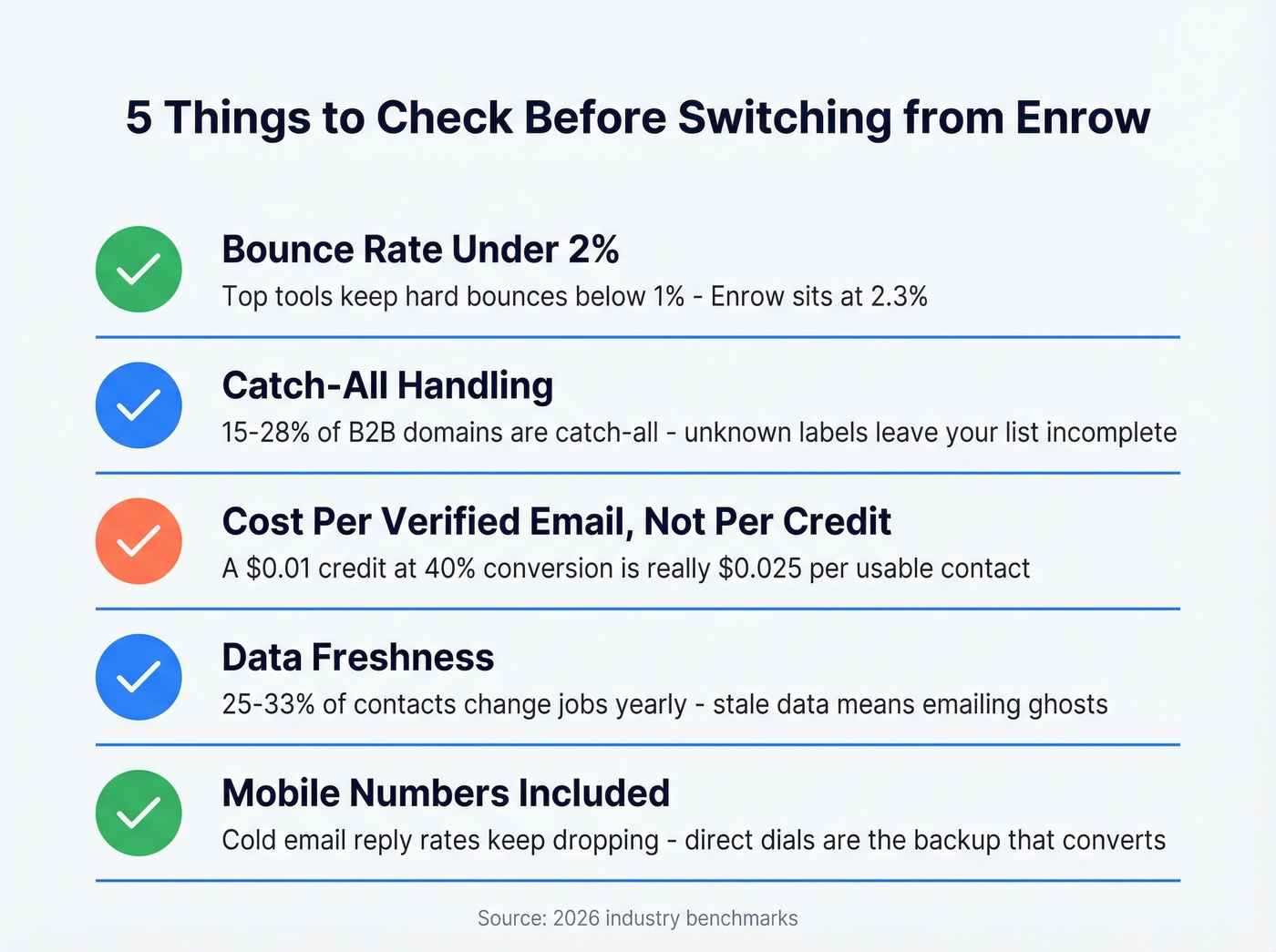
Catch-all handling. Roughly 15-28% of B2B domains are catch-all. A tool that labels them "unknown" leaves a quarter of your list unresolved.
Cost per verified email, not cost per credit. A $0.01 credit that converts 40% of the time is really $0.025 per usable contact. This distinction trips up more buyers than any other pricing detail we've seen. (Related: Lead Enrichment.)
Data freshness. In 2026, 25-33% of contacts change companies within the year. If your data isn't refreshed often, you're emailing ghosts.
Mobile numbers. Cold email reply rates keep dropping. Direct dials are the backup channel that actually converts. (If calling is part of your motion, see our Cold Calling System stack guide.)

Enrow's 2.3% hard bounce rate and 5.8% wrong-domain rate cost you deliverability and deals. Prospeo's 5-step verification keeps email accuracy at 98%, with catch-all handling, spam-trap removal, and a 7-day data refresh - not the 6-week industry average.
Stop enriching stale data. Get emails that actually land.
The 7 Best Enrow Alternatives Compared
1. Prospeo
Prospeo covers the full enrichment stack: 300M+ professional profiles, 143M+ verified emails, 125M+ verified mobile numbers, all refreshed every 7 days. That refresh cadence is a massive differentiator - most competitors update around every 6 weeks, which means by the time you're emailing a contact, they've already changed roles.
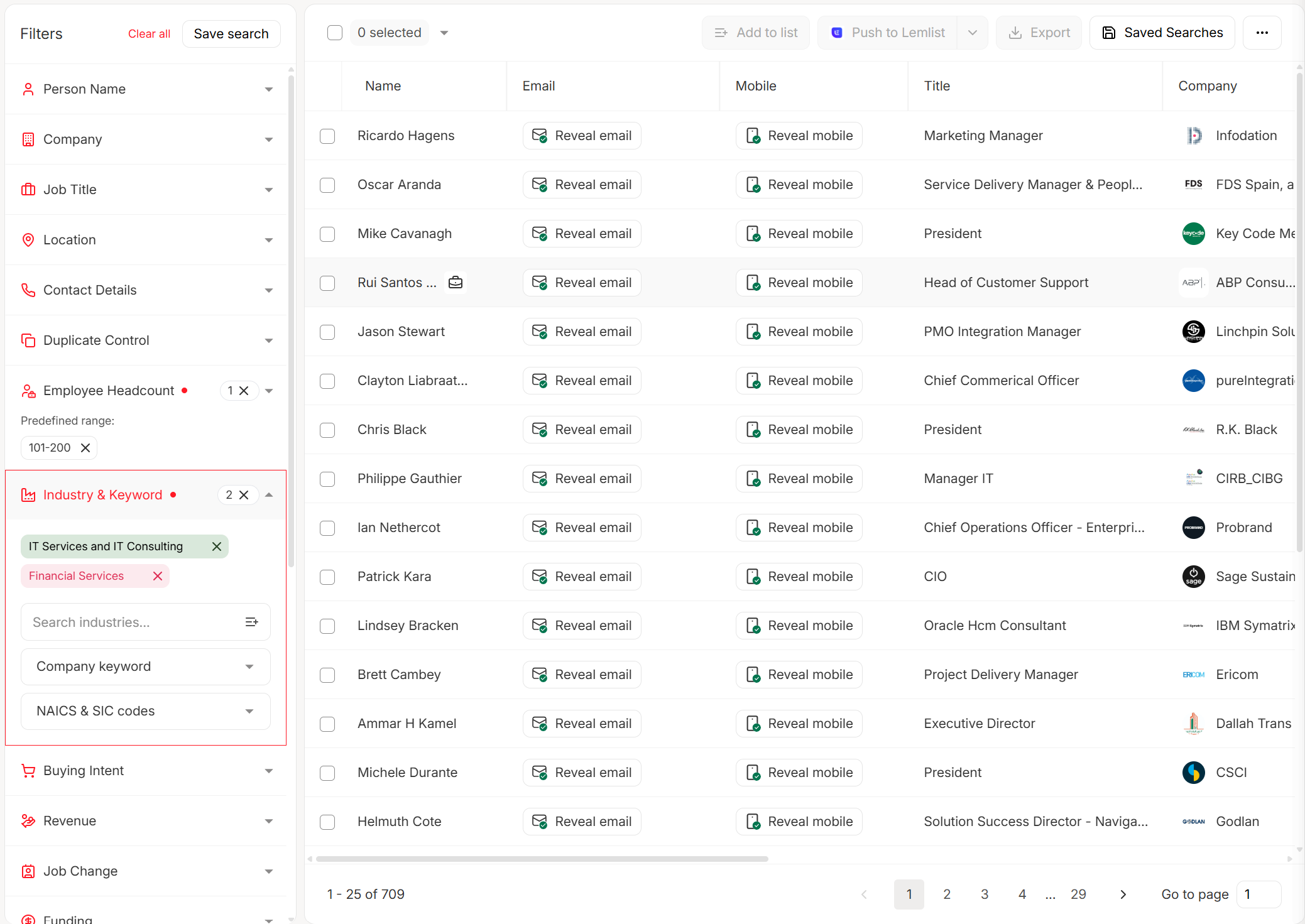
Email accuracy sits at 98%, backed by a proprietary 5-step verification process that includes catch-all handling, spam-trap removal, and honeypot filtering. (If you're comparing verifiers specifically, see Bouncer alternatives.) Real-world results confirm it: Meritt dropped their bounce rate from 35% to under 4% after switching, and Stack Optimize maintains 94%+ deliverability across all client campaigns.
Beyond email, the platform layers in Bombora intent data across 15,000 topics, 30+ search filters (technographics, funding, headcount growth, job changes), and native integrations with Salesforce, HubSpot, Smartlead, Instantly, Lemlist, Clay, Zapier, and Make. At ~$0.01 per email with a free tier of 75 emails/month, it's one of the best values on this list - and it includes mobile numbers and intent data that most point solutions don't touch. (More options: data enrichment services.)
Use if you've outgrown single-purpose email finders and need mobile numbers, intent signals, and CRM enrichment in one platform. Skip if you only need 50 emails a month - the free tier covers it, but you won't touch most of the platform's depth.
2. Findymail
Findymail's pitch is simple: you only pay for verified results. That pay-on-success model is genuinely appealing if you've been burned by tools that charge credits for "not found" responses. At $99/mo for 5,000 finder credits (with 5,000 bonus verifier credits), the effective cost lands around $0.02 per verified email.
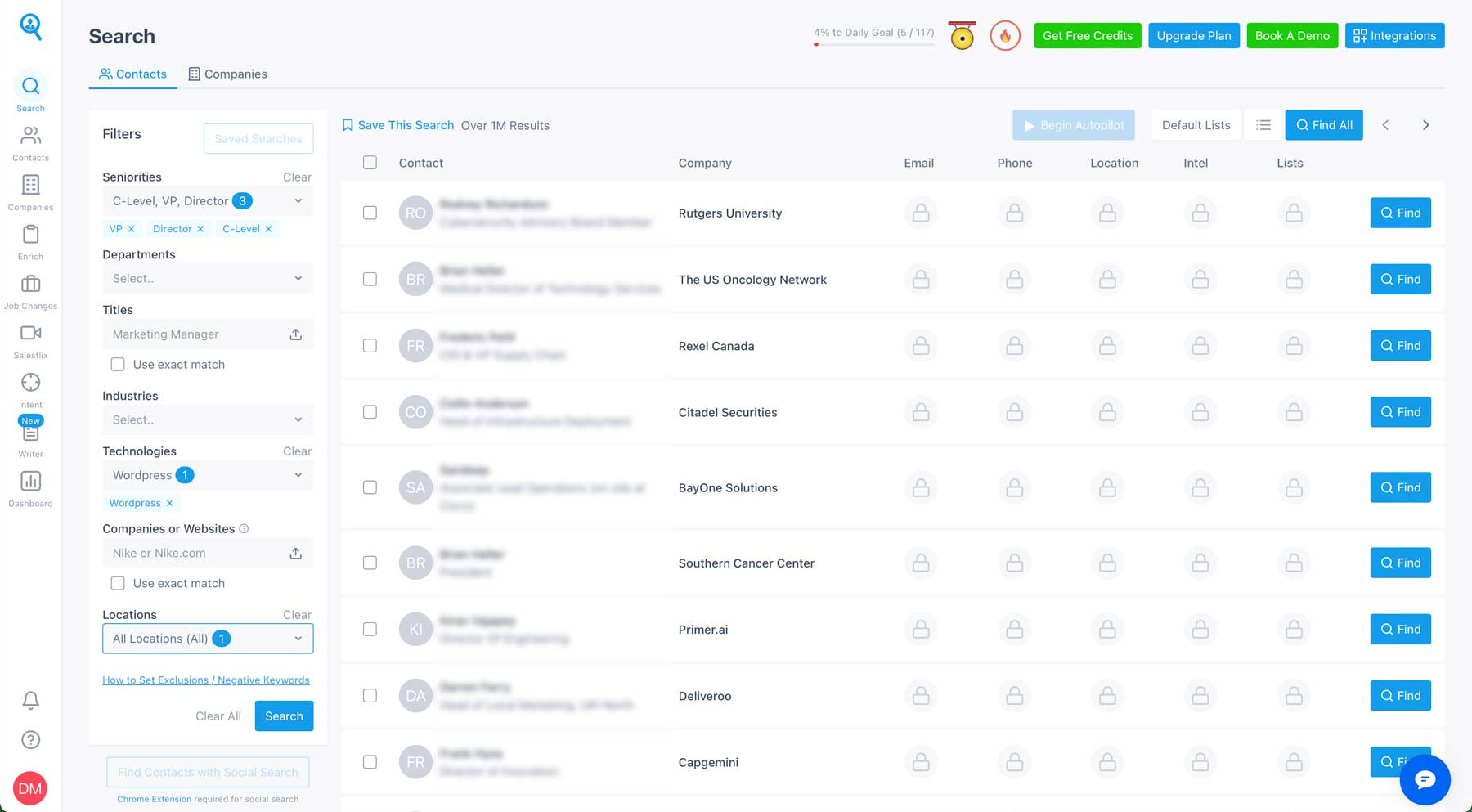
In the 20,000-contact benchmark, Findymail hit a 39.9% real enrichment rate with just a 1.1% hard bounce rate - better than Enrow on bounces, though the 5.2% wrong-domain rate is worth watching. Unused credits roll over, capped at 2x your monthly plan. Phone numbers cost 10 credits each, which gets expensive fast if mobile is a priority.
Use if you want a lightweight finder that never charges for misses. Skip if you need mobile numbers at scale - 10 credits per phone eats through your allocation quickly.
3. Hunter
Hunter's been around long enough to feel like infrastructure. The free tier gives you 50 credits/month with sequences supporting up to 500 recipients - something most enrichment tools charge extra for or don't offer at all.
Starter runs $49/mo for 2,000 credits, Growth is $149/mo for 10,000, and Scale hits $299/mo for 25,000. Verification costs just 0.5 credits per email, so you stretch credits further than most competitors. (If you're shopping around, compare with other Hunter alternatives.)

Use if you want email finding and outreach sequences in one tool. Skip if you need mobile numbers or intent data - Hunter offers neither.
4. Datagma
Here's the thing about Datagma: catch-all emails don't count against your credits. If a big chunk of your ICP sits on catch-all domains (enterprise, government, education), this policy alone can materially cut your effective cost.
Plans start at $49/mo for 3,000 verified emails and 100 mobile numbers, with credits rolling over up to 12 months. The free tier offers 90 emails/month. One catch: mobile numbers cost 30 credits each, so that 100/mo allocation on the Regular plan represents 3,000 credits worth of value. Budget accordingly. (More detail: Datagma pricing.)
Use if a large portion of your target accounts use catch-all domains. Skip if you need a leads database or intent signals alongside enrichment.
5. Dropcontact
Dropcontact ran the 20,000-contact benchmark that half this article references - and they topped their own study at 54.9% real enrichment with a 0.9% hard bounce rate. Impressive, though the vendor-run nature of the study deserves a raised eyebrow.
Their GDPR-first positioning is genuine, with EU-based servers and strong compliance documentation. Pricing runs EUR29-EUR399/mo, working out to about EUR20 per 1,000 usable emails on the entry tier.
Use if GDPR compliance and EU data residency are non-negotiable. Skip if you're US-focused and care more about cost-per-email than compliance certifications.
6. LeadMagic
LeadMagic is built for developers and Clay power users. Every plan includes API, CLI, and MCP access. Credits start at $0.008 each - 1 credit per valid email, 0.25 credits per validation, 5 credits per mobile number. The 100-credit free trial lets you test every endpoint before committing. (If you're building lists in Clay, see Clay list building.)
Use if you run enrichment through Clay or custom API workflows and want granular per-endpoint pricing. Skip if you want a UI-first experience or a searchable leads database.
7. Apollo.io
Apollo is a full sales platform - CRM, sequences, database, the works. The free tier includes 100 email lookups/month, and paid plans run ~$49-$119/user/mo. But accuracy is the tradeoff. Third-party reports consistently put Apollo's verified email rates at 55-60% after bounces, which lags behind every dedicated enrichment tool on this list. Credits expire monthly with no rollover. (If you're evaluating it specifically, see Coresignal vs Apollo.io.)
Let's be honest: if your average deal size is under $15k, Apollo's all-in-one convenience might offset the accuracy gap. Above that, every bounced email to a VP is a burned opportunity you can't get back.
Use if you want an all-in-one sales platform and can tolerate higher bounce rates. Skip if email accuracy is your primary concern - you'll spend more time cleaning lists than selling.
Pricing Comparison
Here's how all seven tools stack up on the numbers that actually matter.
| Tool | Starting Price | ~Cost/Email | Free Tier | Mobiles |
|---|---|---|---|---|
| Findymail | $99/mo (5K) | ~$0.02 | 10 emails | Via credits (10:1) |
| Hunter | $0 (50/mo) | ~$0.025 | Yes | No |
| Datagma | $0 (90/mo) | ~$0.016 | Yes | Limited (30:1) |
| Dropcontact | EUR29/mo (500) | ~EUR0.020 | No | No |
| LeadMagic | $0 (100 credits) | ~$0.008+ | Yes | Via credits (5:1) |
| Apollo.io | $0 (100/mo) | ~$0.05+ | Yes | Limited |
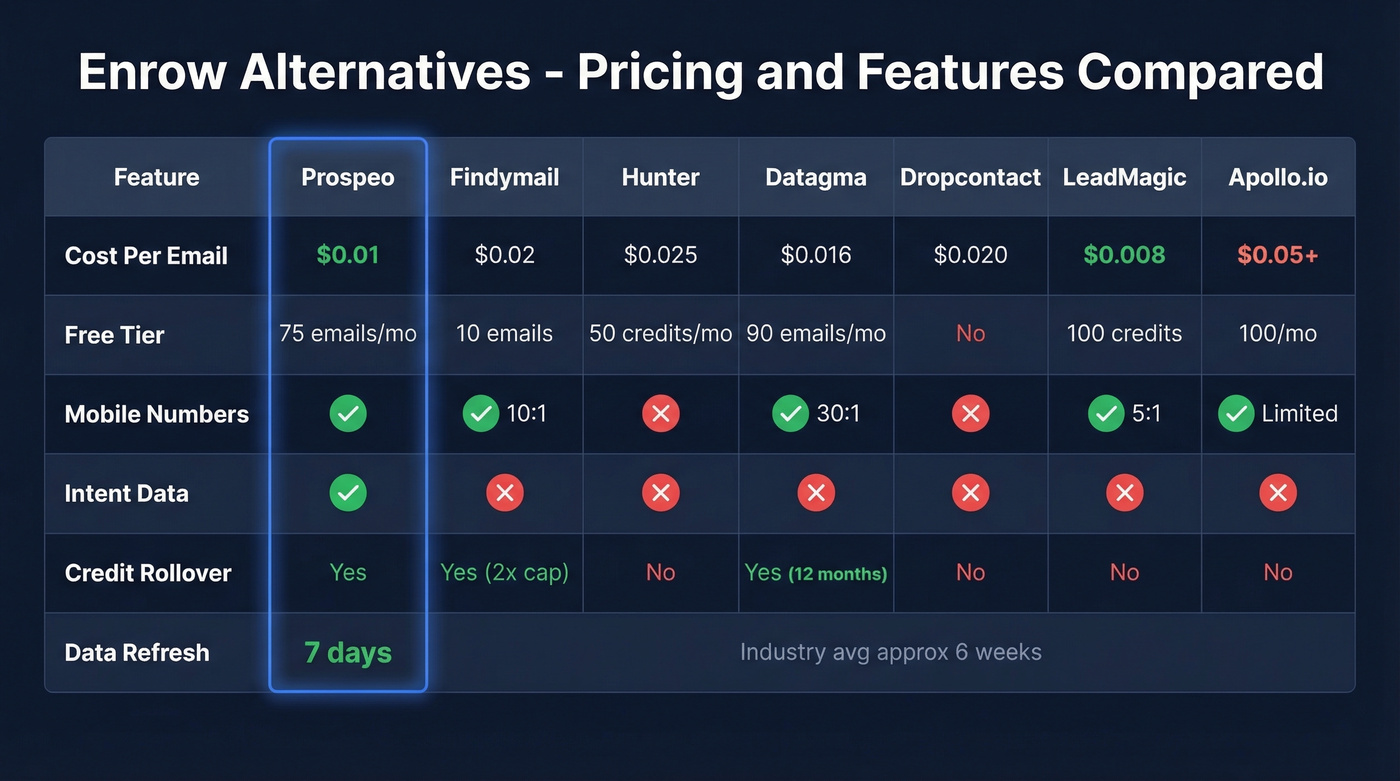
Rollover notes: Findymail rolls over up to 2x your plan. Datagma rolls over up to 12 months. Apollo credits expire monthly with no rollover.
Most Enrow alternatives solve email finding but ignore the channels that close deals. Prospeo gives you 143M+ verified emails, 125M+ verified mobile numbers, and Bombora intent data across 15,000 topics - all in one platform at ~$0.01 per email.
Replace your entire enrichment stack with one tool that actually scales.
FAQ
Is Enrow accurate enough for high-volume outbound?
It's mid-pack. The benchmark showed a 40.9% real enrichment rate, 2.3% hard bounce rate, and 5.8% wrong-domain rate. That's usable at small volumes, but the wrong-domain issue becomes a sender reputation problem once you're sending 5,000+ emails per month.
Which Enrow alternative has the best email accuracy?
Prospeo delivers 98% accuracy across 143M+ verified emails with a 7-day refresh cycle. Among benchmark-tested tools, Dropcontact led at 54.9% real enrichment with a 0.9% hard bounce rate - though they ran the study themselves, so take that with appropriate skepticism.
What's the cheapest email enrichment tool at scale?
LeadMagic at ~$0.008 per credit is the cheapest per-email option. Datagma's catch-all-free policy effectively lowers your cost if many targets sit on catch-all domains. Prospeo lands around $0.01/email with mobile numbers and intent data included - the broadest feature set at that price point.
Is there a free Enrow alternative worth using?
Prospeo's free tier includes 75 verified emails and 100 Chrome extension credits per month - enough to run a small campaign. Hunter offers 50 free credits with built-in sequences. Datagma gives 90 free emails monthly. All three are functional for testing before you commit to a paid plan.