

Enterprise Lead Generation: Benchmarks and Framework That Actually Work
Enterprise lead generation isn't a marketing problem - it's a systems problem. A RevOps lead we know ran a 3-tool bake-off last quarter. The "best" database created 4,000 duplicate contacts in Salesforce in five days. The cheapest one had better phone connect rates. Most teams are solving the wrong part of this.
Why It's a Systems Problem
Buying committees now include 25 stakeholders, up from 16 in 2017. The average B2B sales cycle runs 6.5 months. Win rates hover around 20%. Only 16% of reps hit quota.
You're not generating "leads." You're trying to reach the right 25 people inside a target account, at the right time, across a buying process that stretches two full quarters. Reps spend just 28-30% of their time actually selling - the rest vanishes into CRM admin, tool switching, and chasing contacts that bounce. Every inefficiency compounds when your sales cycle is measured in quarters, which is why lead generation for the complex sale demands a fundamentally different playbook than anything that works at the SMB level.
What You Need (Quick Version)
Enterprise lead gen requires three things SMB doesn't:
- Verified data for 25-person buying committees. You need accurate emails and direct dials for champions, economic buyers, technical evaluators, and legal - not just the VP who showed up on a webinar.
- ABM tiering with signal-based prioritization. Not every account gets the same treatment. Tier by deal size and in-market signals.
- Post-capture operations that don't leak pipeline. At $429 per lead, every handoff failure is expensive.
Enterprise vs. SMB - The Numbers
Every stage converts worse than SMB. You need better data and tighter processes to compensate.
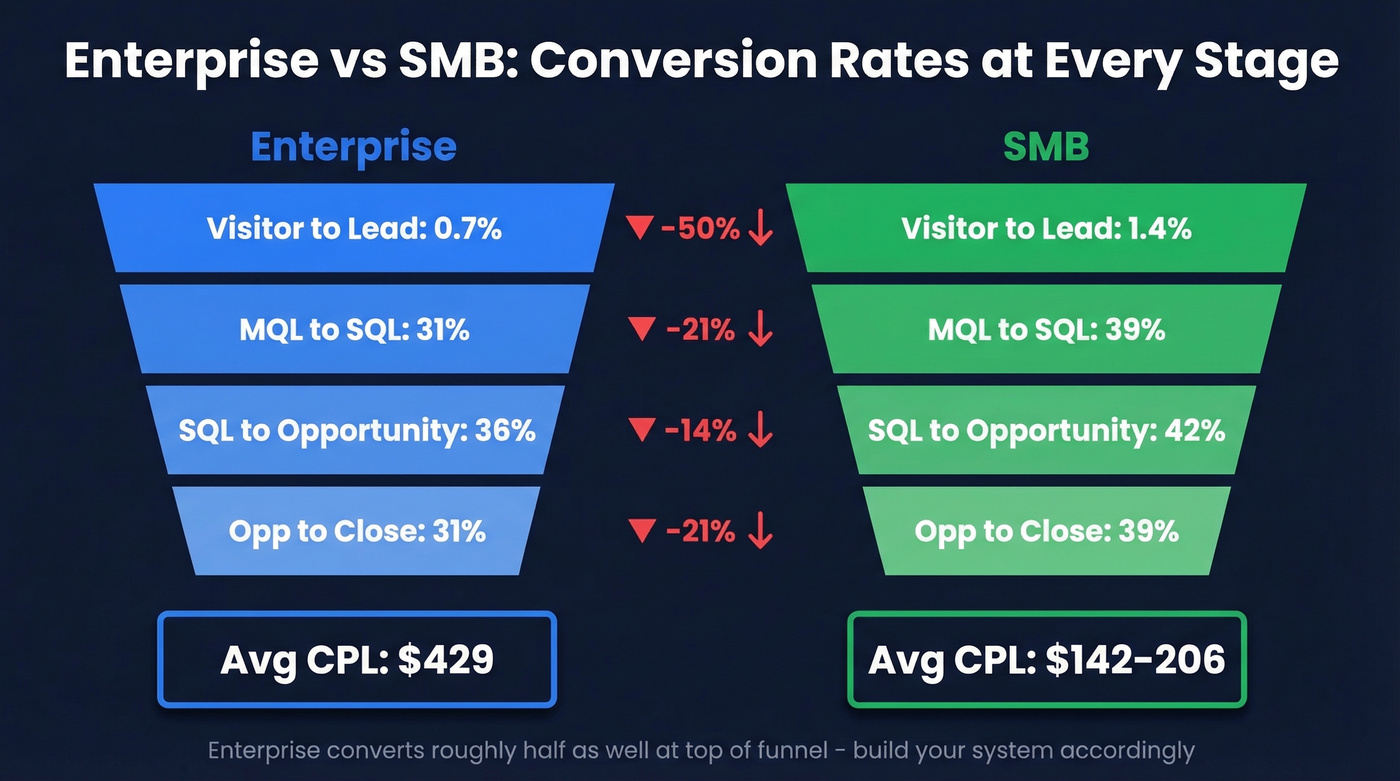
| Metric | Enterprise | SMB |
|---|---|---|
| Visitor to Lead | 0.7% | 1.4% |
| MQL to SQL | 31% | 39% |
| SQL to Opportunity | 36% | 42% |
| Opp to Close | 31% | 39% |
| Avg CPL | $429 | ~$142-206 |
Enterprise conversion rates are roughly half of SMB at the top of funnel and about 15-20% worse at every subsequent stage. That's structural reality, not a marketing failure. Accept it and build accordingly.
The B2B Enterprise Lead Gen Framework
Most guides give you a list of tactics. What you actually need is a system. These five steps build on each other - skip one and the rest fall apart.
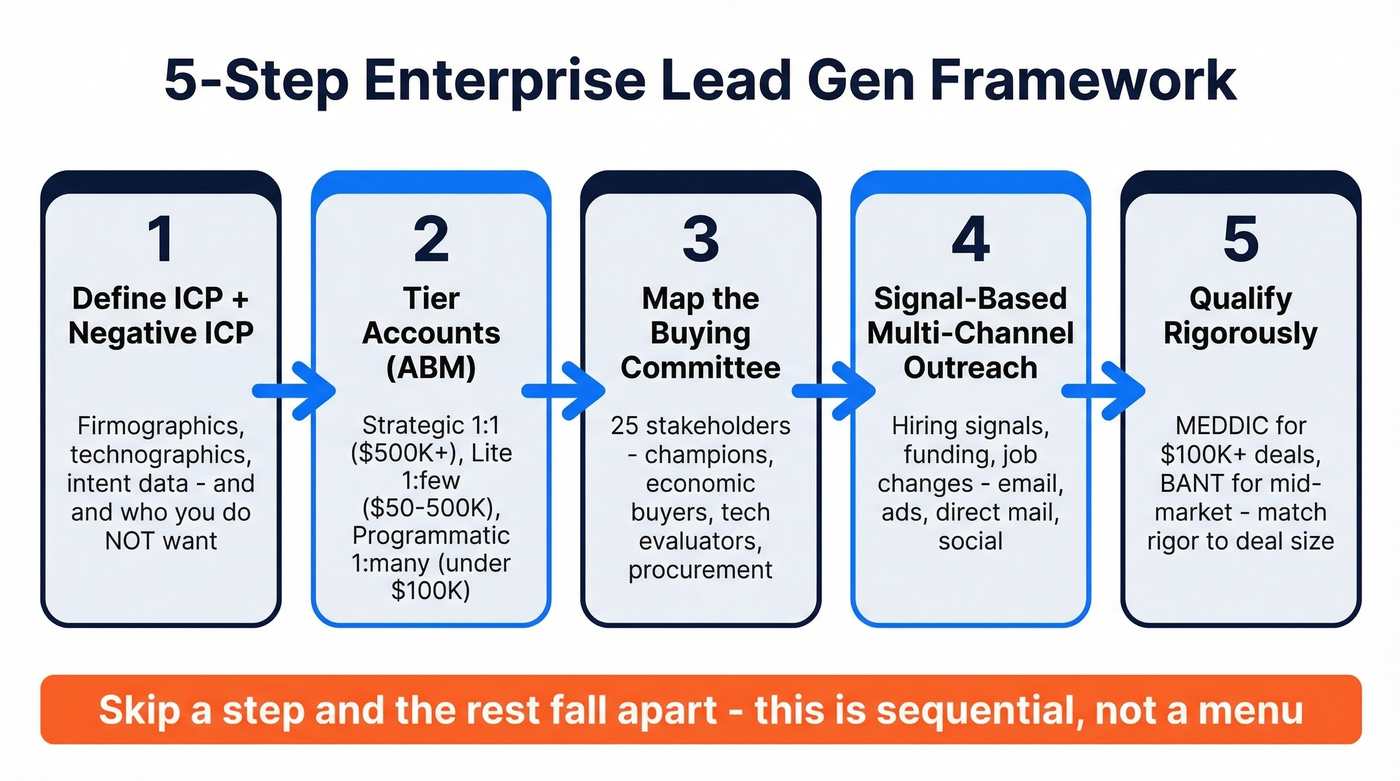
Step 1: Define Your ICP and Negative ICP
Layer firmographic data like revenue, headcount, and industry with technographic signals and intent data. Equally important: define who you don't want. A negative ICP saves your SDRs from burning cycles on accounts that'll never close. This is the distinction between pipeline generation and contact collection - you're building a system that identifies buying potential, not just gathering names.
Step 2: Tier Accounts Using ABM Logic
Strategic ABM (1:1) is for accounts worth $500K+/year. Dedicated SDR/AE, custom content, personalized microsites. ABM Lite (1:few) covers $50K-$500K deals - cluster 5-20 similar accounts with segment-level personalization. Programmatic ABM (1:many) handles deals under six figures through tech-driven triggers and scaled outreach across hundreds of accounts.
The tier determines everything downstream: channel mix, content investment, qualification rigor. Get this wrong and you'll either over-invest in small deals or under-resource the ones that matter.
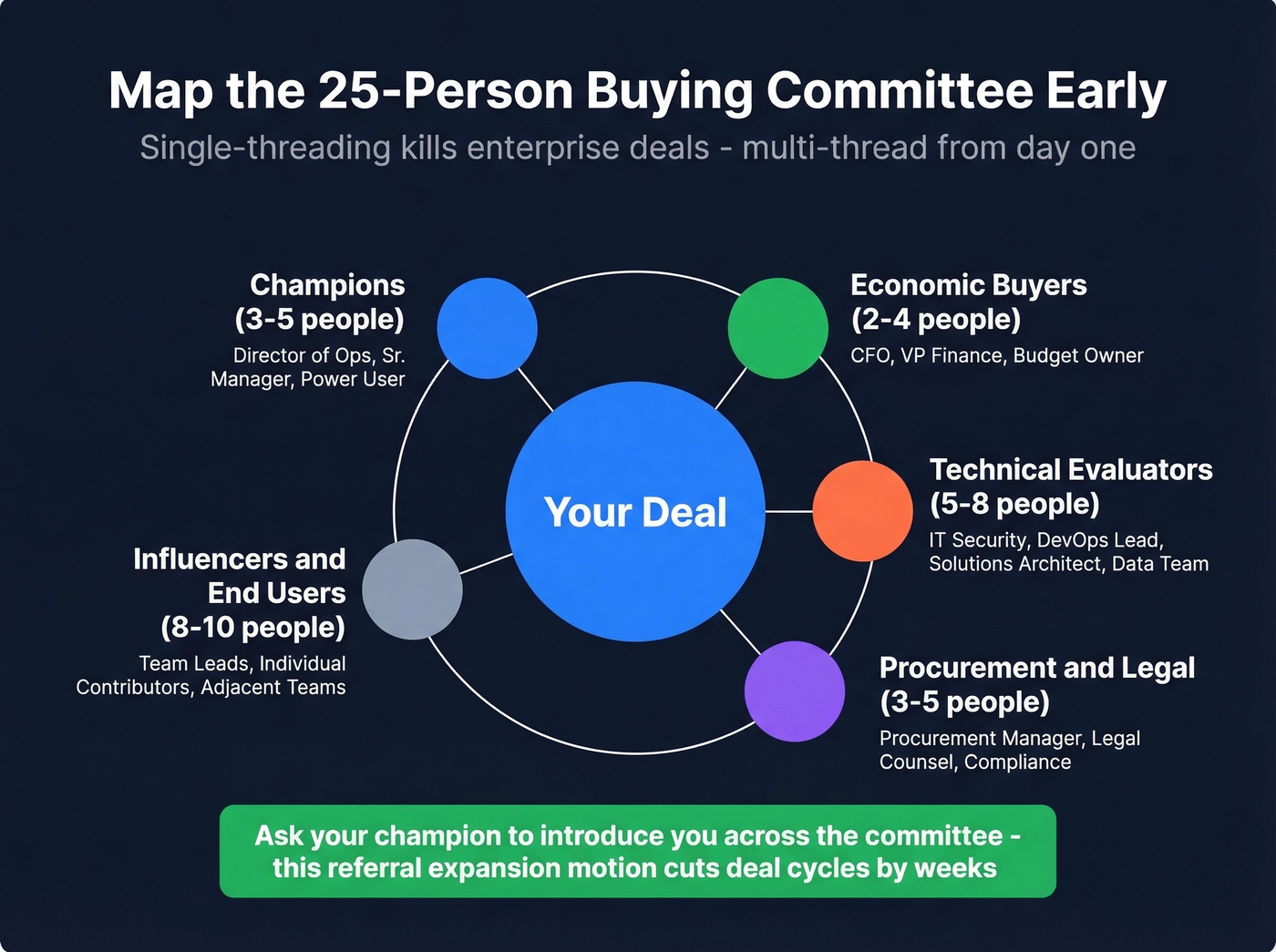
Step 3: Map the Buying Committee Early
With 25 stakeholders involved, single-threading kills deals. Map champions, economic buyers, technical evaluators, and procurement contacts at the start - not when the deal stalls at Stage 3. The shift from MQLs to MQAs (marketing qualified accounts) reflects this reality. Once a champion is engaged, ask them to introduce you across the committee. We've seen this referral-expansion motion cut deal cycles by weeks.
Step 4: Run Signal-Based Multi-Channel Outreach
Layer hiring signals, funding events, and champion job changes to identify which accounts are in-market right now. Outreach spans cold email, targeted ads, direct mail, warm introductions, and social selling - top performers using social selling create 45% more opportunities and see 16% higher win rates. The channel mix depends on the tier.
Step 5: Qualify Rigorously
MEDDIC for $100K+ deals You need to understand the decision process, metrics, and economic buyer before committing resources. BANT works for mid-market. Over-qualifying small deals wastes time; under-qualifying enterprise deals wastes months.

At $429 per enterprise lead, bounced emails and wrong numbers aren't just annoying - they're budget killers. Prospeo's 98% email accuracy and 125M+ verified mobile numbers mean your SDRs actually reach the 25 stakeholders on the buying committee. Data refreshes every 7 days, not every 6 weeks.
Stop paying $429 per lead just to hit a dead inbox.
Signal Stacking and Intent Data
Signal stacking moves you from "we think they might be interested" to "three people at this account are actively researching our category."
Start with first-party intent - website visits, content downloads, webinar attendance. Layer third-party intent from providers like Bombora or 6sense, which track research activity across thousands of B2B publications. The real power comes from combining both with trigger events: a target account just raised a Series C, hired a new CRO, and two directors are reading content about your category. That's not a cold call anymore.
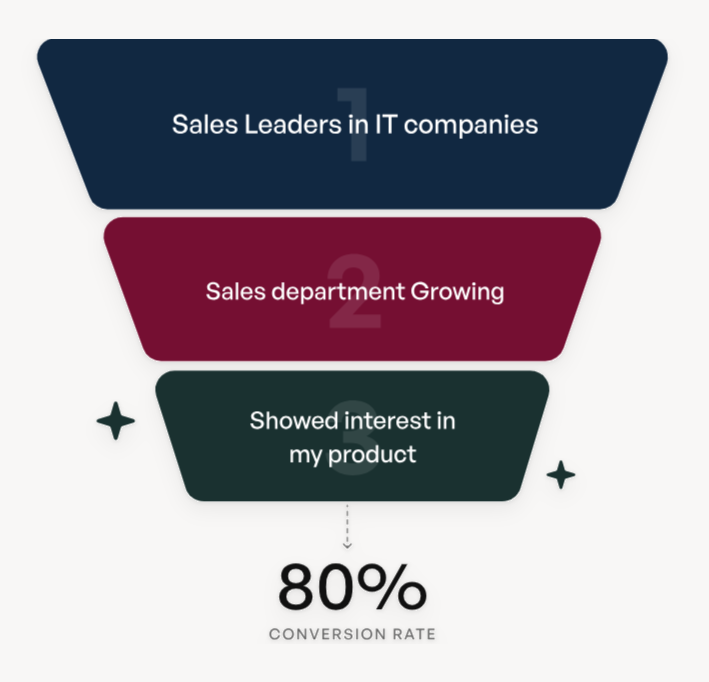
Activating intent data in practice: Audit your existing data sources, then run a 30-day pilot on one ABM tier. Integrate scoring into your CRM, roll out to the full SDR team, and measure monthly. Segment accounts by buying stage and intent intensity - low gets nurture, medium gets marketing outreach, high gets an immediate sales handoff. Refresh monthly because signals decay fast.
Why Enterprise Lead Gen Programs Fail
Most failure happens after lead capture, not before.
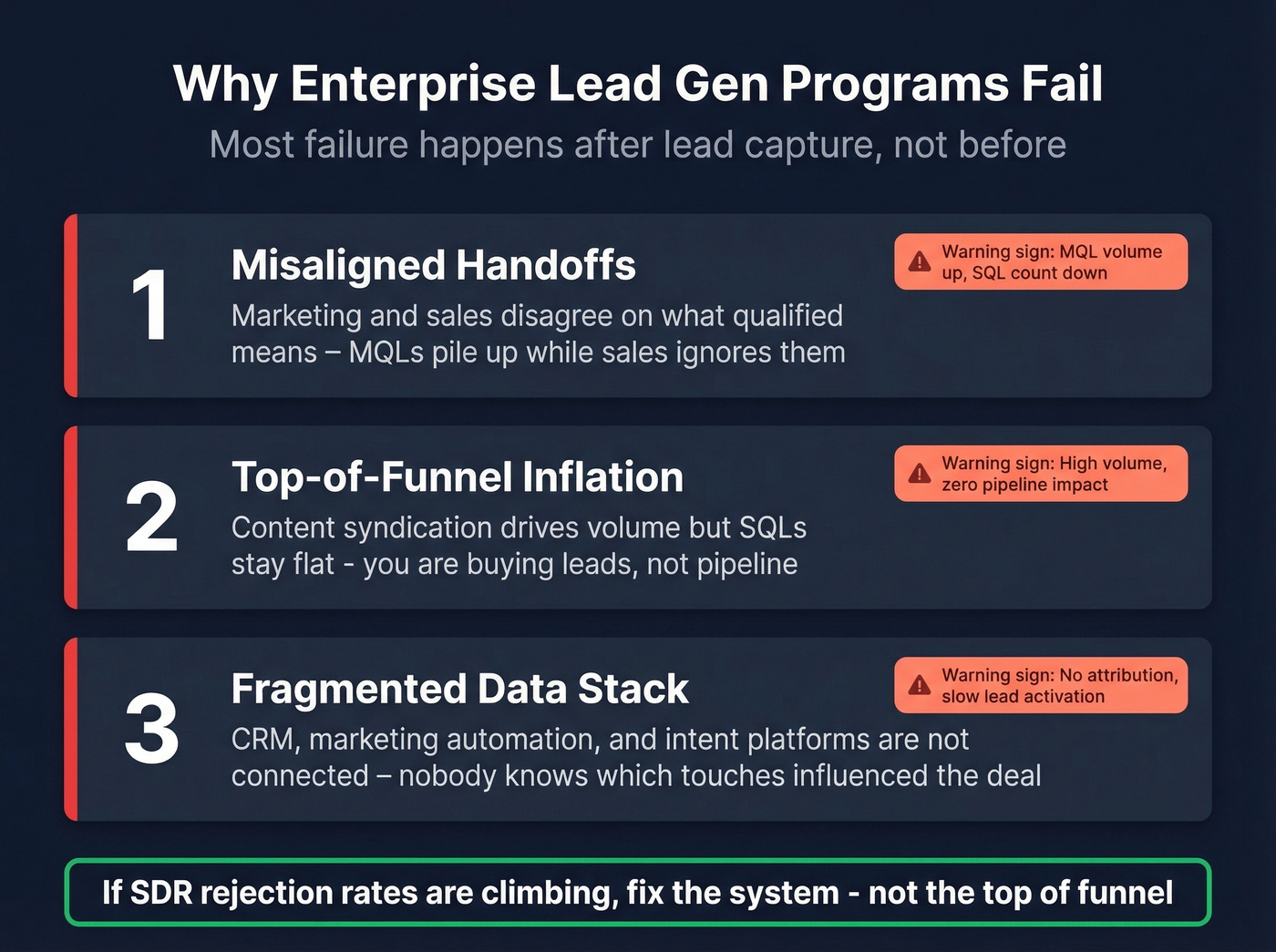
Misaligned handoffs are the biggest killer. Marketing and sales don't share a definition of "qualified," so MQLs pile up while sales ignores them. Warning sign: MQL volume rising while SQL count falls.
Top-of-funnel inflation is the second. Content syndication drives volume, but SQLs stay flat. You're buying leads, not pipeline.
Fragmented data is the third. Your CRM, marketing automation, and intent platform aren't connected, so nobody knows which touches influenced the deal. Slow lead activation means competitors engage first - by the time your rep calls, the buyer's already in a demo with someone else. And generic drip sequences don't work for enterprise buyers who've already done 67% of their research independently.
Here's the thing: if your SDR rejection rates are climbing, fix the system, not the top of funnel.
CPL by Channel
Not all channels are created equal when you're paying $429 per lead.
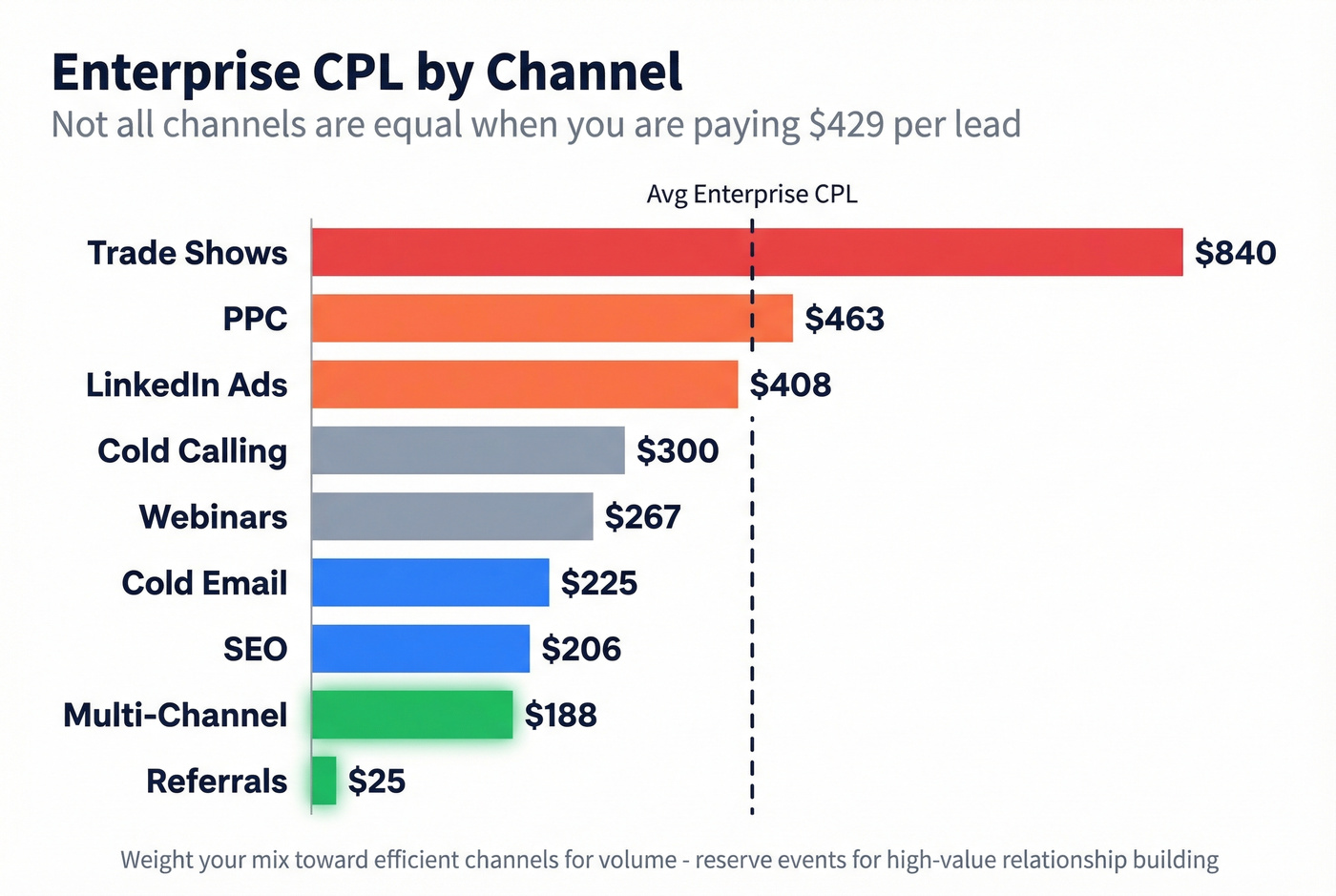
| Channel | Avg CPL |
|---|---|
| Trade shows | $840 |
| PPC | $463 |
| LinkedIn ads | $408 |
| Cold calling | $300 |
| Webinars | $267 |
| Cold email | $225 |
| SEO | $206 |
| Multi-channel | $188 |
| Referrals | $25 |
Multi-channel prospecting and cold email deliver the lowest CPL at scale among outbound channels. Trade shows cost about 4-5x more per lead. That doesn't mean you skip events - enterprise deals often need face-to-face trust - but weight your channel mix toward efficient channels for pipeline volume and reserve events for high-value relationship building.
Building Your Enterprise Prospecting Stack
Let's be honest: ZoomInfo is still the most complete all-in-one enterprise platform. But most teams don't need all-in-one - they need accurate data and a system that works. Buying a $50K platform before you've nailed your ICP and ABM tiers is the most expensive mistake in enterprise lead gen.
Start with a verified contact database as your foundation. Prospeo covers 300M+ profiles with 98% email accuracy and a 7-day data refresh cycle, compared to the 6-week industry average. Its 30+ search filters - including buyer intent powered by Bombora across 15,000 topics, technographics, job changes, and headcount growth - let you build targeted lists that map entire buying committees, not just the obvious contacts. Snyk's team of 50 AEs saw bounce rates drop from 35-40% to under 5% and generated 200+ new opportunities per month after switching. For enterprise prospecting where you're mapping 25-person buying committees, data freshness is the difference between reaching people and bouncing.

Enterprise incumbents: ZoomInfo ($15K-$40K+/year) makes sense if you need intent, engagement, and data in a single platform - it's the broadest US-focused database with deep workflow features. Cognism ($15K-$30K+/year) is popular for European and GDPR-heavy markets. Apollo's free tier is solid for getting started, though the consensus on r/sales is that data freshness is a persistent issue. For intent data specifically, 6sense typically runs $30K-$100K+/year at enterprise scale; Bombora is commonly priced in a similar enterprise range.
Skip this if you haven't built the targeting framework first. Start with accurate data, build the system, then layer on intent and engagement platforms as deal volume justifies the spend.
Signal stacking only works when your contact data keeps up. Prospeo layers Bombora intent data across 15,000 topics with 30+ filters - technographics, funding, headcount growth, job changes - so you tier accounts and reach decision-makers while they're still in-market. At $0.01 per email, scaling across ABM tiers doesn't break the budget.
Turn intent signals into booked meetings with contacts that actually connect.
FAQ
How does enterprise lead generation differ from standard B2B lead gen?
Enterprise lead generation targets 1,000+ employee organizations with 25-person buying committees and 6.5-month sales cycles, requiring multi-threading, ABM tiering, and MEDDIC qualification. Standard B2B lead gen often targets SMBs with single decision-makers and 30-day cycles - it's a different discipline entirely, not just a scaled-up version of SMB outbound.
How long before an enterprise program produces pipeline?
Expect 3-6 months to see qualified pipeline from a new program. Enterprise sales cycles run 6-18 months, so measure early success by pipeline created and MQL-to-SQL conversion improvements - not closed revenue. If conversion isn't improving by month three, your targeting or handoff process needs work.
What's the minimum data stack for enterprise prospecting?
A verified contact database, a CRM like Salesforce or HubSpot, and one intent data source - that's your minimum viable stack. You don't need a $100K tech stack on day one. Get the data right, nail your ICP, and layer on engagement platforms as deal volume grows.