

Gigasheet vs LeadsForge: You're Probably Comparing the Wrong Tools
Your spreadsheet just died, your prospect list came back full of bounced emails, and now you're searching for tools that sound like they might fix both problems. Here's the thing: the Gigasheet vs LeadsForge comparison doesn't hold up because these tools don't compete with each other at all. One analyzes billion-row healthcare datasets. The other generates B2B prospect lists through an AI chat interface. Comparing them is like comparing Snowflake to Apollo.
30-Second Verdict
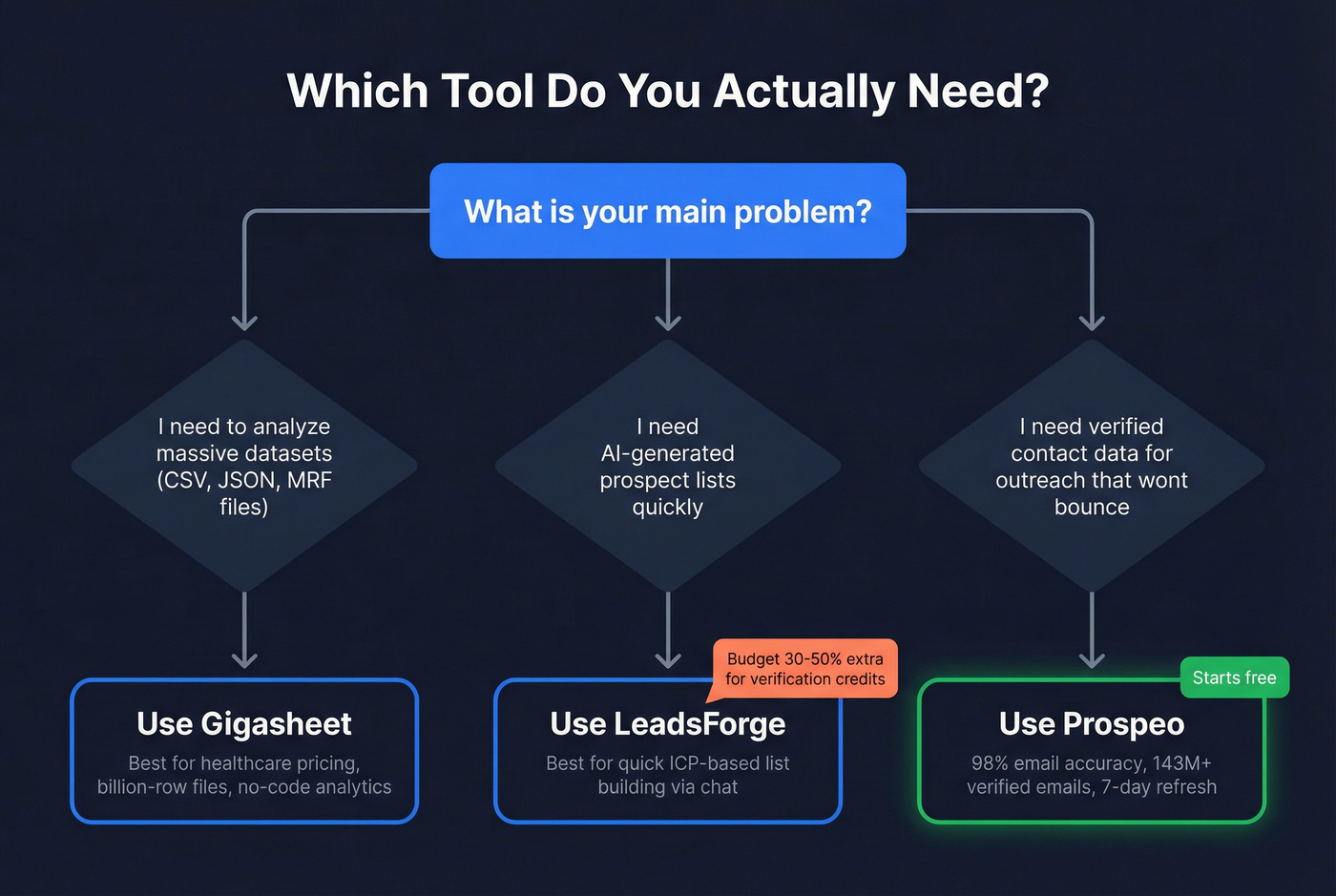
Use Gigasheet to analyze massive files - healthcare price transparency data, billion-row MRFs, warehouse exports - in a spreadsheet UI without writing SQL.
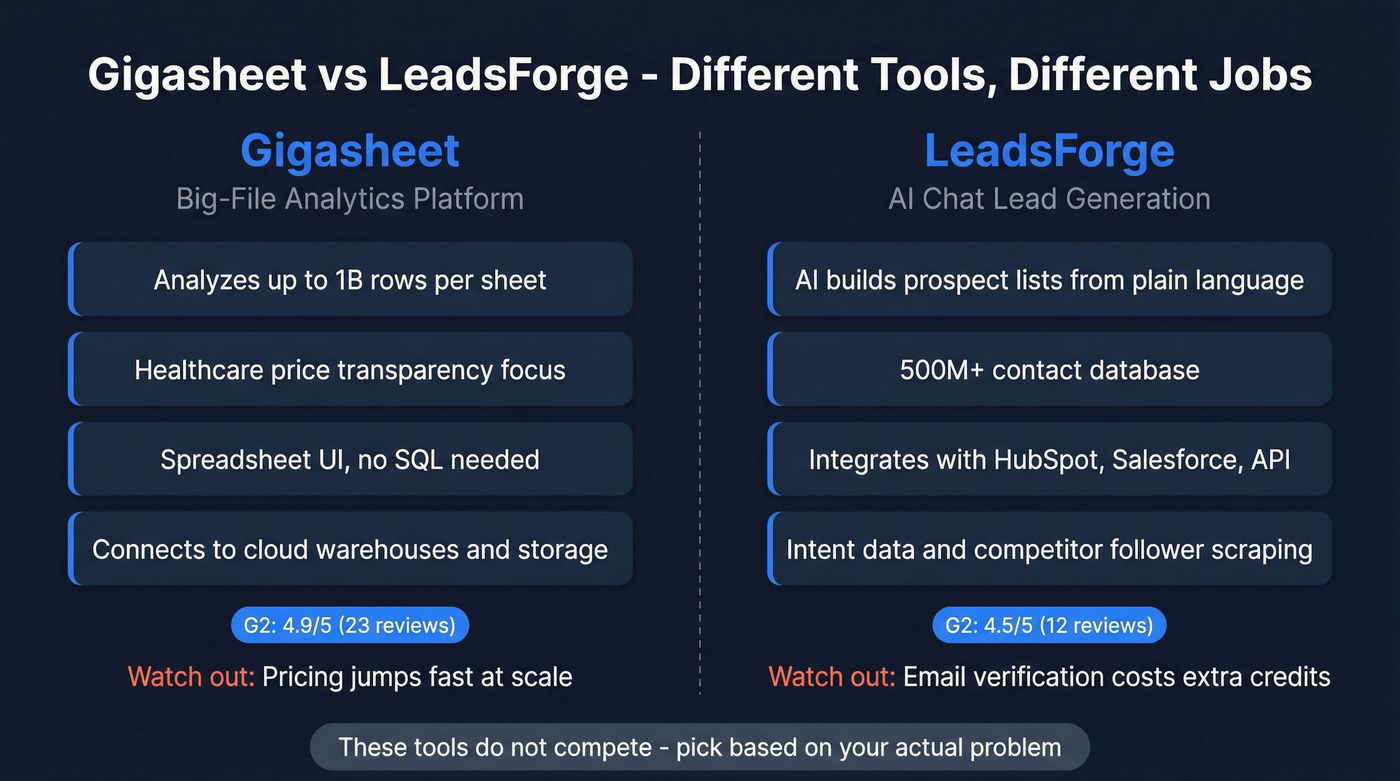
Use LeadsForge for AI-generated prospect lists built from natural language prompts, synced into your outreach stack.
Skip both if your actual problem is getting verified B2B contact data for outreach. Neither tool is built for that.
What Each Tool Does
Gigasheet - Big-File Analytics
Gigasheet is a no-code analytics platform focused on healthcare price transparency. It carries a 4.9/5 on G2 from 23 reviews. The core pitch: handle database-sized datasets in a spreadsheet-style UI with support for up to 1B rows per sheet on the right plan, filter and pivot like Excel, and trace every data point back to the original machine-readable file.

It connects to major cloud data warehouses, cloud storage, and flat files - useful for teams already running modern data stacks. The healthcare angle is strong: payer-negotiated rates, compliance, benchmarking. We've seen Gigasheet's pricing catch teams off guard once they scale past the Premium tier, though. More on that below.
LeadsForge - AI Chat Lead Gen
LeadsForge takes a completely different approach. You describe your ICP in plain language - "SaaS founders in DACH with 50-200 employees who use HubSpot" - and the AI builds a prospect list from a 500M+ contact database. It holds a 4.5/5 on G2 from 12 reviews.

Beyond basic list building, LeadsForge can find company followers from a competitor's profile URL and layer in intent data signals. It integrates with HubSpot, Salesforge, Salesforce, and other tools, with API access for syncing leads into your stack. Users praise it for saving roughly 10 hours a week of manual research.
That said, LeadsForge is still in a pre-launch maturity phase with a thin review count, and data quality underneath the slick interface is where things get dicey - a pattern we've confirmed across AI lead gen tools in our own testing. If you're evaluating other outbound lead generation tools, this is exactly the kind of tradeoff to watch for.
Side-by-Side Feature Comparison
| Gigasheet | LeadsForge | |
|---|---|---|
| Category | Dataset analytics | AI lead generation |
| Best for | Healthcare pricing, big files | B2B prospect lists |
| Entry price | $25/mo (billed yearly) | ~$49 for 2,000 leads |
| Data scale | Up to 1B rows/sheet (MRF Explorer) | 500M+ contacts |
| Integrations | Cloud warehouses, cloud storage, flat files | HubSpot, Salesforge, Salesforce, API |
| G2 rating | 4.9/5 (23 reviews) | 4.5/5 (12 reviews) |
| Key limitation | Pricing shock at scale | Email validation costs extra |
| Verdict | Best for healthcare data analytics | Best for quick AI-built lists |
If you're trying to build a repeatable outbound motion, it helps to separate list building from lead enrichment and verification.

LeadsForge charges extra credits for verification and still produces inconsistent data. Prospeo's 5-step verification delivers 98% email accuracy from 143M+ verified emails - refreshed every 7 days, not whenever an AI model feels like it. No hidden verification fees. No credit surprises.
Stop paying twice for leads that still bounce.
Pricing Reality Check
Gigasheet's pricing page lists an entry option at $25/mo billed yearly. The Premium Individual plan supports 25M rows per sheet and runs $75/user/month billed annually or $95 monthly. Need JSON and MRF file support? That's the MRF Explorer tier at $295/user/month billed annually - $3,540/year. One Reddit user reported needing to pay "$500/month just for a single export." That kind of escalation catches teams off guard.
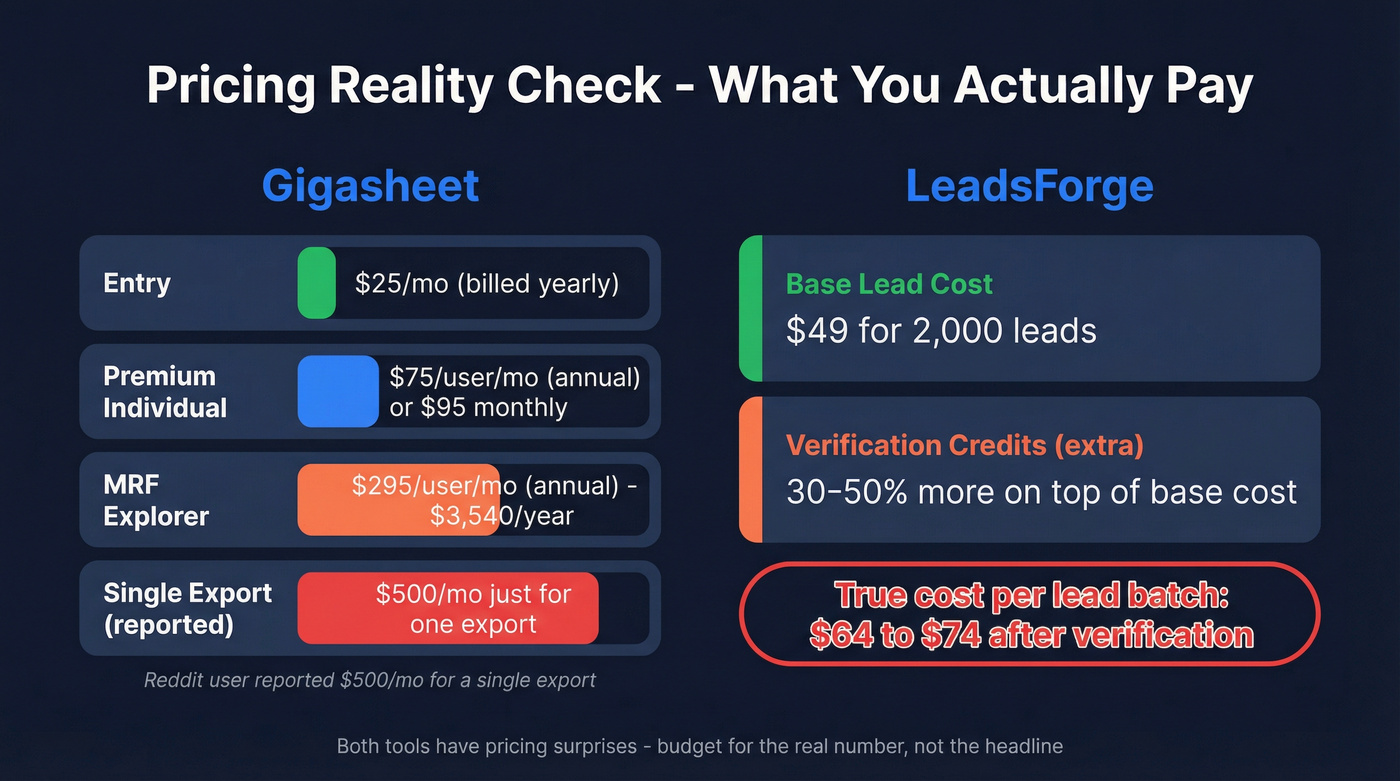
LeadsForge runs on credits at roughly $49 for 2,000 leads. Email validation costs additional credits on top of the base lead price, and users complain that the separate verification credits aren't obvious until you're deep into the workflow. Budget for leads plus verification as separate line items - expect 30-50% more than the headline cost. If you're comparing options, see our breakdown of data enrichment services to understand where list quality typically breaks.
What Users Actually Complain About
LeadsForge draws complaints on Trustpilot (4.0/5 from 11 reviews) about exported data being inconsistent and unclean. The separate verification credits frustrate users who expected all-in pricing, and at least one reviewer reported friction trying to cancel.
Gigasheet users flag pricing escalation once MRF support or large exports enter the picture. The UI has gotten crowded with AI features that obscure core functionality, and it's an analytics viewer - not a full spreadsheet editor.
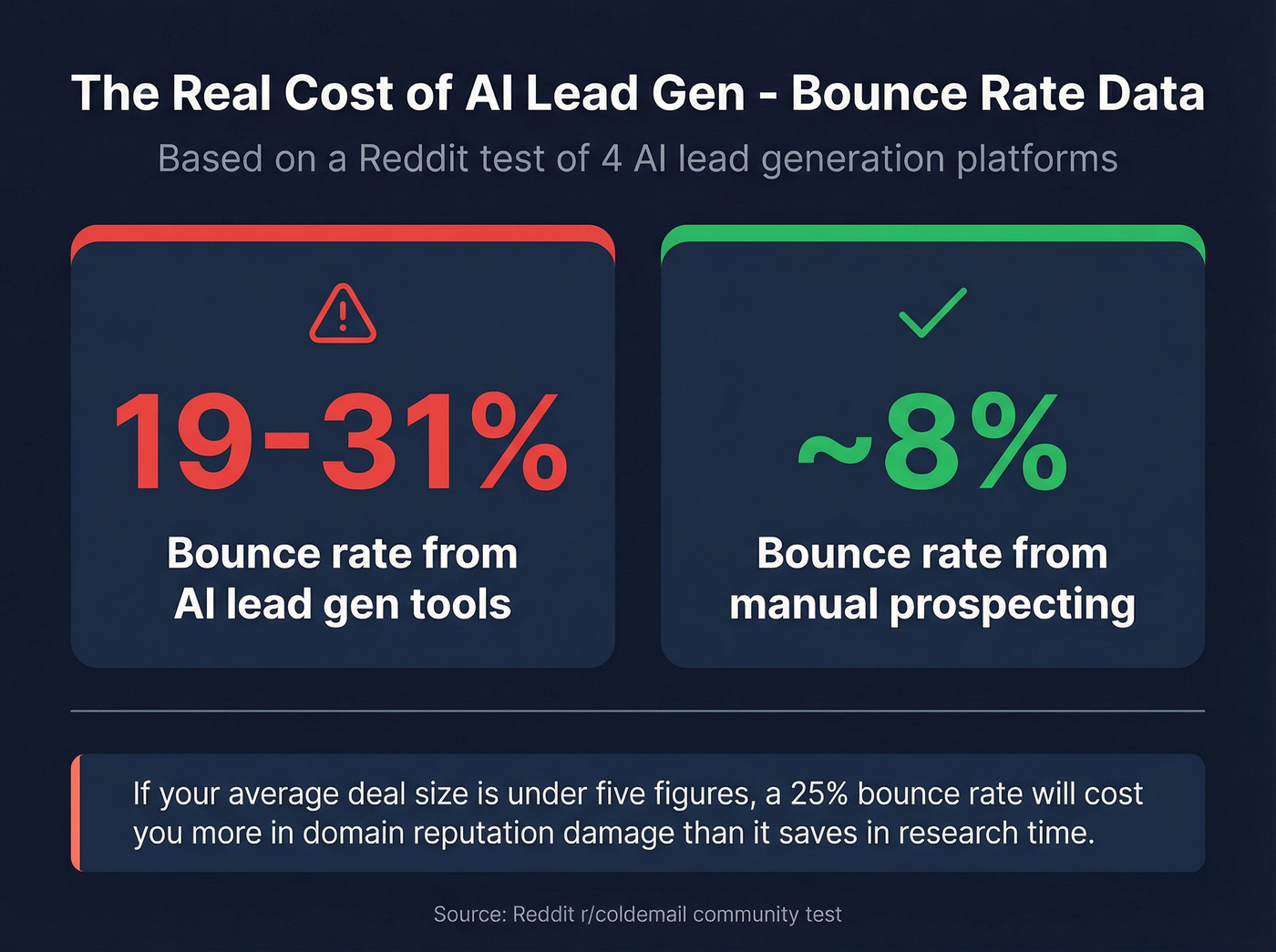
Let's be honest about the bigger issue here. A Reddit test of four AI lead gen platforms found bounce rates between 19-31%, compared to roughly 8% from manual prospecting. If your average deal size sits below five figures, a beautiful AI chat that produces 25% bounce rates will cost you more in domain reputation damage than it saves in research time. Speed means nothing when a third of your emails bounce. (If you want the benchmarks and fixes, start with email bounce rate and then work through an email deliverability guide.)
When You Need Verified Contacts Instead
If your real problem is accurate contact data for outreach, neither Gigasheet nor LeadsForge solves it. Gigasheet doesn't do contacts at all. LeadsForge generates lists, but the data quality concerns are real and well-documented.
The difference shows up in real numbers. Snyk cut bounce rates from 35-40% down to under 5% across 50 AEs, while GreyScout saw pipeline jump 140% after switching from inconsistent data sources. When AI lead gen tools are producing 19-31% bounces, a dedicated verification platform isn't optional - it's infrastructure. For a broader view of what belongs in a modern outbound stack, see our guide to the best SDR tools.

Snyk cut bounce rates from 35-40% to under 5% across 50 AEs. GreyScout grew pipeline 140%. The difference wasn't a chatbot - it was verified contact data with 98% accuracy, 125M+ direct dials, and a 7-day refresh cycle. Prospeo starts free with 75 emails and 100 extension credits per month.
Replace bounced emails with booked meetings.
FAQ
Can Gigasheet and LeadsForge replace each other?
No. Gigasheet analyzes massive datasets like healthcare pricing files and supports up to a billion rows per sheet. LeadsForge generates B2B prospect lists via AI chat. They solve completely different problems - picking between them depends on whether you need analytics or lead generation.
Does LeadsForge include email verification?
LeadsForge offers automated verification, but it costs additional credits beyond the base lead price. Expect to spend roughly 30-50% more than the headline per-lead cost once verification is factored in. Budget for both line items separately.
What's a reliable alternative for verified outreach data?
Prospeo delivers 98% email accuracy across 143M+ verified emails with a 7-day data refresh cycle - purpose-built for outreach-ready contact data. It starts free at 75 emails/month. That Reddit study showing 19-31% bounce rates from AI lead gen tools is exactly why dedicated verification matters.
Is Gigasheet worth it for non-healthcare use cases?
Gigasheet handles any large CSV, JSON, or warehouse export - not just healthcare data. But the pricing tiers are optimized for MRF and compliance workflows. If you're just exploring big CSVs, free alternatives like DuckDB or Google BigQuery's sandbox are more cost-effective starting points.