


Growbots Pricing in 2026: Plans, Credits, and Real Costs
$49/month looks clean on a pricing page. Then you add credits, extra inboxes, and a second seat - and suddenly you're staring at a $700/month invoice wondering what happened. We've watched this exact scenario play out with multiple teams we've talked to, and the pattern is always the same: Growbots pricing is genuinely hard to forecast upfront because the actual numbers hide behind a credit system that only makes sense once you model your volume.
Let's fix that.
Current Growbots Plans
Growbots structures its pricing around two core plans, a bootcamp option, and managed services. You'll still see a $29/month "All-in-One Starter" tier floating around in older third-party reviews, but the most commonly referenced listings today put the starting price at $49/month for Outreach and $199/month for All-in-One.
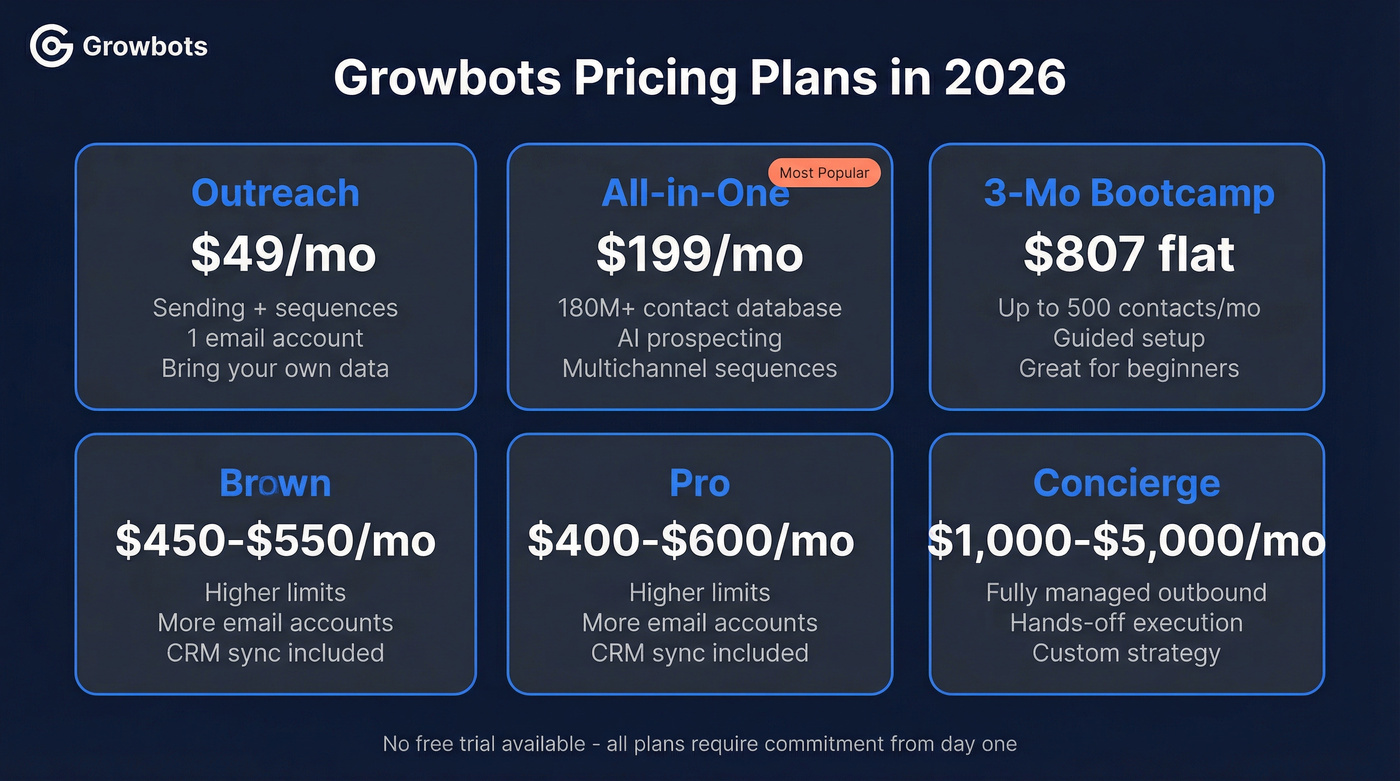
| Plan | Monthly Price | Key Inclusions | Best For |
|---|---|---|---|
| Outreach | $49/mo | Sending + sequences (1 email account) | Solo reps with their own data |
| All-in-One | $199/mo | Sending + sequences + database access via credits | Teams that want sales prospecting platforms and sending in one tool |
| 3-Mo Bootcamp | $807 flat | Up to 500 contacts/mo, guided setup | New-to-outbound teams |
| Pro | ~$400-$600/mo (custom) | Higher limits, more email accounts, CRM sync | Mid-market orgs |
| Concierge | ~$1,000-$5,000/mo | Managed outbound program | Hands-off buyers |
The Outreach plan is primarily email sending infrastructure. You're bringing your own contacts, and if you want new leads from the database, you'll buy them with credits.
All-in-One is the "prospecting + sending" bundle: Growbots includes a B2B database of 180M+ contacts and AI prospecting features, and the platform supports multichannel sequences across email and tasks. Concierge outsources most outbound execution to their team, which explains the price jump.
Despite the complexity, Growbots holds a 4.7/5 on Capterra across 49 reviews, with a 4.5/5 value-for-money score. The tool delivers once you understand the cost structure. But there's no free trial, so you're committing from day one.
How Credits Work
Credits are where things get complicated. One credit equals one new prospect scheduled or exported from the database. Follow-ups to that same prospect don't cost additional credits - once you've "unlocked" a contact, you can message them as many times as your sequence requires.
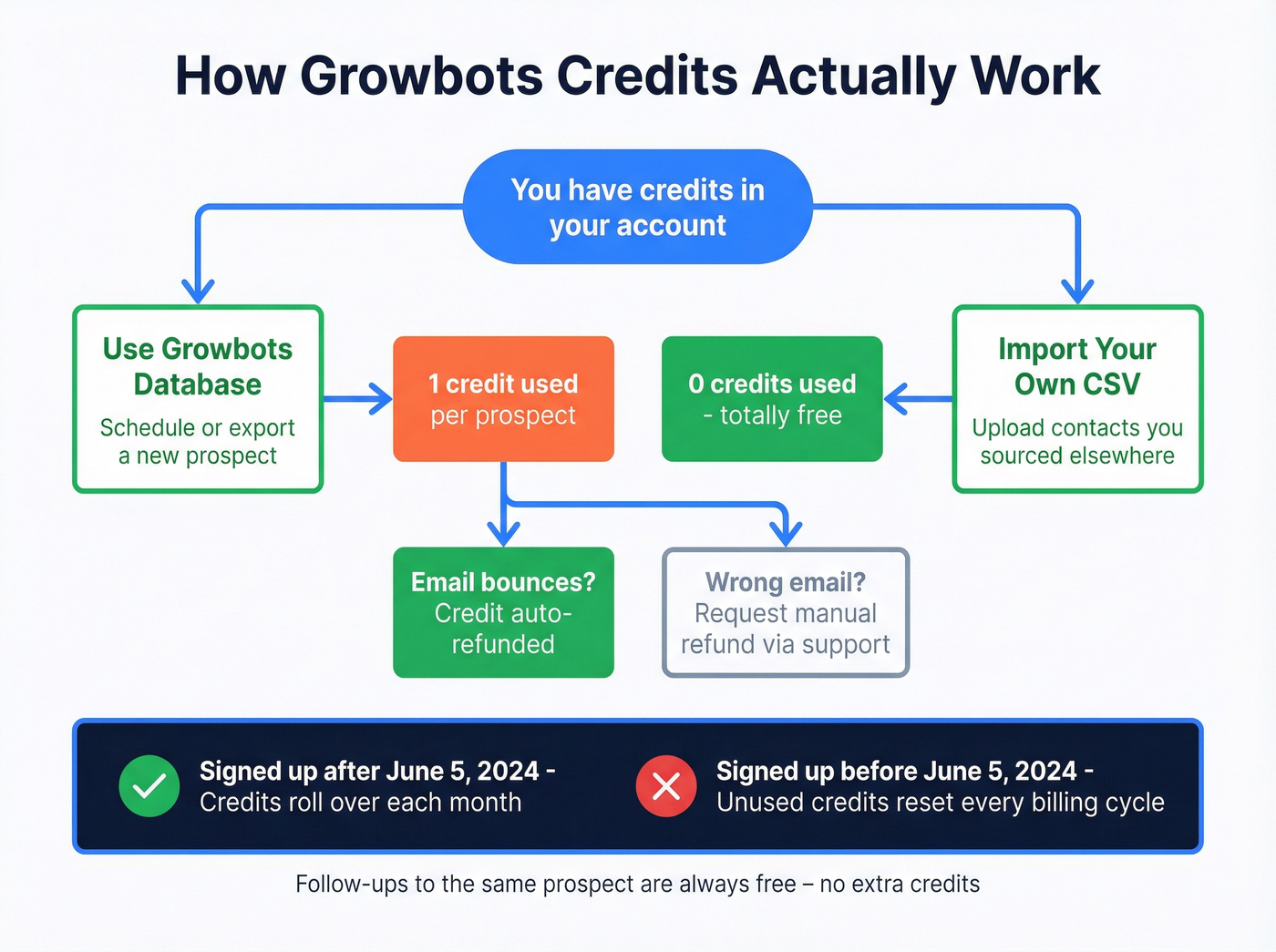
If an email bounces because the address is bad, Growbots automatically refunds the credit. For prospects who've left their company, you can mark "wrong email" and request a support review for a refund. Not automatic, but the option exists.
Here's the detail most people miss: importing your own contacts doesn't consume credits. A lot of billing frustration comes from misunderstanding this. One user complaint that Woodpecker's roundup quoted described billing feeling "the same whether you load your own contacts or use Growbots contacts" - but if you're uploading a CSV of contacts you sourced elsewhere, you can email them through Growbots without touching your credit balance.
Rollover rule (important): If you signed up after June 5, 2024, unused credits roll over month-to-month. Accounts created before that date lose unused credits at each billing cycle. This is documented in Growbots' help center, not on their pricing page - so check with support if you aren't sure which policy applies to your account.
The Warmbots add-on for automated email warmup is free for up to 3 inboxes, then $5/month per inbox beyond that.

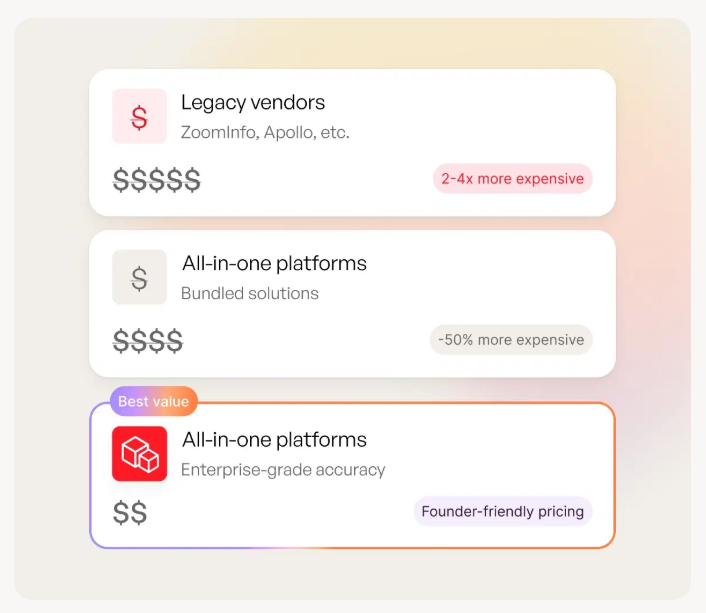
Growbots credits cost $0.13+ per prospect and scale fast. Prospeo delivers 98% accurate emails at $0.01 each - 13x cheaper per contact. No credit puzzles, no rollover rules to memorize. Just 300M+ profiles with a 7-day refresh cycle.
Get verified emails at a fraction of Growbots credit costs.
What It Actually Costs at Scale
Here's what the math looks like on the All-in-One plan at $199/month, using lead credits priced from $0.13 per prospect.
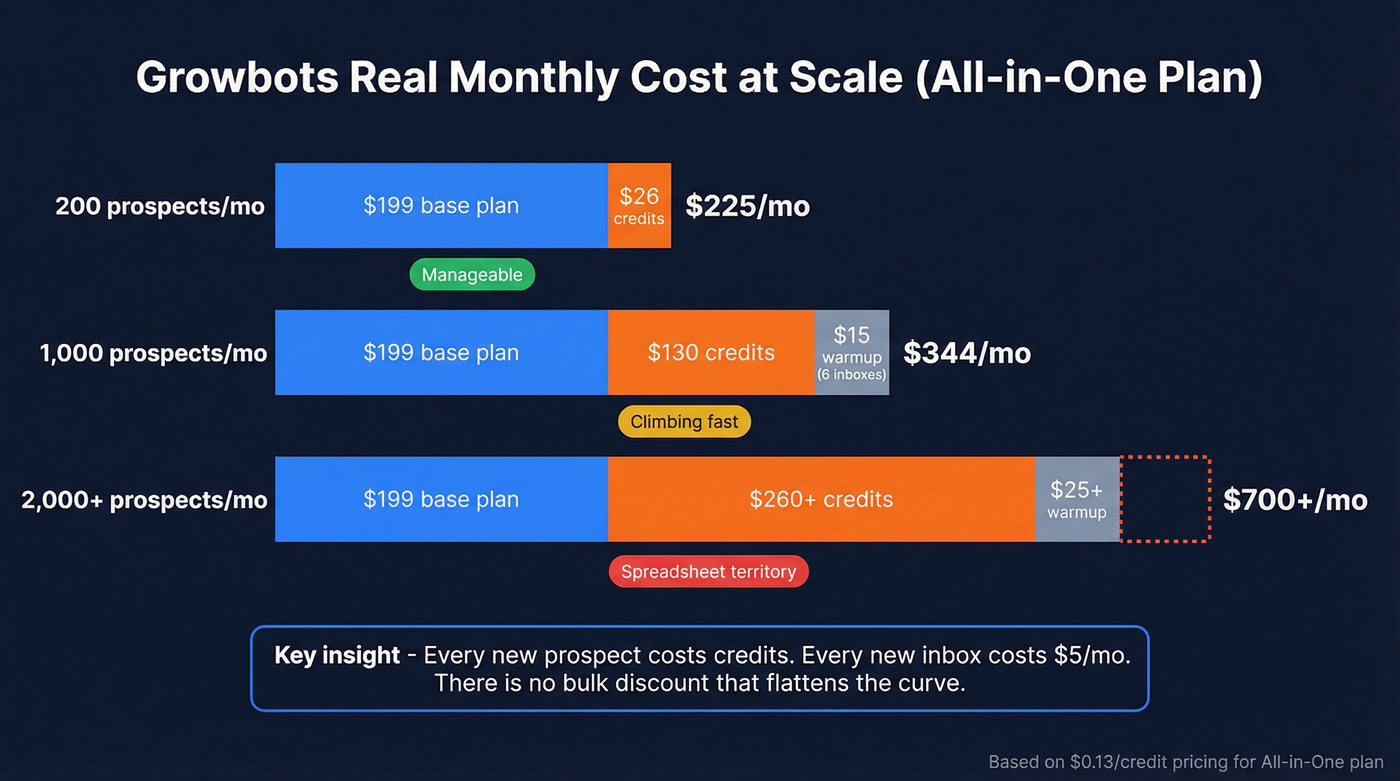
Small team, 200 prospects/month: Base plan ($199) plus roughly 200 credits at $0.13/prospect ($26), plus Warmbots for 3 inboxes ($0). Total: ~$225/month. Manageable.
Scaling team, 1,000 prospects/month: Base plan ($199) plus 1,000 credits ($130), plus Warmbots for 6 inboxes ($15). Total: ~$344/month. Still reasonable, but the trajectory is clear.
Teams do hit much higher numbers once they layer on volume and operational complexity. We've seen user feedback describing monthly spend north of $700 just to maintain an outbound workflow, which is a common trajectory with credit-based models when usage ramps up fast.
Here's our take: for teams under 500 prospects/month, the All-in-One is reasonable. Beyond that, the math often stops working. Every new prospect costs credits, every new inbox costs $5/month, and your total spend climbs in direct proportion to volume. There's no ceiling, no bulk discount that flattens the curve.
If you're trying to forecast this, it helps to map it against your broader cost of sales tech stack and expected pipeline output.
Cheaper Alternatives to Growbots
If the credit system needs a spreadsheet to forecast, these tools offer more predictable spend.
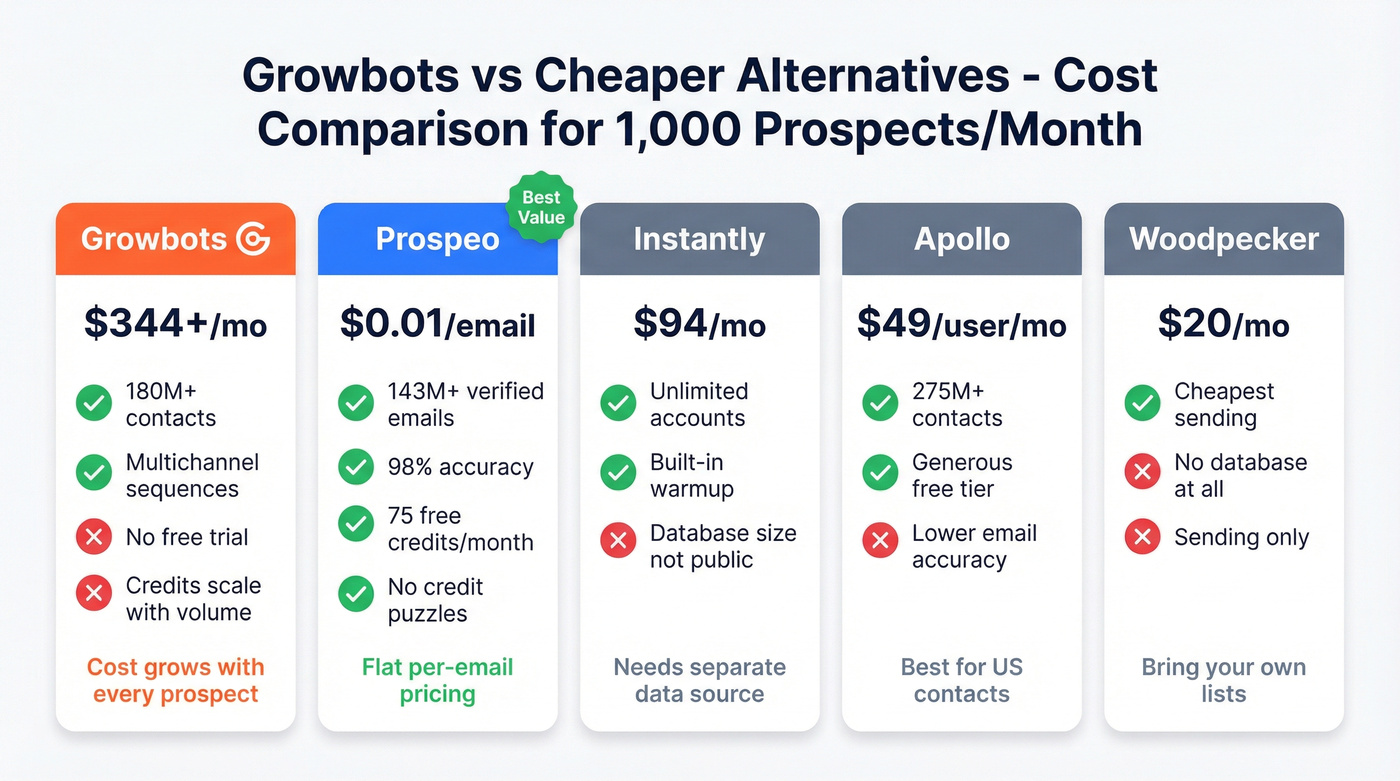
| Tool | Starting Price | Database | Differentiator | Best For |
|---|---|---|---|---|
| Instantly | $47/mo (sending) + $47/mo (leads) | Not public | Unlimited accounts + warmup | High-volume sending |
| Apollo | Free tier; ~$49/user/mo | 275M+ contacts | Generous free plan | Startups, solo founders |
| Woodpecker | From $20/mo | No built-in database | Cold email sending only | Teams with their own lists |
Skip Instantly if you need a built-in contact database. You'll pay $47/month for sending and another $47/month for their leads add-on, and the database size isn't disclosed. It's built for teams who already have data and want to push high volume.
Apollo is the budget pick for solo founders. The free tier is genuinely generous, and $49/user/month gets you solid prospecting. The tradeoff is data accuracy - email verification rates run noticeably lower than dedicated data platforms, and the consensus on r/sales is that Apollo data works best for US-based contacts but gets spotty internationally.
Woodpecker at $20/month is pure sending infrastructure. No database, no prospecting. If you already have clean lists and just need to send, it's one of the cheapest options out there.
If you're comparing stacks, it can also help to look at other credit-based tools like Clay Pricing and how they structure usage.
Forecasting Growbots spend requires a spreadsheet. Prospeo's pricing is transparent from day one - $0.01/email, 75 free credits/month, no contracts. With 143M+ verified emails and 98% accuracy, your bounce rate stays under control while your budget stays predictable.
Start with 75 free emails and zero commitment.
Growbots Pricing FAQ
Does Growbots have a free plan?
No. Capterra and TrustRadius show no free version and no free trial as of 2026. Some older third-party reviews mention one, but it's not reflected in current listings. If you need a free starting point, Prospeo offers 75 email credits/month at no cost, and Apollo has a generous free tier.
Do credits roll over?
Only if you signed up after June 5, 2024. Earlier accounts have credits that reset each billing cycle. This is documented in Growbots' help center but absent from their main pricing page.
What's the cheapest way to use Growbots?
The cheapest paid entry point is the Outreach plan at $49/month, which covers sending only - no bundled database. If you pull new prospects from the database, you'll also pay credits ($0.13+ each) for every contact scheduled or exported. Model your monthly volume before committing, because the credit system is the biggest cost surprise users flag in reviews.
Is Growbots worth it for high-volume outbound?
For teams sending to fewer than 500 new prospects per month, the All-in-One plan at $199/month is competitive. Above that threshold, credit costs push monthly spend past $400-$700, at which point flat-rate or per-email tools typically offer better unit economics. We've found that teams doing 1,000+ prospects/month almost always save money by separating their data sourcing from their sending infrastructure - buying verified emails from a dedicated provider and routing them through a tool like Instantly or Woodpecker for delivery.