

GTM Engineer: What the Role Actually Is, What It Pays, and Whether It's Worth Pursuing
Your VP of Sales just asked you to build an outbound engine in 30 days. Not hire a team - build a system. One that identifies target accounts, enriches contacts, writes personalized first lines, sequences emails, handles replies, and updates the CRM without a human touching it.
The person who builds that system? That's a GTM engineer. And the role is either the most important new hire in B2B or the most overhyped title since "growth hacker" - depending on which archetype you're talking about.
The Short Version
A go-to-market engineer builds automated revenue systems - the plumbing connecting your data, tools, and outreach into workflows that generate pipeline without manual effort.
The role spans four distinct archetypes, from pure software engineers building custom infrastructure ($250K median) to non-technical operators running Clay and Smartlead ($137.5K median). That's why salary data looks like a mess. The overall market range runs roughly $100K-$252K+ depending on seniority, company stage, and technical depth. Technical GTM engineers face a 2.1-to-1 job-to-candidate ratio. The outbound-only archetype is more vulnerable to automation. Choose accordingly.
What Is a GTM Engineer?
GTM engineering means applying an engineering mindset to sales, marketing, and revenue operations - building, automating, and scaling the systems that generate pipeline. The clearest distinction: RevOps optimizes what exists. A go-to-market engineer builds what's missing.
The term traces back to Clay, which coined the role in 2023. But the work isn't new. Companies like Ramp, Stripe, and Figma had people doing this exact job under titles like "growth engineer," "revenue systems architect," or just "that ops person who knows APIs." What changed was the tooling. When Clay, Make, and AI-powered sequencers made it possible for one person to automate what previously required a team, the role became distinct enough to name.
The title first appeared in Google Trends in April 2025. By early 2026, hiring had grown 205% year-over-year. A typical mid-sized company now runs on more than 150 different software tools. Someone has to make those tools talk to each other, and that someone increasingly has "GTM Engineer" on their business card.
The business impact is concrete. ZoomInfo reports that SMB and midmarket customers using engineered workflows saw a 31% drop in customer acquisition costs, with enterprise teams reporting a 42% reduction. That's the kind of output one person in this role creates.
Here's the thing: companies that point their go-to-market engineer exclusively at cold outreach are wasting the role. The best practitioners build churn prevention alerts, post-event follow-up workflows, personalized onboarding sequences, and automated reporting dashboards. Outbound is the entry point, not the ceiling.
The 4 Archetypes (and Why Salary Data Is a Mess)
If you've searched "GTM engineer salary" and gotten confused by numbers ranging from $108K to $250K, you're not alone. The title describes at least four fundamentally different jobs.
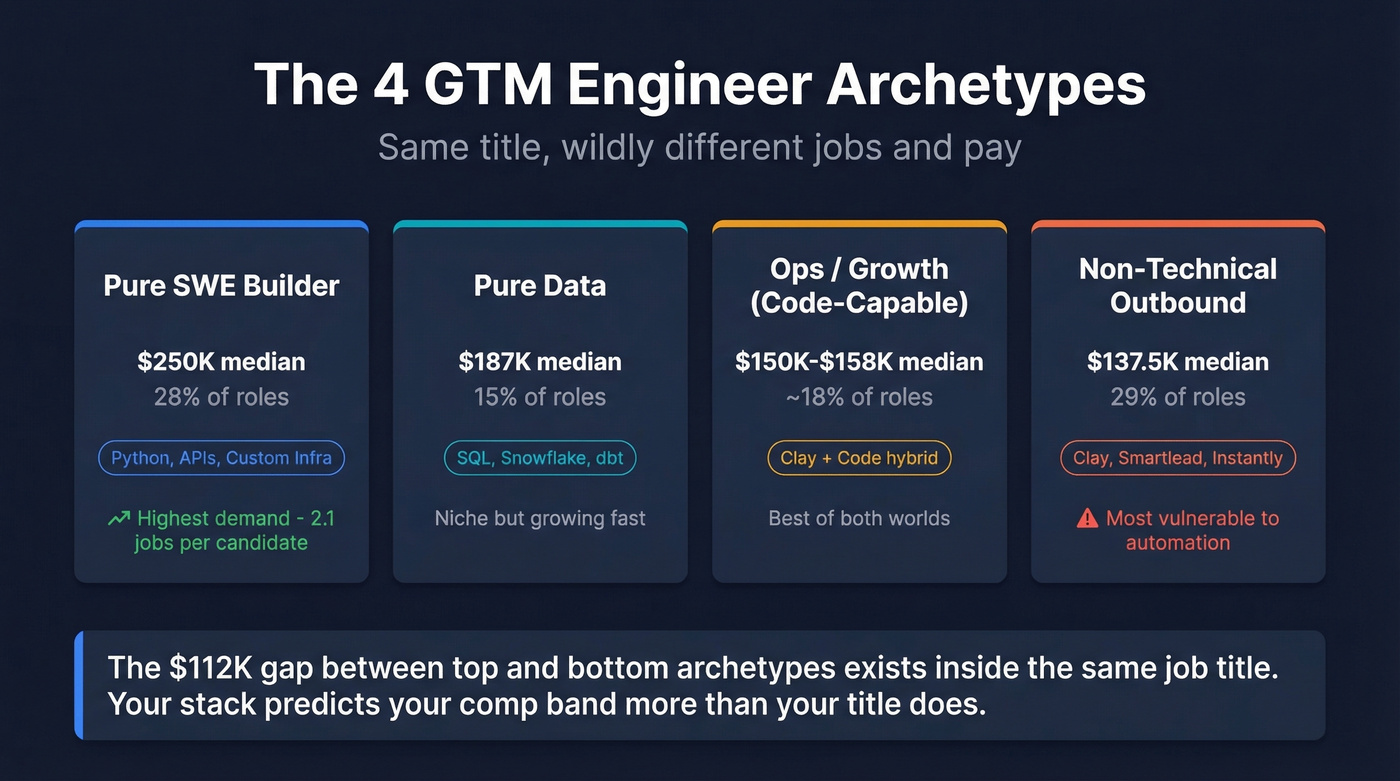
An analysis of 288 unique job postings across 256 companies - plus interviews with 22 hiring teams - identifies four archetypes covering 90% of roles:
| Archetype | % of Roles | Median Salary | P25-P75 Range | Typical Stack |
|---|---|---|---|---|
| Pure SWE Builder | 28% | $250,000 | $188K-$290K | Python, APIs, custom infra |
| Pure Data | 15% | $186,950 | - | SQL, Snowflake, dbt |
| Ops / Growth (code-capable) | ~18% | $150K-$157.5K | - | Mixed (Clay + code) |
| Non-Technical (Outbound) | 29% | $137,500 | - | Clay, Smartlead, Instantly |
That's a $112K median gap between the top and bottom archetypes - inside the same job title. The stack you use predicts your comp band more than your title does. HubSpot+Clay roles pay $108.5K on average. Python-based roles pay $210K. And 41% of companies now benchmark compensation against engineering pay bands, not sales or ops.
One more data point worth noting: roles that mention Clay in the job description pay $26K less than those that don't. Clay isn't the ceiling - it's the floor. Less than half of job descriptions even mention it. The role is bigger than any single tool.
What They Actually Build
The most common build is an automated outbound system. Here's what that looks like end to end.
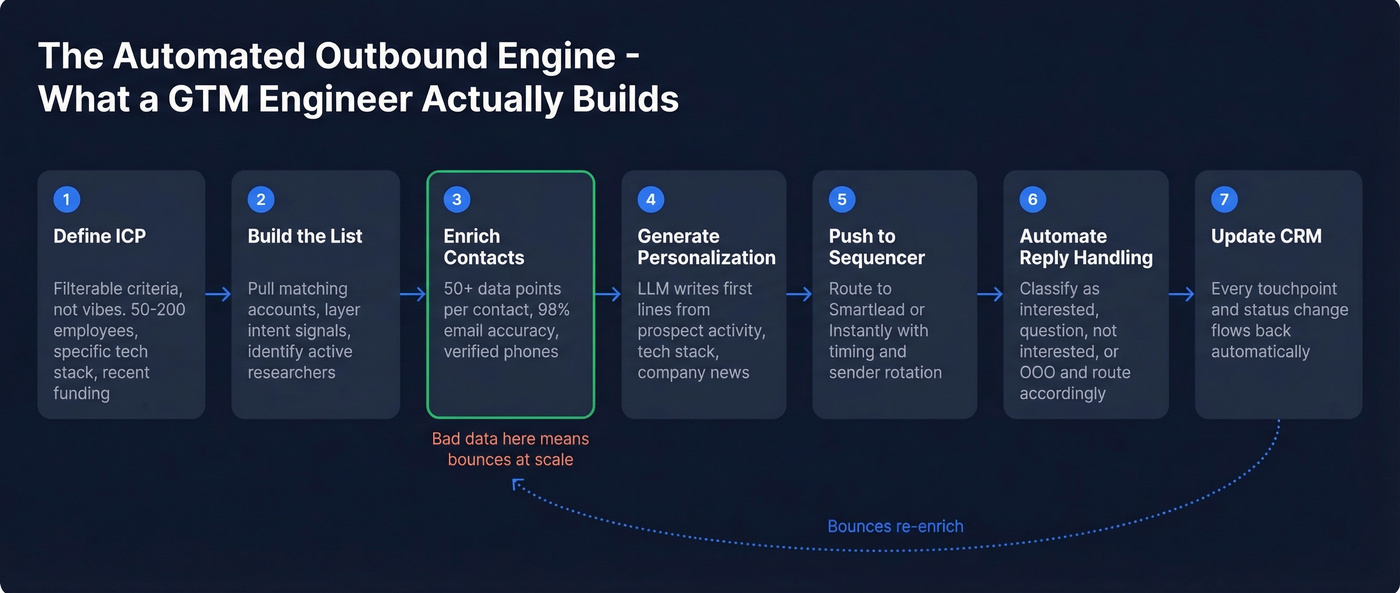
Step 1: Define the ICP. Not "Series B SaaS companies" - something filterable. Companies with 50-200 employees, using Salesforce and Outreach, that raised a round in the last 12 months, with a VP of Sales who's been in the role less than a year.
Step 2: Build the list. Pull accounts matching those criteria from your data platform. Layer in intent signals - who's actively researching your category?
Step 3: Enrich contacts. This is where data quality makes or breaks everything. Enrich your list with verified contact data - Prospeo returns 50+ data points per contact with a 98% email accuracy rate via API, giving you verified emails and direct dials that actually connect. Automated workflows amplify bad data at scale. One wrong email pattern enriched across 5,000 contacts means 5,000 bounces, not 5.
Step 4: Generate personalization. Feed enriched profiles into an LLM to write personalized first lines based on the prospect's recent activity, tech stack, or company news.
Step 5: Push to sequencer. Route contacts into Smartlead or Instantly with the right sequence, timing, and sender rotation.
Step 6: Automate reply handling. Classify responses as interested, question, not interested, or OOO, then route them - interested replies to the AE's calendar, objections to a nurture track, bounces back to the data layer for re-enrichment.
Step 7: Update the CRM. Every touchpoint, status change, and outcome flows back to Salesforce or HubSpot automatically.
That's one workflow. The best practitioners build far beyond outbound: churn prevention alerts triggered by product usage drops, automated post-event follow-up sequences, personalized pitch decks generated from CRM data, and onboarding workflows that adapt based on customer segment.
GTM Engineer vs RevOps vs Sales Engineer
These three roles get confused constantly.
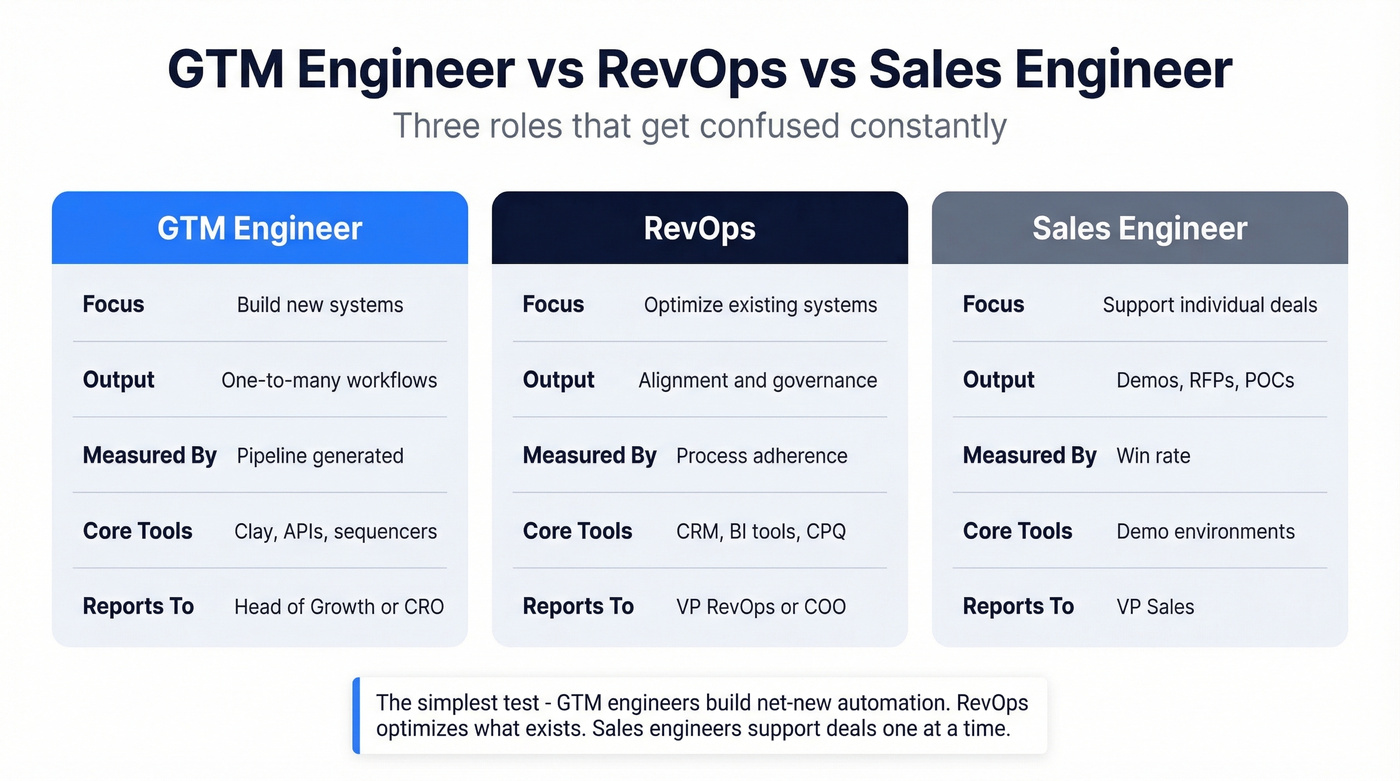
| Dimension | GTM Engineer | RevOps | Sales Engineer |
|---|---|---|---|
| Focus | Build new systems | Optimize existing ones | Support deals |
| Output | One-to-many workflows | Alignment + governance | Demos, RFPs, POCs |
| Measured by | Pipeline generated | Process adherence | Win rate |
| Tools | Clay, APIs, sequencers | CRM, BI tools, CPQ | Demo environments |
| Reports to | Head of Growth / CRO | VP RevOps / COO | VP Sales |
The simplest distinction: go-to-market engineers build net-new automation. RevOps optimizes existing systems. Sales engineers support individual deals one at a time. The GTM engineering role sits closer to product and data teams than either of the other two.

Step 3 is where most GTM engineers hit a wall. Bad data at scale means bounces at scale. Prospeo's API returns 50+ data points per contact at a 92% match rate with 98% email accuracy - the enrichment layer your automated outbound system actually needs.
Stop debugging your pipeline. Start with data that works.
"Is This Just Rebranded RevOps?"
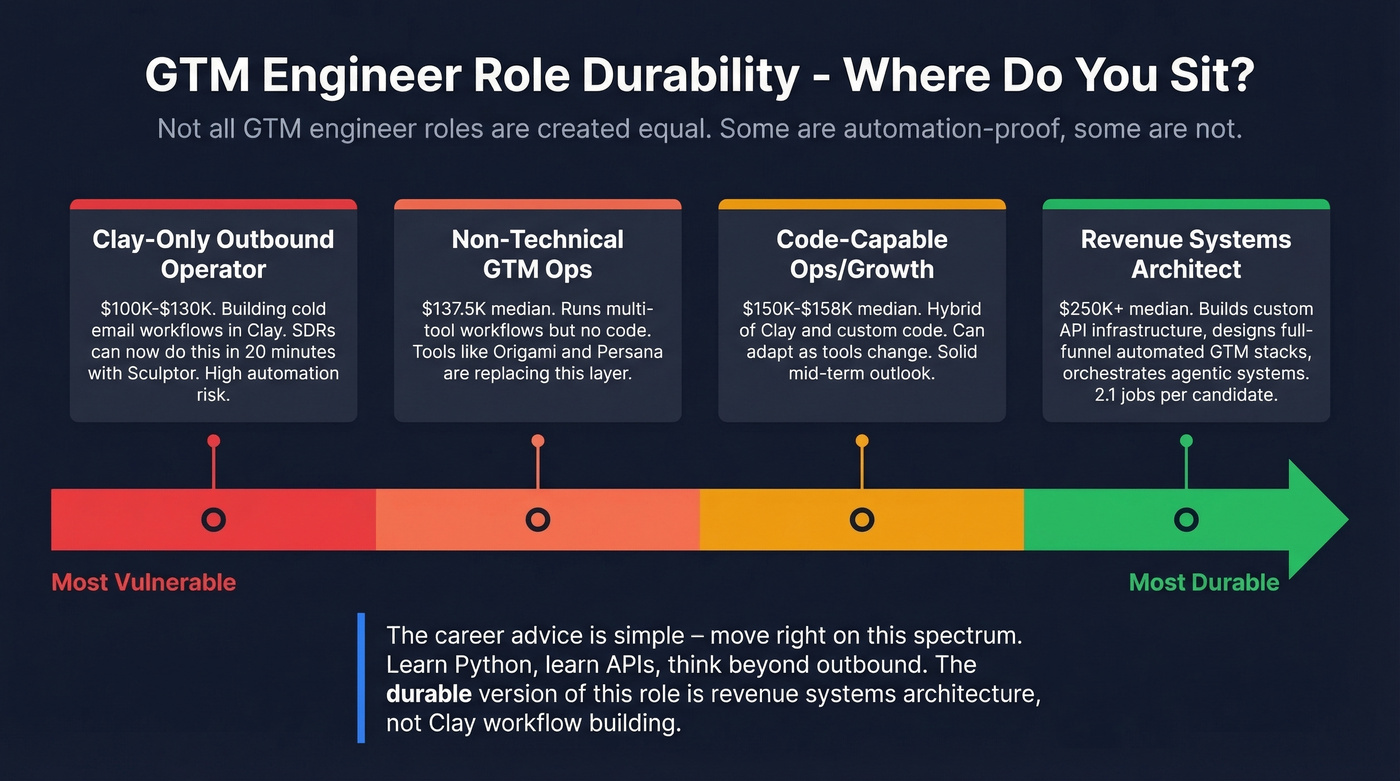
Let's address the skeptic's case head-on. A popular r/SaaS thread argues the role went from niche to "every startup needs one" to "beginning of the end" in roughly 18 months. The poster's logic: Clay's Sculptor feature made workflow-building easy enough that an SDR with zero experience could build a functional workflow in 20 minutes. Tools like Origami, Persana, and Bitscale skip the workflow-building step entirely - describe your ICP in natural language, get enriched lists out.
There's a broader version of this critique too. Give a role a new acronym, sprinkle in AI, and suddenly it feels scarce. There's real irony in people implementing automation who may become casualties of the very automation they're building.
Here's where the data pushes back. The four archetypes aren't interchangeable - a pure SWE builder writing custom API infrastructure has almost nothing in common with someone dragging tiles in Clay. Job growth hit 205% year-over-year, and for technical candidates, there are 2.1 open jobs per qualified person. That's not hype. That's a supply-demand imbalance.
But we'll concede this: the outbound-only archetype is vulnerable. The consensus on Reddit is that Series A-C companies were paying $100K-$130K for Clay workflow builders - a far cry from the $250K that Python-fluent systems architects command. If 70% of your job is building Clay workflows for cold email, automation is coming for you. Skip this archetype if you're planning a long-term career.
The durable version of this role looks more like revenue systems architecture - designing the entire automated GTM stack, not just the outbound piece. The title emerged in 2023, evolved toward AI-native workflows by 2025, and is now shifting toward orchestrating agentic systems across the full funnel.
Salary Benchmarks in 2026
Three sources, three different numbers. Here's how they reconcile.
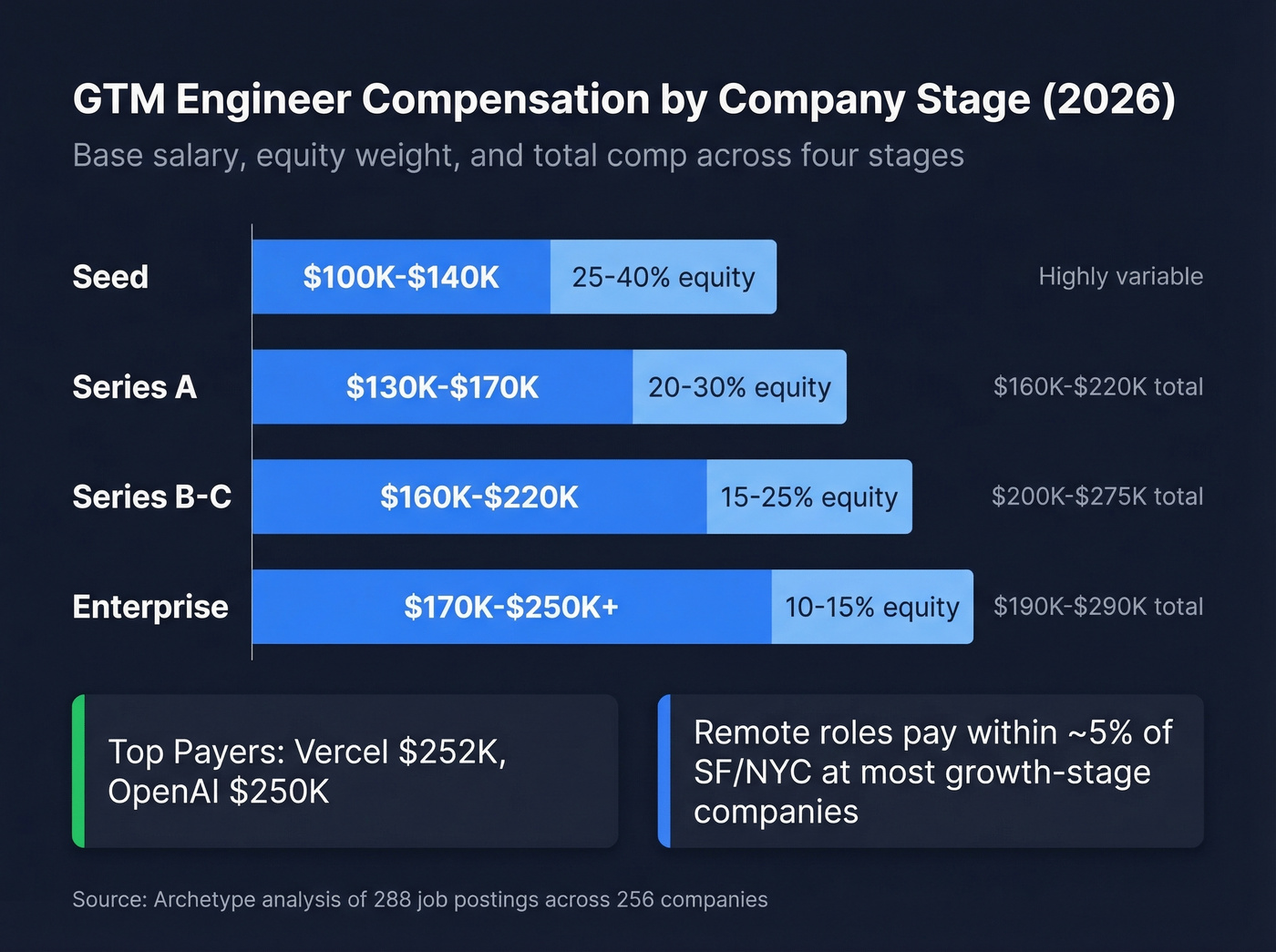
SyncGTM analyzed 1,000+ job postings and found a median of $127,500/year. Glassdoor's 22-salary sample puts median total pay at $184,001 with a range of $138K-$253K. The archetype analysis shows medians from $137,500 to $250,000 depending on role type.
The spread exists because SyncGTM's data skews toward posted base salaries, which capture the non-technical archetype disproportionately. Glassdoor includes total comp - base, bonus, and equity. The archetype data segments by role type, which reveals the real story: there isn't one salary. There are four.
| Stage | Base Salary | Equity % | Total Comp Range |
|---|---|---|---|
| Seed | $100K-$140K | 25-40% | Highly variable |
| Series A | $130K-$170K | 20-30% | $160K-$220K |
| Series B-C | $160K-$220K | 15-25% | $200K-$275K |
| Enterprise | $170K-$250K+ | 10-15% | $190K-$290K |
Top payers include Vercel at $252K and OpenAI at $250K. Remote roles pay within ~5% of SF/NYC at most growth-stage companies - location-based pay compression is real in this market.
The archetype matters more than the title. A non-technical operator at a seed-stage startup earns around $100K. A Python-fluent systems builder at a Series C company clears $250K+. Same title, completely different jobs.
The Core Tech Stack
The average practitioner works across 8-12 specialized tools, with a total cost of ownership running $5K-$15K/month. Meanwhile, 32% of sales reps still spend over an hour daily on manual data entry. The go-to-market engineer exists to kill that hour.
The stack breaks into five layers:
CRM: Salesforce or HubSpot as the system of record, extended with custom objects and workflow automation. $25-$300/user/month.
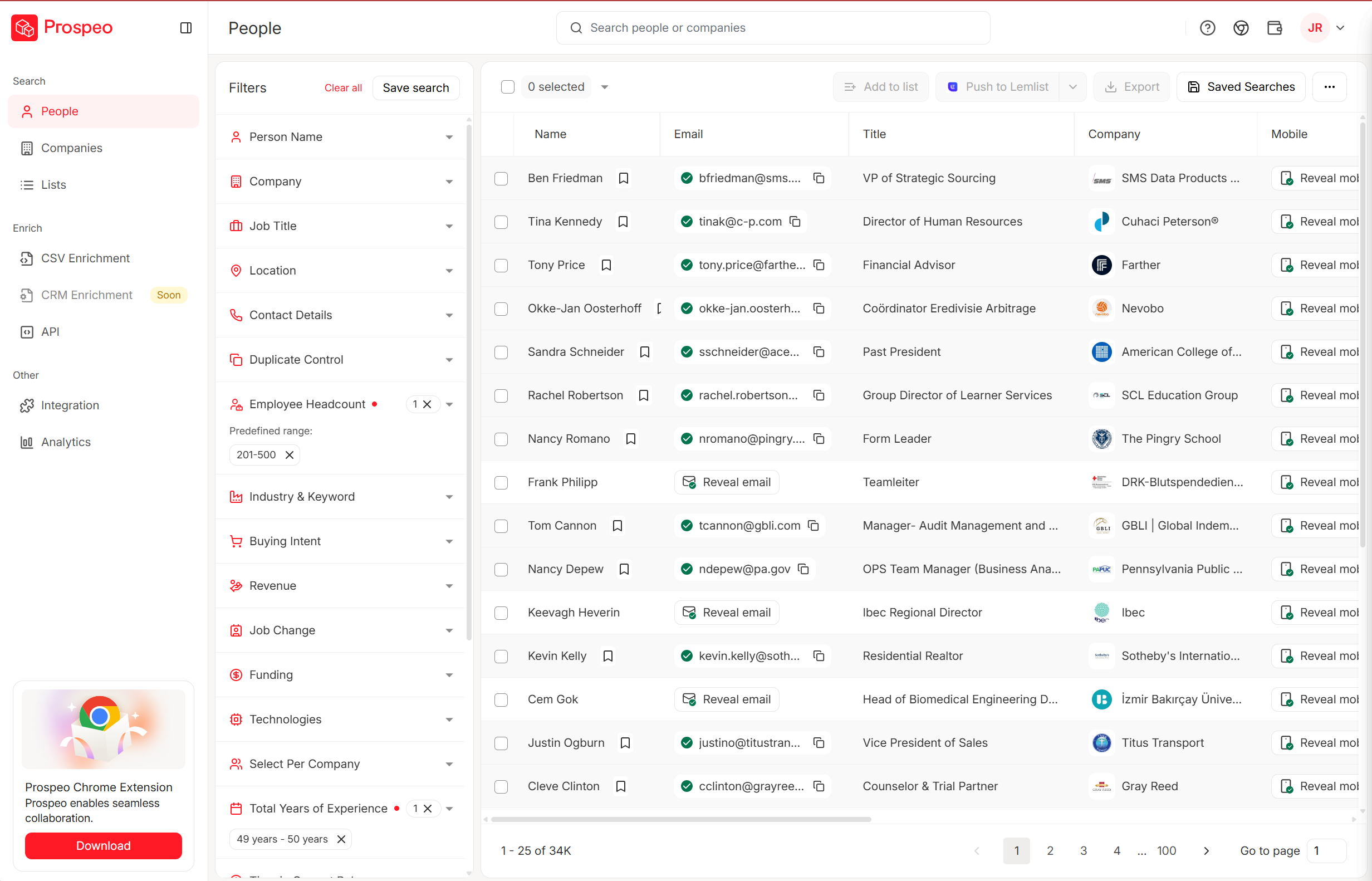
Enrichment: This is the foundation, and it's where we've seen the most variance in quality across teams. Automated workflows amplify bad data at scale - one wrong email pattern enriched across 5,000 contacts means 5,000 bounces. Prospeo delivers 98% email accuracy and 125M+ verified mobile numbers on a 7-day refresh cycle, with native integrations into Clay, Smartlead, Instantly, and HubSpot. (If you're comparing vendors, start with this breakdown of data enrichment services.)
Engagement: Smartlead, Instantly, or Outreach for sequencing. $30-$150/user/month.
Automation and orchestration: Zapier, Make, or n8n for connecting everything. Clay for waterfall enrichment and workflow logic. Automation tools run $20-$200/month; Clay runs on credits, typically $150-$500/month.
Intelligence: Gong for conversation analytics, 6sense or Bombora for intent signals. $100-$200/user/month.
| Layer | Example Tools | Typical Cost |
|---|---|---|
| CRM | Salesforce, HubSpot | $25-$300/user/mo |
| Enrichment | Prospeo, Clay, Apollo, ZoomInfo | ~$0.01/lead to $15K+/yr |
| Engagement | Smartlead, Instantly | $30-$150/user/mo |
| Automation | Zapier, Make, n8n | $20-$200/mo |
| Intelligence | Gong, 6sense | $100-$200/user/mo |
Apollo offers a free tier with paid plans starting at $49/month. ZoomInfo starts around $15K/year for teams. The cost spectrum is enormous, and the best practitioners pick the right tool for each layer rather than building everything inside a single platform.
Whether you're the $250K Pure SWE Builder or the ops-capable hybrid, your workflows are only as good as your contact data. Prospeo refreshes every 7 days, verifies emails in 5 steps, and costs roughly $0.01 per lead - 90% less than ZoomInfo.
Build revenue systems on data that doesn't decay in a week.
How to Become a GTM Engineer
Four transitions are most common. Understanding the role's responsibilities before you make the leap helps you identify which archetype fits your background.
SDR to GTM Engineer
We watched an SDR at a Series B company automate her own prospecting workflow over a weekend - Clay for enrichment, Zapier to push contacts into Smartlead, a webhook to update HubSpot on replies. Her manager saw the pipeline numbers spike and asked what changed. Three months later she had a new title and a $40K raise. That's the fastest path in: build something that works, then point at the results.
The formal gaps to close are CRM administration with custom objects and workflow automation, automation tooling like Zapier, Make, and Clay, and basic API concepts. Salesforce Trailhead and HubSpot Academy are free starting points.
RevOps to GTM Engineer
You already know the systems, data flows, CRM architecture, and process design. The transition is less about new tools and more about a measurement shift - from process adherence to pipeline generated.
Skills to acquire: API fluency (reading docs, making calls, handling auth), AI orchestration (prompt engineering, LLM integration), outbound domain knowledge (deliverability, sender rotation, reply classification), and comfort with ambiguity. There's no established playbook for this role yet, which is part of what makes it interesting.
Software Engineer to Go-to-Market Engineer
Day 1: you can build anything technically. You have no idea why a 2% improvement in email deliverability matters more than an elegant API integration.
Day 90: you've sat in on 20 sales calls, shadowed an SDR for a week, and built an automated outbound system that generated 150 qualified leads. You now understand that the best code is the code that creates pipeline, not the code that's most elegant. Practitioners like Pascal Unger have published GTM engineering best practices that bridge the gap between engineering craft and commercial impact - worth reading before you make the jump.
Growth Marketer to GTM Engineer
You understand campaigns, attribution, and conversion. The shift is from campaign-level thinking to systems-level thinking. Start by connecting your marketing automation platform to your CRM via Zapier, then layer in enrichment and outbound sequencing. Add tool integration, data operations, and workflow automation to your skill set.
Real talk: most growth marketers underestimate how much of the work is plumbing - connecting tools that were never designed to talk to each other. It's less glamorous than running campaigns, but the leverage is enormous.
Most practitioners report 3-6 months of focused skill-building on top of existing experience. The fastest ramp comes from building something real - pick a manual process at your current company and automate it end to end.
When to Hire One
Pre-$1M ARR: you don't need a go-to-market engineer. You need a founder who can sell. Until you have a repeatable sales motion, automating it is premature.
The signals that you're ready: manual processes are breaking under volume, your SDRs spend more time on data hygiene than actual selling, you've got 8+ tools that don't talk to each other, and you've hired your third or fourth rep with an onboarding process that involves a Google Doc and a prayer. A single GTM engineer creates more leverage than two additional SDRs at this stage - their core responsibilities include building the enrichment pipeline, connecting the CRM to outbound sequencers, and standing up reporting dashboards that track pipeline from first touch to closed-won. (If you're mapping the rest of the stack, start with a shortlist of SDR tools.)
The signals you're not ready: fewer than two reps, no consistent close rate, no clear ICP. Automating a broken process just breaks it faster.
FAQ
What is a GTM engineer?
A GTM engineer is a hybrid role combining engineering skills with go-to-market strategy to build automated revenue systems. They design workflows, integrations, and data pipelines that generate pipeline at scale - spanning from no-code operators using Clay to full-stack engineers writing custom infrastructure.
Do they need to know how to code?
Not always - 29% of roles rely on no-code tools like Clay and Zapier. But Python or SQL fluency pays $70K-$110K more on average. Even basic scripting significantly expands your options and earning potential.
Is this just a Clay marketing term?
Clay coined the title in 2023, but companies like Ramp, Stripe, and Figma had people doing the work under different names for years. Less than half of current job descriptions mention Clay. The role is broader than any single tool.
What's a cost-effective enrichment tool for this role?
Prospeo at ~$0.01/email with 98% accuracy and a free 75-credit tier is the most budget-friendly option with enterprise-grade data. Apollo's free tier works for light use, while ZoomInfo starts at $15K+/year for teams needing broader intent signals.
How long does the career transition take?
Most practitioners report 3-6 months of focused skill-building on top of existing sales or ops experience. SDRs and RevOps professionals ramp fastest because they already understand the revenue context. Building one real end-to-end workflow accelerates the timeline significantly.