

How to Increase Sales Velocity: A Data-Backed Playbook
Pipeline is up 30% but closed revenue is flat. You've seen this movie before - the QBR where everyone points at different dashboards and nobody can explain why more pipeline didn't turn into more money. You already know the sales velocity formula. The real question is how to increase sales velocity when the math says you should be winning.
The Short Answer
Most teams try to improve all four velocity levers at once and improve none. The highest-leverage move for most B2B orgs is compressing cycle time - deals closed within 50 days win at 47%, while deals that drag past that mark convert at roughly 20% or lower. Start by cleaning your pipeline, then pick the one lever where you're furthest below benchmark.
The Sales Velocity Formula
(Opportunities x Avg Deal Size x Win Rate) / Sales Cycle Length = $/day
Here's a benchmark profile for B2B SaaS based on Optifai's dataset: 60 qualified opportunities x $50K average deal x 25% win rate / 45 days = $8,219/day.
One critical word in that equation: qualified. Only count fully qualified opportunities. Including raw leads inflates your opportunity count and drags down your measured win rate, which distorts velocity entirely. A common way to think about sales velocity is "revenue per unit of time" - like miles per hour for your pipeline. If you're measuring it with junk data, the speedometer is lying.
What Good Looks Like
The Digital Bloom benchmark compilation and Optifai's dataset (N=939, Q1-Q3 2025) give us useful ranges:
| Metric | Benchmark Range |
|---|---|
| Median cycle length | 84 days |
| Win rate | 20-30% |
| Median deal size | $26,265 |
| Pipeline velocity | $743-$2,456/day |
Cycle length varies dramatically by deal size. Focus Digital's ACV correlation data makes this clear:
| ACV | Avg Cycle |
|---|---|
| <$1K | 25 days |
| $10K-$50K | 75 days |
| $50K-$100K | 120 days |
| >$500K | 270 days |
Find your segment. Compare. Identify the weakest lever. That's where you start.

Your sales velocity formula is only as fast as your data. Every bounced email adds dead time to your cycle length. Prospeo delivers 98% email accuracy on a 7-day refresh cycle - so reps spend time selling, not chasing bad contacts. Snyk's 50 AEs cut bounce rates from 35% to under 5% and generated 200+ new opportunities per month.
Stop losing days to dead data. Start compressing your sales cycle today.
Clean Your Pipeline First
If your pipeline is full of stale deals, your velocity number is fiction. Ebsta's analysis of 4.2M opportunities found 44% deal slippage in 2024 - nearly half of forecasted deals missed their close date. A 50% longer qualification stage correlates with a 120% higher chance of slippage. You can't optimize what you can't measure accurately.
Before touching any lever, run this cleanup: flag everything past 2x your average cycle length, disqualify or escalate anything with no activity in 30+ days, and review your stage distribution. If most of your pipeline sits in one stage, something's broken. Make this a weekly habit for reps and biweekly for managers. Any velocity improvement effort starts here - optimize after you clean, not before.
Pick One Lever to Improve
Stop trying to improve all four levers at once. That's a wish list, not a strategy.
Compress Your Sales Cycle
Deals closed within 50 days convert at 47%. After that? Win rates crater. This isn't about rushing buyers - it's about removing the dead time between steps.
The single best tool for this: Mutual Action Plans. A MAP is a co-created buyer/seller plan with milestones, owners on both sides, and target dates from evaluation through go-live. It surfaces risk at week 3, not month 4.
Here's the thing: Gartner's research shows the average B2B buying group includes 6-10 stakeholders, and 74% of those groups show "unhealthy conflict" that stalls decisions. Forrester found 90% of B2B buyers experienced at least one purchase stall in the past year. About 40% of B2B deals end in No Decision - not a loss to a competitor, just paralysis. MAPs force alignment by making every stakeholder's tasks visible.
Anchor your MAP to buyer deadlines - go-live dates, fiscal year-end, internal compliance requirements. Not fake seller urgency. If you only do one thing from this article, implement MAPs on every deal above your median ACV.
Improve Your Win Rate
MEDDPICC is everywhere. It's also failing most teams that adopt it.
The failure mode: managers inspect field completion, not meaning. Reps fill in "Economic Buyer: CFO" and move on. Win rate stays flat. We've seen this pattern across dozens of sales orgs, and the fix isn't a new framework - it's better questions during pipeline reviews:
- "If the champion left tomorrow, would this deal still happen?"
- "What happens if they don't buy anything?"
- "Walk me through how money moves."
- For every answer: "How do you know?"
Require evidence, not guesses. Enforce it in your CRM with validation rules that prevent stage advancement without required fields. Teams using structured qualification close deals 28% faster with 42% higher win rates than those running ad hoc processes.
Generate More Qualified Opportunities
The biggest mistakes teams make when chasing opportunity volume: prioritizing quantity over quality, spray-and-pray messaging, and relying on stale intent data. But there's a more fundamental problem - your opportunity count is only meaningful if those contacts are actually reachable.
Every bounced email is a dead day added to your sales cycle. Every wrong phone number is a rep spinning their wheels instead of selling. If 20%+ of your emails bounce, you're burning cycle time before the first conversation happens. Snyk's 50-person AE team dealt with exactly this - bounce rates of 35-40% - until they switched to Prospeo's 98% accuracy emails with a 7-day data refresh cycle. Bounces dropped to under 5%, and they generated 200+ new opportunities per month.
Increase Average Deal Size
Multi-threading into larger buying groups is the natural play here - and it aligns with the 6-10 stakeholder reality. If you're only talking to one person, you're leaving money on the table and increasing your No Decision risk at the same time.
Let's be honest: if your average contract value sits below $10K, you probably don't need to optimize deal size at all. This lever has the slowest payback of the four. Focus on cycle time and win rate first - they compound faster and don't require rearchitecting your pricing.
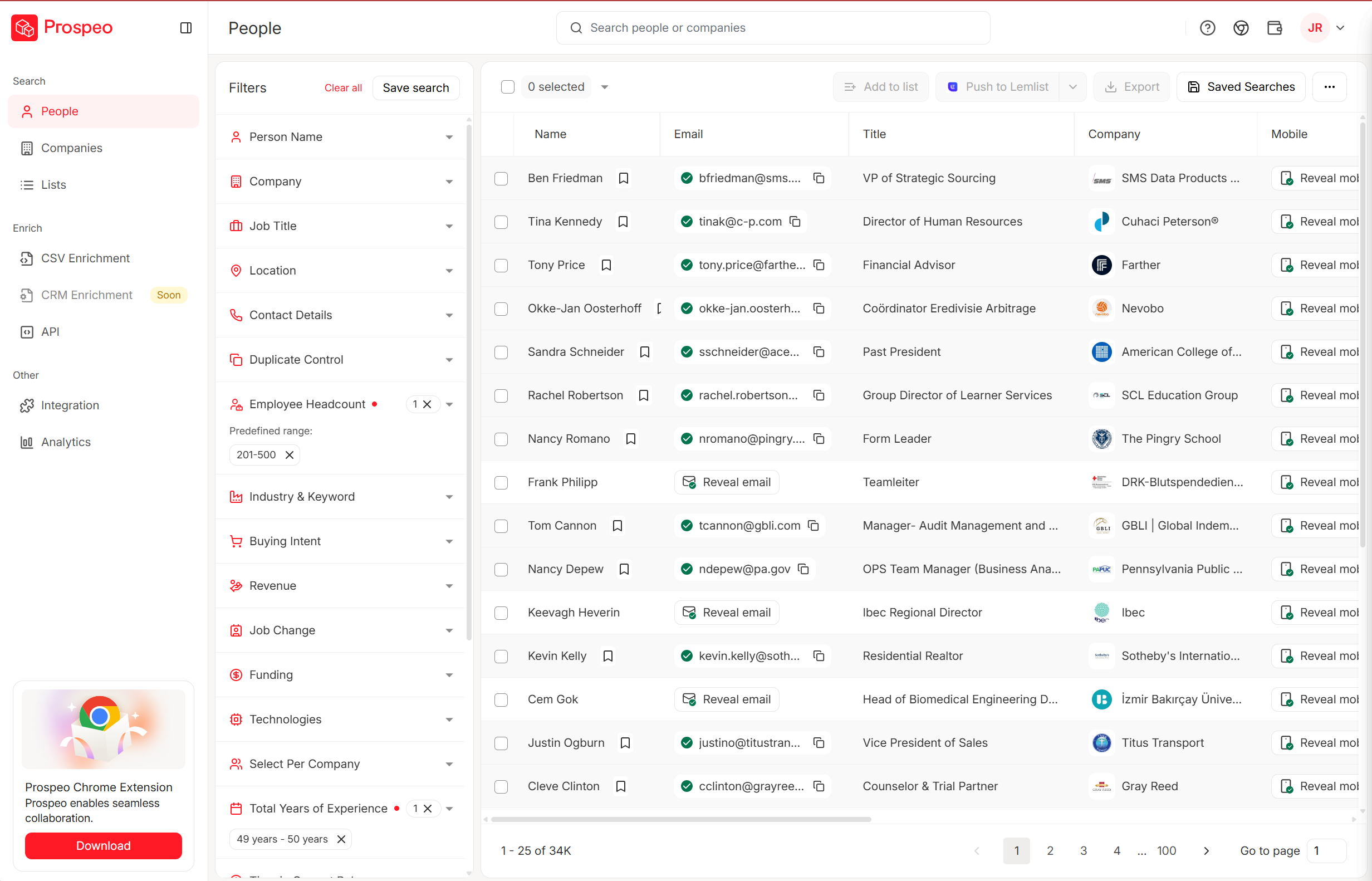
More qualified opportunities with fewer wasted cycles - that's the velocity play. Prospeo's 300M+ profiles with 30+ filters (buyer intent, technographics, job changes, funding) let you build pipeline that actually converts. At $0.01/email, you scale opportunity volume without scaling cost.
Fix the weakest lever in your velocity formula - start with better data.
Stop Doing These Three Things
Chasing vanity MQLs. They inflate your opportunity count and tank your win rate. If marketing is handing over "leads" that never had budget or authority, your velocity formula is lying to you.
Letting deals sit too long. Without executive intervention or disqualification, stale deals become pipeline decoration. They make your forecast look healthy while your actual velocity bleeds out. Teams serious about accelerating revenue treat pipeline hygiene as a weekly discipline, not a quarterly exercise.
Using stale contact data. Every bounced email adds days to the cycle. Every wrong number wastes a rep's afternoon. Switching to a provider with a weekly refresh cycle and verified contact data cuts bounces, speeds up first conversations, and compresses cycle time from day one.
FAQ
What's a good sales velocity benchmark?
For B2B SaaS, Optifai's benchmark puts it at $8,219/day based on 939 companies. Broader pipeline velocity ranges from $743-$2,456/day depending on industry and deal size. Segment by ACV and company size for a meaningful comparison - a $5K ACV startup shouldn't benchmark against enterprise firms running $200K deals.
Which velocity lever should I fix first?
Cycle length or win rate - not lead volume. Cutting your cycle from 45 to 35 days yields a 29% velocity increase because it's the denominator. Find where you're furthest below benchmark and start there. Adding more unqualified opportunities usually makes things worse.
How do I speed up pipeline without adding headcount?
Clean stale deals from the pipeline, implement Mutual Action Plans to compress cycle time, and switch to verified contact data so reps sell instead of chasing bounces. These three moves attack the denominator and numerator simultaneously - no new hires required.
How does data quality affect sales velocity?
Bounced emails and wrong numbers waste rep time and inflate cycle length. Teams using verified data with weekly refresh cycles get more live conversations per day, directly compressing the sales cycle and lifting pipeline velocity. Snyk cut bounces from 35-40% to under 5% and saw AE-sourced pipeline jump 180% - that's the kind of velocity impact clean data creates.