

"I Need to Think About It" - How to Handle This Sales Objection
What to Say When a Prospect Needs to "Think About It"
It's Thursday afternoon. You just ran a 45-minute demo that felt great - the prospect was nodding, asking good questions, even laughing at your jokes. Then, right as you move toward next steps: "This looks great, but I need to think about it."
That sentence isn't a pause. It's a trapdoor. Deals without a scheduled next step die 85% of the time, and every rep who's been in the game longer than six months has a graveyard of "great conversations" that evaporated the moment those words hit the air.
Here's the thing: the phrase itself doesn't kill deals. How you respond to it does.
4 Hidden Meanings Behind the Objection
"I need to think about it" isn't one objection. It's four objections wearing a trench coat.
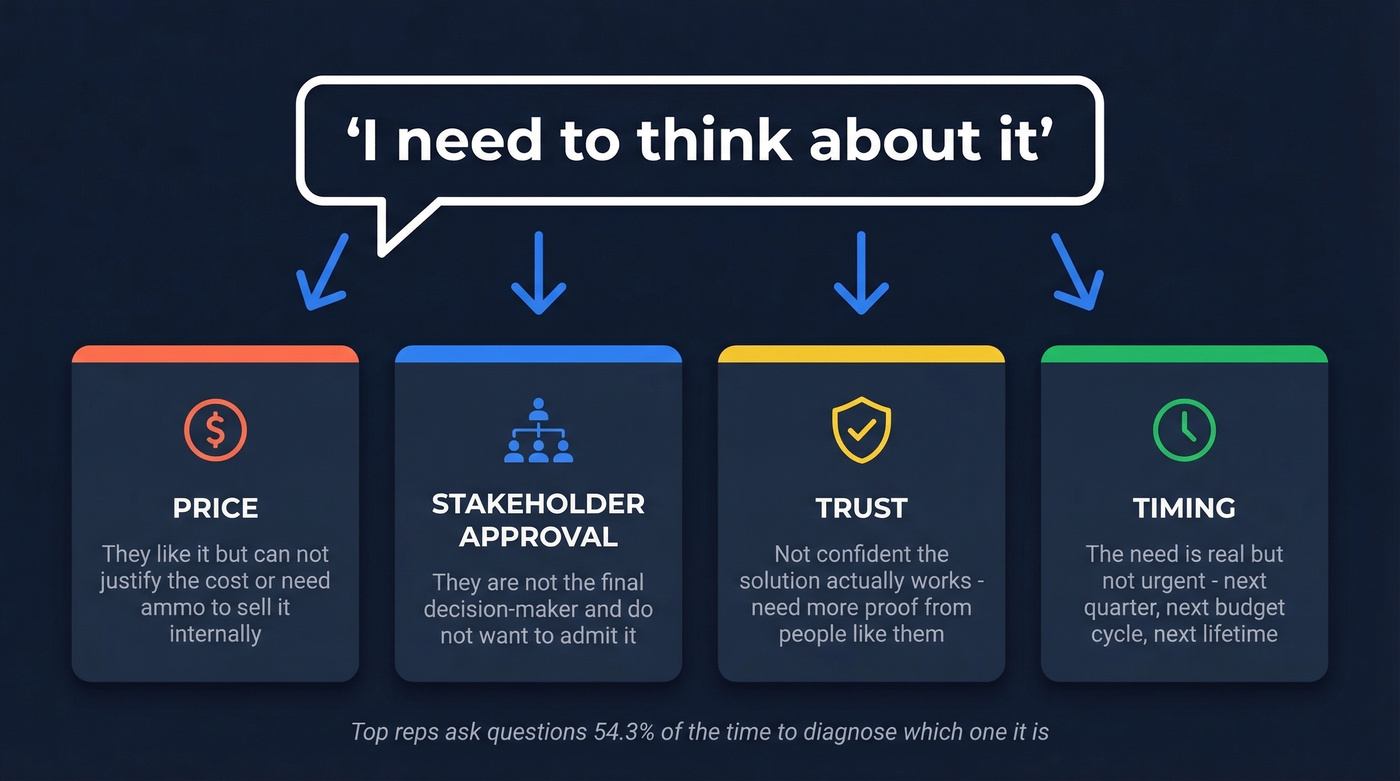
Price. They like it but can't justify the cost - or haven't been given enough ammunition to sell it internally. This is the most common one hiding behind the phrase, especially in mid-market deals where budgets get scrutinized by someone who wasn't on the call.
Stakeholder approval. They need a boss, a procurement team, or a board to sign off. They're not the final decision-maker, and they don't want to admit it.
Trust. They're not confident the solution actually works. Your demo was slick, but they haven't seen enough proof from people like them.
Timing. The need is real but not urgent. They'll get to it next quarter, next budget cycle, next lifetime.
Gong's sales conversation data shows top reps respond to objections with questions 54.3% of the time, versus 31% for average reps. The difference is simple: top performers diagnose before they prescribe.
7 Response Scripts That Actually Work
Top reps pause five times longer than average reps after hearing an objection. Let the silence breathe. Then use one of these.
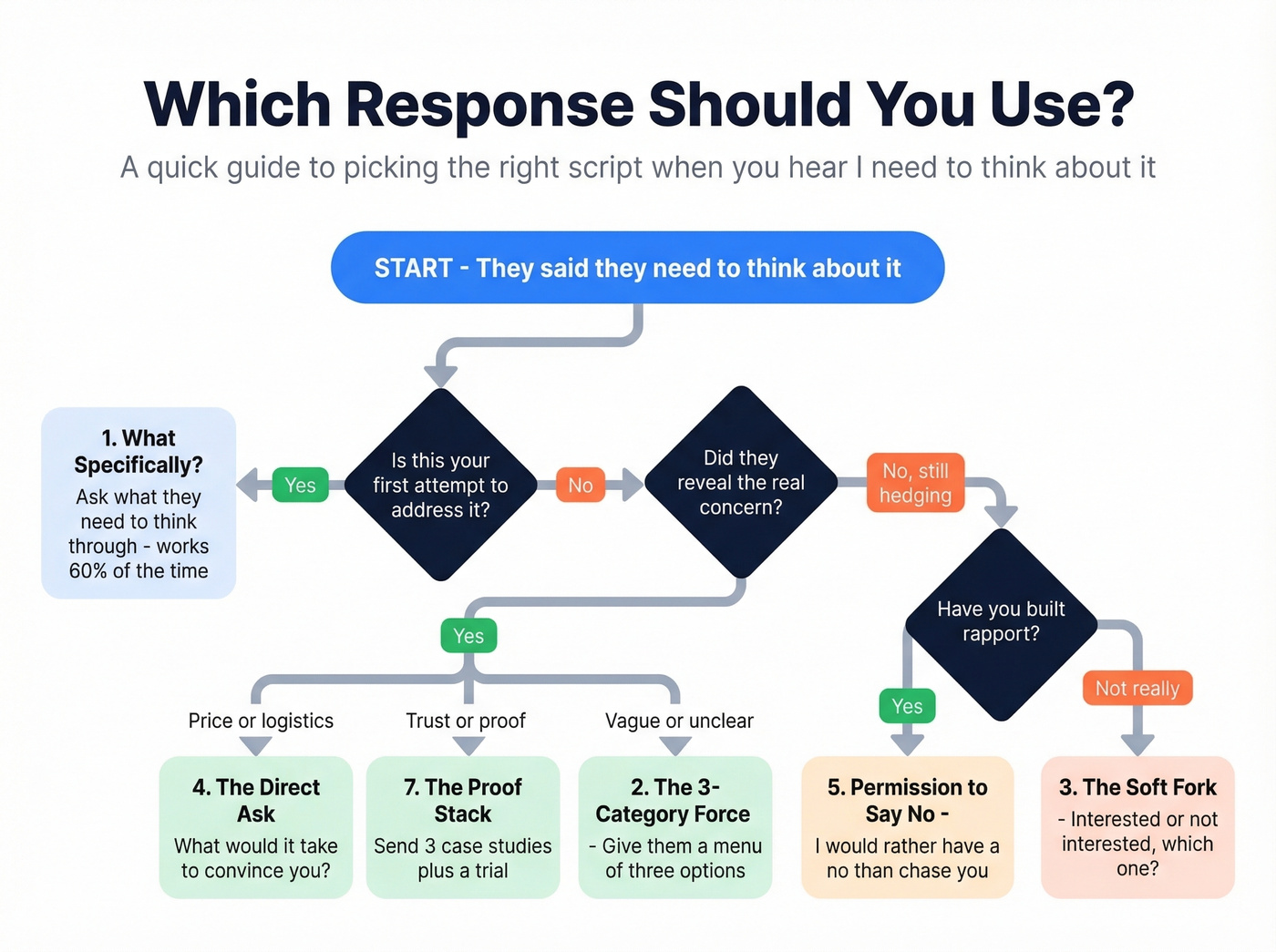
1. "What Specifically?"
The single best first response. An insurance agent on Reddit changed their outcomes with one sentence:
"I totally understand - can I ask what specifically you'd need to think through? Sometimes I can answer it right now and save you some time."
We've found this works best as a first response - save the heavier frameworks for when it doesn't land. About 60% of the time, the prospect reveals the real objection, usually price or needing approval. It's disarming because it doesn't challenge them. It just asks for clarity.
2. The 3-Category Force
From SalesGravy's objection playbook, and it's beautifully direct:
"Totally fair. Usually when someone says that, it means one of three things: it's not a deal and you want off the phone, you like it but something's blocking you, or you like it and just need to rearrange something. Be honest with me - which one is it?"
People almost always pick option two or three, which gives you something concrete to solve. This is one of the most reliable objection handling techniques because it forces specificity without feeling aggressive - you're giving them a menu, not an interrogation.
3. The Soft Fork
A Victor Antonio-style 2-reason framework for when you want a gentler touch:
"Typically when someone says that, it's for one of two reasons - they're either not interested, or they're interested but not sure about something. Which is it for you?"
Most prospects won't say "I'm not interested" directly, so they pick the second option and now you're having a real conversation.
4. The Direct Ask
"What would it take to convince you this is the right move?"
No preamble. No framework. Just a question. Don't lead with this on a first call - earn the right to be this direct through rapport and a strong discovery. But when you've got that foundation, this cuts through everything.
5. Permission to Say No
"Look, if this isn't for you, I'd rather have a no right now than chase you for three weeks. Is that where you're leaning?"
When to use it: The prospect has gone quiet, you've asked one clarifying question, and they're still hedging. Giving someone permission to reject you often makes them more willing to share the real concern.
Skip this if you're early in the relationship or the prospect is senior - it can read as presumptuous with someone you haven't built trust with yet.
6. The Brush-Off Pivot
Adapted from D2D sales tactics, this works when the objection is thin - more reflex than real concern:
"Totally get it. While you're thinking, let me show you the part that everyone's been raving about..."
Use sparingly in B2B. If the concern is genuine, this reads as pushy. But for low-stakes objections that feel like muscle memory, it keeps momentum alive.
7. The Proof Stack
When the objection is really about trust, words won't fix it. Evidence will.
End the call by sending three customer testimonials from companies similar to theirs, plus a low-commitment next step - a trial, a pilot, or an introductory offer. Remove the risk and the "thinking" resolves itself. We've seen reps close deals that were dead for two weeks just by sending the right case study to the right person at the right time.

Half of "I need to think about it" objections come from prospects who aren't the real decision-maker. Prospeo's 300M+ profile database with 30+ filters - including department headcount, job title, and org hierarchy - lets you target the actual buyer before you ever book the demo. Skip the gatekeeper entirely.
Stop pitching the wrong person. Start with the decision-maker.
When to Push vs. Back Off
Here's a counterintuitive data point: a widely shared summary of Gong Labs stats notes that deals where prospects say they need to think it over can actually close at slightly higher rates than average.
The phrase doesn't kill deals. What kills deals is how reps respond to it.
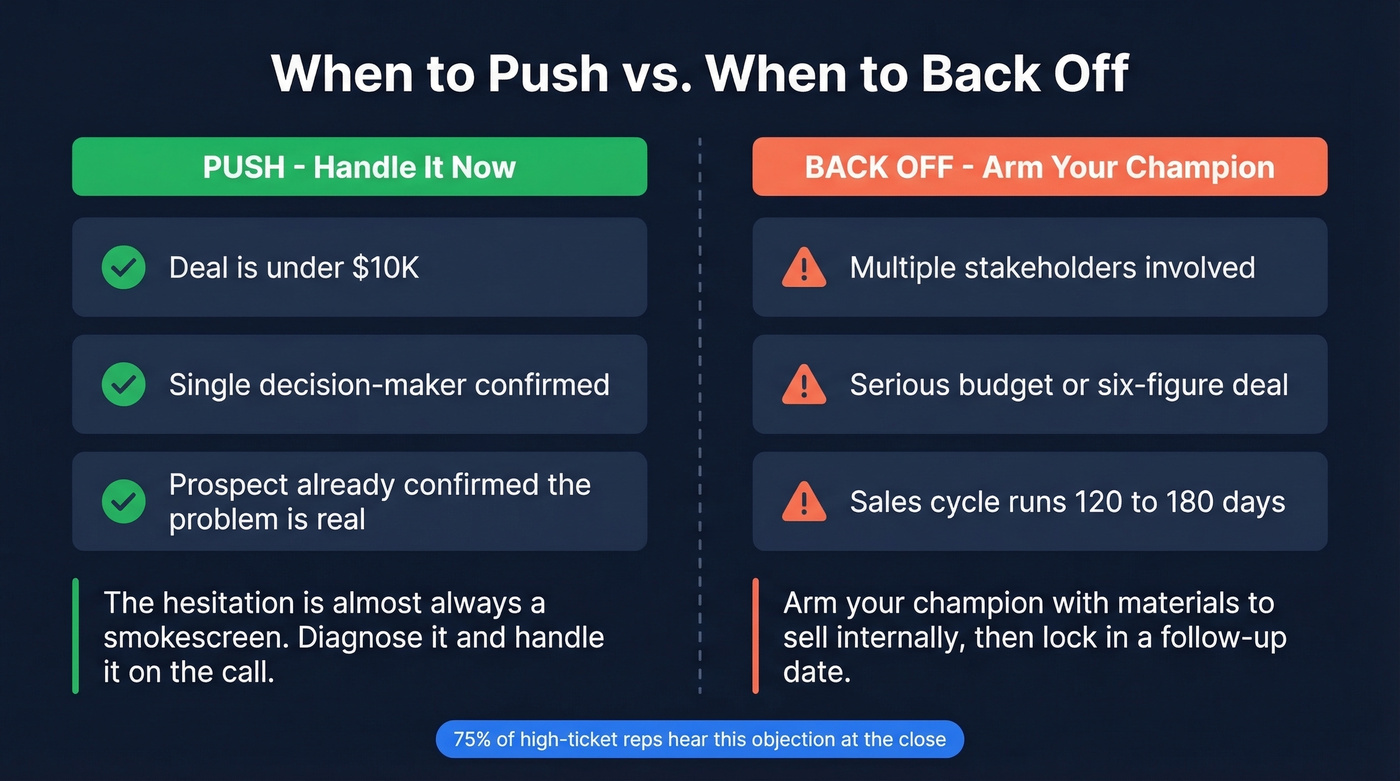
Push when the deal is under $10K, there's a single decision-maker, and the prospect has already confirmed the problem is real. In these situations, the hesitation is almost always a smokescreen. Diagnose it and handle it on the call.
Back off when the deal involves multiple stakeholders and serious budget. Complex enterprise deals run 120-180 days - rushing a six-figure decision because you read a blog post about objection handling is malpractice. 75% of high-ticket reps hear "I need to do my research" or "I need to speak to my spouse" at the close. The move here is to arm your champion with the materials they need to sell internally, then lock in a follow-up date.
The Follow-Up Playbook
Even with perfect objection handling, some prospects will still need time. That's fine - as long as you have a system.
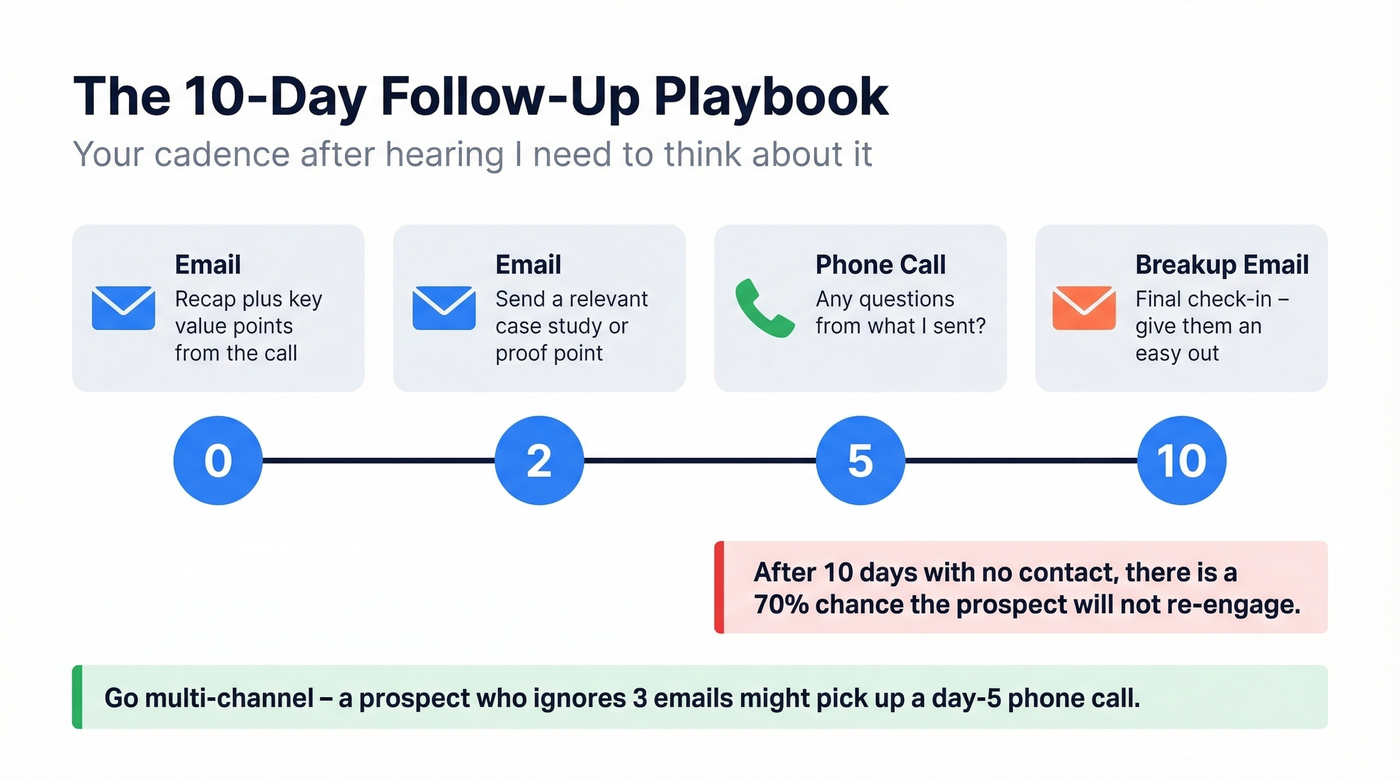
| Touch | Timing | Channel | Content |
|---|---|---|---|
| 1 | Day 0 | Recap + key value points | |
| 2 | Day 2 | Case study or proof point | |
| 3 | Day 5 | Call | "Any questions from what I sent?" |
| 4 | Day 10 | Breakup / final check-in |
If you wait more than 10 days without contact, there's a 70% chance the prospect won't re-engage. Go multi-channel - a prospect who ignores three emails might pick up a phone call on day five. The same approach applies when you hear "I'll let you know" - treat it identically and run the same cadence.
If you want plug-and-play messaging for each touch, use these follow-up templates and adapt them to your deal size.
None of this matters if your contact data is bad. We've seen teams lose winnable deals simply because their follow-up emails bounced and calls rang to a front desk switchboard. Prospeo's 98% email accuracy and verified mobile numbers mean your follow-up actually reaches the person - data refreshes every seven days, so you're not chasing someone who changed jobs two months ago.
If bounces are a recurring issue, it’s worth tightening your email deliverability basics before scaling outreach.
How to Prevent the Objection Entirely
If you're hearing "I need to think about it" constantly, the objection isn't the problem. Your pitch is.
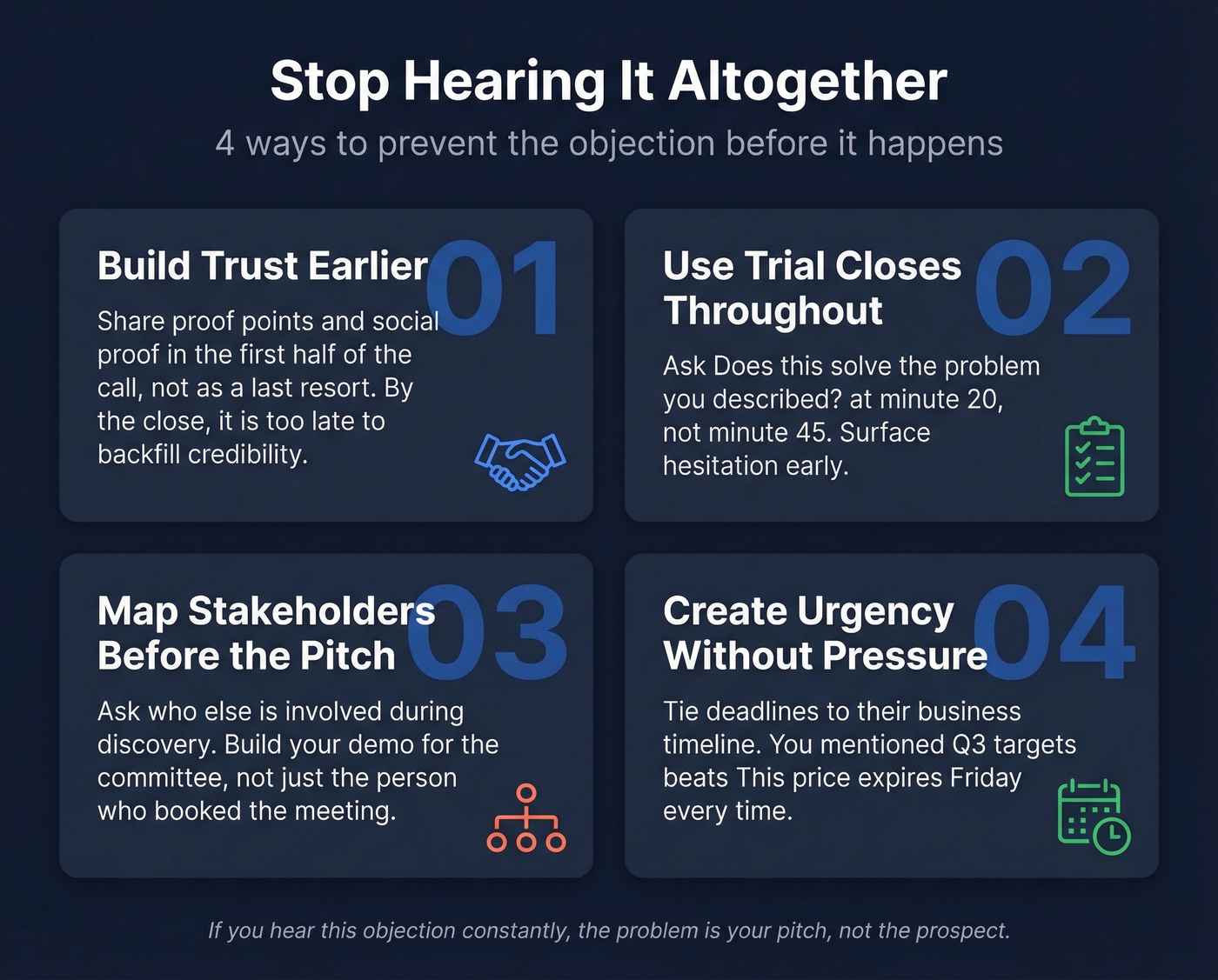
Build trust earlier. Share proof points and social proof in the first half of the call, not as a last resort. The stall often means "I'm not confident enough yet," and by the time you're at the close, it's too late to backfill credibility.
Use trial closes throughout. "Does this solve the problem you described?" and "Can you see your team using this?" surface hesitation before the final ask. If someone's going to balk, you want to know at minute 20, not minute 45.
Map stakeholders before the pitch. Ask who else is involved in the decision during discovery, not at the close. If there's a committee, your demo should be built for the committee - not for the one person who happened to book the meeting.
Create urgency without pressure. A deadline tied to their business timeline beats any artificial discount timer. "You mentioned Q3 targets - if we started onboarding next week, you'd have the team trained before the quarter kicks off" is ten times more effective than "this price expires Friday."
If you’re getting this objection constantly, it may be time to reduce your sales objection rate upstream (positioning, qualification, and next-step control).
Your follow-up cadence is only as good as your contact data. If day-5 phone calls go to voicemail and day-2 emails bounce, that "thinking" prospect is gone forever. Prospeo delivers 98% email accuracy and 125M+ verified mobile numbers with a 30% pickup rate - so your follow-up actually lands.
Dead data kills more deals than bad objection handling ever will.
FAQ
What does "I need to think about it" really mean in sales?
It usually masks one of four objections: price, stakeholder approval, lack of trust, or timing. Ask "what specifically do you need to think through?" to surface the real one - this works roughly 60% of the time.
How should you respond when a prospect says "I'll think about it"?
Ask a clarifying question rather than accepting the stall. Top performers respond to objections with questions 54.3% of the time. Surface the real concern, address it on the spot, and if the prospect genuinely needs time, lock in a follow-up date before ending the call.
How long should you wait before following up?
Send a value-based follow-up within 48 hours. If you wait more than 10 days, there's a 70% chance the prospect won't re-engage. Always leave with a scheduled next step on the calendar.
Does hearing this objection mean the deal is dead?
No. These deals can still close at healthy rates - sometimes higher than average. The key is diagnosing the real concern and securing a concrete next step before hanging up.