

The 2026 Playbook for Inbound Lead Generation for SaaS Companies
You're publishing three blog posts a week, running $8K/month in Google Ads, and your MQL count looks healthy on the dashboard. Then you check the pipeline - and half those leads never replied to a single email. Inbound lead generation for SaaS companies isn't broken because teams aren't generating enough leads. It's broken because the system between "lead captured" and "deal created" has gaps nobody's measuring.
Here's the shift: inbound in 2026 isn't about awareness. It's about readiness. Buyers self-qualify before they ever fill out your form - they've read the comparison pages, scanned Reddit threads, asked ChatGPT for alternatives. By the time they raise their hand, they're evaluating you, not discovering you. AI Overviews have cut organic CTR by 61% on queries where they appear, and Google Ads CPCs for non-branded B2B search jumped 29% YoY to $5.34. BOLT ON Technology restructured their inbound engine around this reality and saw a 272% increase in demos booked with 411% ROI on marketing-impacted revenue. That's what a system-level approach produces.
Quick version: SEO is the highest-converting inbound channel for SaaS at 2.10% visitor-to-lead, with the strongest mid-funnel quality. Generic educational content is losing value to AI Overviews - shift to comparison pages, original research, and product-led content. And your inbound engine is only as good as your data. If reps can't reach leads with verified contact info, nothing upstream matters.
Inbound Funnel Benchmarks by Channel
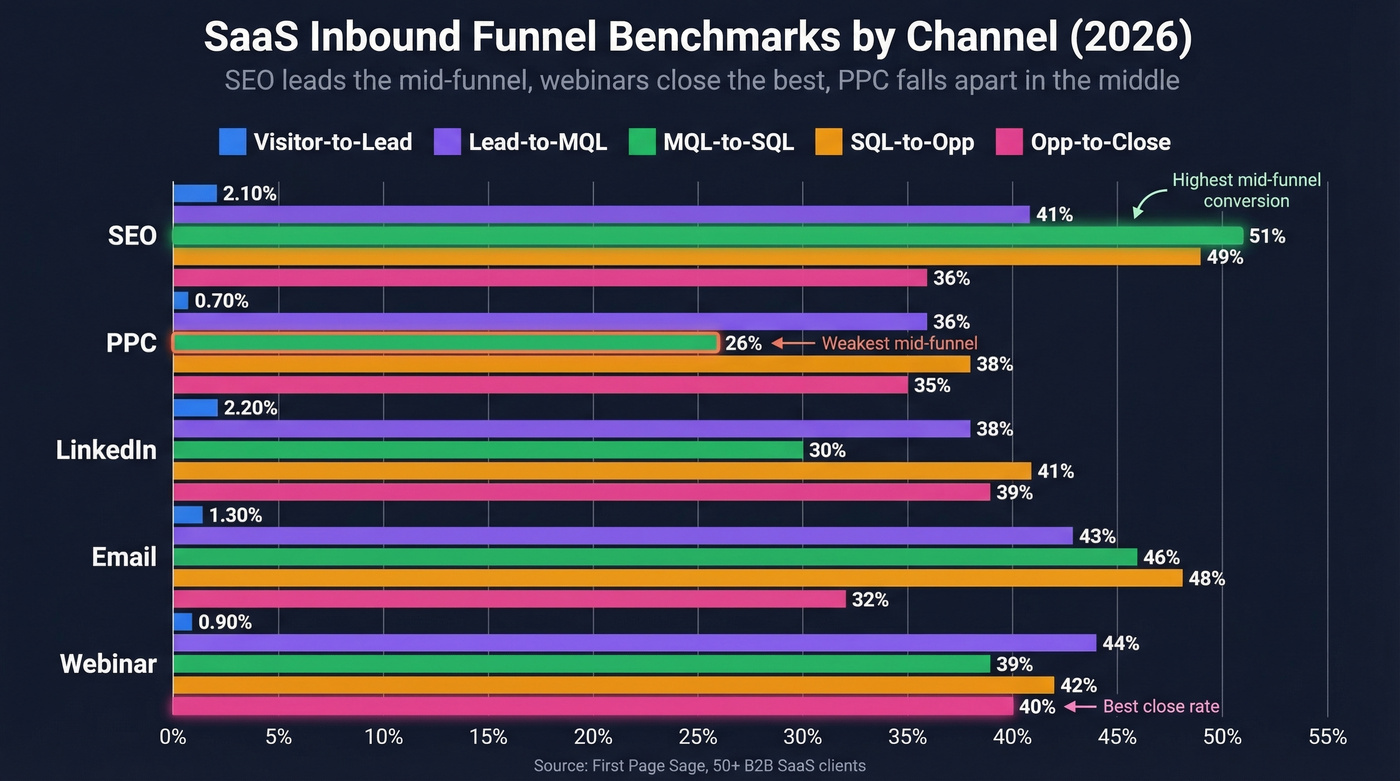
Let's start with the numbers that actually matter. First Page Sage published SaaS funnel conversion data across five major inbound channels, based on 50+ B2B SaaS clients, tracking conversion at every stage from visitor to closed deal:
| Channel | Visitor-to-Lead | Lead-to-MQL | MQL-to-SQL | SQL-to-Opp | Opp-to-Close |
|---|---|---|---|---|---|
| SEO | 2.10% | 41% | 51% | 49% | 36% |
| PPC | 0.70% | 36% | 26% | 38% | 35% |
| 2.20% | 38% | 30% | 41% | 39% | |
| 1.30% | 43% | 46% | 48% | 32% | |
| Webinar | 0.90% | 44% | 39% | 42% | 40% |
SEO delivers the highest visitor-to-lead rate at 2.10% and the strongest mid-funnel conversion - 51% of SEO MQLs become SQLs. PPC looks attractive if you only measure top-of-funnel volume, but it falls apart in the middle: only 26% of PPC MQLs convert to SQLs, which means you're paying more for leads that are less likely to buy.
The cost story reinforces this. Organic inbound CPL averages ~$164, paid averages ~$310, and blended sits around $237. Non-paid leads also convert from MQL to SQL at 51% versus 30% for paid. That's not a marginal difference - it's nearly double the mid-funnel efficiency. For any team serious about SaaS customer acquisition, channel mix decisions should be driven by mid-funnel conversion rates, not top-of-funnel volume.
One number that doesn't get enough attention: webinars close at 40%, the highest opp-to-close rate of any channel. They're terrible at generating volume but exceptional at converting the leads they do produce. If you're running webinars for lead gen, you're doing it wrong. Run them for pipeline acceleration.
Building the Inbound System
Before tactics, build the system. Most SaaS teams skip straight to publishing without this foundation - and then wonder why 79% of their leads never convert into sales.
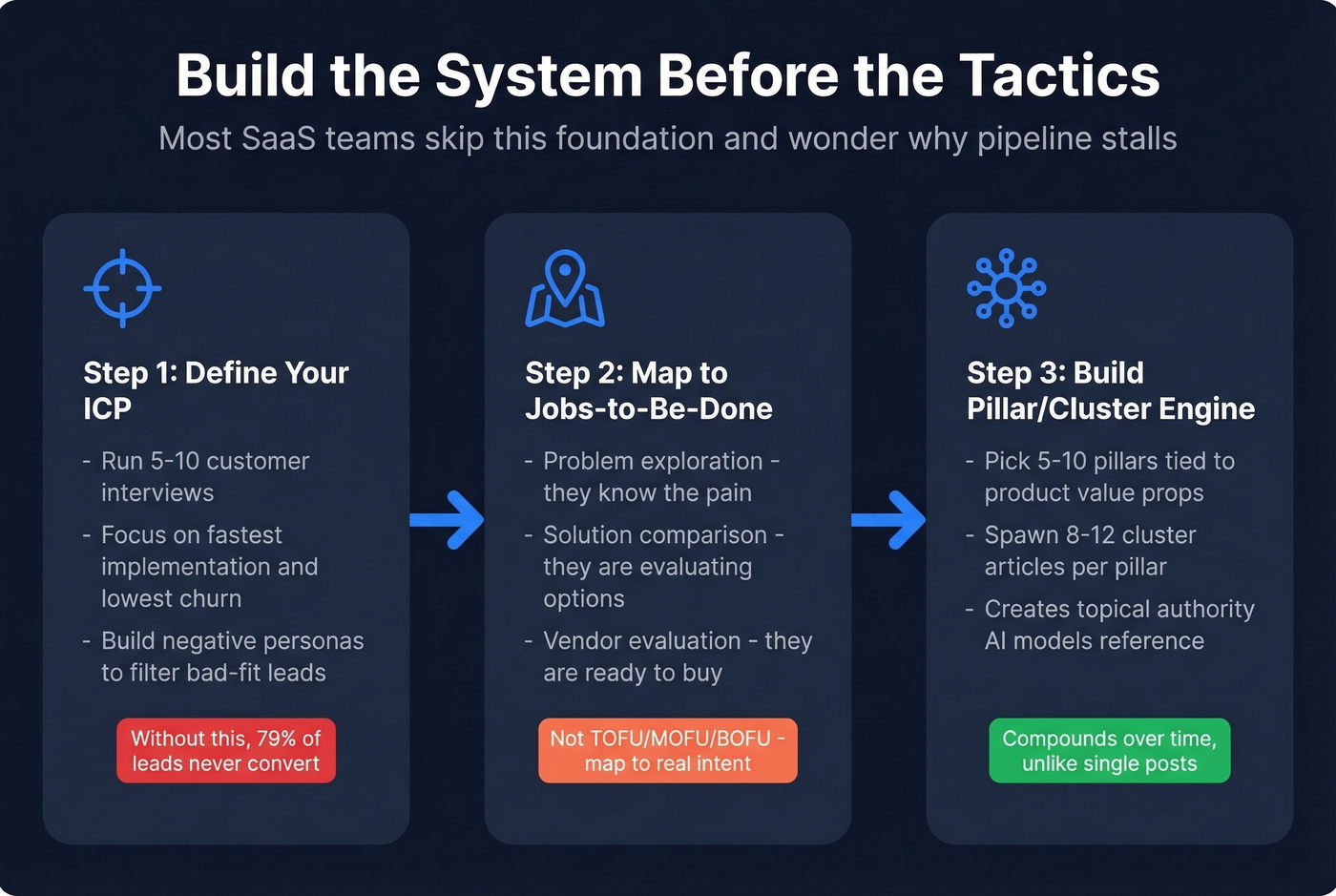
1. Define your ICP with actual rigor. Run 5-10 customer interviews focused on two things: who implemented fastest and who churned least. Build negative personas too - the segments that look good on paper but waste your pipeline. CAC/LTV segmentation by segment isn't optional here; it's how you know which inbound leads are worth pursuing.
2. Map content to jobs-to-be-done, not funnel stages. The generic TOFU/MOFU/BOFU framework produces generic content. Map to real intent states instead: problem exploration ("my reps can't find direct dials"), solution comparison ("enrichment tools ranked"), and vendor evaluation ("Tool A vs Tool B pricing"). Each state needs different content formats and different CTAs.
3. Build a pillar/cluster engine. Pick 5-10 pillar topics that map directly to your product's value propositions. Each pillar spawns 8-12 cluster articles targeting specific long-tail queries. This isn't just an SEO tactic - it's how you create topical authority that AI search models reference. One pillar on "B2B data enrichment" with clusters covering CRM enrichment, API enrichment, email verification, and intent data creates a content advantage that compounds over time in ways a single blog post never will.
Inbound Channels That Convert
SEO and Programmatic SEO
SEO averages 702% ROI with a 7-month break-even over a three-year window. No other inbound channel comes close on a cost-adjusted basis.
The real opportunity in 2026 is programmatic SEO. Zapier ranks for 1.3M keywords and pulls 16M+ monthly visitors - largely through programmatic integration pages. The playbook works for any SaaS company with structured data: integration pages, alternatives pages, use-case pages, location variants, template libraries. Concurate took a new SaaS domain from zero visibility to 13 inbound leads in four months using tool-focused clusters and jurisdiction-specific programmatic content. Insight Assurance saw a 142% increase in organic traffic and 46% more leads from organic after a similar structured approach.
Cost ranges from $200-$500/month with a no-code stack to $3,000+/month with developer support. Start with a 50-page pilot before scaling to hundreds. The critical mistake is generating thin pages - every programmatic page needs unique value, not just a swapped keyword in a template. DeriveVQ saw a 603% increase in organic traffic through a structured content-led SEO approach, so the upside is real when executed well.
One thing most SaaS teams miss about AI search: make expertise explicit with author bios and credentials, answer questions directly in the first paragraph, and structure for scannability. These are the signals AI search models use to decide what to cite - and they're the same signals that protect your traffic from AI Overviews cannibalizing your clicks.
Product-Led Content
AI Overviews are eating the value of "What is X?" content. If ChatGPT can answer the question in two sentences, your 2,000-word explainer isn't getting clicked.
The shift is toward content that AI can't replicate: comparison pages with real product screenshots, alternatives pages with pricing data, ROI calculators, and interactive demos. Storylane ran a "demo day" event format and pulled 800 registrations versus ~100 for their standard webinars - an 8x lift from letting prospects experience the product instead of reading about it. Comparison and alternatives keywords carry the highest commercial intent. These are the pages that convert, not your glossary definitions.
SaaS Product Trials and PLG
58% of B2B SaaS companies now have a PLG motion, and 91% plan to increase investment. Freemium converts visitors at a 12% median rate, significantly higher than gated content or demo request forms. Product trial lead generation has become one of the most efficient paths to pipeline because it lets prospects self-qualify through actual product usage rather than marketing promises.
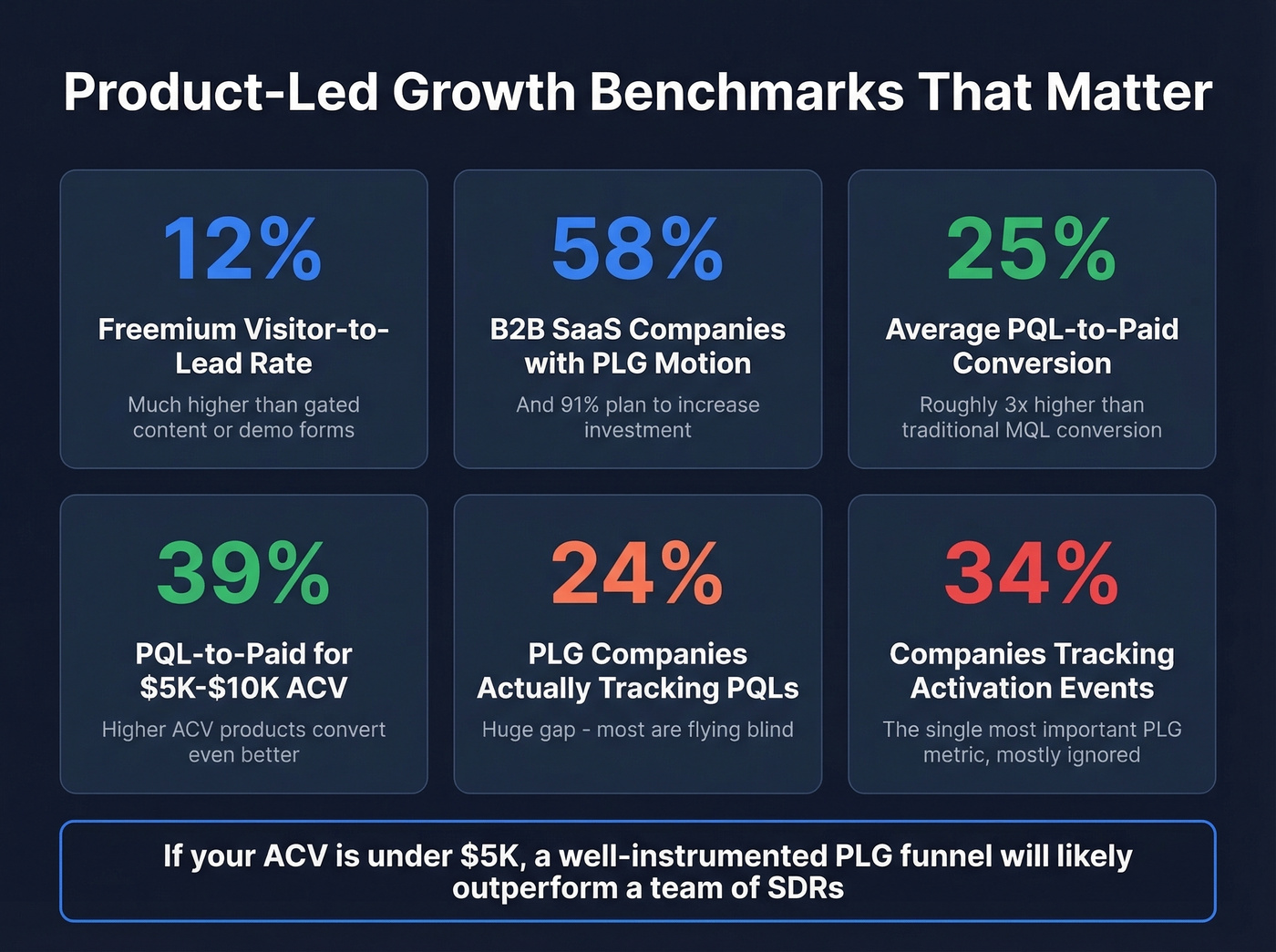
PQL (product-qualified lead) adoption sits at just 24-25% of PLG companies, but those who track PQLs see roughly 3x higher conversion rates. The benchmarks: 25% average PQL-to-paid conversion, 30% for $1K-$5K ACV products, and 39% for $5K-$10K ACV. Yet activation - the single most important PLG metric - is tracked by only 34% of companies. If you're running PLG without measuring activation events, you're flying blind with an engine that could be printing revenue.
Here's the thing: if your average deal size is under $5K, you probably don't need a sales-assisted motion at all. A well-instrumented PLG funnel with PQL tracking will outperform a team of SDRs qualifying MQLs by hand. The math just doesn't work the other way at that price point.
Review Platforms and Community
G2 and Capterra aren't just review sites - they're where buyers do vendor evaluation before they ever visit your website. Maintaining strong profiles with recent reviews is the minimum. Set up G2 buyer intent integrations to route review-site visitors directly into your CRM as warm leads, turning a passive review presence into an active pipeline source.
The consensus on r/sales and r/SaaS is that community engagement drives sign-ups when it's genuine participation, not thinly veiled promotion. Dark social - Slack groups, private communities, DMs - influences buying decisions in ways that never show up in your attribution model. Skip this channel if your team can't commit to authentic, ongoing participation. Half-hearted community posts do more brand damage than silence.
Webinars and Demo Events
Webinars have the highest opp-to-close rate at 40%. They're not a volume play. They're a conversion play. Use them to accelerate mid-funnel deals, not to fill the top of your funnel. Interactive demo events outperform traditional slide-deck webinars by a wide margin - Storylane's 8x registration lift is proof that prospects want to click around, not sit through slides.

You just read that 51% of SEO MQLs convert to SQLs - but only if reps can actually reach them. Prospeo gives your team 98% verified emails and 125M+ direct dials so no inbound lead goes dark. At $0.01/email, enriching every form fill is a no-brainer.
Stop losing pipeline to bad contact data. Enrich every inbound lead instantly.
Why SaaS Inbound Strategies Fail
We see five anti-patterns repeatedly:
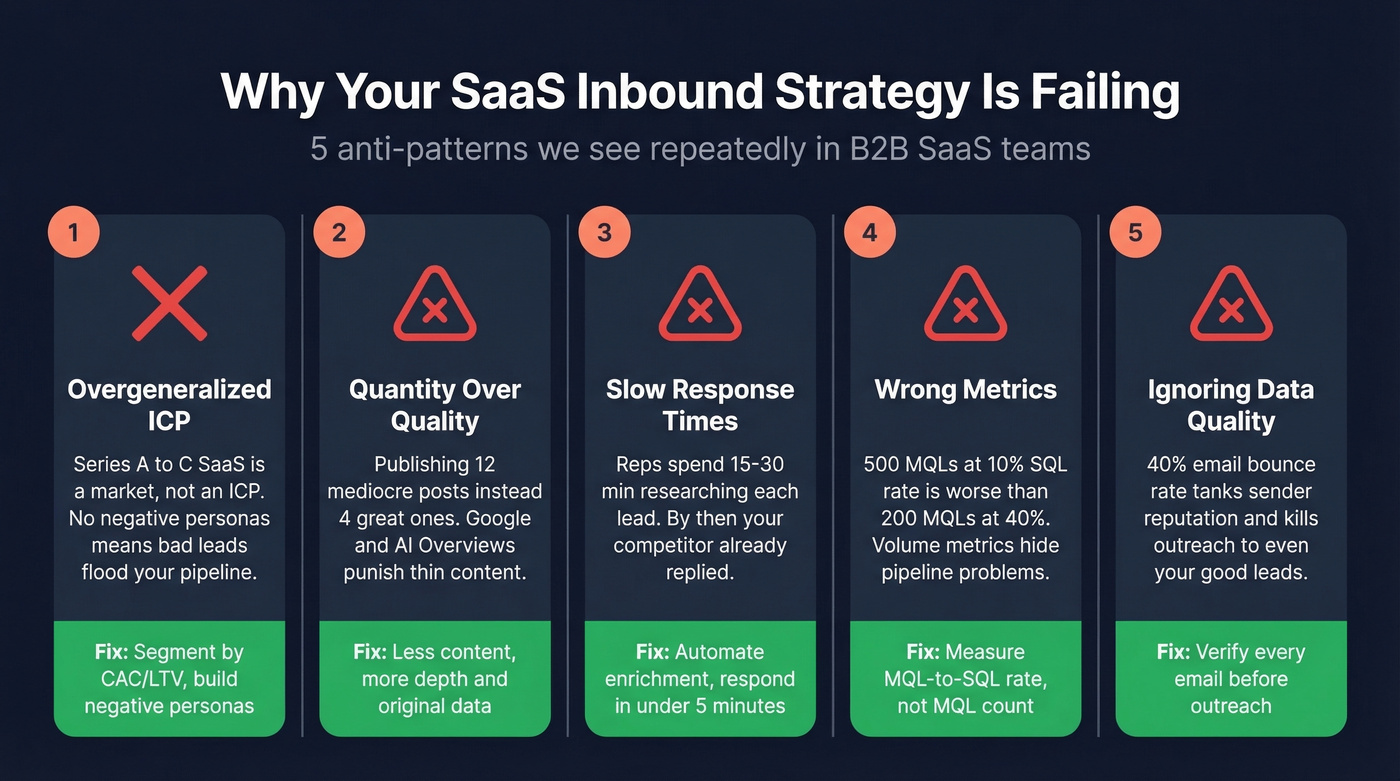
Overgeneralized ICP. "Series A to Series C SaaS companies" isn't an ICP. It's a market. Without negative personas and segment-level CAC/LTV data, you'll attract leads that look great in the dashboard and die in the pipeline.
Quantity over quality. Publishing 12 mediocre posts per month instead of 4 exceptional ones. Google's helpful content system punishes thin content, and AI Overviews reward depth. Less content, more substance.
Slow response times. A Reddit thread on inbound lead handling revealed that reps spend 15-30 minutes researching each inbound lead before responding. By then, the lead's already talking to your competitor. Speed-to-lead isn't a nice-to-have - it's the difference between winning and losing the deal.
Wrong metrics. Most SaaS teams measure the wrong things. A channel producing 500 MQLs at 10% SQL conversion is worse than one producing 200 MQLs at 40%. Measure MQL-to-SQL conversion rate, not MQL volume.
Ignoring data quality. Your inbound engine generates the lead. But if 40% of your inbound emails bounce, your sender reputation tanks and future outreach suffers - even to the good leads.
The Data Quality Layer
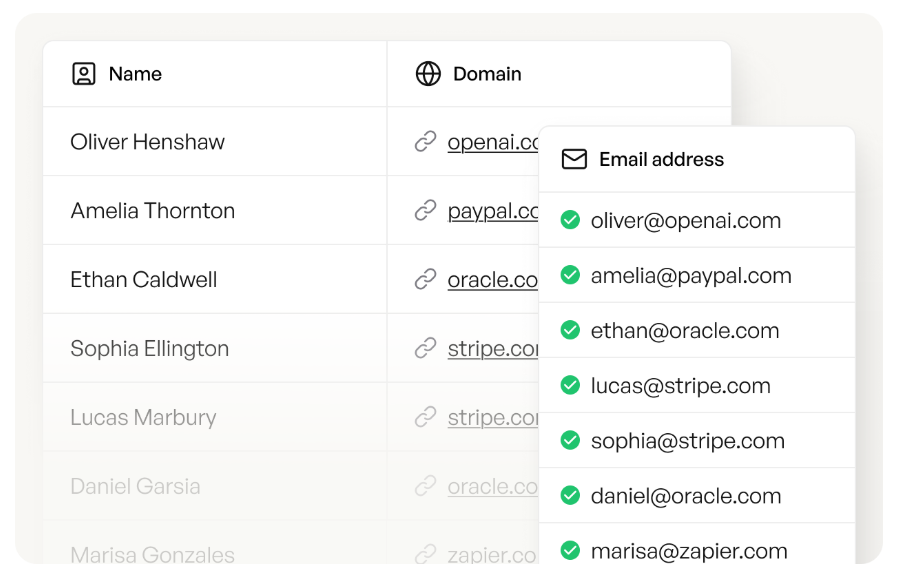
Your content ranks, the lead fills out the form, the MQL gets routed to a rep - and then the rep opens the CRM record and finds a generic info@ email, no phone number, and a company name that doesn't match anything in the system. They spend 20 minutes on manual research. By the time they reach out, the lead's gone cold.
In our experience, the gap between lead capture and first rep touch is where most SaaS pipelines leak. This isn't a sales problem. It's a data infrastructure problem, and it undermines every dollar you spend on customer acquisition upstream.
Recommended Inbound Tool Stack
| Function | Tool | ~Pricing |
|---|---|---|
| CRM | HubSpot | Free tier; Marketing Hub ~$800/mo |
| SEO | Ahrefs / Semrush | ~$99-$130/mo |
| Conversational | Intercom | From ~$74/mo |
| Conversational | Drift | From ~$1,000/mo |
| Data Enrichment | Prospeo | Free tier; ~$0.01/email |
| Programmatic SEO | No-code stack | ~$200-$500/mo |
If you're evaluating vendors, start with a quick scan of data enrichment services and then validate your outreach layer with email deliverability basics so your inbound follow-ups actually land.
Your inbound engine generates MQLs. Your reps need verified contact info to convert them. Prospeo's CRM enrichment returns 50+ data points per contact at a 92% match rate - on a 7-day refresh cycle so you're never calling stale numbers.
Turn every MQL into a reachable buyer with data that's never more than 7 days old.
FAQ
What's a good cost per lead for SaaS inbound?
Organic inbound CPL averages ~$164, paid averages ~$310, and blended sits around $237. Typical B2B SaaS CAC ranges from $200 to $1,000+ depending on ACV and sales motion. Organic channels cost less upfront but take longer to compound.
How long before inbound marketing generates pipeline?
SEO-led inbound typically breaks even at ~7 months with 702% ROI over a three-year window. Programmatic SEO can produce leads within 90-120 days with a 50-page pilot. Paid inbound generates leads immediately but at higher CPL and lower mid-funnel quality.
Should SaaS companies use free trials or freemium?
Freemium converts visitors at a higher rate (12% median) but free trials convert to paid more reliably. For products with $1K-$10K ACV, free trials with PQL tracking deliver 30-39% conversion rates. Start with a free trial if your ACV exceeds $1K - the conversion economics are stronger.
What's the best first inbound channel for B2B SaaS?
SEO, and it's not close. It has the highest visitor-to-lead rate (2.10%), the strongest MQL-to-SQL conversion (51%), and the lowest CPL (~$164). Start with pillar content targeting comparison and alternatives keywords, then expand to programmatic pages.
How do you keep inbound lead data accurate?
Use an enrichment tool with automatic refresh cycles. Prospeo refreshes records every 7 days versus the 6-week industry average, and 98% email accuracy means reps aren't burning sender reputation on bad addresses. Clean data is the difference between a lead that converts and one that bounces.