

SEO Sales Leads: How to Generate, Buy, and Close Them
Your marketing dashboard says 200 leads from organic this quarter. Your sales team actually reached 30. The other 170? Bounced emails, disconnected phones, and form fills from people who wanted your PDF but not your product.
That gap between "SEO-generated lead" and "lead your rep can actually work" is where most pipeline dies. Verification is the step every guide skips. If you're serious about turning SEO sales leads into revenue, let's fix that.
The Quick Version
- SEO leads convert at 2.4% vs 1.3% for PPC - nearly double. Organic is worth the patience.
- Buying leads costs $27-$32 each on monthly tiers. Viable if your contracts exceed ~$3,000/year. Otherwise, the math doesn't work.
- Score every lead on fit + intent before routing to sales. Job title alone isn't enough.
- Verify every email and phone before outreach. Prospeo handles this at ~$0.01/email with 98% accuracy - the cheapest insurance you'll buy.
- Expect 3-6 months for SEO to produce its first real leads. Plan accordingly.
Why Organic Leads Convert Better Than Paid
This isn't opinion. It's math. A First Page Sage study across 124 clients from August 2022 through July 2024 found SEO consistently outperforms PPC on conversion rate, and in some industries it's not even close.
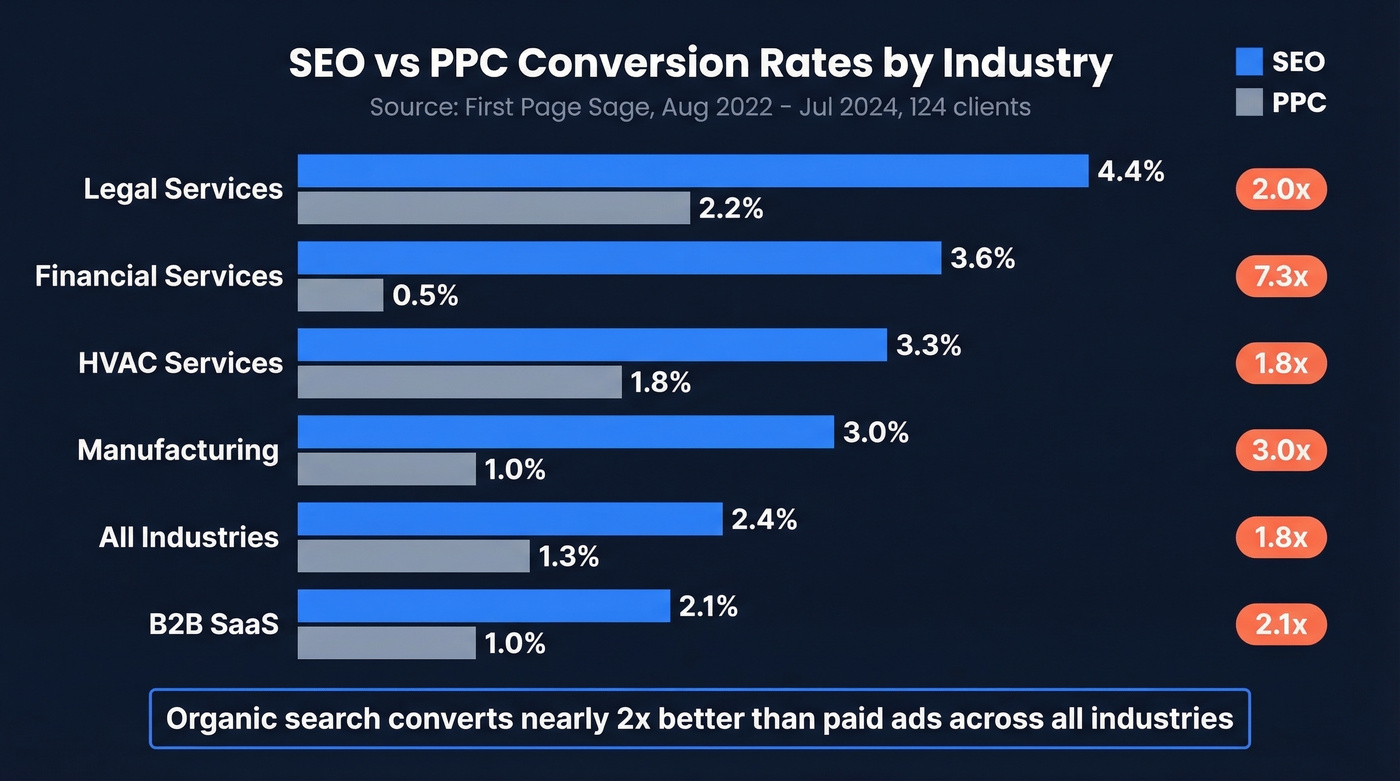
| Industry | SEO CVR | PPC CVR | SEO Advantage |
|---|---|---|---|
| Financial Services | 3.6% | 0.5% | 7.3x |
| Legal Services | 4.4% | 2.2% | 2.0x |
| Manufacturing | 3.0% | 1.0% | 3.0x |
| B2B SaaS | 2.1% | 1.0% | 2.1x |
| HVAC Services | 3.3% | 1.8% | 1.8x |
| All Industries | 2.4% | 1.3% | 1.8x |
Ruler Analytics backs this up with a cross-industry average of 2.9% across 100M+ data points. The reason is straightforward: someone Googling "CRM for construction companies" has a problem they're actively trying to solve. Someone who clicked a cold paid ad does not.
Here's the thing - most of First Page Sage's clients allocate roughly 75% SEO / 25% PPC. That ratio tells you where the smart money goes once teams see the conversion data. We've seen teams double their contact rate on organic leads just by running them through verification before routing to CRM. The channel is already high-intent, so clean data compounds the advantage.
How to Generate SEO Sales Leads
You don't need a 5,000-word SEO tutorial. You need five things done well.
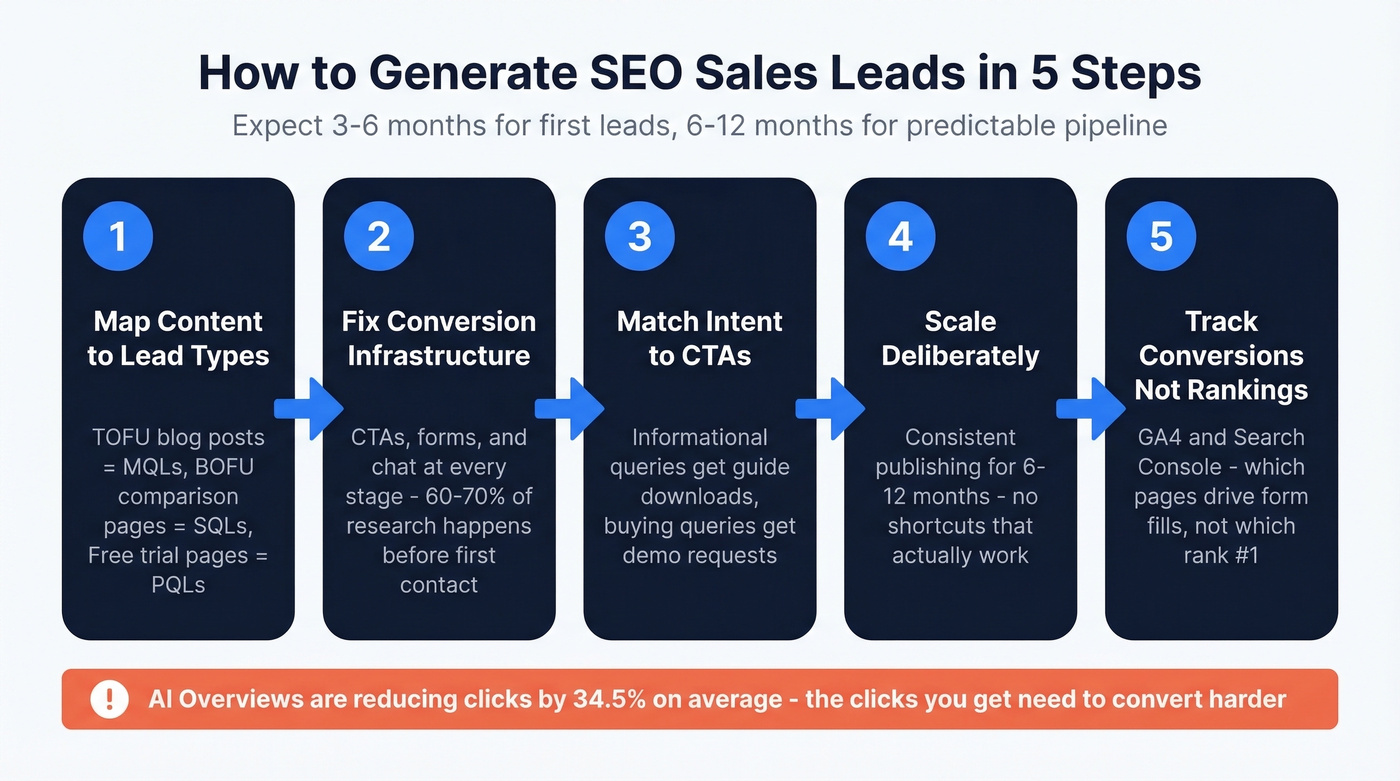
1. Map content to lead types. MQLs come from top-of-funnel blog posts and gated resources. SQLs come from comparison pages, pricing content, and bottom-of-funnel case studies. PQLs come from free trial and feature pages. If all your content targets one stage, you'll only attract one type of lead.
2. Fix your conversion infrastructure. CTAs, forms, and chat widgets are where traffic becomes leads. B2B buyers complete 60-70% of their research online before contacting sales, so your site needs to capture intent at every stage - not just the "request a demo" page. A common failure mode: teams generate plenty of organic traffic but can't convert it because their conversion infrastructure is an afterthought. Don't be that team.
3. Match content to search intent. A blog post answering "what is revenue operations" shouldn't have the same CTA as a page targeting "best RevOps tools." TOFU content earns newsletter signups and guide downloads. BOFU content earns demo requests.
4. Scale deliberately. SEO produces its first meaningful leads in 3-6 months. Consistent, predictable pipeline takes 6-12 months. Anyone promising faster results is either lying or targeting zero-competition keywords that won't move your revenue.
5. Track conversions, not rankings. Rankings are vanity. GA4 and Search Console tell you which pages actually generate form fills and calls. This matters more than ever: AI Overviews are reducing clicks by 34.5% on average, which means the clicks you do get need to convert harder.

You just spent 3-6 months earning those organic leads. Don't waste them on bounced emails. Prospeo verifies every contact at 98% accuracy for ~$0.01/email - so your reps work real pipeline, not dead data.
Stop losing SEO leads to bad contact data.
Should You Buy SEO Lead Lists?
Buying leads isn't a scam, but it's not a strategy either. It's a supplement - and only if the math works. With marketing budgets compressed to 7.7% of revenue (down from 9.1% in 2023 per Gartner), every dollar spent on purchased lead lists needs to justify itself.
Here's what vendors like RankLeads charge:
| Tier | Leads/Week | Cost/Lead (Monthly) | Setup Fee |
|---|---|---|---|
| Basic | 10 | $32 | $199 |
| Standard | 20 | $30 | $149 |
| Business | 50 | $28 | Free |
| Enterprise | 100 | $27 | Custom |
Exclusive leads convert at roughly 10%. Shared leads drop to 3-5%. Average SEO agreement from purchased leads runs $400-$500/month.
Look - if your annual contract value sits below $3,000, skip the purchased lists and invest in better conversion infrastructure on the traffic you already have. At $35/lead and a 10% close rate, you spend $350 to close one deal. A $400/month contract breaks even in month one. Anything smaller and you're underwater. Buying lists only pencils out for agencies and service providers with decent contract values.
Before you buy, vet the vendor hard. Ask about replacement policies for bad leads, confirm whether leads are exclusive or shared, and request TrustedForm certificates to verify TCPA consent. Always verify the contact data independently before your team calls - a bounced email on a $30 lead is money you'll never get back. If you need a compliance gut-check, start with Is It Illegal to Buy Email Lists?.
How to Score Leads for Sales Readiness
Most companies dump every form fill into the CRM and call it a "lead." That's database pollution, not pipeline.
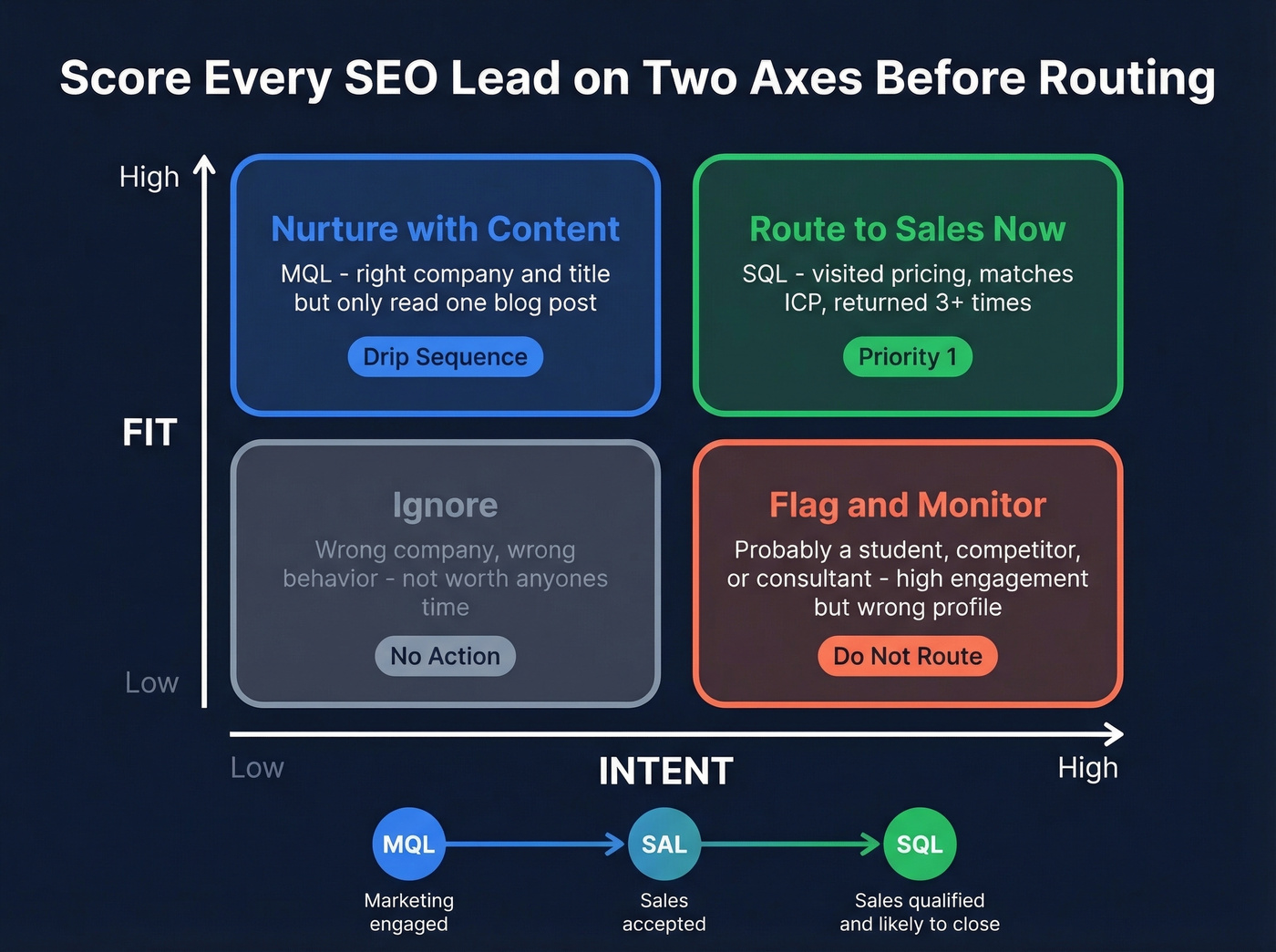
Score leads on two axes. Fit covers explicit data: job title, company size, industry, location. This comes from form fields and enrichment (see Lead Enrichment). Intent covers behavioral signals: which pages they visited, whether they hit pricing, how many times they've returned, what content they downloaded (more on Identifying Buying Signals).
An MQL is marketing-engaged - they downloaded a guide or attended a webinar. A SAL means sales reviewed it and agreed the lead is worth pursuing. An SQL is a lead sales has qualified through conversation and believes is likely to close. Define the handoff thresholds between these stages before you turn on the traffic, because without them you're flooding reps with unqualified names instead of closeable opportunities. If you want a full framework, use this Lead Scoring guide.
The routing logic is simple once you have the scoring in place. High fit + high intent goes straight to sales. High fit + low intent gets nurture sequences with targeted content. Low fit + high intent is almost always a student or competitor - flag and move on. Low fit + low intent doesn't deserve anyone's time.
Verify Before You Outreach
This is where every lead generation guide stops - and where your pipeline actually breaks.
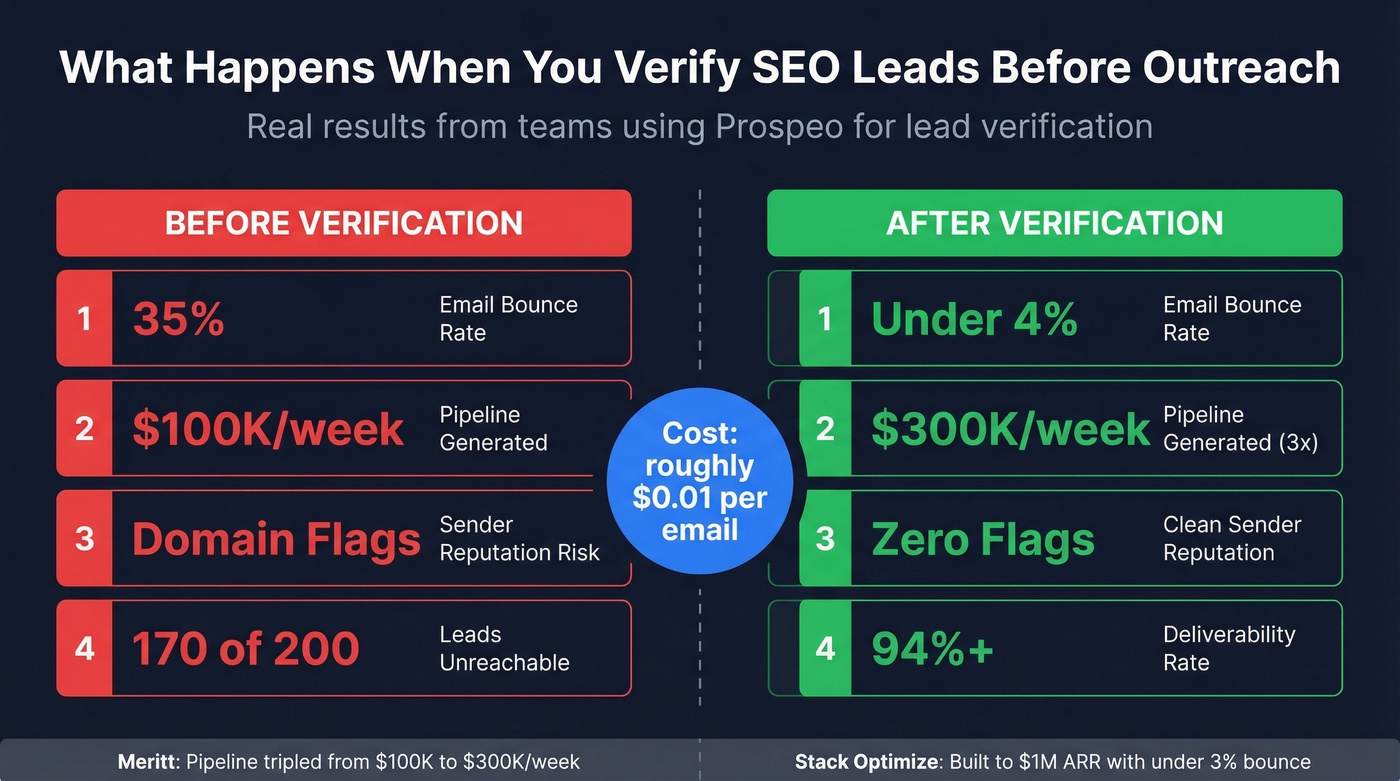
You've generated or bought the lead. Now what? If the email bounces, your sender reputation takes a hit (benchmarks + fixes in Email Bounce Rate). If the phone's disconnected, your rep just wasted a call block. Do this enough times and sales stops trusting marketing's leads entirely. In our experience, the verification step is where most teams skip and then wonder why sales ignores everything marketing sends over. The consensus on r/sales is pretty clear too - reps will quietly stop working "marketing leads" the moment bounce rates creep above 10%.
Prospeo closes this gap. Run your captured leads through verification before they enter the sales queue. With 98% email accuracy and 125M+ verified mobile numbers - a 30% pickup rate, roughly 2.4x ZoomInfo and 2.7x Apollo - you're not guessing whether the contact data is real. The 7-day data refresh cycle means you're working off current records while the industry average sits at six weeks. If you're comparing tools, start with these Bouncer alternatives or an AI Email Checker.
The proof is in the results. Meritt tripled pipeline from $100K to $300K/week after switching, with bounce rates dropping from 35% to under 4%. Stack Optimize built to $1M ARR with deliverability at 94%+, bounce under 3%, and zero domain flags across all clients. That's the difference between "we generated 200 leads" and "sales closed 20 deals." To keep deliverability stable as you scale, follow an Email Deliverability Guide.
Scoring leads on fit and intent is only half the battle. Prospeo enriches every lead with 50+ data points - job title, verified email, direct dial - at a 92% match rate. Route verified, enriched leads to sales instead of raw form fills.
Enrich and verify every organic lead before it hits your CRM.
FAQ
What's a good SEO lead conversion rate?
The average across industries is 2.4%. Legal services hits 4.4%, financial services 3.6%, and B2B SaaS averages 2.1%. If you're below 1.5%, your conversion infrastructure needs work before your content strategy does.
Is buying SEO leads worth it?
Only if your deal size supports it. At $27-$35/lead and a 10% close rate on exclusive leads, you need contracts above $3,000/year to break even. Buying works as a short-term supplement while organic pipeline ramps, not as a long-term strategy.
How do I verify leads before outreach?
Run captured leads through a verification tool before they enter your sales queue. Prospeo checks emails at 98% accuracy on a 7-day refresh cycle, eliminating bounces before they damage your sender reputation. The free tier includes 75 email verifications per month - enough to test the workflow without commitment.
How long does SEO take to generate real leads?
Expect 3-6 months for your first meaningful inbound leads from organic search. Consistent, predictable pipeline typically takes 6-12 months of sustained content production and technical optimization. Plan your budget around paid supplements during the ramp period.