

Intapp Pricing, Reviews, Pros & Cons (2026)
You just got the DealCloud renewal quote. Six figures - again. The partners want to know what they're paying for, the CFO wants a benchmark, and nobody can find a public pricing page because Intapp doesn't publish one. We've pulled together actual transaction data, real user reviews, and a clear-eyed look at whether the spend makes sense for your firm.
30-Second Verdict
Intapp is widely used by Am Law 100 firms and large private capital shops, and DealCloud is genuinely strong software for deal and relationship management. But expect to pay $85K-$1.43M/yr depending on modules and firm size, endure a complex implementation, and navigate rigid contract terms. If you're a sub-200-attorney firm or your primary need is sourcing prospect data rather than managing a full client lifecycle, the cost is hard to justify.
What Is Intapp?
Intapp is an AI-powered, cloud-based platform designed for professional and financial services firms. Its product suite spans deal management (DealCloud), compliance (Conflicts, Intake, Walls), time and billing (Intapp Time), and marketing/BD (OnePlace).
The company serves 2,750+ client firms - including 96 of the Am Law 100, 16 of the top 20 accounting firms, and 1,700+ private capital and investment banking firms. With 813 clients spending over $100K annually and Cloud ARR at $401.4M in Q1 FY2026 (up 30% YoY), this is an enterprise-heavy platform that's growing fast and locking in large clients.
What You'll Actually Pay
Intapp doesn't publish pricing. Every quote requires a sales conversation. But Vendr's transaction data gives us real benchmarks that are far more useful than "contact vendor."
DealCloud Contract Benchmarks
| Metric | Amount |
|---|---|
| Average annual contract | $504,618 |
| Minimum observed | ~$85,000 |
| Maximum observed | ~$1,430,000 |
| Average negotiated savings | 18.49% |
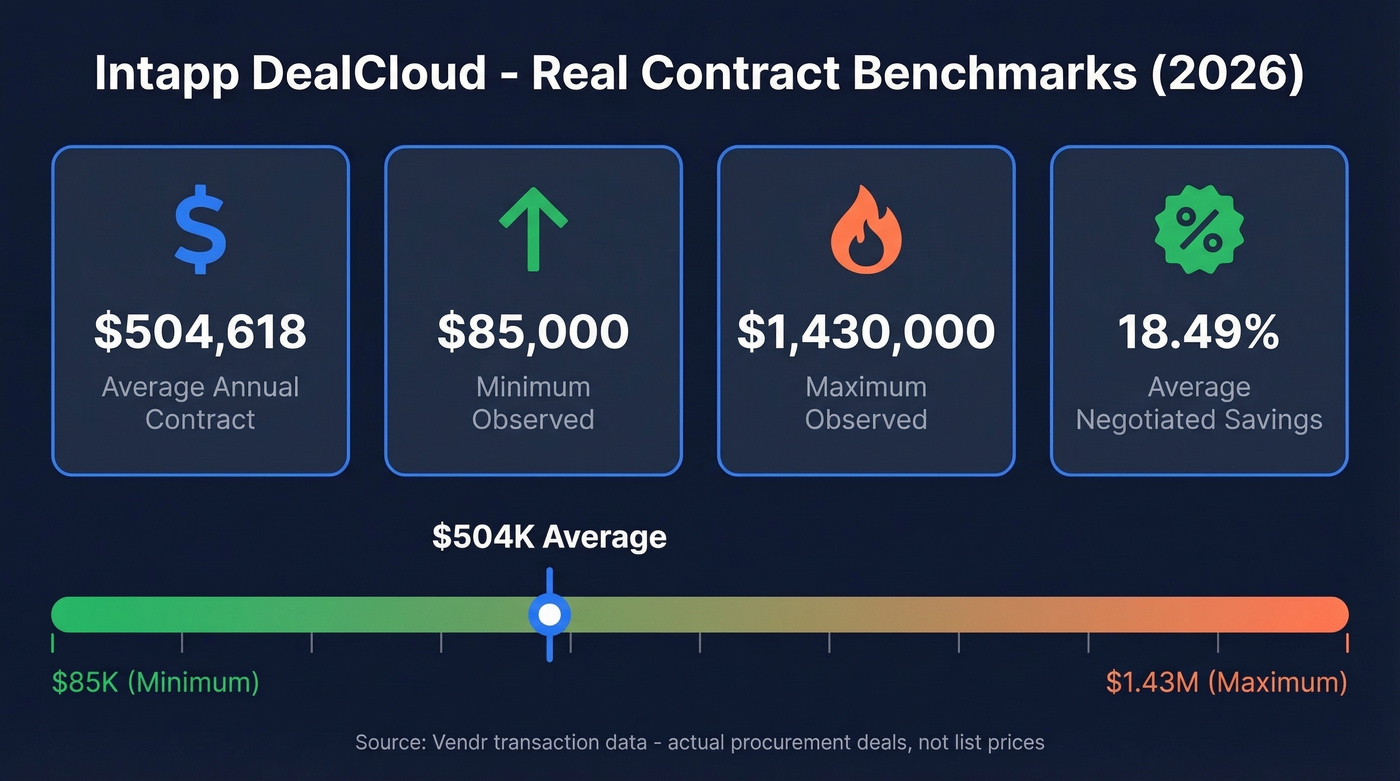
These numbers come from actual procurement transactions, not list prices. The range is enormous because DealCloud pricing scales with user count, firm size, and which add-on modules you bundle.
All Modules (Estimated Annual Cost)
| Module | Est. Annual Cost |
|---|---|
| DealCloud | $85,000-$1,430,000 |
| Intapp Time | $50,000-$200,000+ |
| Conflicts / Intake / Walls | $75,000-$300,000 |
| OnePlace (Marketing/BD) | $50,000-$250,000 |
| Implementation (one-time) | $50,000-$500,000+ |
| Intapp Prime (ongoing support) | $25,000-$100,000+/yr |
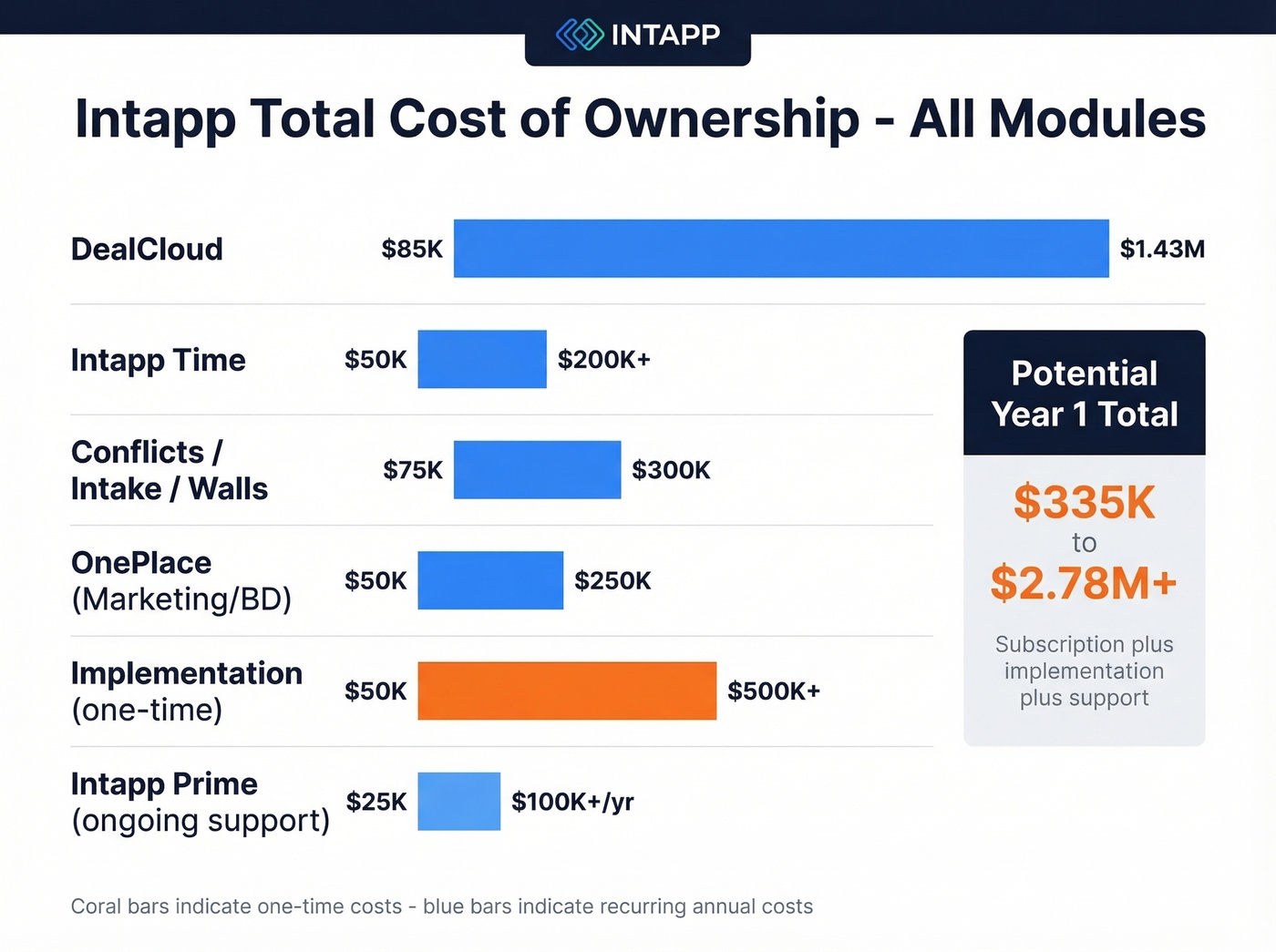
Global firms running multiple modules across offices will land at the high end. A mid-market firm deploying a single module can stay closer to the floor.
Implementation Reality
Here's the thing: the subscription is only part of the bill. Intapp's implementation model requires eight roles - four vendor-side (engagement manager, principal consultant, solutions consultant, solutions engineer) and four client-side (project manager, sponsor, functional leaders, IT/business analyst). These ongoing costs are easy to overlook during procurement and painful to discover after signing.
How to Negotiate Your Contract
Transaction data shows buyers save 18.49% on average when they negotiate DealCloud contracts. In our experience, the services line item is where most buyers leave money on the table. Here's what actually moves the needle:
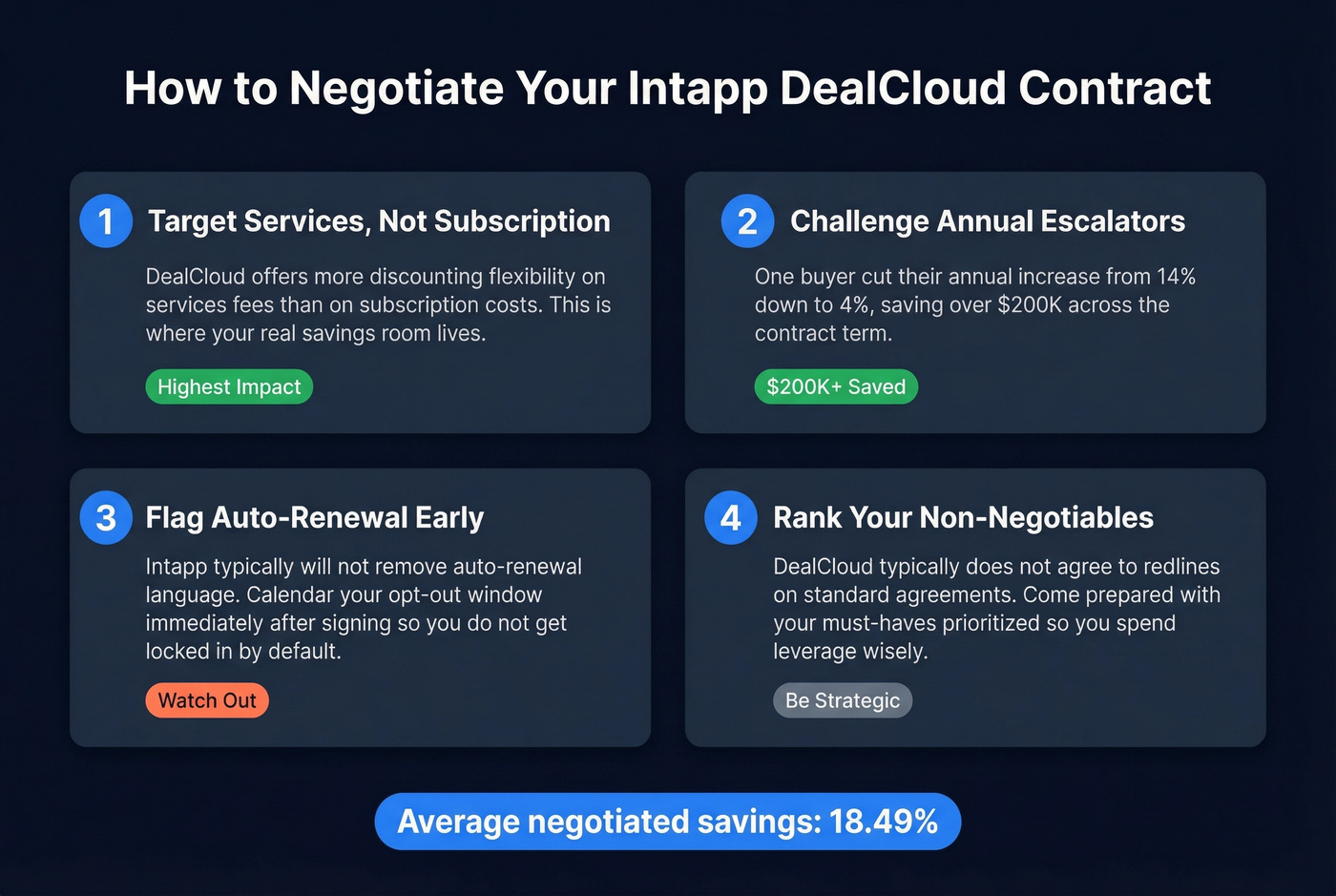
- Push on services, not subscription. DealCloud offers more discounting on the services portion than on subscription fees. That's where your real room is.
- Challenge year-over-year escalators. One buyer started with a 14% annual increase on a 2-year term and negotiated it down to 4%, resulting in over $200K in savings.
- Flag the auto-renewal clause early. Intapp typically won't remove auto-renewal language, but knowing this upfront lets you calendar your opt-out window and avoid getting locked in by default.
- Don't expect redlines. Procurement community insights confirm DealCloud typically doesn't agree to edits on their standard agreements. Come prepared with your non-negotiables ranked.
If you want a more structured approach, use an anchor and define your walk away point before the first call.

Intapp's average contract runs $504K/yr - and that's before implementation. If your real goal is sourcing prospect emails and direct dials for BD, Prospeo delivers 300M+ verified contacts at $0.01/email with 98% accuracy. No six-figure commits. No 8-role implementations.
Stop paying enterprise prices for a data problem that costs a penny to solve.
User Reviews Across Platforms
| Platform | Product | Rating | Reviews |
|---|---|---|---|
| G2 | DealCloud | 4.3/5 | 31 |
| Capterra | DealCloud | 4.5/5 | 21 |
| G2 | Risk & Compliance | 5.0/5 | 3 |
| Gartner | Conflicts | 3.2/5 | 2 |
| Capterra | Integration Service | 4.0/5 | 1 |
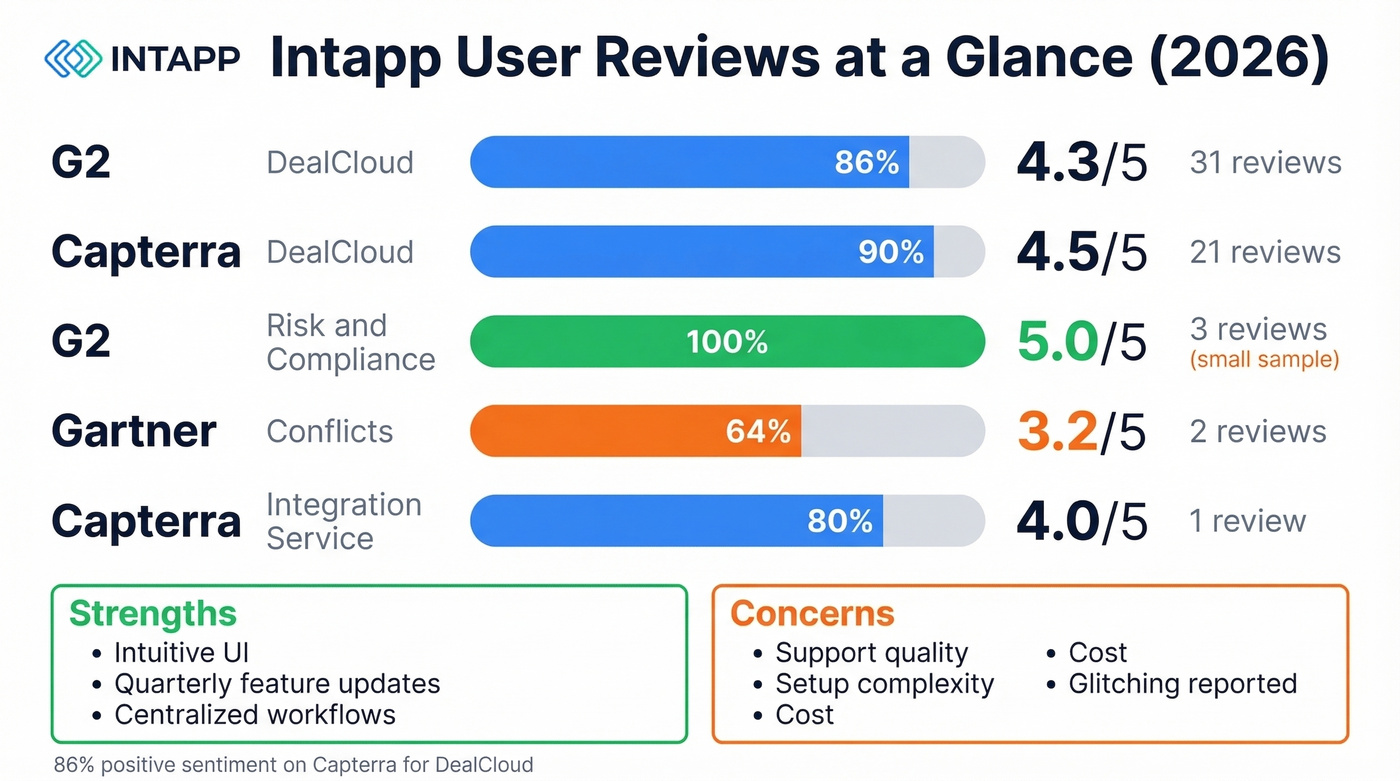
DealCloud scores well across G2 and Capterra, with 86% positive sentiment on Capterra. The Risk & Compliance suite has a perfect 5.0, though that's based on just three reviews - treat it as directional. The Gartner score for Conflicts (3.2/5) is the outlier, with recurring negatives around support quality, setup time, and cost.
Capterra's single Integration Service review flags the platform as "prone to glitching... opening many identical windows or freezing." We've seen this pattern before: the core product works well, but getting help when something breaks is a different story entirely.
Pros and Cons
Pros:
- Intuitive DealCloud UI. G2 reviewers consistently praise the interface as easy to self-administer once configured.
- Quarterly improvements without baseline cost increases. A December 2025 G2 review called out that DealCloud "improves every quarter... adding features without increasing baseline costs."
- Centralized workflows. DealCloud centralizes deal and relationship workflows like pipeline tracking and investment processes, while the Risk & Compliance tools standardize requests with templates and track them through approval chains.
- Am Law adoption. 96 of the Am Law 100 use Intapp, which means the platform handles the complexity of the largest firms. That's not nothing.
Cons:
- Implementation complexity. That same December 2025 G2 reviewer noted "initial setup was challenging." With eight required roles and multi-month timelines, this isn't a tool you deploy over a weekend.
- Support quality concerns. An October 2025 Gartner review flagged it's "difficult to get quality support from the vendor." Lack of a dedicated account rep is a recurring theme in Gartner's likes/dislikes data.
- Rigid contracting. Auto-renewal clauses that are hard to remove, limited willingness to accept redlines, and aggressive year-over-year escalators. The 121% cloud net revenue retention rate tells you something - existing customers are paying more every year.
- Upmarket drift. One G2 reviewer noted DealCloud has "shifted focus to larger companies," making it harder for smaller clients to maintain a strong vendor relationship. If you're not a top-tier account, expect to feel it.
Alternatives Worth Considering
Not every firm needs a six-figure platform. Where you should look depends on what you're actually trying to solve.
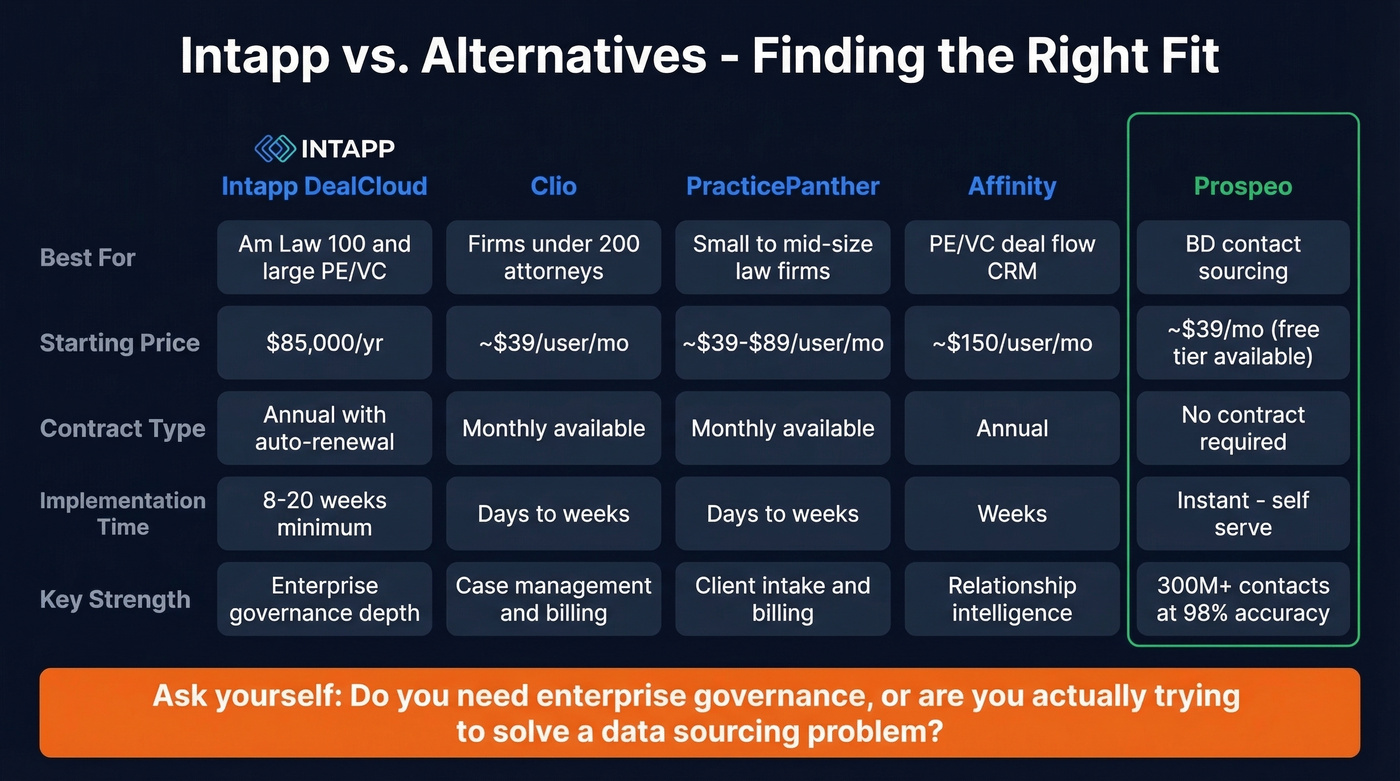
For legal practice management: Clio (~$39/user/mo) and PracticePanther (~$39-$89/user/mo) cover case management, billing, and client intake - better fits for firms under 200 attorneys that don't need enterprise governance.
For PE/VC relationship management: Affinity (~$150/user/mo) and 4Degrees (~$100-$200/user/mo) offer deal-flow CRM purpose-built for private capital without DealCloud's implementation overhead. Skip these if you need cross-office compliance workflows - they don't cover that.
Let's be honest: DealCloud is the best platform for structured governance across complex, multi-office firms. But a lot of firms buying it are actually trying to solve a data-sourcing problem, and you don't need a $500K platform for that. Identify which problem you're actually solving before you sign - starting with your ideal customer profile and the lead generation workflow you want to support.
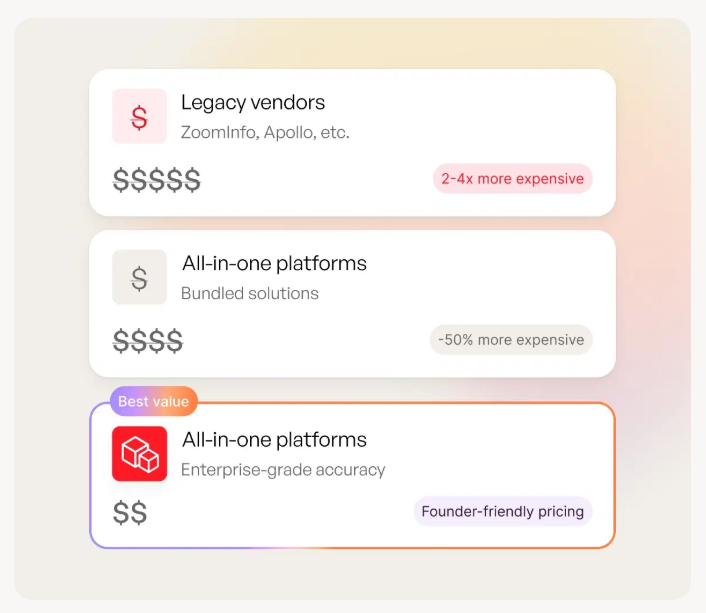
DealCloud's rigid contracts and aggressive escalators lock firms into growing spend year after year. Prospeo gives sales teams 30+ search filters, 125M+ verified mobiles, and intent data across 15,000 topics - self-serve, no annual contracts, cancel anytime.
Enterprise-grade prospecting data without the enterprise procurement headache.
Is Intapp Worth It in 2026?
For large firms, Intapp makes its own ROI case: a $200M firm improving client retention by 2% generates $4M, often covering the platform cost in year one. That's Intapp's own framing, so treat it as a vendor pitch rather than independent validation.
The 121% cloud net revenue retention rate is the number that matters most for procurement planning. Existing customers spend more each year. Budget for annual increases, not flat renewals.
If you're an Am Law 100 firm or a large PE shop running complex compliance workflows across multiple offices, Intapp is the market leader for a reason - newer "relationship intelligence" tools haven't matched its governance depth. But if you're a mid-market firm whose primary pain is sourcing prospect data or managing a simpler deal pipeline, there are faster and cheaper paths to value. Weigh the full picture - pricing, reviews, pros and cons included - before committing to a multi-year contract.
FAQ
Does Intapp offer a free trial?
No. All pricing requires a sales conversation, and contracts are typically annual with auto-renewal clauses that are difficult to remove. Plan for a multi-week procurement process minimum.
How long does implementation take?
Expect 8-20 weeks for a single-module deployment, or 3-9 months for multi-office rollouts with complex integrations. Post-implementation, Intapp Prime provides ongoing configuration support starting at $25K/yr.
What if I just need verified contact data for BD?
You don't need a six-figure platform. Prospeo offers 300M+ profiles with 98% email accuracy, 125M+ verified mobile numbers, and a free tier - paid plans start at ~$39/mo with no contracts.
Can I negotiate DealCloud pricing significantly?
Yes. Vendr data shows buyers save 18.49% on average. Focus negotiation on the services line item and year-over-year escalators - one buyer cut their annual increase from 14% to 4%, saving over $200K across the contract term.