5 Lead Generation Case Studies With Real Numbers and Replicable Playbooks
Your CEO saw a competitor claim "$420K pipeline in 60 days" and now wants the same results by next quarter. The problem? Most lead generation case studies hide the methodology, cherry-pick metrics, and skip the part where they explain what actually moved the needle.
We picked five of the most detailed examples we could find - each includes real numbers and enough process detail to replicate. No guesswork, no vague "we increased leads by 300%" claims with zero context.
The thread connecting all five: list quality beats messaging every time.
Quick Overview
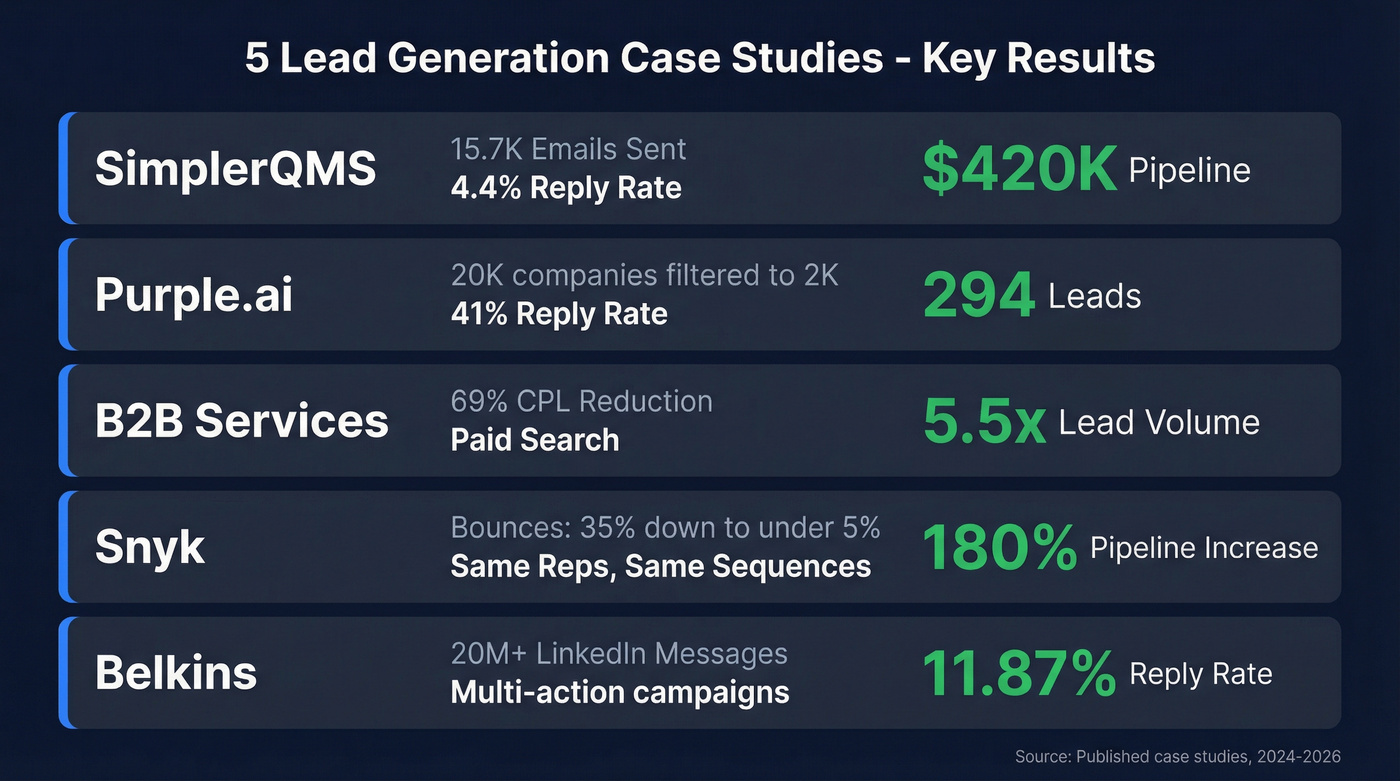
- SimplerQMS - $420K pipeline from 15.7K cold emails (4.4% reply rate)
- Purple.ai - 294 leads at 41% reply rate via hyper-targeted outbound
- B2B Services - 5.5x lead volume, 69% CPL reduction through paid search
- Snyk - 180% pipeline increase after fixing bounce rates with verified data
- Belkins Benchmarks - 20M+ LinkedIn outreach attempts with granular performance data
Cold Email in Regulated Industries (SimplerQMS)
SimplerQMS sells quality management software to medical, pharma, and biotech companies. Their agency, frontBrick, sent 15.7K emails to roughly 2,000 prospects, averaging 400-500 touchpoints per day.
This one's worth studying if you're selling a high-ACV product into a niche vertical where prospects are identifiable by industry codes and job titles. SimplerQMS hit a 4.4% reply rate - above the 1-5% cold email benchmark - generating 21 qualified opportunities and $420K in pipeline within 60 days.
Here's the thing about infrastructure, though: they used Instantly.ai (roughly $30-$100/mo) and Clay (roughly $149-$349/mo) to manage deliverability and personalization at scale. Without proper domain warm-up and sending rotation, this volume would've torched their sender reputation. The tooling cost was real, but at $420K pipeline, the ROI math worked out fast.
Hyper-Targeted Outbound (Purple.ai)
This example reframes how list building should work entirely. SalesBread's campaign for Purple.ai started with 20,000 potential companies and qualified them down to roughly 2,000 before a single message went out. The result: 294 leads at a 41% reply rate, with a scheduling-specific campaign hitting 76%.
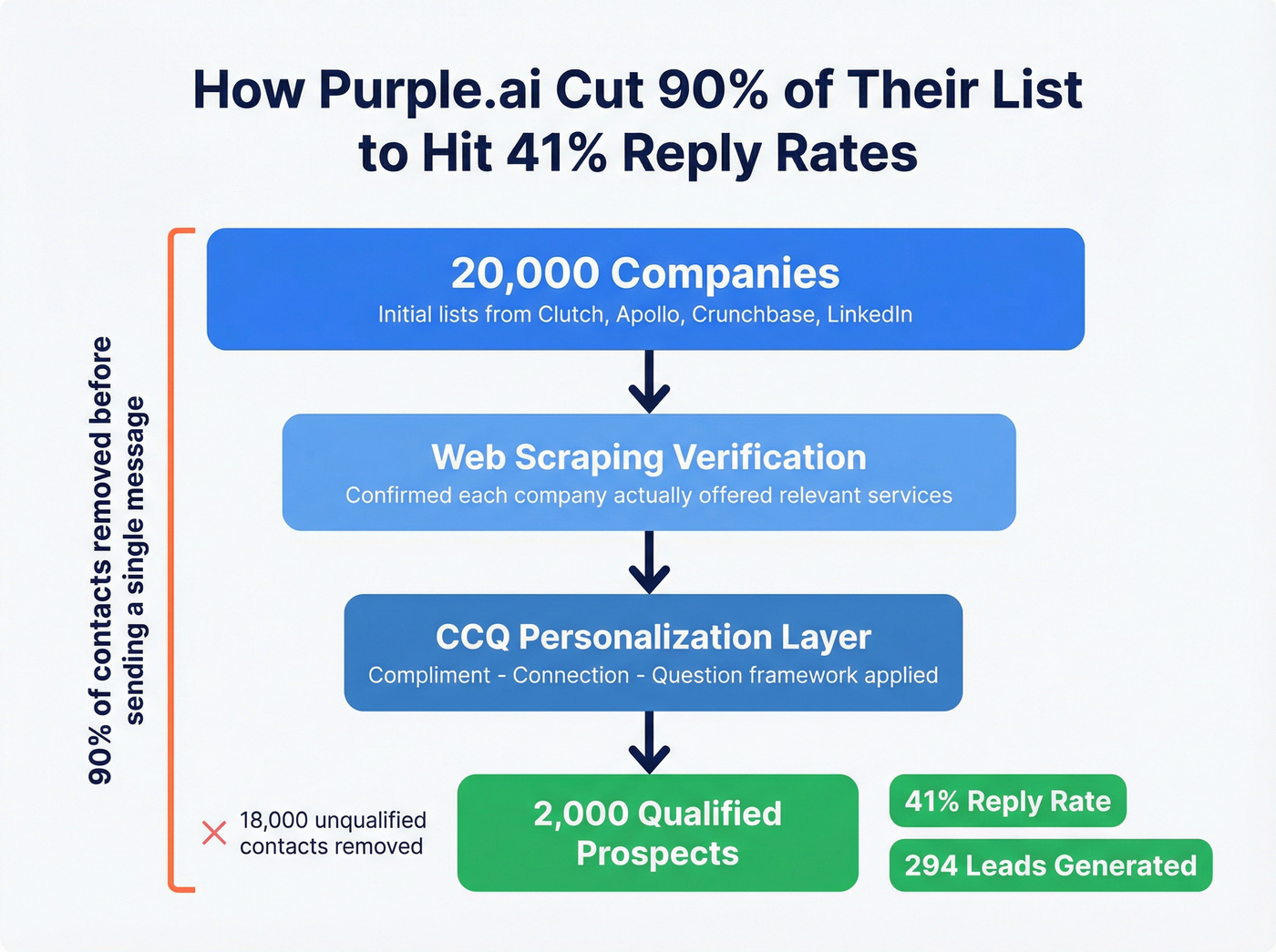
They pulled initial lists from Clutch, Apollo, Crunchbase, and a professional-networking sales prospecting tool, then ran a web scraping project to verify each company actually offered the services Purple.ai's product supported. They used a CCQ (Compliment-Connection-Question) personalization framework - the kind that only works when you genuinely know the prospect's business.
That 90% list reduction is where the magic happened. Twenty thousand companies became two thousand. Cold email practitioners on r/coldemail and r/sales report the same thing over and over: list quality matters more than copy. We've seen it in our own testing too. A mediocre message to the right person outperforms brilliant copy sent to the wrong one every single time.
Paid Search CPL Optimization (B2B Services)
Before: 63 leads at 545 UAH per conversion.
After: 348 leads at 167 UAH per conversion - a 5.5x volume increase with a 69% CPL reduction.
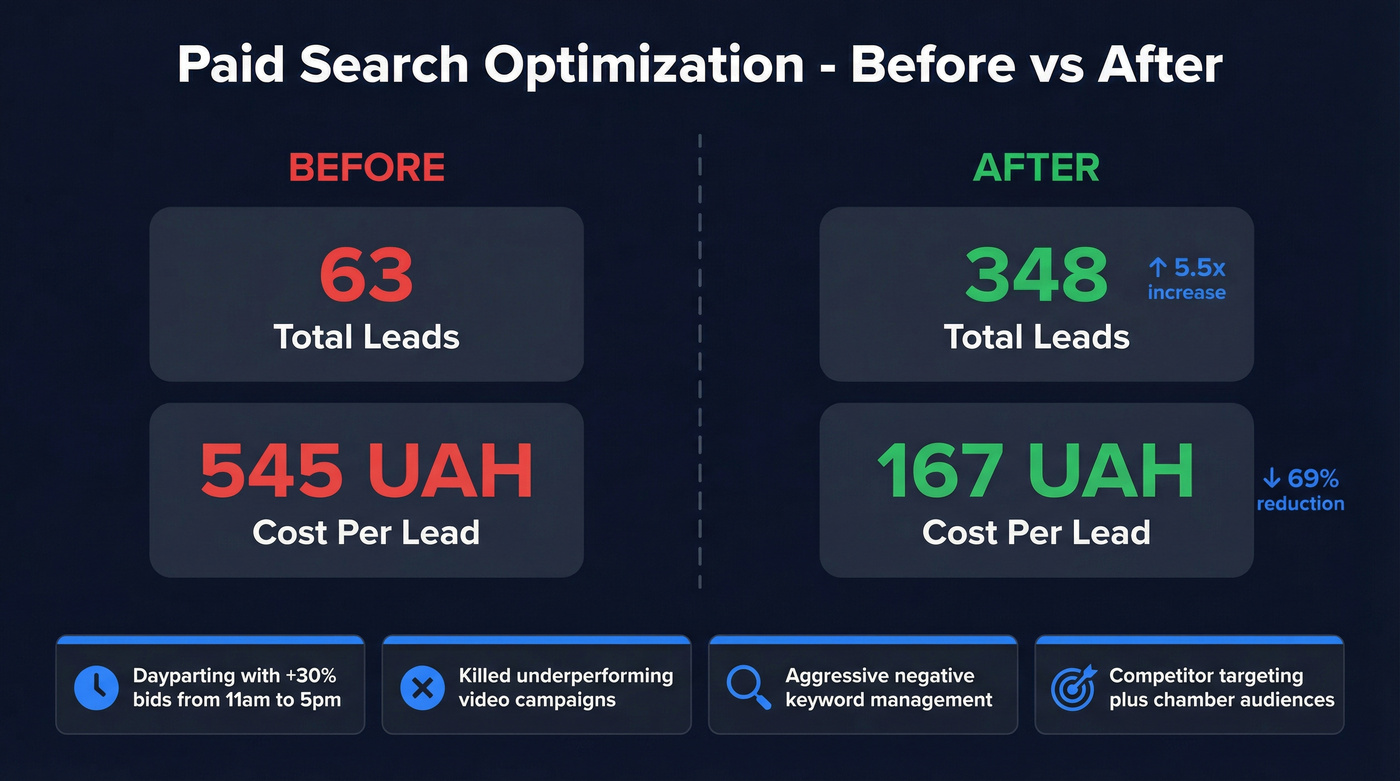
How? Dayparting with +30% bid adjustments between 11am-5pm. Aggressive negative keyword management. Multiple landing page variants tested against different lead magnets. They killed underperforming video campaigns that were burning budget on expensive calls and layered in competitor targeting plus chambers of commerce audiences.
Nothing here is revolutionary. That's the point. Disciplined paid search optimization - not a new channel, not a shiny new tool - drove a 5.5x improvement. Sometimes the boring work is the work that actually compounds.

Purple.ai cut 90% of their list to hit 41% reply rates. Snyk dropped bounces from 35% to under 5%. The common thread: verified data. Prospeo's 300M+ profiles with 98% email accuracy and 7-day refresh cycle give you the list quality these case studies prove matters most.
Stop optimizing copy when your list is the problem.
Data Quality as the Growth Lever (Snyk)
Snyk had 50 account executives each spending 4-6 hours per week on prospecting. Pipeline numbers were fine. Bounce rates weren't.

Emails were bouncing at 35-40%, which meant reps were burning time on contacts that didn't exist and damaging domain reputation in the process. The only variable that changed was the data source. After switching to Prospeo, bounce rates dropped to under 5%. AE-sourced pipeline increased 180%, and the team went from inconsistent outbound results to generating 200+ new opportunities per month.
Same reps. Same sequences. Same ICP targeting. A 7-day data refresh cycle meant reps were reaching real people at current companies, and 300M+ profiles gave AEs enough coverage to fill their prospecting blocks without recycling stale contacts.
Let's be honest - if your deal sizes sit below five figures, you probably don't need a $30K/year data platform. But if you've got 50 reps burning hours on bad data like Snyk did, the math on a self-serve tool at roughly $0.01 per email is hard to argue with.
LinkedIn Outreach at Scale (Belkins)
Belkins published benchmark data from 20M+ LinkedIn outreach attempts covering all of 2024 - one of the largest public datasets we've seen on this channel.
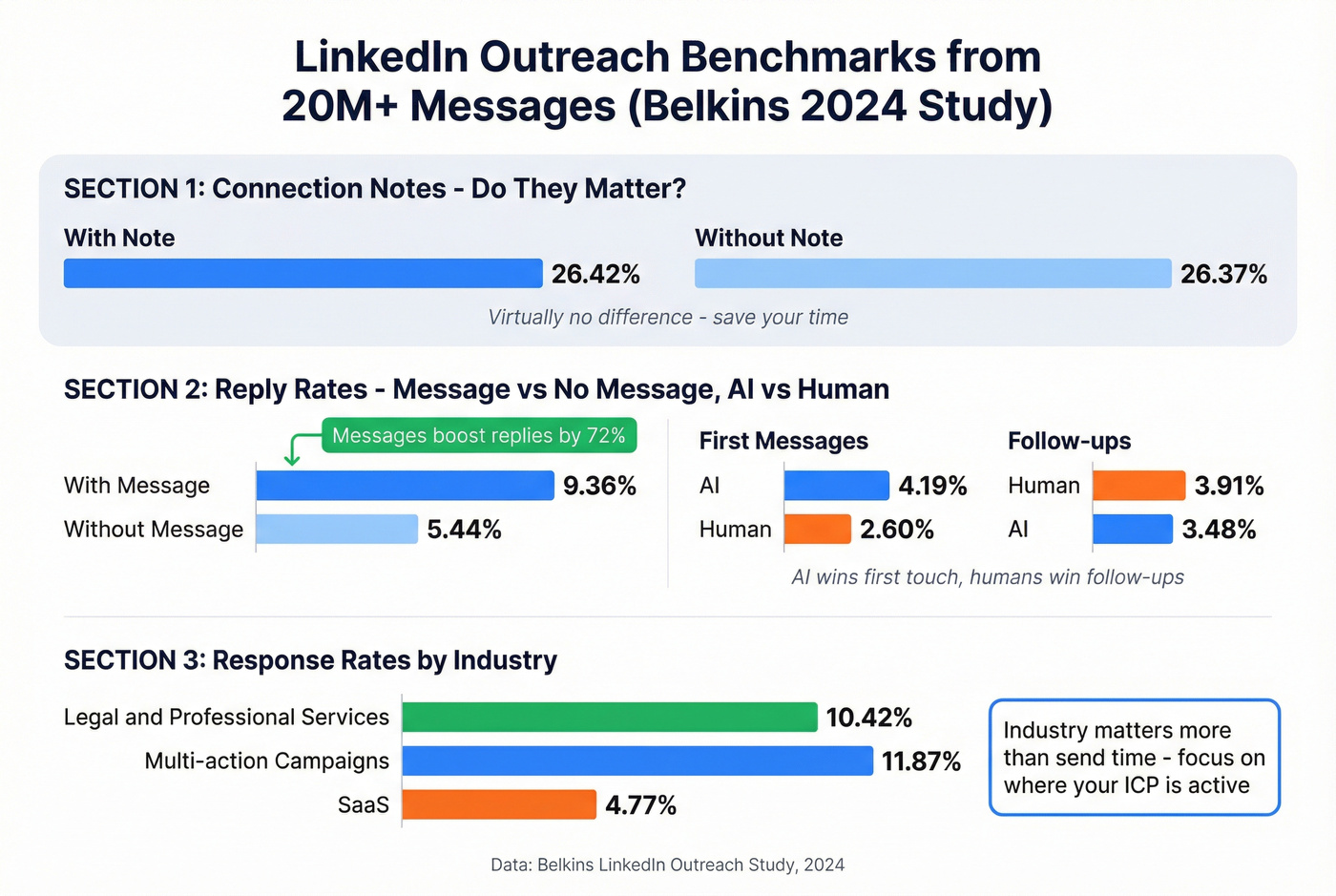
Connection acceptance sits at about 26.4% regardless of whether you include a note (26.42% with vs. 26.37% without). Reply rates tell a different story: 9.36% with a message versus 5.44% without. AI-generated first messages outperformed human-written ones (4.19% vs. 2.60%), though follow-ups flipped - human messages edged AI 3.91% to 3.48%. Multi-action campaigns that combined connection requests with InMails and follow-ups reached up to 11.87% reply rates, which is a strong argument for layering touchpoints rather than relying on a single action.
Industry matters more than timing. Legal and professional services hit 10.42% response rates while SaaS sat at 4.77%. Skip the "best time to send" optimization rabbit hole and focus on whether your ICP is even active on the platform.
B2B Lead Generation Benchmarks
These numbers from HubSpot's 2022 benchmark report help you evaluate campaign performance against the results above:
| Metric | Channel/Segment | Benchmark |
|---|---|---|
| MQL-to-SQL rate | SEO | 51% |
| MQL-to-SQL rate | 46% | |
| MQL-to-SQL rate | PPC | 26% |
| CPL | Webinars | ~$72 |
| CPL | SEM | ~$92 |
| CPL | Trade shows | ~$811 |
| CAC | B2B SaaS | $239 |
| CAC | Financial services | $784 |
| Cold email reply | All industries | 1-5% |
| Email ROI | All industries | $36-$40 per $1 spent |
Organizations generate an average of 1,877 leads per month - roughly 80% never convert. Volume isn't the problem.
The Variable Nobody Talks About
If your cold emails are bouncing at 15%+, the problem isn't your subject line. It's your data.
Look at the Snyk numbers again. Same team, same messaging, same market. Bounce rate drops from 35% to under 5%, and pipeline jumps 180%. That's not a messaging win - it's a data quality win. Before you optimize a single subject line, verify your list. We've watched teams spend weeks A/B testing email copy when their bounce rate was silently killing deliverability the entire time.
Snyk's 180% pipeline increase came from one change - switching to data that actually connects reps to real buyers. At $0.01 per verified email with 30+ filters to nail your ICP, you don't need a $30K platform to replicate their results.
Same reps, same sequences, better data - that's the entire playbook.
Strategies and Lessons From Each Case Study
Build a verified list before writing a single message. A good verification tool should get you under 5% bounce rates. Everything downstream - reply rates, meetings booked, pipeline generated - depends on this foundation.
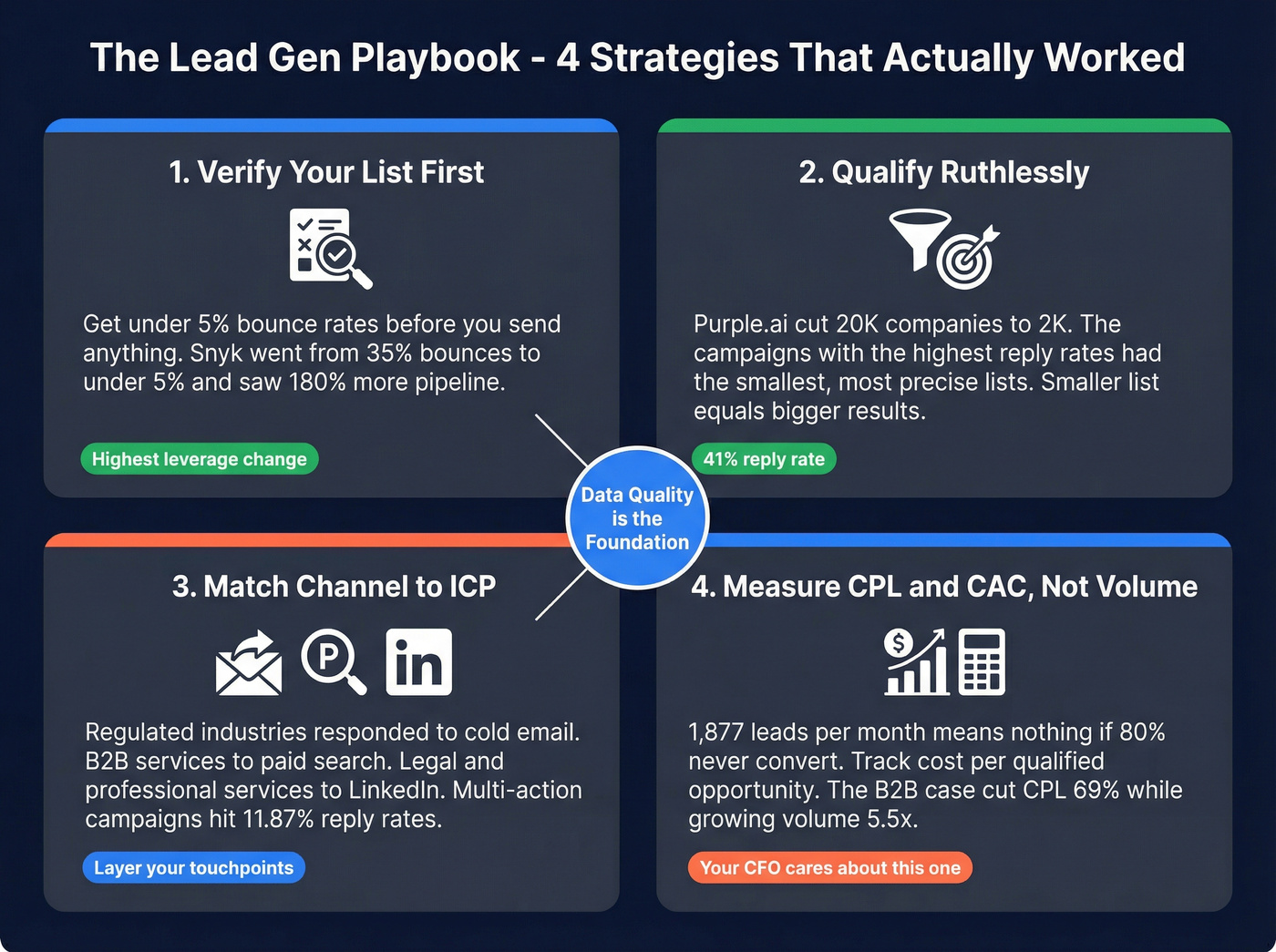
Qualify ruthlessly. Purple.ai cut 20,000 companies to 2,000. SimplerQMS targeted a narrow vertical. The campaigns with the highest reply rates had the smallest, most precise lists. If you're blasting 50K contacts and wondering why reply rates are under 1%, the answer is staring you in the face.
Match channel to ICP. Regulated industries responded to cold email. B2B services responded to paid search. LinkedIn outreach worked best for legal and professional services. Belkins' multi-action campaigns hit 11.87% reply rates by combining touchpoints, which suggests the real play is coordinating across channels rather than perfecting any single one.
Measure CPL and CAC, not just lead volume. Generating 1,877 leads per month means nothing if 80% never convert. Track cost per qualified opportunity, not cost per form fill. The B2B services case study cut CPL by 69% while increasing volume 5.5x - that's the kind of efficiency metric that actually matters to your CFO.
If you want to go deeper on the mechanics behind these wins, start with email deliverability, then tighten your email sending infrastructure, and finally add email verification for outreach so bounces don't erase your gains.
FAQ
What's a good reply rate for cold email?
Benchmarks show 1-5% across industries. SimplerQMS hit 4.4% in regulated verticals; SalesBread's hyper-targeted outbound for Purple.ai reached 41% after cutting 90% of their initial list. The difference is almost always list precision, not copywriting.
How much does B2B lead generation cost per lead?
Expect roughly $72/lead for webinars, $92 for SEM, and $811 for trade shows. B2B SaaS blended CAC averages $239, while financial services runs $784. Paid search optimization - like the B2B services case above - can cut CPL by 69% with disciplined bid management and negative keyword hygiene.
How does data quality affect outbound campaigns?
It's the single highest-leverage variable. Snyk's pipeline increased 180% after bounce rates dropped from 35-40% to under 5% - same reps, same sequences, different data source. Verified email accuracy at 98% and a weekly refresh cycle eliminate the stale-data problem that tanks most outbound programs.
Where can I find lead generation case studies with real data?
Start with the five sources linked in this article - each includes full methodology and pipeline numbers. For LinkedIn-specific benchmarks, Belkins' 20M-message study is the most comprehensive public dataset available. Every lead generation case study here was selected because you can adapt the playbook to your own pipeline, not just admire someone else's results.