

=== CURRENT ARTICLE (slug: lead-generation-vs-lead-nurturing) ===
Lead Generation vs Lead Nurturing: What Actually Matters
Marketing hit their MQL target last quarter. Sales says the leads were garbage. Sound familiar?
That disconnect isn't a lead generation vs lead nurturing problem - it's a handoff problem between the two. And 79% of marketing leads never convert because the nurture side gets starved of attention, budget, and clean data.
Here's the short version: lead generation attracts strangers into your funnel, and lead nurturing converts them into pipeline. Most teams over-invest in gen and under-invest in nurture. If pipeline is stalling, fix nurture first. You're already sitting on unconverted leads.
Definitions Worth Getting Right
Lead generation is top-of-funnel work - how strangers become known contacts through SEO, paid ads, content downloads, webinars, outbound prospecting, and events. The goal is volume with targeting. You're casting a net, ideally a smart one.
Lead nurturing picks up where gen leaves off. It's the mid-to-bottom-funnel process of moving known leads toward a buying decision through email sequences, segmented content, and timely follow-up. The goal isn't more leads - it's converting the ones you already have.
Let's be honest: framing these as separate functions is itself the problem. They're the same system. Separating them organizationally creates the handoff gaps that kill pipeline, and the best-performing teams treat gen and nurture as one continuous motion rather than two departments with different OKRs.
Key Differences at a Glance
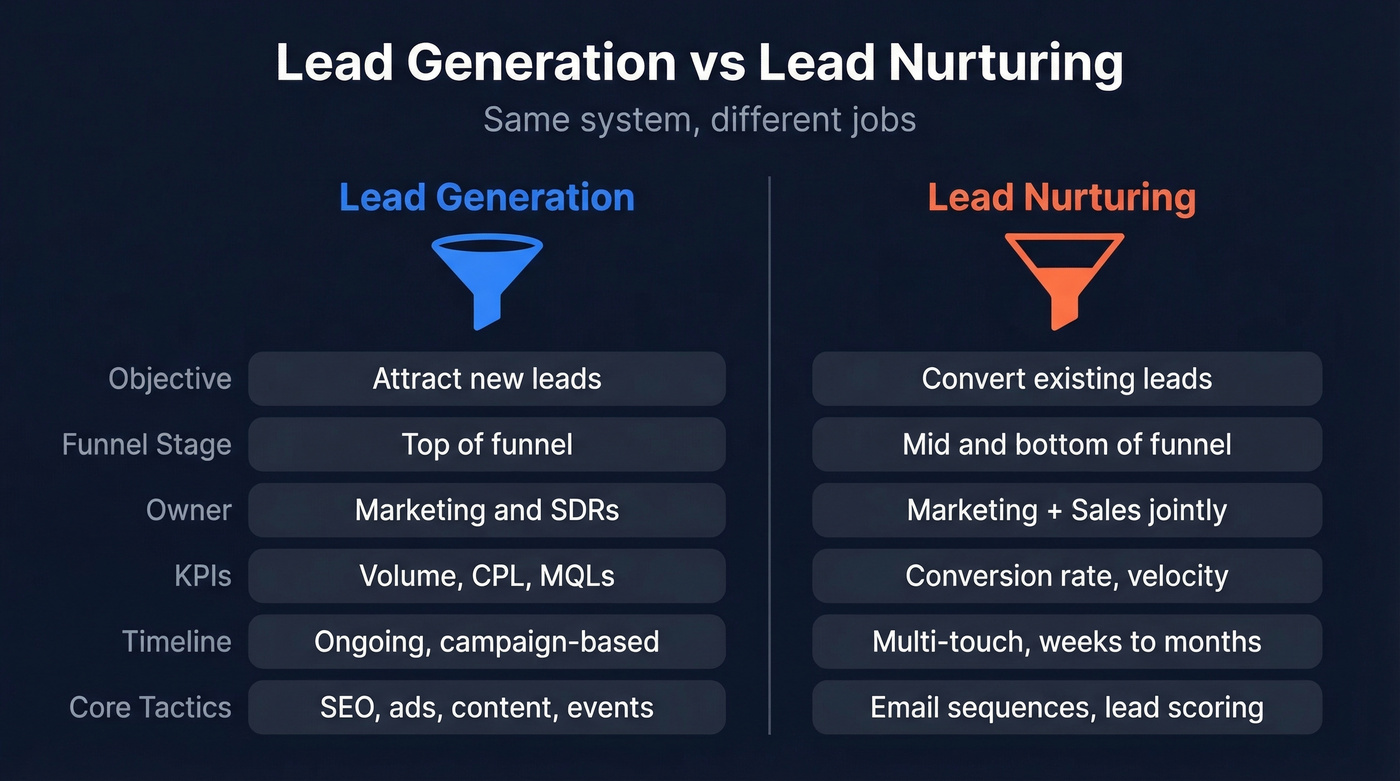
Understanding the difference between lead generation and lead nurturing starts with where each operates in your funnel and what success looks like at each stage.
| Dimension | Lead Generation | Lead Nurturing |
|---|---|---|
| Objective | Attract new leads | Convert existing leads |
| Funnel Stage | Top of funnel | Mid/bottom of funnel |
| Owner | Marketing / SDRs | Marketing + Sales |
| KPIs | Volume, CPL, MQLs | Conversion rate, velocity |
| Timeline | Ongoing, campaign-based | Multi-touch, weeks/months |
| Core Tactics | SEO, ads, content, events | Email sequences, scoring |
2026 Benchmarks That Matter
Buyers now define purchase requirements 83% of the time before ever talking to sales. Your nurture content is doing the selling long before a rep gets involved - and 96% of website visitors aren't ready to buy on their first visit.
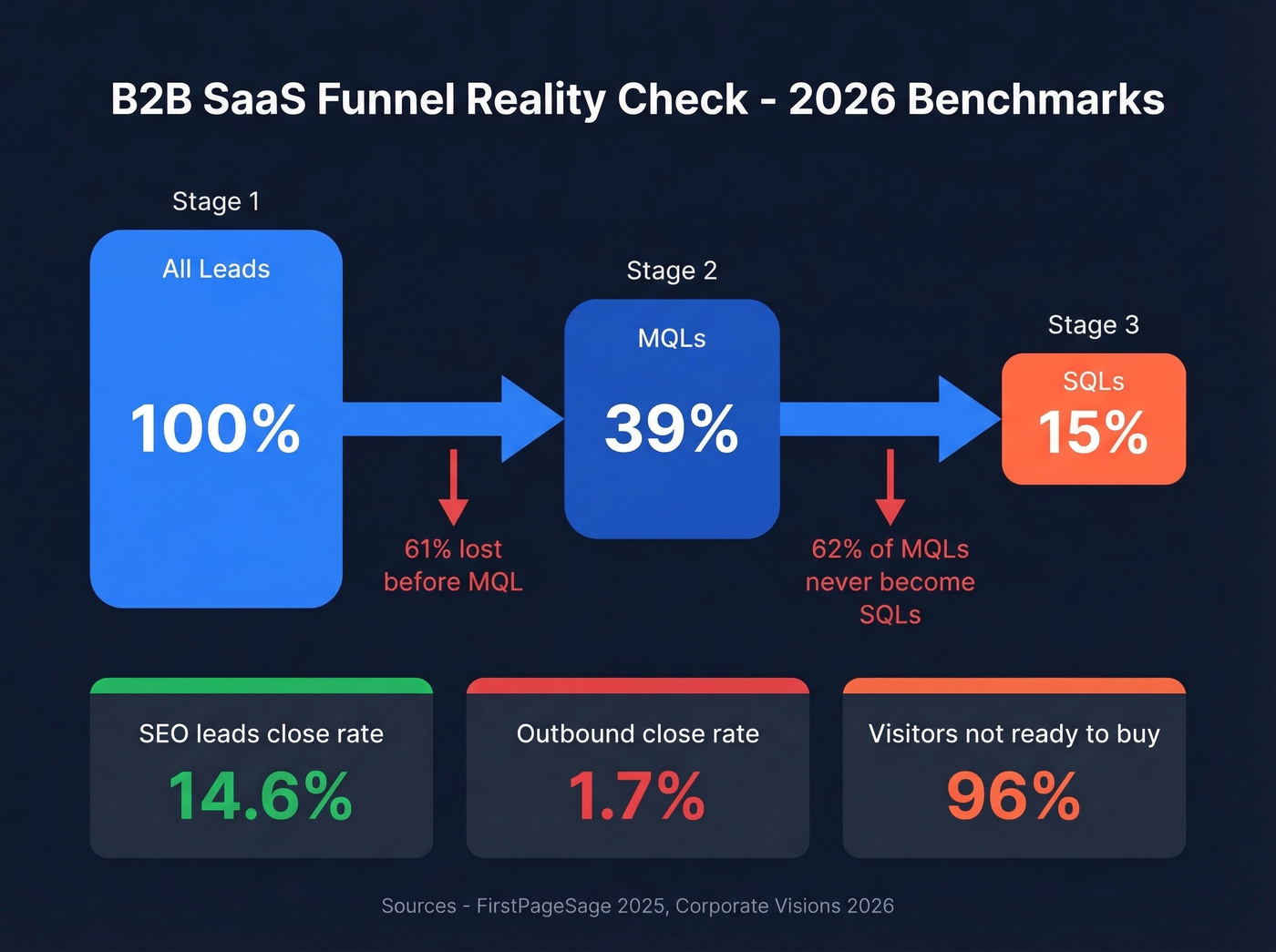
The funnel math is brutal. In B2B SaaS, only 39% of leads become MQLs, and only 38% of those convert to SQLs. That's a 15% pass-through rate from lead to SQL. Without deliberate nurturing at each stage, you're leaking pipeline everywhere.
SEO-driven leads close at 14.6% versus 1.7% for outbound. That gap is about intent, not just quality. Inbound leads arrive warmer, so nurture sequences accelerate them faster. Outbound leads need more touches, more personalization, and more patience.

Your nurture sequence is only as good as the data underneath it. Bounced emails kill deliverability, tank domain reputation, and train inboxes to ignore you. Prospeo's 98% email accuracy and 7-day refresh cycle mean every touchpoint in your sequence actually lands.
Stop nurturing leads you can't reach. Start with verified data at $0.01/email.
How Many Touches to Close?
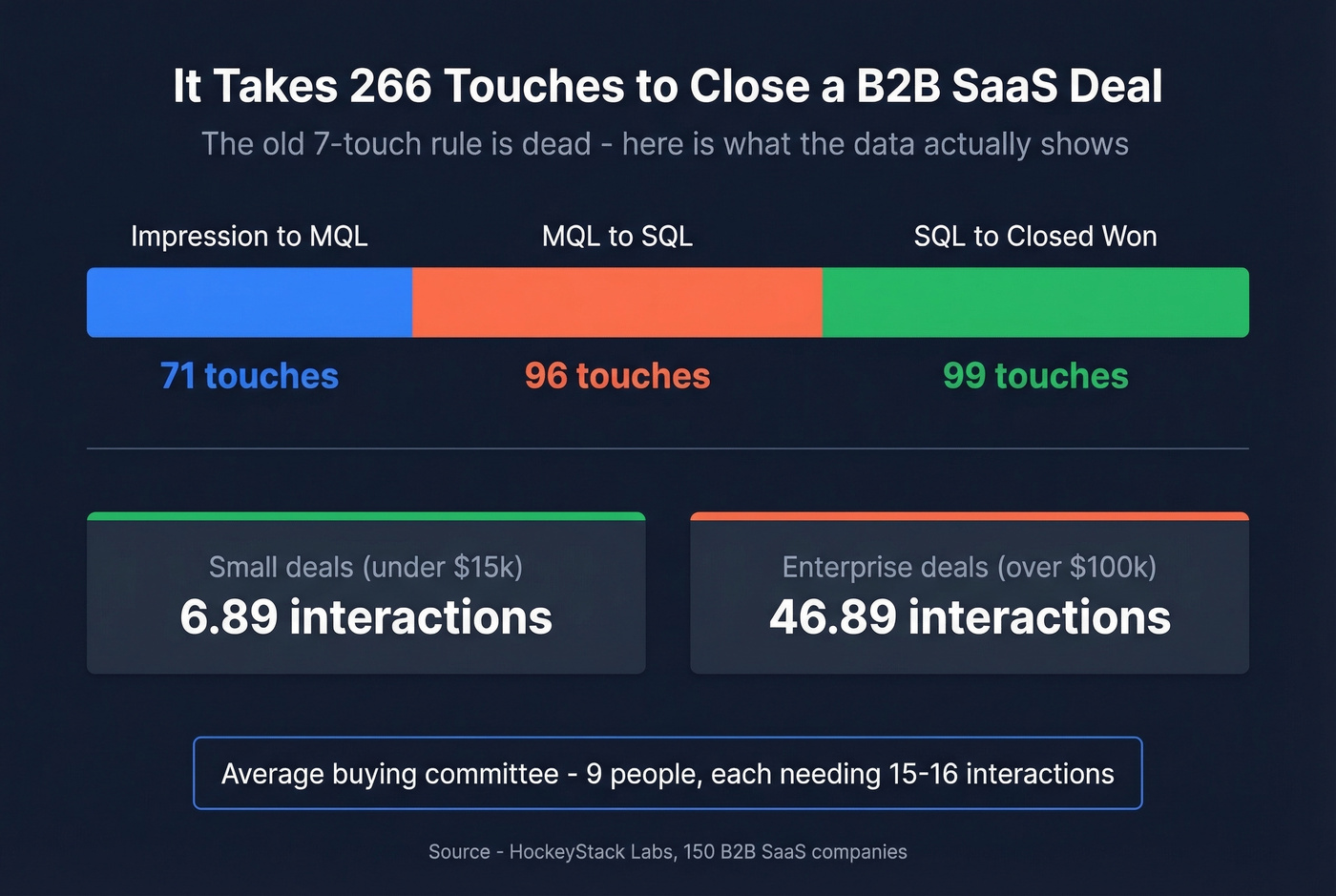
The old "7 touches" rule underestimates modern B2B buying journeys. HockeyStack Labs analyzed 150 B2B SaaS companies and found it takes 266 touches from first impression to closed deal.
| Stage | Avg. Touches |
|---|---|
| Impression to MQL | 71 |
| MQL to SQL | 96 |
| SQL to Closed Won | 99 |
Deal size changes the math dramatically. Small-ticket deals average 6.89 interactions; enterprise deals over $100k require 46.89. Buyers average 15-16 interactions per person across buying committees of roughly 9 people.
"Send three emails and move on" doesn't work. It never did, and the data makes that painfully clear now.
Mistakes That Kill Your Pipeline
On r/marketing, practitioners consistently describe nurture workflows as a "graveyard" for leads. The root cause is usually generic sequences with zero segmentation. A first-time content downloader and a pricing page visitor need completely different cadences - treating them the same is how you train prospects to ignore you.
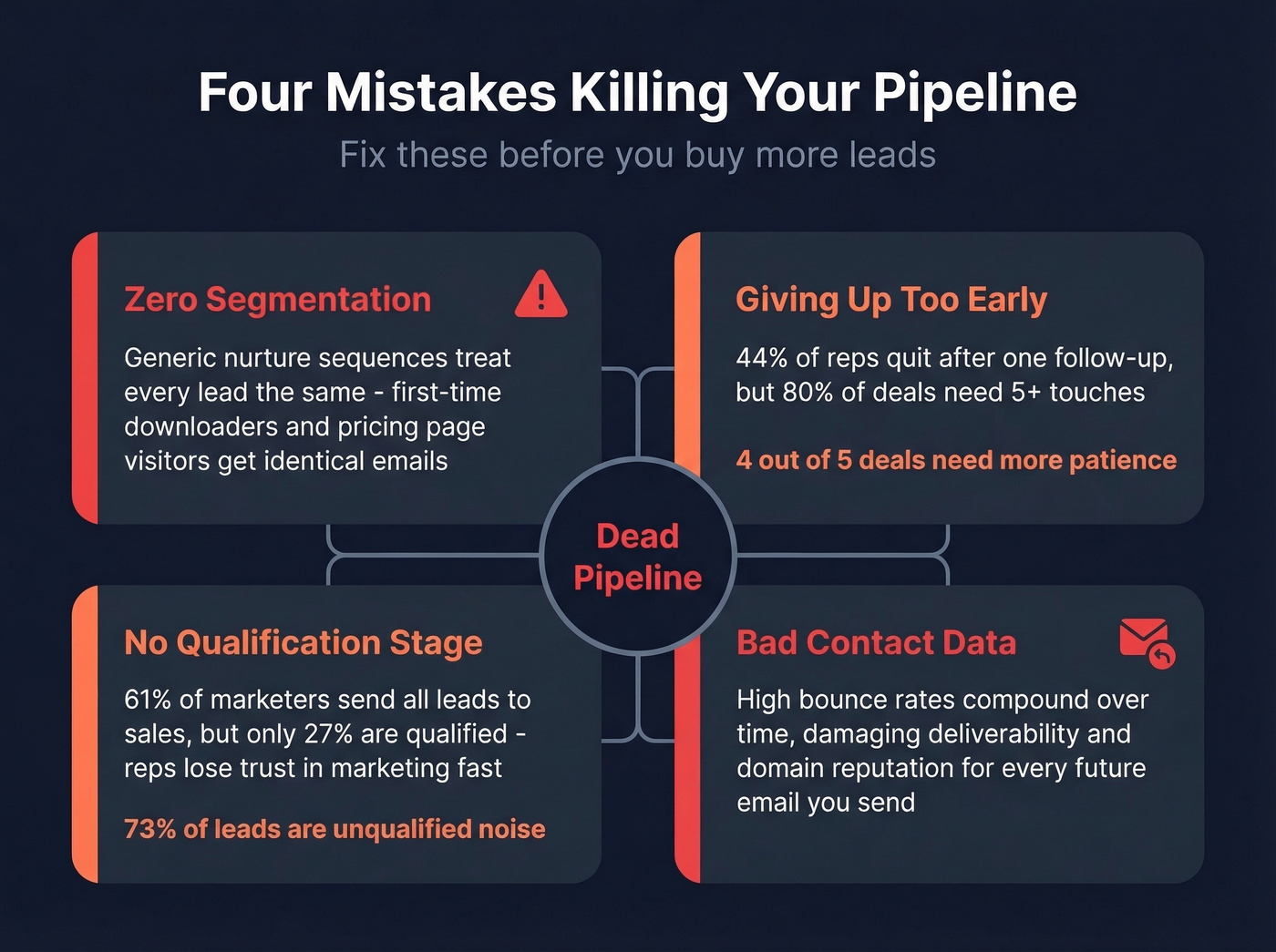
44% of reps give up after one follow-up. Meanwhile, 80% of deals require five or more touches. If your team isn't built to sustain multi-touch sequences, you're abandoning pipeline that's already partially warmed.
Then there's the qualification gap. 61% of B2B marketers send all leads directly to sales, but only 27% are actually qualified. Without a Sales Accepted Lead stage, you're flooding reps with noise and burning their trust in marketing's output.
And the silent killer underneath all of it: bad contact data. High bounce rates damage deliverability and domain reputation over time, which drags down inbox placement for every future email. It's a compounding problem that gets worse the longer you ignore it.

We've seen this firsthand. Snyk's bounce rate sat at 35-40% before they switched to Prospeo's 98%-accuracy verified data on a 7-day refresh cycle. Bounce rate dropped to under 5%, and they started generating 200+ new opportunities per month. If you're running nurture on unverified data, you're burning your domain while thinking you're nurturing leads.
A Nurture Sequence That Works
Here's a five-email framework based on what we've seen work across dozens of implementations:
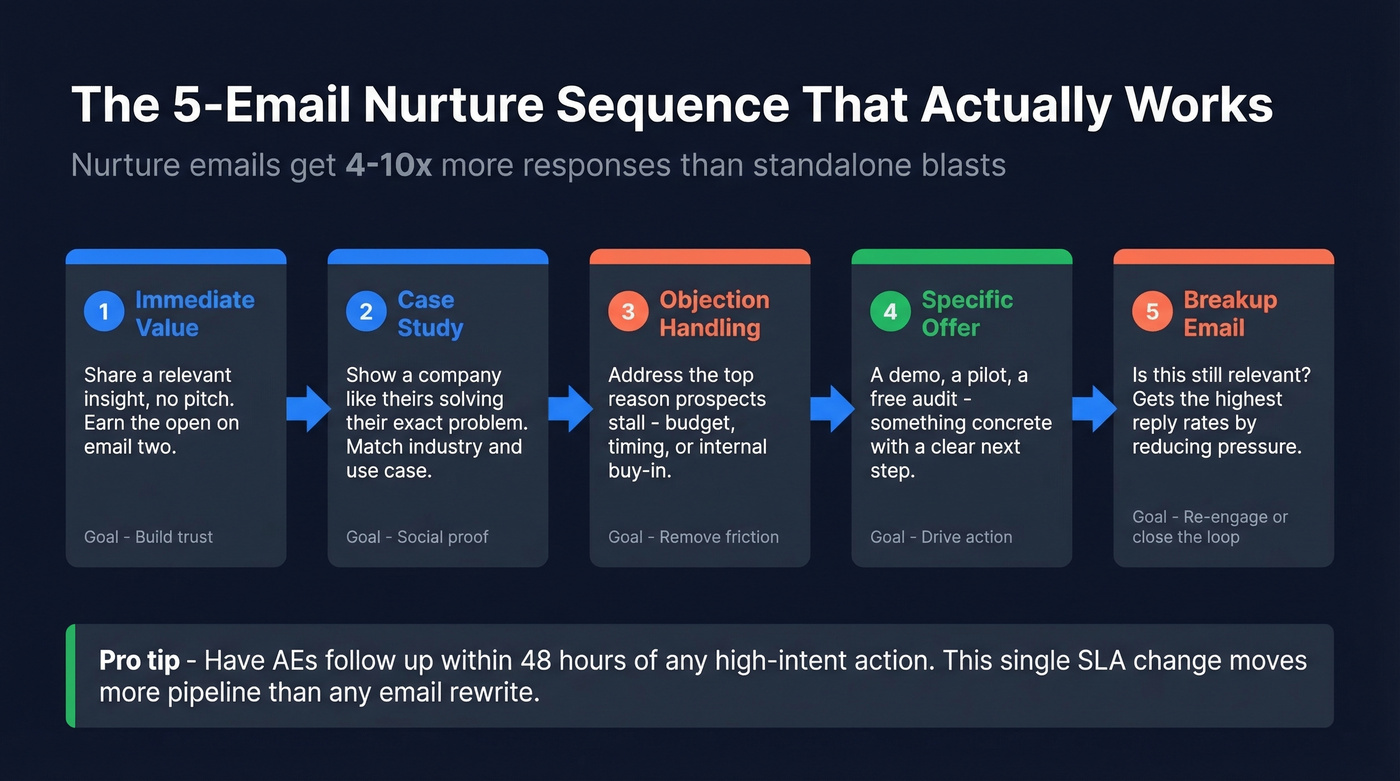
- Immediate value. Share a relevant insight - no pitch. Earn the open on email two.
- Case study. Show a company like theirs solving their problem. Match the story to their industry and use case.
- Objection handling. Address the top reason prospects stall - usually budget, timing, or internal buy-in.
- Specific offer. A demo, a pilot, a free audit - something concrete with a clear next step.
- Breakup email. "Is this still relevant?" These consistently get the highest reply rates because they reduce pressure.
Nurture emails generate 4-10x more responses than standalone blasts. One operational rule worth stealing: have AEs follow up within 48 hours of any high-intent action. That single SLA change moves more pipeline than any email rewrite.
For lead scoring, blend ICP fit with behavioral signals and implement score decay. A lead who was hot six months ago isn't hot anymore. Recalibrate quarterly based on what actually closed, not what marketing thought would close.
Skip the "buy more leads" instinct if your average deal size is under $15k and your bounce rate is above 10%. Fix your data, fix your nurture sequence, and work the leads you already have. You'll generate more pipeline in 90 days than another quarter of top-of-funnel spend would give you.
You don't need more leads - you need to convert the ones you have. Prospeo enriches your existing CRM with 50+ data points per contact at a 92% match rate, so your nurture sequences hit the right person with the right context.
Enrich your pipeline before you expand it. 75 free emails to start.
FAQ
What's the difference between lead generation and lead nurturing?
Lead generation attracts new contacts into your funnel through channels like SEO, ads, and outbound prospecting. Lead nurturing converts those contacts into pipeline through sequenced, personalized follow-up. You need both running simultaneously - neglecting either side starves the other of results.
Which comes first - generation or nurturing?
Generation comes first chronologically; you need leads before you can nurture them. But once you have any pipeline, both should run in parallel. Treating them as sequential phases creates handoff gaps where the vast majority of leads die.
Can small teams handle both effectively?
Yes. Start with one gen channel and one five-email nurture sequence. Automate the sequence, verify your contact data, and iterate quarterly on conversion rates. You don't need a large team - you need clean data and consistent follow-up.