

Lead vs Demand Generation: What Actually Drives Pipeline in 2026
You hit your MQL target last quarter. Marketing celebrated. Pipeline stayed flat. Sales blamed the leads, marketing blamed the follow-up, and the real problem went undiagnosed: you optimized for capturing demand that didn't exist yet.
That's the classic symptom of confusing lead generation with demand generation. 92% of buyers start their research with at least one vendor already in mind, and the pre-contact favorite wins roughly 95% of the time. If you're not on that Day One shortlist, no amount of gated PDFs will save you.
Here's the thing: most B2B teams don't have a lead gen problem. They have a "nobody knows who you are" problem - and they're trying to solve it with form fills.
Definitions That Actually Help
Demand generation is demand creation. You're building awareness, trust, and preference among the 99% of your market that isn't actively buying right now. Ungated content, community presence, thought leadership, events - anything that makes your brand the obvious choice when the buying window opens. The payoff compounds but takes time.
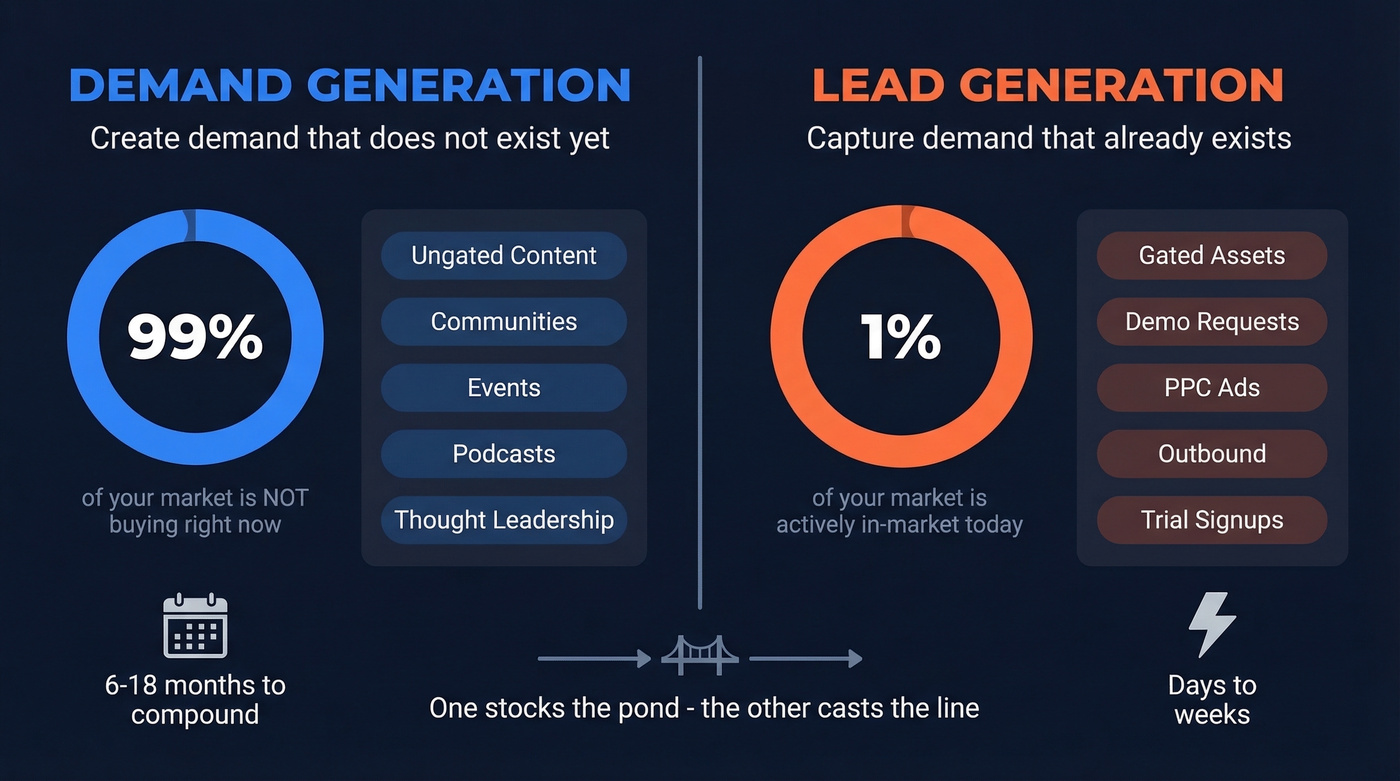
Lead generation is demand capture. You're converting existing interest into contactable prospects through form fills, demo requests, intent-triggered outbound, and trial signups. It works on the 1% who are in-market today. The payoff is immediate but finite.
The mistake most teams make is treating lead gen as the whole strategy. You end up fishing in a pond you never stocked.
How They Actually Differ
| Dimension | Demand Generation | Lead Generation |
|---|---|---|
| Goal | Create awareness + preference | Capture intent + convert |
| Audience stage | Pre-market (99%) | In-market (1%) |
| Timeframe | 6-18 months to compound | Days to weeks |
| Core tactics | Ungated content, communities, events, brand media | Gated assets, demos, outbound, PPC |
| Primary KPIs | Pipeline created, win rate, self-reported attribution | MQLs, SQLs, CPL, conversion rate |
The buyer journey isn't a clean handoff from one to the other. It's non-linear, messy, and involves multiple stakeholders researching in parallel. These categories are useful for budget allocation, not for describing how people actually buy.
Why This Debate Matters Now
Drop into any B2B marketing community and ask whether demand gen is just rebranded lead gen. You'll get a 50-comment thread. The confusion is real - and it costs teams money.
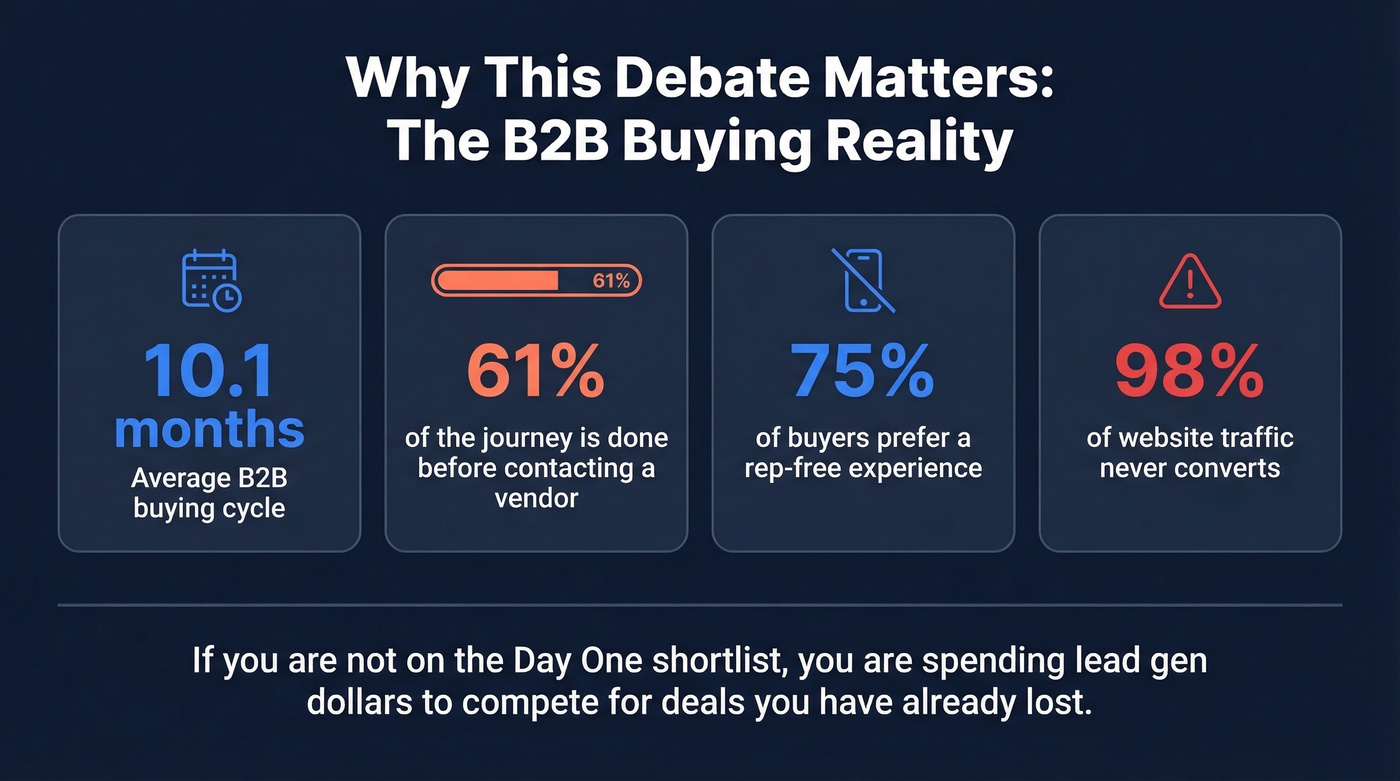
The average B2B buying cycle runs 10.1 months. Buyers don't contact a vendor until they're 61% through that journey, and 75% prefer a rep-free buying experience. Meanwhile, 98% of website traffic never converts and marketing budgets have stagnated around 7.7% of company revenue.
Less money, longer cycles, buyers who don't want to talk to you. If you're not investing in being on that Day One shortlist, you're spending lead gen dollars to compete for deals you've already lost.

Your demand gen built the shortlist. Now your lead gen needs to actually reach buyers. Prospeo gives you 98% verified emails and 125M+ direct dials so your capture motion connects instead of bouncing. At $0.01/email, you stop wasting pipeline on bad data.
Stock the pond, then fish it with data that actually converts.
Budget Splits by Company Stage
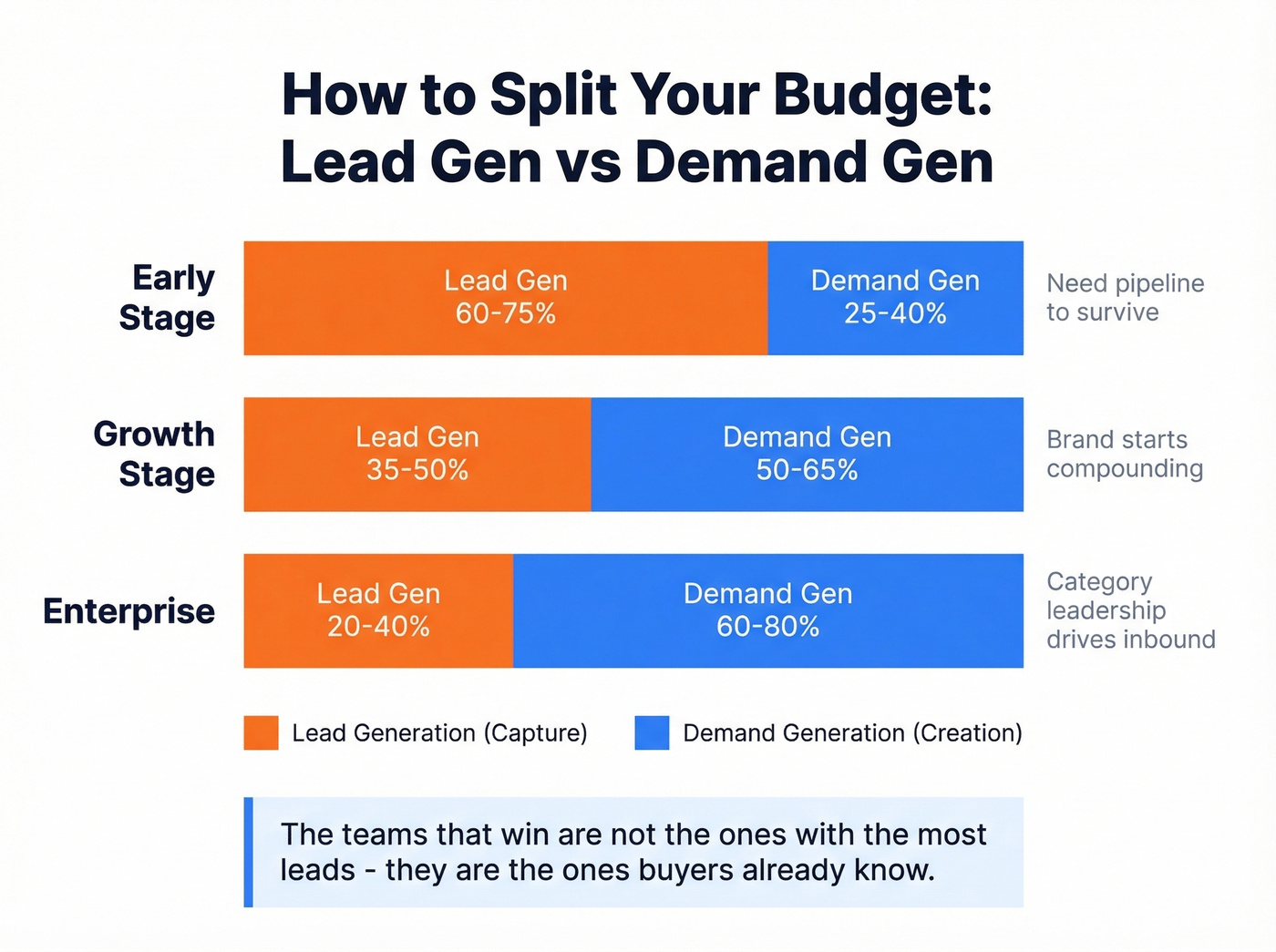
Most guides tell you to "do both." That's not wrong, but it's useless without numbers. Here's the allocation we've seen work at each stage:
| Company Stage | Lead Gen | Demand Gen | Rationale |
|---|---|---|---|
| Early-stage | 60-75% | 25-40% | Need pipeline to survive |
| Growth | 35-50% | 50-65% | Brand compounds |
| Enterprise | 20-40% | 60-80% | Category leadership = inbound |
The teams that win aren't the ones with the most leads - they're the ones buyers already know. If you're still running 75% lead gen at $50M ARR, you're buying the same leads your competitors are, and you're paying more for every one of them.
For channel-level decisions: SEO delivers around 748% ROI, email marketing around 261%, and webinars around 213%. Weight your demand gen mix accordingly.
Measuring What Matters When Attribution Lies
Attribution reports often show ~80% of deals as "direct traffic." Your 90-day attribution window misses early influence on a 10-month buying cycle. So you credit the last touchpoint and conclude that demand gen "doesn't work."
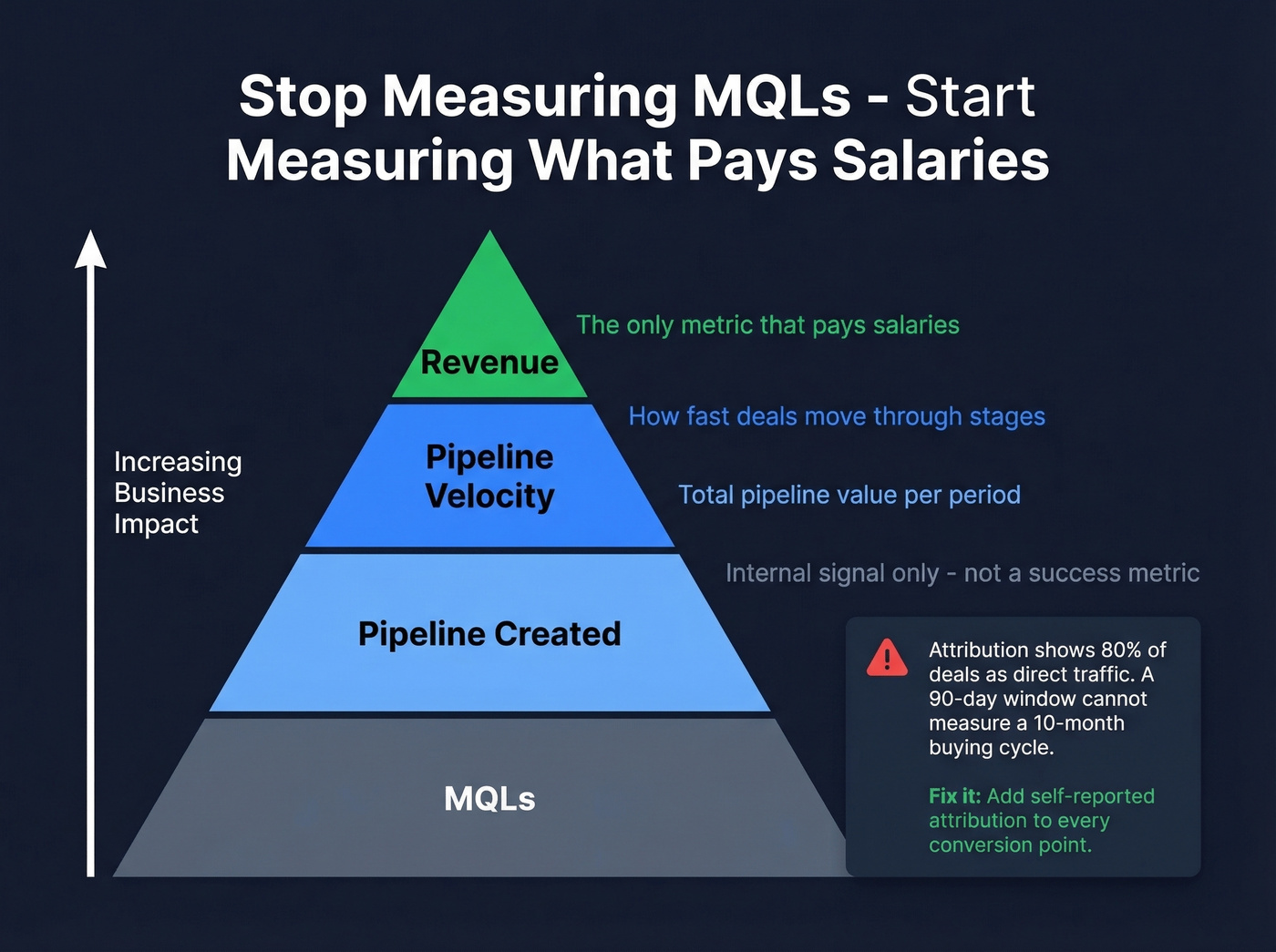
We've tested self-reported attribution across dozens of accounts and it consistently surfaces channels that last-click models miss entirely. Build your measurement stack around what actually reflects reality:
- Self-reported attribution - add "how did you hear about us?" to your demo form
- Pipeline created - total pipeline value per period, not MQLs
- Pipeline velocity - how fast deals move through stages
- Revenue - the only metric that pays salaries
Treat MQLs as an internal signal that an account needs attention, not as a success metric. MQL-to-opportunity conversion sits in single digits for most teams. Let's be honest: if your board deck leads with MQL count, you're measuring activity, not outcomes.
When Things Break
High Traffic, No Pipeline
You've got the eyeballs but nobody's converting. This means your awareness and capture motions are misaligned - demand creation is working, but capture isn't. Add capture mechanisms: chat, demo CTAs, outbound from engaged accounts. Verified contact data ensures your outbound follow-up actually reaches those engaged accounts instead of bouncing into the void.
"Sales Says the Leads Are Junk"
56% of B2B buyers say there's too much content out there. If you're adding to the noise, you'll attract noise back. Tighten your ICP filters. Shift scoring from activity-based - downloaded three PDFs - to fit-based: right title, right company size, right tech stack. We've seen teams cut lead volume by 60% and double pipeline by making that single change.
Attribution Says "Direct" for Everything
This isn't a performance problem. It's a measurement problem. Add self-reported attribution to every conversion point and layer intent data to see which accounts are researching before they raise their hand. If pipeline is growing and win rates are improving, both sides of the equation are working even if your attribution model can't prove it.
Your Demand-to-Pipeline Stack
Think in three layers:
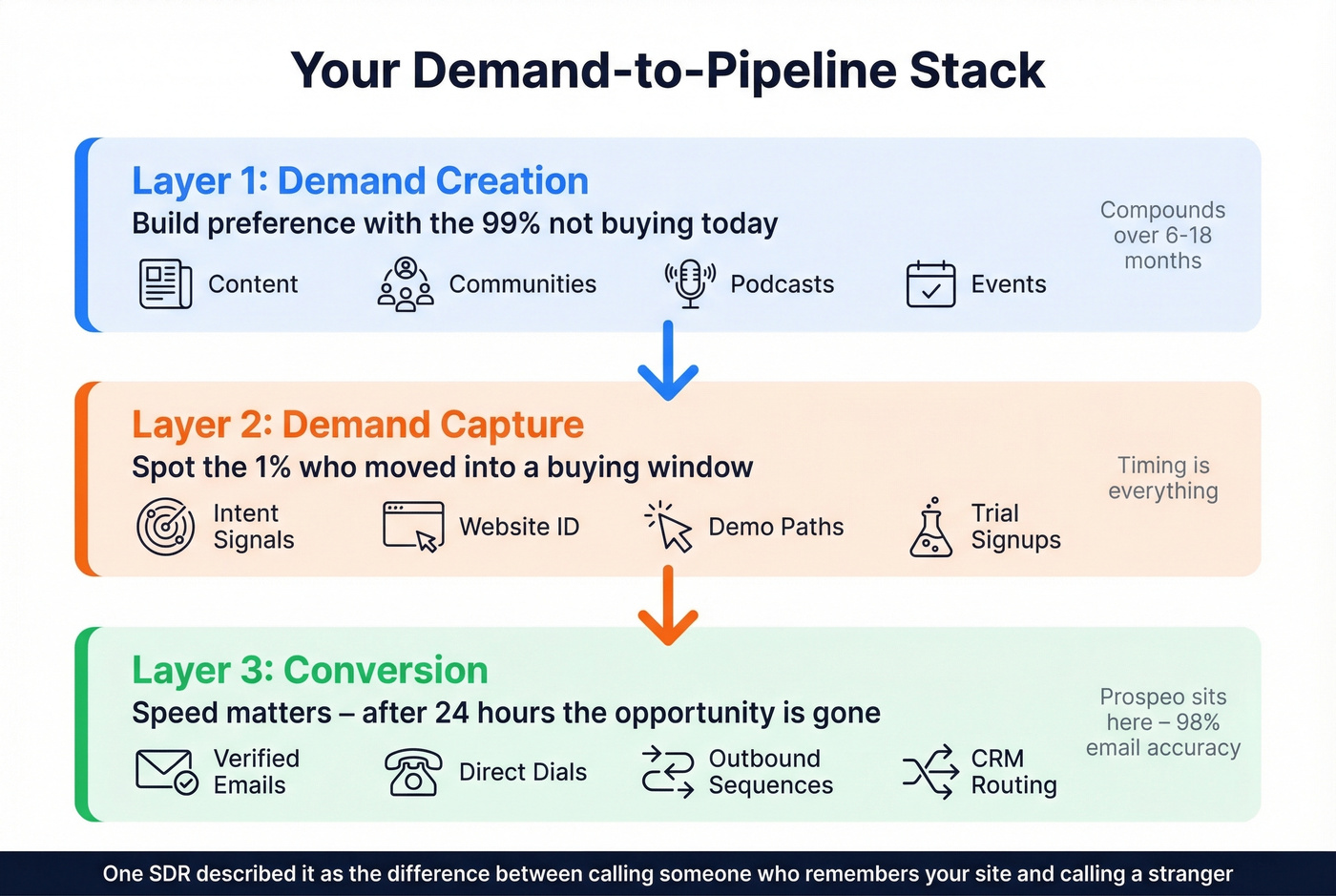
Demand creation - content marketing, communities, events, podcasts. Build preference with the 99% who aren't buying today. Every prospect that enters your pipeline later will convert faster because they already trust your brand.
Demand capture - intent signals, website identification, demo and trial paths. Spot the 1% who've moved into a buying window.
Conversion - verified contact data, outbound sequences, CRM routing. Speed matters here: conversion drops dramatically after one hour, and after 24 hours the opportunity is effectively gone. One SDR we spoke with described it as "the difference between calling someone who remembers visiting your site and calling a stranger."
Prospeo sits in that conversion layer - 300M+ professional profiles with 98% email accuracy on a 7-day refresh cycle, plus intent data across 15,000 topics to spot which accounts are actively researching. Starts free at 75 emails/month.
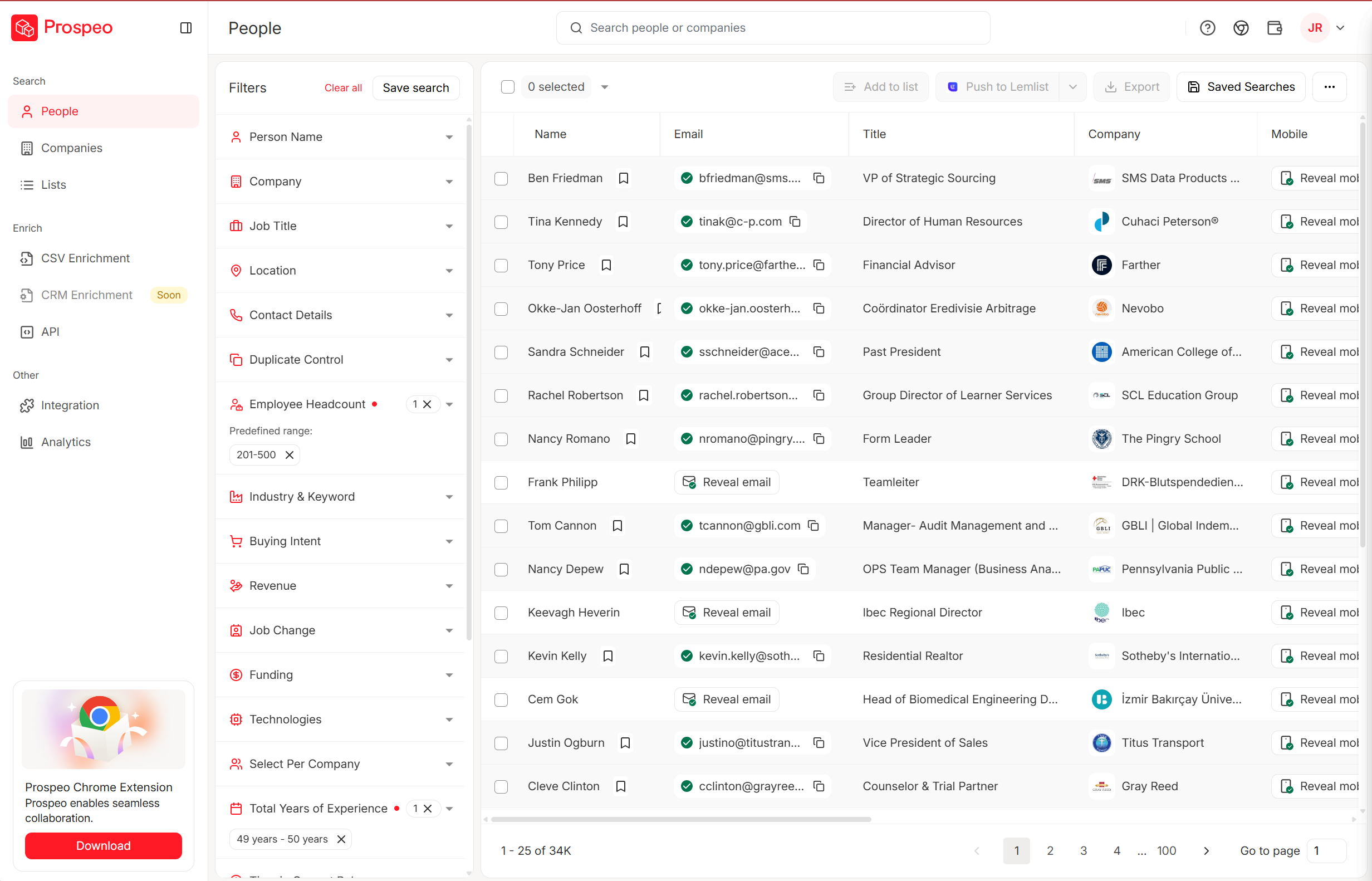
Tightening ICP filters only works if your contact data is accurate. Prospeo's 30+ search filters - intent signals, technographics, headcount growth, funding - let you score on fit, not activity. 83% enrichment match rate. 7-day refresh. The 1% in-market won't slip through.
Cut lead volume by half and double pipeline with fit-based targeting.
FAQ
Is demand generation just rebranded lead generation?
No. Demand gen creates awareness and preference before buyers are ready to purchase. Lead gen captures and converts that existing interest into contacts and pipeline. They're complementary stages - one stocks the pond, the other casts the line.
Which should I invest in first?
If you need pipeline this quarter, start with lead gen and capture tactics. If you're building for compounding growth over 12-18 months, invest in demand gen now - it drives higher win rates and lower CAC long-term. Skip demand gen only if you're genuinely in survival mode and need revenue within 90 days.
Are MQLs dead?
Demoted, not dead. MQL-to-opportunity conversion sits in single digits for most teams. Treat MQLs as an internal alert that an account needs attention, and measure pipeline created and revenue instead.
How do I prove demand gen ROI?
Track pipeline created, pipeline velocity, win rate, and self-reported attribution. A 90-day attribution window is structurally incapable of measuring a 10-month buying cycle - self-reported data fills the gap. The consensus on r/demandgeneration is that teams who add a simple "how did you hear about us?" field are consistently surprised by what they find.
What tools help with capture-to-conversion?
You need intent data to spot in-market accounts, a verified contact database for accurate emails and direct dials, and a sequencing tool for outbound. Speed-to-lead matters, so don't let a 24-hour delay kill a warm opportunity.