

LeadGenius vs QuickEnrich: Managed Research or Self-Serve Enrichment?
Finance just flagged what feels like a ~$22K/year LeadGenius contract. Meanwhile, half the contacts from last quarter's campaign bounced. You're weighing LeadGenius against QuickEnrich and wondering if a $29/month tool could do the same job. Let's break it down.
30-Second Verdict
- LeadGenius wins if you're an enterprise team with a complex global ICP and budget for ~$18K+/year managed research with human-in-the-loop verification.
- QuickEnrich wins if you're budget-conscious, need instant self-serve enrichment, and process around 25K found emails/phones per month on a typical Growth-tier workflow.
What Is LeadGenius?
LeadGenius isn't a database you search - it's a managed research and data enrichment service. You define your ICP, and their team (AI plus human researchers) sources contacts on demand. That model works for niche verticals, global markets, and complex buying committees where off-the-shelf sales prospecting databases fall short.
They also put real weight on privacy and compliance frameworks, including GDPR, CCPA, and LGPD, with transparent sourcing and audit trails.
The tradeoff is cost and speed. Expect $18,000-$81,000+/year depending on scope, with third-party estimates placing the average contract around ~$22,000/year. Delivery can take days to weeks, not seconds. And you're not getting the same kind of self-serve "search a database and export" experience you'd expect from a typical data enrichment service. On G2, LeadGenius sits at 4.3/5 across 14 reviews, and a recurring theme is that some leads arrive outdated or irrelevant.
What Is QuickEnrich?
QuickEnrich is the opposite model - pure self-serve enrichment against a 130M+ contact database. Upload a list or hit their API, and you get double-verified emails using SMTP verification plus catch-all detection, along with a verification date so you can see how recently an email was checked. They also say they never include risky emails, which is a nice touch for email deliverability-conscious teams.
QuickEnrich positions itself on coverage too, claiming 250% more email domains than competitors by finding "true email domains" beyond company websites. Bold claim. Worth testing against your own data before you commit.
Mobile number coverage runs around 25% of enriched contacts. Not great, but they're transparent about it. They integrate with Clay, which matters if you're running waterfall workflows.
Pricing is straightforward: Starter is $29/month and Growth is $99/month, with an Unlimited tier that requires a conversation. One note: their pricing page shows inconsistent credit allotments across tiers, so use the published per-unit rates (~$0.003-$0.005 per found email/phone, depending on plan and billing) as your planning number.

QuickEnrich covers 130M contacts. LeadGenius takes weeks to deliver. Prospeo gives you 300M+ profiles with 98% email accuracy and 125M+ verified mobiles - refreshed every 7 days, not every 6 weeks. Self-serve enrichment that starts at $0.01/email.
Stop choosing between slow research and small databases.
Side-by-Side Comparison
| Feature | LeadGenius | QuickEnrich | Winner |
|---|---|---|---|
| Database size | On-demand research | 130M+ contacts | QuickEnrich |
| Email verification | Human-in-the-loop + process-driven QA | SMTP + catch-all | Tie (different strengths) |
| Email accuracy | Campaign-dependent | Double verified | QuickEnrich |
| Mobile numbers | Included by request / campaign scope | ~25% coverage | QuickEnrich |
| Starting price | ~$18K+/year | $29/mo | QuickEnrich |
| Delivery speed | Days to weeks | Instant | QuickEnrich |
| Self-serve | No | Yes | QuickEnrich |
| CRM integrations | Custom workflows/pipelines | Clay | LeadGenius |
| Compliance framework | GDPR/CCPA/LGPD oriented | Not specified | LeadGenius |
QuickEnrich is the clear pick for speed, transparency, and day-to-day enrichment. LeadGenius is the pick when you need a managed team to build and maintain a very specific dataset - and you're willing to pay for it.
Pricing Breakdown
QuickEnrich is easy to model because it publishes pricing and per-unit rates. LeadGenius is quote-based, so pricing depends heavily on scope and campaign design.
- QuickEnrich: $29/month (Starter) or $99/month (Growth), with per-unit rates roughly $0.003-$0.005 per found email/phone.
- LeadGenius: Quote-based. Contracts commonly land around $18,000-$81,000+/year, with an average near ~$22,000/year.
LeadGenius operates in a completely different cost universe. That premium buys managed research, human-in-the-loop workflows, and compliance-oriented sourcing - but for most teams doing standard B2B enrichment, the math is hard to justify.
The Real Difference
Here's the thing: you probably don't need managed research in 2026.
With emails decaying 25-30% annually, freshness matters more than sourcing method. Industry enrichment benchmarks put single-source accuracy at 70-85% versus 90-98% for waterfall approaches. A self-serve tool that refreshes frequently and verifies at high accuracy will often outperform a managed service delivering older contacts - at a fraction of the cost. We've seen this play out repeatedly with our own users who switched from managed services and immediately saw bounce rates drop.
A Third Option Worth Considering
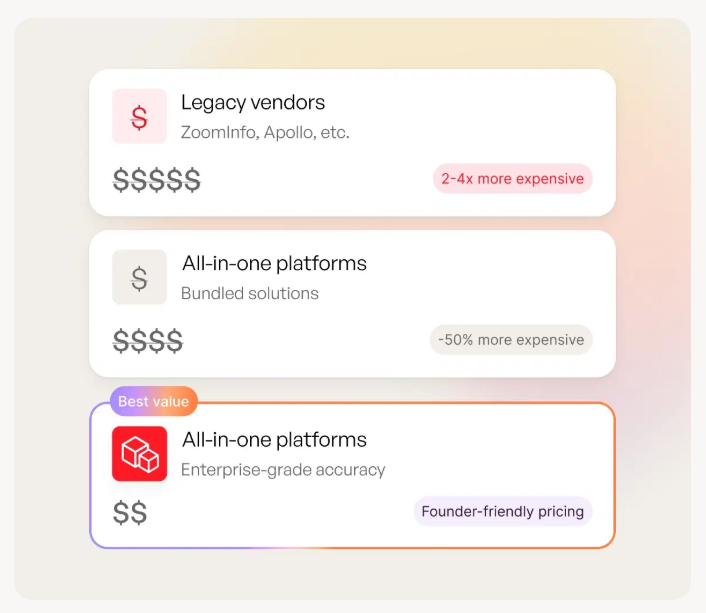
If you want the data quality LeadGenius promises without the enterprise pricing or delivery delays, Prospeo is the stronger pick.
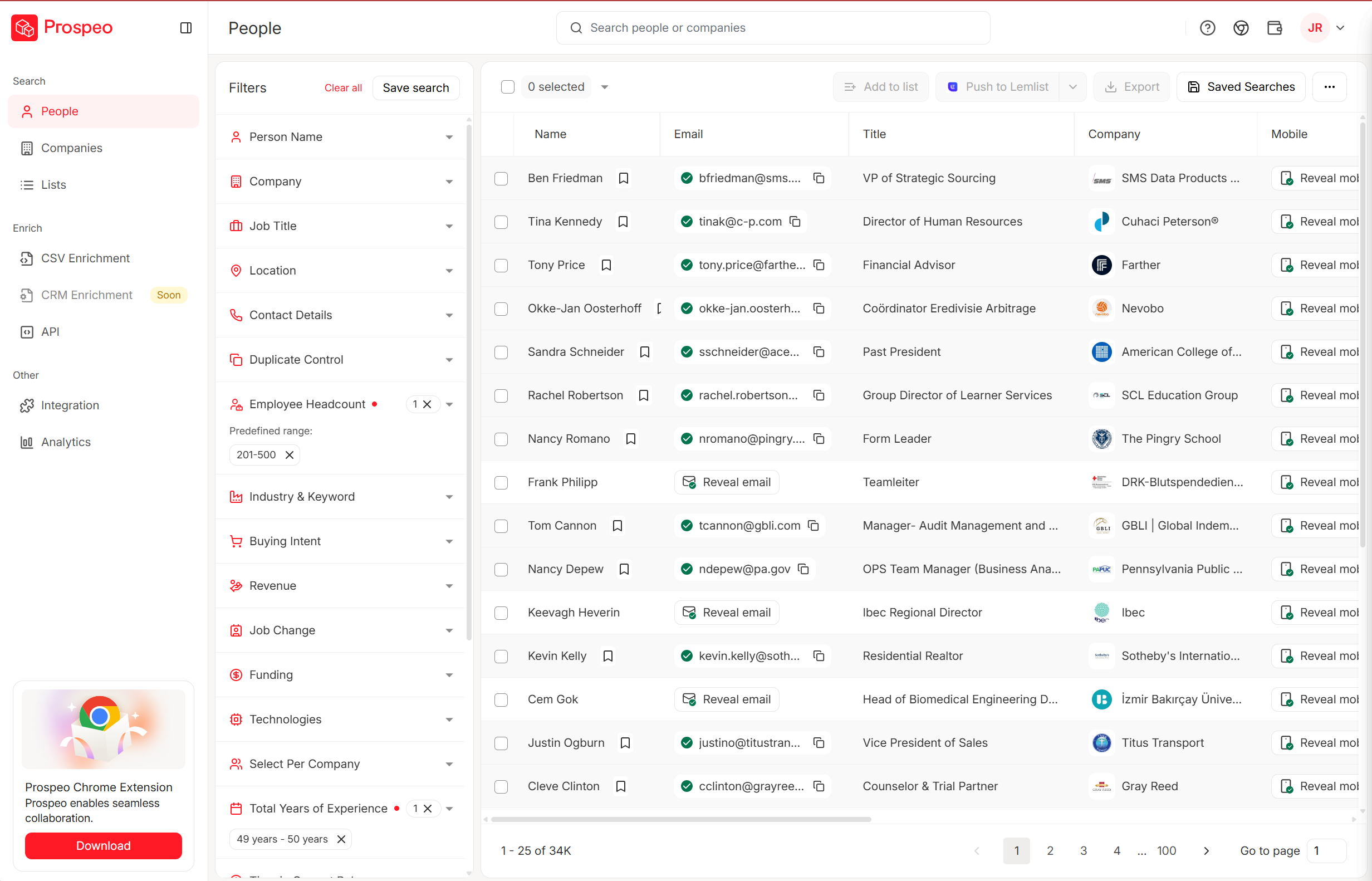
It covers 300M+ professional profiles with 98% verified email accuracy and 125M+ verified mobile numbers with a 30% pickup rate - all refreshed on a 7-day cycle while the industry average sits at 6 weeks. You can search with 30+ filters including buyer intent powered by Bombora, technographics, job changes, and headcount growth signals. Export verified contacts and push them straight to Salesforce, HubSpot, Lemlist, or Clay. The Chrome extension (used by 40,000+ people) enables one-click prospecting from any website.
Real results back this up. Snyk's 50 AEs dropped bounce rates from 35-40% to under 5% and grew AE-sourced pipeline by 180%. Stack Optimize built to $1M ARR while keeping client deliverability above 94% with zero domain flags. Those aren't hypotheticals - they're production numbers from teams that were burning money on bad data before switching.
Pricing starts free with 75 emails/month and 100 Chrome extension credits/month. Paid plans begin at $39/month - no contracts, no sales calls.
Snyk's 50 AEs cut bounce rates from 35-40% to under 5% and grew pipeline 180% after switching to Prospeo. Stack Optimize hit $1M ARR with zero domain flags. That's what 98% accuracy and a 7-day refresh cycle deliver - no $22K contracts required.
Get 75 free verified emails right now - no credit card, no sales call.
FAQ
Is LeadGenius worth the price for small teams?
No. With contracts averaging around $18K-$22K/year, LeadGenius is built for enterprise orgs with six-figure data budgets. If your team spends under $5K/month on data, self-serve enrichment tools will get you instant results at a fraction of the cost.
Does QuickEnrich verify emails before delivery?
Yes. QuickEnrich runs double verification - SMTP checks plus catch-all detection - and doesn't include risky emails. Each record also includes a verification date so you can gauge freshness before sending.
Can I try these tools for free?
QuickEnrich offers a free start, but exact limits aren't published on the pricing page. LeadGenius is quote-based via sales. Prospeo gives 75 free emails and 100 Chrome extension credits monthly with no credit card required - the most generous free tier of the three.
Which tool has better mobile number coverage?
QuickEnrich covers roughly 25% of enriched contacts with mobile numbers. LeadGenius includes mobiles by request within campaign scope but doesn't publish coverage rates. Prospeo offers 125M+ verified mobile numbers with a 30% pickup rate across all regions - the strongest mobile coverage among these three.