


Lusha vs ZoomInfo: Which B2B Data Platform Is Worth Your Budget in 2026?
Whether you're a VP of Sales staring down a ZoomInfo renewal that jumped 10-20%, or an SDR team that burned through Lusha credits by Thursday, this comparison gives you real pricing math, credit breakdowns, and Trustpilot scores instead of vague feature lists.
30-Second Verdict
Choose ZoomInfo if you're an enterprise team with 50+ reps, a budget north of $20k/year, and a genuine need for intent-driven ABM and AI automation at scale.
Choose Lusha if you're an SMB team running email-heavy workflows on a budget under $5k/year. The Chrome extension is fast, the free tier is real, and EU compliance is baked in.
ZoomInfo in 2026
If you've read a comparison of these two platforms recently, there's a good chance it still leans on the old "SalesOS" / "MarketingOS" framing. ZoomInfo's pricing page now emphasizes three tiers: Professional, Copilot Advanced, and Copilot Enterprise.
Professional includes contact and company profiles, advanced search/export, mobile numbers and business emails, CRM integrations, the Chrome extension/mobile app, and AI-powered email generation. That's the baseline. Where things get interesting is the Copilot layer.
The Copilot updates added an Activity-Based Account Feed that surfaces buying signals automatically, an AI Emailer that pulls from historical engagement plus CRM data, and flags for at-risk deals including single-threaded opportunities. Copilot Advanced also includes Account Fit Score and buying group filters - features that genuinely separate it from the Professional tier and justify the price jump for teams that actually use them.
The market proof is hard to argue with: 35,000+ companies use the platform, and ZoomInfo earned 133 #1 rankings in G2's Summer 2025 reports. Their Customer Impact Report claims a 14-point improvement in deals closed (32% to 46%) for Copilot users. That's vendor-reported, so take it with a grain of salt - but even half that lift would justify the cost for enterprise teams running high-volume outbound.
Here's the thing: ZoomInfo is the most powerful B2B data platform on the market. It's also the hardest to leave. Annual contracts, 60 days written notice to cancel , and renewal increases of 10-20% mean you're making a multi-year commitment whether you intended to or not.
Lusha in 2026
Lusha operates in a different weight class entirely. Where ZoomInfo is an enterprise GTM platform, Lusha is a self-serve prospecting tool that gets SDRs moving in minutes.
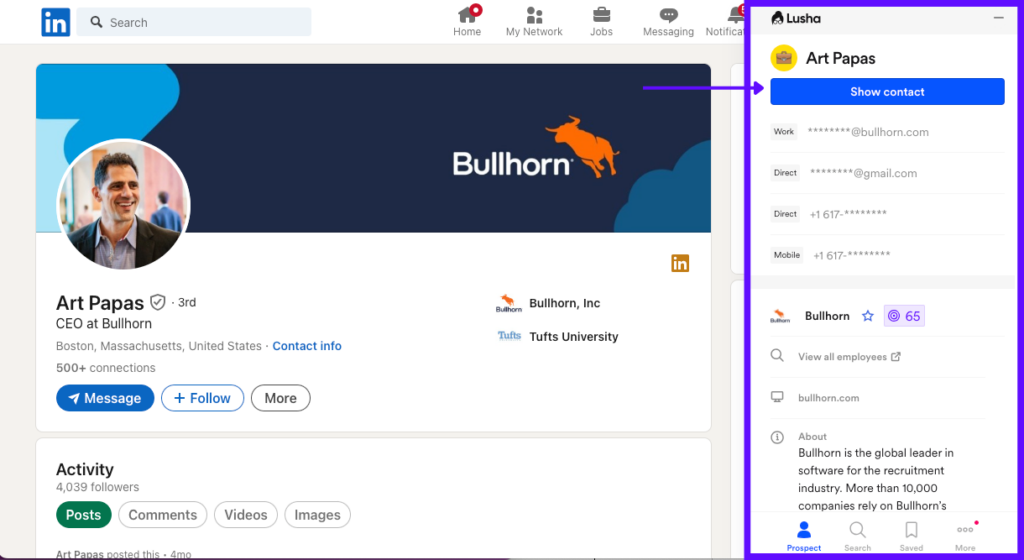
The credit model is the core mechanic: 1 credit reveals an email, 10 credits reveal a phone number. The free tier gives you 70 credits per month - enough for 70 emails or just 7 phone numbers. That math matters a lot more than most people realize.
Lusha is often cited at 98% email deliverability and 85% phone accuracy. Whether those numbers hold up across every ICP is debatable, but at least they're consistently published. ZoomInfo doesn't share comparable accuracy percentages on its pricing page, which makes apples-to-apples comparison harder than it should be.
The Signals API surfaces real-time buying signals like job changes, promotions, headcount growth, and news events, charging 1 credit per enrichment and 1 credit per 25 search results. For teams that want intent-lite without ZoomInfo's price tag, it's a reasonable middle ground.
But the Chrome extension is where most users actually live. It works on professional profiles and company websites, and it's the reason Lusha scores 9.2/10 for Ease of Use on G2 versus ZoomInfo's 8.8. For teams that just need contact data without a six-week implementation, Lusha delivers.

You just saw the numbers: ZoomInfo charges ~$1/email, Lusha ~$0.12, and neither publishes a data refresh cycle you can verify. Prospeo delivers 98% email accuracy at $0.01/email with a 7-day refresh cycle - not monthly, not "unspecified." No annual contracts, no 60-day cancellation traps.
Get the data both platforms charge 10-100x more for.
Head-to-Head Feature Comparison
| Feature | ZoomInfo | Lusha | Edge |
|---|---|---|---|
| Coverage | 174M+ emails; 94M direct dials | 280M contacts | Tie |
| Data accuracy (G2) | 8.2/10 | 7.6/10 | ZoomInfo |
| Phone numbers | Included in plan credits | 10 credits each | ZoomInfo |
| Intent data | Copilot tiers | Signals API | ZoomInfo |
| Data refresh | Not publicly specified | Monthly | Lusha |
| CRM integrations | Salesforce, HubSpot | Salesforce, HubSpot | Tie |
| Onboarding time | Weeks | Minutes | Lusha |
| Contract | Annual only | Monthly available | Lusha |
| Compliance | GDPR/CCPA | GDPR/CCPA/ISO 27701 | Lusha |
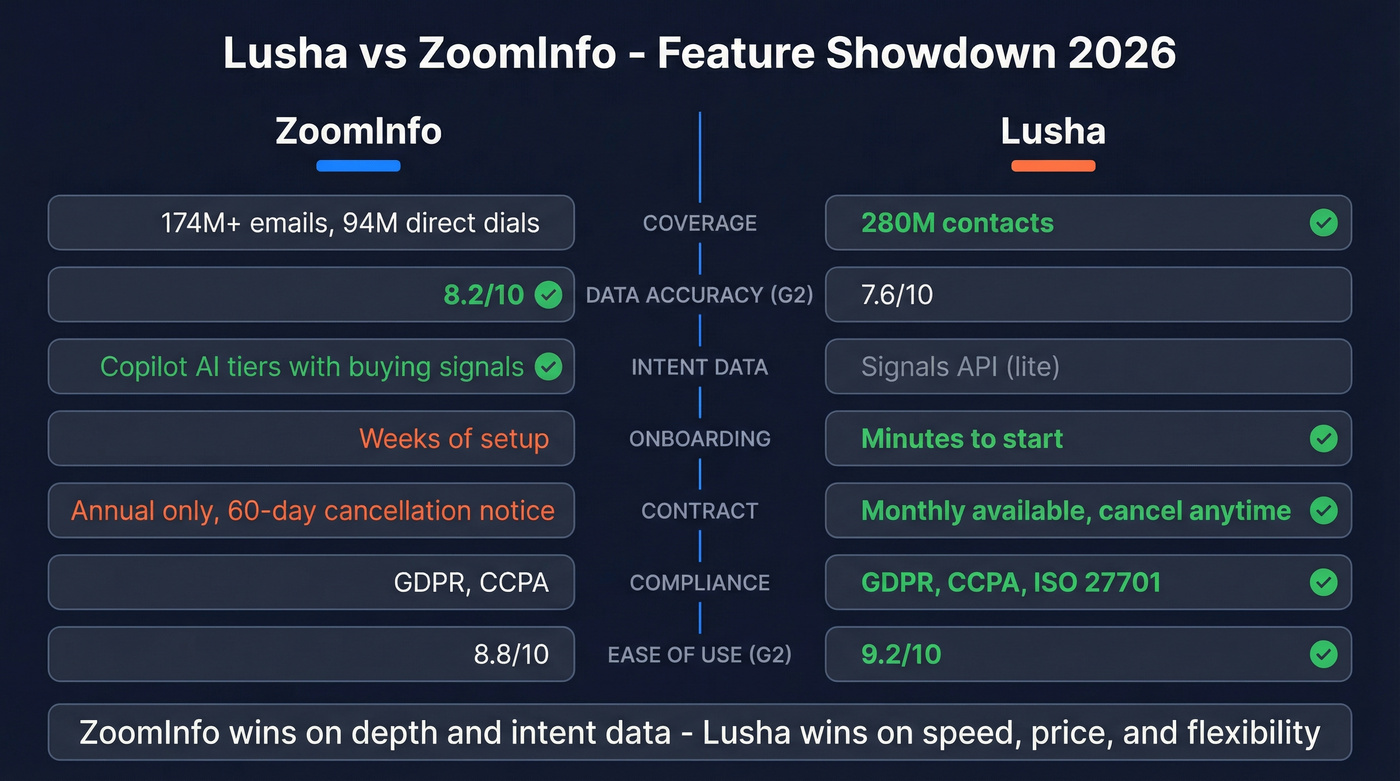
ZoomInfo wins on depth - richer intent data and more sophisticated AI workflows. Lusha wins on accessibility - faster setup, lower cost, monthly flexibility. Neither wins on transparency. The fact that ZoomInfo still doesn't publish pricing in 2026 is frustrating, and Lusha's paid tier pricing is nearly as opaque.
Let's be honest: most teams weighing these two don't actually need either. If your average deal size is under $10k and your team is under 20 reps, you're overpaying for ZoomInfo's depth and underserved by Lusha's credit limits. A dedicated email and phone data tool will outperform both on ROI.
What You'll Actually Pay
ZoomInfo Pricing
ZoomInfo doesn't publish prices, so expect 2-3 weeks of demos before you see a number. Based on publicly discussed ranges:
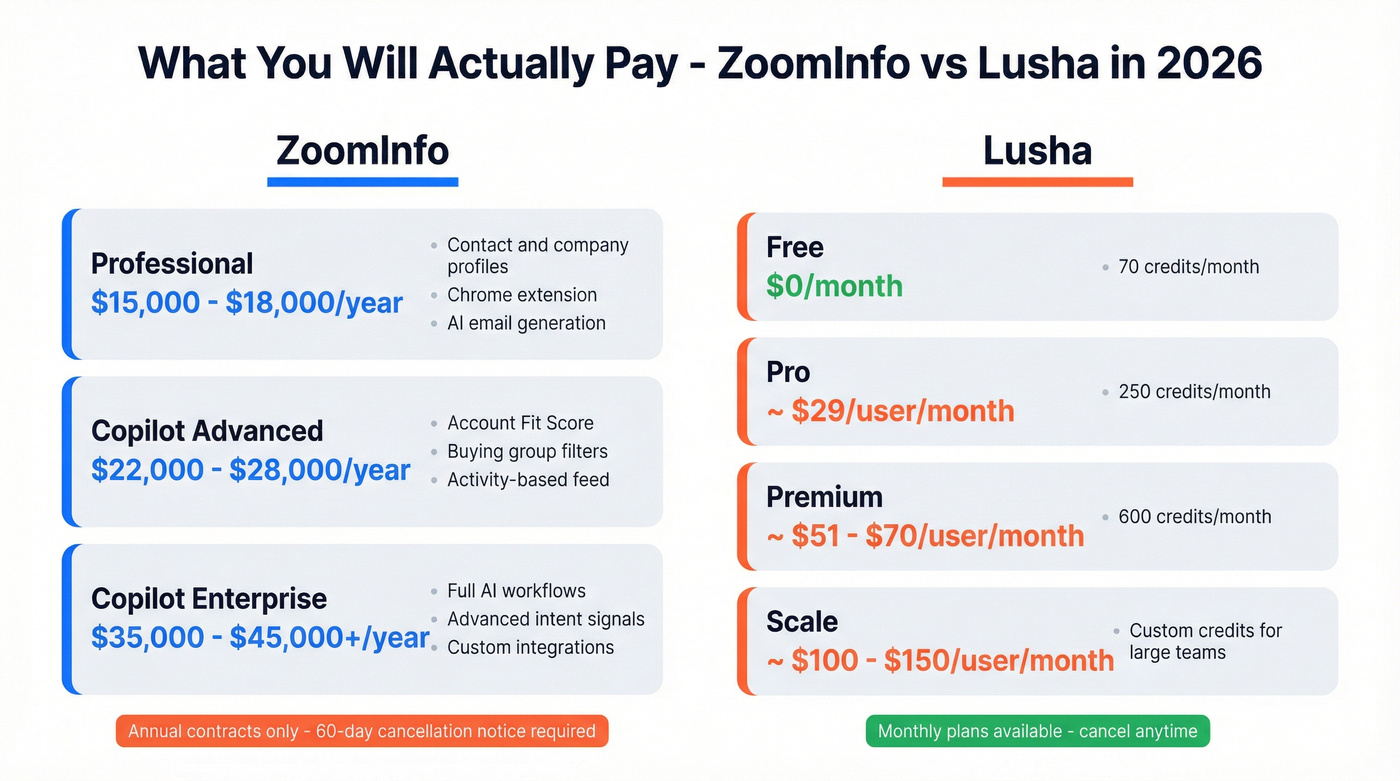
- Professional: $15,000-$18,000/year
- Copilot Advanced: $22,000-$28,000/year
- Copilot Enterprise: $35,000-$45,000+/year
All contracts are annual. Cancellation requires 60 days written notice before renewal. Miss that window and you're locked in for another full year, often at a 10-20% increase. We've heard from teams who set calendar reminders 90 days out just to avoid this trap.
Lusha Pricing
- Free: 70 credits/month
- Pro: ~$29/user/month (250 credits)
- Premium: ~$51-$70/user/month (600 credits)
- Scale: Custom, estimated $100-$150/user/month for large teams
Monthly plans roll over unused credits up to 2x your limit. Annual plans issue credits upfront but reset at cycle end - use them or lose them. You can cancel anytime through Account Settings, a genuine advantage over ZoomInfo's cancellation gauntlet.
Cost-Per-Contact Breakdown
We ran this math so you don't have to.
| Annual cost (est.) | $15,000-$18,000 | ~$350/user/yr | Starts free |
| Cost per email | ~$1/lead | ~$0.12 | ~$0.01 |
| Cost per phone | Included in plan | ~$1.16 | ~$0.10 |
| Data refresh | Not publicly specified | Monthly | 7 days |
| Contract | Annual, 60-day notice | Monthly or annual | No contract |
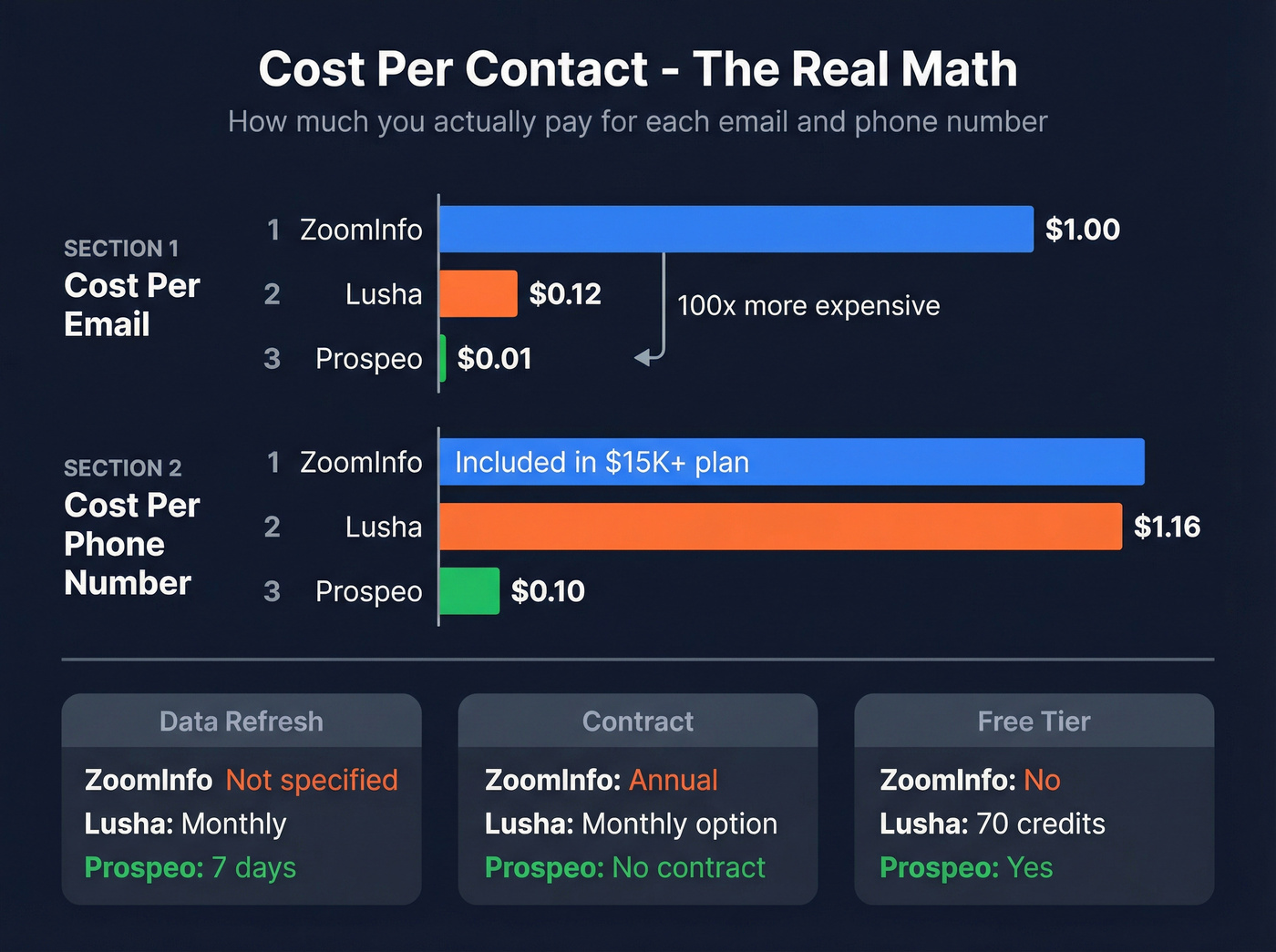
Look at the cost-per-email column. ZoomInfo's per-email cost is roughly 100x Prospeo's and around 8x Lusha's. That gap is hard to justify unless you're actively using intent data, Copilot AI, and the full workflow suite every single day.
What Real Users Say
G2 Ratings
ZoomInfo holds a 4.5/5 across 9,013 reviews. Lusha sits at 4.3/5 with 1,613 reviews. Lusha edges ZoomInfo on Ease of Use (9.2 vs 8.8), while ZoomInfo wins on Quality of Support (8.7 vs 8.1).
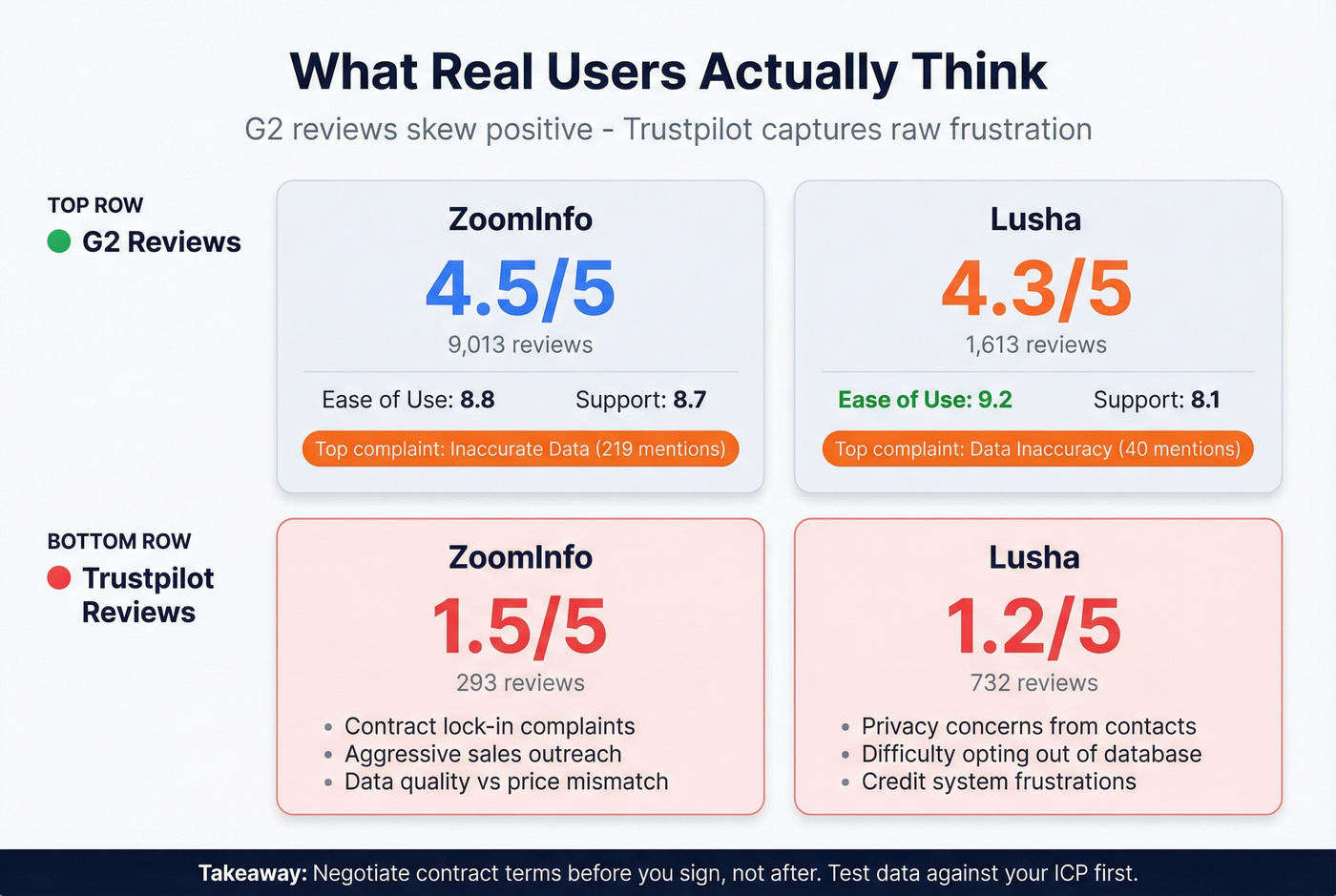
The cons tell a more interesting story. ZoomInfo's top negatives: "Inaccurate Data" (219 mentions) and "Outdated Data" (219 mentions). Lusha's top cons: "Data Inaccuracy" (40 mentions). Smaller review volume, but the complaint rate is comparable when you normalize for sample size.
Trustpilot Tells a Different Story
G2 reviews skew positive - vendors can influence which customers leave feedback. Trustpilot captures raw frustration, and neither platform looks good there.
ZoomInfo on Trustpilot sits at 1.5/5 across 293 reviews. Dominant themes: contract lock-in, aggressive sales outreach after free trial signups, and data quality that doesn't match the price tag. Lusha on Trustpilot is even worse at 1.2/5 across 732 reviews, with complaints skewing toward privacy concerns and difficulty opting out.
The consensus across r/sales threads echoes this: ZoomInfo users feel trapped by contracts, Lusha users feel uneasy about data ethics. Whichever tool you pick, negotiate the contract terms before you sign - not after.
When to Choose Which
Choose ZoomInfo If...
You're running an enterprise sales org with 50+ reps, a budget above $20k/year, and a genuine need for intent-driven ABM at scale. The Copilot AI workflows are powerful when you have the deal volume to justify them. Set up intent-based alerts on day one and segment your account list by ICP fit before burning credits on bulk lookups.
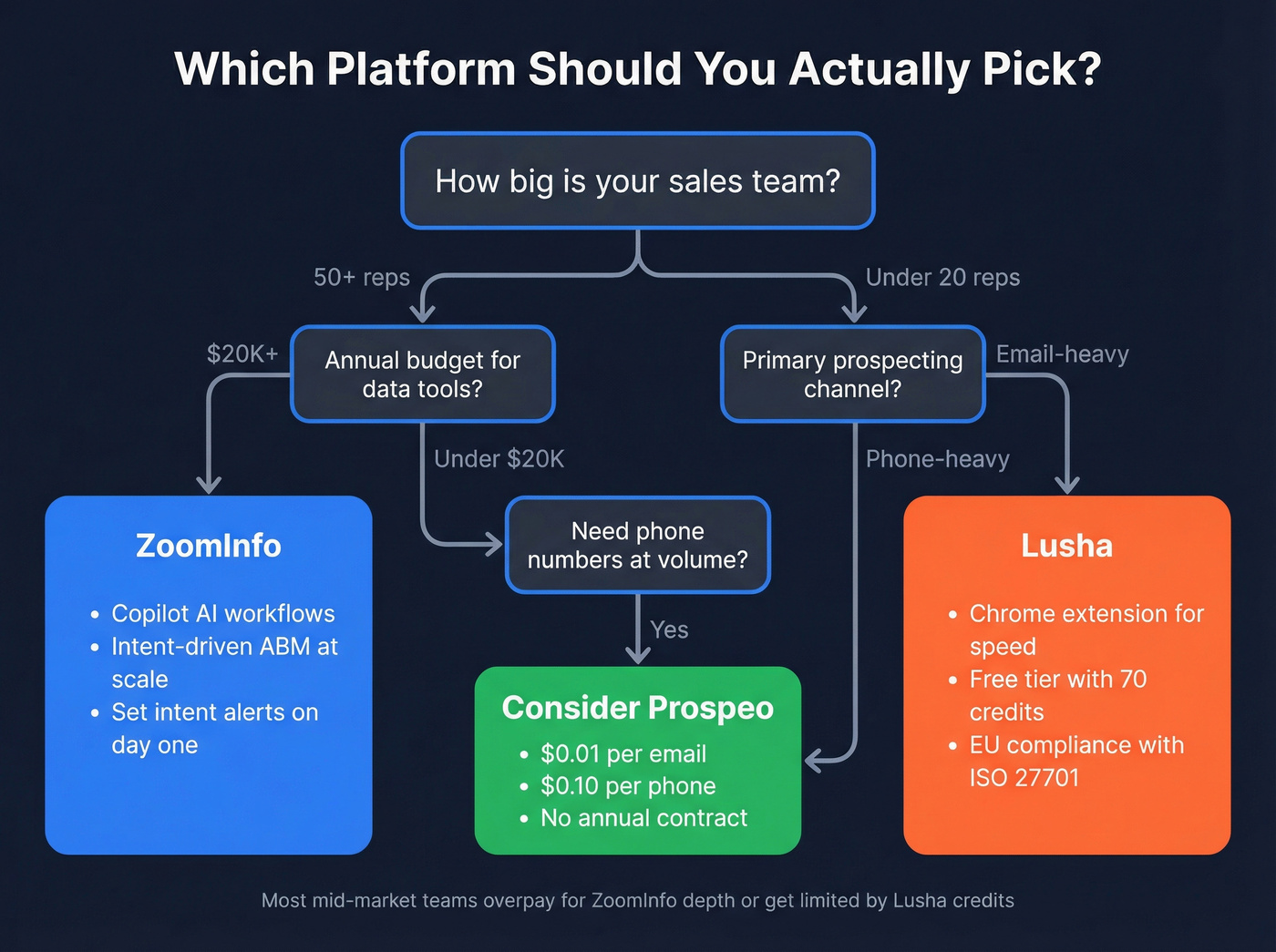
Skip ZoomInfo if your team is under 20 reps. You'll pay for capabilities you won't touch, and the contract will outlast your patience.
Choose Lusha If...
You're an SMB team with email-heavy prospecting and a budget under $5k/year. The Chrome extension is best-in-class for speed, the free tier is legitimately useful, and EU compliance (ISO 27701) is a real differentiator for teams selling into Europe. Just run the credit math first: on the Pro plan, 250 credits gets you 250 emails - or just 25 phone numbers. If your team needs direct dials at volume, Lusha's credit system gets expensive fast.
Lusha charges 10 credits for a single phone number. ZoomInfo locks mobile access behind $15K+ annual contracts. Prospeo gives you 125M+ verified mobile numbers with a 30% pickup rate at ~$0.10 per number - no contract, cancel anytime.
Stop overpaying for phone numbers that nobody answers.
FAQ
Is ZoomInfo worth $15,000 a year?
For enterprise teams running intent-driven ABM with 50+ reps, yes - Copilot's AI workflows and data depth justify the investment. For teams under 20 reps or budgets below $15k, you'll overpay for features you never activate. Most mid-market teams get better ROI from lighter tools like Prospeo or Apollo.
Is Lusha's free plan actually useful?
The 70 monthly credits cover 70 verified emails at no cost - solid for email-only prospecting. But at 10 credits per phone number, you get just 7 direct dials monthly. Most SDR teams burn through free credits within the first week.
Which has more accurate data?
G2 proxy scores give ZoomInfo 8.2/10 and Lusha 7.6/10 for company data accuracy. Both platforms have significant "inaccurate data" complaints in reviews. No independent bake-off exists - test both against your ICP before committing.
Can you cancel ZoomInfo mid-contract?
No. ZoomInfo requires 60 days written notice before your renewal date, and all contracts are annual with no monthly option. Missing the cancellation window locks you in for another full year, often at a 10-20% price increase.
What's a good alternative to both?
Apollo.io works well for budget-conscious teams at ~$49-99/mo per user. Cognism is worth evaluating for UK/EU-focused selling, typically ~$1,000-3,000/mo. Prospeo offers 98% email accuracy at ~$0.01 per email with no annual contract - strongest fit for teams that need verified emails and direct dials without enterprise pricing.