How to Find Similar Companies (And Actually Reach Them)
Your VP drops into Slack: "That Acme deal closed in 18 days. Find me 50 more like them." Simple request. Brutal to execute well.
Reps spend roughly 28% of their week actually selling - the rest vanishes into research, list building, and chasing bad contact data. Learning to find similar companies isn't the hard part. Actually reaching decision-makers at those accounts with verified data? That's where most teams fall apart.
What You Need (Quick Version)
Three steps, in order:
- Define what "similar" means - industry alone isn't enough. Layer in size, business model, and tech stack.
- Generate your list using Apollo Lookalikes, Crunchbase Similar Companies, or one of the five other methods below.
- Verify contacts before outreach - a stale list tanks your domain reputation faster than anything else in your outbound stack (see email verification).
Define "Similar" Before You Search
The biggest mistake we see: teams type an industry into a search bar and call it a lookalike list. That's how you end up with 500 "SaaS companies" ranging from two-person bootstrapped tools to $2B public enterprises. Another common miss is ignoring business model entirely - a sales-led B2B company and a PLG consumer app can share an industry code and have nothing else in common.
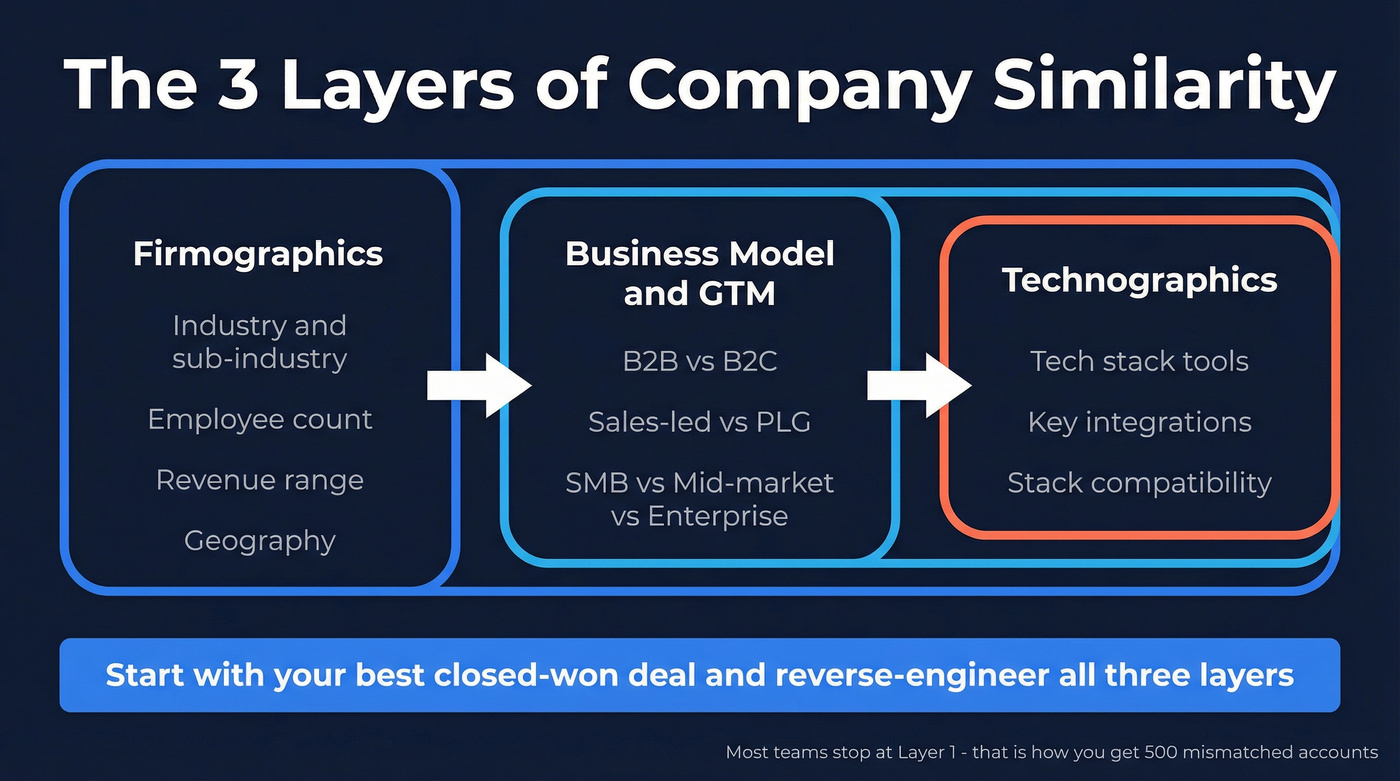
A useful framework breaks similarity into three layers:
- Firmographics - industry, sub-industry, employee count, revenue range, geography (more on firmographic and technographic data)
- Business model and GTM motion - B2B vs. B2C, sales-led vs. PLG, SMB vs. mid-market vs. enterprise (tie this into account-based prospecting)
- Technographics - what tools they run, which integrations matter, stack compatibility (see technographic data for lead scoring)
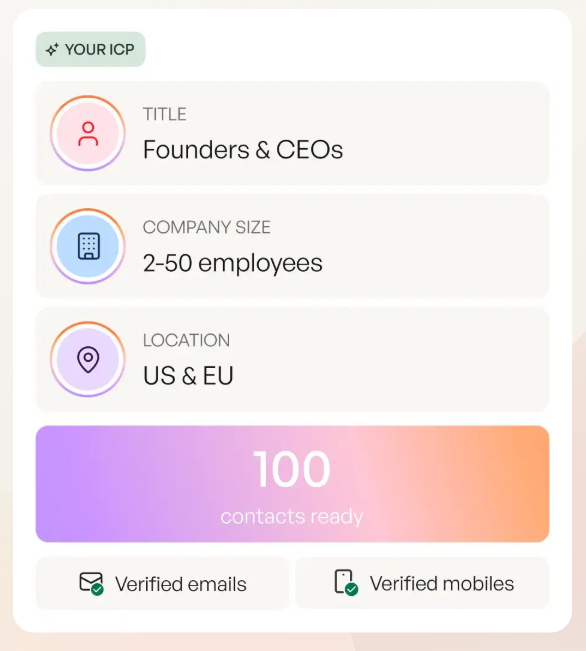
Start with a "hero account" - your best closed-won deal - and reverse-engineer what made them a fit. Pull language from their company page, job postings, and product descriptions. Those keywords become your search filters. Company pages often show "People Also Viewed" suggestions, which surface adjacent players you'd never find through industry codes alone.
7 Ways to Find Similar Companies Online
Apollo Lookalikes
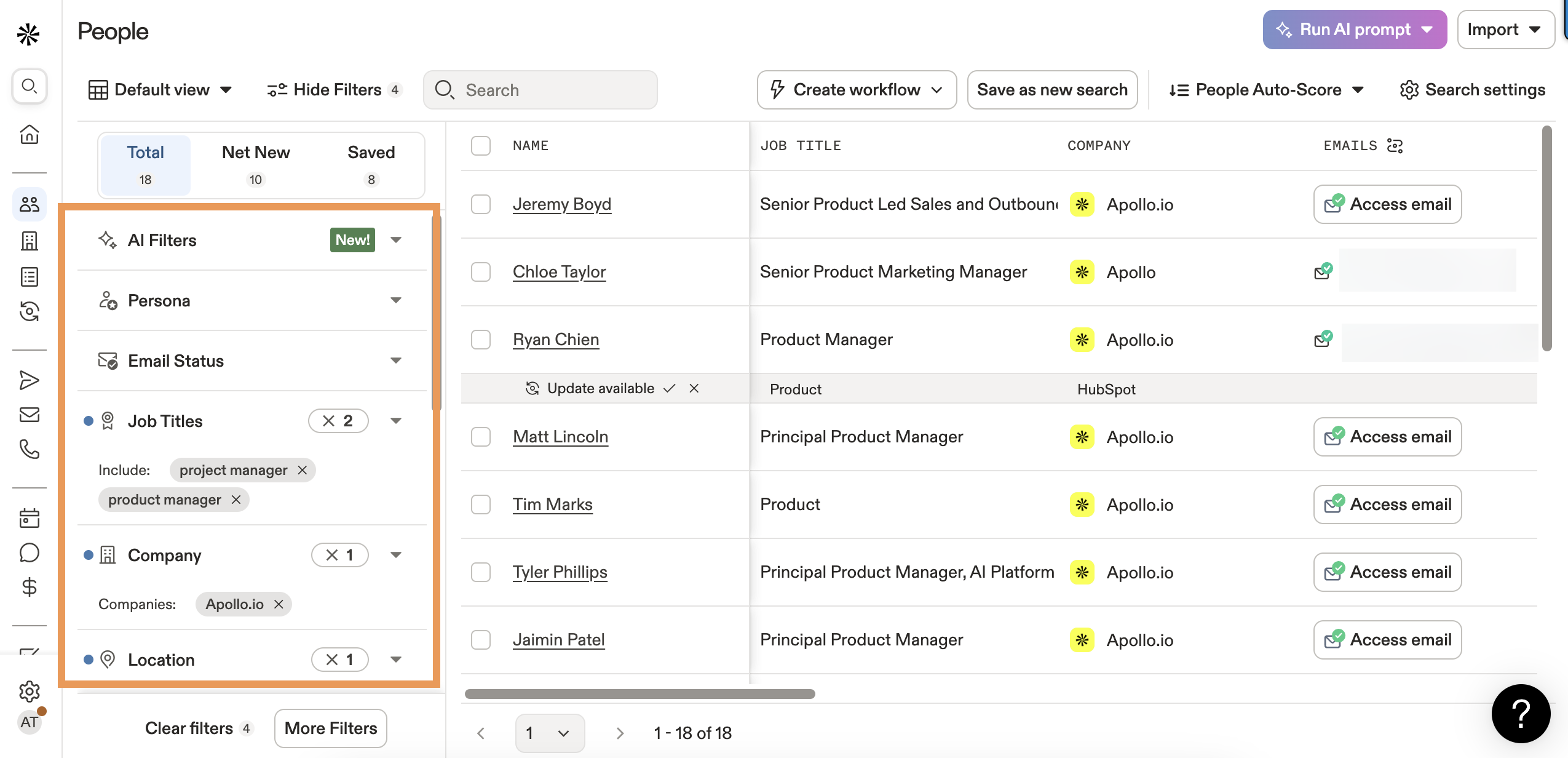
Use this if you want lookalike discovery and outreach sequencing in one platform. Apollo's database covers 270M+ contacts, and it's known for granular ICP targeting - layer industry, headcount, revenue, tech stack, and job titles in a single search. Apollo integrates with Salesforce, and the built-in sequencer means you go from list to live campaign without switching tools. TrustRadius users rate it 8.4/10.
Skip this if you need transparent credit consumption. The most consistent complaint is that credit usage isn't always clear - you'll burn through credits faster than expected. Users also note it's primarily an email platform; LinkedIn steps aren't ideal. Pricing runs $59-$119/user/mo, with lower tiers requiring annual billing.
Crunchbase Similar Companies
Use this if you're prospecting based on funding signals, investor overlap, or growth trajectory. Crunchbase's machine-learning-powered "Similar Companies" feature surfaces accounts that share attributes like industry and growth signals, and it's personalized based on your activity inside the platform. It's one of the strongest tools for discovering companies that just raised a round or hired a new CTO.
Skip this if you need fresh, reliable contact data. TrustRadius gives it a 6.6/10, with recurring complaints about outdated information and slow customer support. The free tier is useful for discovery; paid plans run around $29-$99/user/mo depending on tier.
Oppwiser
Oppwiser's AI similarity scoring factors in PPC and keyword overlap - not just firmographics. This catches digital competitors that traditional filters miss entirely. Pricing is transparent: Free gives you 10 results, Starter ($49/mo) unlocks unlimited lookalike results with 500 emails/phone numbers, and Premium ($99/mo) bumps you to 2,500 emails/phone numbers. The database is smaller than Apollo or ZoomInfo, so treat it as a discovery layer rather than a full prospecting stack.
ColdIQ Free Tool
ColdIQ's similar-company finder exports the top 100 matches as a CSV with match scores, industries, and contact info. It's a sanity check - useful for validating your ICP hypothesis or generating a starter list, but not deep enough for serious pipeline building. Contact data will need verification before you touch it.
Sales Navigator Account Filters
Sales Navigator lets you slice by annual revenue, headcount, headcount growth, HQ location, industry, and technologies used. Buyer intent spotlights add a timing layer to help you prioritize accounts showing purchase signals (see intent signals). At ~$99.99/user/mo it isn't cheap, but the filtering depth makes it a staple in most outbound workflows.
Google + SIC/NAICS Codes
Free and underrated. Look up your hero account's SIC or NAICS code, then search that code alongside geographic or size qualifiers. Combine with "People Also Viewed" suggestions on company pages for a zero-cost discovery workflow. For teams that need to identify lookalike accounts without spending a dime, this is the place to start.
SEO Competitor Tools
Semrush (~$140/mo) and Ahrefs (~$129/mo) both have organic competitor reports that surface companies competing for the same keywords. Fair warning: these are digital competitors, not necessarily business-model matches. A SaaS company and a media site can compete for the same keyword without being remotely similar prospects. Useful as a supplementary signal, not a primary method.

You just built a lookalike list. Now what? Prospeo turns company names into verified decision-maker contacts - 98% email accuracy, 125M+ direct dials, refreshed every 7 days. Layer 30+ filters including technographics and buyer intent to match your hero account profile exactly.
Stop finding companies you can't actually reach.
Tool Comparison
Here's how the seven methods stack up side by side.
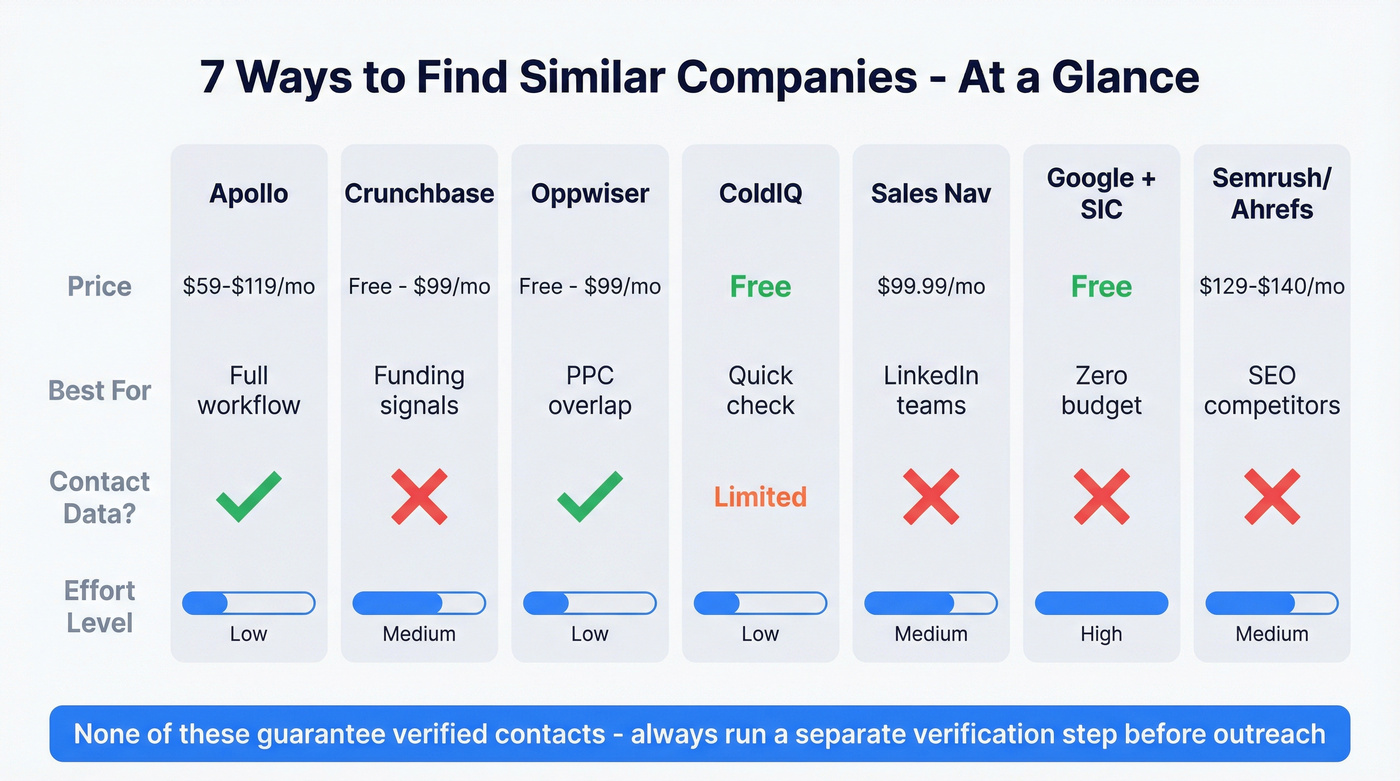
| Tool | Method | Output | Pricing | Best For |
|---|---|---|---|---|
| Apollo | Filter + lookalike | Contacts + sequences | $59-$119/user/mo | Full prospecting workflow |
| Crunchbase | ML recommendations | Company profiles | Free-~$99/user/mo | Funding-signal discovery |
| Oppwiser | AI similarity scoring | Company + contacts | Free-$99/mo | Keyword/PPC overlap |
| ColdIQ | Database scan | CSV (top 100) | Free | Quick sanity check |
| Sales Navigator | Account filters | Company profiles | ~$99.99/user/mo | LinkedIn-native teams |
| Google + SIC/NAICS | Manual search | Company names | Free | Zero-budget research |
| Semrush/Ahrefs | SEO competitor report | Domain list | ~$129-$140/mo | Digital competitor mapping |
Your List Is Useless Without Verified Contacts
Here's the thing: every tool above gives you companies. None of them guarantee you can actually reach anyone at those accounts.
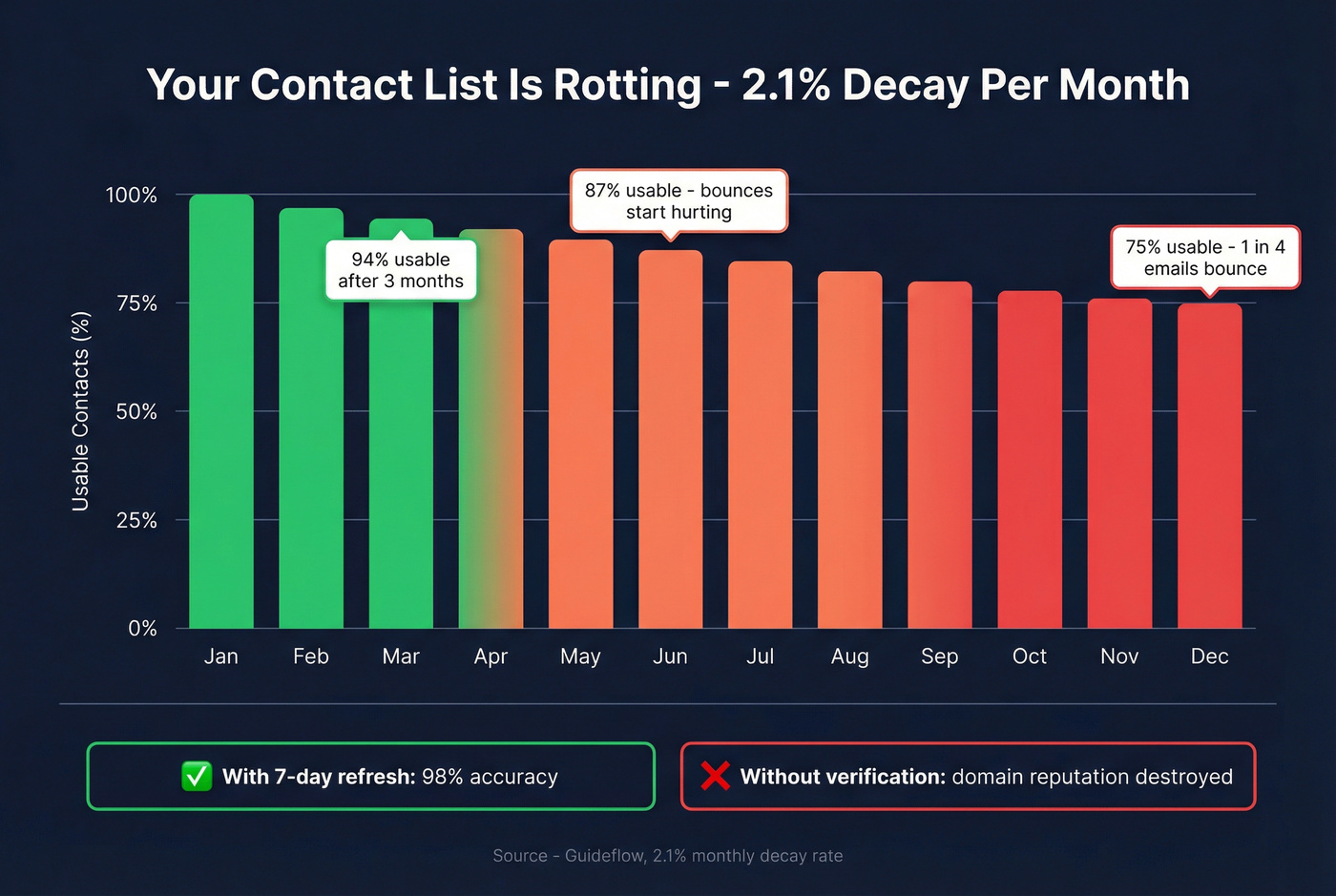
The standard outbound workflow is straightforward - use a lookalike or discovery method to get the accounts, then run a separate enrichment and verification step before you send a single email (see data enrichment for cold email). Contact data decays at roughly 2.1% per month. A list you built in January is 25% stale by December. We've watched teams launch sequences off "verified" lists only to hit dozens of bounces in the first batch, enough to tank domain reputation and land future emails in spam (use this email deliverability checklist).
Upload your lookalike company list to Prospeo's B2B database, filter by job title and seniority, and export verified emails and direct dials for the decision-makers you actually need. With 300M+ professional profiles, 98% email accuracy, and a 7-day data refresh cycle, the records you pull are current - not six weeks old. At roughly $0.01 per email, it's a fraction of what enterprise platforms charge for worse accuracy.
Every record runs through a proprietary 5-step verification process that filters out catch-all domains, spam traps, and honeypots. The result: your sequences actually land (and you avoid a hard bounce).
Hot take: If your average deal size is under five figures, you almost certainly don't need ZoomInfo-level tooling. A free lookalike finder plus a dedicated verification layer will outperform a $30k/year platform you only use at 20% capacity.
Buying Signals That Separate Lists From Pipeline
A lookalike list tells you who looks like your best customers. It doesn't tell you when they're ready to buy. Layer these signals on top:
- Hiring activity - a company hiring three SDRs probably needs sales tools (track hiring signals for sales)
- Funding rounds - recently funded companies have budget and urgency
- Shared investors - 92% of buyers trust referrals from people they know, and a warm intro through a shared investor converts dramatically better than cold outreach
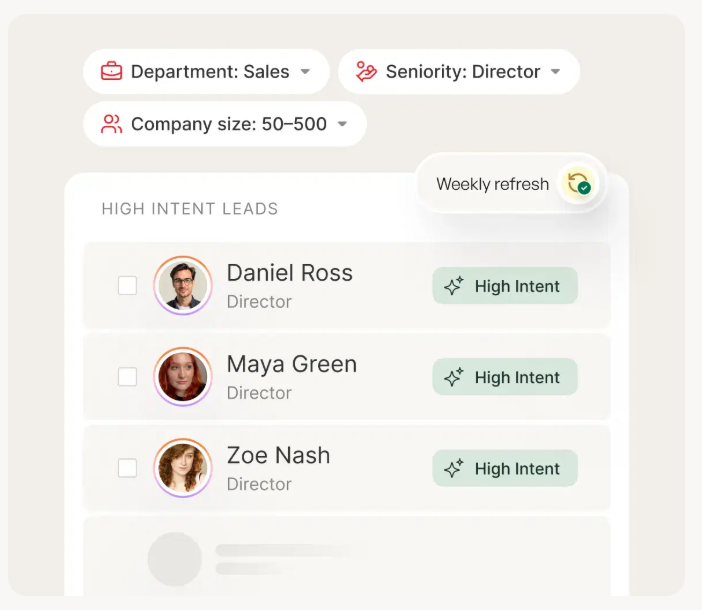
- Intent data - track topics your buyers research to filter your lookalike list down to accounts actively in-market (see buying signals follow up)
Stop searching for similar companies. Start searching for similar buying situations. A company that matches your ICP firmographics but isn't in-market is just a name on a spreadsheet. A company that's hiring, just raised a round, and is researching your category? That's a deal waiting to happen.
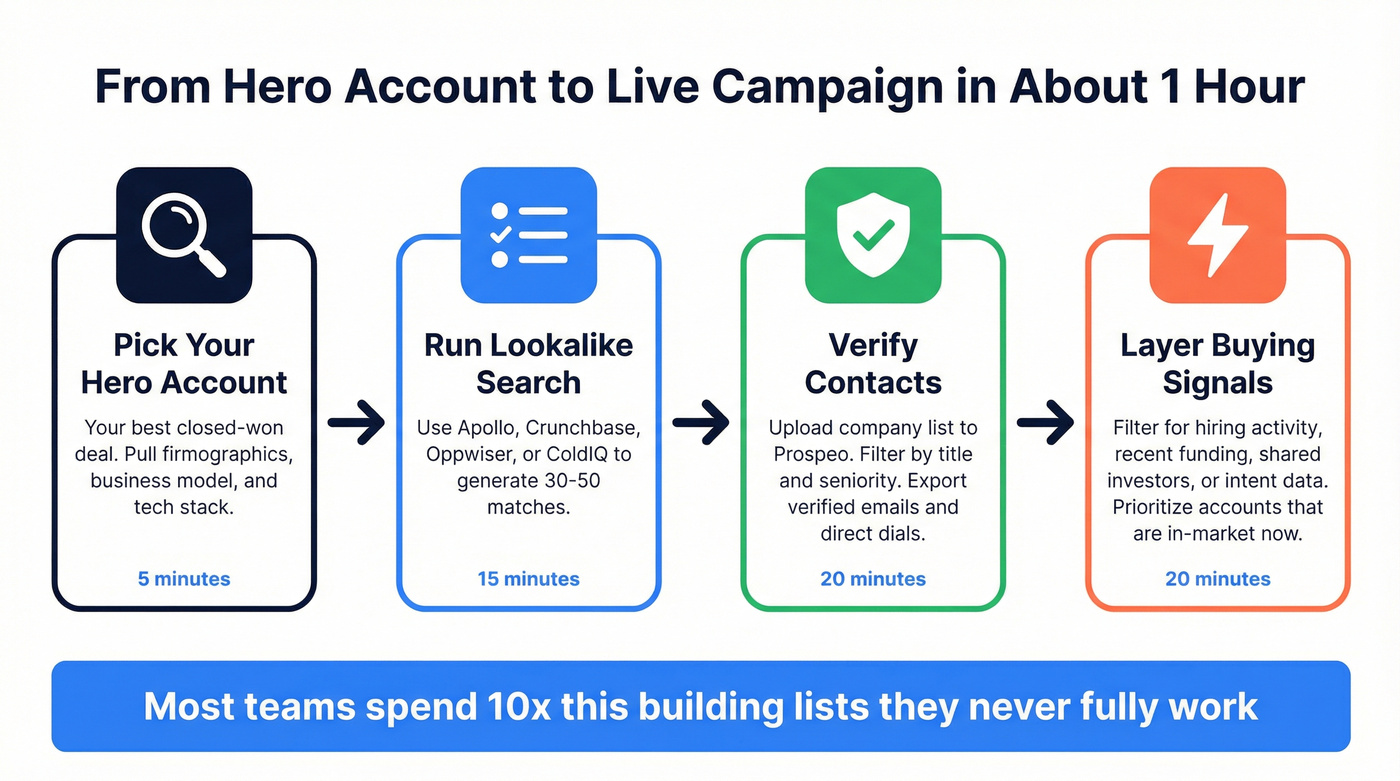
In our experience, the fastest path from hero account to live campaign takes around an hour when you pair a lookalike tool with a verification step and one intent signal. Let's be honest - most teams spend ten times that building lists they never fully work.
FAQ
What's the difference between competitors and similar companies?
Competitors sell the same product to the same buyers. Similar companies share firmographic traits - industry, size, business model - but they might serve entirely different markets. For prospecting, you want similar companies, not just competitors. Your best customer's competitor could be a terrible fit for your product.
How can I find similar companies for free?
ColdIQ exports 100 lookalike accounts as a free CSV. Google plus SIC/NAICS codes works with zero tools. Apollo and Oppwiser both have free tiers with limited results. For verified contact data afterward, Prospeo offers 75 free email lookups per month - enough to test the workflow before committing.
How many lookalike accounts should I target?
Start with 30-50 high-fit lookalikes modeled on your best closed-won deal. Quality beats quantity - 50 verified, well-matched accounts with real contact data outperform 500 loosely filtered names with stale emails every single time. Scale up only after your first batch validates the ICP criteria.
Contact data decays 2.1% per month. Every tool above gives you companies - Prospeo gives you the people inside them with data refreshed weekly, not every 6 weeks. CRM enrichment returns 50+ data points per contact at 92% match rate, so your lookalike list converts to pipeline instead of bounces.
Turn your similar-company list into booked meetings for $0.01 per email.