Data Enrichment for Cold Email: 2026 Guide
Your SDR uploads 5,000 "enriched" contacts from last quarter's list build. By Tuesday morning, 400 have bounced. By Wednesday, your sending domain's reputation is in the gutter - and it'll take weeks to claw it back.
This isn't a hypothetical. Cold campaigns average a 7.5% bounce rate, and 43% of teams say bad data is their number one problem. Most cold email failures aren't copy failures. They're data failures.
The fix isn't better subject lines. It's getting the data right before you hit send.
What You Need (Quick Version)
- A verification step before every send. Your bounce rate target is under 2%. Non-negotiable.
- Enriched fields that power personalization - job title, company size, funding signals, tech stack. Personalized subject lines are 26% more likely to be opened 26% more likely to be opened.
Everything below is the how and why.
What Enrichment Actually Means for Cold Outreach
You start with a name and a company. You end with a record that tells you their title, seniority, company headcount, tech stack, recent funding, and whether they're actively researching solutions in your category. That's enrichment - appending verified contact data, firmographic details, technographic signals, and intent indicators to a raw lead list.
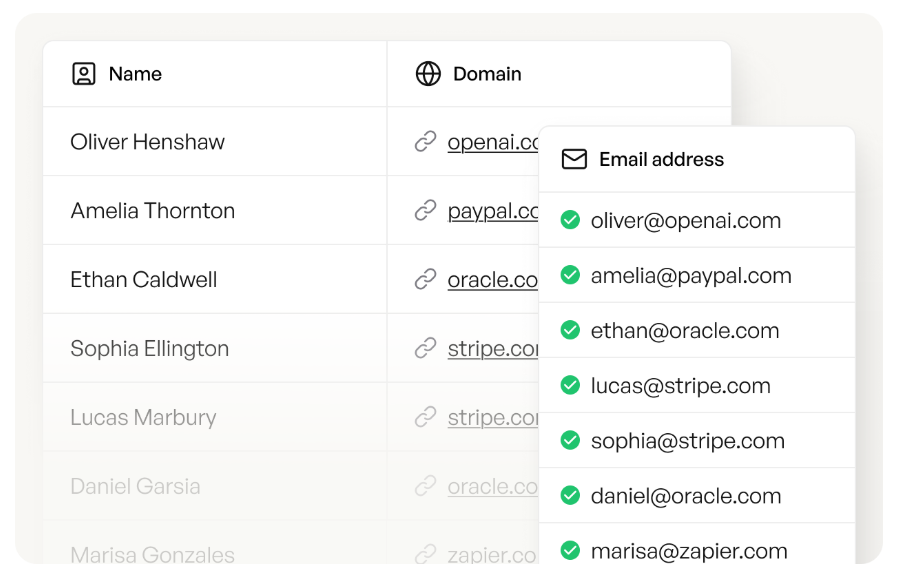
Gartner estimates organizations lose $12.9M per year due to poor data quality. For cold email specifically, bad data doesn't just waste money - it actively damages your infrastructure. Every bounced email chips away at sender reputation, making future emails less likely to land in inboxes.
Here's what most guides miss: static enrichment alone isn't enough. The strongest signals come from combining database fields with CRM engagement history - who's opening emails, visiting your pricing page, engaging with content. A "true lead" has both the right profile and active buying momentum.
Fields That Move Reply Rates
| Rank | Field | Why It Matters |
|---|---|---|
| 1 | Verified email | No email = no campaign |
| 2 | Job title / seniority | Right person, right message |
| 3 | Company size | Tailors pitch to scale |
| 4 | Industry | Relevance filtering |
| 5 | Tech stack | "I see you use X" openers |
| 6 | Funding / growth signals | Timing triggers |
| 7 | Intent data | In-market buyer signals |
| 8 | Direct dial | Multi-channel follow-up |
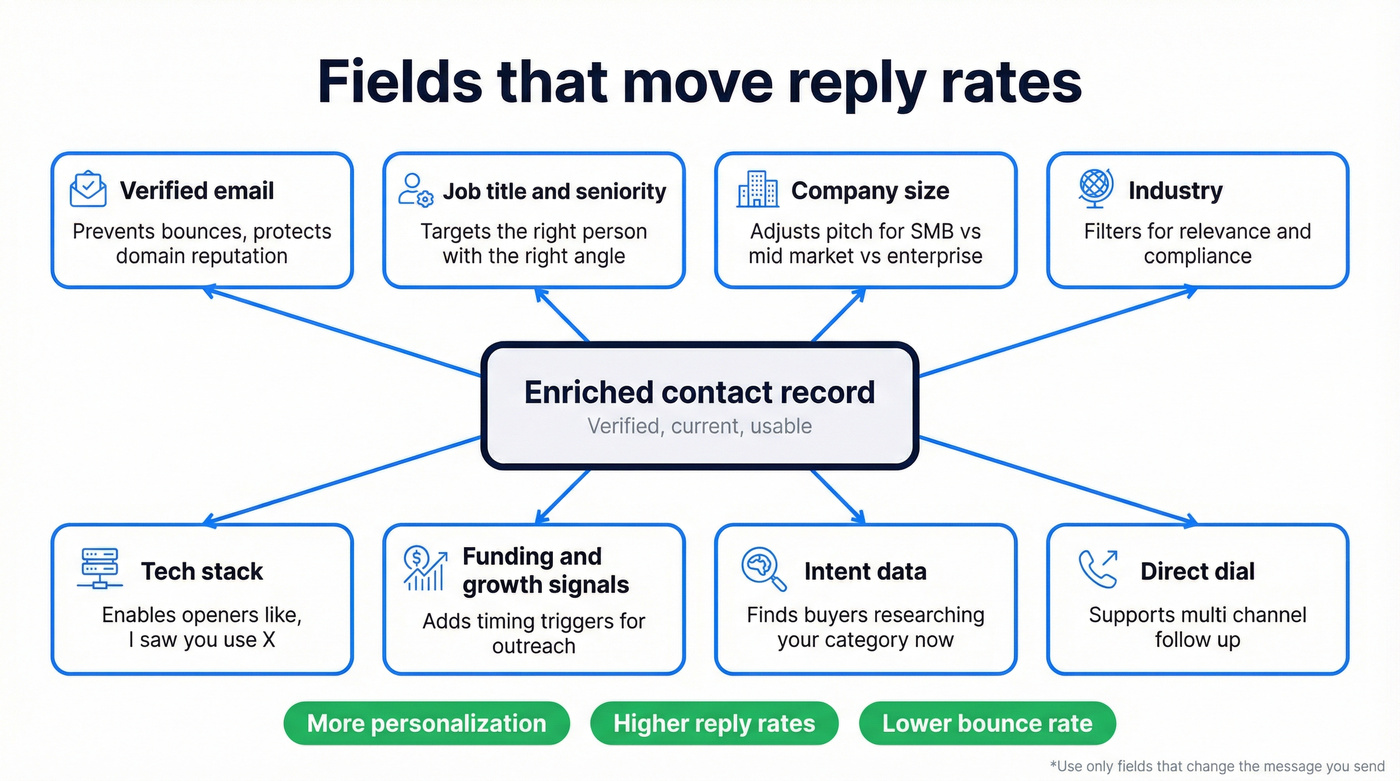
The top two are table stakes. Fields 3-6 power personalization at scale, giving your reps enough context to write messages that feel one-to-one even across thousands of prospects. Intent data is the difference between "cold" and "warm-ish" - it tells you who's actively researching your category right now. Each additional relevant field gives your copywriter (or your AI) another angle for a personalized opener.
Why Waterfall Enrichment Beats Single Providers
Waterfall enrichment means sequentially routing records through multiple data providers until each missing field gets filled. Record goes to Provider A first. If the email comes back unverified, it falls through to Provider B, then C.
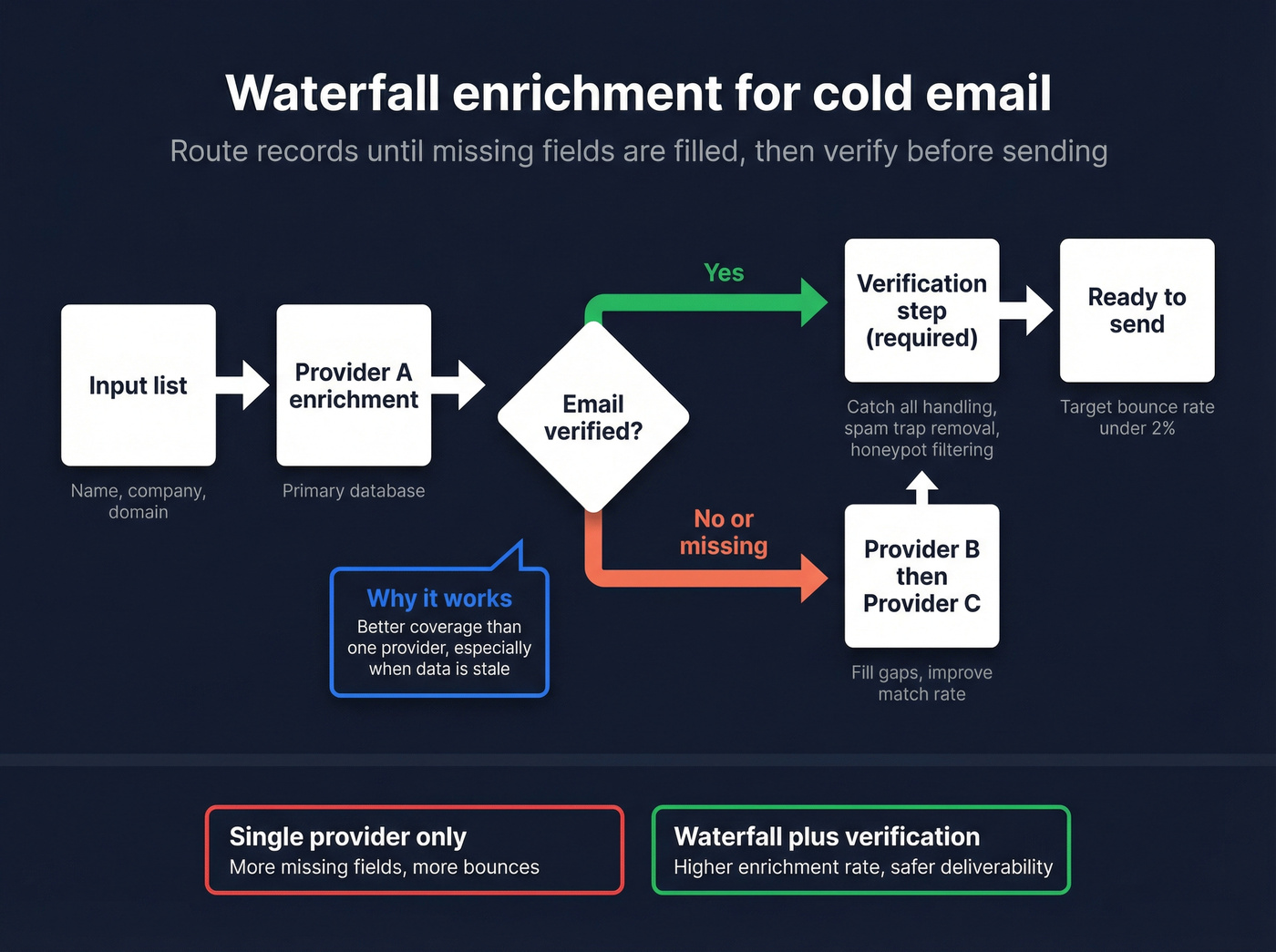
The numbers back it up. BetterContact reports waterfall approaches boost enrichment rates by ~40% over single providers. And since B2B contact data decays roughly 30% per year through role changes and company moves, a provider that refreshed its database six weeks ago is already serving stale records to a meaningful chunk of your list.
Here's the thing, though: you don't need 15 tools in a waterfall. You need one accurate source, one verification step, and one sending platform. When your primary provider refreshes weekly instead of every six weeks, most of the decay problem disappears at the source. The waterfall argument is strongest when your primary provider has slow refresh cycles.
Real-time vs. batch enrichment is the other decision you'll face. Real-time API enrichment fires on form fills or CRM triggers - ideal for inbound leads where speed matters. Batch CSV enrichment processes thousands of records at once for outbound campaigns. Batch runs 30-50% cheaper per record, so default to batch for cold email and save real-time for high-intent inbound.

Every bounced email chips away at your domain reputation. Prospeo's 5-step verification delivers 98% email accuracy at $0.01/email - with data refreshed every 7 days, not every 6 weeks. Meritt cut their bounce rate from 35% to under 4% overnight.
Stop enriching with stale data. Start sending to verified contacts.
How to Audit Your Enrichment Provider
Before committing to any tool, run a 500-contact sample test. Here are the thresholds that separate good providers from expensive liabilities:
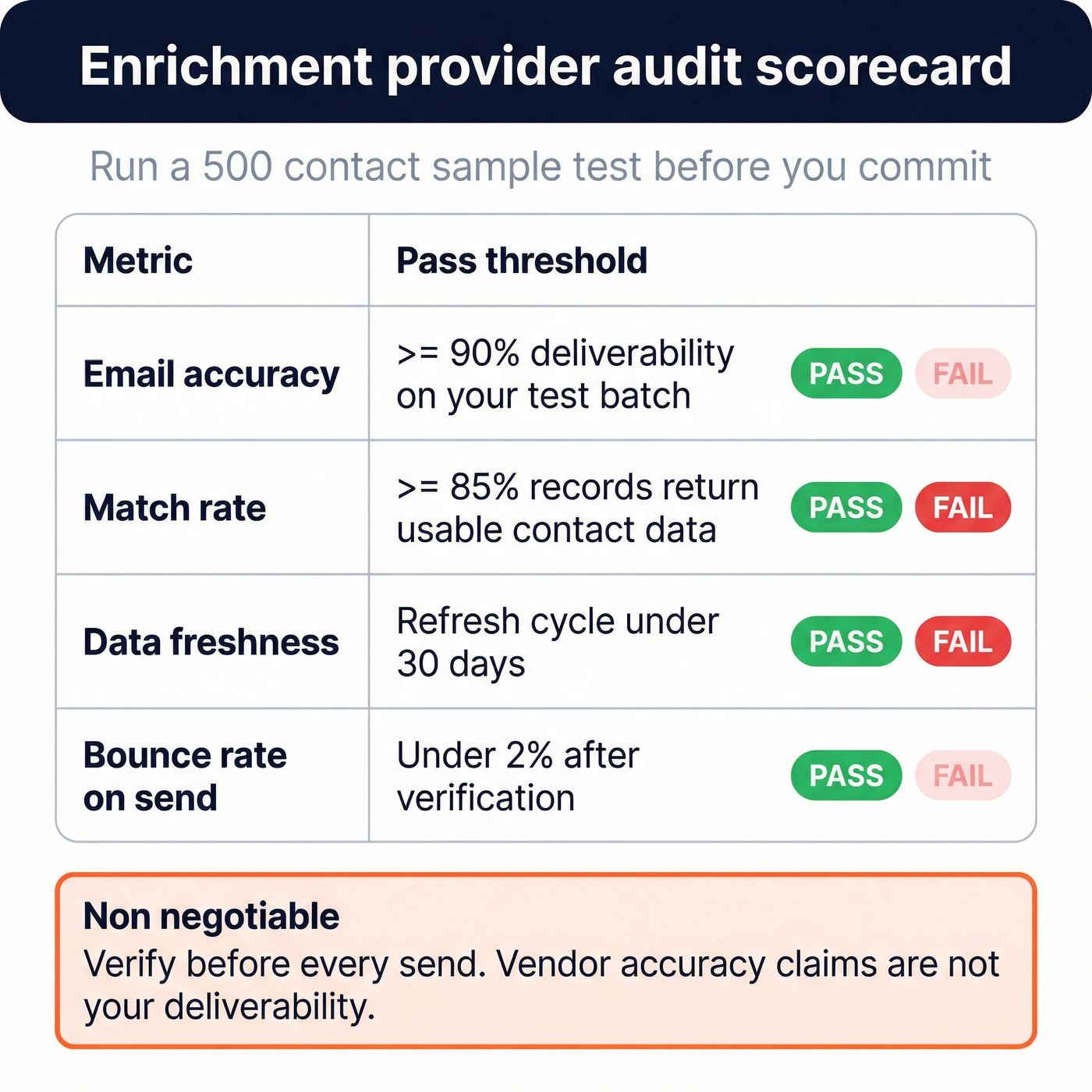
- Email accuracy: 90%+ deliverability on your test batch (not the vendor's self-reported number)
- Match rate: 85%+ of records return usable contact data
- Data freshness: Refresh cycle under 30 days
- Bounce rate on send: Under 2% when you actually email the enriched list
The consensus on r/coldemail is consistent: verify everything before you send, and don't trust any single provider's accuracy claims at face value. Run the test. That 500-contact investment saves you from burning a domain on 5,000 bad records.
Best Enrichment Tools for Cold Email in 2026
| Tool | Best For | Email Accuracy | Starting Price | Refresh |
|---|---|---|---|---|
| Prospeo | Accuracy + freshness | 98% | Free / ~$0.01/email | 7 days |
| Apollo | All-in-one SMB | ~80% | Free / $59/user/mo | ~Monthly |
| Clay | Workflow orchestration | Varies by source | $149/mo | N/A |
| ZoomInfo | Enterprise coverage | ~85% | ~$15K/yr | ~6 weeks |
| Cognism | EMEA + mobiles | ~90% | ~$8K/yr | Varies |
| Hunter | Email verification | N/A (verifier) | Free / $34/mo | N/A |
| FullEnrich | Budget waterfall | Varies | $29/mo | N/A |
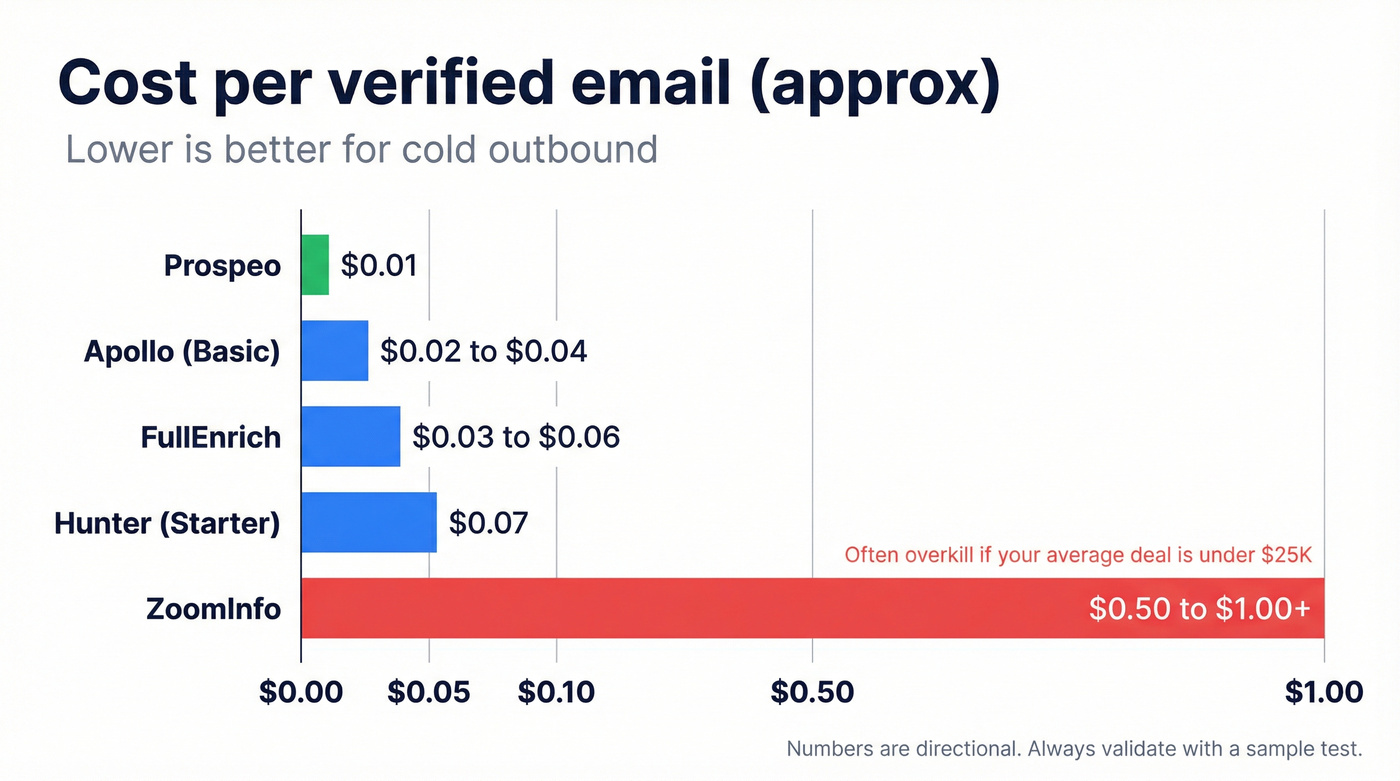
And here's the metric nobody else publishes - cost per verified email:
| Tool | Approx. Cost/Verified Email |
|---|---|
| Prospeo | ~$0.01 |
| Apollo (Basic) | ~$0.02-$0.04 |
| ZoomInfo | ~$0.50-$1.00+ |
| Hunter (Starter) | ~$0.07 |
| FullEnrich | ~$0.03-$0.06 |
Look, ZoomInfo is still the most comprehensive B2B database on the market. But if your average deal size sits under $25K, you almost certainly don't need it - and you're overpaying by 50-90x per verified email for data that refreshes four times slower.
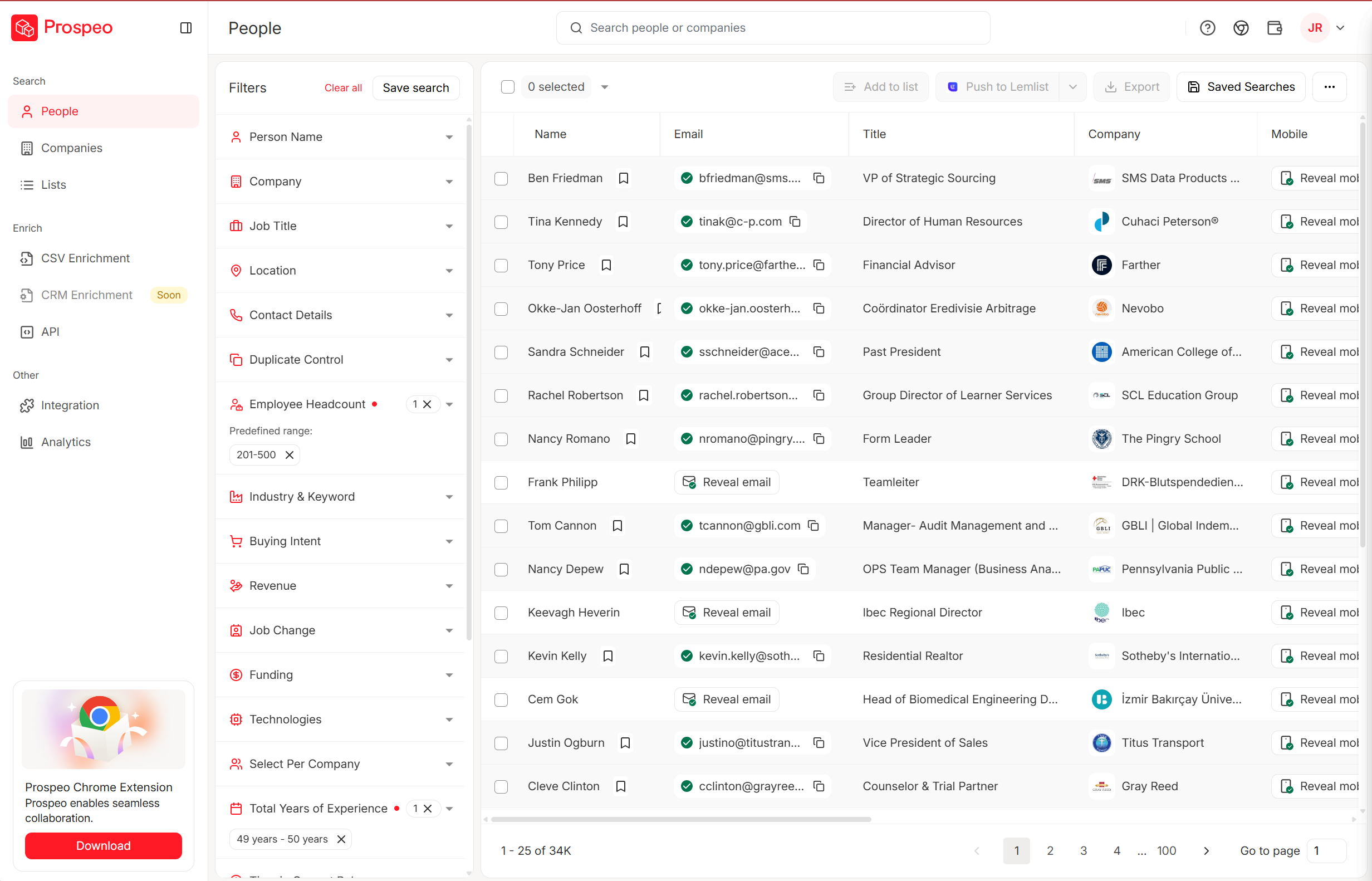
Prospeo - Best for Accuracy and Freshness
Prospeo's database covers 300M+ professional profiles with 143M+ verified emails and 125M+ verified mobile numbers. The 98% email accuracy rate holds up in production - Meritt went from a 35% bounce rate to under 4% after switching, and Snyk's 50-person AE team dropped bounces from 35-40% to under 5% while generating 200+ new opportunities per month.
The 7-day refresh cycle is the real differentiator. While many competitors refresh every 4-6 weeks, Prospeo's data stays current enough that you're not sending to people who changed jobs last month. The API delivers a 92% match rate, and the 5-step verification process includes catch-all handling, spam-trap removal, and honeypot filtering - so the emails you get back are genuinely deliverable, not just formatted correctly.
Pricing is straightforward: free tier gives you 75 emails per month (plus 100 Chrome extension credits), paid plans run about $0.01 per email with no contracts. Integrations cover Instantly, Smartlead, Lemlist, Clay, Salesforce, and HubSpot. GDPR compliant with opt-out enforcement and DPAs available.
You don't need a 15-tool waterfall when your primary provider refreshes weekly. Prospeo returns 50+ data points per contact at a 92% match rate - verified emails, direct dials, tech stack, intent signals - everything your cold campaigns need to land.
Replace your entire waterfall with one accurate source for $0.01/email.
Apollo.io - Best All-in-One for Budget Teams
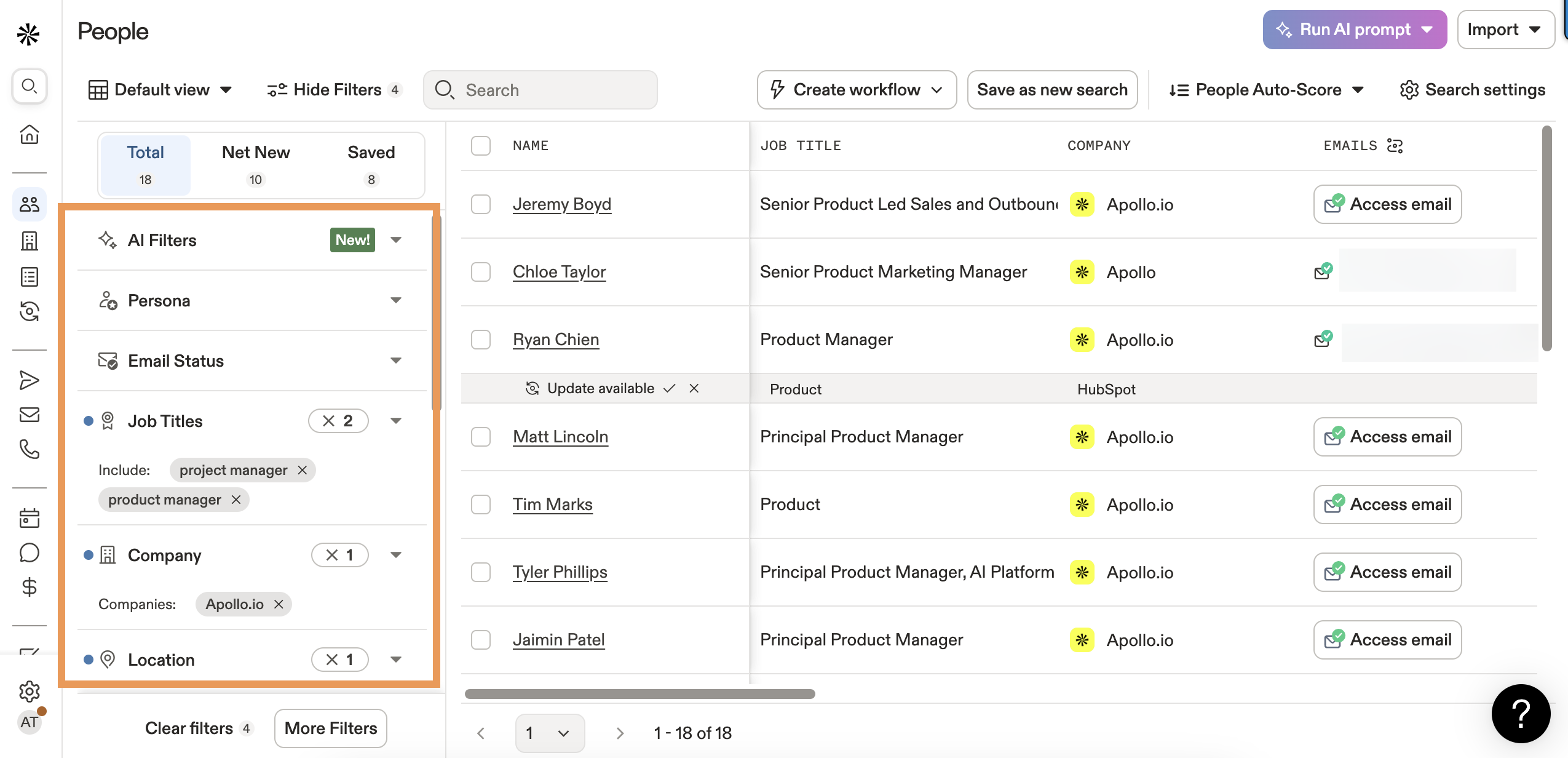
Use this if you're a small team that wants prospecting, sequencing, and enrichment in one platform without juggling multiple subscriptions. Apollo's free tier (75 credits/month) is actually useful for testing, and the G2 rating of 4.7/5 across 9,400+ reviews reflects real satisfaction with the product's breadth.
Skip this if deliverability is your top priority. Independent testing puts Apollo's email accuracy around 80% - one in five emails is bad. That's manageable if you layer a verification tool on top, but dangerous if you're sending Apollo data raw. Pricing scales from free to Basic at $59/user/month, Pro at $99, and Organization at $149 (minimum 3 seats, annual only).
Clay - Best for Workflow Orchestration
Clay does one thing well - orchestrating data from multiple sources through automated workflows. Pull company data from one provider, enrich emails from another, score leads with AI, and push everything to your CRM in a single flow. Teams using Clay are feeding enriched fields into AI to generate personalized first lines at scale, though the quality still depends entirely on the data going in. Starter plans run $149/month, Explorer at $349/month, and Pro at $800/month. Free tier includes 1,200 credits per year.
The key tradeoff: Clay isn't a data source. It's a workflow layer. We've seen teams assume Clay replaces their data provider, then wonder why enrichment rates are inconsistent. Pair it with a strong primary source and it shines.
ZoomInfo - Enterprise Price Tag
ZoomInfo's database lists 321M+ professional profiles and 104M company records. But in independent accuracy testing, email deliverability landed at about 85%. For a tool that starts at ~$15K/year and typically runs $25K-$40K for mid-market teams, that accuracy gap stings. Overkill for 80% of cold email use cases.
Cognism
European coverage and phone-verified mobile numbers through their Diamond Data program make Cognism the pick for teams selling into EMEA. Their GDPR-first approach is genuine, not bolted on. Expect ~$8K-$15K/year on custom contracts. Less relevant if your ICP is North America-only.
Hunter.io
Lightweight email finding and verification - nothing more, nothing less. Free tier gives you 50 credits per month, Starter runs $34/month. Useful as a verification layer on top of another data source, but don't expect enrichment depth beyond email addresses.
FullEnrich
Budget waterfall enrichment that routes through multiple providers. Starter at $29/month for 500 credits, Pro at $55/month for 1,000. We haven't tested FullEnrich deeply enough to give it a full endorsement, but it's on our radar for teams that want waterfall without Clay's complexity or price tag.
Turning Enriched Data Into Replies
Enriched data is useless if it doesn't make it into your copy. Three opener frameworks, each powered by a specific enriched field:
Observation-based (tech stack or company data): "Noticed your team runs Snowflake alongside a legacy ETL setup - that combo usually means your data team is spending 30% of their time on pipeline maintenance."
Signal-based (funding or hiring data): "Congrats on the Series B. If you're scaling the sales team from 5 to 15 this year, the prospecting bottleneck usually hits around rep #8."
Problem-led (industry + company size): "Most 200-person SaaS companies we talk to are spending 6+ hours per week on manual list building. Curious if that matches your experience."
Each framework maps directly to an enriched field. Enrichment isn't about having data - it's about having the right data to write openers that feel researched, not templated. And don't skip follow-ups: the first follow-up alone adds 40-50% more replies.
Mining CRM Data for Outreach Signals
The best cold outreach teams don't treat their CRM as a static contact database. They mine it for signals that sharpen every send. Closed-lost deals from six months ago, prospects who opened five emails but never replied, accounts where a champion recently changed roles - this is behavioral intelligence that most teams ignore entirely.
When you layer enrichment on top of these signals, you're not guessing who to email. You're prioritizing accounts that already showed intent and re-engaging them with updated context. In our experience, the combination of fresh enrichment data and historical CRM engagement data is what separates spray-and-pray from precision outbound.
Deliverability Guardrails
None of the above matters if your emails don't reach inboxes. Hard rules:
- Bounce rate under 2% per send. Cold campaigns average 7.5% - most teams are already damaging their domains without realizing it.
- Spam complaints under 0.3%. One complaint per 333 emails is the ceiling.
- SPF, DKIM, and DMARC authentication on every sending domain. Non-negotiable in 2026.
- Domain warmup before volume sends. New domains need 2-4 weeks of gradual ramp. (If you need a step-by-step, use this email deliverability checklist.)
- GDPR compliance for enriched data. If you're emailing EU contacts, you need a legitimate interest basis, clear opt-out links in every email, and a data processing agreement with your enrichment provider. Ignoring this isn't just risky - it's a fine waiting to happen. (More detail: GDPR for Sales and Marketing.)
Let's be honest about what "good" looks like: 5-10% reply rate is solid for B2B cold email, 15%+ on tightly segmented enriched lists is top-tier. The Backlinko outreach study found an average response rate of ~8.5%. You can beat that with clean data and relevant personalization - but not if your emails are landing in spam. Reddit threads on r/coldemail reinforce this over and over: the teams with the best reply rates aren't writing better copy, they're sending to better data.
FAQ
What's the difference between enrichment and verification?
Enrichment appends missing data points - job title, company size, tech stack, intent signals - to a lead record. Verification confirms an email address is actually deliverable. You need both: enrichment without verification still bounces, and verification without enrichment gives you a valid address but zero personalization context.
How often should I re-enrich my lead lists?
Re-enrich at minimum quarterly, ideally monthly. B2B contact data decays ~30% per year, meaning roughly 2-3% of your list goes stale every month. Providers with weekly refresh cycles handle this automatically, keeping records current between campaigns.
Is waterfall enrichment worth the complexity?
For teams sending 10,000+ emails per month, yes - waterfall boosts enrichment rates ~40% over single providers. For smaller teams, one accurate provider with high match rates and frequent refresh is simpler and often sufficient. Don't add complexity you don't need.
What bounce rate should I worry about?
Keep it under 2% per send. Anything over 6% starts damaging your domain reputation fast. Cold campaigns average 7.5% bounce - most teams are already in the danger zone without a dedicated verification step before every campaign.