

Mailead vs Apollo.io: Honest Comparison (2026)
You're comparing a lifetime-deal cold email sender to a full sales intelligence platform. That's not a subtle difference - it's a fundamental one, and it matters more than any feature checklist before you spend a dollar on either tool.
30-Second Verdict
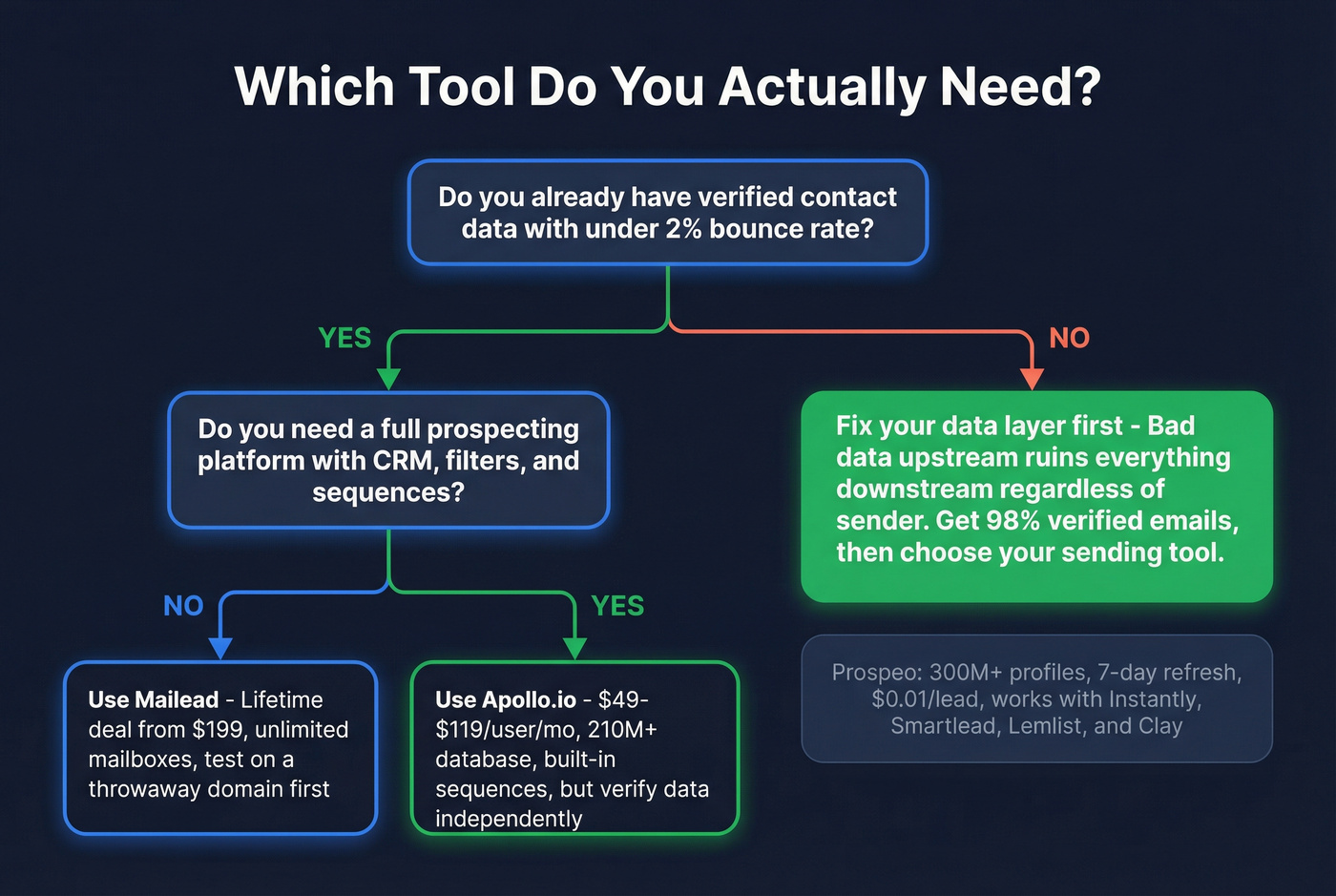
Pick Mailead if you already have verified contact data and just need cheap sending infrastructure with unlimited mailboxes at a fixed cost.
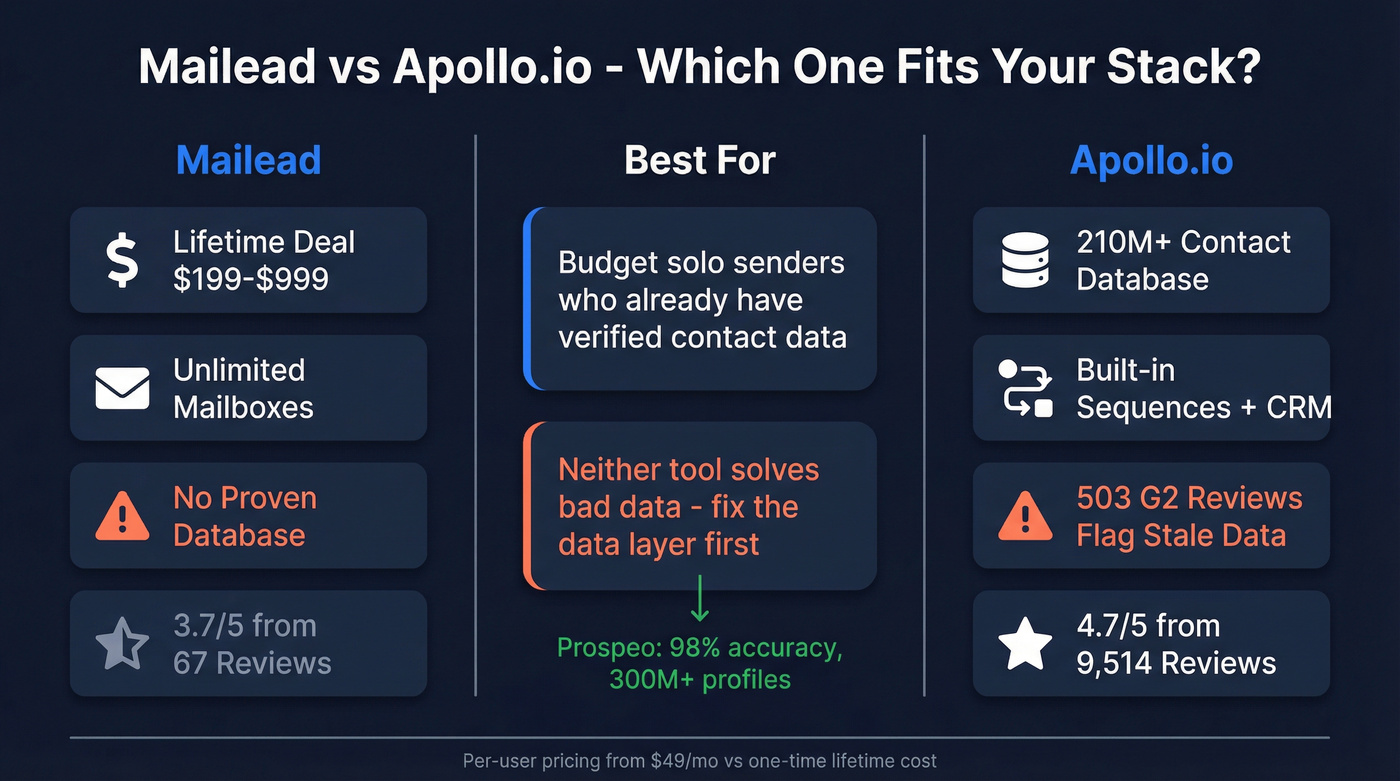
Pick Apollo if you need a massive B2B database (210M+ contacts), advanced search filters, and built-in sequences - and you're okay with per-user pricing plus usage credits that can escalate fast.
Skip both if your real bottleneck is accurate contact data. Bad data upstream ruins everything downstream, regardless of which sender you use.
What Is Mailead?
Mailead is a budget cold email tool that gained traction through AppSumo lifetime deals. It offers unlimited mailboxes, inbox rotation, and email warmup - compelling for pure sending volume on a shoestring. But there's a catch most buyers don't see coming.
Mailead has two separate pricing surfaces, and they cover different products entirely.
The lifetime deal covers cold email sending across three tiers: Starter at $199 gets you 2K emails per month, unlimited mailboxes, 2K uploaded contacts, and one teammate. Pro at $599 bumps that to 10K emails per month, 10 teammates, 500 LinkedIn scraping credits/month, and CRM access. Growth at $999 unlocks 100K emails per month with unlimited uploaded contacts and unlimited teammates, plus 1,000 LinkedIn scraping credits/month and CRM.
Want B2B lead data and verification credits? That's a separate subscription running $29-$149/mo depending on volume. Many buyers don't realize this until after they've purchased the lifetime deal.
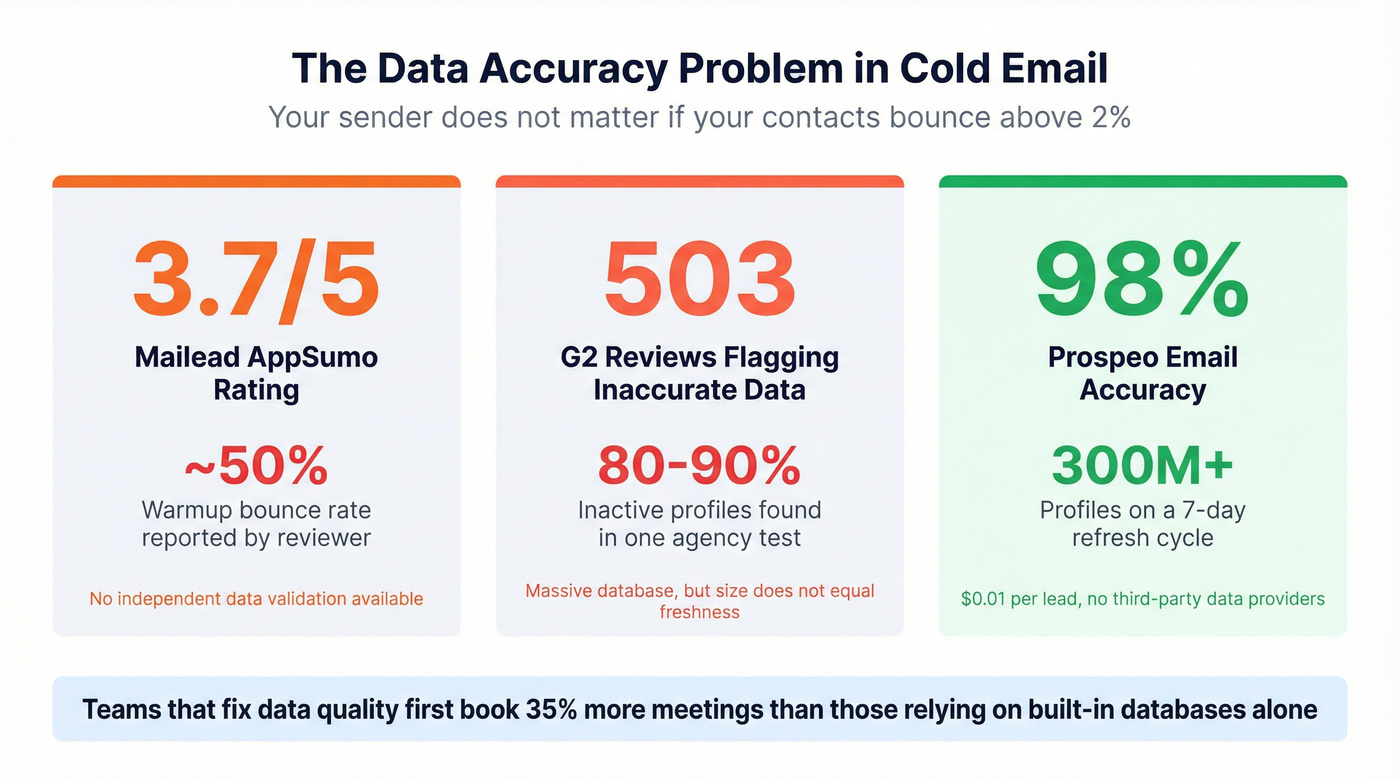
The review picture is polarized. On AppSumo, Mailead sits at 3.7/5 from 67 ratings - 39 five-star reviews alongside 12 one-star reviews. One reviewer described the warmup feature as "catastrophic" for domain reputation after seeing roughly 50% failure/bounce rates, alleging the warmup sends to non-existent addresses. Another alleged that email account credentials were compromised after connecting them to Mailead - unverified beyond the review, but worth knowing before connecting production accounts. Multiple reviewers describe the product as feeling "abandoned," and the Skool community link 404s.
Mailead isn't meaningfully covered on G2, which makes independent validation harder. On Reddit, users considering Mailead are typically switching from Instantly to cut costs - not because of feature advantages.
What Is Apollo.io?
Five hundred and three G2 reviewers tagged Apollo's data as "Inaccurate." That number matters more than the 4.7/5 overall rating from 9,514 reviews, because data accuracy is the thing you're actually paying for.
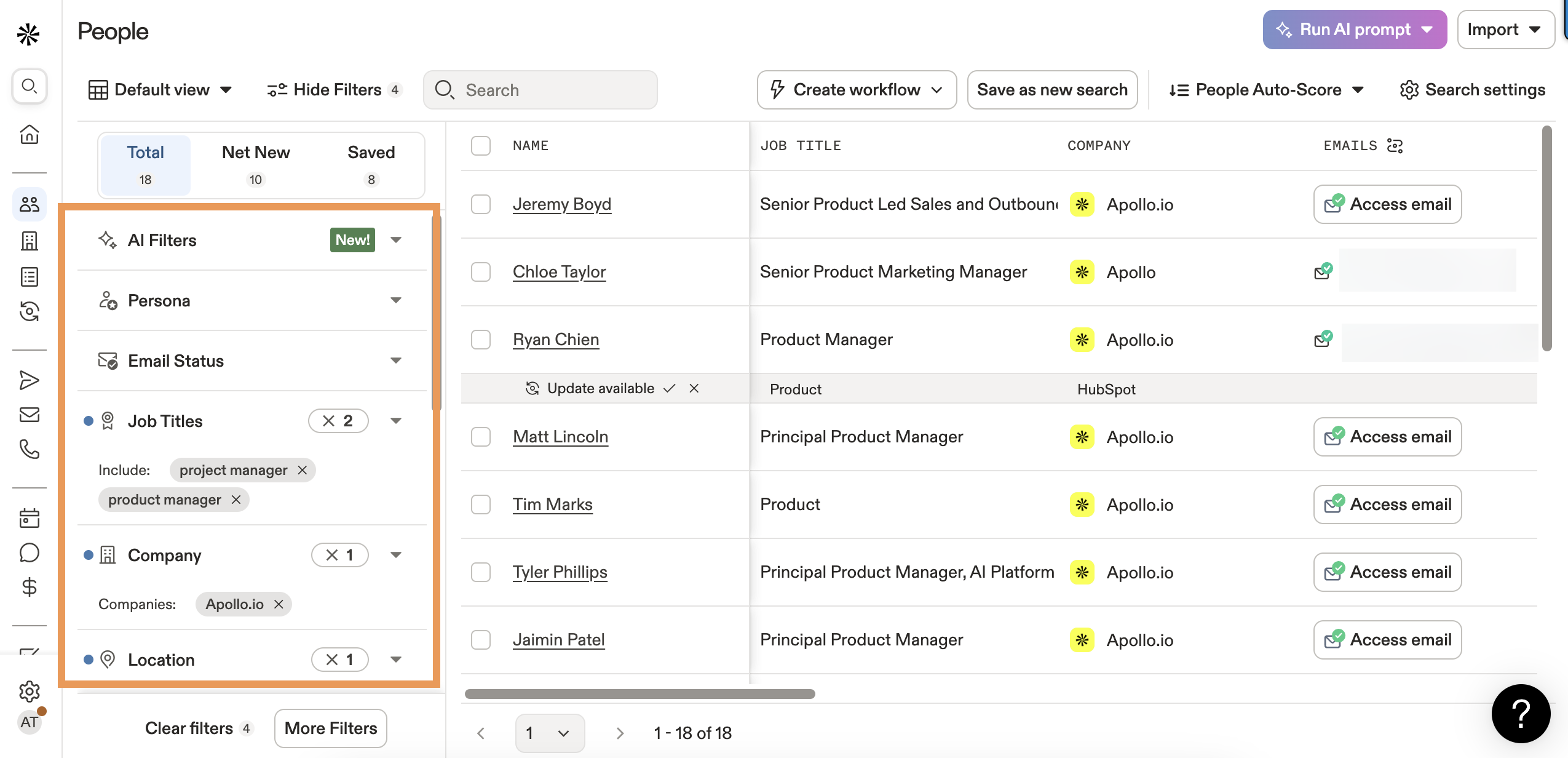
Apollo is a popular sales intelligence platform for SMB and mid-market teams. It combines a 210M+ contact database with built-in email sequences, advanced filters, and a CRM integration ecosystem that actually works. For teams that need prospecting and outreach in one place, it's the obvious starting point (and a common baseline in most sales tech stack discussions).
Pricing runs on a hybrid model: per-user subscriptions plus usage-based credits. The free tier gets you in the door with unlimited email credits but only 5 mobile credits and 10 export credits per month, plus a 2-sequence limit. We've seen teams burn through those exports in a single afternoon.
Paid plans on annual billing start around $49/user/mo on Basic, $79 on Professional, and $119 on Organization (minimum 3 seats). Credits don't roll over, so you're paying for capacity whether you use it or not.
One agency on r/coldemail found 80-90% of profiles from Apollo lists were inactive or abandoned - no profile pictures, weeks of inactivity. When everyone's emailing the same contacts from the same database, deliverability suffers for all of them. The database is massive, but size doesn't equal freshness.

503 G2 reviewers flagged Apollo's data as inaccurate. Mailead's database barely exists in third-party reviews. Prospeo delivers 98% email accuracy from 300M+ profiles on a 7-day refresh cycle - so your cold emails actually land. At $0.01/email, you spend less than Apollo's per-user pricing and get data you can trust more than Mailead's unverified lists.
Fix the data layer first. Everything downstream gets better.
Feature-by-Feature Breakdown
| Feature | Mailead | Apollo.io | Edge |
|---|---|---|---|
| Primary function | Cold email sender | Sales intel + outreach | Apollo (far more complete) |
| Database | Lead/credit add-on exists, not well-validated externally | 210M+ contacts | Apollo (no contest) |
| Sending | Unlimited mailboxes | Built-in sequences | Mailead (volume economics) |
| Pricing model | Lifetime deal $199-$999 + separate lead credits $29-$149/mo | Per-user free tier + paid tiers + usage credits | Mailead (for budget teams) |
| Credit rollover | N/A | No rollover | Mailead (no credits to worry about) |
| Integrations | 200+ claimed | CRM + Zapier ecosystem | Apollo (proven, documented) |
| Reviews | 3.7/5 from 67 on AppSumo | 4.7/5 from 9,514 on G2 | Apollo (overwhelming margin) |
| Key risk | Support gaps + warmup bugs | Data staleness + overused lists | Tie (both carry real risk) |
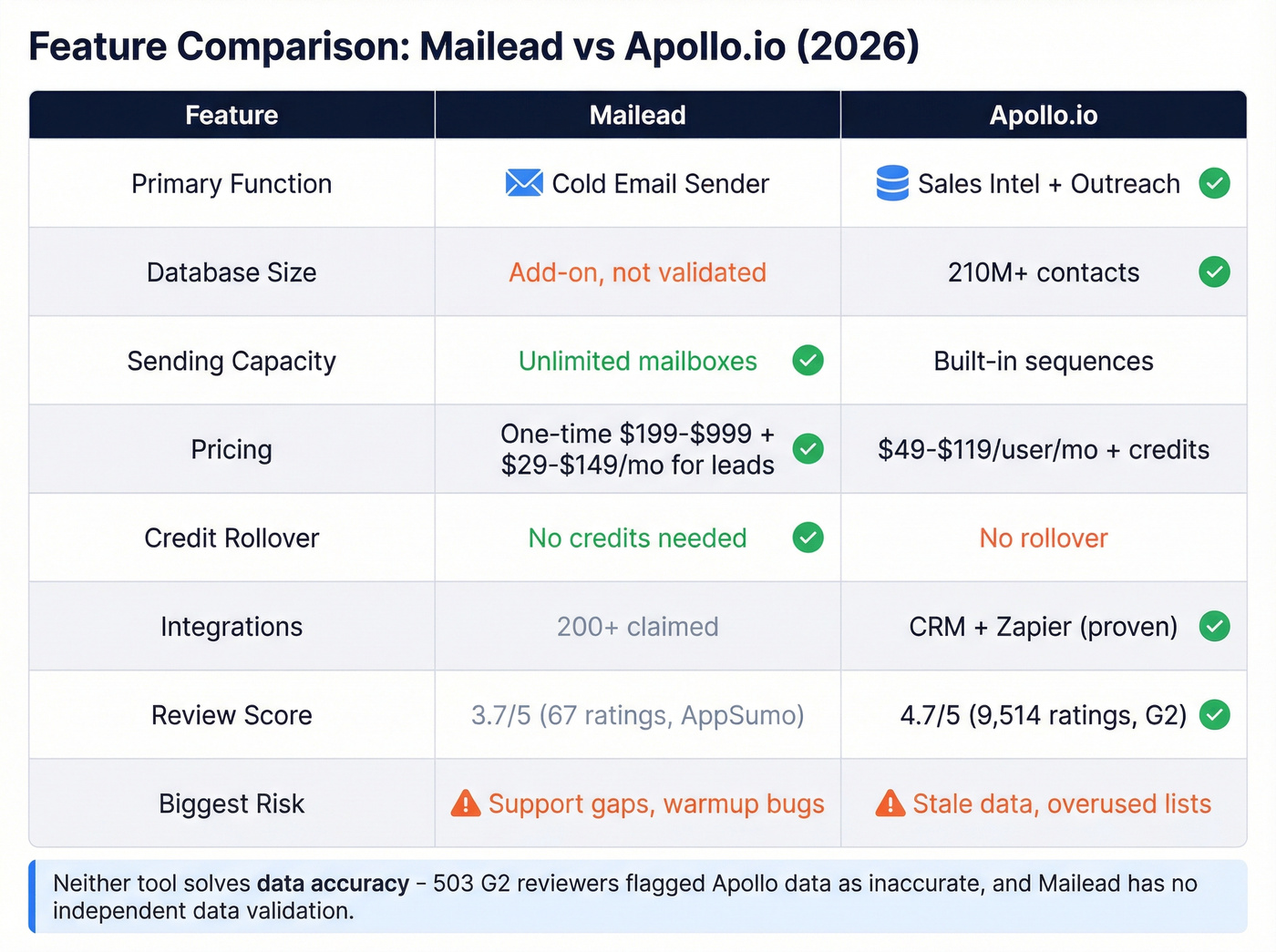
The table makes the gap obvious. Apollo is the more complete platform by a wide margin. But Mailead wins the categories that matter most to budget-conscious solo operators: sending volume economics, lifetime pricing, and no recurring per-user fees.
Strengths, Weaknesses, and Gaps
Use Mailead if you've already got verified contact lists and need the cheapest possible way to send at scale. Unlimited mailboxes at a fixed lifetime cost is genuinely hard to beat on economics alone. For solo operators or agencies running multiple client domains, the math works.
Skip Mailead if you need reliable support, proven warmup infrastructure, or any kind of lead database you can trust without heavy verification. The AppSumo reviews paint a picture of a product that isn't actively maintained. One reviewer's allegation of ~50% failure/bounce rates from the warmup feature alone should give you pause - that kind of bounce rate will torch your domain reputation fast (see common causes in Why Emails Bounce). Test with a throwaway domain first.
Use Apollo if you need a large B2B database with advanced filters, CRM integrations, and built-in sequencing. The market presence and ecosystem depth are real advantages, and the free tier lets you kick the tires before committing.
Skip Apollo if you're running lean - per-user pricing compounds quickly for teams of 5+ - or if data freshness matters more than database size. The "overused lists" concern is real. When thousands of SDRs pull the same contacts from the same filters, those inboxes get hammered and your reply rates crater.
Here's the thing: most teams comparing these two tools are asking the wrong question entirely. Neither solves the fundamental problem. Mailead's lead database isn't well-documented in third-party sources. Apollo's is massive but stale, with 503 G2 reviewers flagging inaccurate data. One tool doesn't send reliably; the other doesn't source reliably. If your contact data bounces above ~2%, your sender doesn't matter. The data layer is where most cold email stacks break down, and in our experience, fixing data quality first makes every downstream tool perform better.
Solving the Data Layer
The real bottleneck in most cold email stacks isn't the sender - it's the data feeding it.

Prospeo addresses that layer with 98% email accuracy across 300M+ profiles and a 7-day refresh cycle that keeps contacts current while competitors update every 4-6 weeks. It uses proprietary email-finding infrastructure with no third-party data providers, which is why that accuracy number holds up at scale. We've watched teams go from 35%+ bounce rates to under 4% just by switching their data source - Meritt tripled their pipeline from $100K to $300K/week after making that change.
Prospeo integrates natively with Instantly, Smartlead, Lemlist, and Clay, so you can pair it with Mailead for sending or use it to independently verify Apollo exports before they hit your sequences (or run them through an email scrubber first). The free tier includes 75 verified emails per month, and paid plans run about $0.01 per lead with no contracts.
Neither Mailead nor Apollo solves the real problem: contact data that bounces. Prospeo's 5-step verification with catch-all handling and spam-trap removal keeps bounce rates under 2%. Teams using Prospeo book 35% more meetings than Apollo users - because accurate data beats a bigger database every time.
Stop choosing between cheap sending and stale data. Get both right.
Final Verdict
Budget sending with your own data? Mailead's lifetime deal makes economic sense, but test with a non-critical domain first and verify that support is responsive before committing real campaigns.
Full sales intelligence platform? Apollo is the stronger choice by a wide margin. Independently verify contact data before sending and budget for credit overages as your team scales (especially if you're doing high-volume email prospecting).
Accurate B2B data without platform lock-in? Get the data right first, then send with whatever tool fits your workflow. Teams that fix the data layer first book 35% more meetings than those relying on Apollo's built-in data alone.
The Mailead vs Apollo.io decision comes down to whether you need a sender or a full prospecting stack. But neither replaces a verified data foundation (use a proper email check API or verifier before you scale).
FAQ
Does Mailead have a free plan?
No. Mailead offers a one-time lifetime deal starting at $199 for cold email sending. B2B lead and verification credits are a separate subscription starting at $29/month, so budget for both if you need data and sending.
Can I use Apollo.io's free tier for real outreach?
Technically yes, but you'll hit walls fast. The free tier caps you at 2 sequences, 5 mobile credits, and 10 export credits per month. Most teams exhaust exports within a day and need to upgrade to Basic at $49/user/month on annual billing.