

Ooma vs RingCentral: Which Business Phone System Is Worth Your Money?
The Ooma vs RingCentral debate isn't apples to apples. Ooma is a phone system. RingCentral is a communications platform. Comparing them on sticker price alone misses the point - the real question is which one matches how your team actually works, and what you'll need six months from now when you've added three more reps.
30-Second Verdict
Ooma wins if you're a solopreneur or team under 5 who needs reliable phones at the lowest price. Start at $19.95/user/month and don't look back.
RingCentral wins if you're a growing team of 10+ that needs CRM integrations, AI features, and real analytics. Pay $25/user/month on an annual plan and get a platform, not just a phone.
Skip both if your real problem isn't the phone system - it's the data feeding it. If your team is dialing dead numbers half the day, fixing your contact data will move the needle more than any VoIP upgrade.
Pricing Side by Side
The sticker prices look close - $19.95 vs $20/user/month for RingCentral Core on annual billing. What's included at each tier is wildly different.
Ooma Plans
| Essentials | Pro | Pro Plus | Enterprise | |
|---|---|---|---|---|
| Price | $19.95/mo | $24.95/mo | $29.95/mo | Custom |
| Toll-free min | 500 | 500 | 500 | Custom |
| SMS/user/mo | - | 250 | 1,000 | Custom |
| Video | - | 25 ppl | 100 ppl | Custom |
| CRM integrations | - | - | ~11 apps | Yes |
| Call recording | - | Yes | Yes | Yes |
No contracts required on any Ooma plan. But notice how CRM integrations don't show up until Pro Plus at $29.95 - suddenly the "budget" option isn't so budget anymore.
RingCentral Plans
| Core (Ann/Mo) | Advanced (Ann/Mo) | Ultra (Ann/Mo) | |
|---|---|---|---|
| Price | $20/$30 | $25/$35 | $35/$45 |
| Toll-free min | 100 | 1,000 | 10,000 |
| SMS/user/mo | 25 | 100 | 200 |
| Video | 100 ppl | 100 ppl | 200 ppl |
| CRM integrations | Basic | 330+ | 330+ |
| Call recording | - | Auto | Auto |
RingCentral's annual pricing requires a 12-month commitment. The monthly pricing? That's where they get you. An 8-person team on Advanced monthly pays $280/month vs $200/month annual. That's $960/year you're leaving on the table if you don't commit upfront.
Hidden Fees and Real Costs
Ooma's extras add up, but they're predictable. There's a $49.95 activation fee upfront. Additional phone numbers run $9.95/month each. Blow past your SMS allocation on Pro? You're paying $0.0095 per message in overage. Taxes and regulatory fees vary by location and aren't included in advertised pricing.
RingCentral's add-ons are where the real money hides. AI Receptionist starts at $59/month for 100 minutes. Conversation Intelligence - the feature that actually makes call coaching useful - runs $60/user/month. Webinar capability? $99/host/month. RingCentral Rooms license? $39/room/month. A 15-person team that wants AI features and a couple of conference rooms could easily add $1,500+/month on top of base licensing.
Here's the thing: Ooma's hidden costs are small and predictable. RingCentral's can double your bill if you're not careful about which add-ons you actually need versus which ones looked cool in the demo.
Features That Actually Matter
| Category | Ooma | RingCentral | Winner |
|---|---|---|---|
| Integrations | ~11 apps (Pro Plus) | 330+ apps | RingCentral |
| Security | E2EE (Ooma-to-Ooma) | E2EE + SSO | RingCentral |
| Analytics | Basic historical | 30+ KPIs, real-time | RingCentral |
| AI features | None | Full suite | RingCentral |
| Video | 100 ppl (Pro Plus) | 200 ppl (Ultra) | RingCentral |
| Hardware | Yealink only | Broad support | RingCentral |
| Ease of setup | Plug and play | More config needed | Ooma |
Integrations
This is the single biggest functional gap between the two. Ooma offers roughly 11 integrations, and only on the Pro Plus tier. RingCentral connects to 330+ apps - Salesforce, HubSpot, Zendesk, Slack, all of it. If your team lives in a CRM, this isn't even a contest.
Security and Compliance
Ooma offers end-to-end encryption, but only for Ooma-to-Ooma calls. The moment you're calling an external number, that encryption doesn't apply. RingCentral provides E2EE across voice, video, and messaging, plus SSO. For any team handling sensitive data in healthcare, finance, or legal, RingCentral is the safer bet.
Hardware Compatibility
Ooma only supports Yealink phones. If your office already has Polycom or Cisco hardware, you're buying new phones on top of the subscription. RingCentral supports a broad range of desk phones and headsets, which makes migration significantly cheaper for teams with existing equipment. We've seen teams spend more on new Yealink hardware than they saved on Ooma's lower monthly rate.

Switching from Ooma to RingCentral won't help if half your dials go to voicemail on outdated numbers. Prospeo gives your team 125M+ verified mobile numbers with a 30% pickup rate - refreshed every 7 days, not every 6 weeks.
Fix the data before you fix the phone system.
AI Features - The 2026 Gap
AI is where these two platforms diverge most sharply in 2026.
RingCentral shipped a full AI suite that's maturing fast. The AI Assistant drafts messages, translates chats, and captures call details automatically. AI Receptionist handles FAQ routing, appointment booking, and call triage without a human touching anything. AI Meeting Highlights generates transcriptions, summaries, and highlight reels after every call. The Workflow Builder connects communication triggers to actions across 6,000+ apps with no-code automation - the kind of thing that used to require a developer and a Zapier subscription.

Ooma has zero AI features. No transcription, no smart routing, no automated summaries. PCMag's editorial review specifically flagged the lack of AI and advanced call-monitoring tools as a notable gap. For teams that want their phone system to get smarter over time, that's a dealbreaker.
What Real Users Say
Ooma User Sentiment
Ooma has won PCMag's Business Choice award 11 years running, with an 8.6 overall satisfaction score. Users love the easy setup, reasonable pricing, and reliable wired call quality.
But the complaints are getting louder. A 2025 review on GetVoIP describes one-way audio issues that cost a business actual orders - the customer could hear the rep, but the rep couldn't hear the customer. That reviewer switched to Zoom. Multiple recent reviews flag billing disputes, unexpected cancellation fees from supposedly month-to-month plans, and a frustrating support process. The satisfaction score trend tells a story: 9.2 in 2018, 9.0 in 2021, 8.6 in 2024. Still good, but the trajectory isn't encouraging. VoIP communities on Reddit surface the same recurring themes - audio glitches and billing surprises that erode trust over time.
RingCentral User Sentiment
RingCentral holds a 4.3/5 on G2 across 2,940 reviews - a strong signal at that volume. The consistent praise centers on integration depth, reliability, and feature breadth. The consistent complaints? Cost and complexity. Teams buy RingCentral for the phone system, then spend weeks configuring features they didn't know they were paying for.
Let's be honest: if you don't have someone on your team who enjoys poking around admin settings, RingCentral's learning curve will frustrate you for the first month.
Who Should Pick What
Pick Ooma Essentials if you're a solopreneur or micro-team of 1-4 people who needs phones, a virtual receptionist, and nothing else. You'll pay the least and be up and running in an afternoon.
Pick RingCentral Advanced if you're a team of 10+ with a CRM, need call analytics, and want AI features that'll compound in value over the next two years. The $25/user/month annual price is fair for what you get.
Think twice about Ooma Pro Plus. At $29.95/user/month with only 11 integrations, you're paying more than RingCentral Advanced for a fraction of the platform. An 8-person team on Ooma Pro Plus pays $240/month. That same team on RingCentral Advanced pays $200/month annually - and gets 330+ integrations, AI features, and real analytics. The math doesn't work in Ooma's favor once you leave the Essentials tier.
If your deals average under $10k and your team is under 5 people, Ooma Essentials is the right call. But the moment you add a sixth rep or need Salesforce syncing, you've already outgrown it. Most teams that start on Ooma Pro Plus would've been better off on RingCentral from day one.
Both providers support number porting, so switching later isn't painful - just plan for a 1-2 week transition window.
The Problem Neither Phone System Solves
We watched an SDR manager pull up his team's call logs last quarter. Half the numbers rang dead or went to generic voicemail. The phone system worked perfectly. The data didn't.
It's like filling a Ferrari with cooking oil - the engine is fine, the fuel is the problem. Prospeo fixes that upstream layer with 125M+ verified mobile numbers and a 30% pickup rate, so your reps actually connect when they dial. The free tier gives you 75 verified emails and 100 Chrome extension credits per month - enough to test whether your data problem is worse than your phone problem.
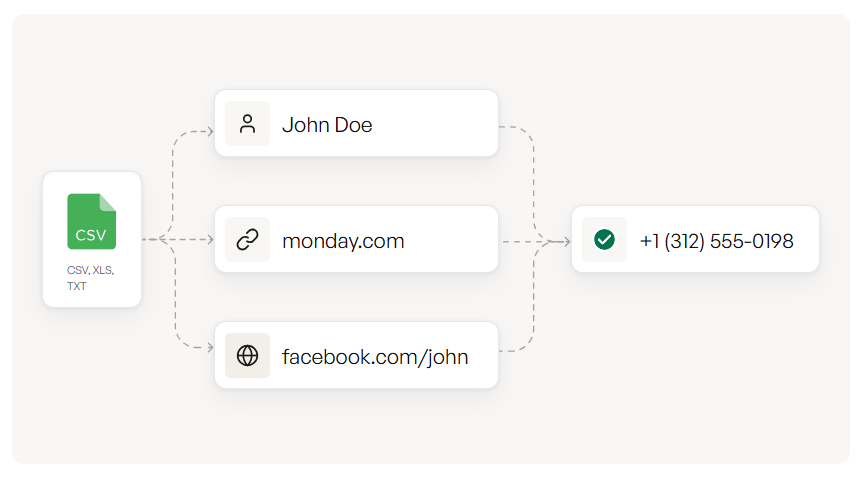
RingCentral's 330+ integrations are useless if your CRM is full of stale contacts. Prospeo enriches your CRM with 50+ data points per contact at a 92% match rate - for roughly $0.01 per verified email.
Clean data turns any VoIP into a pipeline machine.
FAQ
Can I use Ooma Office for free?
No. Ooma's residential service works without a monthly fee if you buy an Ooma Telo device, but Ooma Office for business starts at $19.95/user/month with a $49.95 activation fee. Taxes and regulatory fees are additional.
Does RingCentral offer a free trial?
Yes - 14 days supporting up to 20 phone lines. SMS isn't available during the trial, so you can't test texting workflows until you're on a paid plan.
Which has better call quality?
Both guarantee 99.999% uptime SLAs. In practice, recent Ooma reviews flag more audio issues - one-way audio, answering delays, and calls requiring reboots - than RingCentral reviews do. RingCentral's quality-of-service monitoring also gives admins tools to diagnose issues proactively, which is a meaningful advantage for larger teams. PCMag's VoIP comparison covers both in detail.
Can I port my existing phone number?
Yes, both Ooma and RingCentral support number porting from other providers. The process typically takes 1-2 weeks. Confirm with your current provider that there aren't early termination fees before initiating the port.
What if my real problem is bad contact data, not the phone system?
If reps dial dead numbers or wrong contacts more than 20% of the time, upgrading your VoIP won't help. Pairing clean, verified contact data with either platform dramatically improves connect rates - we've seen teams triple their connection rates just by fixing the numbers they're dialing.