

Cold Calling CRM Integration Playbook (CTI, Data Model, QA) for 2026
You can spend $15k on a dialer, burn weeks on "integration work," and still end up with reps pasting notes into the CRM while recordings live in a different tab. That's not cold calling crm integration. That's chaos with a subscription.
The fix's boring. It works anyway: lock down the CTI flow, the call data model, and a weekly QA audit so every call becomes usable pipeline data. Do that, and your outbound dashboards stop lying.
Most teams don't need "more tools." They need fewer gaps.
What you need (quick version)
If you only do one thing, do this checklist and stop hoping the integration works.

- Real integration = screen pop + auto-association + mandatory outcome + recording link + follow-up task. If any one is missing, reporting turns into fiction.
- Pick your system of record for calls (almost always the CRM). Your dialer can be the UI, but the CRM has to be the truth.
- Make outcomes required (wrap-up code) before a call can be saved. No outcome = no log.
- Define association rules (which contact/company/deal gets the call) and make them deterministic.
- Store a recording URL (and transcript link if you use CI). Don't bury it in the dialer only.
- Create a follow-up task automatically for anything that isn't "Closed out" (callback, nurture, meeting scheduled).
- Enforce ownership: the call owner must match the rep, and the associated record owner rules must be consistent.
- Build a weekly QA audit: missing calls, duplicate calls, unassociated calls, and "Unknown outcome" calls.
- Implement first: required outcomes, association rules, weekly QA audit. Everything else is optional polish.
What "cold calling CRM integration" actually means
It isn't "my dialer has a HubSpot app." It's the end-to-end loop where a rep can place a call, see the right context instantly, and have the CRM updated automatically with the minimum fields needed for reporting and coaching.
Here's the practical definition:
- CTI (computer telephony integration) connects your phone system/dialer to your CRM so the rep can call from their computer and the CRM can react in real time.
- The core CTI features are screen pops, click-to-dial, and automated call logging (time, duration, outcome, notes, recording).
- A good integration also handles associations (which records the call belongs to) and workflow triggers (tasks, sequences, routing).
The bar's simple: initiation → routing → CTI sends caller data → screen pop → call handling → call logging (duration + notes). Anything less becomes "a call happened... somewhere."
Look, if you're selling a lower-priced product, you don't need fancy CTI theater. You need ruthless logging hygiene: mandatory outcomes, correct associations, and recordings that actually open from the CRM.
CTI explained in 90 seconds (and why "integrates with HubSpot" isn't enough)
Think of CTI as two pipes:

REST APIs (pull/write) Your dialer (or middleware) uses APIs to create/update CRM records: create a Call activity, attach a recording URL, set outcome, associate to a Contact/Company/Deal.
Your dialer fires events like: call started, call answered, call ended, recording ready. The CRM (or your middleware) listens and reacts.
A clean mental model looks like this:
- Rep clicks Call
- Dialer starts call and sends call started
- CRM does a screen pop (match phone → contact → company/deal)
- Call ends
- Dialer fires call ended
- Logging runs: create Call record + set duration + require outcome + attach recording link
- CRM automation creates the next-step task
Manual copy-paste notes into the CRM isn't "old school." It's a compliance risk and a reporting killer, and it's exactly why call logging hygiene matters more than most teams think.
What users complain about (and they're right)
- HubSpot doesn't have a Salesforce-style CTI framework. In practice you're choosing a marketplace connector, a calling provider integration, or a custom build.
- "It logs, but not on the right record." That's association logic failing, not rep behavior.
- "We did 200 calls/day and got zero connects." That's usually list quality plus bad event definitions (counting ring-no-answers as "connects"), not "reps aren't trying." (See Answer Rate for definitions and benchmarks.)

Your cold calling CRM integration logs perfectly - but reps still can't reach anyone. That's a data problem, not a dialer problem. Prospeo gives you 125M+ verified mobile numbers with a 30% pickup rate and 98% email accuracy, refreshed every 7 days.
Fix the data feeding your dialer and watch connect rates triple.
Cold calling CRM integration architectures (what each one breaks)
There are two strategies teams keep mixing up:

- CRM-first (built-in dialer / native calling): fastest to launch, fewer moving parts, but you accept the CRM's calling UX and limits.
- Dialer-first (external dialer + integration): best rep experience and dialing power, but you must engineer logging, associations, and QA.
The four common architectures below are just variations of those two strategies, and each breaks in a predictable way.
| Architecture | Best for | What breaks (predictably) | Use it when |
|---|---|---|---|
| Native CRM calling | Fastest go-live | No power dialer/local presence at scale; recordings/transcripts vary by plan | Low volume, simple motion |
| Embedded dialer inside CRM (widget/remote) | CRM-first reps | Can't navigate away mid-call; custom objects blocked (HubSpot) | Reps live on CRM records |
| CTI softphone framework (Salesforce Open CTI) | Tight screen pops + control | Admin time; field mapping + association rules still required | Salesforce-heavy orgs |
| API-first logging | RevOps control + clean data | Duplicates without external ID; "missing" calls when associations fail | You want reporting you can trust |
Native CRM calling (best for simplicity; limits show up fast)
This is HubSpot Calling or Salesforce's native calling options (where applicable), plus basic logging.
Use this if: you want speed-to-live and you can live with the CRM's calling UX.
Skip this if: you need power dialing, local presence at scale, advanced routing, or consistent recordings/transcripts across providers. Native calling's fine until you hit volume, then it becomes a ceiling.
Embedded dialer inside CRM (widget/remote) (best for reps; brutal constraints)
This is the "dialer inside the CRM" experience: a widget, remote window, or embedded panel.
HubSpot supports different embedded modes for calling apps: calling remote + window, remote only, or widget. The widget constraint is the one that wrecks workflows: you can't navigate away without dropping the call. If reps need to open a different record mid-call, they'll stop trusting the tool.
Two more constraints that matter in real outbound setups:
- You can't make a call from a custom object record using a HubSpot calling app. If your outbound motion lives on a custom object (Territory, Target Account, Prospecting List), this becomes a daily annoyance.
- Associations become fragile because reps jump between records to find context, and the connector logs to whatever record was "active" at the wrong moment.
CTI softphone framework (best for screen pops + control; Salesforce wins)
Salesforce is the poster child here with Salesforce Open CTI: a JavaScript-based framework that embeds a softphone in Salesforce for click-to-dial, screen pops, and call logging.
Use this if: you need tight control over screen pops and call handling inside Salesforce, and you've got admin capacity.
Skip this if: you don't have Salesforce admin bandwidth. I've watched teams buy a "CTI-capable" dialer and then stall forever on the last 20% - which is exactly where associations and outcomes become reliable.
API-first logging (best for RevOps control; punishes sloppy governance)
This is where the dialer's mostly a telephony layer, and your logging is controlled via API + webhooks (sometimes with Zapier/Make or a lightweight service).
Use this if: you care about data cleanliness, custom fields, and consistent reporting across multiple dialers or regions.
Skip this if: you won't enforce mandatory outcomes and external IDs. API-first is powerful, but it exposes every governance gap immediately, especially around ownership and change control. (If you're battling duplicates and drift, see How to Keep CRM Data Clean.)
What gets logged and where it goes (HubSpot + Salesforce reality check)
Most "integration problems" are really "logging expectations" problems. Same class of issues teams run into when sequences and activities don't attach to the right record.
Here's what a good setup logs, and where it should live.
What syncs matrix (typical reality)
| Data element | HubSpot | Salesforce | Common pitfall |
|---|---|---|---|
| Call activity | Yes | Yes | Logged to wrong object (Lead vs Contact) |
| Outcome | Yes (filterable) | Yes | Not required → blanks everywhere |
| Duration | Yes (filterable) | Yes | Missing/0 sec from bad event mapping |
| Recording link | Yes | Yes | URL not playable in CRM |
| Transcript | Seat-gated | Tool-dependent | Seat mismatch breaks rollout |
| Associations (contacts/companies/deals/tickets) | Yes | Yes | Not associated → "missing" on timelines |

HubSpot's Calls Index is the sanity check: calls are accessible in a Calls Index and filterable by properties like call outcome and duration. If you can't filter by outcome and duration cleanly, your integration isn't done.
HubSpot's Conversation Intelligence is where teams get surprised: transcription + analysis requires an assigned Sales Hub or Service Hub Professional/Enterprise seat, and only recordings made by users with those seats are automatically transcribed. That changes your seat model and your rollout plan.
Salesforce's model is different: Open CTI embeds the softphone in Salesforce so click-to-dial, screen pops, and logging happen in the Salesforce UI. It feels more CTI-native, but you still have to map fields and associations correctly.
If you want the official HubSpot view of recordings/transcripts behavior, their doc on reviewing call recordings and transcripts is the clearest explanation of what's indexed, filterable, and seat-gated.
HubSpot calling setup gotchas (where teams get burned)
HubSpot calling isn't one thing. In 2026, you're typically choosing between:
- HubSpot-provided numbers (Twilio-powered): these log inbound, missed calls, and voicemails into HubSpot. If you want the CRM to be your complete call history, this's the cleanest path.
- Registered outbound numbers: these are for outbound calling identity, but they don't log inbound calls, missed calls, or voicemails into HubSpot. Teams discover this after launch and wonder why "call volume dropped" - it didn't; the CRM just stopped seeing half the world.
- Third-party calling provider: minutes/billing and telephony behavior live with the provider; HubSpot becomes the activity log and UI surface. Great when you've already standardized on a phone system.
- Admin enforcement: HubSpot lets admins require call outcomes and define custom outcomes. Turn this on early. It's the easiest way to stop blank outcomes from poisoning reporting.
If you're building API-first logging into HubSpot (the concrete mechanics)
If you're implementing your own integration (or hardening a flaky connector), these details matter:
- Create call records via the Calls object endpoint:
POST /crm/v3/objects/calls - Set an external ID and treat it as sacred (idempotency). In HubSpot this's commonly stored in
hs_call_external_id. If webhooks retry, you update the same call, no duplicates. - Set the call source correctly when logging via integrations. A common pattern is
hs_call_source=INTEGRATIONS_PLATFORMso reporting and troubleshooting can separate "human-entered" vs "system-logged." - Associate the call to the right records (contact/company/deal/ticket). If you don't associate, reps won't see it on timelines and they'll swear the integration "lost calls."
- Don't log on "call started." Log on "call ended," then patch in the recording URL when it's ready.
- Tell HubSpot when the recording is ready if you're using the calling extensions flow:
POST /crm/v3/extensions/calling/recordings/ready - Plan seats for transcription. If you want transcripts/CI, you need the right HubSpot seats assigned to the users whose recordings you expect to be transcribed.
This is the unsexy work. It's also the difference between "our dashboard says we did the work" and "we actually did the work."
CRM data model for outbound calling (fields + association rules)
If your data model's vague, your integration will be vague. And vague data becomes fake dashboards.
Minimum required fields
These are the fields we treat as non-negotiable in our own implementations:
| Field | Type | Why it matters |
|---|---|---|
| Call external ID | Text | De-dupe + idempotency |
| Direction | Picklist | Inbound vs outbound |
| Outcome | Picklist | Reporting + coaching |
| Duration (sec) | Number | Quality signal |
| Owner | User | Attribution + routing |
| Next step | Picklist/text | Forces follow-up |
| Recording URL | URL | QA + coaching |
| Dialer/source | Text | Multi-tool clarity |
Two rules that save months of pain:
- Idempotency: the external ID must be stable so "call ended" doesn't create duplicates when webhooks retry.
- Outcome required: if a call can be saved without an outcome, reps will skip it under pressure.
External ID implementation notes (practical, not theoretical)
- Use the dialer's call SID / call UUID as the external ID. Don't invent your own unless you have to.
- Store it in one place (the Call record) and enforce uniqueness in your middleware logic.
- Make your webhook handler upsert, not create:
- If external ID exists → update duration/outcome/associations/recording URL
- If it doesn't → create the call record, then associate
- Log one call per real conversation, not one per attempt, unless your reporting explicitly needs attempts. Mixing "attempts" and "conversations" in one object is how teams get fake connect rates, and we've seen it derail comp plans. (Related: Contact Rate vs Connect Rate.)
Association rules (contact/company/deal precedence; dedupe rules; ownership)
HubSpot and Salesforce both need deterministic association logic. In HubSpot, the rule is unforgiving: calls must be associated to appear on timelines. If your call exists but isn't associated to the right records, it's invisible to the team.
Use "automatic associations" rules as a concept even if your tool doesn't name it that way:
- Match order: phone number → Contact → Company → open Deal (if exists)
- Precedence: if multiple contacts share a company number, pick the contact with the most recent activity or the target persona tag
- Deal association: associate to the most recent open deal, else don't guess
- Ticket association (service motions): if the call is support-driven, associate to the open ticket tied to that contact/company
- Dedupe: if two contacts share a phone, flag for data cleanup instead of randomly associating
- Ownership: if the rep owns the contact, prefer that record; otherwise still log but create a task for the owner
HubSpot CI adds another layer: automatic associations can attach calls to contacts/companies/deals/tickets based on rules, and deal/ticket association can use an AI model. That's useful, but you still need deterministic fallback rules for the cases where the model can't decide or where your business logic's stricter than "best guess."
Here's a scenario we've seen too many times: an SDR calls a shared main line, the connector matches the company but not the right contact, the call logs to a random record, and the manager spends Friday "coaching" the rep on follow-up that never happened - because the call isn't even on the right timeline.
That's not a rep problem. It's a systems problem.
Governance checklist (so the model stays clean)
Most integrations rot because "small changes" happen without change control. Lock down:
- Picklist governance: one owner for outcomes/dispositions; changes require a ticket and a rollout note.
- Field ownership: RevOps owns call properties; Sales managers own coaching tags; Legal owns consent/DNC fields.
- Versioning: when you change dispositions, keep a mapping table so historical reporting doesn't break.
- Automation ownership: one place to manage suppression logic and follow-up task rules.
- Sandbox testing: test association and logging changes in a sandbox before touching production.
Dispositions (wrap-up codes) that make reporting real
Dispositions are the difference between "we made 4,000 dials" and "we know why we're not booking meetings."
Keep it under 10 dispositions. Once you go past 10, reps interpret them differently and your funnel turns into art.
A clean outbound taxonomy you can steal:
- No Answer
- Left Voicemail
- Gatekeeper
- Connected-Not Interested
- Connected-Qualified
- Callback
- Meeting Scheduled
- Bad Data/Invalid Number
- DNC/Opt-out
- Nurture
Enforcement rules that actually work:
- Outcome is mandatory to save/log the call.
- Bad Data/Invalid Number triggers automation: mark phone invalid, create a data cleanup task, and stop future dials. (This is usually upstream B2B Contact Data Decay showing up in your disposition mix.)
- DNC/Opt-out triggers immediate suppression across CRM + dialer lists.
- Callback requires a due date/time (not "sometime next week").
- Review disposition distribution weekly by rep. If one rep has 40% "Nurture," they're avoiding rejection or misusing the code.
KPIs your CRM must report (and the benchmarks to sanity-check them)
Your CRM should answer three questions without spreadsheets:
- Are we reaching people?
- Are we having real conversations?
- Are we converting conversations into meetings and pipeline?
KPI dashboard checklist (minimum viable)
- Dials per rep per day
- Connect rate (connects / dials)
- Conversation rate (calls over 60 seconds / connects)
- Meeting rate (meetings / connects)
- Outcome mix (dispositions by rep, by list source)
- Speed-to-follow-up (callback task created → completed)
- Bad data rate (invalid numbers / dials)
Benchmarks to sanity-check your numbers:
- Average funnel: 800 dials → 43 connects → 2 meetings
- Top 25%: 800 → 106 → 18
If your CRM says you're doing 800 dials and booking 0 meetings, your targeting's off, your messaging's off, or your logging's broken. Those are the only options.
Two sanity checks that catch broken definitions fast:
- Duration distribution check: across call-coaching datasets, sub-1-minute calls correlate with near-zero meeting outcomes, while longer calls correlate with higher success. If your "connects" are mostly 10-20 seconds, you're counting the wrong event (or your reps are hanging up instantly). (For more benchmarks, see B2B Cold Calling Guide 2026.)
- Meeting set vs show timing: if "meetings scheduled" looks healthy but "meetings held" collapses, your follow-up workflow's broken. The integration should create the next-step task immediately and enforce a callback time window; otherwise reps "log it later" and the prospect disappears.
Compliance-by-design (TCPA/DNC/consent fields + automations)
Compliance can't live in a rep's head. It has to live in fields, automations, and suppression logic.
As of Apr 11, 2026, revocation must be accepted by any reasonable means, and you've got 10 business days to honor opt-out. Penalties run $500-$1,500 per violation. In 2026, the operational move's simple: centralize suppression in one system of record, timestamp every opt-out, and enforce a 10-business-day SLA with an audit trail. (If you need a legal-first checklist, see Is Cold Calling Legal?.)
Store these fields (and sync them everywhere)
| Field | Type | Notes |
|---|---|---|
| DNC status | Boolean | Master suppression |
| Opt-out date | DateTime | Start 10-day clock |
| Opt-out channel | Picklist | Call/SMS/email/etc. |
| Consent status | Picklist | None/Implied/Express |
| Consent timestamp | DateTime | Proof |
| Consent method/source | Text | Form, event, etc. |
| Disclosure language | Long text | Exact wording |
| Consent purpose/type | Picklist | Calls/SMS/both |
Automation checklist:
- Any "DNC/Opt-out" disposition sets DNC = true and pushes suppression to dialer + sequences.
- Any inbound request (email, voicemail, verbal) creates an opt-out record and timestamps it.
- One place to manage DNC. If you've got "DNC" in the dialer and "Do Not Call" in the CRM and they drift, you're asking for trouble.
- Audit opt-outs weekly until you trust the system.
If you also SMS from the same CRM record
Most outbound teams call and text from the same contact record. Treat opt-out as broad:
- Assume opt-out applies across channels unless your legal team explicitly separates them by consent type.
- If someone opts out by SMS, you can send one confirmation message within 5 minutes and it has to be confirmation only (no marketing, no "by the way...").
- Your CRM should stamp opt-out channel + timestamp and push suppression to every sending tool (dialer, SMS tool, sequences).
Cold calling CRM integration QA checklist + troubleshooting
Bad logging isn't just annoying. It's data corruption, and it breaks attribution, coaching, and forecasting.
Troubleshooting decision tree (fast)
Call exists in dialer, missing in CRM
- Check user permissions in CRM (can they create activities/calls?)
- Check seat gating (CI/transcripts require paid seats)
- Check object mismatch (logged to Lead vs Contact, or wrong workspace)
- Check webhook delivery (call ended event failing or retrying without upsert)
Call exists in CRM, not on the right record timeline
- Association rules failing (no contact match, multiple matches, wrong precedence)
- Rep called from a context the connector can't handle (custom object record in HubSpot calling apps)
- Company-only match without contact association (timeline looks empty to reps)
Duplicate calls
- Missing external ID / idempotency
- Webhook retries creating new records instead of updating
- Two systems logging the same call (native calling + dialer integration both on)
Recording link exists, but won't play in HubSpot
- Recording URL must support Range header and return 206 Partial Content for seek/rewind in-app (calling extensions behavior)
- File must be downloadable as octet-stream (common failure with locked-down storage links)
Transcripts not generating in HubSpot
- Transcription supports .WAV/.FLAC/.MP4
- Users need the right Sales Hub or Service Hub Professional/Enterprise seats for automatic transcription
Weekly audit checklist (non-negotiable)
- 20 random calls: verify outcome, duration, owner, association, recording link
- % of calls with "Unknown/Blank outcome" (target: near zero)
- % of calls unassociated (target: under 2-3%)
- Duplicate rate by external ID (target: zero)
- Bad data disposition rate by list source (find the list that's poisoning your day)
- "Phantom connects" check: sample 20 "connects" and confirm they're real conversations, not short rings or voicemail drops misclassified as connects
Here's the rule: if you don't run a weekly audit, you'll discover the integration's broken when the VP asks why meetings dropped. That's the worst time to debug webhooks.
Tool stack mapping (dialer + CRM + enrichment) and where Prospeo fits
A workable stack's simple: clean data → dialer → CRM → reporting. Zapier/Make can glue edge cases, but don't build your core logging on duct tape. (For the broader view, see B2B Sales Stack Blueprint.)
This is also where teams should think beyond calls: most modern motions need CRM integrations for cold outreach across calling, email, and social touches so attribution and follow-up doesn't fragment across tools. (Related: Multi-Channel Sales Automation.)
Stack map (with pricing signals)
| Layer | Pick | Why | Pricing signal |
|---|---|---|---|
| Data quality | Prospeo | Verify + enrich | Free tier; ~$0.01/email; 10 credits/mobile |
| Dialer (SMB) | JustCall | Solid CRM sync | $29/$49/$89 per user/mo (annual) |
| Phone system | Aircall | Popular ops choice | ~$30/user/mo annual (often min 3 seats) |
| Unified comms | RingCentral | Enterprise voice | ~$20-$35/user/mo annual |
| Power dialer | Kixie | Fast outbound | ~$35-$95/user/mo |
Prospeo (data quality layer that makes calling + logging worth it)
Before you touch CTI settings, fix the inputs. Prospeo is "The B2B data platform built for accuracy": 300M+ professional profiles, 143M+ verified emails (98% accuracy), and 125M+ verified mobile numbers with a 7-day refresh cycle. That freshness matters because stale numbers don't just hurt connect rates; they create mismatches that break screen pops and associations, which then turns into "the integration lost calls" tickets. (If you’re pressure-testing providers, start with Best B2B Data Providers.)
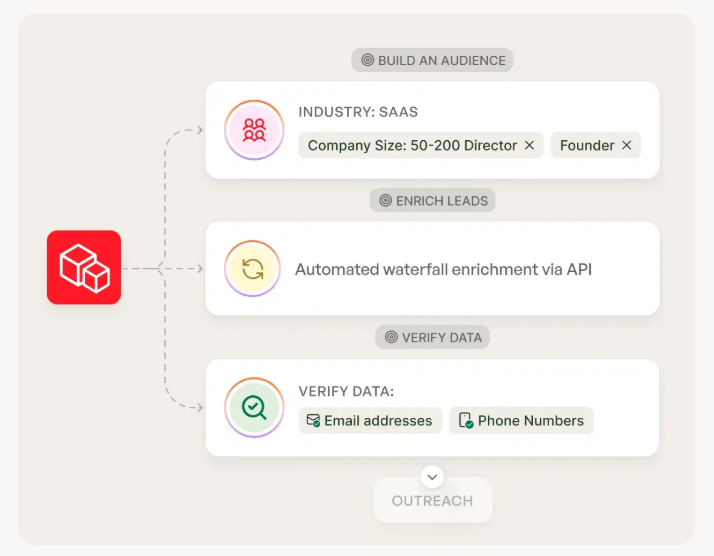
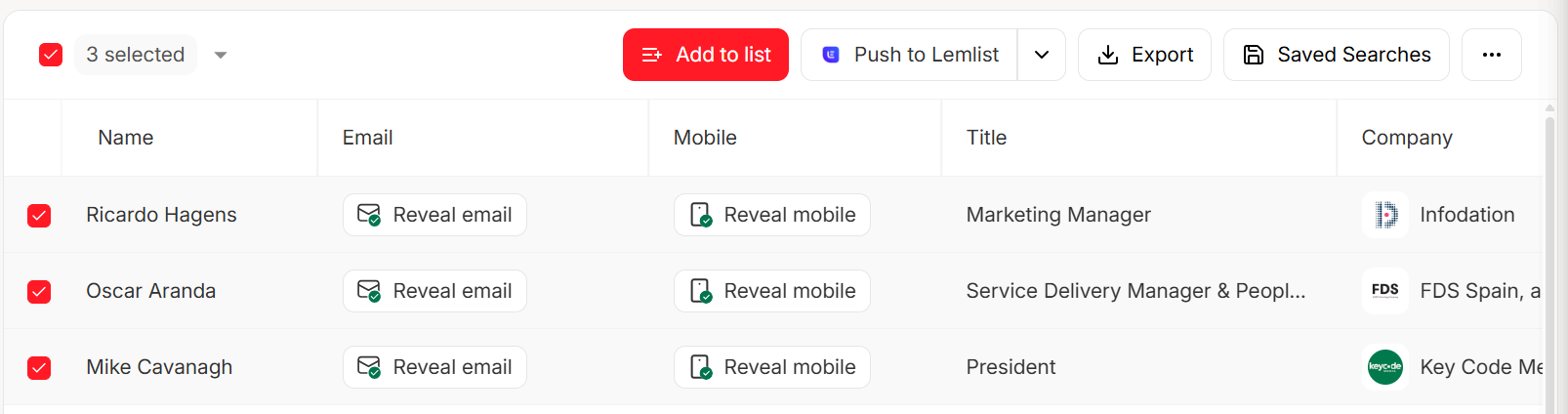
A clean workflow is: build/import a list, verify mobiles and emails in real time, enrich missing fields (50+ data points per contact), then push clean records into HubSpot or Salesforce via native integrations. We've seen teams cut "Bad Data/Invalid Number" dispositions fast once they stop feeding the dialer junk.
JustCall (best-if / avoid-if)
- Best if: you want an SMB dialer reps adopt in a day, with straightforward CRM logging and pricing you can model without a procurement saga.
- Avoid if: your org needs deep Salesforce Open CTI-style softphone control and you don't want to rely on connector behavior for screen pops and associations.
Pricing is clear: $29/user/mo (Team, annual), $49/user/mo (Pro), $89/user/mo (Pro Plus), typically with a 2-license minimum.
Aircall (integration verification checklist)
Aircall works well when you want a "real phone system" feel across inbound + outbound, not just SDR power dialing. Before you commit, verify these integration behaviors in your CRM:
- Does it screen pop to the right record on inbound and outbound?
- Does it log missed calls and voicemails the way your managers expect?
- Can you enforce mandatory outcomes (or at least block blank outcomes via workflow)?
- Where does the recording URL live, and does it play inside the CRM?
- How does it behave with multiple matches (shared company numbers)?
- Does it support your custom objects (HubSpot constraint matters here)?
Pricing: plan on ~$30/user/mo annual, and in many cases min 3 seats.
RingCentral RingEX (one-liner)
RingCentral is reliable unified comms plumbing. For outbound calling + CRM logging it's fine, but it isn't a purpose-built outbound machine. Budget ~$20-$35/user/mo annual.
Kixie (one-liner)
Kixie is built for speed and outbound volume. If your team lives in power dialing, it's a strong fit, just enforce external IDs and mandatory outcomes so the volume doesn't turn into messy data. Budget ~$35-$95/user/mo.
Two glue workflows worth using Zapier/Make for (and one you shouldn't)
Use automation for edge cases and enrichment, not for core call logging.
Good glue workflow #1: "Bad Data" cleanup loop
- Trigger: call outcome = Bad Data/Invalid Number
- Actions: mark phone invalid, create a cleanup task, send record to enrichment, and remove from active calling list
Good glue workflow #2: "Meeting Scheduled" handoff
- Trigger: call outcome = Meeting Scheduled
- Actions: create meeting, create a next-step task for the AE, post a summary + recording link to Slack, and stamp attribution fields
Stack anti-pattern: logging calls via Zapier
- If your call logs depend on a Zap running on a timer, you'll get delays, duplicates, and missing associations. Use APIs/webhooks for call creation; use Zapier/Make for downstream notifications and cleanup.
Bad list quality is why teams log 200 calls/day with zero connects. Prospeo's 300M+ profiles with 30+ filters - buyer intent, technographics, job changes - mean every number your CRM auto-dials is verified and current. Not six weeks stale.
Stop logging calls to disconnected numbers. Start with accurate data.
FAQ: cold calling CRM integration
What should a cold call automatically log in the CRM?
At minimum, log external call ID, direction, owner, duration, mandatory outcome, notes, recording URL, and record associations (contact + company, and deal when relevant). Also auto-create a follow-up task for callbacks and meetings.
Why do calls show up in the dialer but not on the right CRM record?
This comes down to association rules, object mismatch, permissions/seat gating, or logging at the wrong event. In practice, most cases are association logic: no matching contact, multiple matches, or the connector logging to whichever record was "active."
Is Salesforce Open CTI better than HubSpot for cold calling integrations?
For deep CTI control, yes: Salesforce Open CTI is a true softphone framework with consistent screen pops and embedded call control. HubSpot can still work well, but results depend on the connector and embedded mode, especially widget navigation constraints and custom object limitations.
What's a good free tool for list cleanup before you integrate calling?
For small teams, start with Prospeo's free tier (75 emails + 100 Chrome extension credits/month) to verify contacts before they hit your dialer, then add one lightweight enrichment step. Cleaner inputs cut "Bad Data" outcomes and reduce screen-pop mismatches that create unassociated calls.
Summary
Cold calling crm integration isn't a connector checkbox. It's a system: CTI that screen-pops correctly, a call data model with mandatory outcomes and external IDs, deterministic associations, and a weekly QA audit that catches rot before it hits pipeline. Get those right, and your dialer becomes a pipeline machine instead of a note-taking tax.