

Relationship Selling Strategies: A Data-Backed Guide for B2B Reps
You've got a pipeline full of people who like you but never buy. Thirty open conversations, plenty of "great catching up" emails, and a forecast that makes your manager nervous. The problem isn't that relationship selling doesn't work - it's that most reps confuse building rapport with building pipeline. There's a thread on r/sales where a rep calls the whole approach "disingenuous," and honestly, the way most people practice it, they're not wrong.
Relationship selling is a discipline, not a personality trait. Most guides tell you to "be authentic" and "listen more." That's not a strategy - that's a personality suggestion. If you take nothing else from this article, adopt three habits: lead with insight not small talk, hit the 43/57 talk-listen ratio, and use data tools to personalize every touchpoint.
What Relationship Selling Actually Is
Jim Cathcart, who literally wrote the book on this, frames it as "help other people at a profit." Not being nice. Not buying coffee. Helping - and getting paid for it.
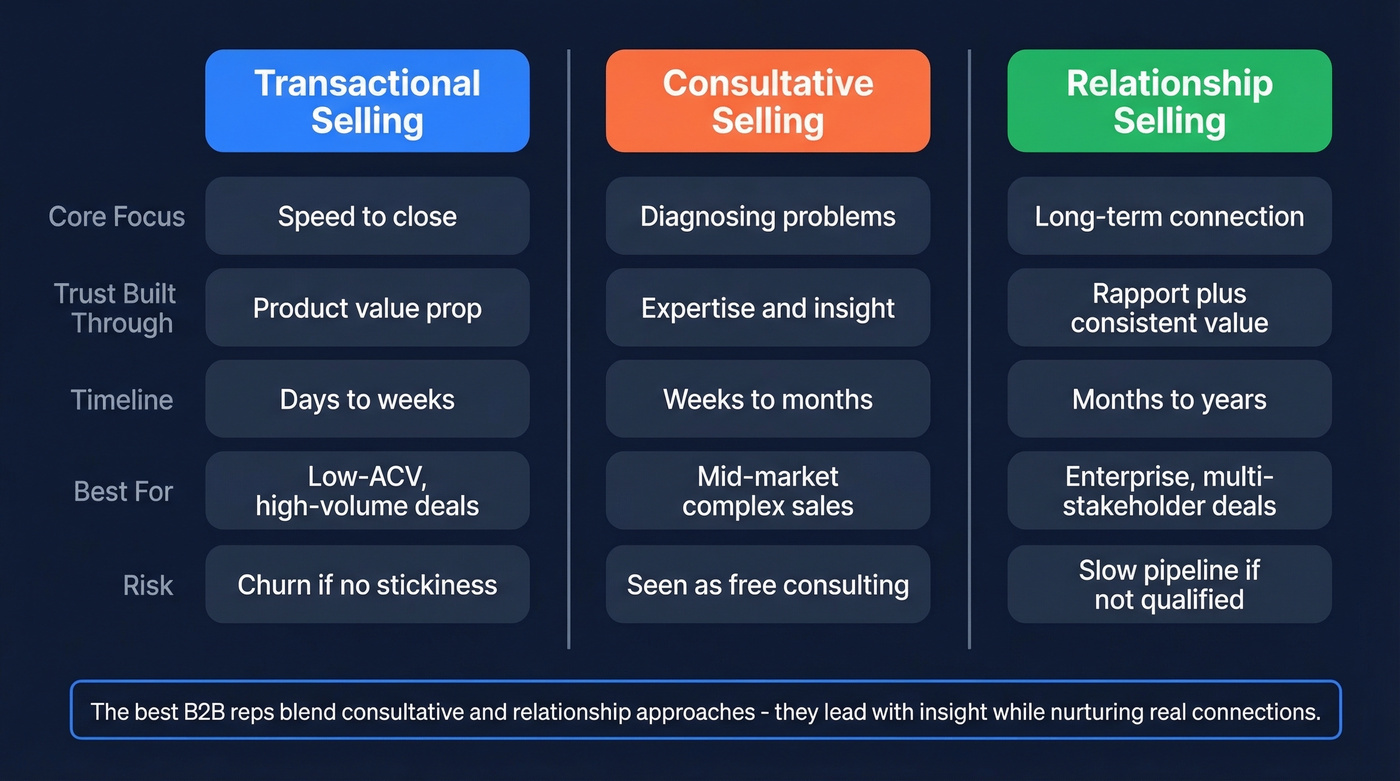
Transactional selling optimizes for speed: pitch, close, move on. Consultative selling builds trust through expertise - you diagnose, then prescribe. A relational sales strategy builds trust through connection over time. The best B2B reps blend consultative and relationship approaches, but they're distinct disciplines. 69% of prospects say their needs are missed on the first sales call. That's not a rapport failure. It's a listening failure.
Why Relationship-Led Selling Is Non-Negotiable in 2026
B2B selling is now digital-first: 80% of B2B sales interactions happen in digital channels, buyers use roughly 10 channels on average, and they spend only 17% of their buying time meeting with potential suppliers. You're competing for slivers of attention.
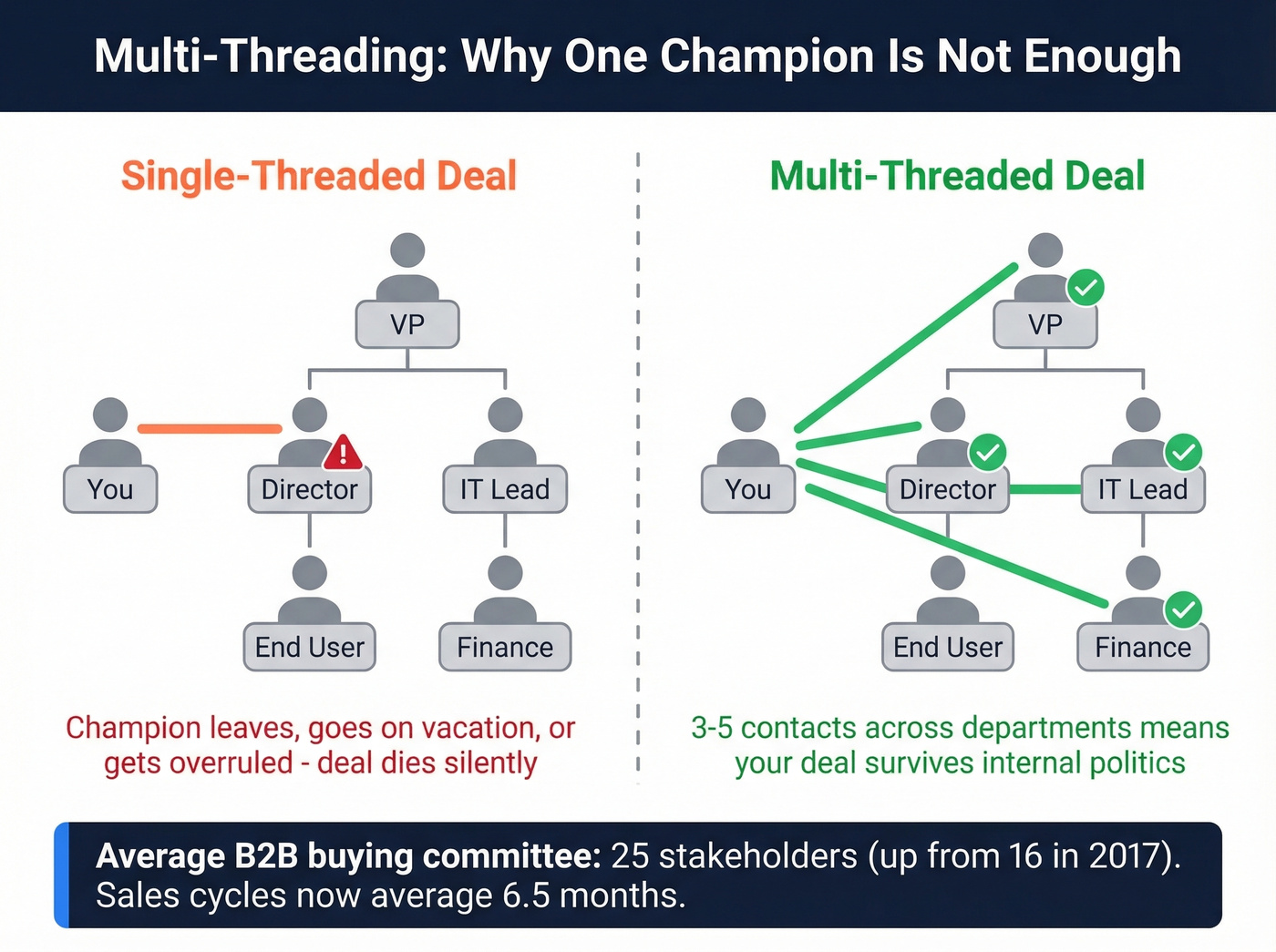
Buying committees have ballooned to 25 stakeholders on average, up from 16 in 2017, and sales cycles now stretch to 6.5 months. Only 16% of reps hit quota. And 77% of B2B buyers say their last purchase was complex or difficult due to information overwhelm.
Here's the payoff: relationship-led accounts typically see 5-15% higher retention and expansion revenue - compounding advantages that transactional approaches simply can't match. Social-selling teams see 16% higher win rates. The rep who's built real relationships across the org chart, not just with one champion, is the one who closes.

Multi-threading across 25-stakeholder buying committees means you need verified contact data for every decision-maker - not just your champion. Prospeo gives you 50+ data points per contact, 98% email accuracy, and 125M+ verified mobile numbers so you can build relationships across the entire org chart.
Stop single-threading deals on outdated data. Start for free.
8 Techniques That Actually Close Deals
1. Lead With Insight, Not Small Talk
The Challenger Sale research studied 6,000 reps across 90 companies and found that the teach-tailor-take-control approach consistently outperformed pure relationship builders. Open with something the prospect doesn't already know about their own business - a competitive shift, a benchmark they're missing, a trend in their vertical they haven't spotted yet. That's how you earn the right to a relationship.
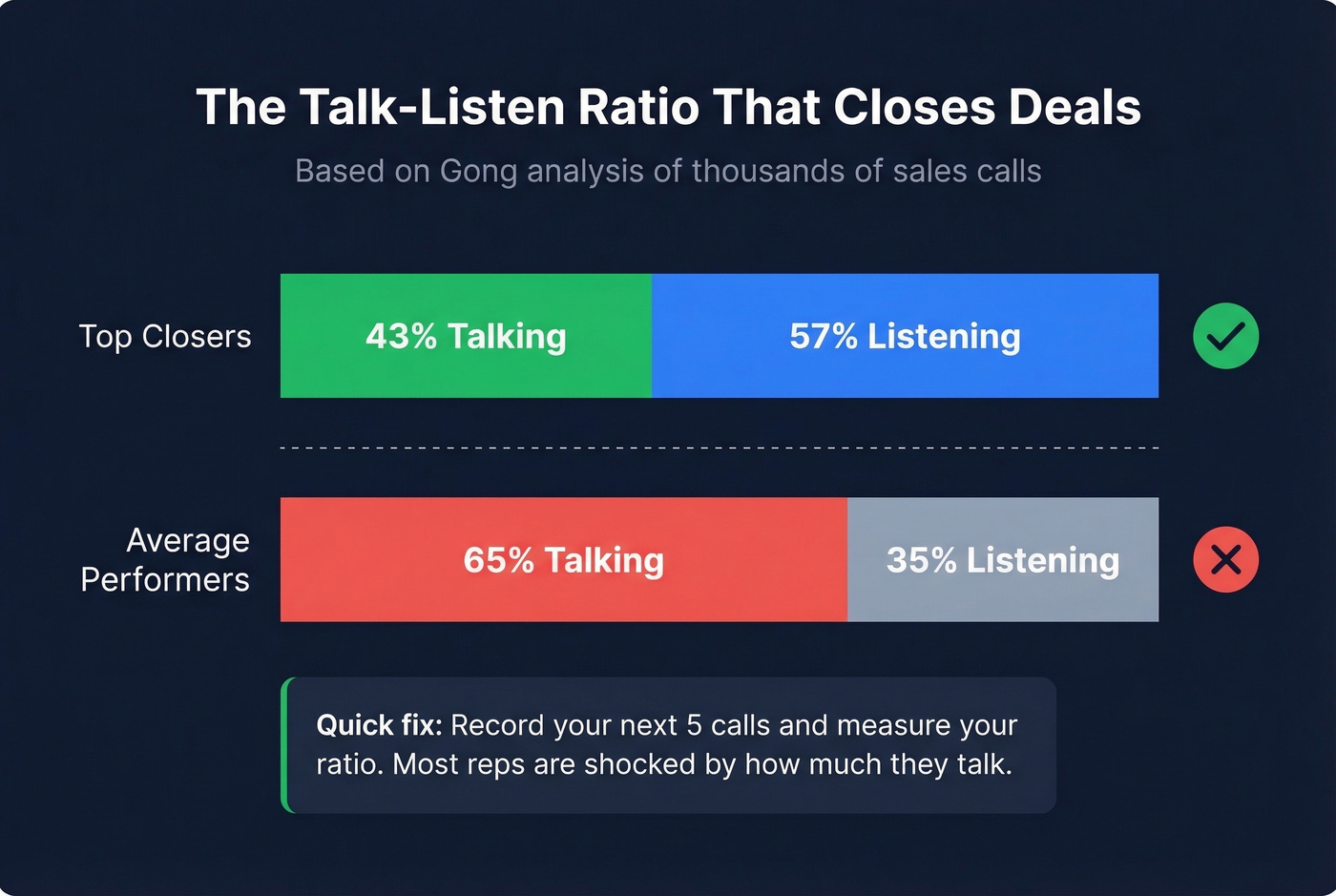
2. Hit the 43/57 Talk-Listen Ratio
Gong's data is clear: top closers speak 43% of the time. Average performers speak 65%. We've seen reps transform their close rates just by measuring this number. Record your next five calls and check. Most people are shocked.
3. Adapt to Your Buyer's Style
A seller once lost a deal because they led with technical specs when the prospect wanted trust signals first. As Sales Gravy puts it: "connect with their style, not yours." Their color model maps this well - Blue buyers want trust, Gold wants follow-through, Green wants data, Orange wants results. Read the room before you run the playbook.
4. Multi-Thread Across the Org Chart
With 25 stakeholders in the average buying committee, one champion isn't enough. Build relationships with 3-5 contacts across departments - finance, IT, end users, the executive sponsor. When your champion goes on vacation the week of the decision, you need someone else pulling for you. Single-threaded deals die silently, and this is the mistake we see kill more enterprise deals than any other.
5. Master Virtual Relationship Cues
Brevet's 4 R's framework works here: Be Relevant, Be Real, Be Relatable, Be Reliable. Camera on. Confirm understanding often - you can't read body language through a screen. Over-communicate rather than assume alignment.
6. Personalize at Scale With Data
Reps spend only 28-30% of their time actually selling. The rest disappears into research, admin, and CRM hygiene. Relationship selling requires knowing your prospect's world before you pick up the phone, and tools like Prospeo let you pull 50+ data points per contact - buyer intent, technographics, verified direct dials - refreshed every 7 days. That's the difference between "Hey, saw your post" and "I noticed you're evaluating [competitor] and your team just grew by 12 people."

7. Follow Up With New Value
"Just checking in" isn't a follow-up strategy. Every touchpoint should deliver something new - a relevant case study, a data point about their industry, a Loom walkthrough of how a similar company solved the exact problem they described. New value earns the next conversation. Recycled pleasantries don't. If you need a system, start with these sales follow-up templates and adapt them to your buyer.
8. Qualify While You Build Rapport
SPIN Selling was developed from studying 35,000+ sales calls across 20+ countries. MEDDIC gives you a qualification checklist for enterprise deals. Pick a framework and use it - especially if you're running enterprise deals. Rapport without qualification is just making friends on company time.
Let's be honest about deal size, too. If you're closing deals under $10k, you probably don't need a 6-month relationship-building cycle. Move fast, build deep - compress the strategies above into days, not quarters. The principles still apply; the timeline doesn't.
3 Mistakes That Kill Trust
Becoming a free consultant. Only 5% of B2B buyers say salespeople exceed expectations - yet reps routinely give away consulting-level advice to unqualified prospects. Set boundaries: if you're delivering that much value, you should be in a paid engagement.
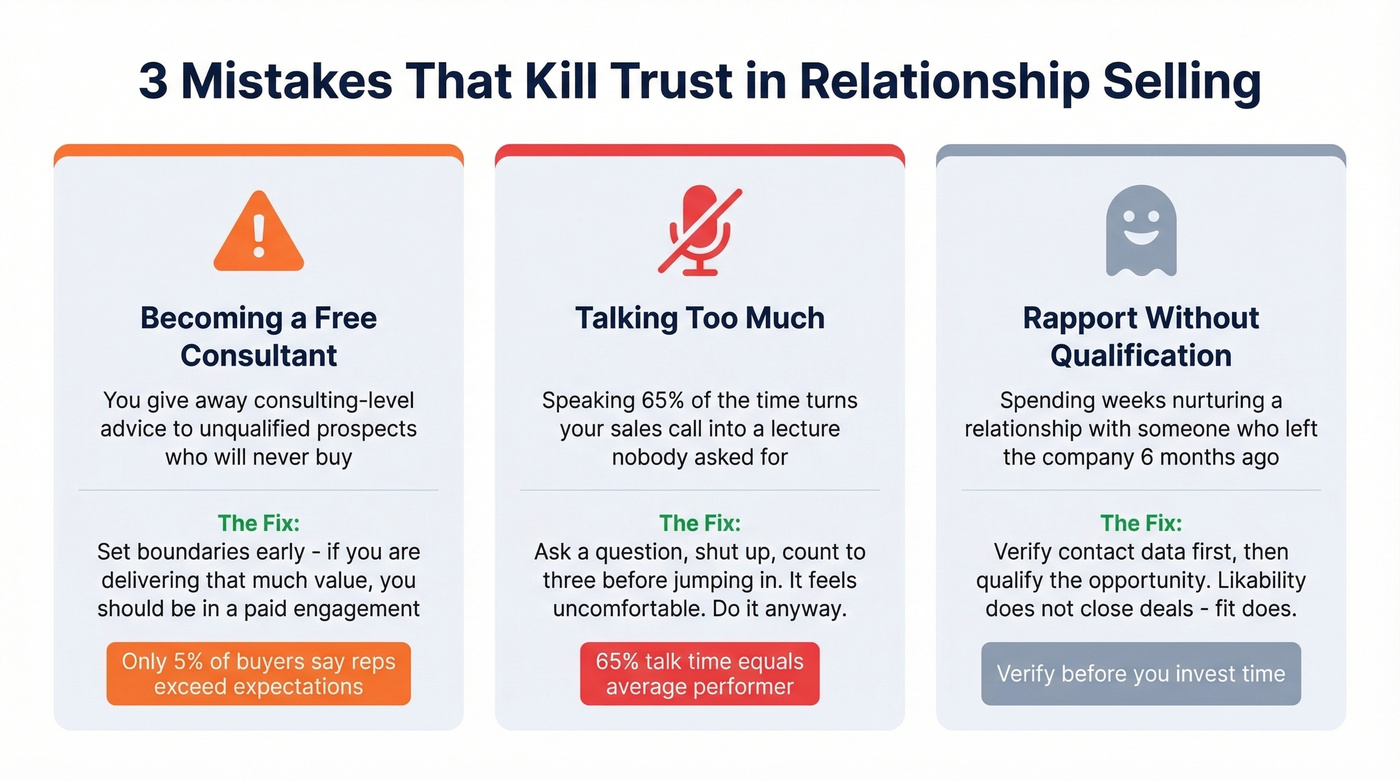
Talking too much. If you're speaking 65% of the time, you're delivering a lecture. The fix is mechanical: ask a question, shut up, count to three before jumping in. It feels uncomfortable at first. Do it anyway. A tighter discovery questions list helps you stay in control without monologuing.
Rapport without qualification. We've watched reps spend weeks nurturing a relationship with someone who left the company six months ago because they never verified the contact data. Verify first, then qualify the opportunity itself. Likability doesn't close deals - fit does. If you're building lists, pair it with data enrichment services so your CRM doesn't rot.
You just read that reps spend only 28-30% of their time selling. The rest vanishes into research and CRM hygiene. Prospeo's 30+ search filters - buyer intent, technographics, job changes, headcount growth - give you the personalization ammo relationship selling demands, at $0.01 per email. No more guessing. No more 'saw your post' openers.
Turn every touchpoint into an insight-led conversation.
FAQ
What's the difference between relationship selling and consultative selling?
Relationship selling builds trust through rapport and personal connection over time; consultative selling builds trust through expertise by diagnosing problems and prescribing solutions. The best B2B reps blend both, leading with insight while nurturing real relationships across the buying committee.
How do you scale relationship selling without burning out?
Automate prospect research so you invest time in conversations, not data entry. Qualify early so you're building relationships only with prospects who can actually buy. Scaling means being selective, not spreading thin.
Does relationship selling work for short sales cycles?
Yes, but the approach compresses into days instead of months. Lead with a relevant insight on the first call, listen more than you talk, and follow up with new value - not small talk. Trust can be built quickly when every interaction is genuinely useful.
What are the best relationship selling strategies for enterprise deals?
Multi-thread across 3-5 stakeholders, lead every conversation with a fresh insight, and qualify with MEDDIC. Enterprise deals live or die on organizational relationships, not individual rapport. One champion isn't enough when 25 people influence the decision.