

Sales Call Analytics: What It Costs, What It Returns, and What Nobody Tells You
Your VP just pulled up the dashboard and wants to know why close rates dropped 15% this quarter. The reps say they're making calls. The CRM says activity is up. But nobody can explain what's actually happening on those calls - what's being said, what's being missed, and where deals are dying.
That's the gap sales call analytics fills. Before you sign a $30K+ contract, though, you need to understand real pricing, compliance landmines, ROI benchmarks, and the upstream problem that makes most analytics investments underperform.
The Quick Version
- Enterprise (100+ reps): Gong or Chorus. Deep analytics, deep pockets required.
- Mid-market (20-50 reps): Outreach or Salesloft. Conversation intelligence bundled with your engagement platform.
- SMB / startup (<20 reps): HubSpot Conversation Intelligence or Fireflies.ai. Good enough without the enterprise price tag.
What Are Call Analytics?
At its core, this category captures, transcribes, and analyzes sales conversations to surface patterns that improve rep performance and deal outcomes. The workflow looks like this: record the call, transcribe it with AI-powered speech recognition, run analysis on the transcript and audio, then sync insights back into your CRM - and increasingly, trigger automated post-call workflows like task creation and deal-stage updates.
The analysis breaks into three layers. Speech and transcription handles the raw conversion of audio to text: speaker diarization, keyword detection, multi-language support. Sentiment and emotion analysis goes deeper, detecting tone shifts, deal signals, and moments where a prospect's energy changes. Rep performance analysis is where most teams get value - talk-to-listen ratios, longest monologues, question frequency, objection handling, and whether next steps were actually set.
This isn't a niche category anymore. The conversation intelligence software market sits at $27.4B in 2026, projected to hit $60.3B by 2036 at an 8.2% CAGR. Cloud-based deployments account for 70% of the market, and large enterprises represent 55.6% of buyers. McKinsey estimates that 30%+ of sales activities can be automated, and 45% of revenue teams now run a hybrid AI-SDR model - call analytics is the automation layer for coaching and deal inspection.
Two Approaches to Call Analysis
There are two fundamentally different types here, and most buyers don't realize they're choosing between them.
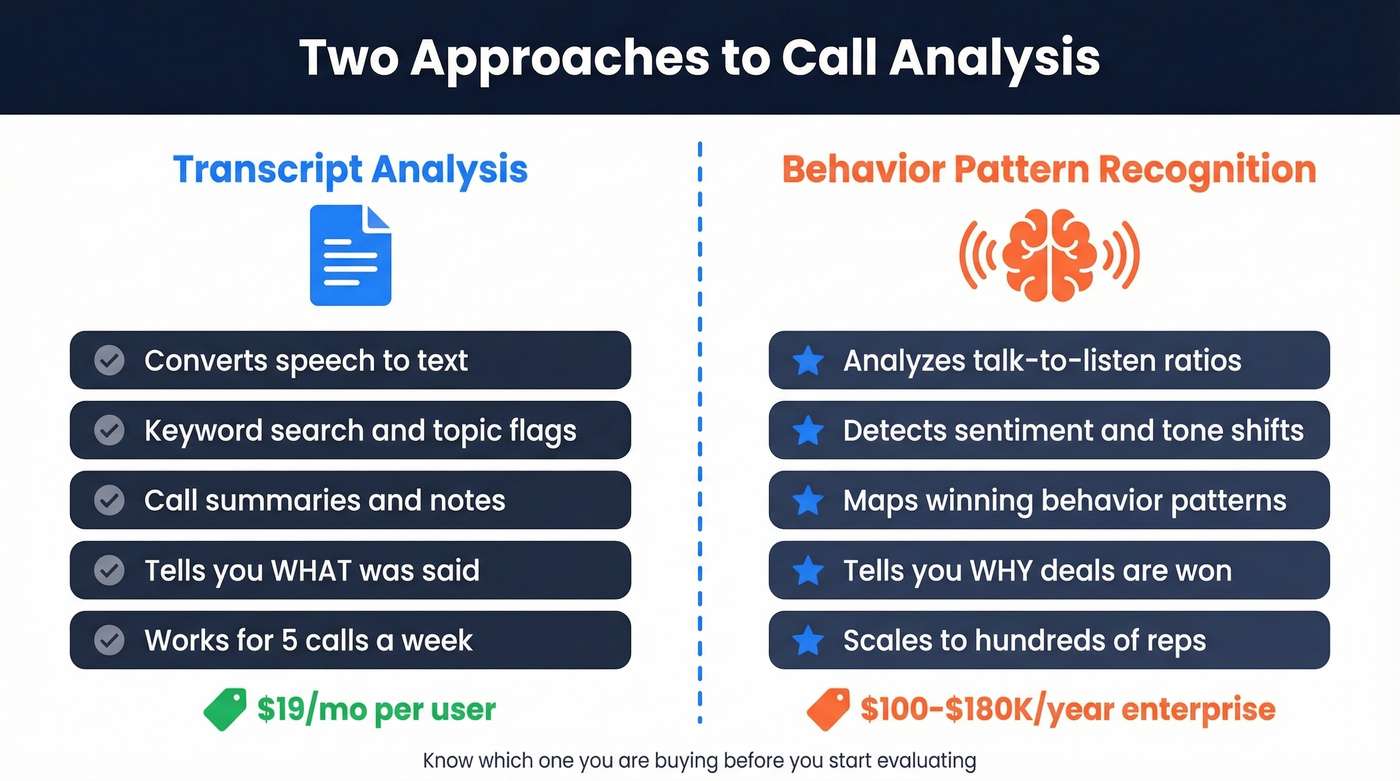
Transcript analysis is the simpler approach. It converts speech to text, lets you search keywords, generates summaries, and flags topics. It tells you what was said. Some managers take a scrappy version of this - dumping transcripts into ChatGPT and asking for patterns. That works for five calls a week. It falls apart at fifty.
Behavior pattern recognition is where the real ROI lives. Instead of just reading words, it analyzes dynamics: talk-to-listen ratios, sentiment shifts, question patterns, tone changes, and the behavioral signatures that separate top performers from everyone else. It tells you why deals are won. This is what platforms like Gong and Outreach's Kaia are actually selling - not transcription, but behavioral intelligence that translates into coaching playbooks.
A third emerging approach layers real-time, in-call coaching on top of both - nudging reps with objection-handling suggestions or competitive intel while the conversation is still happening.
The gap between these approaches is the gap between a $19/month transcription tool and a $180K/year enterprise platform. Know which one you're buying before you start evaluating.
What Call Analytics Software Actually Costs
Gong is widely viewed as the market leader, and it's the pricing benchmark everyone else gets measured against. Gong doesn't publish public list pricing - that tells you everything about how they sell.
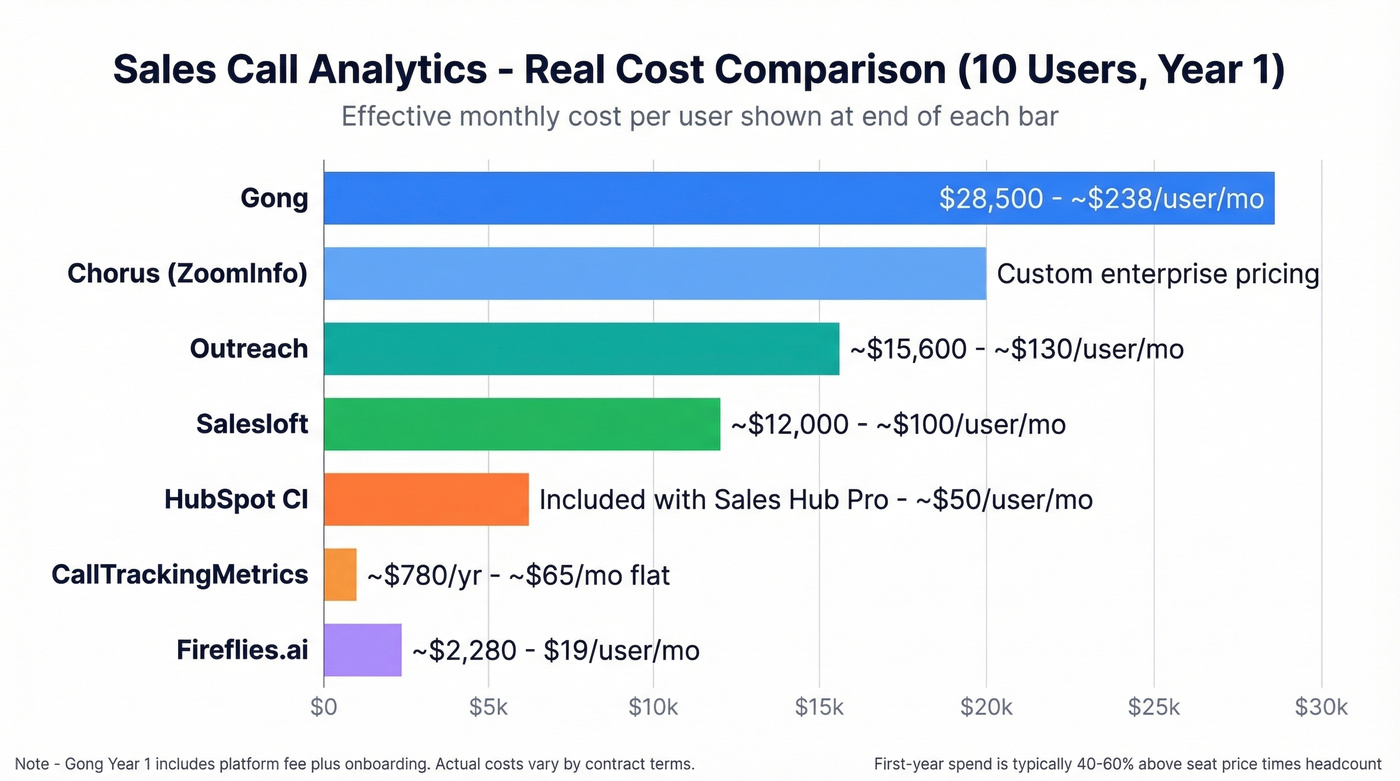
The pricing model has three parts: an annual platform fee ($5,000-$50,000/year), per-user licenses, and mandatory professional services. Per-user costs tier by volume: $1,600/user/year for under 50 users, dropping to $1,360/user/year at 250+. Onboarding runs $7,500-$28,500+, and enterprise implementations with complex integrations can reach $65,000.
Here's a concrete example: 10 users on Gong's Starter tier runs roughly $28,500 in Year 1 - that's $238/user/month effective. Scale to 50 users and you're looking at $105,000-$180,000 for Year 1. Hit 100 users and you're approaching $194,000. Contracts lock you in for 2-3 years with annual prepayment, and renewals carry a 5-15% automatic uplift. The first-year spend typically lands 40-60% above what you'd calculate from seat price times headcount.
Gong isn't the only option. The pricing spread across the category is enormous:
| Tool | Pricing Model | ~Cost | Best For |
|---|---|---|---|
| Gong | Platform + seat + onboarding | $28.5K Year 1 (10 users) | Enterprise, 100+ reps |
| Chorus (ZoomInfo) | Custom; often sold as ZoomInfo add-on | Enterprise pricing | ZoomInfo customers |
| Outreach | Per-user, custom | ~$100-$150/user/mo | Mid-market, full stack |
| Salesloft | Per-user, custom | ~$75-$125/user/mo | Mid-market alternative |
| HubSpot CI | Included in Sales Hub | Included with your HubSpot tier | HubSpot-native teams |
| Fireflies.ai | Freemium + per-user | Free - $19/user/mo | Budget / transcription |
| CallTrackingMetrics | Tiered plans | ~$65/mo | Marketing attribution |

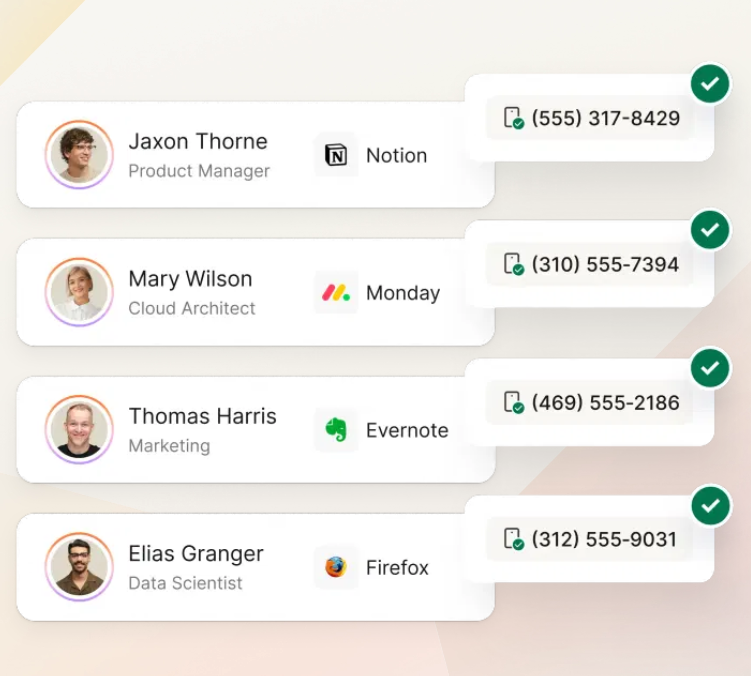
Call analytics tools reveal what's happening on calls - but they can't fix the upstream problem. If your reps are dialing wrong numbers and bouncing emails, no amount of conversation intelligence will save your pipeline. Prospeo delivers 125M+ verified mobile numbers with a 30% pickup rate, so your reps actually reach the right people before analytics even enters the picture.
Stop analyzing calls that never should have been made.
Compliance: Recording Laws You Must Know
Most teams are winging compliance. That's a problem.
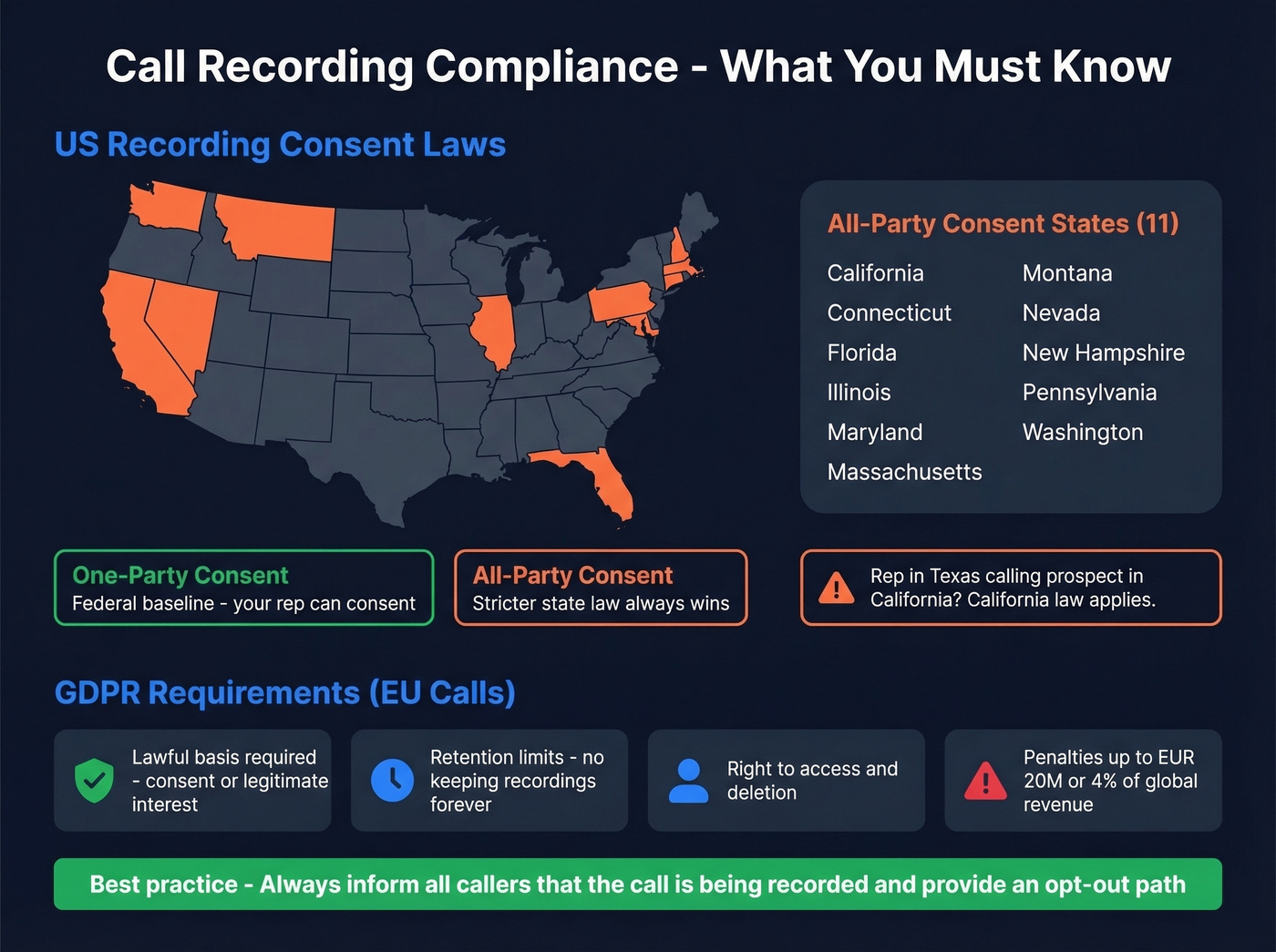
In the US, the federal Electronic Communications Privacy Act establishes one-party consent as the baseline - meaning one person on the call (your rep) can consent to recording. But 11 states override this with all-party consent requirements: California, Connecticut, Florida, Illinois, Maryland, Massachusetts, Montana, Nevada, New Hampshire, Pennsylvania, and Washington. If your rep is in Texas calling a prospect in California, California's stricter law applies.
GDPR adds another layer for any calls involving EU residents. You need a lawful basis for recording - consent, contractual necessity, legal obligation, or legitimate interest. Consent must be freely given, specific, informed, and unambiguous. Data minimization and retention limits apply: you can't keep recordings indefinitely "just in case." Data subjects have the right to access and deletion of their recordings. Penalties run up to EUR 20M or 4% of global annual revenue.
The operational best practice is simple: inform all callers that the call is being recorded, and provide an opt-out path. This protects you across jurisdictions and builds trust. Most major platforms support automated recording disclosures - use them.
ROI Benchmarks: What to Expect
Published benchmarks show that opportunities closed within 50 days carry a 47% win rate, compared to roughly 20% or lower after that threshold. AI coaching assistants correlate with deals closing 11 days faster on average, and on deals over $50K, sellers using real-time coaching see up to a 10 percentage point lift in win rate.
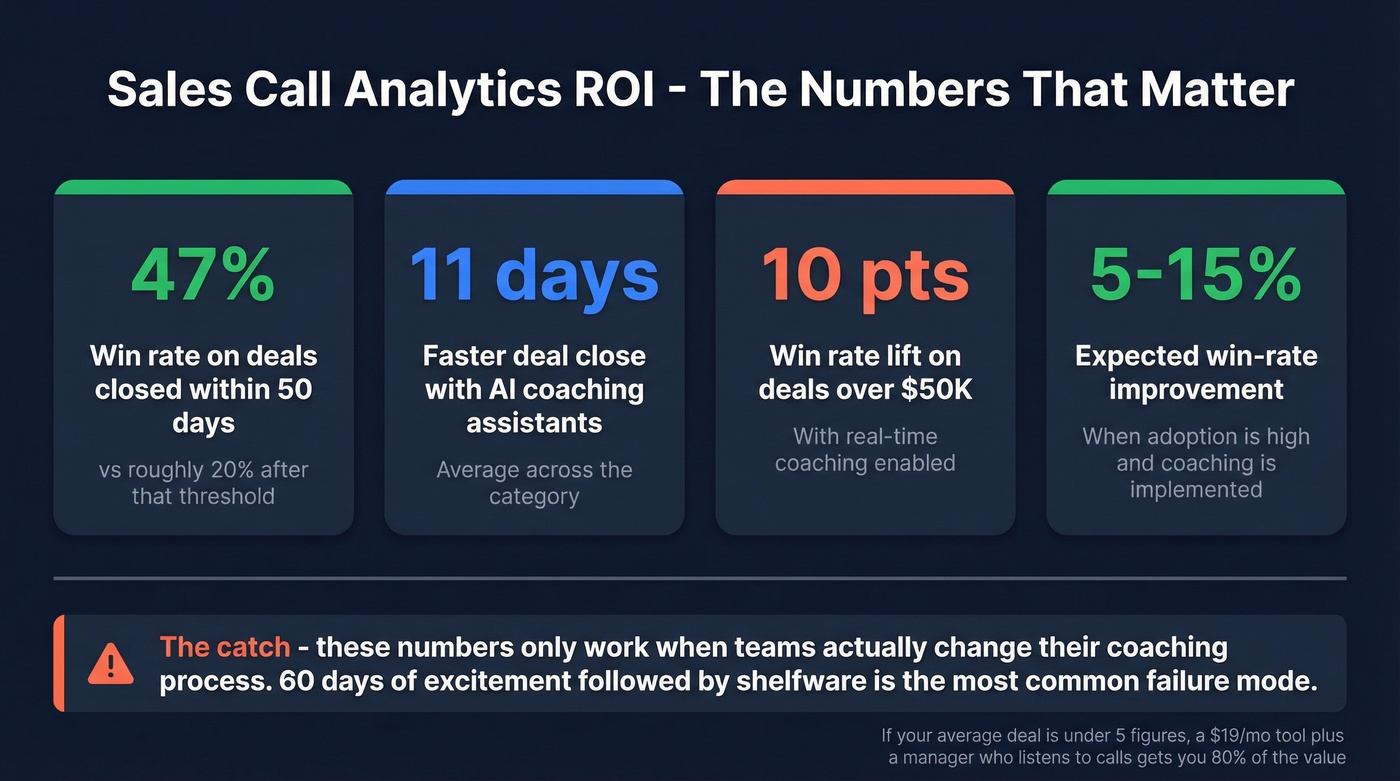
Across the category, expect 5-15% win-rate improvement when adoption is high and coaching workflows are actually implemented. The keyword there is "when." We've seen teams buy Gong, get excited for 60 days, then watch it become shelfware because nobody changed the coaching process.
Here's the thing: if your average deal size sits below five figures, you probably don't need Gong-level analytics. A $19/month transcription tool plus a manager who actually listens to calls will get you 80% of the value at 2% of the cost.
The Upstream Problem Nobody Talks About
If your contact data is bad, your analytics are measuring failure, not performance. An SDR makes 500 dials in a week. 180 go to voicemail. 90 hit disconnected numbers. 40 reach the wrong person entirely. That's 310 wasted dials before analytics even enter the picture.
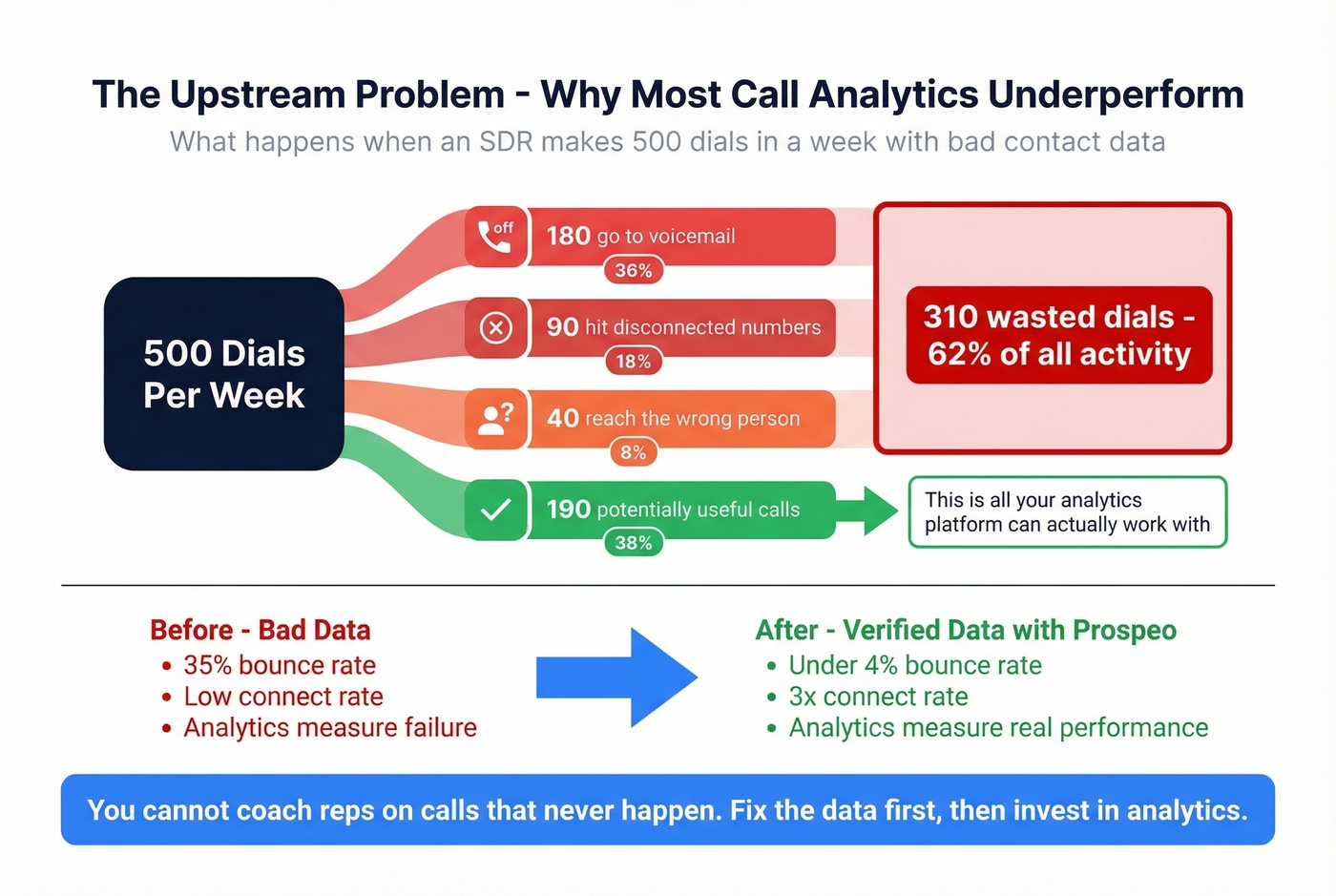
This is where data quality becomes the prerequisite for analytics ROI. Prospeo's mobile finder covers 125M+ verified mobile numbers with a 30% pickup rate, and 98% email accuracy on a 7-day refresh cycle. At roughly $0.01 per email, cleaning your data costs less than a single month of most analytics platforms. One customer, Meritt, went from a 35% bounce rate to under 4% and tripled their connect rate. You can't coach reps on calls that never happen.
Best Tools for Sales Call Analytics in 2026
Gong
Gong is the gold standard in conversation intelligence, and it prices accordingly. The platform excels at behavior pattern recognition - deal boards, talk-to-listen analysis, competitive mention tracking, and coaching scorecards that actually change rep behavior. AI insights are genuinely best-in-class for large sales orgs with complex deal cycles.
The most common Gong complaint we hear? Contract lock-in. Teams that churn after Year 1 still owe the remaining balance. The analytics are powerful, but you're signing a multi-year commitment with automatic price escalation baked in.
Bottom line: Worth it at 100+ reps with enterprise deal sizes. Below 50 reps, the platform fee alone eats your budget before you see returns.

Outreach
Outreach bundles call analytics into its broader sales engagement platform, making it the natural pick for mid-market teams already running sequences through it. The Kaia assistant provides real-time coaching during calls, and their published benchmarks on cycle time and win-rate lift are the most specific in the category. Expect ~$100-$150/user/month, custom-quoted.
| Pros | Cons |
|---|---|
| Call analytics + sequencing in one platform | Overpaying if you only need transcription |
| Real-time in-call coaching via Kaia | Custom pricing means negotiation required |
| Strongest published ROI data in the category | Learning curve for the full platform |
HubSpot Conversation Intelligence
HubSpot CI comes bundled with Sales Hub Professional and Enterprise tiers. It's not as deep as Gong on behavioral analytics, but it handles transcription, keyword tracking, and coaching highlights without adding another vendor. For HubSpot-native teams, the zero-integration overhead is the real selling point.
Use this if: You're already on HubSpot Sales Hub Pro or Enterprise. Skip this if: You need advanced deal intelligence or competitive analysis - you'll outgrow it fast.
Chorus (ZoomInfo)
Let's be honest: buying Chorus standalone doesn't make sense. It's typically sold as a ZoomInfo add-on, not an independent product. If you're already paying for ZoomInfo's data platform, Chorus comes bundled or at a marginal uplift - typically within a $30K-$80K/year ZoomInfo contract. The analytics are solid for enterprise teams running ZoomInfo's intent and engagement data alongside call insights. If you're not a ZoomInfo customer, start your evaluation elsewhere.
SalesLoft
Solid mid-market alternative to Outreach with conversation intelligence baked into the platform. Similar capabilities - transcription, coaching, deal inspection - at ~$75-$125/user/month. The choice between Salesloft and Outreach usually comes down to which UI your team prefers and which integrations matter. The consensus on r/sales is that both are "good enough" and switching costs aren't worth agonizing over.
Fireflies.ai
Budget-friendly transcription and meeting intelligence. The free tier handles basic transcription, and paid plans at $19/user/month add AI summaries, action items, and CRM sync. G2 reviewers praise the simplicity but flag shallow analytics beyond transcription. For teams that just need searchable transcripts and meeting notes, it's hard to beat the price.
CallTrackingMetrics
Marketing attribution meets call tracking. Starting around $65/month, it's not a sales coaching tool - it's a marketing intelligence layer for phone-driven businesses that need to connect inbound calls to campaigns and keywords. If that's your use case, it's great. For outbound sales coaching, look elsewhere.
Five Mistakes That Kill Analytics ROI
1. Measuring speed over outcomes. Teams optimize for shorter calls when they should optimize for calls that advance deals. A 45-minute discovery call that uncovers budget authority is worth more than five 3-minute speed dials.
2. Cherry-picking flattering metrics. It's easy to build a dashboard that shows improving talk-to-listen ratios while ignoring hang-up rates and wrong transfers. Research suggests 70-75% of enterprises misinterpret conversational analytics - usually because they're only looking at numbers that confirm what they already believe.
3. Confirmation bias in dashboards. Build QA scorecards with binary Yes/No questions to reduce subjective interpretation, and run monthly calibration sessions across evaluators.
4. No adoption plan. In our experience, the teams that get ROI are the ones that changed their coaching process first, not their tech stack. Budget 90 days for workflow changes to stick. Tie analytics insights to specific coaching moments - not just scores.
5. Ignoring upstream data quality. Analytics on bad data is expensive noise. If 30% of your numbers are disconnected, your conversation intelligence platform is faithfully documenting failure at $1,600/user/year. Fix the inputs before you analyze the outputs.
You're about to spend $28K-$180K on call analytics software. That investment only pays off if reps are talking to real decision-makers. Teams using Prospeo book 26% more meetings than ZoomInfo users - because 98% email accuracy and verified mobiles mean every call is a real conversation worth analyzing.
Make every recorded call worth the cost of recording it.
FAQ
Is it legal to record sales calls?
Under the federal ECPA, one-party consent applies - your rep's awareness is enough. But 11 states (including California, Florida, and Illinois) require all-party consent, and the stricter law governs cross-state calls. Always disclose recording and offer an opt-out to stay compliant everywhere.
How much does Gong cost?
Expect roughly $28,500/year for 10 users in Year 1, scaling to $105K-$180K for 50 users. That includes a $5K-$50K platform fee, per-seat licenses ($1,360-$1,600/user/year), and mandatory onboarding ($7,500-$28,500+). Contracts run 2-3 years with 5-15% annual renewal increases.
What's a good talk-to-listen ratio?
Top performers typically land at 40-50% talk time, meaning 50-60% listening. But the ratio matters less than what's said - objection handling quality and discovery question depth correlate more strongly with win rates than the raw percentage.
Why is my connect rate low even with analytics?
Sales call analytics diagnose low connect rates but can't fix bad data. If 30%+ of your numbers are disconnected, the problem is upstream. Verify before you dial - tools like Prospeo refresh their mobile database every 7 days, which is the difference between reaching real people and burning through a list of dead numbers.
How long does implementation take?
Standard rollout runs 2-8 weeks for most platforms. Enterprise deployments with complex CRM integrations and legal reviews can stretch to 3-4 months. The bigger bottleneck is adoption - budget 90 days for coaching workflow changes to actually stick.