

The 8 Best Sales Contact Database Software Tools in 2026
There are 50+ tools that call themselves sales contact database software. You need one, maybe two. The difference between the right pick and the wrong one isn't features - it's whether the emails actually land and the phone numbers actually connect.
Why Most Lists Get It Wrong
Most comparison articles lump CRMs, contact databases, and enrichment tools into one pile. They're not the same thing. A CRM manages contacts you already have. A contact database gives you new contacts to prospect. Enrichment tools fill gaps on existing records.
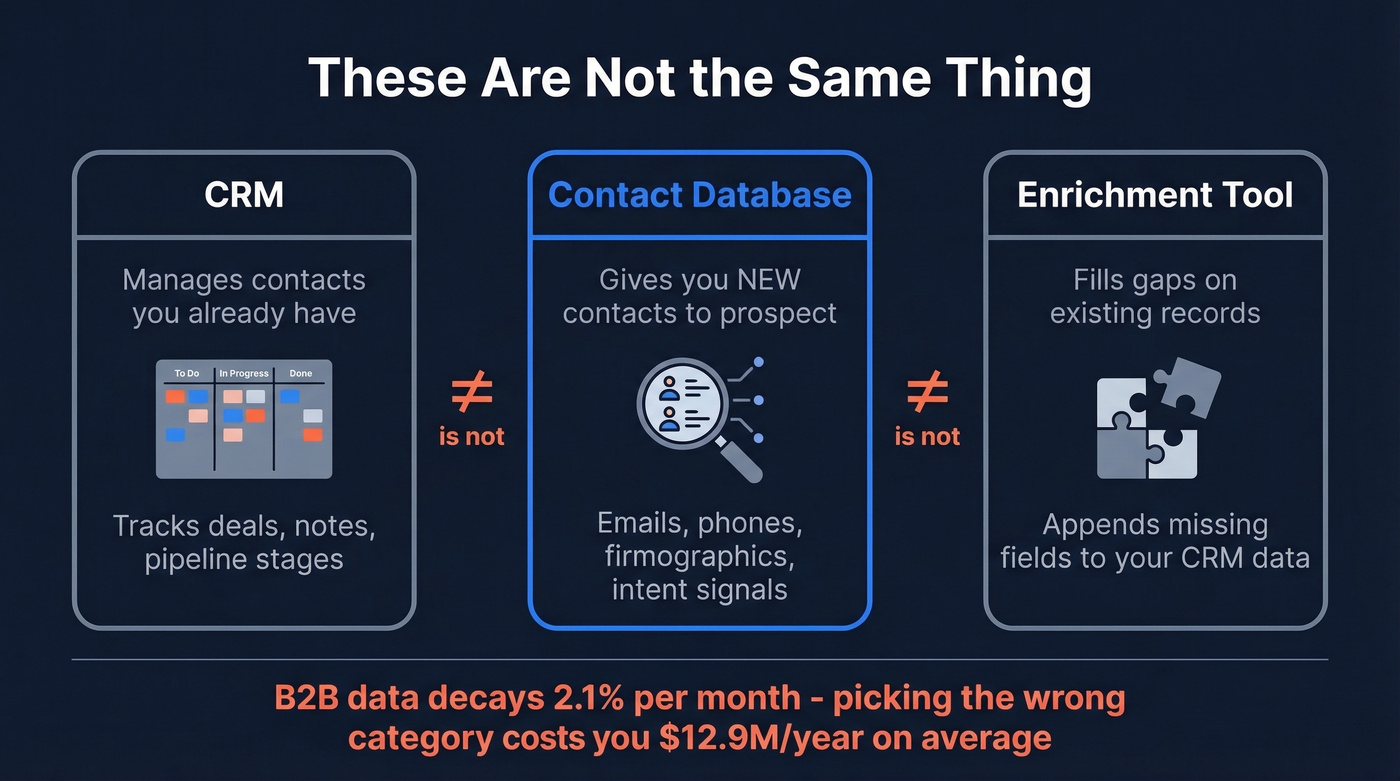
This distinction matters because B2B contact data decays roughly 2.1% per month - about 22.5% annually. Email addresses go stale at 23-30% per year, and poor data quality costs companies an average of $12.9M/year. The database you pick isn't a feature decision. It's a revenue decision.
Our Picks at a Glance
| Tool | Best For | Starting Price | Key Differentiator |
|---|---|---|---|
| Prospeo | Email accuracy + self-serve | Free; ~$0.01/email | 98% accuracy, 7-day refresh |
| ZoomInfo | Enterprise sales intelligence | ~$15K/yr | Massive DB, deep firmographics |
| Apollo.io | Budget volume prospecting | Free; $49/mo | Big free tier, built-in sequences |
| Cognism | European data + compliance | ~$15K/yr | GDPR-first, verified mobiles |
| Lusha | Quick email lookups | Free (70 credits/mo) | Simple Chrome extension |
| Lead411 | Flat-rate data access | ~$49/user/mo | Predictable pricing |
| RocketReach | Basic contact lookups | ~$29/user/mo | Simple search, broad coverage |
| Seamless.AI | AI-powered prospecting | Free; ~$147/mo paid | Real-time search engine |
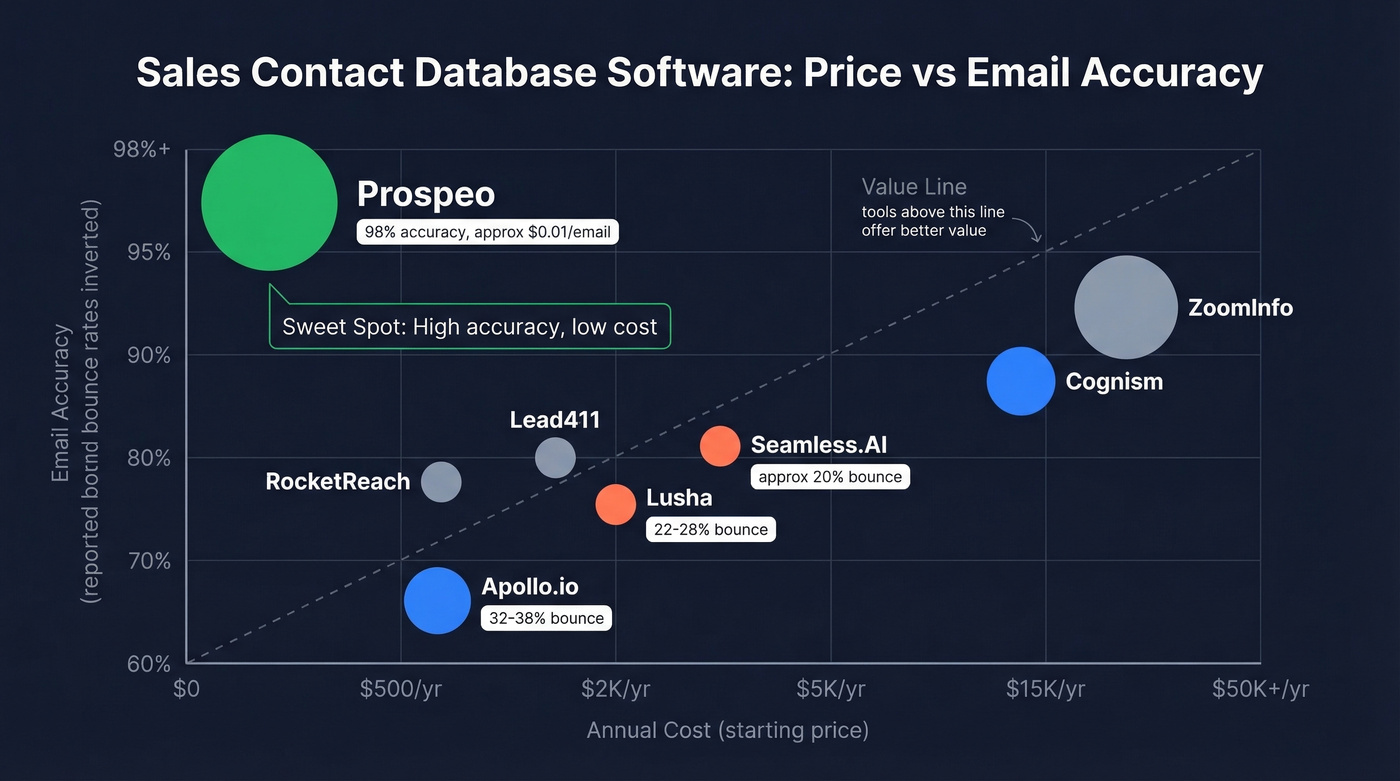
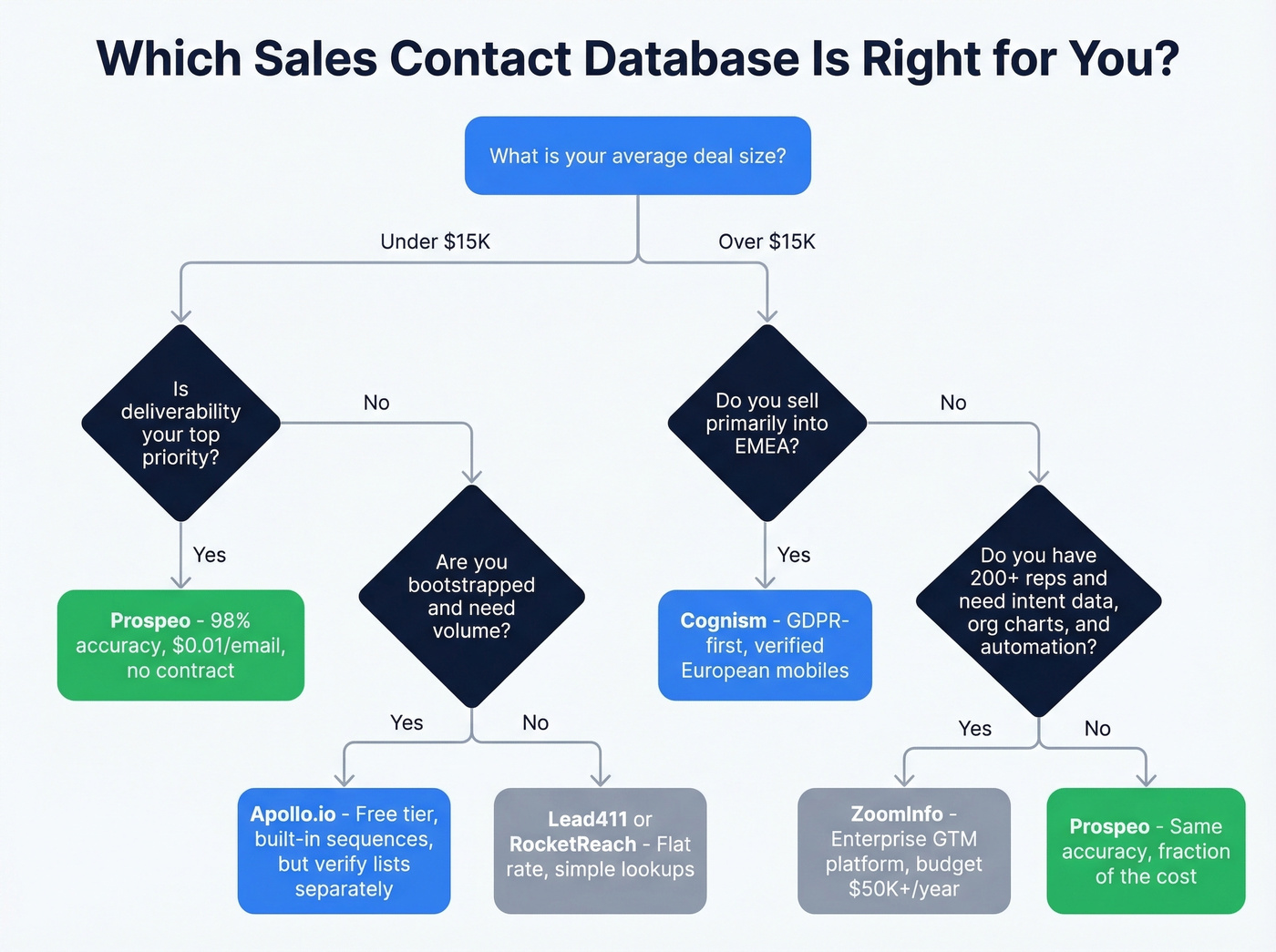
Quick picks: Start with Prospeo if deliverability is your top priority. Go Apollo if you're bootstrapped and need volume. Pick Cognism if you sell into EMEA and need GDPR-first compliance.

You just read that B2B contact data decays 2.1% per month - costing companies $12.9M/year. Prospeo refreshes every 7 days (not 6 weeks), delivers 98% email accuracy, and starts at $0.01/email. Snyk's 50 AEs cut bounce rates from 35% to under 5% and grew pipeline 180%.
Stop paying for stale data that wrecks your sender reputation.
The 8 Best Tools Reviewed
Prospeo
Prospeo covers 300M+ professional profiles, 143M+ verified emails, and 125M+ verified mobile numbers - all on a 7-day refresh cycle. The industry average refresh is six weeks. That gap matters when you're running outbound at scale.

The 98% email accuracy comes from a proprietary 5-step verification process with catch-all handling, spam-trap removal, and honeypot filtering. Snyk's 50-person AE team saw bounce rates drop from 35-40% to under 5% after switching, with AE-sourced pipeline up 180%. The database includes 30+ search filters covering buyer intent across 15,000 Bombora topics, technographics, job changes, headcount growth, and funding signals.
Use this if you care about deliverability above everything else, want self-serve access without a contract, or you're an agency that can't afford to burn client domains on bad data. At ~$0.01 per email with a free tier, the economics are hard to beat.
ZoomInfo
ZoomInfo is the incumbent for a reason: one of the largest B2B databases, very deep firmographic and technographic data, and an ecosystem of add-ons that can power an entire GTM motion.
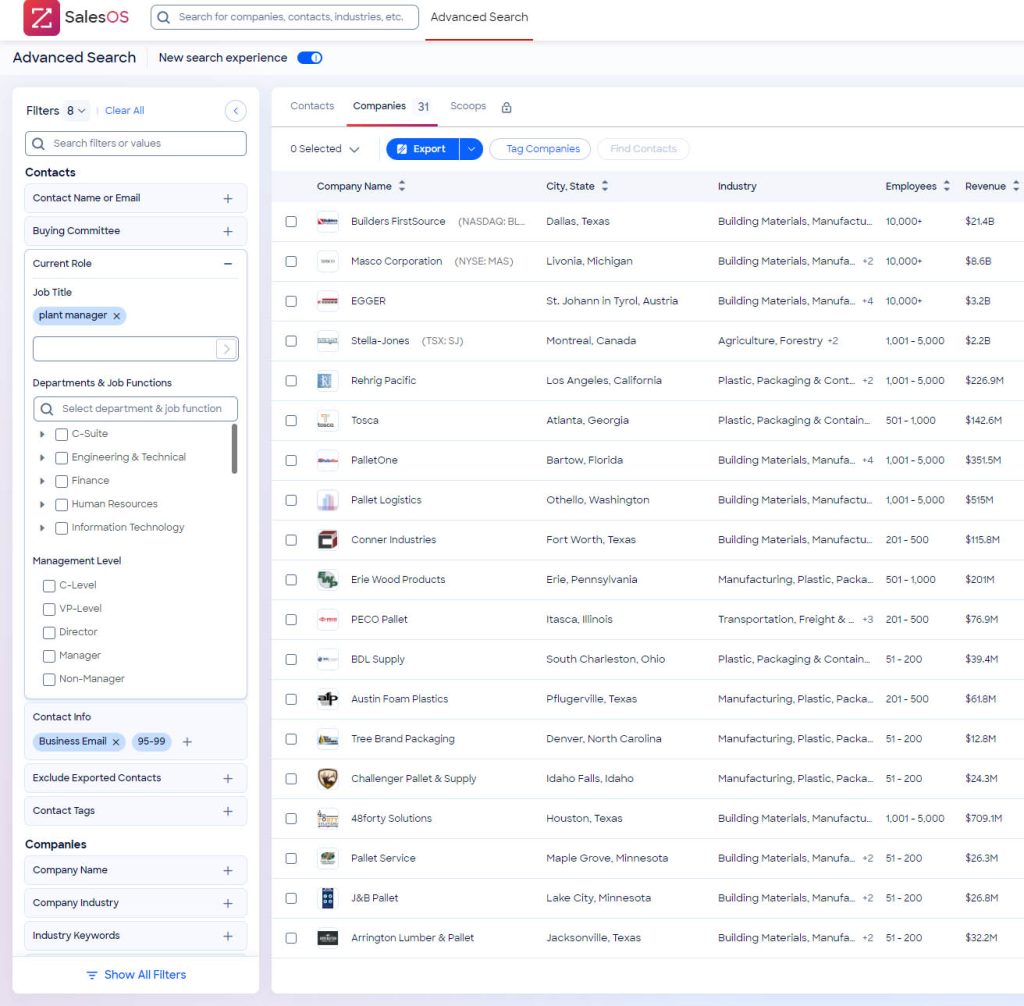
Here's the thing - most teams don't need all of that. ZoomInfo's Professional tier starts at $15K-$18K/year, working out to roughly $3.00 per credit. Advanced runs $22K-$28K. Elite hits $35K-$45K+.
Then add seats at roughly $1,500/user/year, extra credits at about $3,000 per 5,000, and modules like Global Data at around $10K. A 10-seat mid-market contract with intent data can easily clear $50K/year. Renewals typically increase 10-20%, and you're locked into annual contracts with 60-90 day cancellation windows. That's a lot of friction for a team that just needs emails and phone numbers.
Use this if you're a 200+ person sales org that needs intent data, org charts, and workflow automation in one platform. Skip this if you're a team of 5-15 reps who mostly need accurate contact info - you'll pay for features you never activate.
Apollo.io
Apollo is the default "affordable" option, and for good reason. The free tier is genuinely useful, paid plans start at $49/mo per user, and the built-in sequencer means you can prospect and send from one tool.
The common tradeoff is data quality. A practitioner test on r/coldemail reported Apollo bounce rates of 32-38% on exported lists. We've seen similar numbers in our own testing - at those rates, you're burning sender reputation on every campaign. Apollo also migrated to a new credit system in late 2025 where credits don't roll over, so your bill can creep up.

Use this if you're bootstrapped, need volume, and you're willing to run every list through a separate email verification tool before sending. Skip this if deliverability is non-negotiable.
Cognism
Cognism wins over ZoomInfo in one specific arena: EMEA data quality and GDPR compliance. It's SOC2 and ISO27001 certified, built GDPR-first, and its phone-verified mobile numbers in Europe are genuinely better than what US-centric providers offer.
Pricing mirrors ZoomInfo's complexity. The Grow tier runs about $15,000/year platform fee plus roughly $1,500/user/year. Elevate jumps to around $25,000 platform plus $2,500/user. The "unlimited" data access comes with a fair-use cap of roughly 2,000 records per user per month. No free trial - demo only.
Skip this if your entire TAM is North America. Cognism's US database doesn't match ZoomInfo's depth, and you'd be paying European-data premiums for a market you don't sell into.
Lusha
Lusha's credit math is the thing to understand before signing up. One credit reveals a verified email. Ten credits reveal a phone number. The free plan gives you 70 credits/month - that's either 70 emails or 7 phone numbers. Not both.
The same Reddit practitioner test showed Lusha bounce rates around 22-28%, better than Apollo but worse than a waterfall approach. The Chrome extension is fast and simple. But credits evaporate quickly if you're pulling phone numbers, and per-contact costs add up for high-volume teams.
Lead411
Lead411 positions itself as the "unlimited" alternative at around $49/user/month. The flat-rate model is appealing if you're tired of credit math, but "unlimited" comes with fair-use guardrails. The database is smaller than ZoomInfo or Apollo, and the UI feels a generation behind. For teams that want predictable costs and don't need 300M+ contacts, it's worth a trial.
RocketReach
Solid for basic contact lookups starting around $29/user/month. Broad coverage, simple interface, nothing fancy. It's the tool you use when you need one email address for a specific person, not when you're building a 10,000-contact campaign.
Seamless.AI
Real-time search model with a free tier and paid plans starting around $147/mo per user. The AI-powered approach sounds impressive, but accuracy varies by segment - one Reddit test showed roughly 20% bounce rates, middle of the pack. Worth testing if the real-time angle appeals to you, but don't expect magic.
You're comparing 8 sales contact database tools. Here's what matters: 300M+ profiles, 143M+ verified emails, 125M+ mobile numbers - all refreshed weekly. No annual contracts, no demo gates. Free tier included, and paid plans run ~$0.01 per verified email.
Pick the database where the emails actually land and the phones actually ring.
What the Benchmarks Actually Show
A recent phone data benchmark tested 9 providers against 307 verified contacts. Accuracy ranged from 63% to 91%. Coverage ranged from 26% to 92%. Your choice of provider can double or halve your connect rates overnight.
Let's put a dollar figure on it. If 25% of numbers are wrong and a rep makes 300 dials/day, that's 75 wasted calls - roughly $7,500/year per rep in burned time. For a 10-person team, that's $75K+ in wasted dials alone, before you even count the opportunity cost of conversations that never happened.
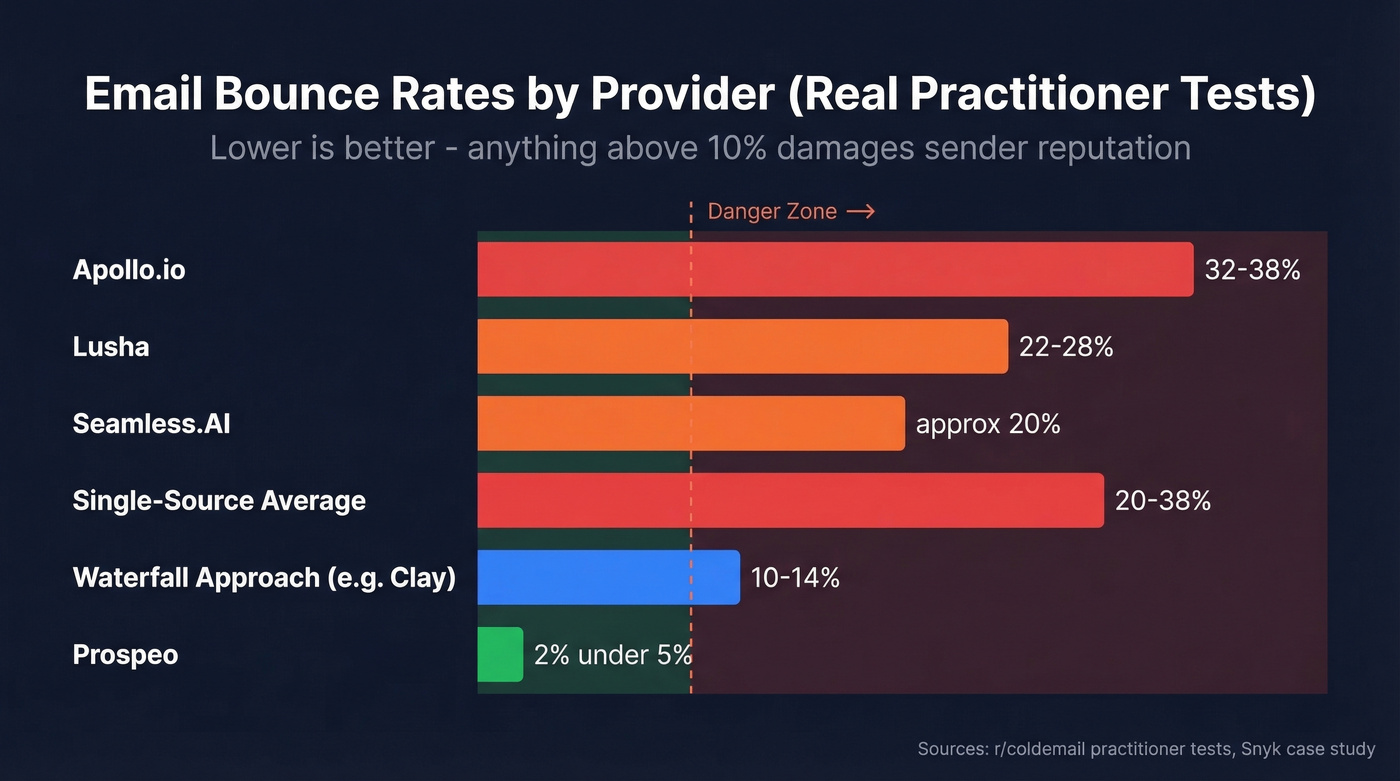
On the email side, the Reddit practitioner data tells a clear story: single-source databases bounce at 20-38%, while waterfall enrichment approaches - stacking providers the way Clay does - drop that to 10-14%. In our experience, weekly data refresh cycles are the single biggest predictor of deliverability. More important than database size, more important than how many filters the UI offers.
Look, if your average deal size is under $15K, you almost certainly don't need a $15K+ database. A tool with 98% email accuracy and a $49/month price point will outperform ZoomInfo for your use case, because you'll actually use it instead of fighting procurement for budget every quarter.
How to Choose the Right Tool
Don't start with database size. The refresh cycle matters more - a 300M-contact database updated every six weeks is worse than a 200M database refreshed weekly. Ask before you buy.
If you're building lists for outbound, start with a clear ideal customer profile so your filters and segments stay consistent.
Next, calculate your cost per usable contact. If a tool costs $0.50/contact but 35% bounce, your real cost is $0.77/usable contact. Factor in bounces, not just list price.
Then check compliance certifications. SOC2, ISO27001, and GDPR compliance aren't optional in 2026 - GDPR fines can hit EUR 20M or 4% of global revenue, and California's B2B exemption under CCPA expired in January 2023. Nineteen US states have data protection laws rolling out through 2026, so this isn't just a European concern anymore.
And regardless of what any sales contact database software provider promises, verify before you send. The consensus on r/coldemail is unanimous on this point: no single provider is accurate enough to skip verification.
If you want to go deeper on list-building workflows, see our guide to sales prospecting techniques that still work in 2026.
FAQ
What's the difference between a CRM and a contact database?
A CRM manages contacts you already own - tracking deals, notes, and pipeline stages. A sales contact database provides new prospect records like emails, phone numbers, and firmographics for outbound prospecting. Most B2B teams need both working together.
How fast does B2B contact data decay?
About 2.1% per month, or roughly 22.5% annually. Providers with weekly refresh cycles catch most decay before it tanks your campaign deliverability. Six-week refresh cycles let around 5% of records go stale between updates.
Can I get accurate data without spending $15K/year?
Yes. Prospeo offers 98% email accuracy with a free tier of 75 emails/month and credit-based pricing at ~$0.01 per email - no annual contract required. Apollo's free plan also works for volume, though bounce rates run 32-38% without separate verification.
What accuracy benchmarks should I expect?
Aim for under 5% bounce rate on emails and above 25% connect rate on direct dials. Single-source databases typically bounce at 20-38%, while waterfall enrichment approaches drop that to 10-14%. Any provider claiming 100% accuracy is misleading you.