

How to Build a Sales Operations Strategy That Isn't Just CRM Admin
84% of sales reps didn't hit quota last year. Sellers spend roughly 30% of their time actually selling. Meanwhile, organizations with a documented sales operations strategy close deals 25-30% faster and see 20-40% productivity gains. If your ops team exists to fix broken Salesforce fields and pull ad hoc reports, you don't have a strategy - you have a help desk with a fancy title.
The gap between "we have sales ops" and "sales ops drives revenue" is a strategy gap. Let's close it.
What You Need (Quick Version)
A high-impact sales ops team spends 60-70% of its time on strategic work like forecasting, territory design, and comp modeling - and only 30-40% on tactical execution. If that ratio is inverted, start here.
Six steps: mission, maturity audit, data foundations, process governance, tech stack, then measure and iterate. The key benchmark to keep in mind is a ~21% average B2B win rate; below that, your process has leaks. Timeline? 90 days to a functioning operating model. And one non-negotiable: fix your data before you build dashboards.
The 6-Step Framework
1. Define Mission and Success Metrics
Every ops team needs a charter that answers one question: what does success look like in 12 months? Not "keep the CRM clean" - that's maintenance. Think pipeline velocity targets, forecast accuracy thresholds, and rep productivity ratios.
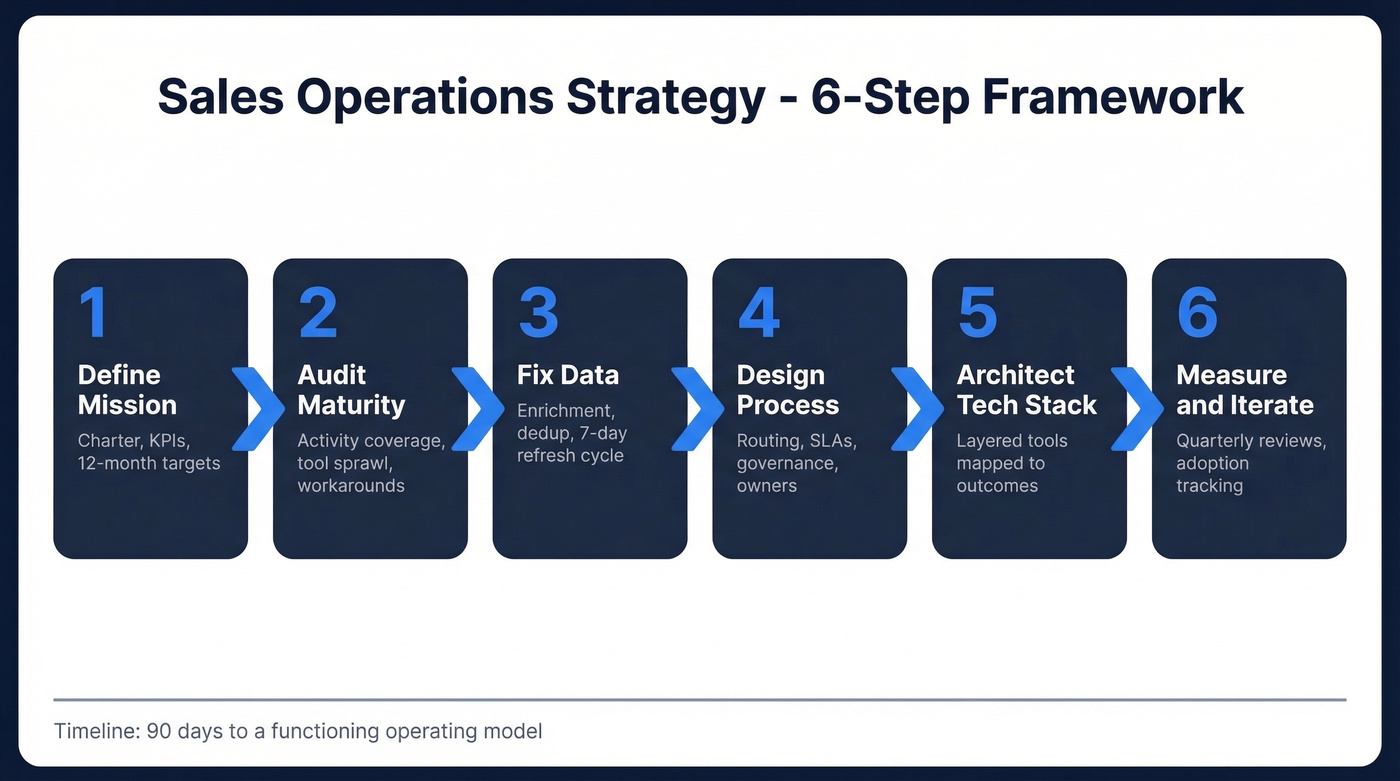
Without this, you'll spend all year reacting to whatever the VP of Sales asks for on Friday afternoon. Write the charter. Get leadership to sign it. Revisit it quarterly.
2. Audit Current Maturity
Before you build anything, figure out where you actually stand. Run through this diagnostic:
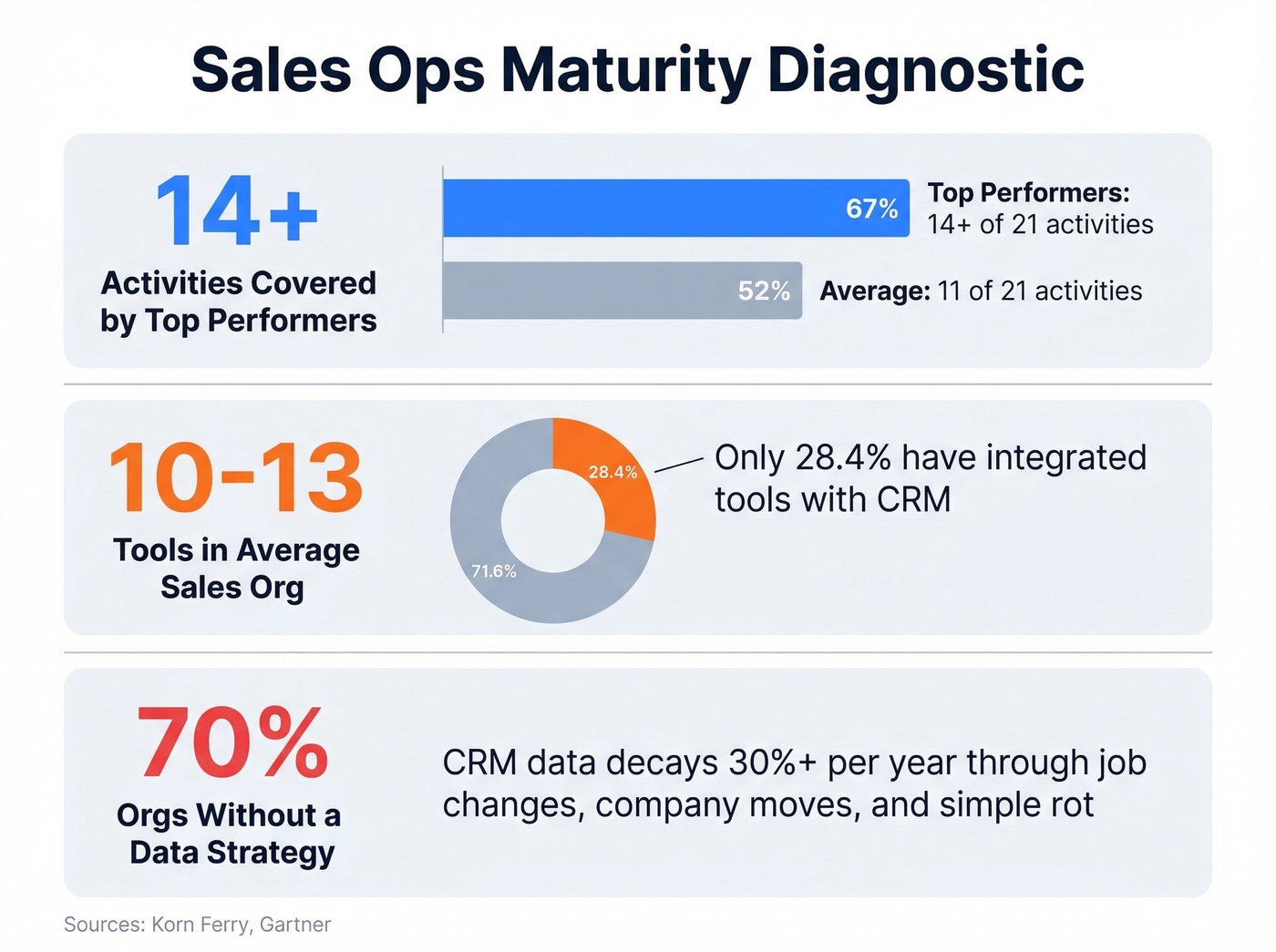
- Activity coverage: Of the 21 sales activities Korn Ferry tracks, how many does your ops team touch? Top performers handle 14+; the average sits at 11.
- Tool sprawl: The average sales org runs 10-13 tools, and only 28.4% have integrated them with their CRM.
- Workarounds: Where are reps building their own spreadsheets because the official process is broken?
Here's the thing - we see this constantly: new ops hires get pulled into "extra hands" work like tool fixes and ad hoc reports instead of strategic projects. If that sounds familiar, your maturity score is lower than you think.
3. Fix Data Foundations
This is where most sales ops strategies quietly die. 70% of sales organizations don't have a data strategy, and CRM data decays 30%+ per year through job changes, company moves, and simple rot. You can't forecast accurately with bad inputs. Full stop.
Prospeo handles this layer well. With 98% email accuracy, a 7-day data refresh cycle, and native CRM integrations, it keeps contact data clean without manual scrubbing. If you're evaluating vendors, start with a shortlist of data enrichment services. Snyk's 50-person AE team went from a 35-40% bounce rate to under 5% after implementing automated enrichment, and AE-sourced pipeline jumped 180%.

4. Design Process and Governance
Process without governance is just a suggestion. Define your lead routing rules, opportunity stage criteria, handoff SLAs, and escalation paths. Document them. Then enforce them.
Every process needs an owner, a metric, and a review cadence. Centralized ops teams work well early on. As you scale past 30-40 reps, consider a hybrid model with embedded specialists reporting to central governance - it prevents the "ops person becomes the team's personal assistant" problem that kills so many growing orgs.
5. Architect the Tech Stack
85% of sales leaders plan to consolidate their tech stacks over the next two years. Right instinct - but consolidation without architecture just creates a different kind of mess.
The decision framework for every tool is simple: can you explain what it does for pipeline velocity or rep productivity? If not, cut it. Build in layers, and map every tool to a specific layer and outcome. If forecasting is a pain point, compare sales forecasting solutions before you buy.
6. Measure, Iterate, Manage Change
Build a quarterly review cadence around your KPI tree. Track adoption metrics alongside outcome metrics - a new process that nobody follows is worse than no process at all.
AI adoption is accelerating fast: reps using AI tools are 3.7x more likely to meet quota, and HubSpot reports AI adoption in sales jumped from 24% to 43% in the past year. We've started building an AI use-case catalog for our own team and updating it every quarter. It's worth the effort. If you're building this out, a curated list of generative AI sales tools helps.
The Sales Ops Tech Stack
Most sales ops tech stacks are a pile of point solutions duct-taped together with Zapier. A layered architecture gives you a framework for what to buy, what to cut, and where the gaps are.
| Layer | Function | Examples |
|---|---|---|
| Systems of Record | CRM, billing, support | Salesforce, HubSpot |
| Data Quality | Enrichment, verification | Prospeo |
| Integration & Orchestration | Routing, sequencing, workflow automation | CRM workflows, Zapier, iPaaS |
| Intelligence | Forecasting, attribution | Clari, Gong |
| Governance | Ownership, SLAs, audit | CRM admin + policy docs |
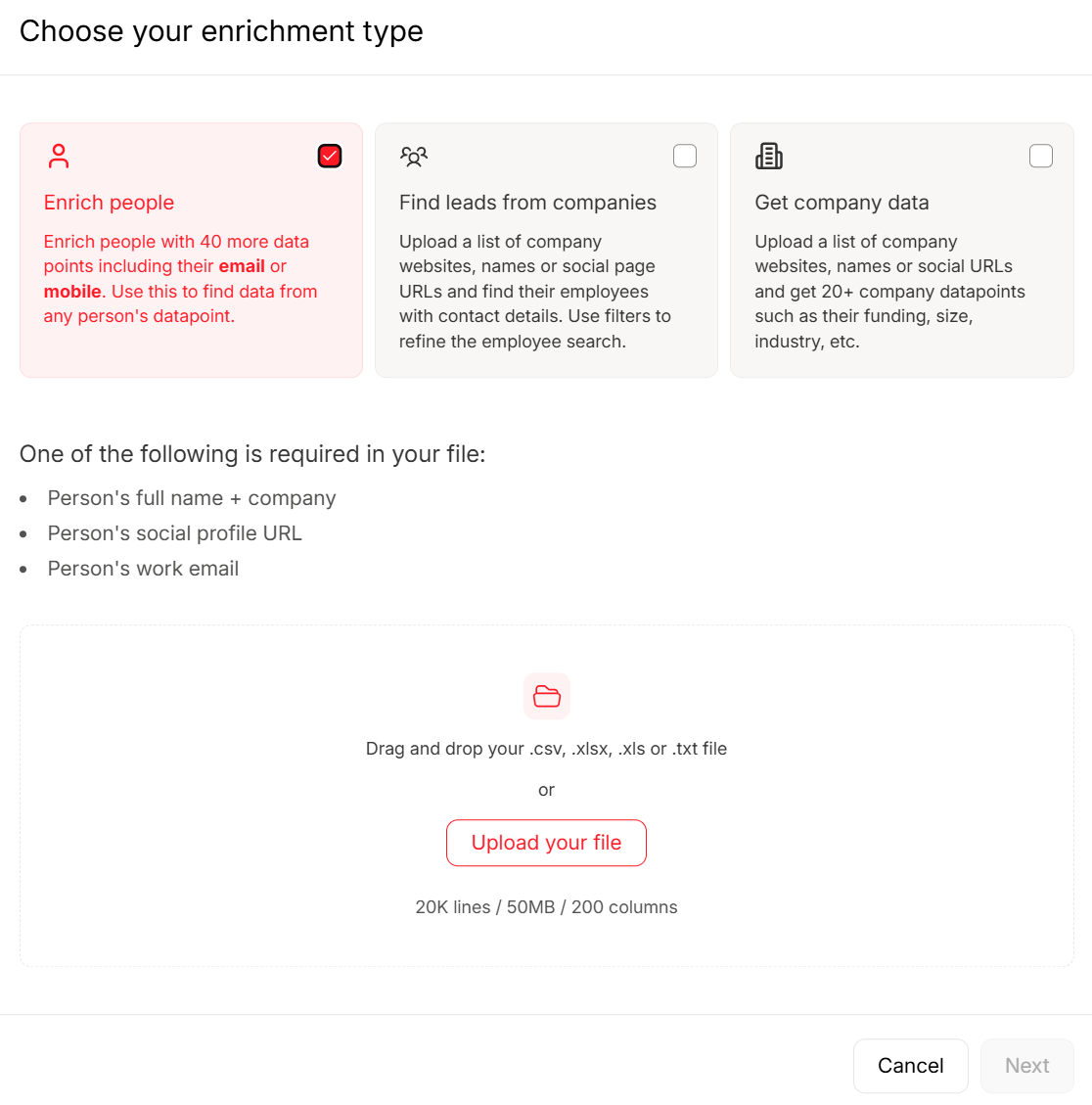

CRM data decays 30%+ per year. Your forecasts, territory plans, and pipeline metrics are only as good as the contacts underneath them. Prospeo's 7-day refresh cycle and 92% enrichment match rate keep your data foundation solid - so your sales ops strategy actually works.
Stop building dashboards on rotten data. Fix the foundation first.
KPIs That Actually Matter
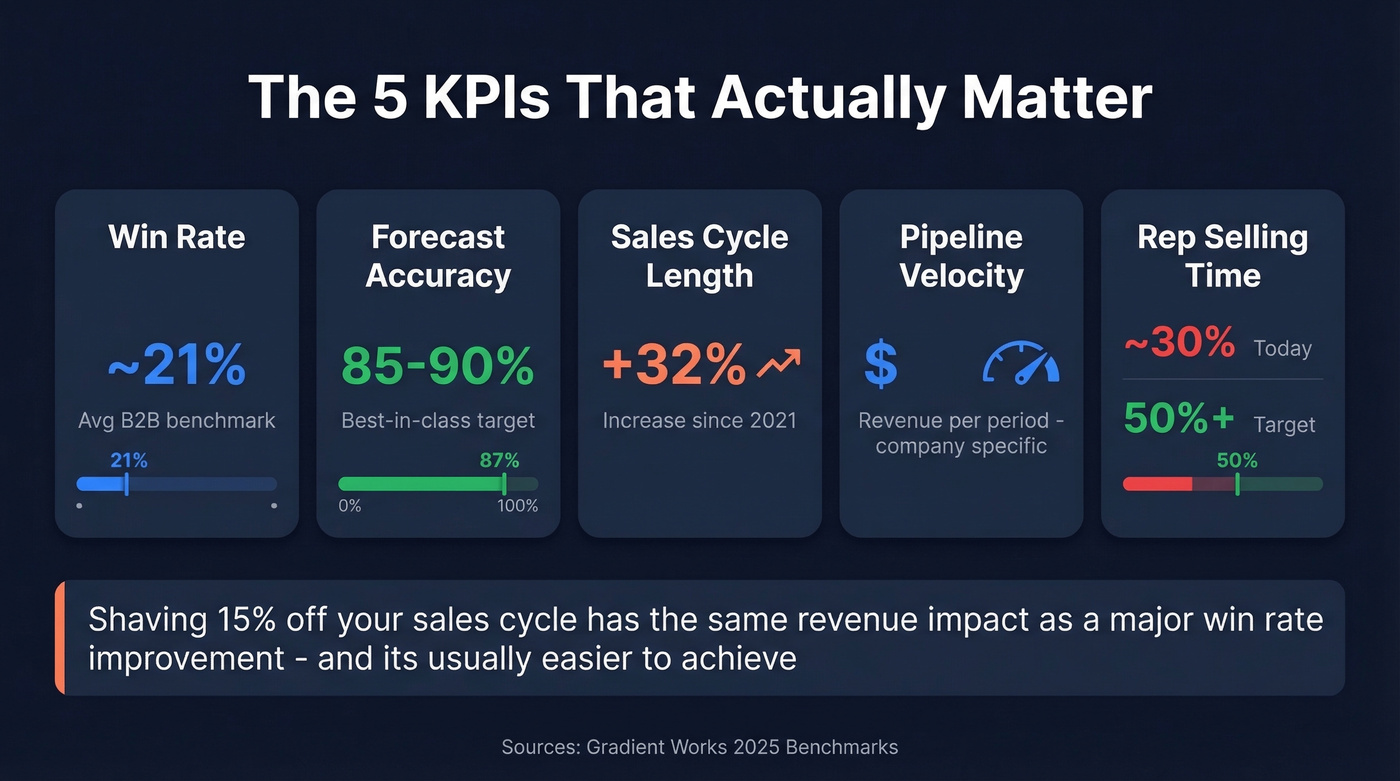
Stop tracking 40 metrics nobody looks at. These five tell you whether your strategy is working:
| Metric | What It Measures | Benchmark |
|---|---|---|
| Win Rate | Deals closed / deals created | ~21% avg B2B |
| Forecast Accuracy | Predicted vs. actual | 85-90%+ best-in-class |
| Sales Cycle Length | Days to close | Up 32% since 2021 |
| Pipeline Velocity | Revenue per period | Company-specific |
| Rep Selling Time | % hours selling | ~30% today (target: 50%+) |
That sales cycle stat should worry you. Cycles are getting longer across the board - startups up 24%, enterprise up 36%. If your ops strategy doesn't address cycle compression, you're optimizing the wrong things.
Most ops teams over-invest in win rate optimization while ignoring cycle length. Shaving 15% off your sales cycle has the same revenue impact as a major win rate improvement, and it's usually easier to achieve through better process and data hygiene. In our experience, cleaning up handoff delays between stages and eliminating stale contacts from sequences are the two fastest wins. If you're diagnosing bottlenecks, start with common sales pipeline challenges and work backward.
Sales Ops vs. RevOps
Gartner projects that 75% of highest-growth companies will adopt a RevOps model by 2026. The staffing benchmark is roughly 12:1 reps to ops personnel. At $50M ARR, expect 4-5 ops pros. At $100M, 7-10.
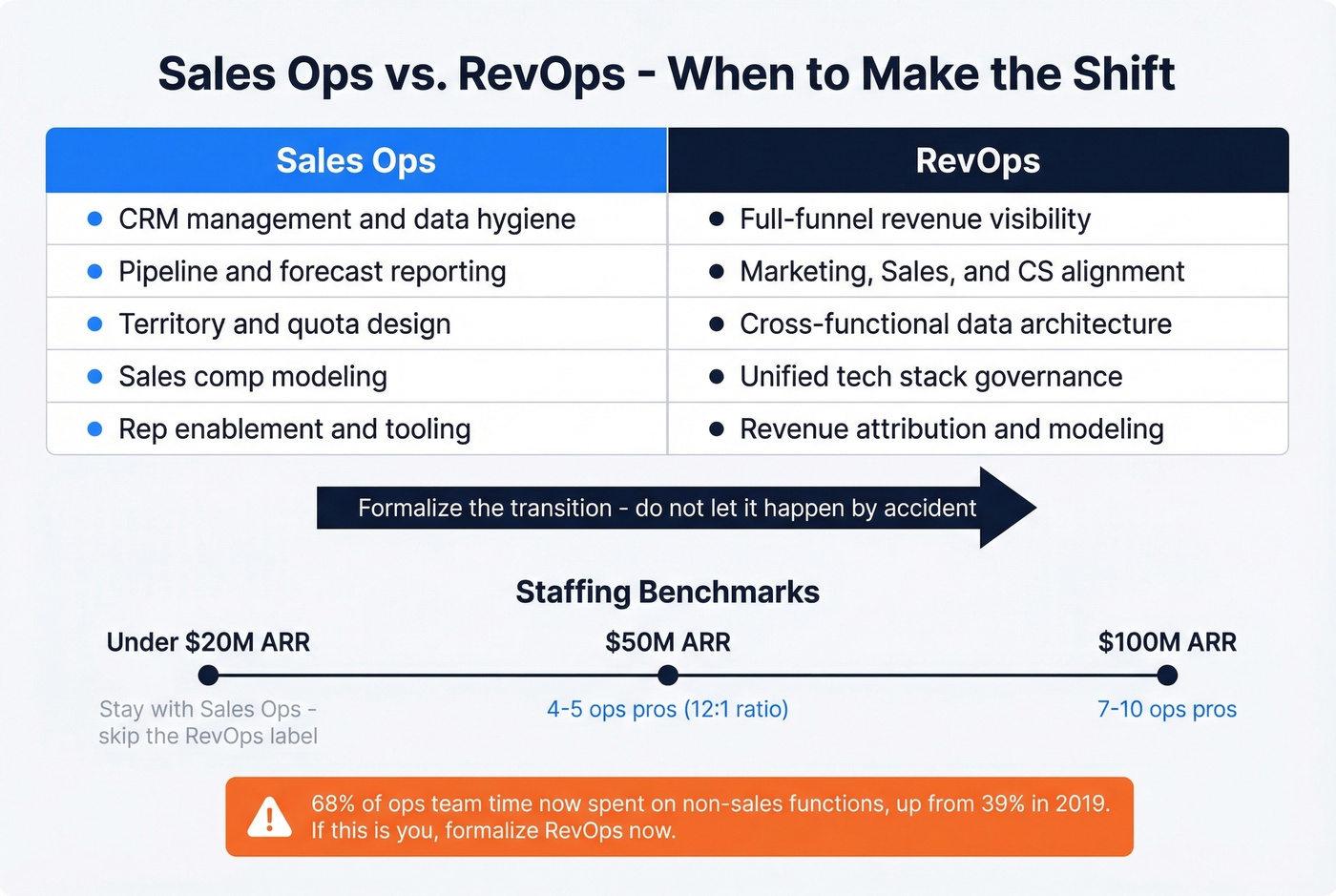
One pattern worth watching: ops teams that started as sales ops get pulled into marketing and CS work until they're spending 68% of their time on non-sales functions - up from 39% in 2019. If that's happening to your team, formalize the RevOps transition rather than letting it happen by accident. And note that this is distinct from S&OP (Sales & Operations Planning), which coordinates demand forecasting with supply chain - a different discipline entirely. Skip the RevOps label if you're under $20M ARR and don't have marketing ops to merge with; you'll just create confusion. If you're hiring for this function, align on the RevOps Manager scope early.
90-Day Implementation Roadmap
Weeks 1-2: Discovery and Charter. Audit your current state. Interview reps, managers, and cross-functional partners. Write your ops charter with clear success metrics. This is the step everyone wants to skip. Don't.
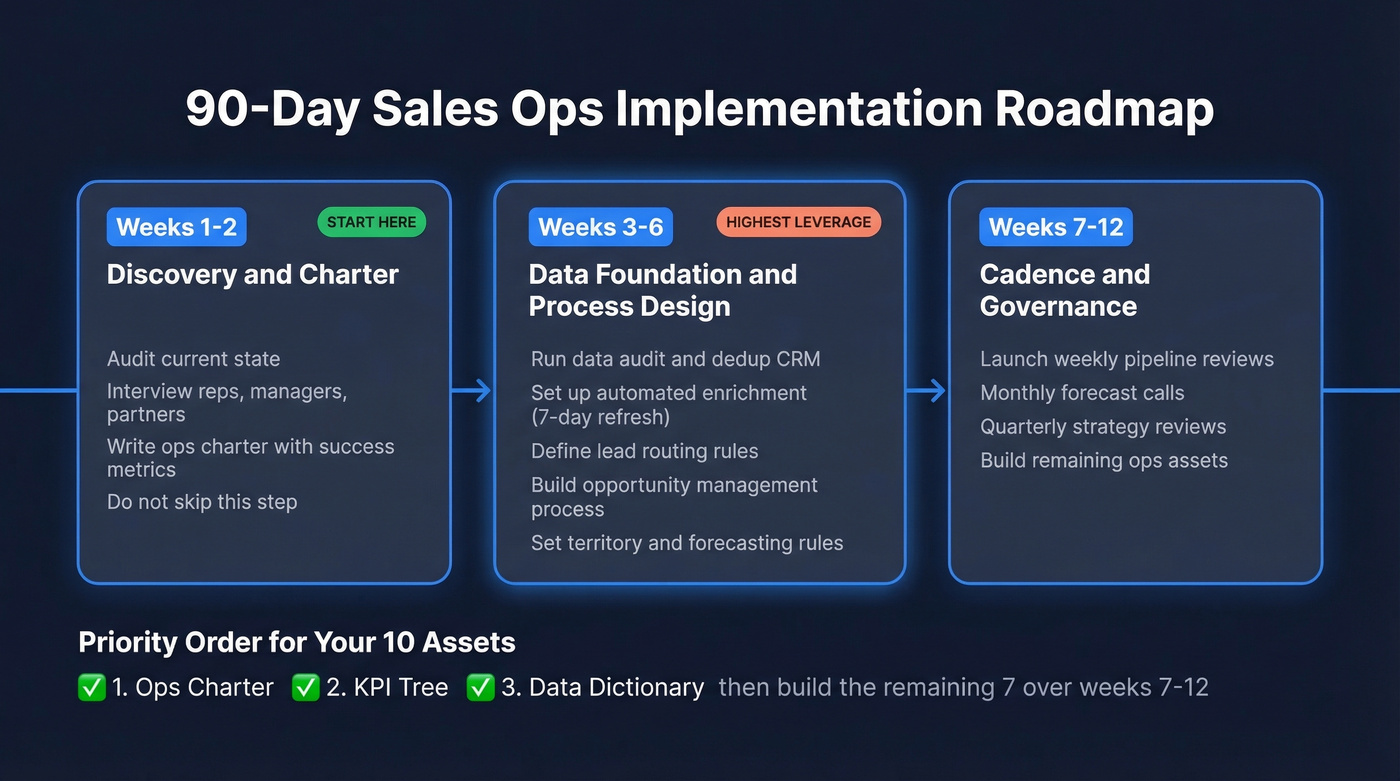
Weeks 3-6: Data Foundation and Process Design. Run a data audit. Deduplicate your CRM. Set up automated enrichment with a tool that offers API-level integration and a fast refresh cycle - CRM data that's six weeks stale is already costing you deals. Define your core processes for lead routing, opportunity management, forecasting cadence, and territory rules. If you need a reference point for what "good" looks like, use a sales process optimization checklist.
Weeks 7-12: Cadence and Governance. Launch your operating cadence with weekly pipeline reviews, monthly forecast calls, and quarterly strategy reviews. Build your 10 non-negotiable assets:
- Ops charter
- Operating model and RACI
- Strategic roadmap
- KPI tree
- Data dictionary
- Cadence calendar
- Ops playbook
- Tech stack blueprint
- AI use-case catalog
- Risk plan
Look - I've seen teams try to build all ten in week one and burn out. Prioritize the charter, KPI tree, and data dictionary first. The rest can come together over weeks 7-12 as your cadence takes shape.
Snyk's 50-person AE team cut bounce rates from 35-40% to under 5% and grew AE-sourced pipeline 180% - by fixing one layer of their ops stack. Prospeo delivers 98% email accuracy, 125M+ verified mobiles, and native Salesforce and HubSpot integrations at $0.01 per email.
The highest-leverage ops move is data you can actually trust.
FAQ
What should a sales operations strategy include?
A complete strategy covers six areas: a mission charter with success metrics, a maturity audit, a data quality foundation, process governance, a layered tech stack, and a measurement cadence. The 90-day roadmap above walks through implementation sequencing.
When should we hire our first sales ops person?
Hire when you hit 10-15 reps and your CRM data or forecasting starts breaking. The 12:1 rep-to-ops ratio is a solid benchmark - at $50M ARR, plan for 4-5 ops professionals. Don't wait until the pain is unbearable; by then you've lost quarters of pipeline data you can't recover.
How do we fix bad CRM data without replatforming?
Start with automated enrichment rather than manual cleanup. Prospeo's CRM enrichment returns 50+ data points per contact at a 92% match rate, with records refreshed every 7 days. Layer in deduplication rules and validation on inbound data, and you'll see forecast accuracy improve within weeks - no migration required.