

Sandbagging in Sales: A Systems Problem, Not a Character Flaw
A rep hits 200% of quarterly quota. Their manager pulls them aside - not to celebrate, but to strategize. "Void the pending DocuSigns," the manager says. "Tell the prospect you found a typo. Resend next month."
This isn't a hypothetical. It's a real scenario shared by a rep on r/sales, and the manager's logic was simple: "It's always better to hit quota than set a record." Sandbagging in sales isn't a character flaw. It's a rational response to broken incentive systems.
The Short Version
If you're pressed for time, here's the fix in three moves:
- Fix the comp plan. Rolling quotas, accelerators past 100%, and zero commission caps. Remove the incentive to delay.
- Separate pipeline reviews from forecast reviews. One meeting for deal progression, another for revenue prediction. Combining them teaches reps that a strong pipeline means a higher number - which means punishment.
- Fix the data. Stale contacts create phantom pipeline that looks like deal-sleeving but is actually data rot. Clean your CRM before blaming your reps.
What Does Sandbagging Mean in Sales?
It's the intentional delay or underreporting of deals to manipulate quota attainment, forecast optics, or commission timing. Some teams call it "sleeving" - tucking a deal up your sleeve for a future period.
Let's draw a clear line here. Conservative forecasting is honest risk management - a rep saying "this deal might slip" because the legal review is genuinely uncertain. Sandbagging is different. It's a rep who knows the deal will close this month but delays the signature to pad next month's number.
The common forms are predictable: extending the sales cycle when the buyer is ready, keeping deals out of the CRM until they're nearly guaranteed, holding opportunities to manage bonus payouts, and understating pipeline to control expectations. There's also a subtler variant - reps who stop prospecting entirely after hitting their number, letting future pipeline starve so they don't raise expectations.
Why Reps Sandbag Deals
84% of sales reps didn't meet quota last year. RepVue's Cloud Sales Index tells a similar story: fewer than 43% of SaaS sellers reported achieving quota attainment in Q2 2024, down 8% over two years. When the vast majority of your team is already underwater, the ones who do hit quota aren't thinking about setting records. They're thinking about survival.
Specifically, they're thinking about not having their quota raised next quarter because they had one great month. Sandler's analysis puts it, this behavior isn't a moral failure - it's a systems response. Comp plans punish overperformance. Managers actively encourage delay. Caps kill motivation past a threshold. The r/sales threads back this up consistently: stories of managers encouraging deal delays, reps being told to "save it for next quarter," and top performers getting punished with higher targets.
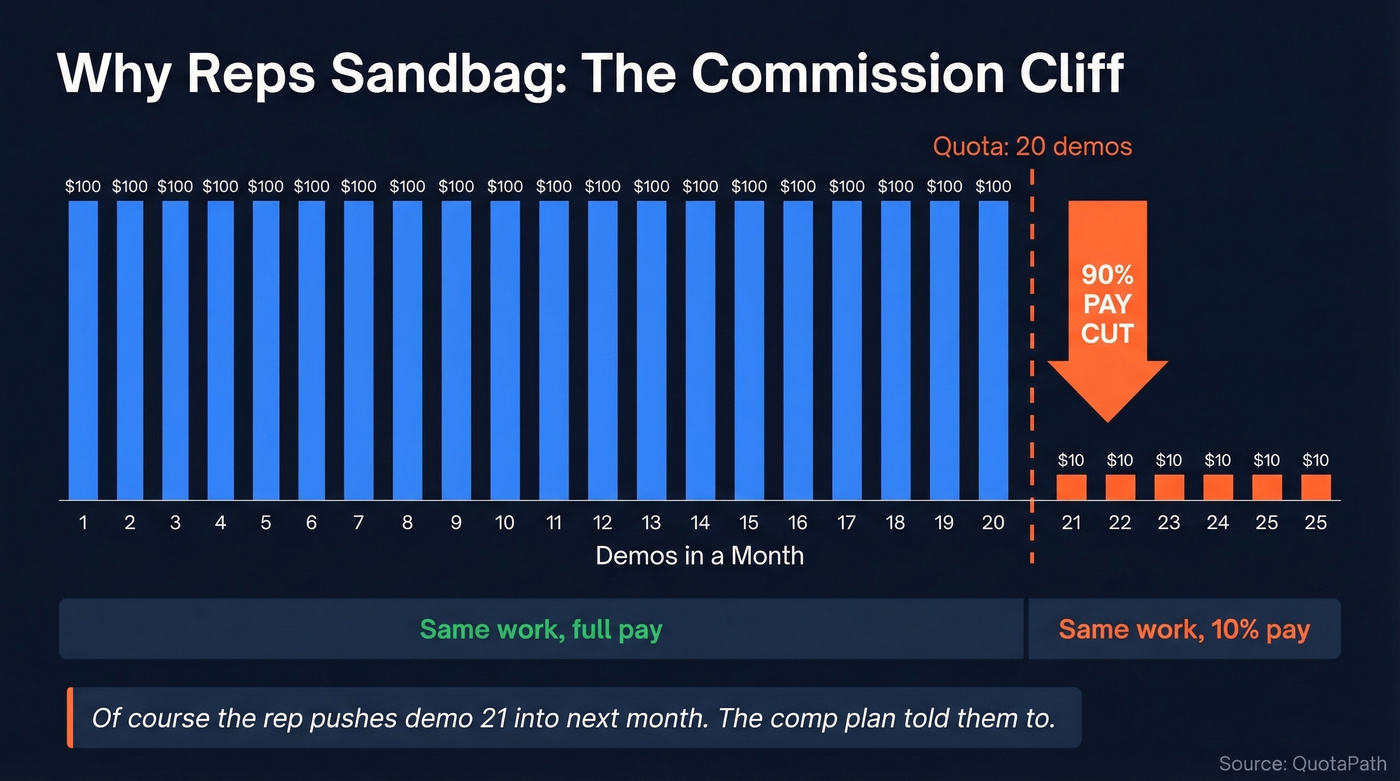
The math makes it undeniable. QuotaPath documents an SDR comp plan where the rep earns $100 per demo booked up to their quota of 20 demos per month. After quota, the payout drops to $10 per demo. That's a 90% pay cut for doing the same work. Of course the SDR pushes demo #21 into next month.
The pattern also looks different depending on your segment. Enterprise reps time fewer, larger deals - holding a six-figure contract for a week to land it in the right quarter. SMB reps defer meeting bookings and small closes in volume. Both are rational, but the detection signals differ, which is why a one-size-fits-all approach to pipeline monitoring fails.

Before you flag a rep for sandbagging, check if their "stale deals" are actually stale data. Prospeo's CRM enrichment returns 50+ verified data points per contact with a 92% match rate - so you can tell the difference between a rep gaming the system and a prospect who simply changed jobs.
Diagnose pipeline rot before you misdiagnose your reps.
The Real Cost of Hidden Pipeline
Sandbagging doesn't just shift revenue between periods. It destroys forecast accuracy, and the numbers are ugly.
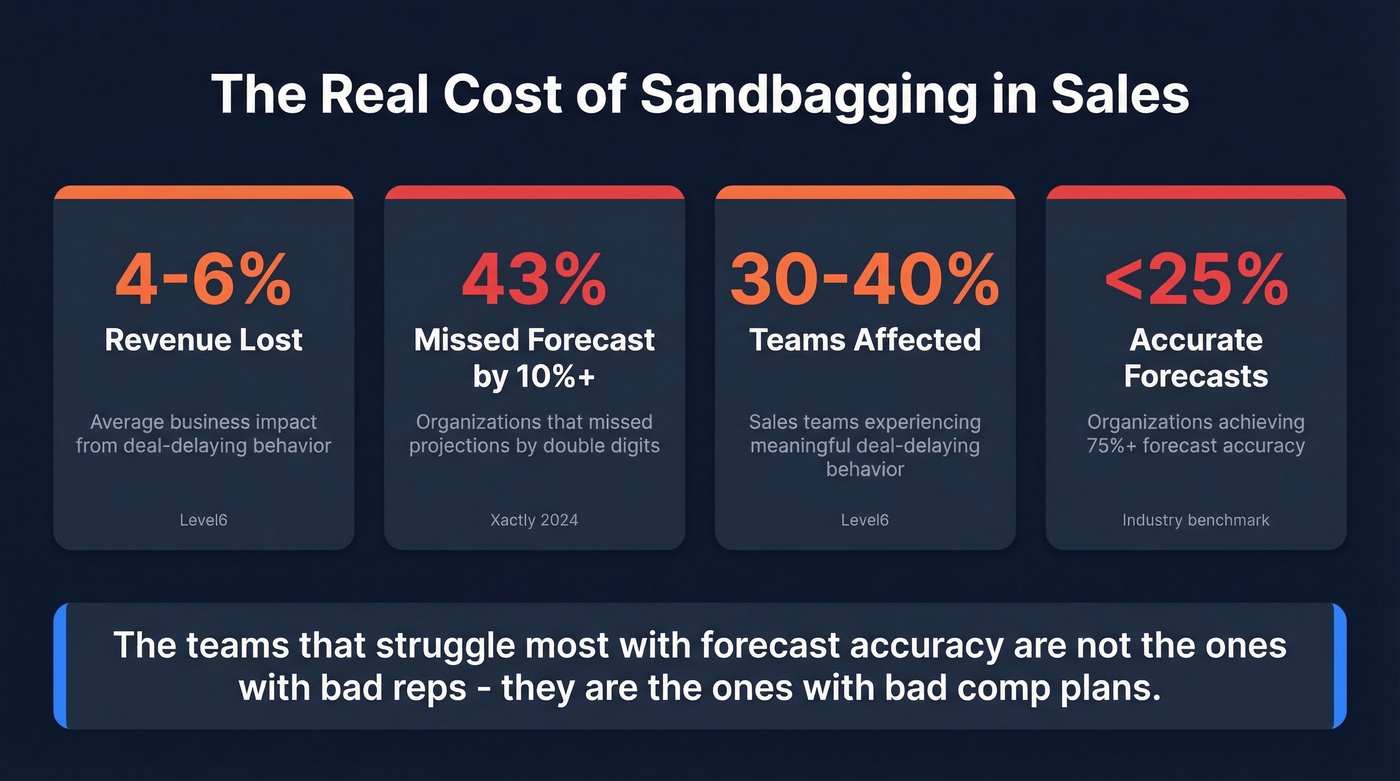
Xactly's 2024 benchmark report found that only 20% of sales organizations achieved forecasts within 5% of projections, while 43% of orgs missed their forecast by 10% or more. A Challenger poll from early 2024 found fewer than 20% of sales leaders rated their forecast accuracy as "predictable." Level6 estimates this behavior costs businesses 4-6% in lost revenue, with 30-40% of sales teams experiencing meaningful deal-delaying behavior. Over 50% of revenue leaders missed a forecast at least twice last year, and fewer than 25% of organizations achieve 75%+ forecast accuracy.
In our experience, the teams that struggle most with forecast accuracy aren't the ones with bad reps - they're the ones with bad comp plans.
But the damage extends beyond operations. When one rep sleeves deals while another grinds to hit quota honestly, the honest rep notices. Trust erodes fast. Sales leadership trust is fragile, and sandbagging breaks it. SalesFuel's research shows a big performance gap tied to strong account management: those who excel at it are 3.1x more likely to increase revenue by 20%+ in existing accounts, and top performers are 2.5x more likely to have effective processes for building and executing strategic account plans. Deal-delaying poisons the trust and consistency those systems depend on.
For public companies, the damage reaches the boardroom. Inaccurate revenue forecasts have shareholder implications. When your CFO tells the board to expect $12M and the team delivers $11.3M because three reps sleeved deals into Q2, that's not just a miss - it's a credibility problem with legal dimensions.
How to Detect It in Your CRM
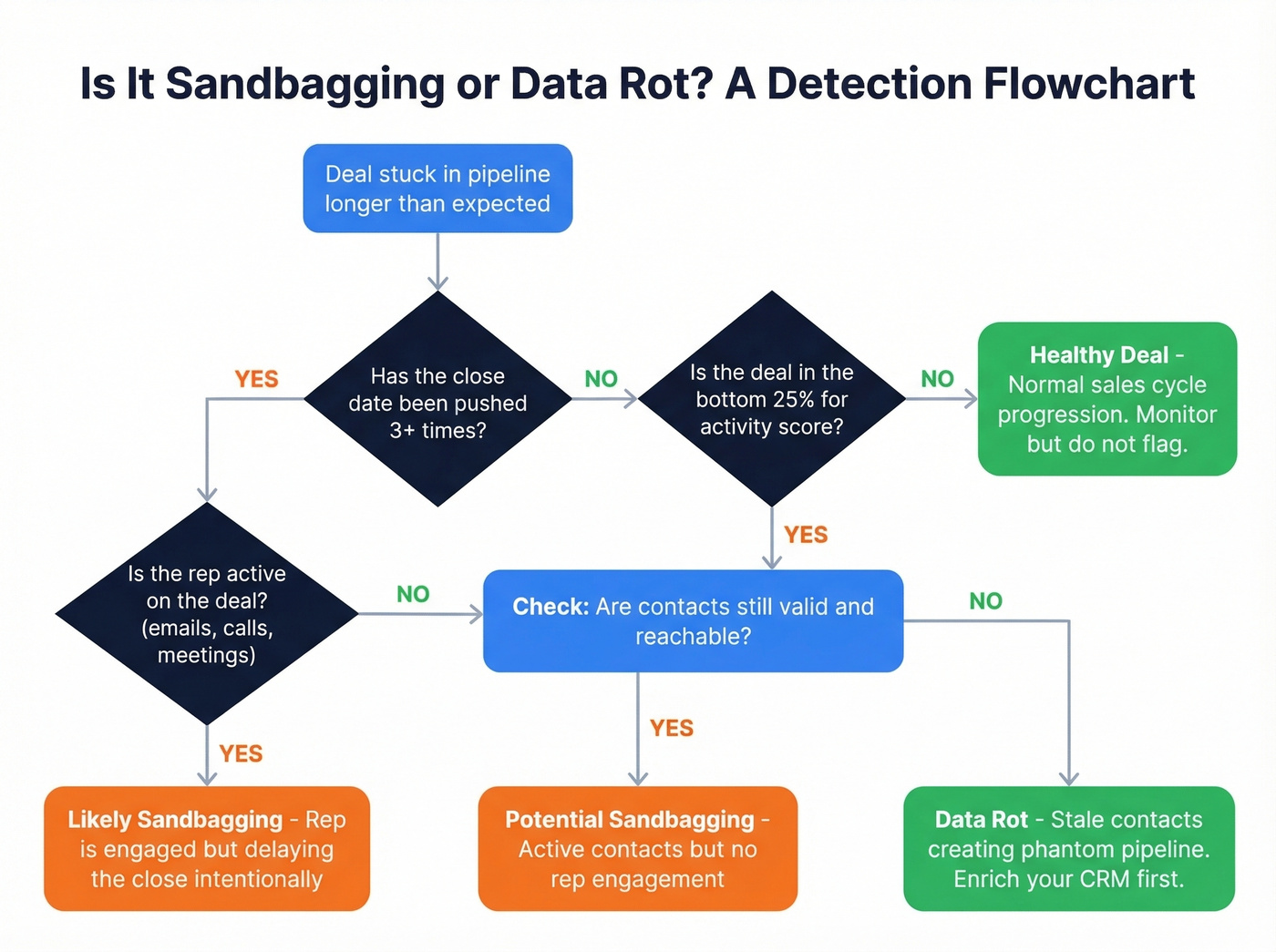
The signals are hiding in your pipeline data. Here are the metrics to watch:
| Signal | What to Track | Flag Threshold |
|---|---|---|
| Close-date pushes | Times close date moved | 3+ pushes |
| Stage aging (SMB) | Days in current stage | >14 days |
| Stage aging (Mid-market) | Days in current stage | >30 days |
| Stage aging (Enterprise) | Days in current stage | >45 days |
| Activity score | Emails, meetings, files | Bottom 25% of team |
| Opportunity age | Total days open | >2x avg cycle |
| End-of-period clustering | Deals closing in final week | >60% of pipeline |
One important caveat: low engagement on a deal doesn't always mean a rep is gaming the system. Before flagging someone, run the contact emails through Prospeo's real-time verification. Sometimes a "dead deal" is just a dead email address, and you'll coach the wrong problem if you can't tell the difference.
How to Stop Sandbagging in Sales
Fix the Comp Plan
Here's the thing: commission caps are the single dumbest feature in sales compensation. They tell your best reps to stop selling. Remove them immediately - it costs nothing in tooling or admin and eliminates the biggest structural incentive to delay deals.
Beyond caps, move to rolling quotas. Level6 illustrates this well: instead of resetting to zero each month, a rep finishing at 110% carries that attainment forward. The "hero to zero" cycle disappears, and with it the end-of-period gaming.
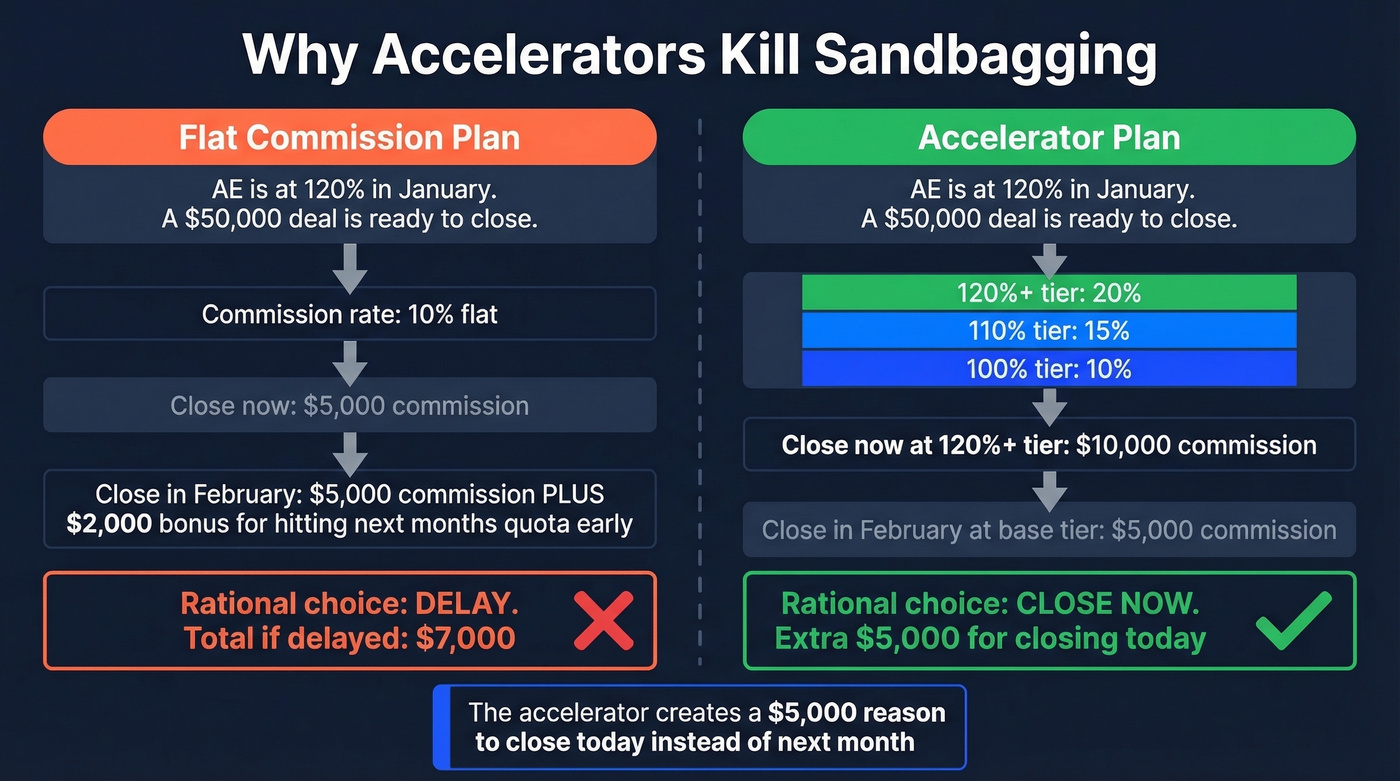
Then layer in accelerators. A structure that works: 10% base commission, 15% at 110% attainment, 20% past 120%. Now picture an AE earning 10% commission plus a $2,000 milestone bonus for hitting 100% of monthly quota. They're at 120% in January with a deal in hand worth 75% of February's target. Under a flat plan, the rational move is to delay the close and bank the February bonus. With accelerators, that same $50,000 deal at the 120%+ tier pays $10,000 instead of $5,000. The rep now has a $5,000 reason to close today instead of next month.
Remove cliffs too - those all-or-nothing bonus thresholds where missing quota by $1 means losing the entire bonus. They create desperation gaming at period end. Remove punitive decelerators, and add year-to-date performance rules so a bad month doesn't wipe out momentum.
Most articles on this topic tell you to "create a culture of transparency." That's useless advice. Culture doesn't override a comp plan that pays reps 90% less for the same work after quota. Fix the money first. Culture follows incentives, not the other way around.
One more lever worth considering: tie a portion of variable comp to customer outcomes - satisfaction scores, NPS, or retention metrics. When reps are measured on relationship quality alongside revenue timing, the incentive to game close dates weakens because the customer experience matters for their paycheck too. Every structural element should answer one question: does this reward closing now, or closing later?
Fix the Process
We've seen this pattern repeatedly: a manager runs a single weekly meeting that's half pipeline review, half forecast call. The rep learns fast - if they show a strong pipeline, the manager raises their commit number. So they hide deals.
This is also where pipeline health metrics help you separate real risk from gamesmanship.
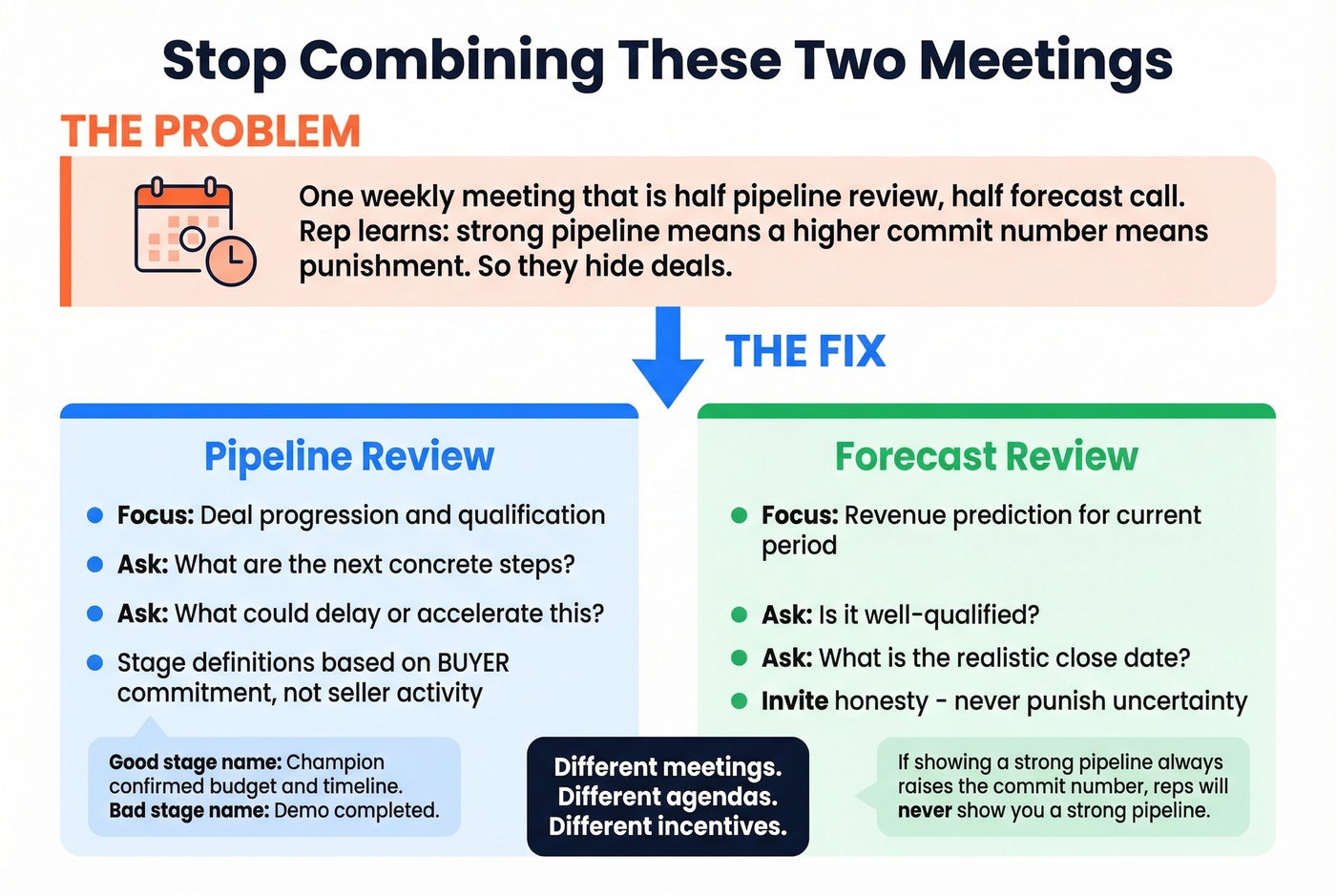
The fix is simple. Separate pipeline reviews from forecast reviews. Pipeline reviews focus on deal progression, qualification, and next steps. Forecast reviews focus on revenue prediction for the current period. Different meetings, different agendas, different incentives.
Redefine your pipeline stages around buyer commitment, not seller activity. "Demo completed" is a seller milestone. "Champion confirmed budget and timeline" is a buyer commitment. The latter is harder to fake and harder to manipulate. In forecast conversations, ask questions that surface reality without punishing uncertainty: Is it well-qualified? What are the next concrete steps? What could delay or accelerate this? These questions invite honesty instead of penalizing it.
Fix the Data
Nobody talks about this part. According to Xactly's 2024 analysis, 66% of organizations say reporting systems that can't access reliable historical CRM data are the primary obstacle to accurate forecasting. HBR's research found that only 37% report successful data quality improvement efforts.
Stale contacts create phantom pipeline. Deals that look alive in your CRM are built on emails that bounce and phone numbers that ring out. This distorts forecasts from the infrastructure side the same way deal-sleeving distorts them from the rep side - and it's often harder to see.
If you want a broader view of vendors and approaches, start with data enrichment services and lead enrichment.
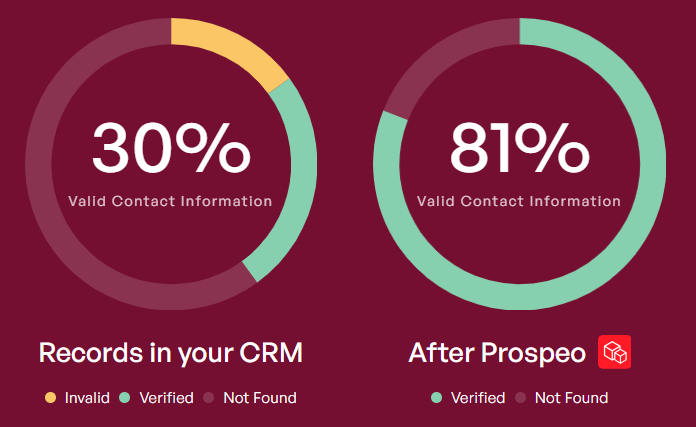
Prospeo addresses the data-quality side of this problem. With 300M+ professional profiles and 98% email accuracy on a 7-day refresh cycle, it keeps your CRM data honest. The enrichment capability enriches Salesforce or HubSpot records with 50+ data points per contact, so your pipeline reflects reality - not six-month-old job titles and defunct email addresses. When your data is clean, you can actually distinguish intentional deal delays from data rot, and coach accordingly.
If you're rebuilding your stack, it also helps to compare sales forecasting solutions and sales performance management tooling so incentives and reporting stay aligned.
Phantom pipeline doesn't just wreck forecasts - it makes honest reps look like sandbaggers. Prospeo refreshes 300M+ profiles every 7 days (not the 6-week industry average), so your pipeline reflects reality. At $0.01 per email, cleaning your data costs less than one missed forecast.
Real-time data kills phantom pipeline. Start with 75 free credits.
FAQ
What's the difference between sandbagging and conservative forecasting?
Sandbagging is intentional delay or manipulation of deal timing for personal benefit - holding a signed contract to pad next month's number. Conservative forecasting is honest risk assessment - flagging that a deal might slip because procurement is slow. The test: are you protecting yourself, or protecting the forecast's accuracy?
Is sandbagging ever acceptable?
No. The company loses more than the rep gains: 4-6% in lost revenue, broken forecasts, and eroded team trust. Once a team sees it tolerated, it becomes the norm. The answer isn't to accept it - it's to fix the system that rewards it.
What's the fastest way to reduce it?
Remove commission caps. It costs nothing to implement and immediately eliminates the single biggest incentive to delay deals. Pair it with accelerators above 100% attainment, and reps have a financial reason to close everything as fast as possible.
Can CRM tools detect sandbagging automatically?
Partially. Track close-date pushes (flag at 3+), stage aging beyond typical cycle length, and deal activity scores. But verify contact data quality first - stale emails mimic the same signals. Real-time email verification helps you rule out data rot before coaching the wrong problem.
What does "sleeving" mean in sales?
Same as sandbagging. Reps "sleeve" a deal by tucking it away for a future period - delaying signatures, holding follow-ups, or keeping opportunities out of the CRM until the timing benefits them. It's especially common in organizations with monthly quota resets and commission caps.