

Simpleem Pricing, Reviews, Pros & Cons (2026)
Simpleem has a visibility problem. Search for it and you'll probably land on SimplifyEm, a property management tool for landlords collecting rent. Completely different product. Simpleem is an AI emotional intelligence platform for sales calls - it analyzes facial expressions, tone of voice, and body language to predict whether a deal will close.
We dug into the pricing, user reviews, and real-world performance claims so you don't have to piece it together from scattered directory listings and a four-review G2 profile.
30-Second Verdict
Simpleem scores a 4.9/5 on G2 from exactly four reviews. Pricing starts around $49/mo based on directory listings, but there's no official pricing page. The "Artificial Emotional Intelligence (AEI)" concept is novel, and the 94% accuracy in predicting meeting outcomes claim for predicting meeting outcomes is bold. But with an inactive vendor profile and almost zero independent validation, this is early-stage tech you're betting on - not buying with confidence.
For most teams: Gong is the proven enterprise pick, Fathom is the free/SMB winner. And if better sales outcomes are the actual goal, verified prospect data delivers faster ROI than any conversation intelligence tool. You can't optimize calls you never get to make.
What Is Simpleem?
Simpleem built what it calls Artificial Emotional Intelligence (AEI). The core thesis: traditional conversation intelligence only analyzes text, which represents just 7% of communication context. The remaining 93% splits between para-verbal signals - voice, tone, pace - at 38% and non-verbal signals like facial expressions and body language at 55%.
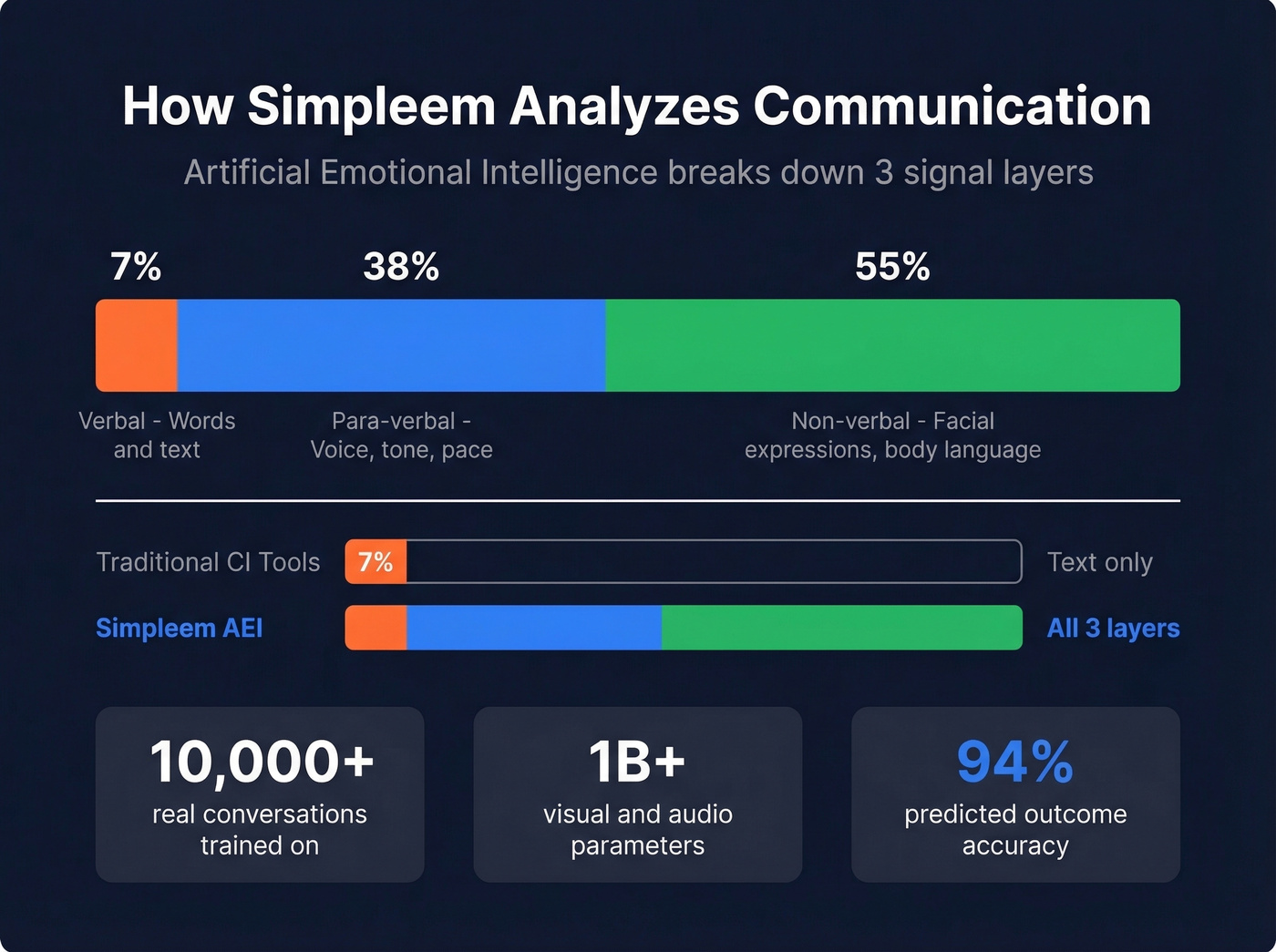
Five proprietary models, trained on 10,000+ real business conversations and over 1 billion visual and audio parameters, analyze all three layers simultaneously. The platform claims 94% accuracy in predicting meeting outcomes. It integrates with Zoom, Webex, Google Meet, and Microsoft Teams, and setup takes 1-5 minutes per the MIT Solve listing. That's a compelling pitch on paper.
Simpleem Pricing Breakdown
Simpleem doesn't publish pricing. Their site has a "Try for Free" button and a "Book a Demo" option, but no pricing page. The Salesforge directory lists pricing as "Contact for pricing," and their subscription agreement references a separate pricing page at app.simpleem.com/pricing that isn't publicly accessible. The agreement also indicates fees are usage-based and invoiced monthly in arrears.
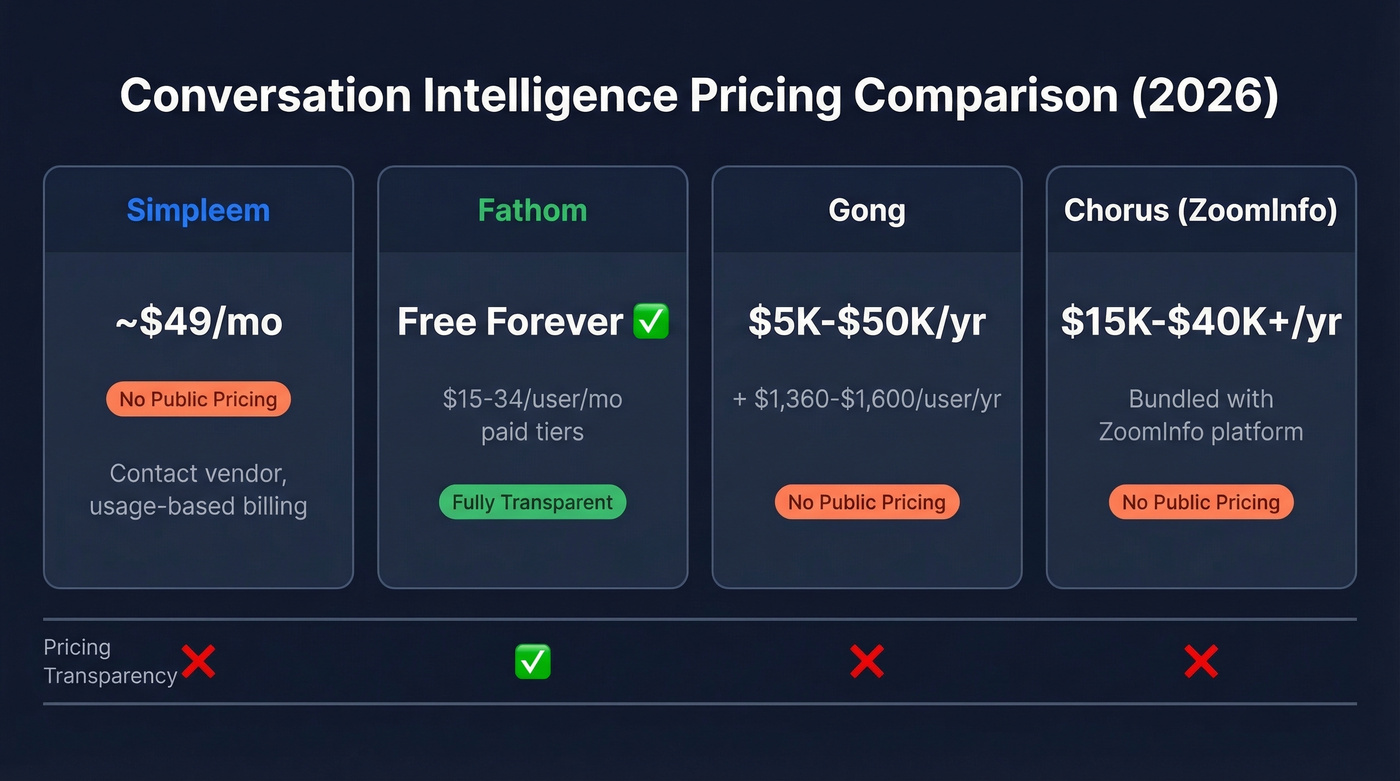
From third-party directories: Shyft.ai lists Simpleem at $49/mo as a starting price. SoftwareWorld shows a "$20/user" Basic plan, though that listing's product description doesn't match the tool's actual features - it reads like a generic sales enablement template.
Opaque pricing in 2026 is a yellow flag. Here's how it stacks up:
| Tool | Starting Price | Model | Public Pricing? |
|---|---|---|---|
| Simpleem | ~$49/mo | Contact vendor | No |
| Fathom | Free | $15-34/user/mo paid tiers | Yes |
| Gong | ~$5K-$50K/yr + seat fees | Platform + per seat | No |
| Chorus (ZoomInfo) | ~$15K-$40K+/yr | Bundled with ZoomInfo | No |
Fathom is the only one with fully transparent pricing. That matters a lot when you're evaluating an early-stage tool against proven alternatives.

Conversation intelligence tools optimize what happens during calls. But most pipeline problems start before the call - with bad emails and wrong numbers. Prospeo delivers 300M+ profiles at 98% email accuracy for ~$0.01/email, so your reps spend time selling, not chasing dead leads.
Fix your data before you optimize your conversations.
Pros and Cons
Pros:
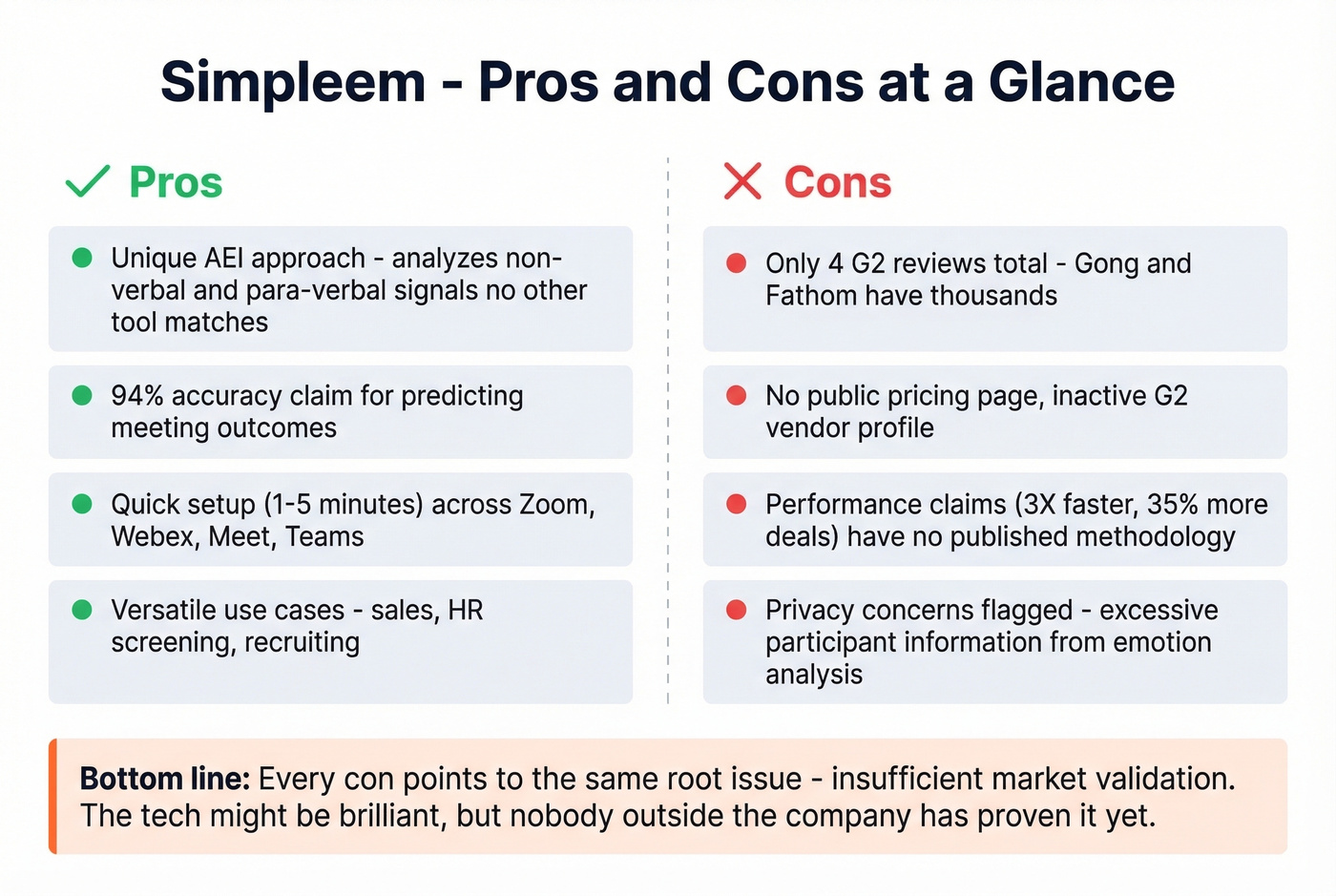
- Genuinely unique approach - AEI analyzes non-verbal and para-verbal signals at a depth no other AI meeting coaching tool matches
- 94% accuracy for outcome prediction, a strong number if it holds up under independent scrutiny
- Setup takes minutes across Zoom, Webex, Google Meet, and Microsoft Teams
- Versatile beyond sales: HR screening, recruiting, and candidate assessment
The pros are real but theoretical until more users validate them. A 4.9 rating means nothing at a sample size of four.
Cons:
- Only 4 G2 reviews total - Gong and Fathom have thousands
- No public pricing and an inactive G2 vendor profile for over a year
- Performance claims (3X faster qualification, 35% more deals, 40% more retention) have no published methodology
- One reviewer flagged "excessive information about participants," raising data privacy questions around emotion and facial analysis
Every con points to the same root issue: insufficient market validation. The technology might be brilliant, but nobody outside the company has proven it yet.
What Users Actually Say
Four G2 reviews - all 5 stars - highlight integrations and ease of use. One reviewer called it a "great tool for analyzing emotions during conversations." The single negative signal is the "excessive information" complaint, which is worth taking seriously given that the tool analyzes facial expressions and body language.
Here's the thing: Reddit presence is entirely founder-led promotion, not organic user sentiment. We found posts in r/kickstarter and r/Crowdfunding from the founder pitching a B2C interview coaching concept - zero independent user discussions. No meaningful threads on r/sales or r/SaaS either. For a tool you're considering putting into your sales workflow, that silence is louder than any review.
Alternatives Worth Considering
Gong
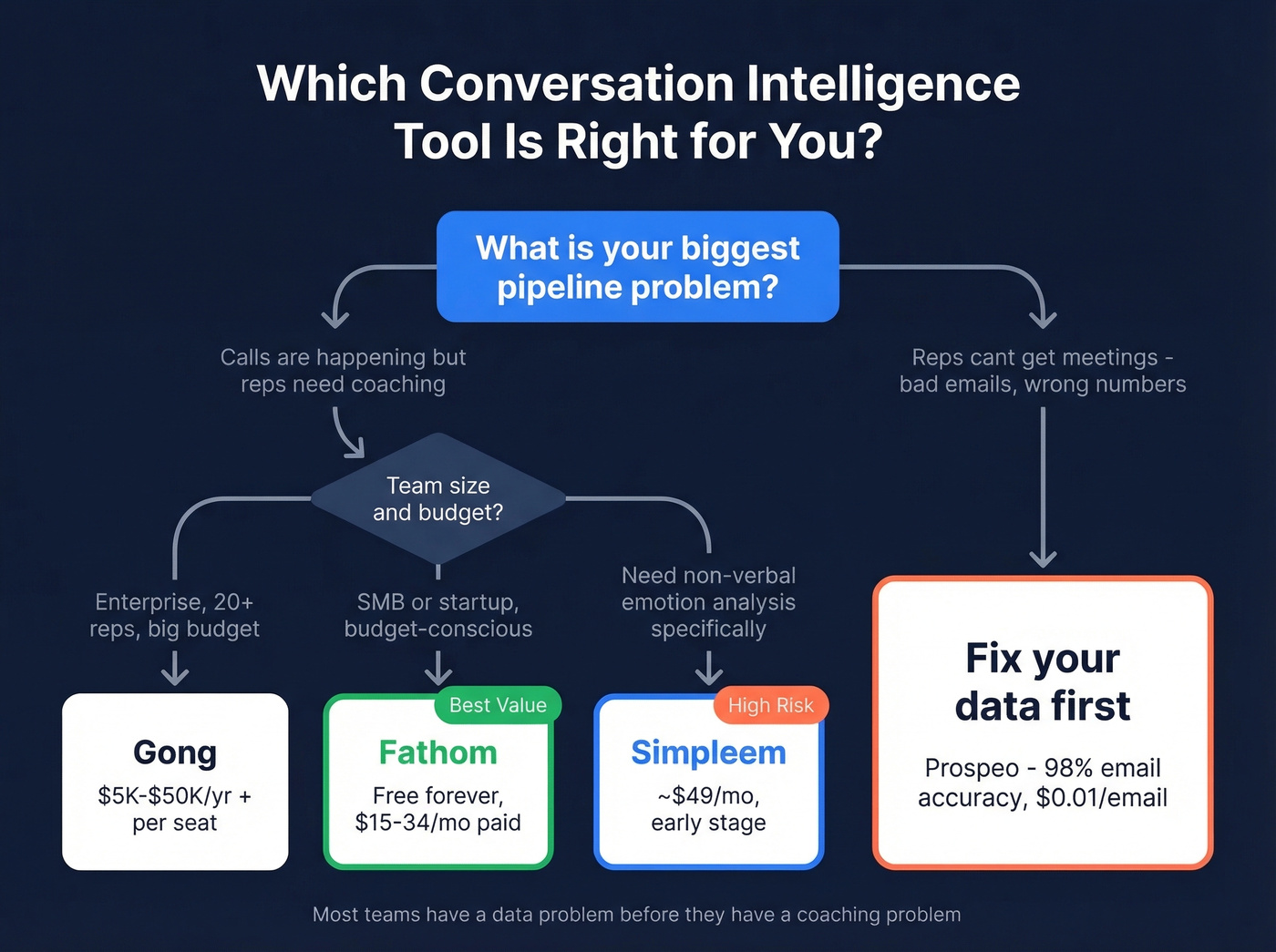
The enterprise standard. Gong's platform fee runs around $5,000-$50,000/year plus $1,360-$1,600/user/year, with add-ons like Forecast and Engage layered on top. That's serious money, but deep CRM integrations, a massive user base, and years of market validation mean you're buying certainty. Skip this if your team is under 20 reps or your budget is in the hundreds per month.
Fathom
The best free option, period. Fathom's free plan is genuinely free forever, with paid tiers from $15-34/user/month. It won't analyze facial expressions or body language, but it's proven, transparent, and widely used. If you don't specifically need non-verbal analysis, start here and save yourself the vendor evaluation headache.
Chorus (ZoomInfo)
An enterprise alternative bundled with ZoomInfo's broader sales intelligence platform. Expect $15K-$40K+/year. It's a strong conversation intelligence tool, but you're essentially buying ZoomInfo and getting Chorus included - not the other way around.
Fix the Data First
Let's be honest about something we've seen over and over: most teams shopping for conversation intelligence tools have a bigger problem upstream. You can't coach calls that never happen. If your reps are constantly hitting voicemail or bouncing emails, no amount of emotion analysis will save your pipeline.
Prospeo's 300M+ profiles with 98% email accuracy and 125M+ verified mobile numbers solve that problem at roughly $0.01/email - with fully transparent pricing and a free tier of 75 verified emails per month. One of our customers, Snyk, cut their bounce rate from 35-40% to under 5% and saw AE-sourced pipeline jump 180%. That's the kind of ROI you can measure in weeks, not quarters.
If you're evaluating vendors on data quality, start with data enrichment tools and the benefits of email verification before you commit budget.

The Bottom Line
Simpleem is a bet, not a sure thing. The AEI concept is genuinely novel, and analyzing non-verbal signals during sales calls could be a real breakthrough for teams that live and die by video meetings. But 4 reviews, no public pricing, and unvalidated performance claims make it a tool for early adopters comfortable with risk.
For everyone else: pick Gong or Fathom for conversation intelligence, and fix your prospect data layer first. Bad data will tank your pipeline regardless of how well you analyze the calls you do get on. If you need help building a repeatable outbound motion, pair clean data with a tight sales cadence and proven follow-up email templates.
Snyk's 50 AEs cut their bounce rate from 35-40% to under 5% and grew AE-sourced pipeline 180% with Prospeo. No opaque pricing, no annual contracts - 75 free verified emails/month to start. That's measurable ROI before you ever need call coaching.
Stop analyzing calls that never should have bounced.