

SMARTe vs Startup Tracker: Different Tools, Different Jobs
SMARTe and Startup Tracker don't compete. Comparing them only makes sense once you understand the gap between what each one does - and it's a big gap. SMARTe is a B2B sales intelligence platform that finds verified emails and phone numbers across a database of 281M+ contacts. Startup Tracker is a startup company search engine built for discovering and monitoring startups from MVP to IPO, with a database of 300K+ companies.
The confusion exists because Product Hunt categorizes Startup Tracker under "lead generation software." But there's no evidence in any available product listing that it provides verified emails, phone numbers, or CRM enrichment. The market created this comparison, not any real feature overlap.
30-Second Verdict
Use SMARTe if you need verified contact data for outbound prospecting - emails, direct dials, technographics, CRM enrichment.
Use Startup Tracker if you want to browse startups as they grow through funding stages. It's a discovery tool, not a contact data platform.
Side-by-Side Comparison
| SMARTe | Startup Tracker | |
|---|---|---|
| Category | Sales intelligence | Startup search/tracking |
| Database | 281M+ contacts | 300K+ startups |
| Verified emails | Yes | No |
| Direct dials | Yes | No |
| CRM integrations | Salesforce, HubSpot | Evernote via Crunchbase workflow |
| Pricing | Free / Pro from $25/mo | Free |
| G2 presence | Active profile | No meaningful review footprint |
| Primary use | Outbound prospecting | Company discovery/tracking |

Startup databases find companies. You still need the people. Prospeo gives you 300M+ professional profiles with 98% verified email accuracy and 125M+ mobile numbers - refreshed every 7 days, not every 6 weeks. At $0.01 per email, it costs 90% less than ZoomInfo.
Stop discovering startups you can't actually reach.
What Each Tool Does
SMARTe
SMARTe covers 281M+ contacts across 65M+ companies, with technographics tracking 58K+ technologies and buying signals like funding rounds, job changes, and layoffs. The pricing model is genuinely unusual - credit-based with no per-user license fees, so your whole team gets access without seat multiplication eating your budget.

The free tier gives you 10 credits/month. Pro runs $25/month plus $0.50 per credit. Enterprise pricing drops to $0.20-$0.30/credit in bundles of 50K-1M credits. Compared to ZoomInfo's $15K-$25K/year minimum, SMARTe gives smaller teams real flexibility. We've found the credit model works best for teams under 10 reps who don't need unlimited seats - you pay for what you pull, nothing more.
Startup Tracker
Startup Tracker positions itself as a search engine for finding, tracking, and discovering startups from MVP to IPO. The company claims a database of 300,000+ startups, though that figure dates back to February 2018 and it's unclear how actively the database has been maintained since.
Crunchbase describes Startup Tracker as a workflow tool built around Crunchbase and Evernote to keep tabs on up-and-coming and competing startups, and it mentions a free Firefox extension. Product Hunt shows launches in the 2014-2018 period with no user reviews on the listing. The company is headquartered in London with a 1-10 employee headcount.
Here's the thing: if your deal sizes sit below $10K, you probably don't need a dedicated startup database at all. A well-filtered search on Crunchbase's free tier plus a contact data tool will outperform any paid startup directory.
Key Differences
These tools serve different stages of the same workflow, not different versions of the same job.
SMARTe provides verified emails and direct dials. Startup Tracker helps you discover and track companies - it doesn't provide verified contact data. SMARTe syncs with Salesforce and HubSpot. Startup Tracker is built around a Crunchbase + Evernote tracking workflow. One finds people. The other finds companies.
When to Use Each
SMARTe fits when you need verified B2B contact data for outbound - building lists, enriching your CRM, or running signal-based outreach at scale. (If you're building a full outbound motion, see our sales prospecting techniques guide.)
Startup Tracker fits when you want to monitor startup ecosystems or discover emerging companies in a specific vertical. Think VC analysts, competitive intelligence teams, or BD reps mapping a new market before they start prospecting.
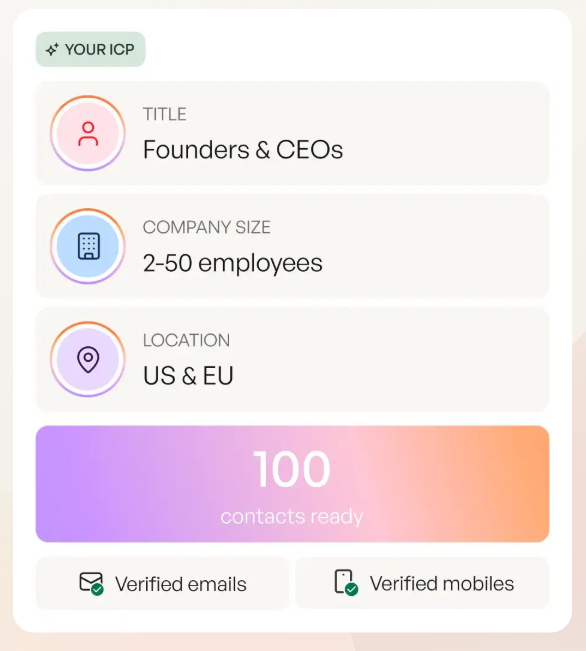
The real workflow requires both jobs done well: find the companies, then find the people. We recommend using a startup database to identify companies matching your ICP, then a contact data platform like Prospeo to pull verified emails and mobile numbers for decision-makers at those companies. Prospeo's Chrome extension (40K+ users) makes this fast - find a company on any website, pull contacts with 98% email accuracy, then push them into Salesforce or HubSpot, connect to outbound tools like Smartlead, Instantly, or Lemlist, or just export to CSV. With 300M+ professional profiles refreshed on a 7-day cycle and a free tier of 75 emails/month, it's a fraction of what you'd pay for ZoomInfo or Apollo.
The best workflow pairs company discovery with real contact data. Use Prospeo's Chrome extension to pull verified emails and direct dials from any startup's website, then push them straight into Salesforce, HubSpot, or your outbound sequencer. 75 free emails/month, no contract, no sales call.
Turn every startup you track into a conversation you start.
FAQ
Does SMARTe offer a free plan?
Yes. SMARTe's free tier includes 10 credits/month with no credit card required. Pro costs $25/month plus $0.50/credit, and enterprise bundles drop to $0.20-$0.30/credit at volume.
What's the cheapest way to get verified B2B emails in 2026?
Prospeo offers verified emails at roughly $0.01 each with a free tier of 75 emails/month and 98% accuracy - significantly cheaper than ZoomInfo ($15K+/year) or Apollo ($49-$119/user/month), with no contracts required.
Can I use both tools together?
Yes, and that's the ideal workflow. Use Startup Tracker or Crunchbase to discover companies matching your ICP, then use a contact data platform to find verified emails and direct dials for decision-makers at those companies. This two-step approach - company discovery plus lead enrichment - consistently outperforms relying on a single tool that tries to do both jobs halfway.