


TAMI AI vs The Data City: Different Tools for Different Jobs
A RevOps lead we know spent two weeks evaluating "B2B data tools" before realizing the two finalists on her shortlist didn't even compete with each other. One found phone numbers for SDRs. The other classified companies by industrial taxonomy for a government innovation report. That's the TAMI AI vs The Data City comparison in a nutshell - and if you're here, you might be making the same category error.
30-Second Verdict
These aren't competing products. TAMI AI is a sales prospecting platform that gives you emails, direct dials, and technographics to fuel outbound. The Data City is an industrial classification engine that maps what companies actually do - replacing outdated SIC codes with real-time AI-powered taxonomies for policy analysts, investors, and researchers.
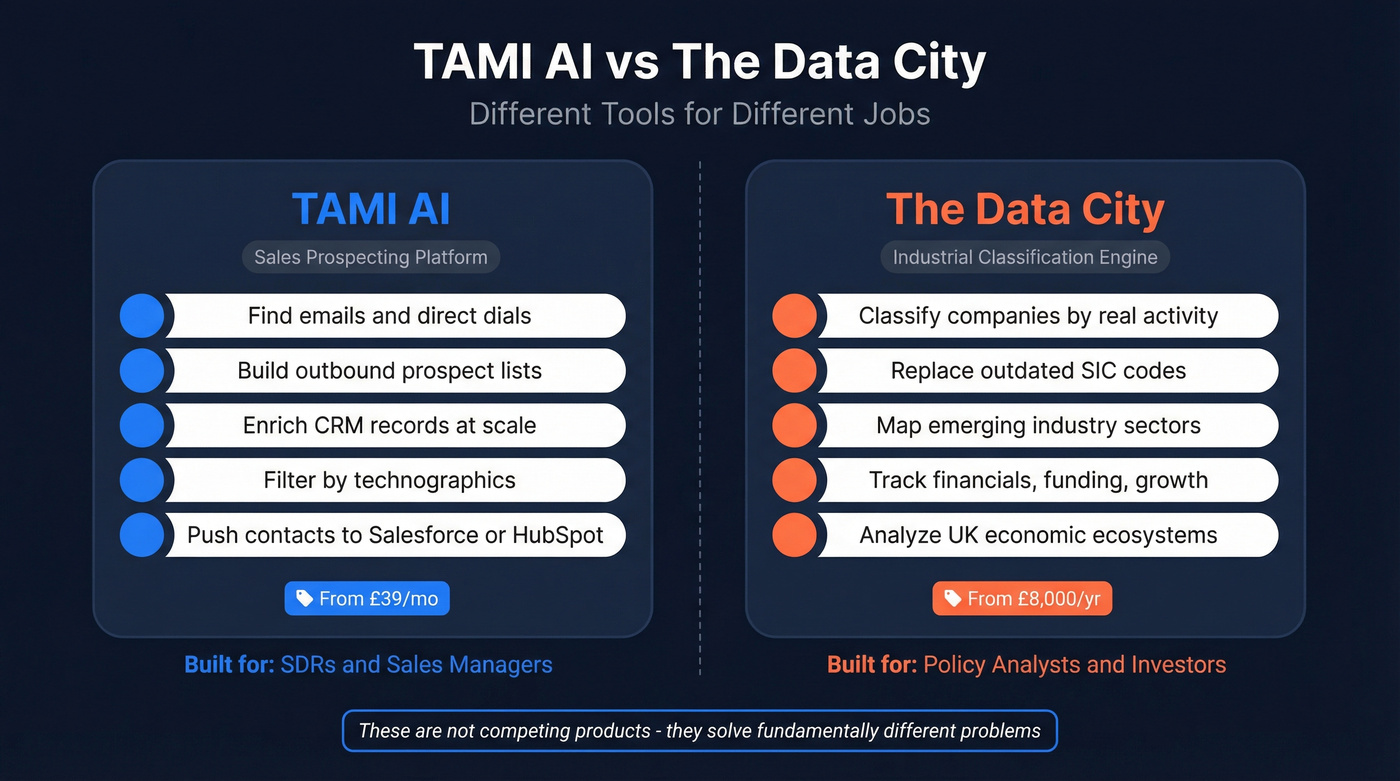
If you're an SDR or sales manager building outbound lists and enriching your CRM, TAMI is the relevant tool. If you're a policy analyst or investor mapping emerging industries across the UK economy, The Data City is purpose-built for that job.
Neither tool generates much discussion on Reddit or sales communities. The Data City's niche audience and TAMI's mid-market positioning keep them below the radar of the usual r/sales debates. That alone tells you something about how specialized both products are.
What Is TAMI AI?
TAMI AI is a B2B sales intelligence platform built around contact discovery and CRM enrichment. The database covers 17M+ companies and 450M verified contacts, with filters for technographics, payment providers, shipping signals, and eCommerce evidence. It's designed for SDRs and sales managers who need to build targeted lists and push them into Salesforce, HubSpot, Pipedrive, or Close.

In a MarTech comparison test against BuiltWith, ZoomInfo, and Cognism, TAMI reported a 95% email delivery rate. The Chrome extension - their "Browser Companion" - lets reps capture contacts while browsing and export directly to CRM. In one case study, a global logistics provider enriched 6.5M CRM records through TAMI with a 99% match rate during deduplication, which is a genuinely impressive number for a mid-market tool.
On review sites, TAMI holds a 4.3/5 on G2 with 139 reviews and a 4.4/5 on Capterra across 131 reviews. Users consistently praise the filtering and ease of use. But Capterra reviews flag a recurring issue: contacts sometimes get mapped to incorrect companies. That's worth testing during the trial before you commit budget.
What Is The Data City?
The Data City solves a fundamentally different problem. Founded in 2017, it's an AI-powered industrial classification platform covering 9M UK companies with 500+ Real-Time Industrial Classifications (RTICs) and 90+ data points per company. The core pitch? Replacing SIC codes - which haven't been meaningfully updated since 2007 - with machine-learning-driven classifications that reflect what companies actually do today.

The platform includes six years of financials covering turnover, profit, and EBITDA, plus funding data by round, growth analytics with CAGR tracking, and director/shareholder information. The Data City launched V5 in early 2025 with faster classification speeds, and Oxford Economics' £2M investment at a £19M valuation is funding a planned US joint venture. Customers include Greater Manchester Combined Authority and techUK - the base skews toward policymakers, ecosystem builders, and investment analysts, not sales teams.
Third-party reviews are scarce: one Trustpilot review at 3.7/5, and no meaningful G2 or Capterra presence. For a platform at this price point, that's a trust signal gap worth noting.

Comparing tools that don't even compete? Skip the detour. Prospeo gives you 300M+ profiles, 98% email accuracy, and 125M+ verified mobiles - refreshed every 7 days, not every 6 weeks. At $0.01/email with no contracts, it's built for teams that need pipeline, not taxonomies.
Stop evaluating tools that weren't built for outbound. Start here.
Side-by-Side Comparison
| Dimension | TAMI AI | The Data City |
|---|---|---|
| Use case | Sales prospecting | Industrial classification |
| Database | 17M+ cos, 450M contacts | 9M UK cos, 500+ RTICs |
| Data focus | Emails, phones, tech | Financials, funding, growth |
| Entry price | £39/mo (Basic) | £8K-£30K/yr |
| Free trial | Yes (50 credits) | Yes (7 days) |
| CRM integrations | Salesforce, HubSpot, Pipedrive, Close | API, HubSpot documented |
| Reviews | G2: 4.3, Capterra: 4.4 | Trustpilot: 3.7 (1 review) |
| Ideal user | SDRs, sales managers | Analysts, investors |
| Geo focus | Global | UK-centric (expanding) |
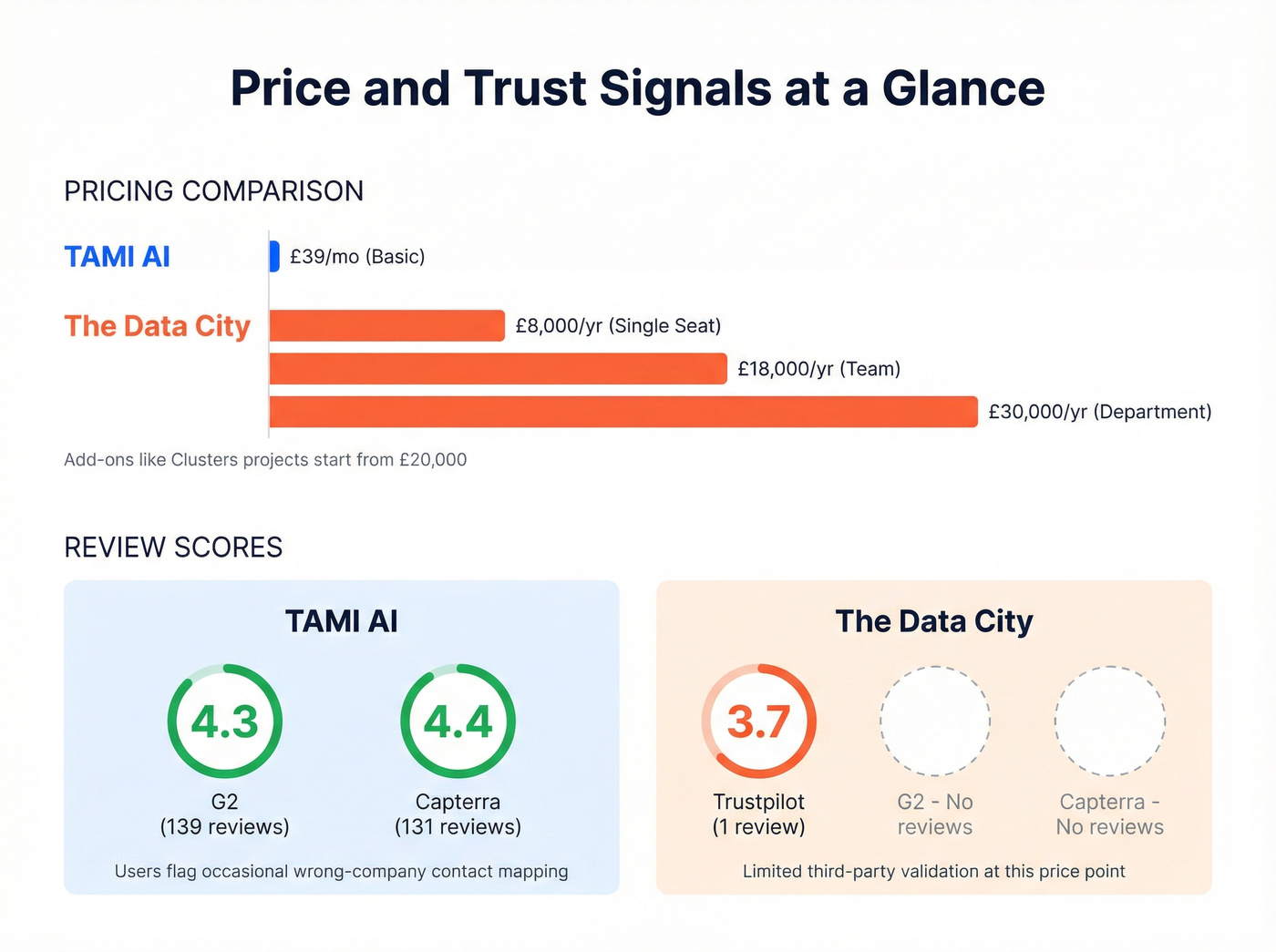
The pricing gap tells the whole story. TAMI starts at £39/mo for individual reps. The Data City's entry point is £8,000/yr for a single seat, team plans run £18,000/yr, and department access hits £30,000/yr. Add-ons like Lightcast Jobs & Skills push costs another £2,000-£8,000 depending on your plan tier, and Clusters projects start from £20,000. Multi-year commitments get you a 10% discount, but you're still looking at a minimum five-figure annual spend.
These aren't comparable price points because they aren't comparable products. One sells contacts. The other sells economic intelligence.
Which Should You Choose?
Go with TAMI if you're an SDR or sales manager building outbound lists and need contact data with technographic filters. The CRM integrations are solid, the filtering is genuinely useful, and at £39/mo it's accessible for individual contributors. Just validate data quality during the trial - contacts mapped to wrong companies can waste entire sequences.
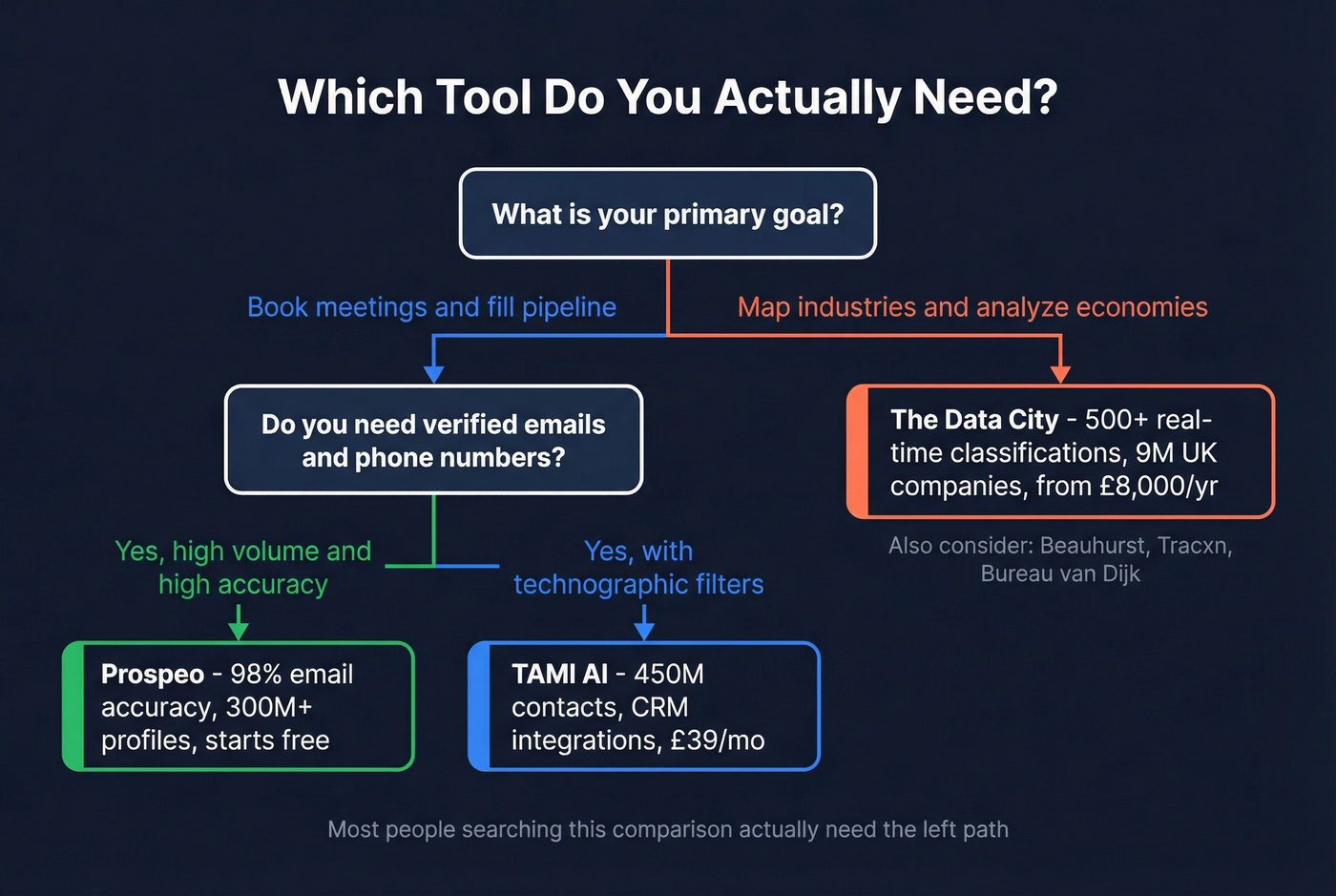
Go with The Data City if you're a policy analyst, investor, or economic researcher who needs to map emerging industries with real-time classifications. The Data City competes with Beauhurst, Tracxn, and Bureau van Dijk - not with sales prospecting tools. The £8,000/yr minimum makes sense when you're producing investment theses or government reports, not when you're trying to book meetings.
Here's the thing: we've watched teams burn weeks evaluating tools that were never meant to compete. If your primary job is sending outbound emails and booking meetings, you probably don't need either of these tools. TAMI does contact discovery, but it's not the strongest option in a crowded field. The Data City doesn't even try.
When You Actually Need Verified Contact Data
Let's be honest about what most people searching "TAMI AI vs The Data City" really want - they want accurate emails and phone numbers to fill their pipeline. Neither platform is optimized for high-volume, high-accuracy email prospecting at scale.
Prospeo covers 300M+ professional profiles with 98% email accuracy, 143M+ verified emails, and 125M+ verified mobile numbers, all refreshed on a 7-day cycle versus the 6-week industry average. Pricing starts free with 75 emails/month, and paid plans run roughly $0.01 per email - no annual contracts, no sales calls required. In our testing, the bounce rates consistently stay under 5%, which is a different league from what we've seen with mid-market tools.
If you're building lists at scale, it also helps to understand lead enrichment and how to manage email bounce rate before you ramp volume.

TAMI's 450M contacts sound impressive until you hit wrong-company mappings mid-sequence. Prospeo's 5-step verification and proprietary email infrastructure keep bounce rates under 5% - and teams book 26% more meetings than with ZoomInfo. 75 free emails/month, no sales call required.
Verified contacts that actually connect you to real buyers.
FAQ
Can TAMI AI and The Data City replace each other?
No. TAMI provides contact data and technographics for sales outbound. The Data City provides industrial classifications and economic data for research and policy. They serve different buyers with entirely different workflows - comparing them is like comparing a CRM to a BI tool.
Is The Data City worth £8,000/year for a sales team?
Almost certainly not. The Data City doesn't provide contact data or outbound prospecting features. Sales teams get far more value from dedicated prospecting tools starting under £50/month - like TAMI at £39/mo or Prospeo's free tier with 75 verified emails - that are built specifically for finding decision-maker contacts. Skip The Data City entirely unless you're doing economic research.
What's the most accurate tool for finding verified emails?
Prospeo delivers 98% email accuracy with a 7-day data refresh cycle, covering 143M+ verified addresses. TAMI reports 95% email delivery, but Capterra reviews flag occasional accuracy issues with contacts mapped to wrong companies. The Data City includes basic contact fields but isn't built for email prospecting.