

The Best Visitor Identification Software for B2B Teams in 2026
Your site got 3,000 visitors last week. You know exactly zero of their names. That's not a traffic problem - it's a conversion problem, and roughly 98% of B2B website traffic leaves without filling out a form.
Visitor identification software exists to close that gap. But here's the thing most vendors won't tell you: you don't need a $30,000/year platform. A $79/month pixel and a verification tool with a free tier will get you most of the way there.
Our Top Picks
| Use Case | Pick | Why |
|---|---|---|
| Person-level ID (US traffic) | RB2B | One of the only credible person-level pixels at $79/mo; 30-45% contact-level coverage on paid tiers, 70-80% on Pro+ with Premium Resolution |
| Company-level ID (global) | Dealfront | Works outside the US with a strong EU compliance story |
| Verified contact data after ID | Prospeo | 98% email accuracy, 125M+ verified mobiles, 7-day refresh - turns identification into pipeline |
How Visitor ID Actually Works
Two fundamentally different approaches exist, and most vendors blur the line between them on purpose.
Company-level identification uses reverse IP lookup to map a visitor's IP address to an organization. You learn that someone from Acme Corp visited your pricing page, but not who. This is the more compliant approach under GDPR and works globally.
Person-level identification uses identity graphs, device fingerprinting, and cookie matching to resolve an individual contact. The catch: it's effectively US-only. European privacy law requires explicit opt-in before tracking cookies fire, which kills person-level deanonymization for EU traffic. The US operates on an opt-out model, so every person-level tool limits coverage to American IP ranges.
A common theory in practitioner communities - and one we've found holds up - is that many person-level tools pull from the same one or two upstream identity graphs. You're often paying different prices for the same underlying data.
Match-Rate Reality Check
Most vendors inflate match rates by conflating company-level with person-level numbers. A MarketBetter benchmark breaks it down:
- Company-level: 30-65% of visitors matched
- Person-level: 5-20% of visitors matched
- Combined (company + person fallback): 60-80%
When a vendor says "we identify 80% of your traffic," they almost always mean company-level. Person-level is dramatically lower. And with over 60% of knowledge workers now remote or hybrid, IP-to-company mapping is degrading fast - your visitor's home IP doesn't resolve to their employer.
RB2B is refreshingly transparent here. Their free plan averages 15-20% coverage at the company level. Paid plans push contact-level identification to the 30-45% range depending on tier, and Pro+ averages 70-80% with Premium Resolution.

Visitor identification gets you the company name. Maybe a profile. But sending unverified emails from deanonymized lists is how you get a 35% bounce rate and a torched domain. Prospeo's 5-step verification turns identified visitors into 98%-accurate emails and 125M+ verified mobile numbers - refreshed every 7 days, not every 6 weeks.
Stop burning your sender reputation on stale visitor data.
The 8 Best Tools for Identifying Website Visitors
1. RB2B
Use this if you want person-level identification for US traffic without a five-figure contract.
The free plan gives you 150 resolutions/month at company-level only. Starter ($79/mo) adds person-level ID with profile URLs pushed to Slack - but no email addresses. Pro (from $149/mo) unlocks business emails and broader integrations. Pro+ (from $199/mo) adds Premium Resolution and is the tier associated with 70-80% average identification rates.
Setup takes about 10 minutes: drop a pixel on your site, connect Slack, and identified visitors start flowing in real time. One practitioner who tested RB2B against Visual Visitor for about 24 hours found RB2B identified fewer visitors overall, but the matches looked accurate when cross-referenced with form submissions - while Visual Visitor's results weren't holding up.

Skip this if your traffic is primarily non-US. RB2B's person-level identification is US-only, and the company-level fallback isn't its strength.
2. Dealfront (Leadfeeder)
Dealfront is the go-to company-level identification tool for teams with international traffic. It maps visitors to organizations, surfaces the pages they viewed, and integrates cleanly with HubSpot and Salesforce.
The EU compliance story is where Dealfront separates from the pack - built for GDPR from the ground up, which matters if your legal team has opinions about tracking pixels. Paid plans start around EUR 165/mo and scale by identified companies. You won't get person-level contact resolution, but for ABM teams running account-based plays across Europe, it's a strong fit.

3. Prospeo
Visitor ID tools tell you who showed up. They don't guarantee the contact data is any good.
We've seen teams run identified visitor lists straight into outreach sequences only to bounce 35%+ of their emails - destroying sender reputation in the process. One of our customers, Meritt, was dealing with exactly this: a 35% bounce rate that cratered their deliverability before switching to verified data and dropping that number under 4%.
Prospeo sits right after the identification step. Upload a list of identified contacts or companies, and it returns verified emails and direct dials from a database of 300M+ professional profiles. The 98% email accuracy rate comes from a 5-step verification process with catch-all handling, spam-trap removal, and honeypot filtering. The database refreshes every 7 days, compared to the 6-week industry average - which is why stale data isn't the problem it is with other tools.
With 125M+ verified mobile numbers and a 30% pickup rate, you go from "someone from Acme Corp visited your pricing page" to a direct dial to the right decision-maker. The free tier gives you 75 emails and 100 Chrome extension credits per month - enough to test the workflow before committing. Paid plans run about $0.01 per email with no contracts.
Use this if you're doing outbound after identification and need verified contact data that won't torch your domain.
4. Lead Forensics
The legacy incumbent. Lead Forensics carries a 4.4/5 on G2 with over 1,000 reviews, and users consistently praise ease of use.
The problems are well-documented too. G2 reviewers flag outdated contacts (23 mentions), incorrect information (19 mentions), and general lead quality issues (35 mentions). At a median annual cost of $17,486 - with contracts ranging from $1,700 to over $70,000 - you're paying premium prices for data that increasingly needs a second verification pass. For teams already locked into an annual contract, it works. For everyone else, there are cheaper paths to the same outcome.
5. Factors.ai
Factors.ai combines visitor identification with marketing attribution and intent signals, which makes it appealing for teams that want deanonymization and campaign analytics in one dashboard. The identification product starts at $99/mo for company-level ID, with higher tiers adding workflow automation.

Knowing which campaign drove a visitor before you identify them adds context that standalone ID tools miss. Mid-market teams running multi-channel ABM campaigns get the most value here. If you already track website visitor behavior through Google Analytics but want to unmask the companies behind those sessions, Factors.ai bridges that gap nicely.
6. Warmly
Warmly isn't a simple identification platform. It's an enterprise orchestration system that happens to include visitor ID as one feature.
Starting at $15,000/year for the TAM package and $30,000/year for inbound capture, it pulls from 220M+ people profiles, 40M+ company profiles, and 33M+ intent signals per year to power automated routing, real-time alerts, and AI-driven follow-up. If you're running a full-stack revenue operation with the budget to match, Warmly makes sense. For everyone else, you're spending $30K on a platform when a $79 pixel plus a verification tool does 80% of the job.
7. Snitcher
EU-focused company-level identification with a clean interface and strong analytics integrations. A lighter Dealfront alternative for smaller teams that don't need the full feature set.
8. Bullseye
Credit-based model at $99/month for 200 credits. Worth testing if you have low traffic volume and want to pay per identification rather than commit to a bigger monthly subscription.
Pricing Comparison
| Tool | Starting Price | What's Included | Per-ID Cost | Model |
|---|---|---|---|---|
| RB2B | Free / $79/mo | 150 (Free) or 300 (Starter) resolutions | $0.45 overage (Starter); $0.25 (Pro/Pro+) | Monthly sub |
| Dealfront | ~EUR 165/mo | Company-level ID, CRM sync | Scales by volume | Monthly/annual |
| Lead Forensics | ~$17.5K/yr median | Company-level ID, alerts | Bundled | Annual contract |
| Factors.ai | $99/mo | Company ID + attribution | Tiered | Monthly/annual |
| Warmly | $15K/yr | Full orchestration suite | Bundled | Annual contract |
| Snitcher | Paid plans available | Company-level ID, analytics | Scales by volume | Monthly/annual |
| Bullseye | $99/mo (200 credits) | Company-level ID | $0.60/credit overage | Monthly sub |
Why Verification Is the Step Everyone Skips
Let's be honest: identification without verification is an expensive way to burn your domain reputation.
These tools surface names and email addresses, but those records go stale fast - people change jobs, inboxes get deactivated. Lead Forensics' own G2 reviews prove the point. You don't need a $30,000/year platform to solve this. Run your identified visitor list through a verification engine, and you go from a 35%+ bounce rate to under 4%.
A 7-day data refresh cycle means you're reaching people at their current company, with their current email, every time. The cheapest path we've found: RB2B's free plan for identification, paired with Prospeo's free tier for contact verification. Total cost: $0 to start.
If you want to go deeper on deliverability, start with bounce rate and then work through a full email deliverability checklist.
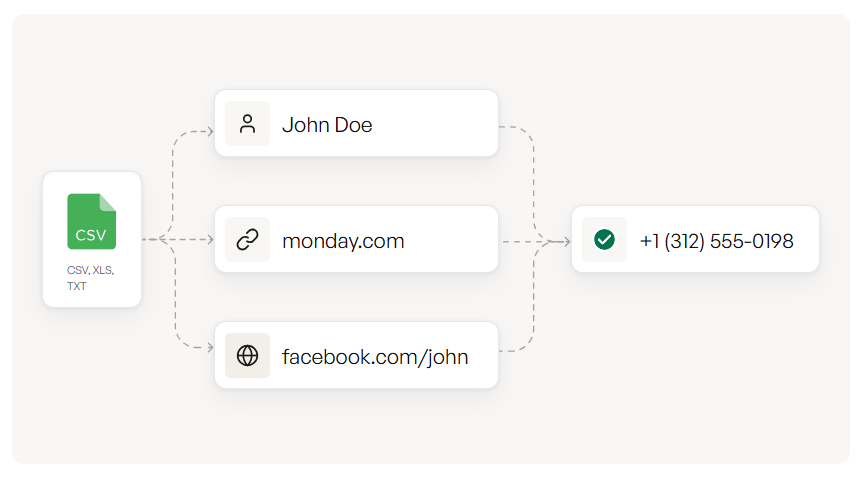
Person-level tools cap out at 20% match rates. Company-level gives you a logo, not a conversation. The real gap isn't identification - it's what happens after. Prospeo returns verified direct dials with a 30% pickup rate and emails at $0.01 each. No contracts. Free tier included.
Turn anonymous visitors into booked meetings for a penny per contact.
Is Visitor ID Legal?
GDPR (EU): Explicit opt-in required before setting tracking cookies. Consent banners must offer granular category choices, no pre-ticked boxes, a "Reject All" button, and easy withdrawal. Company-level ID with proper consent is compliant; person-level identification is effectively blocked.
US (federal): No comprehensive federal privacy law yet. Most state laws operate on an opt-out basis, which is why person-level tools work in the US.
State-by-state patchwork: California (CCPA/CPRA), Colorado, Connecticut, and others have their own rules. Some require Global Privacy Control (GPC) support. The consensus on r/sales and r/b2bmarketing is that you should run your setup past legal counsel before going live - especially if you're targeting multiple states.
Practical takeaway: If your traffic is global, company-level identification is your compliant default. Person-level is a US-only play until privacy law converges. Choosing the right tool depends as much on where your audience sits as on what features you want.
FAQ
What's the difference between company-level and person-level identification?
Company-level maps a visitor's IP to their organization - you see the company name but not the individual. Person-level uses identity graphs and cookie matching to resolve a specific contact, but it only works for US traffic due to opt-in requirements in the EU.
How many visitors can these tools actually identify?
Expect 30-65% match rates at the company level and 5-20% at the person level. Always ask which type a vendor is quoting - combined numbers (60-80%) often mask low person-level resolution.
Is visitor identification software GDPR compliant?
Company-level identification with proper cookie consent is compliant under GDPR. Person-level deanonymization requires opt-out regimes, effectively limiting it to US traffic where no federal opt-in law exists.
What's the cheapest way to start identifying website visitors?
RB2B's free plan (150 company-level IDs/month) paired with Prospeo's free tier (75 verified emails/month). Total cost: $0. Upgrade either tool independently as volume grows.
Why do emails from visitor ID tools bounce so often?
Most identification databases refresh every 4-6 weeks, so contacts who've changed jobs or deactivated inboxes stay in the system. Pairing ID with real-time verification that runs on a 7-day refresh cycle drops bounce rates from 35%+ to under 4%.