


Accutrend vs Apollo.io: Why This Comparison Doesn't Work (And What You Actually Need)
Someone in your pipeline review mentioned Accutrend, and now you're weighing it against Apollo.io to figure out if one replaces the other. Short answer: this is like comparing a lumber yard to a furniture store. Accutrend sells raw materials - government-sourced business entity records. Apollo.io sells a finished product - a prospecting platform with sequences, CRM integrations, and contact reveals. They don't compete. They barely overlap.
We've dug into both tools so you don't have to waste a discovery call finding that out. Let's clear up the confusion so you can stop wondering and start buying the right thing.
30-Second Verdict
- Use Accutrend if you need government-sourced entity data for compliance, M&A due diligence, or new business registrations - and you're comfortable with a multi-year data licensing contract.
- Use Apollo.io if you're an SDR or startup team running cold outbound and you want a self-serve platform with sequencing, CRM pushes, and a free tier.
What Is Accutrend?
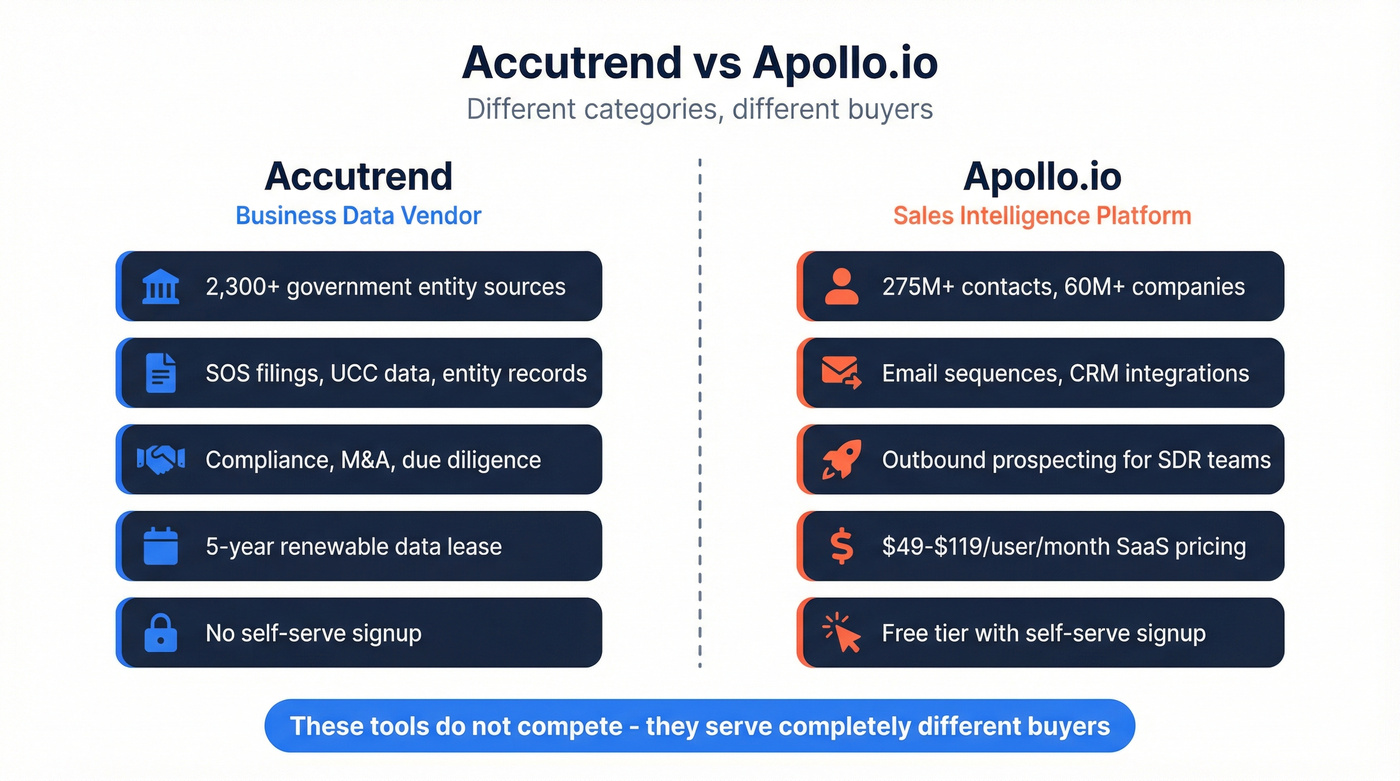
Accutrend isn't a sales intelligence platform. It's a business data vendor that licenses datasets acquired directly from 2,300+ government entities - Secretary of State offices, county clerks, municipal licensing agencies - and refreshes them daily.
The core products include Secretary of State corporate filings with fields like officer/director names, tax IDs, and registered agent details (some records date back to the 1700s). They also offer Business View data covering firmographics like NAICS/SIC codes and revenue estimates, plus UCC filing and collateral data for lien and secured-loan research. Canadian coverage adds another 3.13M business records.
Here's the thing about the buying motion: it's enterprise data licensing, full stop. Accutrend's full-file leasing runs on 5 consecutive 12-month renewable terms with a 90-day termination notice - leave early and you return all data files. Pricing isn't public, but expect custom quotes in the mid-four to five figures annually depending on scope. There's no G2 or Capterra presence, and the Glassdoor rating sits at 2.9/5 from just 4 reviews. This is a small, specialized operation, not a SaaS company with a growth team.
The typical buyer is a financial institution verifying entity status, an M&A team doing due diligence, or a manufacturer targeting newly registered businesses. That last use case is where Accutrend earns its keep: newly registered businesses tend to make major purchases in their first 30-90 days, and the daily refresh is designed to catch that window. But if you're trying to find a VP of Sales's email address, you're in the wrong aisle entirely.
What Is Apollo.io?
If you've ever signed up for a sales tool on a Friday afternoon and started sending sequences by Monday, that was probably Apollo.io. The database covers 275M+ B2B contacts across 60M+ companies, and the platform bundles prospecting search, email sequencing, and CRM integrations into a single tool. Paid plans run from $49 to $119/user/month billed annually, and the free tier gets you started - though it caps you at 5 mobile credits and 10 export credits per month, which runs dry fast.
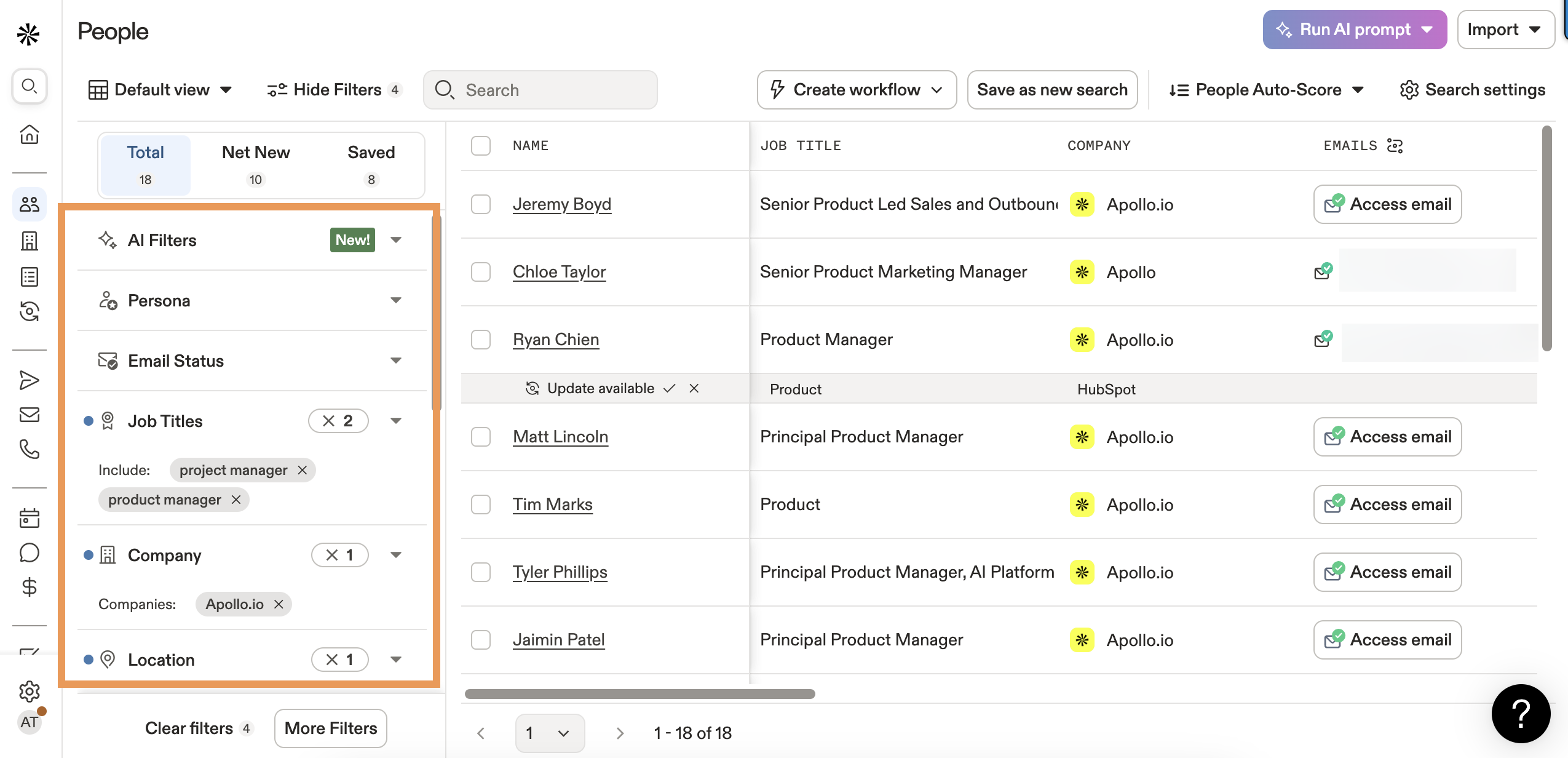
The G2 rating is 4.7/5 from 9,512 reviews, putting it among the most-reviewed sales tools on the platform. The cons tell a different story, though: 503 reviews flag "Inaccurate Data" and 597 flag "Missing Features."
For teams running high-volume outbound, bounce rates can land in the 15-25% range. Once your domain reputation takes a hit, you feel it fast. The credit model adds its own friction too - you burn separate credits for email reveals, phone reveals, and exports, and credits don't roll over. That scarcity mindset slows reps down when they should be moving.
Apollo is the best value-to-feature ratio in sales intelligence. But "best value" and "best data" aren't the same thing, and most teams figure that out after their first domain reputation hit.

Apollo's 20%+ bounce rates aren't a data quality tradeoff - they're a domain reputation liability. Prospeo's 5-step verification with catch-all handling and spam-trap removal delivers 98% email accuracy at $0.01/email. No credit-gated reveals. No list cleaning after export.
Stop warming up replacement domains and start sending to real inboxes.
Side-by-Side Feature Table
| Dimension | Accutrend | Apollo.io |
|---|---|---|
| Product type | Business data vendor | Sales intelligence platform |
| Data sources | 2,300+ gov entities | Large-scale contact & company database |
| Core use case | Compliance, M&A, entity research | Outbound prospecting, sequencing |
| Database size | Government filings + business datasets (incl. Canada 3.13M) | 275M+ contacts, 60M+ companies |
| Pricing model | Custom quote (annual/usage) | Per-user + credits ($0-$119/mo) |
| Contract length | 5-year renewable lease | SaaS subscription (annual billing common) |
| Self-serve signup | No - sales conversation required | Yes - free tier available |
| G2 reviews | None | 4.7/5 (9,512 reviews) |
| Contact data for outreach | Varies by dataset (often entity/officer info) | Yes (credit-gated) |
| CRM integrations | Not a core focus (data delivery via files/API) | Salesforce, HubSpot, and more |
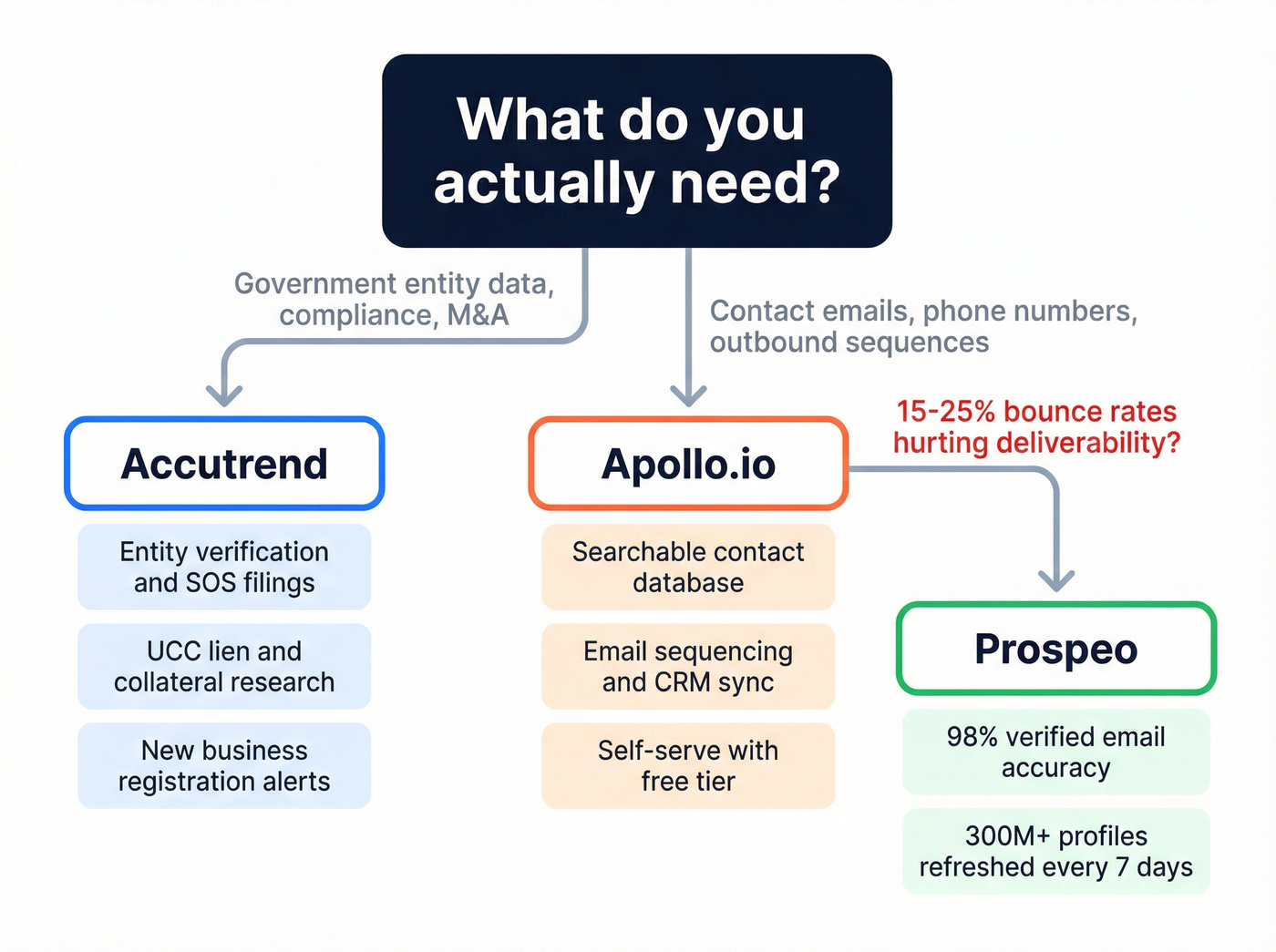
The table makes the category gap obvious. Accutrend is infrastructure for data teams. Apollo is a workflow tool for sales reps. There's no "winner" here because they're playing different sports.
Who Should Use Which
Accutrend makes sense for financial institutions verifying entity status, compliance teams tracking UCC filings, M&A shops running due diligence, or manufacturers targeting newly registered businesses by NAICS code. The 5-year commitment and opaque pricing signal that it's built for enterprise data licensing buyers who negotiate annual contracts - not individual reps looking for a quick email lookup.
Apollo.io fits SDR teams at startups or SMBs running cold outbound who want sequencing, CRM integrations, and a searchable contact database in one platform. Its sweet spot is teams of 3-15 reps doing US-focused prospecting who need to move fast and don't mind cleaning bounced emails. For teams that can tolerate some data quality tradeoffs in exchange for an all-in-one workflow, it's hard to beat on price.
Skip Accutrend if you're doing outbound sales - it simply doesn't have the contact-level data you need. Skip Apollo if your bounce rates are already hurting deliverability and you can't afford another domain reputation hit.
A Better Option for Prospecting
If you searched this comparison because Apollo's bounce rates frustrate you and you thought Accutrend might fix that - it's a completely different product. What you actually want is a prospecting tool with verified data.

We've seen this pattern repeatedly: teams burn through Apollo credits, hit 20%+ bounce rates, scramble to warm up a new domain, and then start shopping for alternatives. The r/sales community has threads full of this exact frustration. Prospeo covers 300M+ professional profiles with 98% email accuracy backed by a 5-step verification process with catch-all handling and spam-trap removal - a fundamentally different approach than credit-gated databases that leave you cleaning lists after export. The data refreshes every 7 days instead of the 6-week industry average, and the mobile database runs 125M+ verified numbers with a 30% pickup rate.
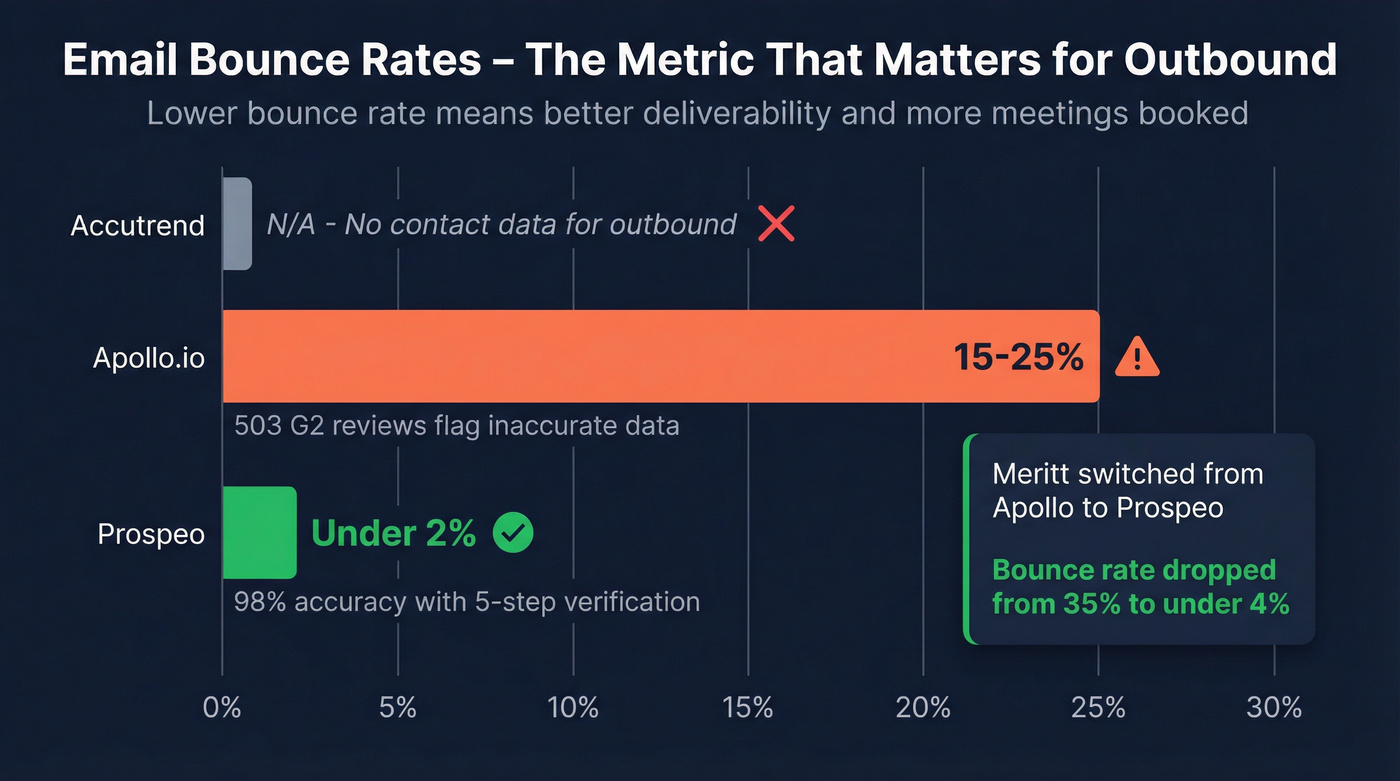
There's a free tier (75 emails/month + 100 Chrome extension credits/month), no contracts, and the cost works out to roughly $0.01 per lead. You get 30+ search filters, intent data powered by Bombora across 15,000 topics, and native integrations with Salesforce, HubSpot, Lemlist, Instantly, and Clay. Meritt switched from Apollo and cut bounce rates from 35% to under 4% - that's the difference verified data makes.
Accutrend can't give you contact data for outbound. Apollo gives you contacts but burns your deliverability. Prospeo covers 300M+ profiles refreshed every 7 days with 125M+ verified mobiles - and teams book 35% more meetings than with Apollo.
Get the prospecting data both of these tools fail to deliver.
FAQ
Is Accutrend a CRM or sales tool?
No. It's a business data vendor that licenses government-sourced entity records - SOS filings, UCC data, new business registrations. It doesn't offer CRM features, email sequencing, or outbound prospecting tools. Data is delivered via files or API for integration into your own systems.
Why is Apollo.io's data accuracy criticized?
Over 500 G2 reviews flag "Inaccurate Data" as a con. Teams running high-volume outbound report bounce rates in the 15-25% range, and the credit model adds friction - separate credits for reveals and exports, none of which roll over month to month.
Is this actually a fair comparison?
Not really, and we said as much up front. Accutrend sells government-sourced business entity data for compliance, M&A, and entity research. Apollo.io is a sales prospecting platform with contact data, sequencing, and CRM integrations. They serve completely different buyers. If you need outbound prospecting, Apollo or a verified-data tool like Prospeo is the right category. If you need entity filings and UCC data, Accutrend is the right category.
What's a good Apollo.io alternative for accurate emails?
Prospeo offers 98% verified email accuracy across 300M+ profiles with a 7-day data refresh cycle. It's self-serve with a free tier (75 emails/month) and costs roughly $0.01 per lead - no annual contracts required. Teams report 35% more meetings booked compared to Apollo.