

How to Build a Co-Selling Partnership That Doesn't Die After the First Meeting
You signed a co-selling partnership three months ago. Nice dinner, slide deck about "synergies," firm handshake. Since then? Two emails, one awkward intro that went nowhere, radio silence. Roughly 95% of strategic partnerships die after the handshake because they're built on vibes instead of mutual business problems.
Here's the thing: the fix isn't more partners. It's a tighter process with fewer of them.
The short version: Start with one partner and a specific shared customer problem. Define five or fewer outcomes per quarter, a commission structure of 10-30%, monthly reviews, and 30-day exit criteria. Account-map your overlap before committing resources, and verify contact data before sharing it.
What Co-Selling Actually Is
Co-selling is two companies selling jointly to the same buyer - sharing pipeline, context, and relationships throughout the deal. Not a referral tossed over the fence. Not reselling someone else's product. Both parties show up on calls, contribute expertise, and split the outcome.
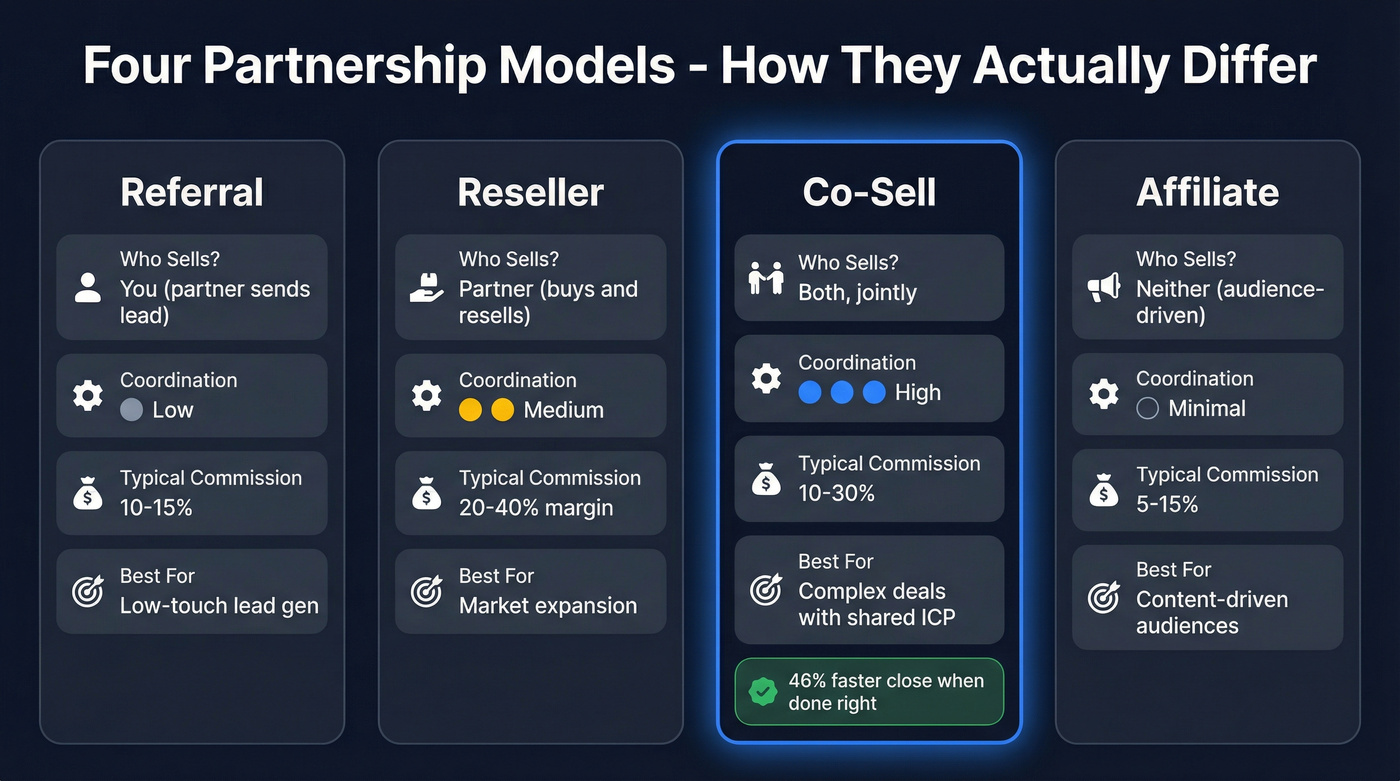
Most partnerships never get here. Around 90%+ of channel partnerships are referral-based, according to Jake Atwood of The Channel Builder. That's fine for some businesses, but it's not co-selling.
| Model | Who sells? | Coordination | Typical commission |
|---|---|---|---|
| Referral | You (partner sends lead) | Low | 10-15% |
| Reseller | Partner (buys & resells) | Medium | 20-40% margin |
| Co-sell | Both, jointly | High | 10-30% |
| Affiliate | Neither (audience-driven) | Minimal | 5-15% |
When tracking results, separate partner-sourced revenue from partner-influenced revenue. Both matter, but they tell very different stories about your program's health.
Why Most Co-Sell Partnerships Fail
Three failure patterns show up constantly. We've seen all three firsthand.
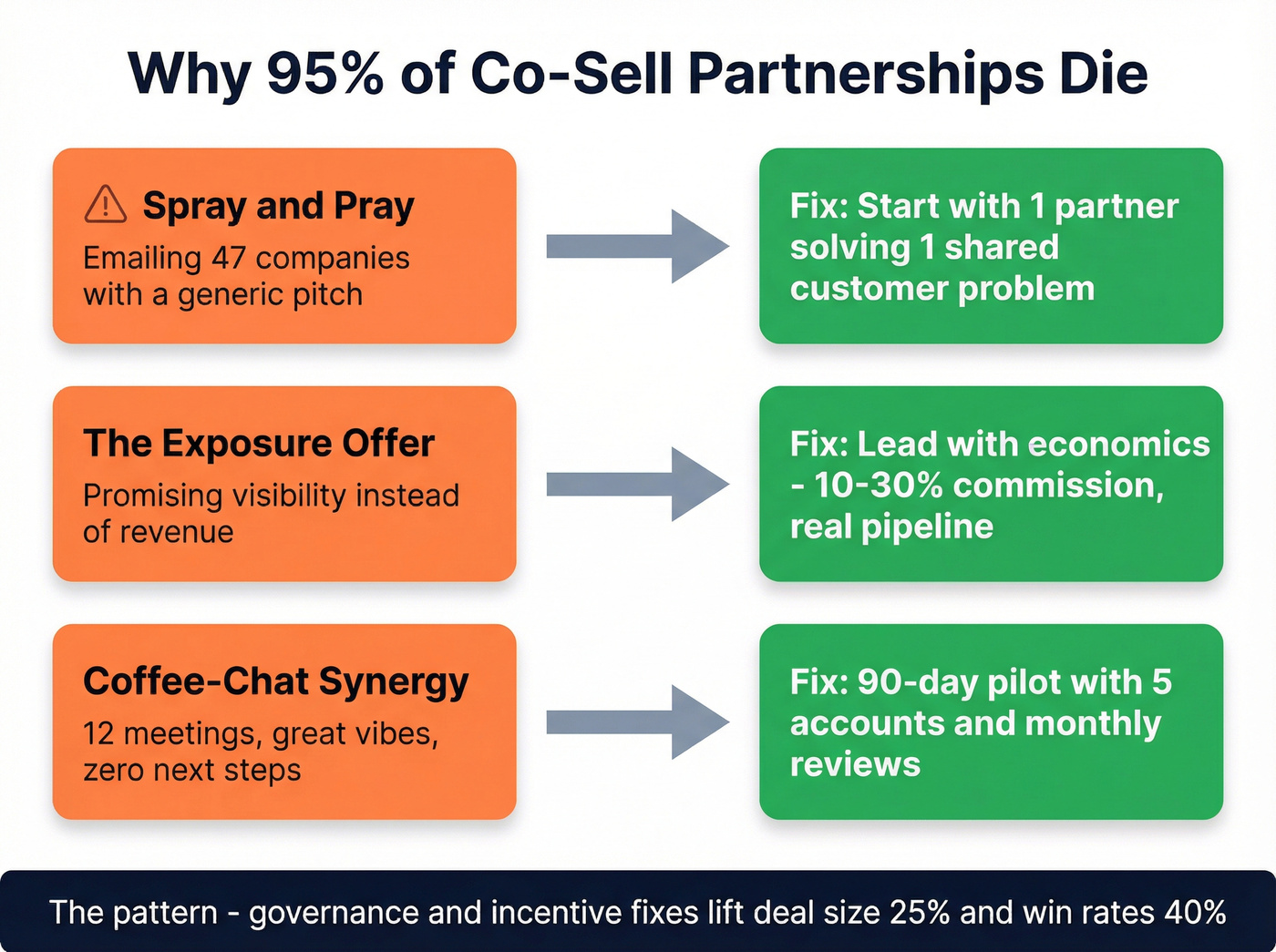
Spray and pray. One founder reached out to 47 companies proposing partnerships. Polite responses, zero follow-through. Volume doesn't fix a weak value proposition - it just spreads a weak one thinner.
The "exposure" offer. Offering a partner visibility instead of economics is a fast track to getting ghosted. Partners need revenue, not impressions. If your pitch includes the phrase "great exposure for your brand," you've already lost.
Coffee-chat synergy. Twelve founder meetings, great conversations, no next steps. Networking theater.
The data backs up what practitioners already feel. Blue Ridge Partners found that fixing governance and incentive problems - clarified ownership, cross-sell accelerators, earlier deal reviews - lifts average deal size 25% and improves win rates on complex deals by 40%.
Coordination isn't optional, but it needs to be calibrated. Outreach's team-selling data shows that simply assigning multiple sellers to an account yields a measly +2% win rate lift. When those reps actively coordinate outreach, win rates jump 6.2 points and deal cycles shorten by 16 days. One caveat worth knowing: for deals under $50K, over-collaboration actually hurts. Outreach found a -7.9 point win rate penalty when too many sellers pile on smaller opportunities. The process is the product, but match it to deal size.

Account mapping is only as good as the data behind it. One bounced email to a partner's prospect torches credibility on both sides. Prospeo's 98% email accuracy and 7-day refresh cycle ensure your shared prospect lists are current and deliverable - so every co-sell intro actually lands.
Verify your overlap lists before your next partner review.
Steps to Build a Co-Sell Motion That Works
Pick the Right Partner
Start from your customer's journey, not your Rolodex. Where do buyers hit a gap your product doesn't solve? Who solves that gap credibly? That's your shortlist.
The criteria: complementary problems rather than competing ones, overlapping ICP, and a go-to-market motion that doesn't clash with yours. If your partner sells six-month enterprise contracts and you're PLG with a 14-day trial, the motions won't mesh. We learned this the hard way after spending a quarter trying to co-sell with a company whose sales cycle was four times longer than ours - every deal stalled in their procurement process while our champion lost interest.
Before cold-emailing potential partners, check for shadow co-selling. Your AEs are probably already making warm intros to the same three vendors on every deal. Formalize those relationships first. They already have proof of concept.
Map Your Account Overlap
This is where the partnership goes from concept to pipeline. Cross-reference your prospects, opportunities, and customers against your partner's data. Partner ecosystem benchmarks from Crossbeam's research show deals close 46% faster when partners are involved.
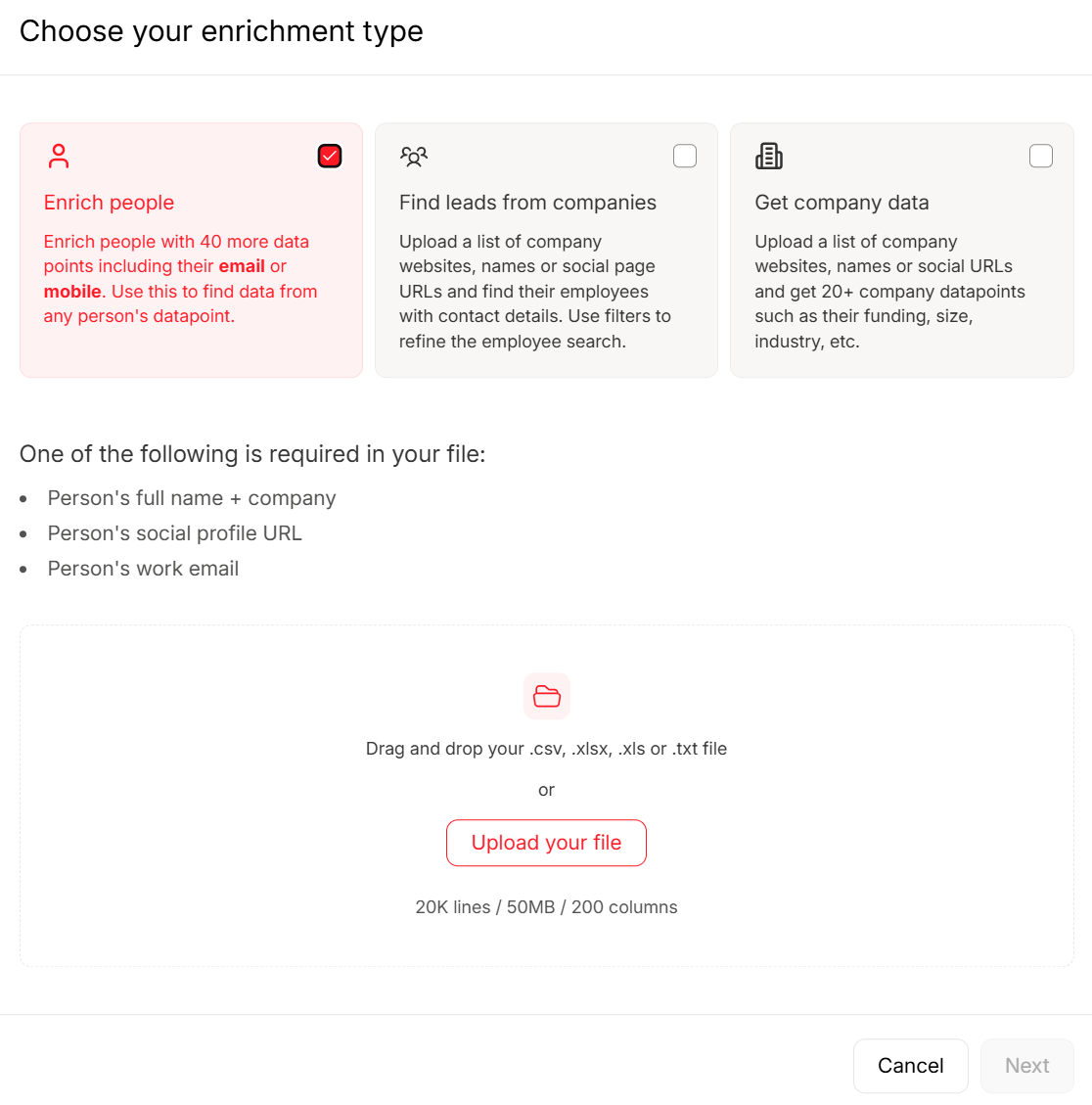
But account mapping is only as good as your CRM data. A bounced intro email burns trust with both the partner and the prospect - and it happens more often than anyone wants to admit. Before sharing a prospect list with a partner, run it through email verification. Prospeo's 98% accuracy rate and 7-day refresh cycle keep overlap lists current between review cadences, which matters when you're sharing data monthly.
Run a 90-Day Pilot
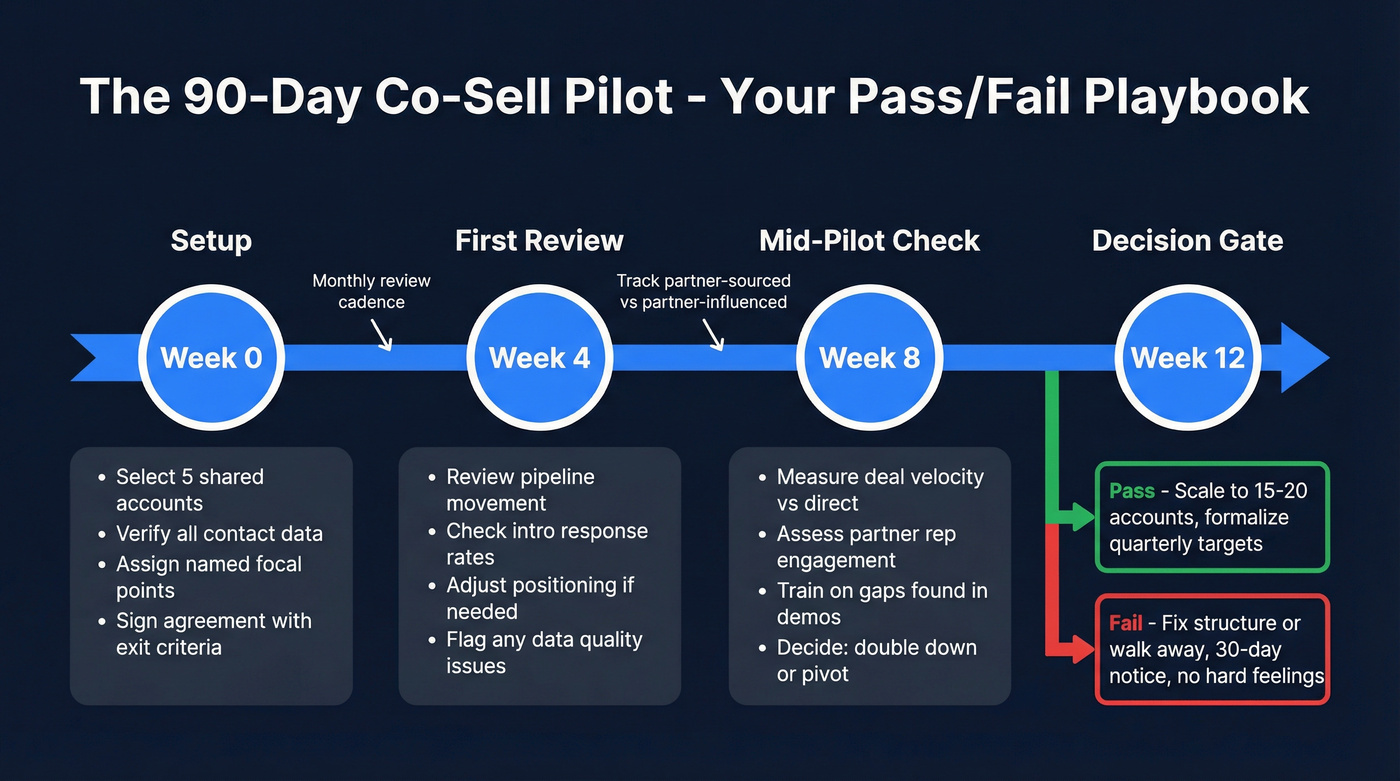
Don't try to build an ecosystem before you've proven the motion works. Five shared accounts is the sweet spot for a first pilot - enough to generate signal, small enough to manage tightly. Monthly reviews, not quarterly. If the first 90 days don't produce pipeline movement, fix the structure or walk away.
That Reddit founder who shifted from spray-and-pray to focused partnerships? 23% of signups attributed to partner referrals. Apollo's partner program grew to contribute 10% of total company revenue in two years. Glide hit 30% of revenue from partners. These numbers came from disciplined pilots that scaled, not from signing 20 partners on day one.
Let's be honest: most teams skip the pilot and jump straight to "strategic partnership" announcements. Resist that urge. The teams that build profitable co-sell programs treat the pilot as a pass/fail gate.
What to Put in Your Agreement
Seven elements. Skip any and you'll end up back in coffee-chat territory.
- Joint account planning - how you identify and prioritize shared targets
- Named focal points - a program manager on each side, not "the partnership team"
- Funnel obligations - who sources, who qualifies, who closes
- Partner enablement - each side trains the other's reps on positioning
- Demo and documentation access - free for co-sell purposes
- Integration commitment - "commercially reasonable efforts" to connect products, meaning try hard but no guarantees
- Exit criteria - 30-day notice if metrics aren't met, no hard feelings
Include a deal registration window of 30-90 days with first-to-register priority.
For revenue sharing, three models dominate. The 50/50 split is rare and reserved for truly equal contribution. Royalty-based, where one side takes a percentage of revenue, is most common. Retainer plus royalty offers a guaranteed base with upside. Co-selling commissions typically land in the 10-30% range.
One concrete example: Hatch pays $50 per demo and $250 per close, with a 70% close rate in their co-sell motion. In our experience, quarterly payments with audit rights prevent most commission disputes. The Fynk template is a solid starting point for commercial mechanics if you don't want to draft from scratch.
Measuring Co-Selling Partnership Performance
Track four categories. Pick two KPIs per category and review monthly.
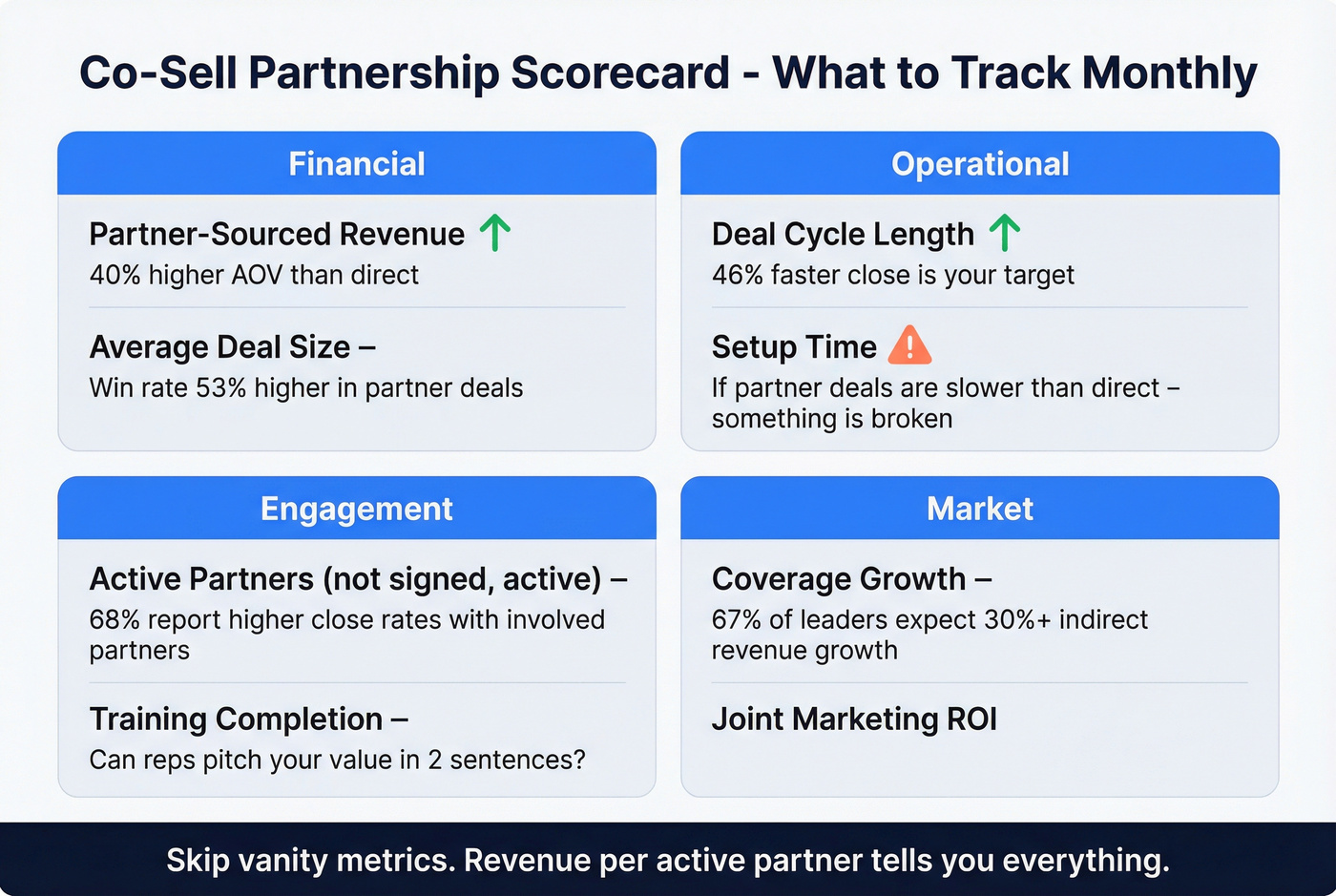
Financial: Partner-sourced revenue and average deal size. Partner-led benchmarks commonly cited in ecosystem content show partner-sourced deals run 40% higher AOV and win 53% more often. If yours don't, the motion needs work - not more partners.
Operational: Deal cycle length and setup time. That 46% faster close is your benchmark. If partner deals are somehow slower than direct sales, something's broken in the handoff. Dig into it immediately rather than waiting for the quarterly review.
Engagement: Active partners - not signed, active - and training completion. 68% of companies report higher close rates when partners are involved, and 64% say more than half of new customers come through partner-influenced or co-sold deals. But involvement requires enablement. If your partner's reps can't articulate your value prop in two sentences, you haven't enabled them.
Market: Coverage growth and joint marketing ROI. Forrester's 2026 survey found 67% of B2B channel leaders expect indirect revenue to grow 30%+ year over year. If your program isn't contributing to that trajectory, revisit partner selection before adding more partners to the roster.
Skip the vanity metrics. "Number of partners signed" tells you nothing. Revenue per active partner tells you everything.
If you want to tighten the operating cadence, borrow a lightweight QBR structure and keep a running list of QBR questions for partner reviews.
Running a 90-day co-sell pilot with five shared accounts? You need verified contacts for every stakeholder - direct emails and direct dials. Prospeo gives you 300M+ profiles with 30+ filters to map the exact buying committee, at $0.01 per email. No stale data burning your partner's trust.
Build your co-sell target list in minutes, not weeks.
FAQ
What's the difference between co-selling and reselling?
In co-selling, both companies sell jointly to the same buyer - sharing pipeline, context, and relationships throughout the deal cycle. In reselling, one company buys the other's product and sells it independently. Co-selling requires tighter coordination but produces higher win rates and larger deal sizes.
What commission should I offer a co-selling partner?
Co-selling commissions typically land between 10-30% of deal value. Referral-only arrangements sit at the lower end; full co-sell motions with joint pipeline work justify 20-30%. Start at 20% and adjust based on how much pipeline the partner actually generates versus how much your team carries.
How do I keep shared prospect data accurate between partners?
Run every shared list through an email verification tool before handoff. A bounced intro email damages trust with both the partner and the prospect. Verify on a monthly cadence at minimum and flag contacts who've changed roles. Tools like Prospeo handle this with a 7-day refresh cycle, so your overlap lists don't go stale between reviews.
What are the key steps to build a profitable co-sell program?
Select a partner who solves a complementary problem for your shared ICP, then map account overlap to confirm real pipeline potential. Run a 90-day pilot with five shared accounts and monthly reviews, lock in a clear agreement covering funnel obligations and exit criteria, and scale only after the pilot produces measurable pipeline movement. Don't add a second partner until the first one's working.