

How to Build a Cold Calling Team That Actually Books Meetings
Your CEO just told you to build an outbound team. You've got 90 days, a headcount budget, and a CRM nobody's logged into since Q2. Here's what nobody mentions in that kickoff meeting: the gap between a cold calling team that books meetings and one that burns through lists isn't talent - it's data. The industry-wide cold calling success rate sits at 2.7%. Teams using verified, ICP-targeted data hit 11.3%. That's a 4.2x difference before a single rep picks up the phone.
Your list quality matters more than your callers. Start with verified data, a parallel dialer, and a CRM. Everything else is optimization.
What the Team Structure Looks Like
The core unit is SDRs (or BDRs - the titles are interchangeable at most companies), a team lead, and ideally a QA coach who reviews calls. Plan for one manager per 6-10 SDRs. Below six, you're overpaying for management overhead. Above ten, coaching quality drops and reps start freelancing their messaging.
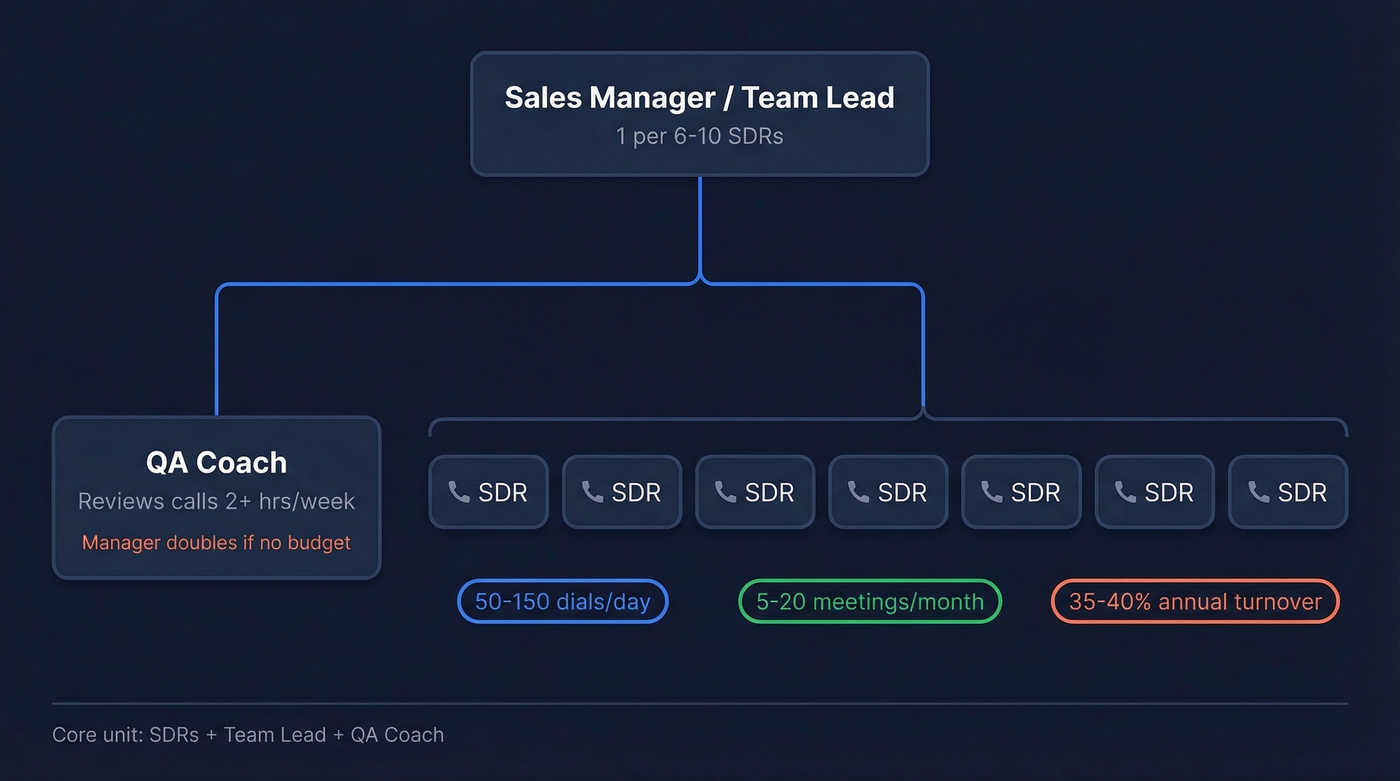
If you can't afford a dedicated QA coach, the manager doubles as one - block two hours a week for call reviews. That's non-negotiable.
In-House vs. Outsourced: The Real Math
This is the first fork in the road, and most teams get it wrong by underestimating in-house costs.
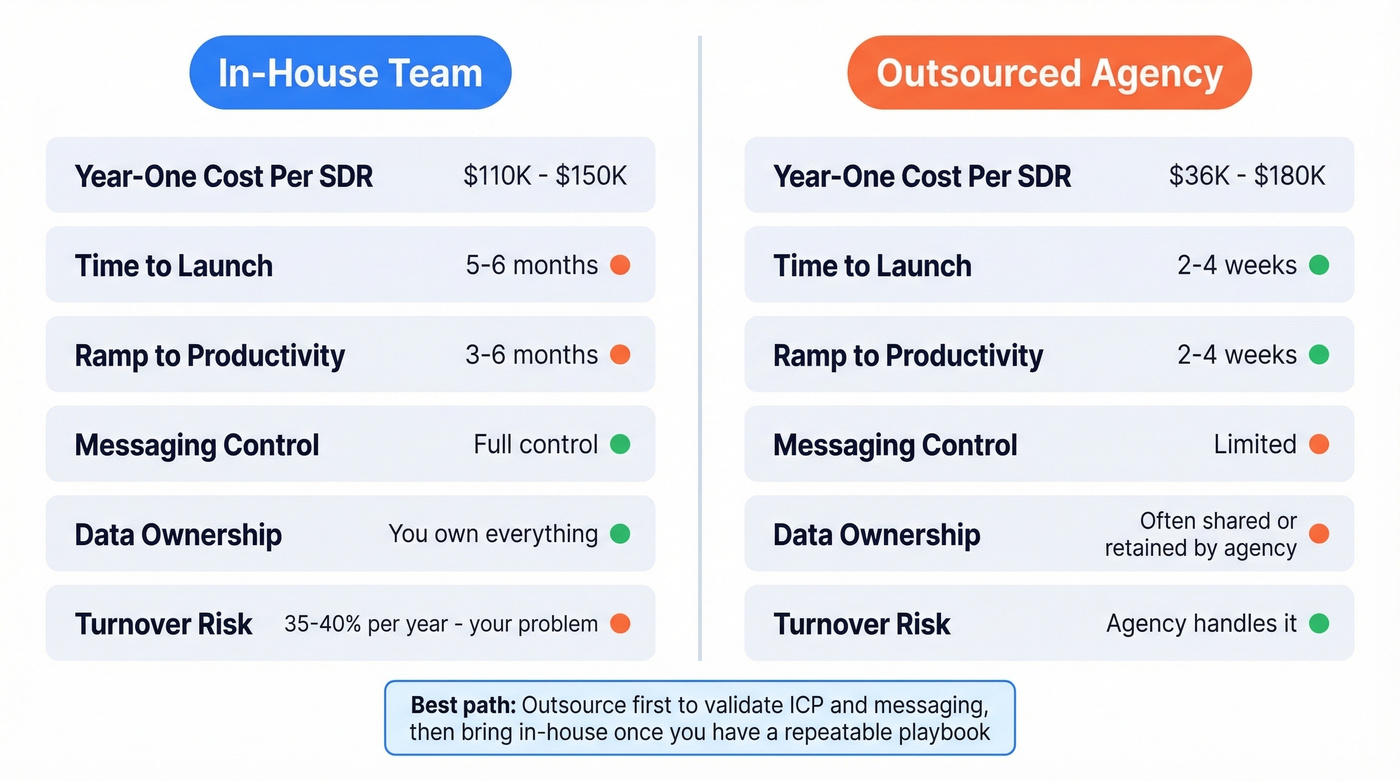
| Factor | In-House | Outsourced |
|---|---|---|
| Year-one cost per SDR | $110k-$150k | $36k-$180k depending on scope |
| Time to launch | 5-6 months | 2-4 weeks |
| Ramp to productivity | 3-6 months | 2-4 weeks |
| Messaging control | Full | Limited |
| Data ownership | You own it | Often shared or retained by the agency unless your contract says otherwise |
| Turnover risk | 35-40%/year | Agency's problem |
| Best for | Long-term pipeline ownership | Fast validation, overflow capacity |
The in-house number breaks down like this: base salary of $50k-$70k, benefits and taxes at $15k-$25k, recruiting costs at 15-20% of first-year salary running $9k-$12k, tools at $6k-$18k/year, and training plus management overhead at $10k-$20k. That totals roughly $100k-$130k per SDR before they've booked a single meeting.
Outsourced agencies range from $3k-$15k/month. At the low end, Quick Cold Calls starts at $695/month. At the high end, LevelUp Leads runs around $5,000+/mo with dedicated reps and campaign management. The timeline difference is dramatic: an outsourced team launches in two to four weeks versus five to six months for in-house.
Here's the thing: 35-40% annual SDR turnover means you're re-hiring and re-ramping constantly. That hidden cost alone can justify outsourcing your first year while you nail messaging and ICP fit.
How to Hire and Pay SDRs
OTE for SDRs in 2026 runs $75k-$95k. The right pay mix is 65/35 or 70/30 base-to-variable. Don't go 50/50 - SDRs can't control close rates, and heavy variable comp drives the wrong behaviors.
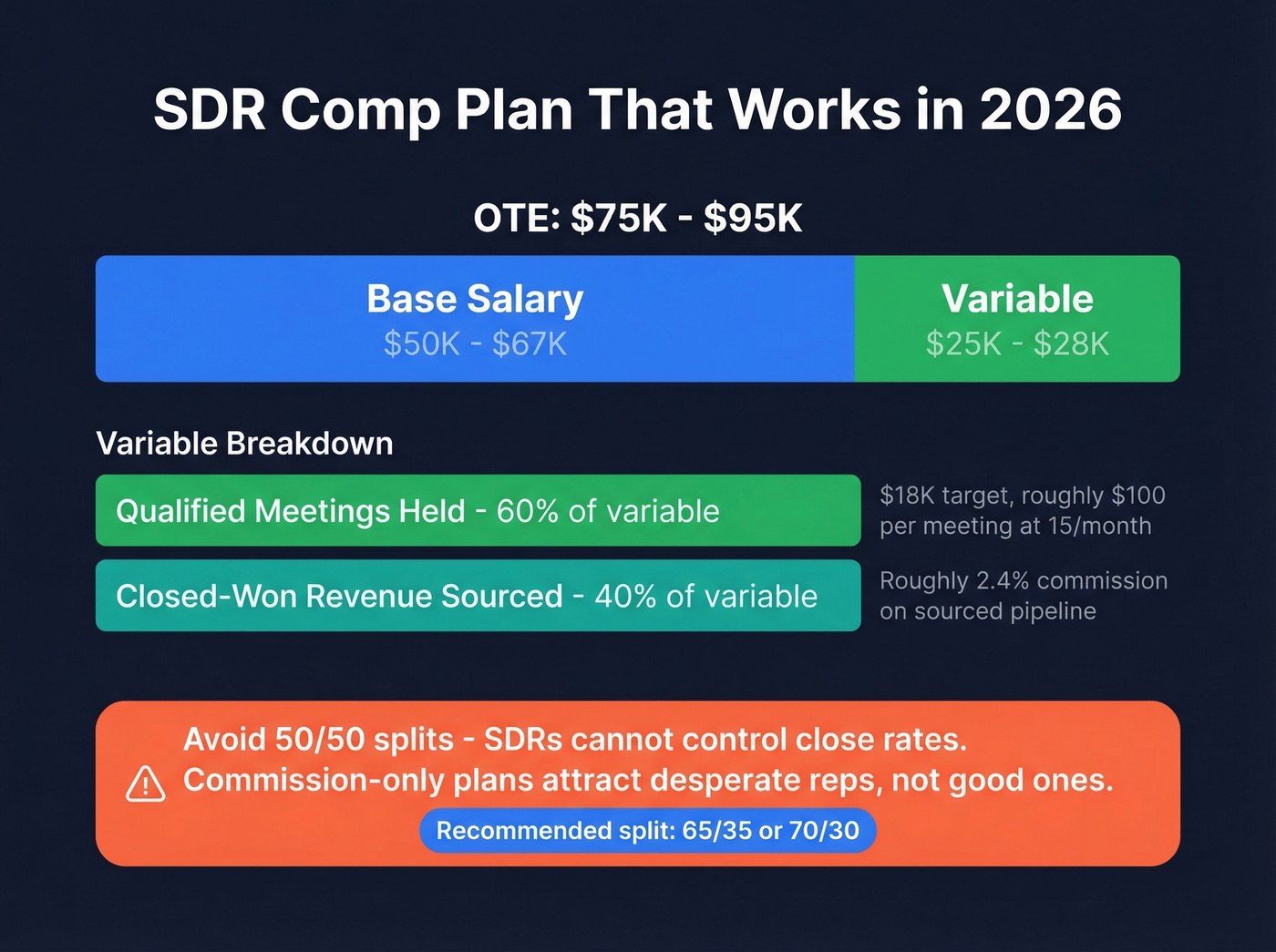
We've seen the best results with a hybrid variable model: 60% of variable tied to qualified meetings actually held and confirmed by the AE, 40% tied to closed-won revenue sourced. If your variable target is $30k/year, the meeting bucket is $18k. Set a goal of 15 qualified meetings per month and you're paying roughly $100 per meeting. The revenue bucket pays out as a ~2.4% commission on sourced pipeline that closes.
Commission-only plans almost always fail for SDR roles. You'll attract desperate reps, not good ones.

You just read that SDR turnover hits 35-40% a year. Every rep you lose takes their ramp time with them. GreyScout cut ramp from 8-10 weeks to 4 with Prospeo's 125M+ verified mobiles and 98% accurate emails - and grew pipeline 140%. At $0.01 per email, your data budget won't even dent that $110K per-SDR cost.
Give every new rep day-one data that actually connects to buyers.
Tech Stack
Think of your stack in layers: data sourcing, enrichment/verification, dialer, CRM, scheduling. Get the first layer wrong and nothing downstream matters.
Prospeo sits at the top of that stack. Its 125M+ verified mobile numbers hit a 30% pickup rate - roughly 3x what most teams see from stale CRM exports. The 98% email accuracy and 7-day refresh cycle mean your SDRs aren't wasting call blocks on dead numbers or bounced follow-up emails. Free tier gives you 75 verified emails per month; paid plans start under $50/mo. GreyScout cut rep ramp time from 8-10 weeks to 4 after switching, and their pipeline jumped 140%.
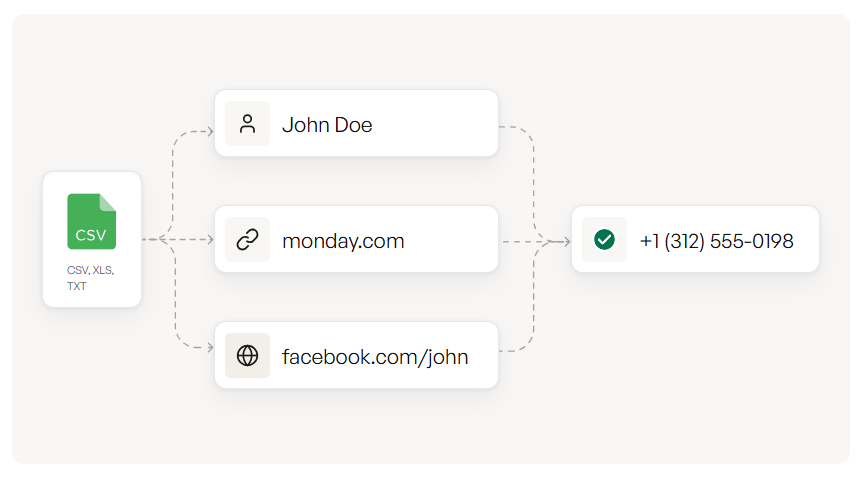
For dialers, the choice between power and parallel matters. Power dialers call one number at a time for personalized conversations. Parallel dialers ring multiple numbers simultaneously - better for high-volume plays.
| Dialer | Starting Price | Best For |
|---|---|---|
| Dialpad | $15/user/mo | Budget teams |
| CloudTalk | $19/user/mo | Mid-market |
| JustCall | $29/user/mo | Parallel dialing |
| Aircall | $30/user/mo | CRM-heavy workflows |
Round it out with HubSpot, Pipedrive, or Salesforce for CRM. Calendly for scheduling. That's it - don't overcomplicate this.
Let's be honest: most teams spend weeks evaluating CRMs and dialers while running campaigns on garbage data. If your average deal size is under $25k, spend 80% of your tool budget on data quality and use whatever CRM you already have. We've watched teams triple their connect rates just by switching data providers, without changing a single thing about their pitch.
If you need a tighter shortlist, start with SDR tools and a clear cold calling system before you add anything else.
Your KPIs show a 30% decision-maker connect rate goal - but that's impossible with stale numbers. Prospeo refreshes 300M+ profiles every 7 days, not every 6 weeks. Teams using Prospeo's verified mobiles hit 3x the pickup rate of CRM exports. That's the difference between 5 connects a day and 15.
Stop blaming reps for bad data. Fix the top of your stack first.
KPIs That Predict Pipeline
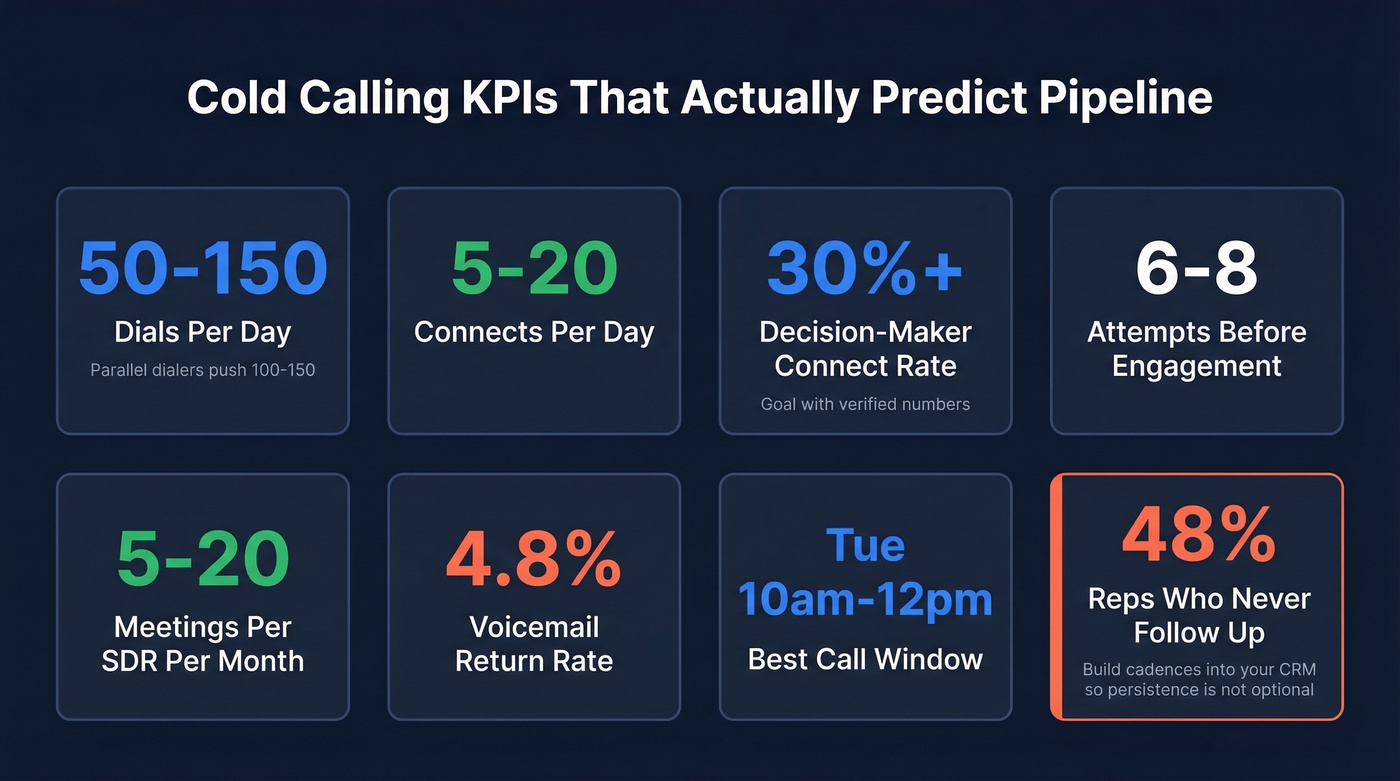
Stop measuring dials alone. These benchmarks actually predict pipeline:
| Metric | Benchmark |
|---|---|
| Dials per day | 50-150 |
| Connects per day | 5-20 |
| Decision-maker connect rate | 30%+ goal |
| Attempts before engagement | 6-8 |
| Meetings per SDR per month | 5-20 |
| Voicemail return rate | 4.8% |
| Best call window | Tuesdays, 10am-noon |
The stat that should haunt every sales manager: 48% of reps never follow up after the first call. That's not a training problem. It's a process problem. Build follow-up cadences into your CRM so persistence isn't optional - if a rep has to remember to follow up, they won't.
If you're trying to operationalize this, use a defined lead status model and track pipeline health weekly, not monthly.
Training Reps to Book, Not Pitch
Teach reps a 35-second opener that answers three questions: who you are, why you're calling, and what you want. The ask should always be specific - "15-20 minutes this week, how's Thursday at 2?" Never "would you be open to a conversation sometime?"
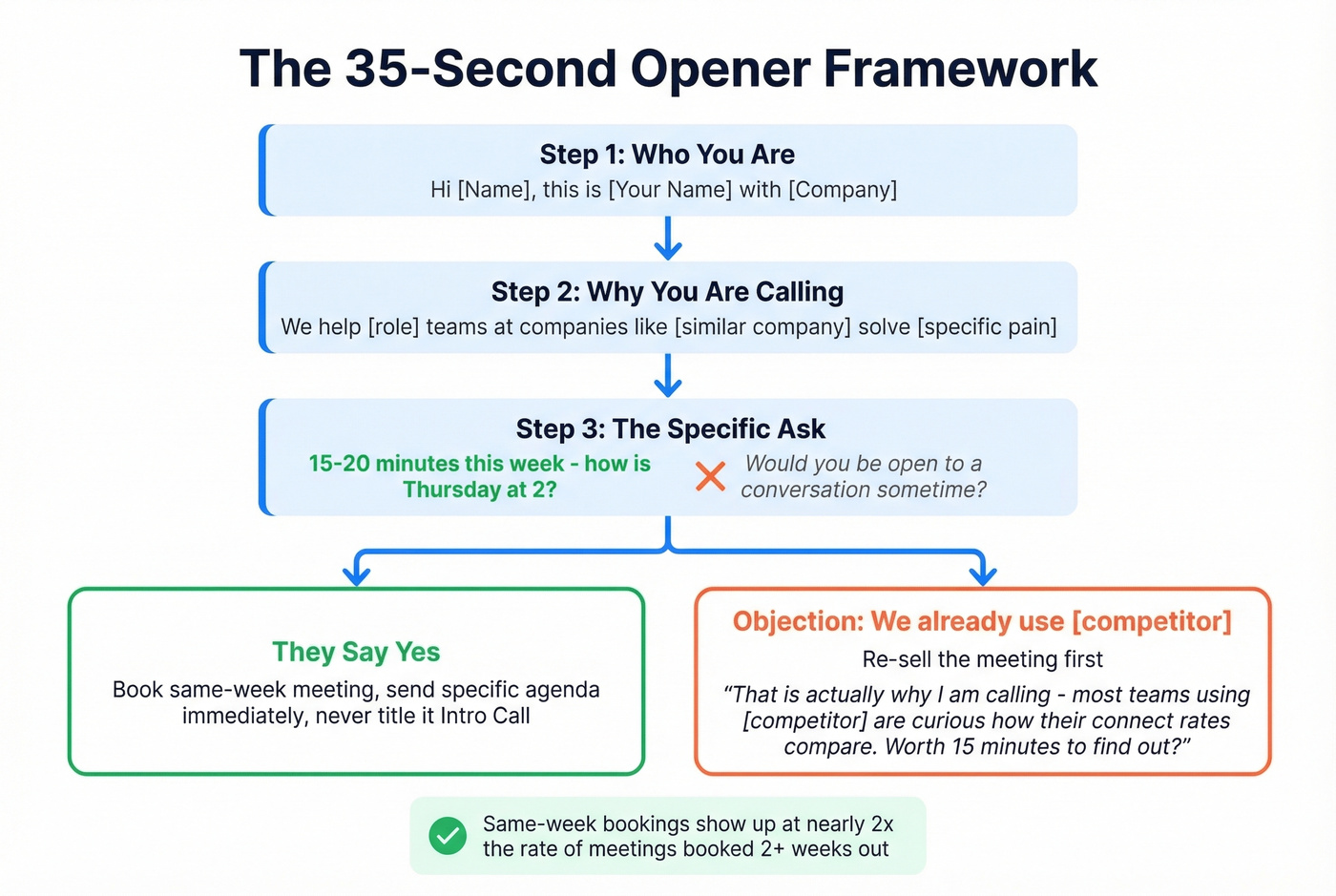
In our experience, reps who pitch product features too early on a cold call get hung up on fast. The goal of the cold call is the meeting, not the discovery. Your opener should lead with relevance and a clear ask. When a prospect says "we already use [competitor]," train reps to re-sell the meeting before qualifying deeper. Something like: "That's actually why I'm calling - most teams using [competitor] are curious how their connect rates compare. Worth 15 minutes to find out?"
Reduce no-shows by sending a specific agenda immediately, never titling it "Intro Call," and booking same-week meetings whenever possible. Same-week bookings show up at nearly double the rate of meetings booked two or more weeks out.
To tighten the messaging, build a few reusable talk tracks and keep sales communication standards consistent across reps.
How to Vet an Outsourced Agency
If you go outsourced, demand daily metrics: calls made, contacts reached, contacts per hour, qualified leads, and conversion rate. Ask for call samples. Get a written definition of "qualified lead" before you sign anything.
Look, operators on r/WholesaleRealestate consistently warn that $5/hr agencies deliver recycled callers and scraped data. Dialer management alone impacts 30-40% of your connection rate. Check their caller ID rotation, DNC scrubbing, abandonment rate, and DID rotation practices. Make sure they comply with the FTC Telemarketing Sales Rule and state-level DNC lists.
If they can't explain these, walk away. Insist on month-to-month contracts until they've proven results - any agency confident in their work won't demand a six-month lock-in.
Skip agencies that won't share raw call recordings or that define "qualified lead" as anyone who didn't hang up in the first ten seconds. You'll burn budget and poison your CRM with junk.
FAQ
How many dials should an SDR make per day?
50-150 depending on dialer type. Parallel dialers push the high end (100-150); manual dialing keeps you around 50-70. Track connects per dial, not raw volume - 8-12% connect rate on verified numbers is a solid benchmark.
How long does it take to ramp a new cold caller?
In-house SDRs typically need three to six months to hit full quota. Outsourced teams launch in two to four weeks with pre-trained callers. Using fresh, verified contact data cuts ramp time significantly - GreyScout reduced theirs from 8-10 weeks to 4.
What's the best way to get verified phone numbers for cold calling?
Use a dedicated B2B data provider with fresh mobile numbers instead of stale CRM exports. A 7-day refresh cycle and verified mobiles delivering 30%+ pickup rates will outperform any list you scrape or buy in bulk. Free plans from providers like Prospeo let you test before committing budget.
Should I build in-house or outsource first?
Outsource first if you haven't validated your ICP and messaging. It's faster (2-4 weeks vs. 5-6 months) and avoids sinking $100k+ per rep before you know what works. Bring the function in-house once you have a repeatable playbook and predictable conversion rates.